
Understanding the Metaverse Interoperability Challenge for Blockchain

Welcome to Blockchain Trends, your compass in the ever-evolving world of decentralized technology!
Dive into a world where blockchain transcends cryptocurrency, unlocking groundbreaking applications across industries. Are you ready to explore the intricate web of decentralized finance (DeFi), the transformative power of enterprise blockchain solutions, and the complex landscape of regulatory frameworks shaping this technology?
This month, we tackle a critical piece of the puzzle: the future of blockchain interoperability. Join us as we unravel the blockchain interoperability challenges solutions that will define the next generation of decentralized systems, starting with a deep dive into how these challenges impact the burgeoning metaverse. What are the hurdles, and how can we overcome them to unlock the full potential of a truly connected digital future? Let's explore!
Understanding the Metaverse Interoperability Challenge for Blockchain
- Introduction: The Metaverse and the Promise of Blockchain
- Defining Metaverse Interoperability
- The Core Blockchain Interoperability Challenges in the Metaverse
-
Current Blockchain Interoperability Solutions and Their Applicability to the Metaverse
- Cross-Chain Bridges: Advantages and Limitations for Metaverse Assets
- Atomic Swaps: Enabling Direct Asset Exchange in Virtual Worlds
- Layer-2 Scaling Solutions: Enhancing Transaction Speed and Reducing Costs
- Polkadot's Cross-Chain Messaging: Facilitating Interoperability Between Parachains
- Cosmos' Inter-Blockchain Communication Protocol (IBC): Enabling Sovereign Blockchains to Connect
- Addressing Blockchain Interoperability Challenges: Potential Strategies
- The Impact of Interoperability on the Metaverse Economy
- Case Studies: Examining Existing Interoperable Metaverse Projects
- The Future of Blockchain Interoperability in the Metaverse
- Conclusion: Overcoming the Blockchain Interoperability Challenges for a Unified Metaverse
-
Frequently Asked Questions
- What is the main challenge discussed in relation to the Metaverse and Blockchain?
- Why is blockchain interoperability important for the Metaverse?
- What are some potential solutions to the Metaverse interoperability challenge?
- How could a lack of blockchain interoperability affect Metaverse users?
- What is the future outlook for blockchain interoperability in the Metaverse?
- Final Reflection: Bridging the Metaverse Divide
- Ignite the Metaverse: Take Action Now!
Introduction: The Metaverse and the Promise of Blockchain
Exploring the Convergence of Metaverse and Blockchain Technology
The concept of the metaverse envisions a persistent, interconnected network of 3D virtual worlds, facilitating real-time interaction, social connection, and digital ownership. Blockchain technology emerges as a foundational layer for this vision, offering decentralized infrastructure for digital asset ownership, identity management, and transparent transaction systems. By leveraging blockchain, metaverses can enable users to truly own their digital items, from avatars and clothing to virtual land and unique collectibles, represented as non-fungible tokens (NFTs). This convergence promises a departure from siloed digital experiences, allowing for verifiable scarcity, provable ownership, and the potential for economic activity within and across virtual environments.
This integration goes beyond simple asset ownership. Blockchain can power decentralized autonomous organizations (DAOs) within metaverses, enabling community governance and shared decision-making. Smart contracts can automate interactions and enforce rules without intermediaries, facilitating complex economic models and social structures. The inherent transparency and immutability of blockchain records provide a trust layer essential for a digital world where value is exchanged and identities are managed. As the metaverse concept matures, the role of blockchain in providing a secure, open, and user-centric foundation becomes increasingly critical for realizing its full potential.
The Need for Interoperability in a Decentralized Metaverse
A truly realized metaverse shouldn't be a collection of isolated digital islands. The vision is one where users can seamlessly move between different virtual worlds, carrying their digital identity, assets, and experiences with them. This requires robust interoperability – the ability for disparate systems, protocols, and platforms to communicate and interact effectively. Without interoperability, a user who owns a unique avatar skin in one metaverse platform might be unable to use it in another, severely limiting the utility and value of their digital possessions and fragmenting the overall user experience.
Blockchain, while offering decentralization, also introduces its own set of interoperability challenges. Different blockchains operate independently with distinct consensus mechanisms, data structures, and smart contract languages. Assets and data locked on one chain, like Ethereum, cannot natively interact with applications or assets on another, such as Polygon or Solana. Overcoming these blockchain interoperability challenges solutions is paramount for building a unified metaverse where digital economies can flourish across diverse platforms. The goal is to break down the barriers between virtual worlds, allowing for a fluid and interconnected digital existence.
Defining Metaverse Interoperability
What is Metaverse Interoperability? A Technical Overview
Metaverse interoperability, from a technical standpoint, refers to the capability of different virtual worlds, platforms, and underlying blockchain networks to exchange information, assets, and identities in a meaningful and functional way. This is not just about transferring a file; it's about ensuring that a digital asset, like an NFT representing a virtual sword, retains its properties, functionality, and appearance when moved from one metaverse environment to another, potentially built on a different blockchain. It involves establishing common standards and protocols for representing digital objects, user identities, and spatial data.
Achieving this requires sophisticated technical solutions that can bridge the gaps between incompatible systems. This might involve translation layers for data formats, cross-chain communication protocols, and standardized APIs for interacting with virtual environments.
For example, if a user buys a piece of virtual clothing as an NFT on an Ethereum-based platform, true interoperability would allow them to wear that same clothing item on their avatar in a game running on a Polygon-based platform or a social space built on Solana, provided the receiving platform understands and can render the asset correctly based on common standards. The technical complexity lies in maintaining the integrity and utility of digital assets and identities across diverse technological stacks.
The Importance of Seamless Asset and Data Transfer
The ability to seamlessly transfer assets and data is a cornerstone of a vibrant metaverse economy and user experience. For assets, this means not only moving ownership records across blockchains but also ensuring the asset itself (or its representation) can be utilized in different virtual contexts.
Imagine owning a virtual car NFT: seamless transfer means you could potentially drive that car in a racing game, display it in a virtual gallery, or use it as transportation in a social hub, regardless of which specific metaverse or blockchain network each experience resides on. This fluidity enhances the value proposition of digital assets, as their utility is not confined to a single platform.
Beyond assets, data transfer is equally vital. This includes user identity and reputation data, quest progress, social connections, and even environmental data. If a user builds a reputation or earns achievements in one part of the metaverse, ideally, aspects of that progress could be recognized or carried over to other areas. Seamless data transfer facilitates persistent identity and experience across the fragmented digital landscape. Overcoming blockchain interoperability challenges solutions for both assets and data is fundamental to creating a truly connected and valuable metaverse ecosystem, empowering users and creators alike.
The Core Blockchain Interoperability Challenges in the Metaverse
Technical Hurdles to Metaverse Interoperability
One of the primary technical hurdles in achieving blockchain interoperability for the metaverse lies in the fundamental differences between various blockchain architectures. Each major blockchain, such as Ethereum, Solana, Cardano, or Polygon, has its own consensus mechanism (Proof-of-Work, Proof-of-Stake, etc. ), transaction processing speed, fee structure, and smart contract execution environment (like the Ethereum Virtual Machine vs. Solana's Sealevel). Transferring an asset or data directly between these disparate systems is like trying to connect two different types of electrical outlets without an adapter – they are fundamentally incompatible at a low level.
Furthermore, the representation of digital assets, particularly NFTs, can vary significantly. While standards like ERC-721 and ERC-1155 are common on Ethereum-compatible chains, their implementation details and the metadata associated with them can differ. Moving an NFT from one chain to another often involves "wrapping" or locking the original asset on its native chain and issuing a representation of it on the destination chain.
This process introduces complexity, potential points of failure, and can impact the asset's functionality or visual representation in a new environment if not handled with robust blockchain interoperability challenges solutions. The sheer variety of blockchain technologies in use presents a significant technical puzzle.
Security Concerns in Cross-Chain Metaverse Environments
Enabling interactions between different blockchains inevitably introduces new security vulnerabilities. Cross-chain bridges, which are common blockchain interoperability challenges solutions, have been the target of some of the largest hacks in the crypto space. For instance, the Ronin Network bridge hack in March 2022 resulted in the loss of over $600 million, and the Wormhole bridge suffered a loss of over $320 million in February 2022. These incidents highlight the risks associated with transferring or locking assets on one chain to represent them on another. The security of the bridge mechanism itself becomes a critical single point of failure.
In a metaverse context, these security risks are amplified by the potential value stored in digital assets and the complexity of cross-platform interactions. If an avatar or a piece of virtual land is transferred via a vulnerable bridge, it could be stolen or duplicated, undermining the core promise of provable ownership. Ensuring the integrity and security of transactions and asset transfers across multiple, potentially less secure, chains requires sophisticated cryptographic techniques, rigorous auditing, and decentralized governance models for bridge operations. Addressing these security concerns is paramount for building trust in cross-chain metaverse experiences.
Standardization Issues: Lack of Common Protocols
A significant barrier to metaverse interoperability is the lack of universally adopted standards for representing digital assets, identities, and virtual environments. While some standards exist within specific ecosystems (like ERC tokens on Ethereum), there's no widely agreed-upon framework that dictates how a 3D avatar model, a piece of virtual architecture, or a user's reputation score should be formatted, stored, and exchanged across any metaverse or blockchain. This absence of common protocols means that assets or data from one platform are often unintelligible or unusable in another without complex, custom translation layers.
For example, different metaverse platforms might use varying file formats for 3D models (e.g., glTF, FBX), different metadata standards for NFTs, or different methods for managing decentralized identities. Without standardization, achieving true "plug-and-play" interoperability becomes exceptionally difficult. Every cross-platform interaction requires bespoke integration work, hindering scalability and limiting the seamless user experience that the metaverse promises. Developing and adopting open, non-proprietary standards is a crucial step in overcoming these blockchain interoperability challenges solutions and fostering a truly interconnected digital world.
Current Blockchain Interoperability Solutions and Their Applicability to the Metaverse
Cross-Chain Bridges: Advantages and Limitations for Metaverse Assets
Cross-chain bridges are one of the most common blockchain interoperability challenges solutions currently employed. They function by allowing users to lock assets on a source chain and mint equivalent "wrapped" assets on a destination chain, or vice versa. For metaverse assets like NFTs representing virtual items or land, bridges can theoretically enable the transfer of ownership representation between chains. For instance, an NFT on Ethereum could be locked, and a representation issued on Polygon, potentially allowing it to be used in a Polygon-based metaverse game.
The primary advantage of bridges is their ability to connect otherwise isolated blockchain ecosystems. They can increase liquidity for assets and allow users to leverage the strengths of different chains (e.g., lower fees on Polygon vs. broader ecosystem on Ethereum). However, their limitations are significant, especially for the metaverse. As noted, security vulnerabilities in bridge designs have led to massive losses.
Furthermore, transferring an asset's representation doesn't guarantee its functionality or appearance in the new environment. A wrapped NFT might prove ownership on the destination chain, but the 3D model or associated data needed to render and use it in a virtual world might still be inaccessible or incompatible. The technical gap between the blockchain layer and the virtual world layer remains a challenge for bridges.
Atomic Swaps: Enabling Direct Asset Exchange in Virtual Worlds
Atomic swaps are a peer-to-peer method for exchanging cryptocurrencies from different blockchains without needing a trusted third party. Using hash time-locked contracts (HTLCs), two parties can agree to exchange assets, and the transaction is either completed successfully on both chains or fails on both, preventing one party from losing their funds while the other doesn't receive theirs. While primarily used for fungible cryptocurrency exchanges (like swapping BTC for ETH), the underlying principle could potentially be applied to certain types of non-fungible assets or value transfers within a metaverse context.
In theory, atomic swaps could facilitate direct, trustless exchanges of specific metaverse assets between users on different chains, provided the assets are compatible and the HTLC logic can be applied to their unique properties. However, atomic swaps are typically complex to set up and execute for individual users and are more suited for direct, one-off exchanges rather than enabling seamless, ongoing interaction or asset utility across different virtual environments.
They are less a solution for general metaverse interoperability (like using an avatar across worlds) and more a tool for specific asset trading between chains, representing a niche among blockchain interoperability challenges solutions for virtual economies.
Layer-2 Scaling Solutions: Enhancing Transaction Speed and Reducing Costs
Layer-2 scaling solutions, such as rollups (Optimistic and Zero-Knowledge) and sidechains, operate on top of a base blockchain (like Ethereum) to process transactions more quickly and cheaply off-chain while still inheriting some of the base chain's security. While not direct cross-chain interoperability solutions in the sense of connecting entirely different base layers (like Ethereum and Solana), they are crucial for enabling scalable interactions within ecosystems built on that base layer, which is highly relevant for the metaverse.
Metaverse interactions, such as buying digital items, trading assets, or even small in-world actions recorded on-chain, can generate a massive volume of transactions. Running all these on a Layer-1 like Ethereum can be prohibitively expensive due to gas fees and slow due to network congestion. Layer-2 solutions drastically reduce transaction costs (often to fractions of a cent) and increase throughput significantly (potentially thousands of transactions per second).
This scalability is essential for making blockchain-based metaverse activities economically viable and responsive. While they don't solve the problem of moving assets between, say, an Ethereum L2 and a Solana application, they are vital blockchain interoperability challenges solutions for enabling complex, high-frequency interactions within a connected ecosystem built on a common base layer or its scaling solutions.
Polkadot's Cross-Chain Messaging: Facilitating Interoperability Between Parachains
Polkadot is designed as a multi-chain network specifically focused on interoperability. Its architecture consists of a central Relay Chain and multiple independent, application-specific blockchains called Parachains. The core innovation is the Cross-Chain Message Passing (XCMP) protocol, which allows Parachains to send and receive messages, including asset transfers and data, in a secure and trustless manner via the Relay Chain. This design inherently addresses blockchain interoperability challenges solutions within the Polkadot ecosystem.
For the metaverse, Polkadot's model offers a framework where different virtual worlds or metaverse components could potentially exist as separate Parachains or utilize Parachains, allowing for native, secure communication and asset transfer between them. For example, one Parachain could host a virtual game world, another a decentralized identity service, and a third a digital asset marketplace, all interacting seamlessly. While this approach is specific to the Polkadot ecosystem and doesn't inherently connect to external chains like Ethereum without bridges, it represents a significant step towards trustless, internal interoperability for complex, multi-component decentralized applications like the metaverse.
Cosmos' Inter-Blockchain Communication Protocol (IBC): Enabling Sovereign Blockchains to Connect
Cosmos is another project focused on creating an "Internet of Blockchains." Its core technology is the Inter-Blockchain Communication Protocol (IBC), a standard protocol that allows independent, sovereign blockchains (built using the Cosmos SDK) to reliably and securely exchange data and tokens. Unlike Polkadot's shared security model via a Relay Chain, Cosmos chains maintain their own sovereignty but can connect and communicate via IBC if they adhere to the protocol. IBC enables chains to send packets of data to each other, which can represent anything from token transfers to arbitrary cross-chain contract calls.
IBC is a powerful blockchain interoperability challenges solution because it allows diverse blockchains to connect in a decentralized way, fostering a network effect. For the metaverse, this means different virtual worlds, asset registries, or identity layers built on separate, sovereign Cosmos SDK chains could potentially communicate and transfer assets and data directly using IBC. This facilitates a more open and decentralized approach to interoperability compared to relying solely on centralized or federated bridges. As more blockchains integrate IBC, the potential for building interconnected metaverse experiences across a wider range of independent networks grows, although compatibility requirements remain.
Addressing Blockchain Interoperability Challenges: Potential Strategies
Developing Universal Metaverse Standards for Asset Representation
A key strategy to overcome blockchain interoperability challenges solutions in the metaverse is the development and adoption of universal, open standards for representing digital assets. This goes beyond existing token standards like ERC-721 or ERC-1155 to include standards for the content of the assets themselves – how 3D models are formatted, how textures are applied, how animations are described, and how metadata is structured to be universally understood across different rendering engines and platforms. Initiatives like the Metaverse Standards Forum are working towards this goal, bringing together companies and organizations to define common specifications.
Adopting such standards would significantly reduce the need for complex translation layers or platform-specific asset formats. If all metaverse platforms could interpret a standardized representation of a virtual shirt NFT, for example, a user could truly "wear" that shirt on their avatar in any compatible world, regardless of the underlying blockchain. This requires collaboration across the industry, involving blockchain developers, metaverse platform creators, and content creators, to agree on common technical specifications that enable assets to retain their functionality and appearance across diverse environments.
Implementing Secure and Scalable Cross-Chain Communication Protocols
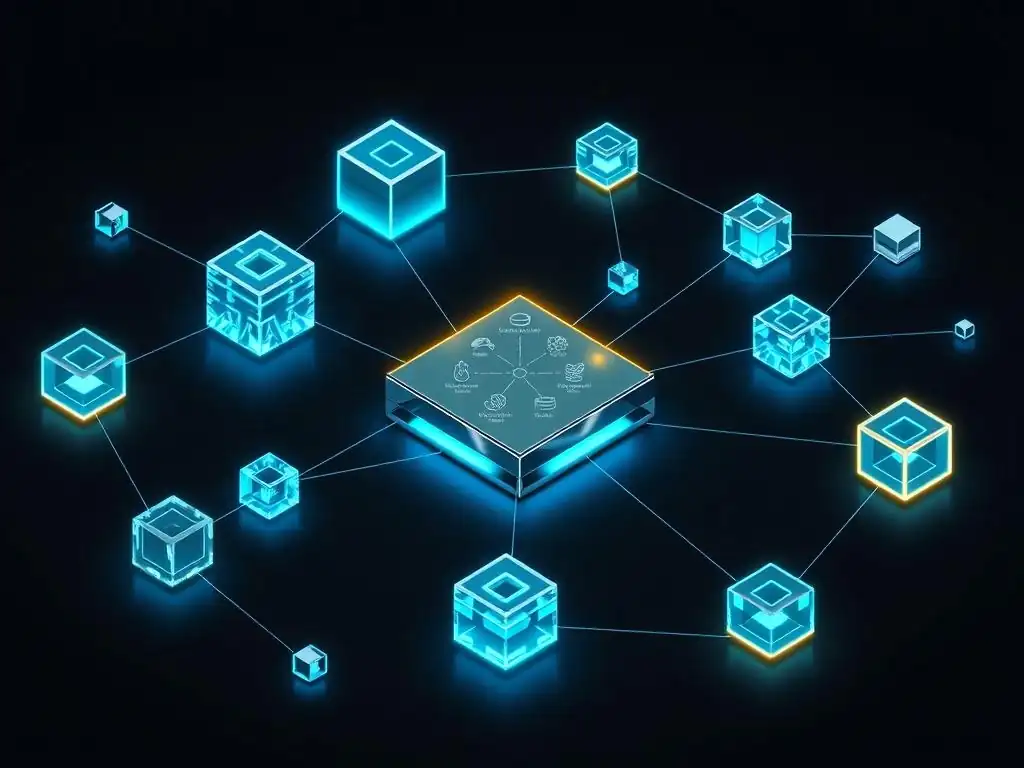
While current cross-chain bridges have faced security issues, continued research and development into more secure and scalable cross-chain communication protocols are essential. This involves exploring alternative bridge designs, such as those utilizing zero-knowledge proofs (ZKPs) to verify transactions off-chain before settling on-chain, potentially reducing the attack surface compared to multi-signature schemes or relying on federated relayers. Decentralized bridge governance and robust auditing processes are also critical components of more secure blockchain interoperability challenges solutions.
Scalability is equally important. As metaverse activity grows, the volume of cross-chain transactions related to asset transfers, data synchronization, and cross-world interactions will increase dramatically. Future protocols must be able to handle this traffic efficiently and cost-effectively without becoming bottlenecks. Innovations in consensus mechanisms, sharding, and optimized cryptographic techniques will play a role in building the high-throughput, low-latency cross-chain infrastructure needed for a seamless metaverse experience.
Fostering Collaboration Between Blockchain Platforms and Metaverse Developers
Addressing metaverse interoperability is not solely a technical challenge for blockchain developers; it requires close collaboration with the developers building the virtual world platforms themselves. Blockchain teams need to understand the specific needs and technical constraints of metaverse environments, while metaverse developers need to understand the possibilities and limitations of different blockchain technologies and blockchain interoperability challenges solutions.
Joint working groups, shared development roadmaps, and open-source initiatives involving both blockchain and metaverse communities are crucial for developing integrated solutions. This collaboration can lead to the creation of SDKs (Software Development Kits) and APIs that abstract away the complexity of blockchain interactions for metaverse developers, making it easier to integrate blockchain features and enabling cross-platform compatibility from the ground up rather than as an afterthought. Building a truly interoperable metaverse requires a unified effort across these distinct but converging technological domains.
The Role of Decentralized Identity (DID) in Metaverse Interoperability
Decentralized Identity (DID) systems, often built on blockchain or distributed ledger technology, offer a promising approach to managing user identities in a way that is self-sovereign, portable, and privacy-preserving. Instead of relying on centralized platforms to manage user profiles and data, DIDs allow users to control their own digital identifiers and choose what information they share and with whom.
In the context of the metaverse, DIDs are a critical blockchain interoperability challenges solution for identity. A user's DID could serve as their persistent identity across different virtual worlds and blockchain networks.
This allows for the creation of portable reputation systems, verifiable credentials (e.g., proof of ownership of assets, completion of quests, or membership in a DAO), and seamless login experiences without needing separate accounts for every platform. By decoupling identity from specific platforms and linking it to a decentralized identifier, DIDs enable users to carry their digital persona and associated data with them as they navigate the interconnected metaverse.
The Impact of Interoperability on the Metaverse Economy
Enabling a Thriving Digital Asset Marketplace
True blockchain interoperability is foundational for a thriving digital asset marketplace in the metaverse. If assets can seamlessly move and be utilized across different platforms and virtual worlds, their potential market size and liquidity increase dramatically. An NFT representing a piece of virtual art could be bought in a marketplace on one chain, displayed in a gallery on another, and potentially even used as decor within a virtual home on a third. This expanded utility makes digital assets more attractive to both creators and consumers.
Interoperability reduces the risk of assets being locked into single, potentially ephemeral, platforms. It fosters competition among platforms to provide the best experiences, rather than relying on users being locked in by their asset ownership. This increased liquidity and utility can drive significant economic activity, from trading and collecting to the creation of businesses that operate across multiple metaverse environments, all underpinned by robust blockchain interoperability challenges solutions.
Facilitating Cross-Platform User Experiences
Beyond assets, interoperability fundamentally enhances the user experience by breaking down digital silos. Users can maintain a persistent identity, carry their achievements or reputation, and interact with friends regardless of which specific virtual world they are currently inhabiting, provided those worlds are connected via interoperable protocols. Imagine attending a virtual concert in one platform, then using the same avatar and digital clothing to meet friends in a social hub on another platform immediately afterward.
This seamless flow between experiences makes the metaverse feel more like a single, expansive digital universe rather than a collection of disconnected games or applications. It encourages exploration and participation across a wider range of virtual environments, enriching the user journey and increasing engagement. Overcoming blockchain interoperability challenges solutions is key to delivering this fluid, interconnected user experience.
Reducing Fragmentation and Promoting User Adoption
The current landscape of virtual worlds and blockchain platforms is highly fragmented. Users often have to choose a specific platform and commit their time, effort, and money within that ecosystem, knowing that their progress and assets might not be transferable elsewhere. This fragmentation is a significant barrier to mainstream user adoption, making the metaverse concept seem complex and risky.
By enabling interoperability, the metaverse becomes less intimidating and more appealing to a broader audience. Users are more likely to invest in digital assets or build their digital identity if they know these can be used across a variety of experiences. Reduced fragmentation also fosters network effects, as users from different platforms can interact, leading to a larger, more vibrant overall metaverse ecosystem. Addressing blockchain interoperability challenges solutions is therefore not just a technical goal, but a strategic imperative for driving widespread adoption of the metaverse vision.
Case Studies: Examining Existing Interoperable Metaverse Projects
Decentraland: Exploring Asset Portability and Cross-World Experiences
Decentraland is a virtual world platform built on the Ethereum blockchain, where users can buy, sell, and develop virtual land (represented by LAND NFTs) and other in-world assets. While primarily operating within its own virtual space, Decentraland has made strides in exploring asset portability through its use of open standards like ERC-721 and ERC-1155 for assets. Users own their assets in their Ethereum wallet, meaning they are not locked within the Decentraland platform itself at the blockchain level.
While Decentraland assets are primarily usable within the Decentraland world, their existence as standard Ethereum NFTs allows for potential cross-platform compatibility if other platforms choose to support these standards and interpret the associated metadata. For instance, some third-party marketplaces and galleries outside of Decentraland can display Decentraland NFTs. The challenge remains making these assets functional in other distinct virtual environments. Decentraland's approach highlights the potential of blockchain-native asset ownership but also underscores the need for broader industry standards and robust blockchain interoperability challenges solutions to move beyond basic ownership and into true cross-world utility.
The Sandbox: User-Generated Content and Blockchain Integration Challenges
The Sandbox is another prominent blockchain-based metaverse platform, also utilizing the Ethereum blockchain and Polygon Layer-2 for its operations. It focuses heavily on user-generated content, allowing creators to build voxel-based assets and games on their virtual land plots (represented by LAND NFTs). Assets created within The Sandbox ecosystem, called ASSETs, are also tokenized as NFTs (ERC-1155).
The Sandbox faces similar blockchain interoperability challenges solutions as Decentraland regarding truly seamless cross-world functionality of its assets. While ASSET NFTs are owned by users on-chain, their utility is currently primarily confined to The Sandbox's specific game engine and rendering environment.
Moving an ASSET like a virtual character or item into a completely different metaverse platform built with different technology requires significant effort to ensure compatibility and rendering. The Sandbox's success in fostering a creator economy within its ecosystem demonstrates the power of blockchain ownership, but also illustrates the current limitations of interoperability when platform-specific content formats and engines are involved, highlighting the need for universal metaverse standards.
The Future of Blockchain Interoperability in the Metaverse
Emerging Technologies and Potential Breakthroughs
The future of blockchain interoperability challenges solutions for the metaverse will likely involve the maturation and widespread adoption of several emerging technologies. Zero-Knowledge Proofs (ZKPs) hold significant promise for enhancing the security and privacy of cross-chain communication by allowing one chain to verify the validity of a transaction or state on another chain without needing to trust the other chain or reveal sensitive data. Advancements in ZKP technology could lead to more secure and efficient cross-chain bridges and communication protocols.
Another area of development is the concept of "interoperable smart contracts" or cross-chain dApps, which can execute logic that spans multiple blockchains. Protocols like LayerZero or Chainlink's Cross-Chain Interoperability Protocol (CCIP) aim to provide a universal standard for dApps to send messages and interact across various chains securely. These protocols could enable more complex cross-world interactions and decentralized applications within the metaverse that aren't confined to a single blockchain.
The Evolution of Standards and Protocols
The push for universal metaverse standards is gaining momentum. Industry bodies and collaborative initiatives are working towards defining common protocols for areas such as 3D asset representation (e.g., universal avatar standards), spatial data, identity, and economic interactions. The evolution from proprietary or platform-specific formats to open, widely adopted standards is crucial.
This includes the development of more sophisticated NFT standards that can encapsulate richer, more dynamic information about digital assets, potentially including behaviors, physics properties, and platform-agnostic rendering instructions. As these standards mature and are adopted by major players, the technical barriers to asset and data transfer between different virtual worlds will significantly decrease, paving the way for more seamless blockchain interoperability challenges solutions in the metaverse.
Predictions for the Interoperable Metaverse Landscape
Looking ahead, the metaverse landscape is likely to evolve towards a more interconnected state, driven by the necessity of addressing blockchain interoperability challenges solutions. It's improbable that a single, monolithic metaverse will emerge. Instead, we are more likely to see a network of interconnected virtual worlds, each potentially built on different technologies and blockchains, but linked by common standards and interoperability protocols.
This future state envisions users moving freely between these worlds, bringing their digital assets and identity with them. Cross-chain marketplaces will become commonplace, allowing trading of assets regardless of their native chain. Decentralized identity will be the norm, providing users with sovereign control over their digital presence. While challenges remain, the continued development of secure cross-chain technologies, coupled with the adoption of universal metaverse standards, suggests a future where the digital boundaries between virtual worlds become increasingly permeable, realizing the true potential of a decentralized, interconnected metaverse.
Conclusion: Overcoming the Blockchain Interoperability Challenges for a Unified Metaverse
The Path Forward: Collaboration and Innovation
Overcoming the blockchain interoperability challenges solutions is not a trivial task; it requires a multi-faceted approach involving sustained innovation and unprecedented collaboration across the entire ecosystem. Technically, this means developing more secure, scalable, and robust cross-chain communication protocols that can handle the complexity and volume of metaverse interactions. It involves pushing the boundaries of cryptography, distributed systems, and smart contract security.
Equally important is the human element: fostering collaboration between competing blockchain networks, metaverse platforms, content creators, and standards bodies. This requires a shared vision for an open, decentralized metaverse and a willingness to agree upon and adopt common technical standards, even if it means sacrificing some platform-specific advantages. The path forward is paved with open-source development, joint research initiatives, and industry-wide forums dedicated to solving these complex interoperability puzzles together.
The Long-Term Vision for a Seamless and Interconnected Metaverse Experience
The long-term vision is a metaverse where the underlying blockchain infrastructure is largely abstracted away from the end-user. Users won't need to worry about which specific chain an asset is on or how to bridge it to another. They will simply experience a seamless flow between different virtual worlds, interacting with assets and identities as if they existed on a single, unified network. This interconnected experience will unlock immense potential for creativity, commerce, and social connection in the digital realm.
Achieving this vision requires persistent effort in developing and implementing effective blockchain interoperability challenges solutions. It means building secure bridges, establishing universal standards for digital assets and identities, and creating protocols that allow diverse virtual environments to communicate and interact fluidly. While significant hurdles remain, the progress being made in blockchain technology and the growing recognition of the importance of interoperability provide a strong foundation for building a truly unified and accessible metaverse for everyone.
Frequently Asked Questions
What is the main challenge discussed in relation to the Metaverse and Blockchain?
The main challenge discussed is interoperability, specifically how different blockchain-based Metaverse platforms can seamlessly communicate and exchange assets. This lack of seamless integration hinders the overall user experience.
Why is blockchain interoperability important for the Metaverse?
Blockchain interoperability is crucial because it allows users to move their digital assets (avatars, items, currencies) freely between different Metaverse platforms, creating a unified and seamless experience. It prevents walled gardens and promotes a more open ecosystem.
What are some potential solutions to the Metaverse interoperability challenge?
Potential solutions include developing standardized protocols for asset transfer and data exchange, creating cross-chain bridges to connect different blockchains, and implementing governance mechanisms to ensure compatibility.
How could a lack of blockchain interoperability affect Metaverse users?
A lack of interoperability could lead to fragmented user experiences, where users are locked into specific platforms and cannot easily move their assets. This limits user freedom and innovation within the Metaverse.
What is the future outlook for blockchain interoperability in the Metaverse?
The future likely involves increased focus on developing interoperability solutions, driven by the growing demand for a more unified Metaverse experience. This could lead to the emergence of new standards and technologies that facilitate seamless interaction between different blockchain networks.
Final Reflection: Bridging the Metaverse Divide
The exploration of blockchain interoperability challenges within the metaverse reveals a critical juncture in the evolution of digital existence. The seamless interaction between disparate virtual worlds, powered by blockchain, remains a pivotal hurdle to overcome before the metaverse can truly realize its transformative potential. Without addressing these challenges, the vision of a unified, interconnected digital realm risks fragmenting into isolated silos, hindering innovation and limiting user experience.
The ongoing struggle for interoperability profoundly impacts the cultural and social landscape of the nascent metaverse. The ability to freely move assets, identities, and experiences between different platforms is not just a technical issue; it's a fundamental requirement for a truly democratic and inclusive digital future. As we build these new worlds, we must prioritize collaboration and open standards to ensure that the metaverse becomes a space of shared opportunity, not a collection of walled gardens. The future of the metaverse hinges on our ability to build bridges, not walls.
Now, as you consider the potential of the metaverse and the crucial role of blockchain interoperability, take a moment to reflect on your own digital footprint. How can you advocate for open standards and collaborative solutions? How can you contribute to building a metaverse that is truly interconnected and accessible to all? The future of this digital frontier is being shaped today, and your voice and actions can help pave the way for a more unified and equitable digital future.
Ignite the Metaverse: Take Action Now!
Thank you for exploring the complexities of metaverse interoperability and blockchain challenges. We hope you gained valuable insights into this rapidly evolving field. If you're ready to turn knowledge into action, here are some ways you can contribute to creating a more interconnected metaverse:
- Advocate for Open Standards: Engage in discussions within your online communities about the importance of promoting cross-chain compatibility and open standards. Sharing your understanding can help foster collaboration and innovation.
- Learn About Interoperability Solutions: Investigate existing platforms and protocols that address cross-chain communication, such as LayerZero, Polkadot, or Cosmos, to understand how they facilitate interoperability.
- Share and Discuss: Spread this article to raise awareness about the challenges and opportunities in metaverse interoperability, and join the conversation in the comments below.
Which interoperability solution do you find most promising, and why? We look forward to your thoughts!
Leave a Reply