
Web3 and the Potential for Personalized Experiences: UserCentric Internet


Welcome to Blockchain Trends, your guide to understanding the revolutionary impact of blockchain technology.
Are you ready to dive beyond the headlines and explore how blockchain is reshaping industries? Today, we're unraveling the potential of personalized Web3 user experiences, a key element in crafting a truly user-centric internet. Discover how this transformative approach is poised to revolutionize the way we interact online and unlock unprecedented opportunities. Intrigued? Let's delve into the future of blockchain together and see what's on the horizon.
Web3 and the Potential for Personalized Experiences: User-Centric Internet
- Introduction: The Evolution Towards Personalized Web3 User Experiences
- Understanding Web3 and its Foundations
- The Current State of Personalization on the Web
- Personalized Web3 User Experiences: A Deep Dive
- Use Cases of Personalized Web3 Experiences
- Benefits of User-Centric Design in Web3
- Challenges and Considerations for Personalized Web3
- The Role of Decentralized Identity (DID) in Personalized Web3
- The Future of Web3: Towards a Truly User-Centric Internet
- Conclusion: Embracing User-Centricity in the Web3 Revolution
-
Frequently Asked Questions
- What exactly does "Personalized Web3 user experiences" mean in the context of a UserCentric Internet?
- How does blockchain technology enable personalized experiences in Web3?
- What are some examples of personalized Web3 experiences that are being developed?
- What are the key benefits of prioritizing personalized Web3 user experiences?
- What are the potential challenges in implementing personalized Web3 experiences?
- Final Reflection: Embracing the Personalized Web3 Revolution
- Unleash Your Web3 Potential: Create Your User-Centric Internet!
Introduction: The Evolution Towards Personalized Web3 User Experiences
The internet has undergone significant transformations since its inception. From the static pages of Web1 to the interactive, user-generated content powerhouses of Web2, each evolution has brought new possibilities and challenges. Web2, while enabling global connectivity and dynamic content, has increasingly raised concerns about data privacy, ownership, and the centralization of power in the hands of a few large corporations. This has led to a growing demand for a more user-centric internet, one where individuals have greater control over their digital identities and data.
Emerging from the foundational principles of blockchain technology, Web3 promises to usher in this new era. By shifting from centralized servers to decentralized networks, Web3 aims to empower users, giving them ownership over their data and digital assets. This fundamental change creates a fertile ground for developing truly personalized Web3 user experiences, moving beyond the often intrusive and opaque data collection practices of Web2 towards a model built on consent, transparency, and user control. The potential for creating deeply relevant and tailored online interactions, while respecting individual sovereignty, is a defining characteristic of this next internet evolution.
Understanding Web3 and its Foundations
Decentralization: The Core Principle of Web3
Decentralization lies at the heart of the Web3 paradigm, representing a fundamental shift away from the centralized architectures that dominate Web2. In Web2, platforms like social media networks, search engines, and e-commerce sites store user data and manage interactions on their proprietary servers. This creates single points of control and failure, making users dependent on these entities and susceptible to their policies, data breaches, and censorship. Decentralization, conversely, distributes data and computational power across a network of many participants, often referred to as nodes.
This distributed nature means that no single entity has absolute control over the network or the data residing on it. For example, a decentralized social network built on Web3 would store user posts and profiles across numerous computers worldwide, rather than on a single company's servers.
This makes the platform more resilient to censorship and outages, as shutting down one or even many nodes would not take the entire network offline. This principle is crucial for enabling personalized Web3 user experiences that are not dictated or controlled by a central authority but rather shaped by the user themselves and the decentralized protocols they interact with.
Blockchain Technology: The Backbone of Web3
Blockchain technology serves as the foundational infrastructure for much of Web3, providing the necessary mechanisms for decentralization, transparency, and security. A blockchain is essentially a distributed ledger that records transactions across many computers in a way that is secure, transparent, and tamper-resistant. Each block in the chain contains a batch of transactions, and once added, it is cryptographically linked to the previous block, forming a chain. This structure makes it extremely difficult and computationally expensive to alter past transactions.
Different blockchain platforms, such as Ethereum, Solana, and Polygon, provide the underlying infrastructure for building decentralized applications (dApps). These dApps operate on smart contracts, self-executing contracts with the terms of the agreement directly written into code, which run on the blockchain.
This ensures that logic and data are handled in a transparent and immutable manner, without the need for intermediaries. This secure and transparent foundation is essential for building trust in personalized Web3 user experiences, as users can verify how their data interactions are being handled on the public ledger, albeit often in a pseudonymized or anonymized form depending on the specific implementation.
Semantic Web: Enhancing Data Interoperability
While not a new concept, the principles of the Semantic Web, as envisioned by Tim Berners-Lee, are highly relevant to the potential of personalized Web3 user experiences. The Semantic Web aims to create a "web of data" where information is given well-defined meaning, enabling computers and people to work in cooperation. This involves using technologies like RDF (Resource Description Framework) and OWL (Web Ontology Language) to structure data and define relationships between different pieces of information, making it more understandable and usable by machines.
In the context of Web3, Semantic Web technologies can enhance data interoperability across different decentralized platforms and applications. By providing a common framework for describing data, it becomes easier for various dApps to understand and utilize user-owned data, even if it originates from different sources.
This interoperability is key to creating seamless and personalized Web3 user experiences, allowing users to carry their preferences, digital assets, and identity across different decentralized ecosystems without encountering silos or compatibility issues. Imagine a scenario where your browsing history on a decentralized browser could inform content recommendations on a decentralized media platform, all while maintaining your privacy and control over the data.
The Current State of Personalization on the Web
Limitations of Web2 Personalization: Data Privacy Concerns
Personalization in Web2 is largely driven by extensive data collection and analysis, often performed without explicit, granular user consent. Companies track user behavior across websites and applications, build detailed profiles based on browsing history, purchase patterns, social interactions, and demographic information, and then use these profiles to deliver targeted content, advertisements, and recommendations. While this can sometimes be convenient, the opaque nature of this data collection and usage model has led to significant privacy concerns.
Users often have little visibility into what data is being collected, how it is being used, or who it is being shared with. Data breaches are frequent, exposing sensitive personal information to malicious actors. Furthermore, the power imbalance inherent in this model means users have limited recourse if they disagree with how their data is being handled. This has fueled a growing distrust in centralized platforms and highlighted the urgent need for alternative models that prioritize user privacy and control, paving the way for the user-centric approach promised by personalized Web3 user experiences.
The Promise of User-Controlled Data in Web3
Web3 offers a compelling alternative to the Web2 model of data ownership and control. Instead of user data being stored and managed by centralized entities, Web3 leverages blockchain and decentralized storage solutions to enable users to own and control their own data. This shift empowers individuals to decide what data they share, with whom they share it, and under what conditions. This is a fundamental change that underpins the potential for truly personalized Web3 user experiences.
With user-controlled data, personalization moves from being something done to the user based on data they don't control, to something the user actively participates in and benefits from. Users can choose to share specific data points or credentials with a decentralized application to receive tailored services or content, all while maintaining ownership and the ability to revoke access at any time. This model fosters a relationship built on trust and transparency, where personalization is a value-exchange initiated and managed by the user, leading to more meaningful and less intrusive personalized Web3 user experiences.
Personalized Web3 User Experiences: A Deep Dive
Data Ownership and Control for Enhanced Personalization
At the core of personalized Web3 user experiences is the principle of data ownership and control resting with the individual. Unlike Web2, where platforms aggregate and monetize user data, Web3 architectures allow users to hold their data in decentralized storage solutions, often linked to their decentralized identity. This could involve storing browsing history, purchase records, preferences, and even digital identity attributes in a secure, encrypted format that only the user can access and manage.
This ownership model fundamentally changes how personalization is implemented. Instead of platforms inferring preferences from passively collected data, users can actively curate and share specific data points to receive tailored services. For instance, a user could grant a decentralized music streaming service access to their listening history stored in their personal data vault, enabling the service to provide highly accurate recommendations without the service ever taking full custody of the user's data. This level of granular control and transparency is a cornerstone of truly personalized Web3 user experiences.
Consent-Based Data Sharing in Web3 Ecosystems
Consent is paramount in the realm of personalized Web3 user experiences. Building on the foundation of data ownership, Web3 protocols and applications are designed to facilitate explicit, granular, and revocable consent for data sharing. Users are not just presented with vague terms of service; they can often specify exactly which pieces of data a particular application can access and for what purpose. This shifts the power dynamic significantly, putting the user in the driver's seat regarding their personal information.
Smart contracts can be used to enforce these consent agreements automatically. For example, a user might grant a decentralized e-commerce platform access to their purchase history for a limited time to receive personalized product recommendations. The smart contract would ensure that the data is only used for that specific purpose and access is automatically revoked after the agreed-upon period. This consent-based model builds trust and enables personalized Web3 user experiences that are both highly relevant and deeply respectful of individual privacy boundaries.
AI-Driven Personalization within a Decentralized Framework
While decentralization and user control are key, Artificial Intelligence (AI) still has a significant role to play in delivering sophisticated personalized Web3 user experiences. However, the application of AI shifts from being a tool for centralized data exploitation to one that operates within a privacy-preserving, decentralized framework. This could involve using techniques like federated learning or homomorphic encryption, which allow AI models to be trained on decentralized user data without the data ever leaving the user's device or being decrypted by a central party.
Imagine a decentralized recommendation engine that uses federated learning to improve its algorithms based on the collective preferences of users, without any single user's specific viewing or listening history being revealed to the central model or other users. Alternatively, AI could be used client-side, running on the user's own device to process their local data and generate personalization insights that are then used to interact with decentralized applications.
This approach allows for the benefits of AI-driven personalization – such as highly accurate recommendations and tailored interfaces – to be realized within the ethical and privacy-preserving constraints of Web3, creating truly personalized Web3 user experiences that respect user sovereignty.
Use Cases of Personalized Web3 Experiences
Personalized Content Recommendations on Decentralized Platforms
Decentralized content platforms, such as video streaming services or news aggregators built on Web3, offer a prime opportunity for personalized Web3 user experiences. Instead of relying on a centralized algorithm that may have opaque biases or prioritize specific content for external reasons, users can control the data used to generate recommendations. A user might share their viewing history or content preferences from a personal data vault, allowing the decentralized platform to suggest relevant content based on their actual interests, not just what is trending or promoted.
For instance, a decentralized video platform could use a user's token holdings related to specific content creators or genres as an indicator of preference, combined with explicit consent to access past viewing data stored securely by the user. This enables a level of personalization that is both accurate and transparent, free from the potential manipulation inherent in centralized recommendation systems. The user receives recommendations that truly align with their tastes, enhancing engagement and satisfaction on the platform through tailored personalized Web3 user experiences.
Tailored DeFi Services Based on User Preferences
Decentralized Finance (DeFi) is another area where personalized Web3 user experiences can add significant value. DeFi platforms offer a wide range of financial services, from lending and borrowing to trading and yield farming, typically accessed through non-custodial wallets. While powerful, navigating the complexity of DeFi can be challenging for new users. Personalized experiences can simplify this by tailoring the interface and highlighting relevant services based on a user's stated financial goals, risk tolerance, and on-chain activity (with consent).
Consider a DeFi dashboard that, based on a user's consent to analyze their wallet's transaction history and token holdings, automatically suggests relevant yield farming opportunities or alerts them to favorable lending rates for assets they hold. A user could also explicitly set preferences, such as "seeking low-risk stablecoin yields" or "interested in exploring options for collateralizing NFT assets," allowing the platform to present tailored information and options.
This personalized approach makes DeFi more accessible and efficient, enabling users to interact with decentralized financial protocols in a way that is specifically tailored to their individual needs and strategies, driving personalized Web3 user experiences in finance.
Customized NFT Experiences and Digital Identity
Non-Fungible Tokens (NFTs) are a cornerstone of digital ownership in Web3, representing unique digital assets ranging from art and collectibles to in-game items and virtual real estate. Personalized Web3 user experiences can manifest through the ways users interact with and showcase their NFT collections, which are often tied to their decentralized identity. Platforms can offer customized galleries, personalized feeds of new drops based on collecting habits, or tailored social features connecting users with similar NFT interests.
For example, a decentralized social platform focused on digital art could allow users to arrange and display their owned NFTs in personalized virtual galleries, reflecting their individual taste and collecting journey. The platform could then use this information, with user consent, to provide personalized recommendations for new artists or upcoming NFT auctions based on the user's collection and stated preferences. Furthermore, a user's collection of utility NFTs could unlock personalized features or access within various decentralized applications, demonstrating how digital assets contribute to unique and personalized Web3 user experiences.
Personalized Learning Paths in Web3 Educational Platforms
Web3 educational platforms, often leveraging tokens for incentives and decentralized identity for credentialing, can offer highly personalized learning paths. By allowing users to share their learning history, skills, and interests via their decentralized identity or a personal data store, platforms can adapt course recommendations, content difficulty, and even interactive elements to suit individual needs and learning styles.
Imagine a decentralized learning platform where a user, having completed certain modules on blockchain basics, consents to share this progress. The platform could then automatically suggest intermediate courses on smart contract development or advanced topics like zero-knowledge proofs, tailored to their demonstrated knowledge level and stated interests. Furthermore, the platform could use AI, running client-side or via privacy-preserving methods, to analyze a user's interaction patterns with content (e.g., time spent on topics, quizzes taken) to dynamically adjust the presentation of material or suggest supplementary resources. This creates deeply engaging and effective personalized Web3 user experiences for education.
Benefits of User-Centric Design in Web3
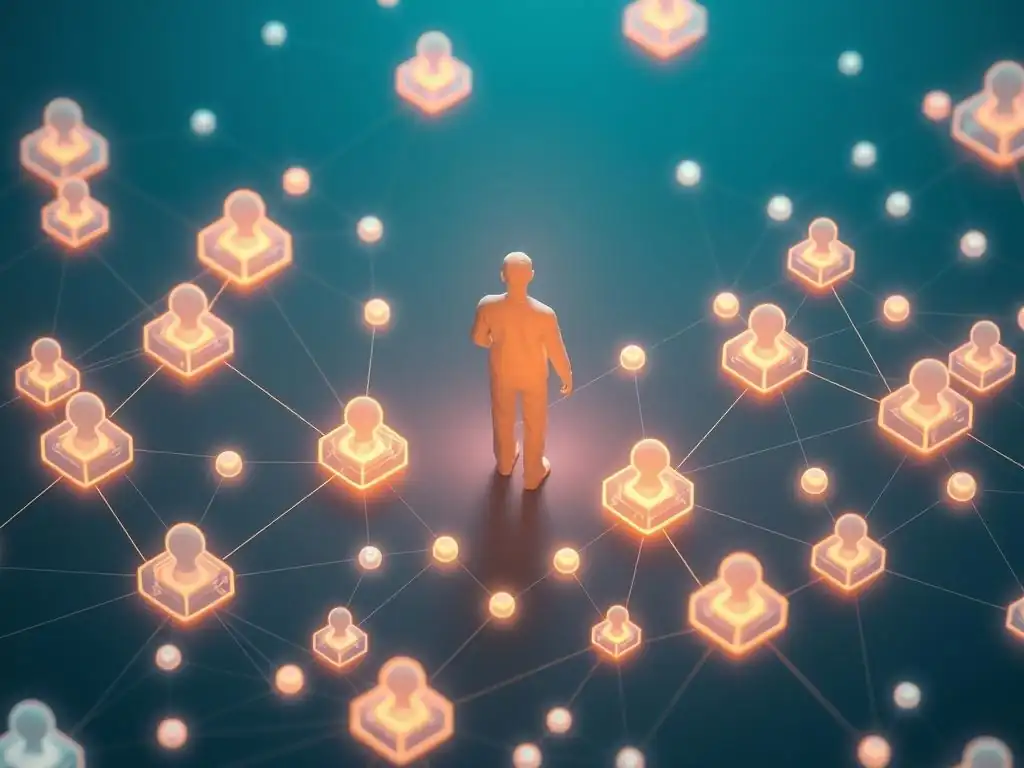
Enhanced User Engagement and Retention
Prioritizing user-centric design and delivering personalized Web3 user experiences leads directly to enhanced user engagement and retention. When users feel their individual needs and preferences are understood and catered to, they are more likely to spend time on a platform, interact with its features, and return repeatedly. Personalized interfaces, content recommendations, and tailored service offerings make the digital environment more relevant and appealing to the individual.
Consider the difference between a generic decentralized application and one that adapts based on a user's past interactions and stated preferences (with their consent). The latter feels more intuitive and valuable, reducing friction and increasing the likelihood of continued use. By putting the user at the center and enabling them to shape their own experience, Web3 platforms can foster stronger connections and build loyal communities, driven by the positive impact of personalized Web3 user experiences.
Increased Trust and Transparency
A key benefit of the user-centric approach in Web3 is the significant increase in trust and transparency between users and platforms. By giving users ownership and control over their data, and requiring explicit consent for its use, Web3 platforms operate on a foundation of transparency. Users can potentially audit how their data is being used (often through public blockchain transactions, though the data itself may remain private) and revoke access at any time.
This stands in stark contrast to the often opaque data practices of Web2, where trust is eroded by frequent data breaches and a lack of control. In Web3, personalization built on consent and transparency fosters a more equitable relationship. Users are more likely to trust platforms that are open about their data practices and empower them with control, leading to a healthier and more sustainable digital ecosystem where personalized Web3 user experiences are built on a foundation of mutual respect.
Greater User Empowerment and Control
Perhaps the most significant benefit of user-centric design in Web3 is the profound empowerment and control it grants to individual users. Moving away from centralized gatekeepers, users gain sovereignty over their digital identity, assets, and data. This control is not merely theoretical; it is enforced by the underlying decentralized protocols and cryptographic security.
Users have the ability to port their data and identity across different compatible Web3 platforms, reducing vendor lock-in and fostering a more competitive and innovative landscape. They can monetize their own data if they choose, participate in the governance of decentralized platforms (via DAOs), and curate their online presence and interactions in ways previously impossible. This newfound empowerment, facilitated by the ability to create and manage personalized Web3 user experiences, is a cornerstone of the Web3 revolution.
Challenges and Considerations for Personalized Web3
Scalability of Decentralized Personalization Systems
Implementing highly personalized Web3 user experiences at scale presents significant technical challenges, particularly concerning the scalability of underlying decentralized networks. Processing and storing the vast amounts of data required for sophisticated personalization for millions or billions of users can strain current blockchain architectures. Transaction fees and network congestion on some blockchains can make frequent, granular data interactions prohibitively expensive.
While Layer 2 scaling solutions (like rollups) and more scalable blockchain designs (like sharding or alternative consensus mechanisms) are being developed and deployed, achieving the throughput and low costs necessary for real-time, deeply personalized experiences comparable to or exceeding Web2 is still an ongoing challenge. Developing efficient and scalable methods for decentralized data storage and retrieval that can support complex personalization algorithms is crucial for the widespread adoption of personalized Web3 user experiences.
Ensuring Data Security and Privacy in Web3
While Web3 promises enhanced privacy through user control, ensuring robust data security and privacy in personalized experiences still requires careful consideration. Storing sensitive personal data, even in encrypted form, in decentralized storage solutions requires strong cryptographic practices and secure key management by users. A lost private key could mean irreversible loss of access to data, while compromised keys could expose sensitive information.
Furthermore, while blockchain transactions are transparent, the data linked to decentralized identities might still be vulnerable if not handled correctly. Sidechain data or off-chain computations used for personalization also need strong security measures. Developing user-friendly and secure methods for managing decentralized identities and data, alongside robust encryption and access control mechanisms, is essential to deliver personalized Web3 user experiences without compromising user security or privacy.
Overcoming the Complexity of Web3 Technologies
For the average user, interacting with Web3 technologies can be complex. Managing private keys, understanding gas fees, navigating decentralized applications, and comprehending concepts like smart contracts can be daunting barriers to entry. This complexity can hinder the adoption of personalized Web3 user experiences, even if the underlying benefits are compelling.
Simplifying the user interface and overall user experience of Web3 applications is paramount. Abstraction layers that hide the underlying technical complexities, intuitive wallet interfaces, and clear explanations of data sharing permissions are needed to make personalized Web3 accessible to a wider audience. Reducing this technical friction is critical for enabling mainstream users to confidently engage with and benefit from personalized Web3 user experiences.
Addressing the Digital Divide and Promoting Accessibility
The promise of personalized Web3 user experiences must be tempered by the reality of the digital divide. Access to reliable internet, suitable hardware, and the technical literacy required to navigate Web3 technologies is not universal. Ensuring that personalized Web3 is accessible and equitable for all users, regardless of their technical background or socioeconomic status, is a significant challenge.
Designing interfaces that are intuitive for non-technical users, providing educational resources, and exploring solutions that can function on lower-end devices or with less stable internet connections are crucial steps. Furthermore, addressing potential biases in decentralized algorithms used for personalization and ensuring representation and inclusivity in the development of Web3 protocols are vital to prevent personalized Web3 user experiences from exacerbating existing inequalities.
The Role of Decentralized Identity (DID) in Personalized Web3
Self-Sovereign Identity and User Data Management
Decentralized Identity (DID) is a foundational technology for enabling self-sovereign identity in Web3, which in turn is critical for personalized Web3 user experiences. Self-sovereign identity means that individuals have control over their digital identities and the data associated with them, without relying on a centralized authority like a government or a corporation. DIDs, often anchored on a blockchain, provide a unique, persistent identifier that an individual controls.
Linked to a DID, a user can manage verifiable credentials – digital proofs of attributes like age, education, or professional licenses, issued by trusted entities and stored securely by the user. This allows users to selectively share specific, verified information with decentralized applications to gain access to services or receive personalized content, without revealing their entire identity or unnecessary personal details. This granular control over identity data is fundamental for building trust and enabling truly personalized Web3 user experiences.
DID for Secure and Private Personalization
Utilizing Decentralized Identity (DID) for personalization offers a significant step forward in terms of security and privacy compared to traditional methods. Instead of relying on centralized user profiles that are vulnerable to data breaches, personalization can be based on verifiable credentials and attributes linked to a user's DID, shared with explicit consent. This minimizes the amount of sensitive information a platform needs to store or access.
For example, instead of sharing your full date of birth with a decentralized application to prove you are over 18, you could simply share a verifiable credential issued by a trusted third party that cryptographically confirms you meet the age requirement, without revealing the specific date. This zero-knowledge proof approach allows for personalized access or content based on verified attributes while preserving privacy. This secure and selective sharing of identity attributes via DID is a cornerstone of privacy-preserving personalized Web3 user experiences.
Standards and Interoperability of DIDs
The development of standardized protocols and specifications for Decentralized Identities is crucial for ensuring interoperability and enabling seamless personalized Web3 user experiences across different platforms and ecosystems. Organizations like the W3C (World Wide Web Consortium) have been developing standards such as the DID Core specification and Verifiable Credentials data model to provide a common framework for creating, managing, and verifying decentralized identities and credentials.
Adherence to these standards ensures that a verifiable credential issued by one entity can be recognized and accepted by various decentralized applications and services across different blockchains or decentralized networks. This interoperability is key to unlocking the full potential of personalized Web3, allowing users to carry their identity, reputation, and preferences with them as they navigate the decentralized web, enabling consistent and personalized Web3 user experiences regardless of the specific platform they are using.
The Future of Web3: Towards a Truly User-Centric Internet
The Convergence of AI, Blockchain, and Personalization
The future of personalized Web3 user experiences lies in the powerful convergence of AI, blockchain technology, and user-centric design principles. As blockchain technology becomes more scalable and interoperable, and decentralized storage solutions mature, the infrastructure for handling vast amounts of user-controlled data will improve. Simultaneously, advancements in privacy-preserving AI techniques, such as federated learning and secure multi-party computation, will allow for sophisticated personalization algorithms to operate on this decentralized data without compromising user privacy.
This convergence could lead to highly intelligent decentralized applications that learn and adapt to individual user preferences in real-time, recommending content, services, and interactions that are uniquely tailored to each person, all while the user retains full control and ownership of their underlying data. Imagine an AI assistant, owned and controlled by the user via their DID, that interacts with various decentralized services on their behalf, optimizing their personalized Web3 user experiences across finance, entertainment, education, and more, based purely on user-defined parameters and privacy settings.
The Rise of Decentralized Autonomous Organizations (DAOs) in Shaping User Experiences
Decentralized Autonomous Organizations (DAOs) are poised to play a significant role in shaping the future of personalized Web3 user experiences. DAOs are organizations represented by rules encoded as a transparent computer program, controlled by the organization members, and not influenced by a central government. In the context of platforms and protocols, DAOs allow the community of token holders or users to participate in governance decisions, including how the platform evolves, what features are prioritized, and how user data is handled (within the consent framework).
This governance model empowers users to directly influence the development and direction of the platforms they use, ensuring that future updates and features align with user needs and preferences, including how personalization is implemented. Users can vote on proposals related to privacy settings, data usage policies, or the introduction of new personalization features, ensuring that the evolution of personalized Web3 user experiences is driven by the community, not just a corporate entity. This participatory approach reinforces the user-centric ethos of Web3.
Personalized Web3 as the Next Evolution of the Internet
Personalized Web3 user experiences represent not just an improvement upon Web2, but a fundamental shift towards a more equitable, private, and user-empowering internet. By leveraging the core principles of decentralization, blockchain, and user-controlled identity and data, Web3 has the potential to deliver online interactions that are deeply relevant, respectful of privacy, and entirely within the user's control.
This evolution signifies a move away from the current model where users are often the product, towards one where users are empowered participants and beneficiaries. As the technology matures, user interfaces simplify, and standards become more established, personalized Web3 will become the norm, transforming how we interact with digital content, services, and communities. This next phase of the internet promises a future where the digital world truly adapts to the individual, fostering a more meaningful and trusted online experience through sophisticated personalized Web3 user experiences.
Conclusion: Embracing User-Centricity in the Web3 Revolution
The journey towards a truly user-centric internet is gaining momentum with the advent of Web3. The potential for personalized Web3 user experiences, built on the pillars of decentralization, data ownership, consent, and decentralized identity, offers a compelling vision for the future. This paradigm shift promises to address the limitations and concerns of Web2, particularly regarding data privacy and centralized control, by putting the individual back at the center of their digital life.
While challenges related to scalability, complexity, and accessibility remain, ongoing development and innovation within the Web3 ecosystem are actively working to overcome these hurdles. The focus on user empowerment, transparency, and trust inherent in the Web3 philosophy is paving the way for online interactions that are not only more personalized but also more secure and respectful of individual sovereignty. Embracing this user-centric approach is essential for realizing the full transformative potential of the Web3 revolution and building an internet that truly serves its users.
Frequently Asked Questions
What exactly does "Personalized Web3 user experiences" mean in the context of a UserCentric Internet?
It refers to creating Web3 applications and platforms that adapt to individual user needs and preferences, offering a tailored experience rather than a one-size-fits-all approach. This leverages blockchain for secure and verifiable user data control.
How does blockchain technology enable personalized experiences in Web3?
Blockchain allows users to own and control their data, granting them the power to selectively share information with applications. This enables platforms to offer personalized services based on user-granted permissions.
What are some examples of personalized Web3 experiences that are being developed?
Examples include customized DeFi investment strategies based on risk tolerance, personalized learning platforms offering tailored content, and social media feeds filtered by user preferences, all built on decentralized and user-controlled data.
What are the key benefits of prioritizing personalized Web3 user experiences?
Prioritizing personalization leads to increased user engagement, improved data privacy and security, and the creation of more relevant and valuable services for each individual. This fosters a more user-centric internet.
What are the potential challenges in implementing personalized Web3 experiences?
Challenges include ensuring data privacy and security, managing user permissions effectively, and developing user-friendly interfaces that allow for seamless personalization without compromising the decentralized nature of Web3.
Okay, here's a final reflection designed to close your article "Web3 and the Potential for Personalized Experiences: User-Centric Internet," optimized for the keyword "Personalized Web3 user experiences," and following the structure you provided:
Final Reflection: Embracing the Personalized Web3 Revolution
The promise of a truly user-centric internet is no longer a distant dream, but a rapidly approaching reality fueled by the innovations of Web3. As we've explored, the potential for personalized Web3 user experiences is immense, offering a paradigm shift from the generic, data-exploitative models of the past to a future where individuals control their data and shape their own digital journeys. This shift is not just about convenience; it's about empowering users and fostering a more equitable and engaging online environment.
The ongoing evolution of Web3, with its emphasis on decentralization and user ownership, is profoundly reshaping the digital landscape. Witnessing this transformation firsthand underscores the importance of actively participating in its development, ensuring that the principles of personalization and user empowerment remain at the forefront. As Tim Berners-Lee, the inventor of the World Wide Web, wisely stated: The Web as I designed it, is supposed to be a universal space allowing everyone to realize their potential.
This vision resonates deeply with the potential of Web3 to create a truly personalized and empowering online experience for all.
Now, as you navigate the evolving world of Web3, consider the role you can play in shaping its future. Embrace the opportunities to explore personalized Web3 user experiences, advocate for user-centric design principles, and contribute to the development of a more equitable and empowering internet. The future of the web is being written now, and your voice, your choices, and your actions will help define the personalized Web3 revolution.
Unleash Your Web3 Potential: Create Your User-Centric Internet!
Thank you for exploring the exciting possibilities of Web3 and its potential to create truly personalized online experiences. We hope this article has sparked your imagination about a future where the internet is truly yours. Now, it's time to take action and build that future!
Here's how you can start shaping the user-centric internet today:
- Start building! Begin exploring decentralized applications that prioritize user control and data ownership. This is your first step toward experiencing a personalized Web3.
- Explore blockchain communities and forums discussing user-centric design principles. Share your thoughts and connect with like-minded individuals!
- Consider auditing the privacy settings of your current online accounts. Take proactive steps to reclaim control of your data, even outside the Web3 ecosystem.
How will you use Web3 to build the personalized digital experience you've always wanted? Share your thoughts in the comments below!
Leave a Reply