
Web3 and the Power of Open Source: Collaborative Innovation in Action


Welcome to Blockchain Trends, your guide to understanding the real impact of blockchain technology. Beyond the hype, we delve into the transformative potential of decentralized systems. Curious about how blockchain enterprise applications are driving decentralized innovation and reshaping industries? Explore how Web3's open-source nature fosters collaborative innovation and discover the future of blockchain. Let's unlock the possibilities together.
Web3 and the Power of Open Source: Collaborative Innovation in Action
- Introduction: Unlocking Blockchain Innovation with Web3 and Open Source
- Understanding the Foundations: Web3, Blockchain, and Open Source
- The Synergistic Relationship: How Open Source Fuels Web3
- Open Source Blockchain Projects: Case Studies in Collaborative Innovation
- Benefits of Open Source in Web3: A Deeper Dive
- Challenges and Considerations for Open Source Web3 Projects
- The Future of Blockchain Enterprise Applications: Powered by Open Source and Web3
- Conclusion: Embracing Open Source for a Thriving Web3 Ecosystem
-
Frequently Asked Questions
- What role does open source play in the development of Web3 applications for enterprises?
- How does blockchain technology facilitate decentralized innovation within enterprises?
- Beyond cryptocurrencies, what are some practical examples of blockchain enterprise applications?
- What are the key regulatory considerations for enterprises adopting blockchain solutions?
- How does the Web3 philosophy of open source contribute to the future of decentralized systems and blockchain enterprise applications?
- Final Reflection: Embracing Decentralized Futures
- Unlock Your Web3 Potential: Start Contributing Today!
Introduction: Unlocking Blockchain Innovation with Web3 and Open Source
The Convergence of Web3 Principles and Open Source Development
Web3 represents a paradigm shift towards a decentralized internet, where control and ownership are distributed among users rather than concentrated in centralized entities. This vision is inherently aligned with the core principles of open source development: transparency, collaboration, community governance, and free access to code.
Open source provides the foundational building blocks – from protocols and algorithms to developer tools and software libraries – necessary to construct this new digital architecture. By making the underlying technology openly available, Web3 projects can foster trust and enable a global community of developers to inspect, contribute to, and build upon the shared infrastructure.
The synergy between Web3 and open source is evident in the rapid proliferation of decentralized applications (dApps) and protocols. The open nature allows for rapid iteration and experimentation, crucial in a nascent field. For instance, the development of new consensus mechanisms or decentralized finance (DeFi) protocols often begins as open source initiatives, inviting contributions and scrutiny from a diverse group of experts worldwide. This collaborative approach accelerates the pace of development far beyond what a single proprietary entity could achieve, laying the groundwork for innovative blockchain enterprise applications.
Why Open Source is Crucial for the Growth of Decentralized Applications
Open source is not merely a development methodology for Web3; it is a critical enabler of its growth and adoption. One primary reason is the inherent need for trust in decentralized systems. Users and developers must be confident that the underlying code is secure and operates as intended. Open source allows anyone to audit the code, providing a level of transparency that is impossible with proprietary software. This public scrutiny helps identify vulnerabilities early, enhancing the overall security and resilience of the ecosystem, vital for the integrity of blockchain enterprise applications.
Furthermore, open source dramatically lowers the barrier to entry for developers. Anyone with an internet connection can access the codebases of major Web3 projects, learn from them, and contribute. This accessibility fuels a vibrant global developer community, estimated to be in the hundreds of thousands, constantly building new tools, improving existing protocols, and creating novel decentralized applications. This collective intelligence and collaborative innovation are essential for scaling the Web3 ecosystem and driving the development of diverse blockchain enterprise applications decentralized innovation.
Understanding the Foundations: Web3, Blockchain, and Open Source
Defining Web3: A Decentralized Vision for the Internet
Web3 envisions the next evolution of the internet, moving beyond the centralized platforms that dominate Web2. At its core, Web3 aims to give users more control over their data, identity, and online interactions. Instead of relying on intermediaries like social media giants or cloud providers to store data and manage access, Web3 leverages decentralized technologies to create peer-to-peer networks where users can own their digital assets and participate directly in network governance. Key characteristics include decentralization, persistence, verifiability, and native value transfer (often via cryptocurrencies or tokens).
This shift represents a fundamental change in how value is created and exchanged online. In Web2, value often accrues to platform owners who control user data and network effects. In Web3, the goal is for value to be shared among network participants – users, developers, and service providers – through tokenomics and decentralized governance models. This creates new possibilities for economic models and collaborative structures, paving the way for innovative blockchain enterprise applications that operate on open, verifiable infrastructure.
The Role of Blockchain Technology in Web3's Infrastructure
Blockchain technology serves as a cornerstone of the Web3 infrastructure, providing the essential layer of trust, immutability, and transparency required for decentralized systems. Blockchains are distributed ledgers that record transactions across many computers, making them incredibly difficult to alter or tamper with. This distributed nature eliminates the need for a single point of trust or control, which is fundamental to the Web3 ethos of decentralization. Smart contracts, code that runs automatically on the blockchain when conditions are met, enable complex logic and automated agreements without intermediaries.
Different types of blockchains play varied roles within Web3. Public blockchains like Ethereum provide a global, permissionless platform for dApps and token issuance, fostering broad decentralized innovation. Permissioned or consortium blockchains, such as those built with Hyperledger Fabric, offer more control over participants and data visibility, making them suitable for specific blockchain enterprise applications where privacy and governance are paramount. Regardless of type, the blockchain provides the secure, verifiable backbone upon which other Web3 components are built, ensuring data integrity and reliable transaction execution.
Open Source: The Collaborative Engine Driving Web3 Development
Open source is the engine that powers the rapid and collaborative development characterizing the Web3 space. By making the source code of protocols, platforms, and applications freely available, open source enables developers worldwide to inspect, modify, and distribute the software. This collaborative model contrasts sharply with traditional proprietary software development, where code is kept secret and controlled by a single entity. The open nature fosters a culture of transparency and shared ownership, crucial for building trust in decentralized systems.
The vast majority of foundational Web3 technologies, including popular blockchain protocols, smart contract languages, development frameworks, and decentralized storage solutions, are developed under open source licenses. This allows for contributions from a diverse range of developers, researchers, and organizations. Projects benefit from collective problem-solving, faster bug identification and patching, and the development of a rich ecosystem of compatible tools and services. This collaborative framework is directly responsible for the pace of decentralized innovation seen in the Web3 landscape, including advancements in blockchain enterprise applications.
The Synergistic Relationship: How Open Source Fuels Web3
Increased Transparency and Trust Through Open Source Code
One of the most significant benefits of open source in the Web3 context is the inherent transparency it provides. In a system designed to minimize trust in centralized authorities, the ability for anyone to examine the underlying code is paramount. Users and developers can verify exactly how a protocol or application functions, ensuring there are no hidden backdoors, malicious functionalities, or unintended consequences. This level of public scrutiny builds confidence in the technology itself, which is critical for the widespread adoption of decentralized applications and blockchain enterprise applications.
This transparency extends beyond just the core protocols. Open source development encourages open communication about development roadmaps, design decisions, and ongoing challenges. This allows the community to stay informed, provide feedback, and actively participate in the project's direction. For enterprises considering blockchain solutions, the ability to audit the open source codebase provides a level of assurance regarding security and reliability that proprietary systems often cannot match, fostering trust in the underlying blockchain enterprise applications decentralized innovation.
Accelerated Development and Innovation via Community Contributions
The open source model leverages the collective intelligence and effort of a global developer community. Instead of relying on a single team, projects can benefit from contributions from thousands of developers with diverse skills and perspectives. This significantly accelerates the pace of development, leading to faster feature implementation, quicker bug fixes, and more robust software. Major Web3 projects often have active communities submitting code improvements, proposing new features (like Ethereum Improvement Proposals - EIPs), and developing complementary tools.
Consider the development speed of the Web3 ecosystem compared to earlier internet technologies. New protocols and applications emerge and evolve rapidly, often building upon existing open source components. This modularity and reusability, enabled by open source, allows developers to stand on the shoulders of giants rather than reinventing the wheel. This collaborative environment is a powerful catalyst for decentralized innovation, driving the creation of novel use cases and more sophisticated blockchain enterprise applications.
Enhanced Security and Resilience Through Collaborative Code Review
While open source code is publicly visible, which might seem counterintuitive for security, it actually enhances it through the "many eyes" principle. A large community reviewing the code is more likely to identify vulnerabilities, bugs, and potential exploits than a small internal team. This collaborative code review process acts as a continuous audit, constantly improving the security posture of the software. Critical bugs discovered by the community are often reported and patched rapidly.
Furthermore, many open source Web3 projects undergo formal security audits by specialized firms. While these audits are crucial, the ongoing community review provides an additional layer of security assurance. This robust approach to security, combining formal audits with continuous community scrutiny, is essential for building resilient decentralized systems that can handle valuable assets and sensitive data, a key requirement for reliable blockchain enterprise applications. The collaborative nature of open source development directly contributes to the robustness needed for widespread adoption.
Open Source Blockchain Projects: Case Studies in Collaborative Innovation
Case Study 1: Ethereum - Decentralized Smart Contract Platform
Ethereum stands as a prime example of the power of open source in driving decentralized innovation. Launched in 2015, it is a public, open source blockchain platform that enables the creation and execution of smart contracts and decentralized applications (dApps). Its open architecture has fostered the vast majority of activity in areas like Decentralized Finance (DeFi), Non-Fungible Tokens (NFTs), and various other Web3 applications. The Ethereum ecosystem boasts one of the largest and most active developer communities in the world, estimated to be over 200,000 monthly active developers contributing to the core protocol and surrounding tooling.
The evolution of Ethereum itself is a testament to open source collaboration. Major upgrades, such as the transition from Proof-of-Work to Proof-of-Stake (known as "The Merge"), involved years of research, development, and testing conducted openly by numerous independent teams and contributors globally. This massive, coordinated effort, managed through open forums and processes like Ethereum Improvement Proposals (EIPs), demonstrates how complex, critical infrastructure can be built and maintained through collaborative open source efforts.
Key Features and Open Source Contributions
Ethereum's key feature is its Turing-complete smart contract functionality, primarily coded in Solidity, allowing developers to build complex logic directly on the blockchain. The platform relies on open source client software implementations (like Geth and Erigon) developed and maintained by independent teams, ensuring decentralization at the node level. Furthermore, the ecosystem is supported by a wealth of open source development tools and libraries, such as web3.js and ethers.js, which abstract away blockchain complexities and make it easier for developers to interact with the network.
The Ethereum Foundation and various other organizations and individuals contribute significantly to research, development, and ecosystem growth, all within an open framework. The EIP process allows anyone to propose improvements to the protocol, which are then discussed and refined openly by the community before potential inclusion. This collaborative approach has resulted in a rich and diverse software stack that supports everything from simple token transfers to complex financial protocols and sophisticated blockchain enterprise applications.
Impact on Blockchain Enterprise Applications
While often associated with public dApps, Ethereum's open source technology has had a significant impact on the development of blockchain enterprise applications. Many enterprises are exploring or utilizing Ethereum-based solutions, either directly on the public chain for transparency or via permissioned forks and layer 2 solutions for privacy and scalability. For example, the development of enterprise-focused platforms like Polygon or Quorum (originally from J.P. Morgan, now an open source project) leverages Ethereum's core concepts and open source code, adapting them for business needs.
Enterprises use Ethereum's smart contract capabilities for use cases like supply chain tracking, digital identity management, tokenization of assets (real estate, securities), and automated settlements. The open source nature of Ethereum makes it easier for enterprises to integrate these solutions with existing systems and build interoperable applications. The large talent pool familiar with Ethereum development also reduces adoption friction for companies looking to leverage decentralized innovation on a robust, community-supported platform.
Case Study 2: Hyperledger Fabric - Enterprise-Grade Blockchain Framework
Hyperledger Fabric, hosted by the Linux Foundation, is a leading open source framework specifically designed for developing blockchain enterprise applications. Unlike public blockchains, Fabric is a permissioned network, meaning participants are known and authenticated, which is often a requirement for business consortia. Its modular architecture allows developers to plug and play components like consensus mechanisms and membership services, offering flexibility tailored to specific industry needs. Fabric is widely used for supply chain management, trade finance, and identity verification.
The open source nature of Hyperledger Fabric is crucial for its adoption among competing businesses forming a consortium. No single company owns the technology; it is developed and governed collaboratively by members of the Hyperledger community, which includes major corporations, startups, and individual developers. This shared ownership and transparent development process build trust among participants who need to collaborate on a shared ledger while maintaining control over their private data.
Addressing Transparency and Traceability with Open Source
Hyperledger Fabric's open source framework enables businesses to build highly transparent and traceable solutions within controlled environments. The modular design allows consortium members to agree on specific configurations and chaincode (smart contracts) that govern transactions and data sharing. By making the framework and the chaincode open source within the consortium or even publicly available (for the framework itself), participants can verify the logic and ensure that data is handled according to agreed-upon rules.
Real-world examples include supply chain networks where multiple parties (farmers, processors, distributors, retailers) track goods from origin to consumer. Using Fabric, participants can record transactions on a shared, immutable ledger. While sensitive business data might be kept private, the open source nature of the underlying framework and the agreed-upon chaincode provides transparency regarding how data is recorded and verified, building trust among disparate entities. This collaborative approach is driving decentralized innovation in complex, multi-party business processes.
How Open Source Fosters Decentralized Innovation in Supply Chains
Open source is fostering decentralized innovation within supply chains by providing a neutral, collaborative ground for industry participants. Companies that are competitors can jointly develop and maintain the core blockchain infrastructure and application logic on Fabric without fear of vendor lock-in or one party gaining undue control. This accelerates the creation of industry-wide standards and solutions that benefit all participants.
For instance, initiatives like IBM Food Trust (now part of Trust Your Supplier Network) leverage Hyperledger Fabric to improve food traceability. The open source nature allowed various participants, from large corporations like Walmart to smaller suppliers, to join and contribute to the network's development and governance. This collaborative model enables the creation of truly decentralized networks where data isn't controlled by a single company but shared among authenticated participants, leading to increased efficiency, transparency, and resilience across the entire supply chain.
Case Study 3: IPFS - Decentralized Storage System
The InterPlanetary File System (IPFS) is an open source peer-to-peer hypermedia protocol designed to make the web faster, safer, and more open. It is a foundational technology for Web3, addressing the limitations of the traditional centralized HTTP protocol. Instead of locating information by where it is stored (on a specific server), IPFS locates information by what it is (its content hash). This content-addressing model is key to building a more resilient and decentralized web.
As an open source project, IPFS is developed and maintained by Protocol Labs and a global community of contributors. Its specification and code implementations are freely available, allowing anyone to build applications that interact with the decentralized network. IPFS is widely used in Web3 for storing and sharing data associated with NFTs, dApps, and decentralized websites, providing an alternative to centralized cloud storage providers.
User Empowerment Through Open Source Storage Solutions
IPFS empowers users by providing a decentralized way to store and access data. When data is added to IPFS, it is broken into chunks, cryptographically hashed, and distributed across the network. Users retrieving data ask the network for content based on its hash, and the network finds peers holding that content. This means data is not reliant on a single server being online, increasing resilience and censorship resistance. The open source nature of IPFS allows developers to easily integrate decentralized storage into their applications, giving users control over where and how their data is stored, moving towards data ownership.
For example, decentralized social media platforms or content publishing dApps built on Web3 principles often use IPFS to store user-generated content. The open source libraries and tools available make it straightforward for developers to implement IPFS integration, providing users with a more robust and censorship-resistant way to manage their digital footprint. This contrasts with Web2 platforms where user content is stored on company servers, giving the platform owner ultimate control.
Enhancing Privacy and Security in Decentralized Data Management
IPFS enhances security and privacy in decentralized data management through its core design principles. Content addressing ensures data integrity; if even a single bit of data changes, the hash changes, making tampering immediately detectable. This immutability of addressed content is crucial for trusted data storage in Web3. While IPFS itself doesn't provide encryption, its open source nature allows developers to easily integrate encryption layers on top before data is added to the network, ensuring that only authorized users can access sensitive information, even if the data is distributed across many nodes.
Furthermore, the distributed nature of IPFS improves resilience against attacks or data loss compared to centralized storage. There is no single point of failure that can be targeted. By providing an open source, verifiable protocol for decentralized storage, IPFS is a key component in building secure and private blockchain enterprise applications that require storing large amounts of data off-chain while maintaining links to the blockchain for verification and integrity checks.
Benefits of Open Source in Web3: A Deeper Dive
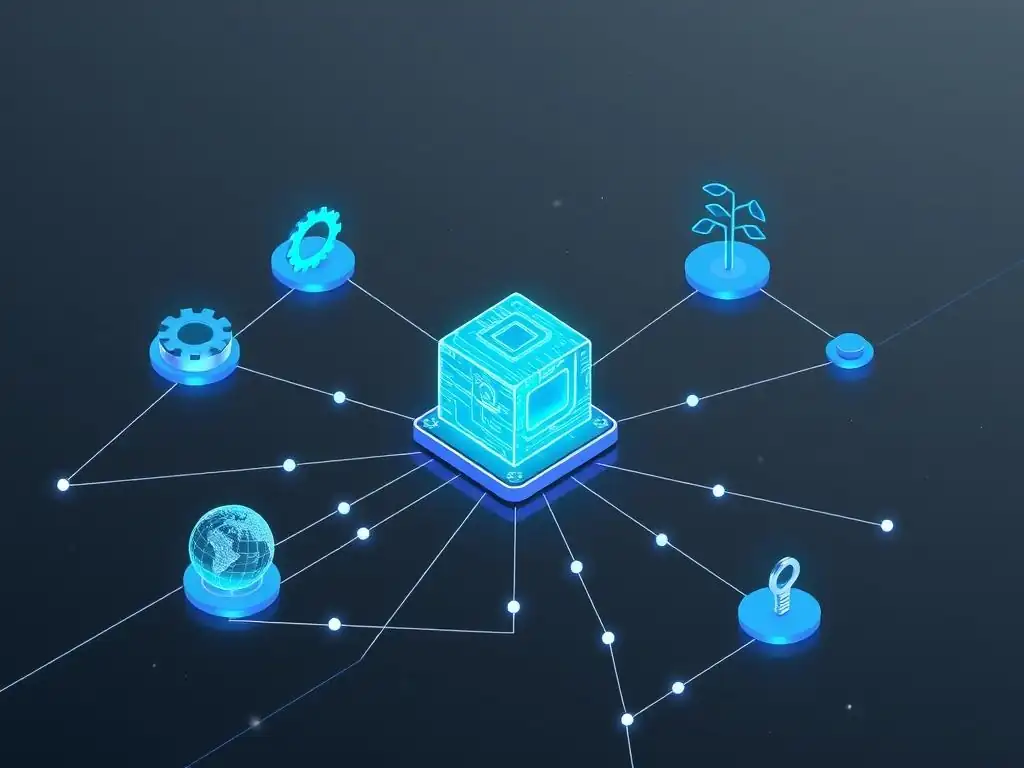
Fostering a More Inclusive and Accessible Web3 Ecosystem
Open source significantly contributes to making the Web3 ecosystem more inclusive and accessible globally. By providing free access to code, documentation, and development tools, it lowers the financial and technical barriers for individuals and organizations to participate. Developers from anywhere in the world can learn, build, and contribute to cutting-edge decentralized technologies without needing expensive proprietary licenses or specialized hardware initially. This global accessibility fosters a more diverse pool of talent and ideas, leading to more robust and culturally relevant applications.
This inclusivity also extends to users. Open source promotes the development of open standards and protocols, ensuring that different applications and services can interoperate seamlessly. This prevents the fragmentation often seen in proprietary ecosystems and allows users to move their data and digital assets between different platforms easily. This accessibility is vital for driving mass adoption and ensuring that the benefits of decentralized innovation are available to a wider audience, including potential users of blockchain enterprise applications.
Reducing Vendor Lock-in and Promoting Interoperability
A major challenge with proprietary software is vendor lock-in, where organizations become dependent on a single provider's technology, making it difficult and costly to switch or integrate with other systems. Open source fundamentally addresses this by providing transparent, standardized, and freely available technology. In Web3, this is crucial for building an interconnected ecosystem where different decentralized protocols and applications can communicate and work together seamlessly.
For blockchain enterprise applications, avoiding vendor lock-in is particularly important. Enterprises often need to integrate blockchain solutions with complex existing IT infrastructure and collaborate with multiple partners using different systems. Open source frameworks and protocols, like those from the Hyperledger suite or public blockchain standards like ERC-20 or ERC-721 on Ethereum, provide the necessary interoperability and flexibility. Companies can build solutions using open source components, customize them as needed, and integrate them with other systems without being tied to a single vendor's roadmap or pricing structure.
Driving Sustainable and Long-Term Growth in the Blockchain Space
The open source model contributes significantly to the long-term sustainability and growth of the blockchain space. Projects developed openly benefit from continuous maintenance and improvement by the community, even if the original founding team shifts focus or resources. This ensures that the core technology remains viable and evolves over time, adapting to new challenges and opportunities. The collective effort of the community provides a level of resilience and longevity that is difficult for single companies to achieve.
Furthermore, the open nature encourages the development of a broad ecosystem of supporting businesses and services built around the core technology. Companies can specialize in areas like security audits, development tools, consulting services, or specific application development, all contributing to the health and growth of the ecosystem. This sustainable model is essential for the maturation and widespread adoption of blockchain enterprise applications, as businesses need confidence that the underlying technology will be supported and developed for years to come. The collaborative innovation fostered by open source is a key driver of this sustainable growth.
Challenges and Considerations for Open Source Web3 Projects
Ensuring Code Quality and Security Through Rigorous Audits
While open source offers transparency and community review, it doesn't automatically guarantee code quality or security. The public visibility of code means that vulnerabilities, if they exist, can be discovered by malicious actors as well as benevolent contributors. Therefore, rigorous security practices are paramount. This includes extensive automated testing, formal verification methods, and, crucially, professional security audits by reputable third-party firms.
Smart contracts, in particular, are notorious for their immutability once deployed, making bugs potentially catastrophic. Significant resources must be allocated to auditing smart contract code before deployment. While community review helps, complex protocols and contracts require deep expertise to audit effectively. For blockchain enterprise applications handling valuable assets or sensitive data, multiple independent audits are often necessary, representing a significant cost and challenge that open source projects must actively address through funding models and development practices.
Managing Community Contributions and Governance Effectively
Managing a large, distributed open source community presents unique challenges related to coordination, decision-making, and maintaining a coherent development roadmap. With potentially thousands of contributors, ensuring code quality, consistency, and adherence to project goals requires robust processes. Clear contribution guidelines, code review workflows, and automated checks are essential.
Furthermore, decentralized governance models are often necessary for Web3 projects to align with their core principles. Implementing effective decentralized autonomous organizations (DAOs) or other community-driven governance structures can be complex. Deciding who has a say, how decisions are made, and how conflicts are resolved requires careful design and iteration. Successfully navigating these governance challenges is key to harnessing the power of collaborative innovation while maintaining project direction and stability, particularly as open source projects underpin critical blockchain enterprise applications.
Addressing Intellectual Property Rights and Licensing Issues
While open source licenses (like MIT, Apache 2.0, GPL) provide a framework for using, modifying, and distributing code, navigating intellectual property (IP) rights in the blockchain and Web3 space can be complex. Choosing the right license is crucial for balancing the desire for widespread adoption and contribution with potential concerns around patents or commercialization. Different licenses have different requirements regarding attribution, modifications, and downstream use.
For blockchain enterprise applications built on open source foundations, understanding the implications of the chosen licenses is vital. Companies need to ensure compliance and consider how their own contributions or proprietary layers interact with the open source components. While open source generally promotes collaboration, potential issues can arise around patenting specific blockchain-related inventions or navigating contributions from developers employed by competing organizations. Clear policies and community understanding of IP are necessary.
The Future of Blockchain Enterprise Applications: Powered by Open Source and Web3
Predictions for Open Source's Role in Decentralized Innovation
Looking ahead, open source is poised to remain the dominant force driving decentralized innovation in the blockchain space. The complexity and interconnectedness of Web3 infrastructure necessitate collaborative development and open standards. We can expect to see continued development of core open source protocols for new blockchain architectures, interoperability layers, decentralized identity, and privacy-preserving technologies. The open nature will accelerate experimentation with novel consensus mechanisms, scaling solutions (like zero-knowledge proofs), and decentralized governance models.
Furthermore, open source development will likely extend beyond core infrastructure into industry-specific applications. We may see open source libraries and frameworks emerge for common blockchain enterprise applications use cases, such as standardized smart contracts for supply chain finance, tokenized real estate protocols, or decentralized identity verification modules. This will reduce redundancy and accelerate the deployment of blockchain solutions across various sectors, built on a foundation of shared, verifiable code.
How Open Source Will Shape the Evolution of Web3
Open source will fundamentally shape the evolution of Web3 by ensuring that its development is driven by community needs and technical merit rather than solely by commercial interests of a few large entities. The open nature allows for continuous feedback loops between developers, users, and researchers, leading to more robust, secure, and user-centric technologies. Standards and protocols will likely emerge from collaborative open source efforts, promoting interoperability and preventing fragmentation of the ecosystem.
The success of open source projects like Ethereum and Hyperledger Fabric demonstrates that complex, high-value systems can be built and maintained collaboratively. This model will likely be replicated across new areas of Web3 development, from decentralized social networks to open metaverse infrastructure. The emphasis on transparency and community will reinforce the core Web3 principles of decentralization and user empowerment, guiding the direction of decentralized innovation towards a more open and equitable internet.
The Importance of Collaboration in Building a Decentralized Future
Building a truly decentralized future, one that delivers on the promise of Web3 and supports robust blockchain enterprise applications, requires unprecedented levels of collaboration. No single company or organization has the resources or expertise to build the entire stack alone. Open source provides the essential framework for this collaboration, enabling developers, businesses, academics, and users worldwide to contribute their skills and perspectives towards shared goals.
From contributing code to participating in governance, providing feedback, or simply using and promoting open source Web3 applications, every form of participation adds value. This collaborative ecosystem fosters a virtuous cycle: more contributors lead to better code, which attracts more users and developers, further accelerating innovation. Embracing open source is not just a technical choice; it is a commitment to a collaborative model for building the future of the internet and unlocking the full potential of blockchain enterprise applications decentralized innovation.
Conclusion: Embracing Open Source for a Thriving Web3 Ecosystem
The Power of Collaborative Innovation in Blockchain
The journey towards a decentralized web, powered by Web3 and blockchain technology, is intrinsically linked to the principles and practices of open source development. Open source provides the essential ingredients for this transformation: transparency that builds trust, a global community that accelerates innovation, and a collaborative framework that enhances security and resilience. From foundational protocols like Ethereum and Hyperledger Fabric to critical infrastructure like IPFS and countless developer tools, open source projects form the backbone of the Web3 ecosystem.
This collaborative innovation is not just a preference; it is a necessity for building systems that are secure, interoperable, and truly owned and governed by their users. The success of future blockchain enterprise applications will heavily depend on their ability to leverage and contribute to this open ecosystem.
Call to Action: Contribute to Open Source Web3 Projects and Drive Decentralized Innovation
The future of Web3 and the potential of blockchain enterprise applications decentralized innovation are being built today, primarily through open source collaboration. Whether you are a developer, a business leader, a researcher, or simply an enthusiastic user, there are numerous ways to contribute and shape this future.
Consider contributing code to a project you believe in, improving documentation, participating in community discussions, testing new applications, or supporting initiatives that fund open source development in the space. By actively engaging with open source Web3 projects, you become a part of the collaborative force driving the next wave of internet technology, helping to unlock the full potential of decentralized systems for everyone.
Frequently Asked Questions
What role does open source play in the development of Web3 applications for enterprises?
Open source is critical for Web3 enterprise applications, fostering collaborative innovation and transparency. It allows businesses to build upon existing solutions and customize them to their specific needs.
How does blockchain technology facilitate decentralized innovation within enterprises?
Blockchain enables decentralized innovation by providing a secure and transparent platform for data sharing and collaboration. This fosters trust and allows for the creation of novel solutions across different departments or organizations.
Beyond cryptocurrencies, what are some practical examples of blockchain enterprise applications?
Examples include supply chain management, where blockchain tracks products from origin to consumer, and digital identity verification, which enhances security and reduces fraud. Another application is secure data storage for sensitive information.
What are the key regulatory considerations for enterprises adopting blockchain solutions?
Enterprises must navigate regulations around data privacy, such as GDPR, and financial compliance, depending on the specific application. Understanding legal frameworks is crucial for responsible blockchain adoption.
How does the Web3 philosophy of open source contribute to the future of decentralized systems and blockchain enterprise applications?
The open-source ethos promotes community-driven development, leading to more robust and secure decentralized systems. This encourages rapid innovation and the creation of interoperable solutions for enterprises.
Final Reflection: Embracing Decentralized Futures
The journey through Web3 and its open-source foundations reveals a powerful truth: collaborative innovation is not just a buzzword, but the very engine driving the next generation of enterprise applications. The principles of transparency, community ownership, and decentralized governance, once niche concepts, are now reshaping how businesses approach technology, fostering a landscape where innovation is democratized and accessible to all.
The rise of blockchain enterprise applications fueled by open-source Web3 technologies has profoundly impacted the cultural and social landscape. It's inspiring to witness how these decentralized innovations are empowering individuals and organizations to build more equitable and transparent systems. The future is already here – it's just not evenly distributed.
- William Gibson. This quote perfectly encapsulates the current state of Web3; while its potential is immense, the challenge lies in ensuring its benefits are accessible to everyone, fostering true decentralized innovation.
As we stand at the cusp of this technological revolution, I invite you to reflect on the role you can play in shaping a more decentralized future. Consider how you can contribute to open-source projects, advocate for transparent governance, and embrace the collaborative spirit of Web3. The power to build a more equitable and innovative world lies within each of us; let's harness it together.
Unlock Your Web3 Potential: Start Contributing Today!
Thank you for exploring the exciting world of Web3 and open-source collaboration with us. We hope you've gained valuable insights into the power of decentralized innovation and how you can be a part of it. Now, it's time to put that knowledge into action!
Ready to dive deeper? Here's how:
- Commit to your first open-source Web3 project this week! Explore platforms like GitHub, find a project that resonates with you, and contribute even a small fix.
- Share this article with a friend or colleague who's curious about Web3 and inspire them to join the movement.
- Participate in a Web3-focused hackathon or online workshop to connect with like-minded individuals and build your skills.
What specific open-source Web3 project are you most excited to explore and potentially contribute to? Share your thoughts in the comments below!
Leave a Reply