
Web3 Social: Reimagining Online Communities with Blockchain Technology

Welcome to Blockchain Trends, your guide to understanding the revolutionary potential of blockchain technology!
Ever wondered how blockchain could reshape the very fabric of online interaction? Dive into this insightful exploration of Blockchain social media communities and discover how Web3 is forging a new era of decentralized connection, where user empowerment and data ownership reign supreme. Prepare to be amazed by the possibilities – and the challenges – that lie ahead in the future of blockchain-powered social experiences. Intrigued? Keep reading to unravel the future of Web3 social!
Web3 Social: Reimagining Online Communities with Blockchain Technology
- The Rise of Blockchain Social Media Communities: A New Era for Online Interaction
- Key Features of Web3 Social Platforms
- Exploring the Benefits of Blockchain Social Media Communities
- Web3 Social Platforms: Examples and Use Cases
- The Challenges and Opportunities of Web3 Social Adoption
- How Blockchain Technology is Transforming Online Communities
- The Future of Social Media: A Decentralized Vision
-
Frequently Asked Questions
- How does blockchain technology enhance security in Web3 social media communities?
- What are some potential benefits of using blockchain for content ownership in Web3 social platforms?
- How can blockchain address the issue of censorship prevalent in traditional social media?
- What role does decentralization play in the governance of Web3 social media communities?
- What are some current challenges hindering the mainstream adoption of blockchain-based social media platforms?
- Final Reflection: Empowering Connections through Blockchain Social Media Communities
- Unlock Your Web3 Social Potential!
Traditional social media platforms, despite their widespread adoption and utility in connecting billions globally, operate on highly centralized models. This centralization often leads to a lack of user control over personal data, which is aggregated, analyzed, and monetized by the platform owners.
Major data breaches, such as the 2018 Cambridge Analytica scandal affecting an estimated 87 million Facebook users, starkly highlighted the vulnerabilities inherent in storing vast amounts of sensitive user information in single, centralized databases. Users often feel they are the product, not the customer, with opaque algorithms dictating content visibility and engagement, further eroding trust and autonomy within these online spaces.
Furthermore, the governance and moderation policies on these platforms are typically top-down, decided by corporate entities with limited transparency or user input. Content moderation decisions can seem arbitrary, leading to account suspensions or content removal without clear recourse, impacting free expression and community dynamics. The revenue models, heavily reliant on targeted advertising based on user data, create a financial incentive for platforms to maximize engagement at potentially any cost, sometimes contributing to echo chambers or the spread of misinformation. This centralized control over data, content, and rules presents significant limitations that blockchain social media communities aim to address.
Decentralized social networks, often referred to as Web3 social platforms, emerge as a compelling alternative to the traditional centralized model by leveraging blockchain technology. At their core, these platforms distribute data storage, identity management, and governance across a network of participants rather than relying on a single corporate server.
This fundamental shift promises greater user ownership of data and identity, enhanced privacy, and censorship resistance, as content and profiles are not held hostage by a single entity that can arbitrarily delete them. The architecture inherently promotes a more open and interoperable social graph, allowing users to potentially take their social connections and content across different applications built on the same underlying protocol.
The Web3 paradigm introduces concepts like tokenization and decentralized autonomous organizations (DAOs) into the social media sphere. This enables new models for incentivizing user participation, content creation, and community moderation through native tokens. These tokens can represent ownership, voting rights in governance decisions, or rewards for valuable contributions, shifting power and value back towards the users who generate the content and build the community. By building blockchain social media communities on decentralized infrastructure, Web3 aims to create online spaces that are more equitable, transparent, and resilient, fostering a new era of online interaction where users are empowered stakeholders.
Blockchain-Based Identity and User Data Ownership
One of the foundational features of blockchain social media communities is the implementation of blockchain-based identity. Instead of relying on a username and password stored on a company's server, users can manage their digital identity, often tied to a wallet address or a decentralized identifier (DID), on a blockchain or decentralized network.
This gives users direct control over their identity and the data associated with it. For example, platforms built on protocols like Lens Protocol allow users to own their social graph and content as NFTs or other blockchain-based assets, meaning their followers, posts, and profile information are portable and not locked into a single application.
This shift to user-owned data fundamentally changes the relationship between the user and the platform. Users grant permissions for applications to access their data, rather than the platform owning it outright. This model minimizes the risk of mass data breaches from a single point of failure and empowers users to decide how their information is used. It moves away from the surveillance capitalism model where user data is harvested for advertising, towards a model where users can potentially even monetize their own data streams if they choose, creating a more equitable digital economy within blockchain social media communities.
Tokenization is a transformative element in Web3 social platforms, introducing novel ways to incentivize participation and enable decentralized governance. Users can be rewarded with native tokens for actions that contribute value to the network, such as creating engaging content, curating valuable information, or actively participating in moderation. This moves beyond the traditional "likes" and "shares" to tangible economic incentives. For instance, platforms might distribute tokens based on engagement metrics, similar to how some early Web3 social experiments saw users earning small amounts of crypto for posting. These tokens can often be traded, staked, or used within the platform's ecosystem.
Beyond incentives, these tokens often grant holders voting rights in the platform's governance structure, typically managed by a DAO. This allows the community to propose and vote on important decisions, such as changes to the platform's features, moderation policies, or token distribution mechanisms.
Projects like Farcaster, while not solely token-governed initially, are exploring pathways towards more decentralized control, and many emerging blockchain social media communities are launching with governance tokens from day one. This model contrasts sharply with the opaque, centralized decision-making of traditional platforms, offering users a direct voice in the evolution and rules of the online spaces they inhabit.
Privacy and security are significantly enhanced in many decentralized social networks compared to their centralized counterparts. By design, sensitive user data is often not stored in a single, hackable database. Instead, data might be stored on distributed file systems like IPFS, encrypted and accessible only via the user's cryptographic keys, or managed directly by the user's wallet. This architecture drastically reduces the attack surface for malicious actors seeking to steal vast quantities of personal information. Furthermore, interactions can sometimes be pseudonymous, linked only to a public wallet address rather than a real-world identity, offering a layer of privacy.
Security is also bolstered by the inherent properties of blockchain technology, such as immutability and transparency for certain types of data or transactions (like identity registration or content metadata). While the content itself might not always be stored directly on the blockchain due to storage costs and scalability, the pointers to the content and the associated metadata can be, making them tamper-proof.
This provides a verifiable history of interactions and content, fostering trust. While challenges remain in balancing transparency with user privacy, the fundamental architectural shift towards user-controlled data and decentralized storage offers a promising path to building more secure and privacy-respecting blockchain social media communities.
Increased User Autonomy and Control Over Content
One of the most compelling benefits of blockchain social media communities is the significant increase in user autonomy. Unlike traditional platforms where terms of service can change arbitrarily and accounts can be suspended or deleted without clear recourse, Web3 social platforms aim to give users true ownership and control. Content created by a user, whether it's a text post, image, or video, can be stored in a decentralized manner, often linked to the user's decentralized identity. This means the content is not 'owned' by the platform but by the user.
This ownership translates into greater freedom of expression and censorship resistance. If a platform application decides to ban a user or remove their content, the underlying data and social graph often remain accessible through other applications built on the same protocol.
For example, if a user's profile and posts are part of a decentralized social graph like Lens Protocol, different front-end applications can choose to display or filter that content, but the user's ability to publish and own the content itself is not solely dependent on any single company's decision. This empowers users and reduces the power of centralized gatekeepers.
Fairer Content Monetization and Creator Empowerment
Blockchain social media communities are poised to revolutionize content monetization, offering creators fairer and more direct pathways to earn from their work. Traditional platforms typically take a significant cut of advertising revenue or rely on complex algorithms that make it difficult for creators to earn consistently without massive scale. In the Web3 model, creators can monetize their content directly through various mechanisms enabled by blockchain technology.
This can include receiving direct tips or payments from followers using cryptocurrencies, selling content as NFTs (Non-Fungible Tokens), or earning platform tokens based on the value their content brings to the network. Some platforms are exploring models where creators receive a larger percentage of revenue generated, moving away from the often unfavorable splits seen on Web2 platforms. For instance, while specific revenue share numbers are still evolving, the potential exists for creators to capture a much larger portion of the value they create, fostering a more sustainable creator economy within these decentralized social networks.
Transparent and Tamper-Proof Community Governance
Transparency and tamper-proof mechanisms are inherent benefits derived from building blockchain social media communities on public or permissioned blockchain infrastructure. The rules of the network, the code governing interactions, and records of significant events (like governance votes or identity registrations) can often be publicly verifiable on the blockchain. This contrasts sharply with the opaque internal processes of traditional tech companies.
Community governance, often facilitated through DAOs and the use of governance tokens, adds another layer of transparency and fairness. Proposals for changes to the platform's rules, features, or tokenomics are typically submitted and voted upon by token holders, with the voting results recorded immutably on the blockchain. This open and auditable process ensures that community decisions are made democratically and cannot be easily manipulated by a central authority. This level of transparency and user participation in governance builds trust and aligns the incentives of the platform with those of its users.
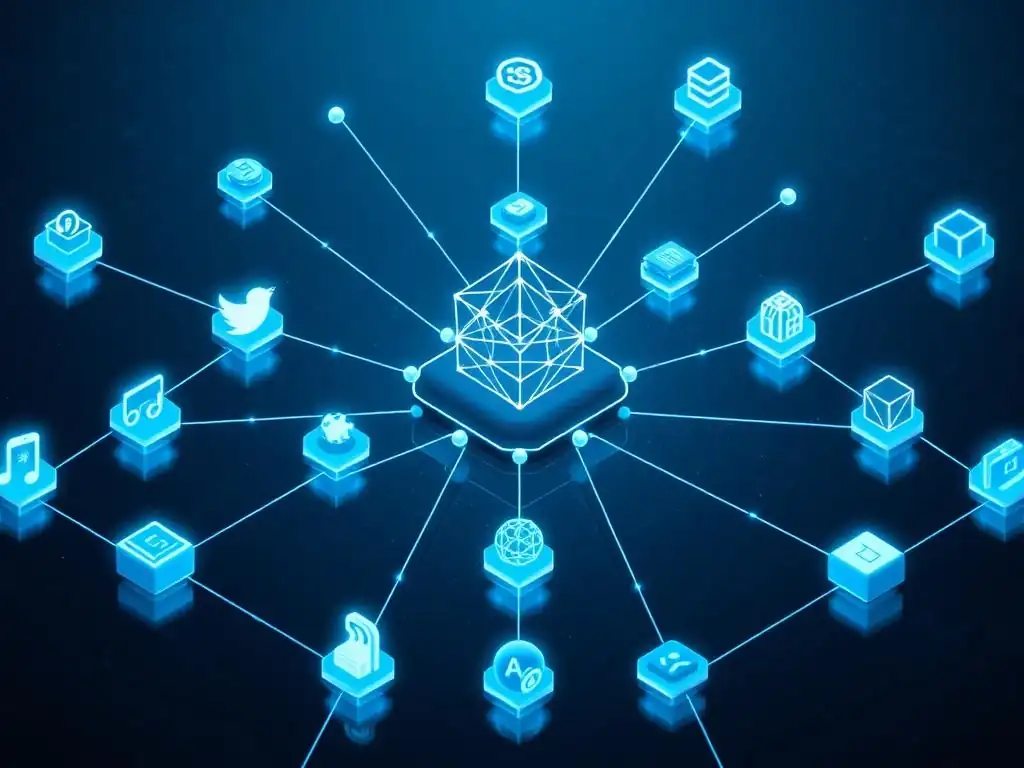
Lens Protocol, built on the Polygon blockchain, is a prominent example of a decentralized social graph designed to underpin blockchain social media communities. It's not a single social network application itself, but rather a protocol that allows developers to build various social applications (like posting apps, news feeds, or profile explorers) that share the same underlying social data. User profiles, followers, and content (posts, comments, likes) are represented as NFTs or other data structures owned by the user's wallet.
As of early 2023, Lens Protocol had seen significant growth, with hundreds of thousands of profile NFTs minted and a growing ecosystem of applications building on its graph. This composability means a user's profile and content created on one Lens-based app are instantly available and usable on any other app built on Lens. This eliminates vendor lock-in and allows users to explore different interfaces and features without having to rebuild their social presence from scratch. This focus on a shared, user-owned social graph is a core innovation driving many emerging blockchain social media communities.
Farcaster is another notable example of a protocol aiming to build decentralized social networks, often described as "sufficiently decentralized." It uses a hybrid architecture where user identities are anchored on the Ethereum blockchain (via ENS names) but data like posts (called "casts") and reactions are stored off-chain in a peer-to-peer network managed by "hubs." This design aims to balance the decentralization and security benefits of blockchain with the performance and scalability needed for a social network.
Farcaster emphasizes cryptographically verified identities and aims to resist censorship by making it difficult for any single entity to remove content or ban users across the entire network of hubs. While still relatively early in its development and adoption compared to Web2 giants, Farcaster has seen steady growth, particularly among crypto-native users and developers. Its focus on open protocols and developer-friendly APIs is fostering an ecosystem of independent clients and applications, showcasing how blockchain social media communities can evolve through open standards and community contributions.
Use Cases: From Content Creation to Decentralized Autonomous Organizations (DAOs)
The use cases for blockchain social media communities extend far beyond simple posting and liking. Content creation is fundamentally enhanced, allowing creators to directly own, monetize, and distribute their work in novel ways, such as issuing limited-edition content NFTs to their followers or earning tokens based on engagement. This empowers artists, writers, musicians, and other creators to build direct relationships with their audience and capture more value.
Furthermore, these platforms can serve as the social layer for Decentralized Autonomous Organizations (DAOs). DAOs rely on transparent communication and decision-making among members, and decentralized social networks can provide a robust, censorship-resistant platform for these interactions. Members can discuss proposals, share information, and coordinate activities within a space that aligns with the decentralized ethos of the DAO itself. Other use cases include building niche communities around specific interests with built-in token economies, creating decentralized marketplaces for digital assets tied to social profiles, and developing new forms of collective action and coordination powered by shared data and tokenized incentives.
One of the primary technical challenges facing blockchain social media communities is scalability. Social networks require handling massive volumes of real-time interactions – posts, likes, comments, shares – from millions or even billions of users. Writing every single interaction directly onto a layer-1 blockchain like Ethereum would be prohibitively expensive and slow due to transaction fees (gas costs) and throughput limitations. Even layer-2 scaling solutions or alternative blockchains designed for higher throughput may struggle to match the instantaneous, zero-cost interactions users expect from Web2 platforms.
This challenge presents significant opportunities for innovation in blockchain architecture. Hybrid models, like Farcaster's off-chain data storage with on-chain identity, are one approach. Another involves using specialized layer-2 solutions or entirely new blockchain designs optimized for social graph data and high transaction volumes at low cost. Continued advancements in scaling technology, such as optimistic rollups, zk-rollups, and sharding, are crucial for enabling blockchain social media communities to handle the load required for mainstream adoption while maintaining decentralization and security.
Another significant hurdle for blockchain social media communities is user experience (UX) and accessibility. Web2 social platforms have benefited from years of iteration, resulting in highly polished, intuitive interfaces that require no technical knowledge to use. Web3 applications, however, often require users to understand concepts like cryptocurrency wallets, seed phrases, gas fees, and decentralized identifiers, which can be daunting for non-technical users. The process of setting up a decentralized identity or interacting with tokens can be cumbersome compared to simply signing up with an email address.
The opportunity here lies in abstracting away the complexity of the underlying blockchain technology. Developers are working on creating more user-friendly wallet interfaces, enabling gasless transactions for certain actions, and designing social applications that feel familiar to Web2 users while leveraging Web3 benefits under the hood. Improving onboarding flows, providing clear explanations of decentralized concepts, and building applications that are fast and responsive are essential steps for making blockchain social media communities accessible to a broader audience beyond early adopters and crypto enthusiasts.
The regulatory landscape presents both challenges and uncertainties for the future of blockchain social media communities. Governments and regulatory bodies worldwide are still grappling with how to classify and regulate blockchain technology, cryptocurrencies, and decentralized applications. Issues such as data privacy (e.g., GDPR compliance when data is distributed), content moderation responsibilities in a decentralized system, and the legal status of tokens used for governance or incentives are complex and largely undefined.
Navigating this evolving regulatory environment is crucial for the growth and sustainability of decentralized social networks. Clarity on regulations could provide a framework for compliance and encourage mainstream adoption, while overly restrictive or unclear rules could stifle innovation.
The opportunity lies in engaging with regulators and policymakers to educate them on the unique aspects of decentralized systems and to help shape frameworks that protect users and foster innovation without imposing the same centralized control models that Web3 seeks to overcome. The future of blockchain social media communities will partly depend on finding a balance between decentralization principles and necessary legal compliance.
How Blockchain Technology is Transforming Online Communities
Blockchain technology fundamentally addresses the pervasive centralization issues inherent in traditional social media platforms. By distributing the storage of user data and the control mechanisms across a network of nodes rather than concentrating them on a single company's servers, blockchain eliminates the single point of failure that makes traditional platforms vulnerable to censorship, data breaches, and arbitrary rule changes. User identities and content metadata, when anchored on a blockchain, become more resistant to deletion or manipulation by a central authority.
This architectural shift empowers users by giving them sovereignty over their digital presence. Instead of renting space and visibility on a platform they don't control, users in blockchain social media communities can own their social graph and content. This shifts the power dynamic from the platform owner to the community members, fostering a more democratic and resilient online environment where the rules are often governed by consensus rather than corporate decree.
Fostering Trust and Transparency in Online Interactions
Transparency is a core tenet of blockchain technology, and this translates directly into fostering greater trust in online interactions within decentralized communities. Actions recorded on a public or permissioned blockchain, such as identity registration, content timestamping, or governance votes, are immutable and verifiable by anyone on the network. This open ledger stands in stark contrast to the black-box algorithms and opaque decision-making processes that often characterize traditional social media.
This transparency builds trust among users and between users and the platform itself. For example, if a platform's content moderation rules are enforced via smart contracts or recorded on-chain, users can see why a certain action was taken, rather than receiving an unexplained notification. Similarly, the transparent distribution of tokens for incentives or the public record of governance votes ensures that the system operates according to agreed-upon rules. This verifiable transparency is a key factor in building more trustworthy and accountable blockchain social media communities.
Creating More Engaging and Rewarding User Experiences
Blockchain social media communities have the potential to create more engaging and rewarding user experiences by aligning user incentives with the health and growth of the community. Traditional platforms rely heavily on advertising, which doesn't directly reward users for their contributions beyond social validation (likes, followers). Web3 social, through tokenized economies, can provide tangible rewards for creating valuable content, curating information, moderating discussions, or even simply participating actively.
This economic layer transforms passive consumption into active participation, encouraging users to contribute more meaningfully to the community. Earning tokens that have real-world value or grant governance rights makes engagement a more rewarding activity. Furthermore, the ability for creators to directly monetize their audience fosters a stronger connection with followers and encourages the production of higher-quality content. These direct incentives and ownership models can lead to more vibrant, active, and sticky blockchain social media communities.
Predictions for the growth of blockchain social media communities vary, but the consensus among Web3 proponents is that they represent a significant evolutionary step for online interaction. While they currently serve a niche, primarily crypto-native audience, the underlying protocols and applications are improving rapidly.
Analyst firms have projected significant growth in the broader Web3 space, and social applications are a key component of this future. Some estimates suggest user numbers for Web3 platforms could reach tens or even hundreds of millions within the next five to ten years, although widespread adoption on the scale of Web2 giants like Facebook (over 3 billion users) or Instagram (over 2 billion users) will require overcoming significant technical and user experience hurdles.
Growth will likely be driven by continued innovation in scalability solutions, improvements in user interfaces that abstract away blockchain complexity, and the development of compelling use cases beyond simple posting. As more creators and communities recognize the benefits of ownership, direct monetization, and decentralized governance, migration from traditional platforms to decentralized alternatives is expected to accelerate. The increasing awareness of data privacy issues and the desire for greater control over online identity also serve as tailwinds for the adoption of blockchain social media communities.
Web3 social is poised to have a profound impact on the creator economy, shifting power and value from platforms to individual creators and communities. By enabling direct monetization through tokens, NFTs, and peer-to-peer payments, creators are no longer solely reliant on platform algorithms or advertising revenue shares, which can be unpredictable and often unfavorable. This empowers creators to build sustainable businesses around their content and audience.
Consider an artist who can sell unique digital art pieces as NFTs directly to their followers on a decentralized social network, capturing a much larger percentage of the sale than they would through a traditional marketplace or platform. Or a writer who can earn tokens for each article published based on community engagement, supplementing or replacing ad revenue. This shift fosters greater financial independence for creators, potentially leading to a proliferation of diverse and high-quality content as creators are better rewarded for their work within blockchain social media communities.
The Role of DAOs in Shaping the Future of Online Communities
Decentralized Autonomous Organizations (DAOs) are set to play a pivotal role in shaping the future of online communities, particularly within the Web3 social landscape. DAOs provide a framework for collective ownership and governance, allowing communities to manage shared resources, make decisions, and evolve according to the will of their members, rather than a central authority. When integrated with decentralized social protocols, DAOs can govern everything from content moderation policies and platform feature development to the allocation of community funds and the distribution of tokens.
This model transforms users from passive consumers into active stakeholders with a vested interest in the community's success and governance. For example, a blockchain social media community focused on a specific topic could be governed by a DAO where token holders vote on which content is promoted or how community funds are spent on initiatives. This level of participatory governance fosters stronger community bonds, increases trust, and ensures that the platform evolves in a way that truly serves the needs and values of its members, representing a significant departure from the corporate-controlled online spaces of the past.
Frequently Asked Questions
Blockchain offers enhanced security through its decentralized and immutable nature. This makes it incredibly difficult for hackers to tamper with data or censor content, fostering a more secure environment.
Blockchain enables users to truly own their content using NFTs (Non-Fungible Tokens). This allows creators to monetize their work directly, control distribution, and potentially earn royalties on secondary sales.
Blockchain's decentralized structure makes censorship more challenging. Because there is no single point of control, content is distributed across multiple nodes, reducing the power of any one entity to remove or suppress it.
Decentralization empowers community members with voting rights and decision-making power. This can be achieved through DAOs (Decentralized Autonomous Organizations), fostering a more democratic and transparent governance model.
Challenges include scalability issues, complex user interfaces, and the need for improved user education. Overcoming these hurdles is crucial for wider acceptance and integration into everyday online life.
In an era where digital interactions often feel superficial, the emergence of blockchain social media communities offers a transformative approach to online engagement. By leveraging decentralized technologies, these platforms not only enhance user privacy and ownership but also foster genuine connections among individuals. As we navigate a world increasingly defined by digital communication, the potential of blockchain to reshape our social landscapes is both profound and timely.
The influence of blockchain social media communities extends beyond mere technological innovation; it is a cultural shift towards valuing authenticity and user agency. As we witness the rise of these platforms, we are reminded of the importance of community in our digital lives. In a world where you can be anything, be kind.
This quote resonates deeply as we explore how blockchain technology empowers users to create spaces that prioritize respect, collaboration, and shared values. The ongoing evolution of these communities reflects a growing desire for meaningful interactions that transcend traditional social media paradigms.
As we look to the future, I invite you to reflect on how you engage with online communities. Consider the role you play in shaping these spaces and the impact of your contributions. Embrace the opportunities presented by blockchain technology to foster connections that are not only enriching but also empowering. Together, we can build a digital landscape that celebrates authenticity, inclusivity, and shared purpose, paving the way for a more connected and compassionate online world.
Thank you for diving into the exciting world of Web3 social! Now that you understand the power of blockchain in reshaping online communities, let's put that knowledge into action and become part of the revolution.
- Dive in: Create your decentralized social profile: on a platform like Lens Protocol or Farcaster and experience the future of online interaction firsthand.
- Explore: Join Web3 communities focused on your passions. Discover DAOs and decentralized forums using platforms like Aragon or Discord and become an active participant.
- Share the Vision: Talk about Web3 social with your friends and colleagues! Help spread awareness about the potential of decentralized online communities.
Ready to build a better, more democratic social experience online? What kind of community will you create within the Web3 space?
Leave a Reply