
Will Web3 Replace Web2? Exploring the Coexistence of Internet Generations

Welcome to Blockchain Trends, your gateway to understanding the profound impact of blockchain technology beyond the hype. Dive into the evolving landscape of decentralized finance, enterprise solutions, and regulatory developments shaping our future.
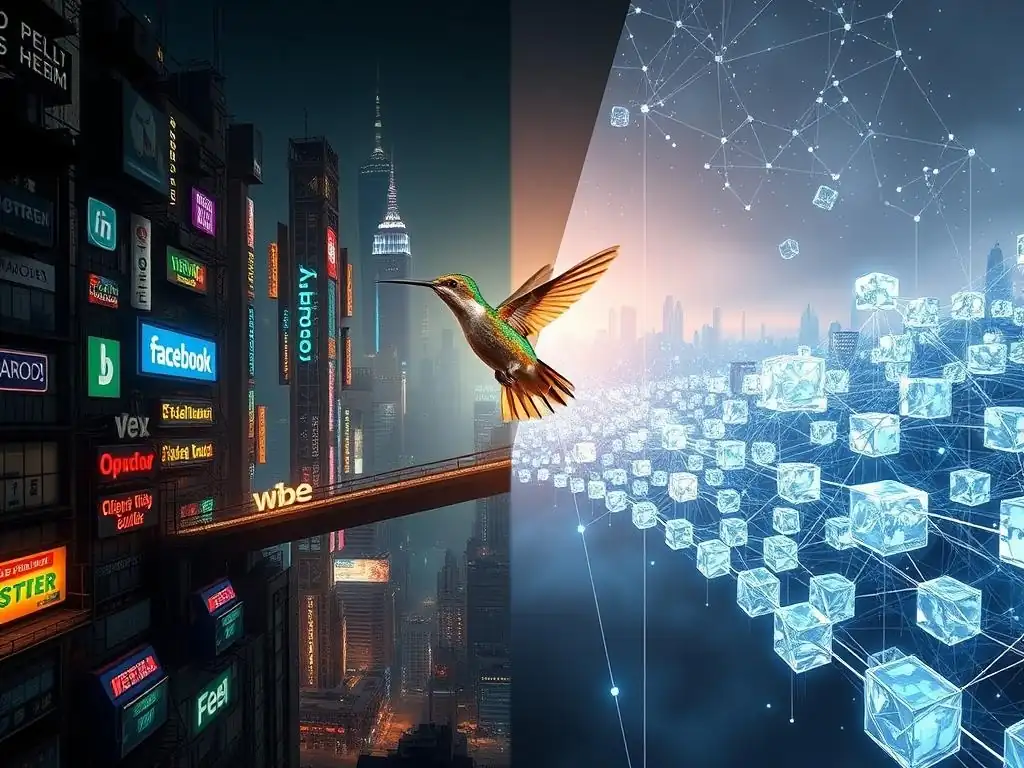
Ever wondered if the future of the internet is a complete overhaul? In this article, we unravel the complex relationship between Web3 vs Web2 coexistence, exploring whether a complete replacement is inevitable or if these internet generations can, and perhaps must, find a way to thrive together. Ready to explore the possibilities?
- Understanding Web2: The Current Internet Landscape
- The Rise of Web3: A Decentralized Vision for the Future
- Web3 vs Web2 Coexistence: A Comparative Analysis
- The Challenges of Web3 Adoption: Barriers to Mainstream Acceptance
- Web3 and Web2: A Future of Integration and Collaboration
- Use Cases: Examples of Web3 and Web2 Working Together
- The Future of the Internet: Web3's Impact on Web2 and Beyond
- Conclusion: Navigating the Transition from Web2 to Web3: Focusing on Coexistence
-
Frequently Asked Questions
- What are the key differences between Web2 and Web3, and why is the comparison important?
- Is Web3 intended to completely replace Web2, or is a coexistence model more likely?
- What are some potential benefits of Web3 that could encourage adoption, even alongside Web2?
- What are the main challenges hindering the widespread adoption of Web3, preventing a full-scale takeover of Web2?
- How might businesses and individuals leverage both Web2 and Web3 technologies in the future?
- Final Reflection: Embracing the Evolving Web
- Ignite Your Web3 Journey!
Understanding Web2: The Current Internet Landscape
Web2, the current iteration of the internet most users interact with daily, emerged in the early 2000s, shifting from static web pages to dynamic, user-generated content and interactive platforms. This era is characterized by the rise of social media, cloud computing, e-commerce giants, and mobile applications, fundamentally changing how people communicate, consume information, and conduct business online. The core of Web2's success lies in its centralized infrastructure and focus on user participation within platform-controlled environments.
This era fostered unprecedented connectivity and accessibility, making information and services readily available to billions worldwide. Major platforms like Google, Facebook, Amazon, and Twitter became dominant forces, providing valuable services while aggregating vast amounts of user data. This model, often described as platform capitalism, enabled rapid innovation and growth, but also introduced significant challenges related to control, privacy, and data ownership, setting the stage for discussions around Web3 vs Web2 coexistence.
Key Characteristics of Web2: Centralization and Data Ownership
Centralization is a defining feature of Web2. Large corporations operate and control the servers, databases, and infrastructure that power the most popular online services. This centralized control allows for efficient management, rapid updates, and scalable services, enabling platforms to serve hundreds of millions or even billions of users simultaneously. However, it also grants these entities significant power over user data, content moderation, and access to their platforms.
In the Web2 paradigm, users typically do not own their data. While they generate content and provide personal information, the ownership and control rights often reside with the platform provider, as outlined in lengthy terms of service agreements that few users fully read or understand. This model facilitates targeted advertising and data monetization strategies, which are the primary revenue streams for many Web2 giants, but raises fundamental questions about privacy and agency in the digital realm.
Limitations of Web2: Data Privacy Concerns and Platform Control
One of the most significant limitations of Web2 is the pervasive issue of data privacy. Centralized databases, while efficient, are attractive targets for cybercriminals, leading to large-scale data breaches impacting millions of users. For instance, major breaches have exposed personal information, financial details, and sensitive communications, eroding user trust. Furthermore, the collection and use of personal data for targeted advertising and behavioral profiling have led to concerns about surveillance capitalism and the potential for misuse of information.
Platform control in Web2 extends beyond data. Companies dictate the terms of service, content guidelines, and algorithms that shape user experience and information flow. This power includes the ability to censor content, deplatform users, and alter algorithms in ways that can significantly impact individuals, businesses, and even public discourse. While platforms often justify these actions for safety or policy enforcement, the lack of transparency and user recourse highlights the inherent power imbalance.
The User Experience in Web2: Convenience vs. Control
The Web2 user experience is largely defined by its convenience and ease of use. Signing up for services is often a simple process, navigation is intuitive on well-designed interfaces, and features like single sign-on streamline access across different platforms. Network effects are powerful; the value of a platform increases with the number of users, making centralized social networks and marketplaces highly attractive and functional for daily interactions and transactions.
However, this convenience comes at the cost of control. Users have limited visibility into how their data is used, stored, or shared. They also have little control over the algorithms that curate their feeds or the policies that govern their online behavior. The user experience is dictated by the platform provider, leaving users with little agency over their digital identity and assets, a central tension when considering Web3 vs Web2 coexistence scenarios.
The Rise of Web3: A Decentralized Vision for the Future
Web3 represents a proposed evolution of the internet towards a more decentralized, open, and user-centric model. Built upon foundational technologies like blockchain, Web3 aims to address the limitations of Web2 by shifting power away from centralized entities and back to individual users. The vision is an internet where users have verifiable ownership of their data, digital assets, and online identity, participating in decentralized networks rather than being confined to platform silos.
This emerging landscape is characterized by concepts such as digital scarcity, verifiable ownership, and programmable value, enabled by distributed ledger technology. While still in its early stages, Web3 is rapidly developing, with significant investment and innovation occurring in areas like decentralized finance (DeFi), non-fungible tokens (NFTs), decentralized autonomous organizations (DAOs), and decentralized social networks. The goal is to create a more equitable and resilient internet infrastructure, prompting exploration into Web3 vs Web2 coexistence models.
Core Principles of Web3: Decentralization, Blockchain, and User Ownership
Decentralization is the cornerstone of Web3. Instead of data and control residing on centralized servers owned by single entities, information is distributed across a network of computers (nodes). Blockchain technology facilitates this by providing a transparent, immutable, and distributed ledger that records transactions and data in a way that is difficult to alter or censor. This removes the need for a single point of trust or control, making systems more robust and resistant to censorship or manipulation.
User ownership is another fundamental principle. In Web3, users can directly own their digital assets, identity, and data, often represented by cryptographic tokens on a blockchain. This contrasts sharply with Web2, where platforms typically control user-generated content and data. Through technologies like NFTs, users can own unique digital items, while protocols allow users to control their identity and decide how their data is shared, empowering individuals in ways not possible in the Web2 model.
Web3 Technologies: Blockchain, NFTs, and DAOs Explained
Blockchain is the underlying technology enabling Web3. It's a distributed, immutable ledger that records transactions across many computers. Each block of transactions is linked to the previous one using cryptography, creating a chain that is highly secure and transparent. Blockchains form the backbone for decentralized applications (dApps) and enable trustless interactions without intermediaries.
Non-Fungible Tokens (NFTs) are unique digital assets recorded on a blockchain. Unlike cryptocurrencies, which are fungible (each unit is identical), each NFT has distinct properties and represents ownership of a specific item, whether digital art, music, virtual real estate, or collectibles. NFTs enable verifiable digital ownership and scarcity, creating new economic models for creators and users within the Web3 ecosystem.
Decentralized Autonomous Organizations (DAOs) are internet-native organizations collectively owned and managed by their members. Decisions are made through proposals and voting, often using governance tokens, with rules encoded on a blockchain. DAOs aim to create more transparent and democratic organizational structures, applicable to everything from investment clubs to protocol governance.
How Web3 Aims to Solve Web2's Problems: Data Security and User Empowerment
Web3 directly addresses Web2's data security issues through decentralization and cryptography. By distributing data across a network rather than storing it in a single location, the risk of massive data breaches from a single point of failure is significantly reduced. Cryptographic techniques used in blockchain ensure data integrity and secure transactions, making it much harder for unauthorized parties to access or alter information. Users control their private keys, which are essential for accessing their assets and data, giving them direct custody.
User empowerment is central to the Web3 vision. By enabling verifiable ownership of data and assets, Web3 allows users to control their digital footprint and monetize their contributions directly, without relying on intermediaries who take a significant cut. DAOs offer users a voice in the governance of platforms and protocols they use, shifting power from corporations to communities. This fundamental change in the relationship between users and online services is a key aspect of the Web3 vs Web2 coexistence discussion.
Web3 vs Web2 Coexistence: A Comparative Analysis
The conversation around Web3 vs Web2 coexistence isn't necessarily about one completely replacing the other, but understanding their fundamental differences and potential areas of overlap or integration. Web2 excels in areas like scalability, user familiarity, and centralized control for rapid development and content moderation. Web3, while promising, currently faces challenges in these areas but offers distinct advantages in data ownership, security, and censorship resistance.
A comparative analysis reveals that both paradigms have strengths and weaknesses. Web2's model is mature and widely adopted, powering the majority of today's internet activities. Web3 is nascent but represents a powerful alternative vision built on different principles. The future internet landscape is likely to involve elements of both, as the benefits of decentralization are integrated into existing structures, leading to complex Web3 vs Web2 coexistence models.
Web3 and Web2 Feature Comparison: A Side-by-Side Look
Comparing Web3 and Web2 highlights key differences in their underlying architecture and user interaction model:
- Architecture:
- Web2: Centralized servers and databases.
- Web3: Decentralized networks (like blockchains).
- Data Ownership:
- Web2: Data owned and controlled by platforms.
- Web3: Data owned and controlled by users (via keys).
- Identity:
- Web2: Platform-specific identities (username/password).
- Web3: Decentralized, portable identities.
- Monetization:
- Web2: Advertising, platform fees, data sales.
- Web3: Tokens, NFTs, direct user-to-user transactions.
- Control:
- Web2: Controlled by corporations.
- Web3: Governed by communities (DAOs) and code.
- Trust:
- Web2: Relies on trusting intermediaries (e.g., banks, platforms).
- Web3: Relies on cryptographic proof and network consensus (trustless).
This contrast illustrates the paradigm shift Web3 proposes, moving from a permissions-based, centralized model to a permissionless, decentralized one, crucial for understanding Web3 vs Web2 coexistence.
Advantages of Web3 Over Web2: Enhanced Data Security Through Cryptography
A primary advantage of Web3 lies in its enhanced data security, largely due to the application of cryptography and decentralized architecture. In Web2, sensitive user data is often stored in large, centralized databases, making them prime targets for hackers. A single breach can compromise millions of records, as seen in numerous high-profile incidents. The security relies heavily on the vigilance and infrastructure of the centralized entity.
Web3, leveraging blockchain technology, uses cryptographic hashing and digital signatures to secure data and transactions. Data stored on a blockchain is distributed across numerous nodes, making it extremely difficult for a single entity to tamper with or censor it. Users control access to their assets and data through private keys, adding a layer of security and personal control that is absent in the Web2 model. This cryptographic security model offers a significant improvement for sensitive applications, contributing to the appeal of Web3 vs Web2 coexistence for specific use cases.
Advantages of Web2 Over Web3: Scalability and Widespread User Familiarity
Despite its limitations, Web2 holds significant advantages in areas where Web3 currently struggles, most notably scalability and user familiarity. Web2 platforms have spent decades optimizing their infrastructure to handle billions of users and process vast amounts of data and transactions daily. Major social media platforms, search engines, and e-commerce sites demonstrate a level of performance and reliability that current decentralized networks are still striving to achieve. For instance, Visa processes tens of thousands of transactions per second globally, a throughput far exceeding most current public blockchains.
Furthermore, Web2 benefits from widespread user familiarity and ease of use. The current internet interface, account systems (username/password), and application models are intuitive for the vast majority of internet users. Web3, with its concepts like wallets, seed phrases, gas fees, and decentralized identities, presents a steeper learning curve for the average person. The convenience and established user patterns of Web2 represent a significant barrier to widespread Web3 adoption and underscore why Web3 vs Web2 coexistence, rather than replacement, is a more probable near-term future.
The Challenges of Web3 Adoption: Barriers to Mainstream Acceptance
While the vision of Web3 is compelling, its path to mainstream adoption is fraught with significant challenges. These include technical hurdles related to scalability and infrastructure, regulatory uncertainties in jurisdictions worldwide, and the need to drastically improve the user experience to match the ease of use offered by Web2 platforms. Overcoming these barriers is crucial for Web3 to move beyond early adopters and become a truly global, accessible internet layer.
Addressing these challenges requires continued innovation in blockchain technology, clearer legal frameworks, and dedicated efforts to design user-friendly interfaces and onboarding processes. The current state of Web3 technology, while rapidly evolving, is not yet ready to handle the scale and complexity of the entire internet's activity, highlighting the necessity of considering Web3 vs Web2 coexistence as a transitional phase.
Scalability Issues in Web3: Addressing Transaction Speed and Capacity
Scalability remains one of the most pressing technical challenges for Web3. Many foundational blockchains, like Bitcoin and Ethereum (though improving), have limited transaction throughput compared to centralized systems. Bitcoin processes around 7 transactions per second, while Ethereum currently handles roughly 15-30 transactions per second on its mainnet, significantly less than the thousands processed by payment giants or cloud platforms. This limitation leads to network congestion, high transaction fees (gas fees), and slow confirmation times, hindering the development of fast, low-cost applications.
Significant research and development are focused on scaling solutions. Layer 2 solutions, such as rollups (optimistic and zero-knowledge), lightning networks, and sidechains, aim to process transactions off the main chain while inheriting its security, drastically increasing throughput. Sharding, a technique being implemented in Ethereum 2.0, breaks the blockchain into smaller, more manageable pieces. While these solutions show promise, they add complexity and are still maturing, impacting the immediate potential for widespread Web3 vs Web2 coexistence in high-volume scenarios.
The rapidly evolving nature of Web3 technologies like cryptocurrencies, NFTs, and DAOs has outpaced existing legal and regulatory frameworks in most countries. Governments worldwide are grappling with how to classify and regulate these novel digital assets and decentralized structures. This uncertainty creates significant challenges for businesses and developers operating in the Web3 space, potentially stifling innovation and adoption.
Different jurisdictions are taking varied approaches, from outright bans or strict regulations in some countries to more permissive or experimental stances in others. Issues like consumer protection, anti-money laundering (AML), know-your-customer (KYC) requirements, taxation of digital assets, and the legal status of DAOs are still largely unresolved. Navigating this complex and fragmented regulatory landscape is a major hurdle for Web3 projects aiming for mainstream adoption and influences the practical feasibility of large-scale Web3 vs Web2 coexistence.
The Web3 User Experience: Improving Usability and Accessibility
For Web3 to achieve mainstream adoption, the user experience must become significantly simpler and more intuitive. Currently, interacting with decentralized applications often requires technical knowledge, such as understanding blockchain networks, managing cryptographic wallets, securing seed phrases, and navigating fluctuating transaction fees. The risk of losing assets due to simple errors (like sending funds to the wrong address or losing a private key) is also a significant barrier.
Compared to the seamless onboarding and recovery options offered by most Web2 platforms, Web3 can feel daunting for average users. Improving usability involves developing better wallet interfaces, abstracting away technical complexities like gas fees, creating more user-friendly dApp interfaces, and developing robust account recovery mechanisms that don't compromise decentralization. Bridging this usability gap is essential to attract users accustomed to Web2's convenience and facilitate a smoother transition towards Web3 vs Web2 coexistence.
Web3 and Web2: A Future of Integration and Collaboration
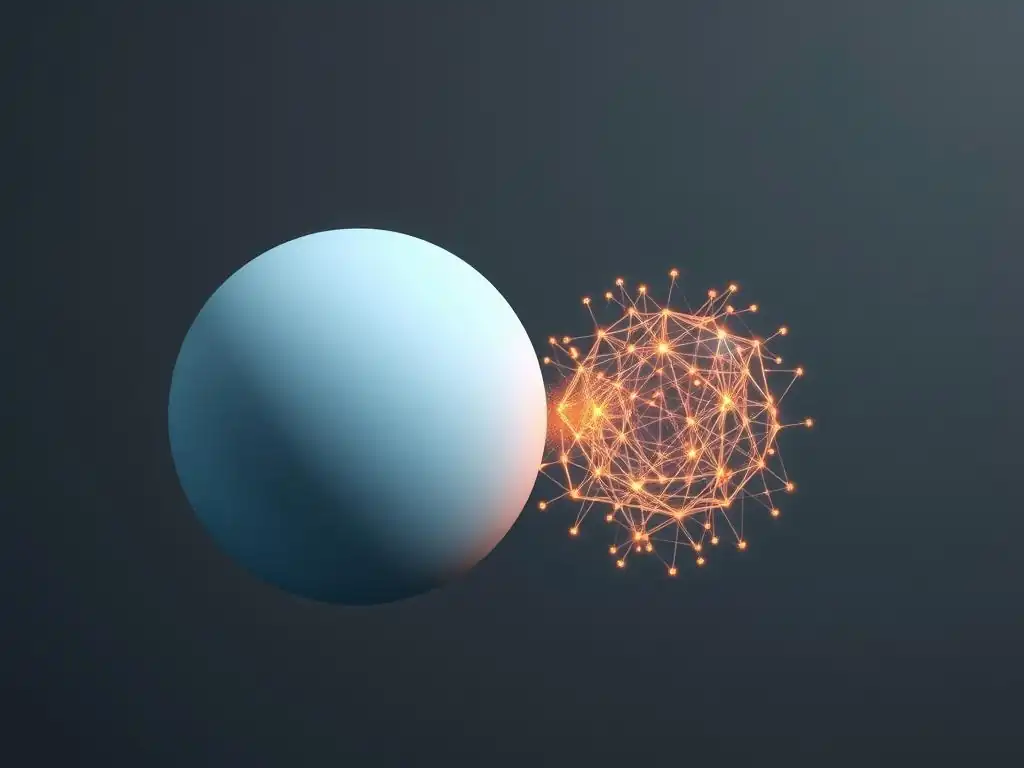
Rather than a simple replacement, the most likely future involves significant integration and collaboration between Web2 and Web3 technologies. Elements of decentralization, digital ownership, and tokenization can enhance existing Web2 platforms and services, while Web3 applications can leverage Web2 infrastructure for better performance and accessibility. This hybrid approach allows businesses and users to gradually adopt Web3 concepts without a complete overhaul of the current internet architecture.
This future of Web3 vs Web2 coexistence is already taking shape, with companies exploring ways to incorporate blockchain into their existing models. Examples range from using tokens for loyalty programs to leveraging decentralized identity solutions for enhanced privacy. Interoperability between the two internet generations will be key to unlocking the full potential of this integrated future.
Hybrid Models: Combining the Best of Web3 and Web2
Hybrid models represent a practical approach to Web3 adoption, blending the strengths of both paradigms. These models involve integrating decentralized components into otherwise centralized systems or building applications that use Web3 elements on the backend while providing a familiar Web2-like user interface on the frontend. This allows users to benefit from features like verifiable ownership or transparent transactions without needing deep technical knowledge of the underlying blockchain.
For example, a gaming company could use Web3 to allow players to truly own in-game assets as NFTs, which can be traded freely, while the core game engine and user accounts might remain on centralized servers for performance. Similarly, a social media platform could explore using decentralized storage for user content to enhance privacy while maintaining a centralized feed algorithm. These hybrid approaches facilitate a smoother transition and showcase the potential for productive Web3 vs Web2 coexistence.
Web3 Enhancements to Existing Web2 Platforms: Blockchain-Based Loyalty Programs
Existing Web2 platforms can leverage Web3 technology to offer enhanced features and user experiences. One tangible example is the implementation of blockchain-based loyalty or rewards programs. Instead of accumulating points within a single, siloed system, users could earn tokens that represent verifiable value and ownership. These tokens could potentially be traded, exchanged for other assets, or used across different platforms, offering greater utility than traditional loyalty points.
Consider a retail chain issuing loyalty tokens on a blockchain. Customers earn tokens for purchases, which are recorded transparently. These tokens could then be redeemed for discounts, exclusive products, or even traded on secondary markets. This not only increases user engagement but also provides greater transparency and value for the consumer, demonstrating a clear benefit of integrating Web3 elements into established Web2 business models, fostering Web3 vs Web2 coexistence in the commercial sphere.
The Role of Interoperability in Bridging Web2 and Web3
Interoperability is crucial for facilitating seamless interaction between the Web2 and Web3 worlds. This refers to the ability of different systems, platforms, and protocols to communicate and exchange data or assets. For Web3 to integrate successfully with the existing internet, there need to be robust mechanisms for transferring information, identity, and value between centralized databases and decentralized networks.
Technologies like APIs (Application Programming Interfaces) that connect Web2 services to blockchain data, cross-chain bridges that allow assets to move between different blockchains, and standards for decentralized identity are all vital components of building an interoperable future. As these bridges and standards mature, it will become easier for users and applications to navigate both the centralized and decentralized layers of the internet, strengthening the case for sustained Web3 vs Web2 coexistence through interconnectedness.
Use Cases: Examples of Web3 and Web2 Working Together
Real-world examples already illustrate how Web3 and Web2 technologies are being combined or used in tandem. These use cases demonstrate the practical benefits of decentralization and blockchain in specific applications, often building upon existing Web2 infrastructure or user bases. From finance to social media and enterprise solutions, hybrid models and integrated systems are proving effective.
These examples highlight that Web3 is not just an abstract concept but is actively being applied to create new possibilities and solve existing problems. They serve as tangible proof points for the viability and potential of Web3 vs Web2 coexistence in various sectors, showing how the strengths of each can be leveraged for mutual benefit.
Decentralized Finance (DeFi) Applications: Tokenized Securities Offering 24/7 Trading
Decentralized Finance (DeFi) is a prime example of Web3 functionality built on blockchain technology, often accessed through Web2 interfaces. DeFi platforms allow users to lend, borrow, trade, and earn interest on digital assets without traditional financial intermediaries like banks. Using smart contracts on blockchains like Ethereum, these platforms operate 24/7, offering services that are typically limited by traditional business hours. For instance, tokenized securities on some platforms aim to allow for near-instantaneous settlement and trading outside of traditional market hours (e.g., 9 am - 5 pm on weekdays).
While the backend is decentralized, users often interact with DeFi protocols through familiar Web2-style websites and mobile apps. These interfaces provide the necessary usability layer to make complex smart contract interactions accessible. The total value locked (TVL) in DeFi protocols has reached significant figures, demonstrating substantial user adoption and capital flow into this decentralized financial ecosystem, proving a strong use case for Web3 vs Web2 coexistence where the Web2 layer provides accessibility to the Web3 backend.
Web3 is inspiring new models for social media that challenge the centralized, ad-revenue-driven model of Web2 giants. Decentralized social media platforms aim to give users ownership and control over their data and content, often rewarding them with tokens for their contributions. Platforms like Lens Protocol or applications built on protocols like Nostr allow users to own their social graph and identity, preventing censorship or deplatforming by a single entity.
These platforms often integrate Web3 features like NFT avatars, token-gated communities, and direct peer-to-peer payments or tips using cryptocurrencies. While the underlying architecture is decentralized, the user interfaces and core functionalities often resemble their Web2 counterparts to ease adoption. The focus is on empowering creators and users, allowing them to directly monetize their content and engagement without significant cuts taken by a central platform, illustrating another area of potential Web3 vs Web2 coexistence focused on user empowerment.
Enterprise Applications of Blockchain: Supply Chain Tracking and Traceability
Blockchain technology is being adopted by enterprises to improve transparency, security, and efficiency in various processes, particularly in supply chain management. Companies are using private or consortium blockchains to track goods from origin to destination, creating an immutable and transparent record of every step. This helps verify authenticity, reduce fraud, and improve traceability in case of issues like contamination or recalls.
Major corporations across industries, from food and agriculture (like Walmart using blockchain for food traceability) to luxury goods and pharmaceuticals, are piloting or implementing blockchain solutions. These enterprise applications often run on permissioned blockchains, which offer a degree of centralization for control and performance while still leveraging core blockchain benefits like immutability and transparency. This represents a form of Web3 technology (blockchain) being integrated into traditional Web2 enterprise structures, showcasing practical Web3 vs Web2 coexistence in business operations.
The Future of the Internet: Web3's Impact on Web2 and Beyond
The trajectory of the internet is being influenced by the emergence of Web3. While a complete overnight replacement of Web2 by Web3 is improbable, Web3's principles and technologies are already beginning to reshape expectations around data ownership, privacy, and online interaction. The future internet landscape is likely to be a complex interplay between centralized and decentralized systems, with integration and collaboration driving innovation.
Web3's long-term impact extends beyond just technical architecture; it has the potential to fundamentally alter economic models, governance structures, and the relationship between individuals and online entities. Predicting the exact evolution is challenging, but it is clear that the discussions around Web3 vs Web2 coexistence will continue to shape development and adoption for years to come.
Predicting the Evolution of the Web: A Decentralized or Hybrid Future?
Experts generally agree that the internet is heading towards a more hybrid future rather than a complete shift to pure decentralization. The convenience, performance, and established infrastructure of Web2 are too deeply entrenched to disappear entirely in the near-to-medium term. Instead, elements of Web3 will likely be integrated into existing systems, and new applications may combine centralized and decentralized components to offer the best of both worlds.
Purely decentralized Web3 applications face significant hurdles in achieving the scale and usability required for mass adoption. Conversely, Web2 platforms are increasingly recognizing the demand for greater data control and transparency, potentially leading them to adopt certain decentralized principles or technologies. The evolution will likely be a gradual transition, characterized by increasing Web3 vs Web2 coexistence in various forms, rather than a revolutionary overthrow.
Web3's Influence on Data Privacy and Security: A Paradigm Shift
Web3 has the potential to usher in a paradigm shift in how we think about data privacy and security online. By empowering users with verifiable ownership and control over their data through cryptographic keys, Web3 challenges the prevailing Web2 model where platforms are the custodians (and often, owners) of user information. This shift moves from trusting intermediaries to verifying through cryptography.
While Web3 is not a panacea for all privacy and security issues, it offers architectural solutions that fundamentally alter the risk landscape. Decentralized storage, encrypted peer-to-peer communication facilitated by decentralized identifiers, and self-sovereign identity solutions can significantly reduce reliance on centralized honey pots of data. This influence pushes the entire internet ecosystem towards better security practices and greater user agency, impacting even how Web2 services might evolve alongside Web3 vs Web2 coexistence.
The Long-Term Vision: How Web3 Could Reshape the Internet Landscape
The long-term vision for Web3 is an internet that is more open, equitable, and resilient. It envisions a landscape where individuals have greater control over their digital lives, creators can directly monetize their work, and online communities can govern themselves. This could lead to new economic models, decentralized governance structures, and a more diverse ecosystem of online services not dominated by a few large corporations.
While this vision is ambitious and faces significant technical and societal challenges, the underlying principles of decentralization, transparency, and user ownership are powerful. As Web3 technologies mature and become more accessible, their influence will likely extend beyond niche applications, potentially reshaping industries from finance and gaming to social media and digital identity, driving a deeper and more complex Web3 vs Web2 coexistence.
The debate around whether Web3 will replace Web2 is less productive than exploring how they will coexist and integrate. Web2 has built the foundation of the modern internet, providing unparalleled connectivity and convenience, albeit with significant trade-offs in privacy and control. Web3 offers a compelling alternative vision based on decentralization, user ownership, and cryptographic security, aiming to address Web2's core limitations.
However, Web3 is still in its nascent stages, facing substantial hurdles related to scalability, regulatory clarity, and user experience. The most probable future involves a period of significant Web3 vs Web2 coexistence, where elements of both paradigms are combined in hybrid models. Existing platforms may integrate decentralized features, while new Web3 applications may leverage Web2 infrastructure and interfaces. The transition will be gradual, driven by innovation, user demand for greater control, and the development of robust interoperability solutions. Understanding and navigating this period of coexistence is key to realizing the potential of a more decentralized and user-centric internet.
Frequently Asked Questions
What are the key differences between Web2 and Web3, and why is the comparison important?
Web2 is characterized by centralized platforms controlling user data, while Web3 aims for decentralization and user ownership. Understanding this distinction is crucial for navigating the evolving internet landscape.
Is Web3 intended to completely replace Web2, or is a coexistence model more likely?
A complete replacement is unlikely. The article explores a coexistence model, where Web3 leverages Web2's existing infrastructure while offering enhanced features like data ownership.
What are some potential benefits of Web3 that could encourage adoption, even alongside Web2?
Web3 offers benefits such as increased transparency, enhanced security, and user control over data, which are appealing alternatives to Web2's centralized model.
What are the main challenges hindering the widespread adoption of Web3, preventing a full-scale takeover of Web2?
Challenges include scalability issues, complex user interfaces, and regulatory uncertainty, all impacting Web3's accessibility and mainstream adoption.
How might businesses and individuals leverage both Web2 and Web3 technologies in the future?
Businesses can use Web2 for mass reach and Web3 for secure data management, while individuals can choose platforms based on their privacy and control preferences.
Final Reflection: Embracing the Evolving Web
The debate surrounding Web3 versus Web2 often frames it as a zero-sum game, but as we've explored, the reality is far more nuanced. The true potential lies not in replacement, but in coexistence and collaboration, where the strengths of each generation complement the other, fostering a richer and more diverse digital landscape.
The ongoing evolution of the internet, with its constant shifts and innovations, has profoundly shaped our cultural and social interactions. Witnessing this transformation firsthand highlights the importance of adaptability and open-mindedness. The only constant in life is change,
a sentiment that rings particularly true in the rapidly evolving world of technology. This quote reminds us that embracing change, rather than resisting it, is key to navigating the complexities of the digital age.
As you consider the future of the internet, I invite you to reflect on your own role in shaping it. How can you leverage the best of both Web2 and Web3 to create a more equitable, innovative, and user-centric online experience? The future of the web is not predetermined; it's a collaborative effort, and your perspective is a valuable piece of the puzzle.
Ignite Your Web3 Journey!
Thank you for exploring the future of the internet with Blockchain Trends. Now that you've learned about the potential integration of Web3 and Web2, it's time to take action and become part of the evolving digital landscape.
Here are some ways to get started:
- Dive into Web3 by trying out a decentralized application or exploring a blockchain-based social platform. Experiment and discover what this new internet era has to offer you directly!
- Share this article with your network to help spark a conversation about the future of the web.
- Join the discussion on our Blockchain Trends forum. Your insights are valuable!
What unique opportunities do you see emerging from the convergence of Web2 and Web3 technologies? Share your thoughts in the comments below!
Leave a Reply