
From Art to Music: Diverse NFT Use Cases Empowering the Creator Economy

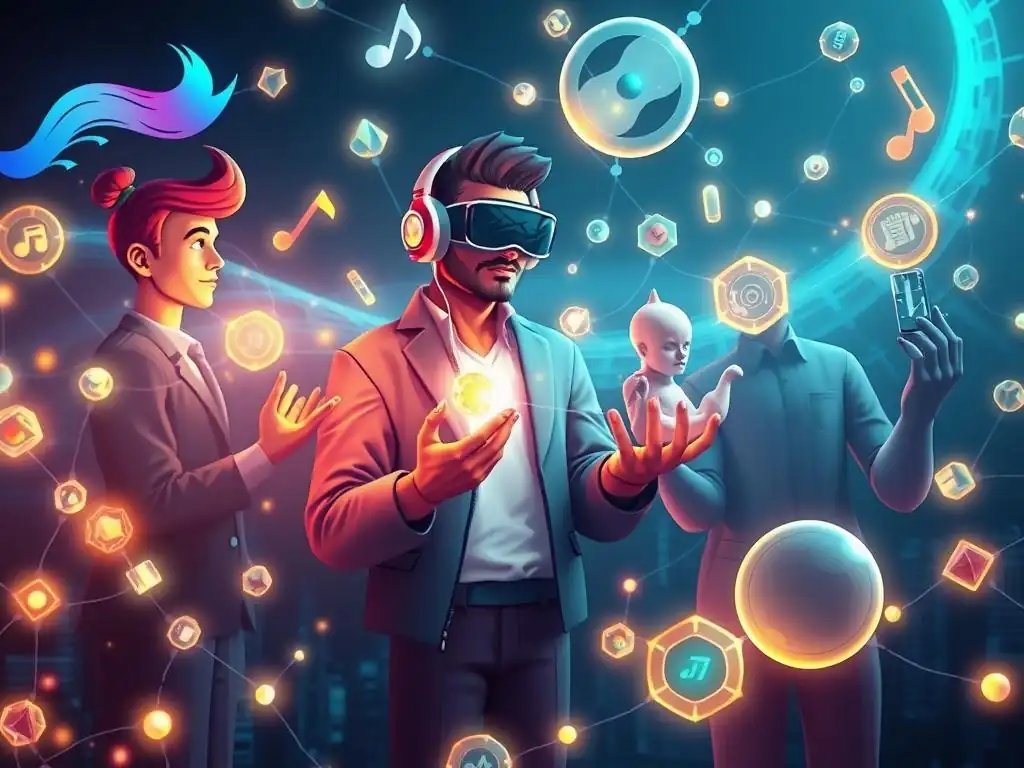
Welcome to Blockchain Trends, your guide to understanding the revolutionary impact of blockchain technology. Beyond the hype of cryptocurrencies, blockchain is reshaping industries and empowering individuals. Curious about how? This week, we delve into the fascinating world of NFTs empowering creator economy, exploring how these unique digital assets are transforming the way artists, musicians, and creators connect with their audiences and monetize their work. Discover the diverse NFT use cases, from art to music, and unlock the potential of this burgeoning decentralized ecosystem. Let's explore!
From Art to Music: Diverse NFT Use Cases Empowering the Creator Economy
- Introduction: NFTs Revolutionizing the Creator Landscape
- NFTs in the Art World: A New Era for Digital Artists
- Music NFTs: Transforming the Music Industry and Empowering Musicians
- Beyond Art and Music: Expanding NFT Use Cases for Creators
- NFTs and Intellectual Property: Protecting Creator Rights
- The Future of NFTs in the Creator Economy: Trends and Predictions
- Navigating the NFT Space: Tips for Creators and Collectors
- Conclusion: NFTs - A Powerful Tool for Creator Empowerment and a Sustainable Creator Economy
-
Frequently Asked Questions
- What are NFTs, and how do they empower creators in the economy?
- Beyond art, what are some other NFT use cases relevant to the creator economy?
- How does blockchain technology ensure the authenticity and scarcity of NFTs?
- What are some of the regulatory challenges facing the NFT market and the creator economy?
- How might NFTs shape the future of the creator economy and decentralized systems?
- Final Reflection: The Enduring Power of Creative Ownership
- Unleash Your Creative Power: Dive Deeper into the NFT Revolution!
Introduction: NFTs Revolutionizing the Creator Landscape
The Rise of NFTs and Their Impact on Digital Ownership
The emergence of Non-Fungible Tokens (NFTs) has fundamentally altered the concept of digital ownership. Unlike cryptocurrencies, which are fungible (each unit is interchangeable), NFTs represent unique digital assets, verified and secured on a blockchain.
This technological innovation allows creators to tokenize digital items – from art and music to videos and collectibles – establishing verifiable proof of authenticity and ownership in a digital realm where copying is effortless. This shift is particularly significant because it assigns scarcity and value to digital creations that previously existed in a state of near-infinite reproducibility, laying the groundwork for NFTs empowering the creator economy.
This newfound ability to own and trade unique digital assets has opened up unprecedented avenues for creators. Before NFTs, digital artists often struggled to monetize their work effectively, facing challenges with copyright infringement and the devaluation of digital files. NFTs provide a mechanism to track provenance, proving the original creator and subsequent owners of a digital asset.
This transparent and immutable record, stored on the blockchain, builds trust and enables a direct relationship between creators and collectors, bypassing many traditional intermediaries. The rise of NFTs is thus not just a technological trend but a significant economic shift, positioning NFTs empowering the creator economy by giving creators more control and direct access to market value.
Why NFTs are a Game-Changer for Creators: Bypassing Traditional Gatekeepers
Historically, creators across various disciplines – be it art, music, or writing – have often relied on intermediaries like galleries, record labels, publishers, and distribution platforms to reach their audience and monetize their work. These gatekeepers often take a significant cut of the revenue, dictate terms, and control access to markets.
NFTs disrupt this model by enabling creators to connect directly with their audience and sell their work peer-to-peer on decentralized marketplaces. This disintermediation is a core reason why NFTs are a game-changer, fundamentally reshaping how value flows within creative industries and proving how NFTs empowering creator economy is more than just a buzzword.
By leveraging NFTs, creators can establish their own terms for sales, including setting initial prices, determining royalty percentages on future secondary sales, and engaging directly with their community. This level of autonomy was previously unattainable for many independent creators. For example, a musician can sell tokenized albums or singles directly to fans, keeping a much larger percentage of the revenue than they would through traditional streaming platforms or record deals. This direct-to-fan model fosters stronger community bonds and provides creators with more sustainable income streams, solidifying the narrative of NFTs empowering creator economy by shifting power dynamics.
NFTs in the Art World: A New Era for Digital Artists
Digital Art NFTs: Authenticity and Provenance on the Blockchain
Digital art, despite its growing prominence, faced significant challenges regarding authenticity and value perception before NFTs. A digital file could be infinitely copied, making it difficult to prove ownership or scarcity. NFTs solve this by linking a unique token on the blockchain to a specific digital artwork file.
This token acts as a certificate of authenticity and ownership, verifiable by anyone on the public ledger. The blockchain records the entire transaction history, providing an immutable provenance that traces the artwork from its creation through every subsequent sale. This verifiable history and proof of scarcity are crucial for establishing the value of digital art in the same way that physical art has relied on provenance and limited editions for centuries.
This clear chain of custody and proof of scarcity has revolutionized the digital art market. Collectors can now invest in digital art with confidence, knowing the authenticity and ownership are secured on the blockchain. This has led to a surge in both the creation and sale of digital art NFTs.
For instance, the digital art market saw explosive growth in 2021, with total sales reaching billions of dollars, a stark contrast to its relatively niche status just a few years prior. This demonstrates the power of NFTs empowering creator economy, specifically for digital artists who can now command significant prices for their unique digital pieces, previously considered difficult to monetize effectively.
NFT Art Marketplaces: Connecting Artists with Collectors Directly
NFT art marketplaces serve as the primary venues where digital artists can mint, list, and sell their NFT-backed artworks directly to collectors. Platforms like OpenSea, Rarible, and SuperRare have become central hubs for this new ecosystem.
These platforms provide the infrastructure for creators to upload their digital files, define the terms of the NFT (such as edition size and royalty percentage), and interact with potential buyers without needing a traditional gallery or auction house. The accessibility of these platforms means that artists from anywhere in the world can access a global market, significantly broadening their potential reach and collector base.
These marketplaces facilitate price discovery through auctions or fixed-price sales and handle the complexities of blockchain transactions. Critically, they also automate royalty payments for creators. When an NFT artwork is resold on the secondary market, a pre-programmed percentage of the sale price (often ranging from 5% to 15%) is automatically sent back to the original creator via smart contracts.
This provides artists with a continuous income stream from their work, a significant departure from the traditional art market where artists typically only profit from the initial sale. This ongoing revenue potential is a powerful illustration of NFTs empowering creator economy by providing long-term financial benefits to artists.
Case Study: Beeple's "Everydays: The First 5000 Days"
One of the most widely cited examples of the impact of NFTs on the art world is the sale of Mike Winkelmann, known as Beeple's, digital collage "Everydays: The First 5000 Days." This single piece of digital art, compiled from 5,000 images Beeple created daily since 2007, was tokenized as an NFT and sold at Christie's auction house in March 2021. The sale price was a staggering $69.3 million, making it one of the most expensive artworks ever sold by a living artist and the most expensive NFT sale at the time.
This landmark sale sent shockwaves through both the traditional art world and the broader public, demonstrating the immense value that could be assigned to verifiable digital ownership via NFTs. It legitimized digital art as a serious collectible asset class and highlighted the potential for NFTs empowering creator economy on a grand scale.
The sale not only brought massive attention to Beeple but also validated the entire NFT ecosystem as a viable market for high-value digital assets. While such astronomical figures are not typical, the Beeple sale undeniably showcased the potential for digital artists to achieve unprecedented success and recognition through the NFT medium.
Music NFTs: Transforming the Music Industry and Empowering Musicians
Tokenizing Music: Fractional Ownership and Royalties Distribution
NFTs offer musicians innovative ways to package and distribute their music, moving beyond traditional streaming and download models. Musicians can tokenize individual tracks, albums, limited edition collectibles (like digital album art or backstage passes), or even ownership rights or royalties streams associated with their music. Tokenizing music allows for unique possibilities like fractional ownership, where multiple fans can collectively own a portion of a song or album, potentially sharing in future royalties or gains. This creates a deeper sense of investment and community around the artist's work.
Furthermore, smart contracts embedded in music NFTs can automate royalty distribution. Instead of relying on complex and often opaque traditional royalty collection and distribution systems, a portion of streaming revenue or future sale value can be automatically split among the artist, collaborators, producers, and even fractional owners, based on the terms programmed into the NFT. This transparency and automation simplify a notoriously complicated part of the music industry and ensure fairer compensation, illustrating how NFTs empowering creator economy specifically for musicians seeking more equitable revenue models.
Music NFT Platforms: Direct-to-Fan Engagement and Revenue Streams
Dedicated music NFT platforms like Catalog, Royal, and Sound.xyz are emerging, providing musicians with tools to mint and sell their music directly to fans. These platforms facilitate the sale of limited edition music NFTs, offering exclusive content, experiences, or even a share in future earnings. This direct-to-fan model cuts out traditional record labels and distributors, allowing artists to keep a much larger percentage of the revenue generated from their music sales. For independent artists, this can mean the difference between struggling to make a living and building a sustainable career.
Beyond direct sales, these platforms enable unique fan engagement opportunities. Artists can offer exclusive access to unreleased tracks, behind-the-scenes content, or virtual meet-and-greets to NFT holders. This not only creates valuable experiences for fans but also builds a loyal community around the artist.
The revenue generated from music NFT sales can be substantial; some artists have sold tokenized albums or singles for tens or even hundreds of thousands of dollars, far exceeding what they might earn from millions of streams on traditional platforms. This highlights the powerful potential of NFTs empowering creator economy by fostering direct financial support and community building for musicians.
Case Study: Grimes' NFT Drop
In February 2021, musician Grimes (Claire Boucher) conducted a notable NFT sale titled "WarNymph Collection Vol. 1" on the Nifty Gateway platform. The drop consisted of several pieces of digital art and short videos set to original music, all tokenized as NFTs. Within approximately 20 minutes, the collection sold for a total of $5.8 million.
This case study demonstrated the immediate financial potential of music-related NFTs and the willingness of collectors/fans to invest significant amounts in tokenized digital creations from established artists. While primarily visual art, the inclusion of original music underscored the potential for musicians to leverage NFTs beyond just tokenizing songs.
It showed that artists with a strong fanbase could generate substantial revenue quickly by offering unique digital assets and experiences. The success of Grimes' drop further solidified the idea that NFTs empowering creator economy is a tangible reality, providing artists with alternative and highly lucrative revenue streams outside of traditional industry structures.
Beyond Art and Music: Expanding NFT Use Cases for Creators
NFTs for Photography: Protecting Copyright and Monetizing Images
Photographers face similar challenges to digital artists regarding copyright infringement and monetizing their work in the digital age. High-resolution images can be easily copied and distributed without permission. NFTs offer a solution by providing verifiable proof of ownership and authenticity for digital photographs. A photographer can mint an NFT linked to a specific digital image file, establishing its unique identity on the blockchain. This makes it significantly harder for unauthorized parties to claim ownership or provenance.
Furthermore, NFTs open up new monetization avenues for photographers. Instead of relying solely on stock photo sales or limited print editions, photographers can sell unique or limited edition digital copies of their work as NFTs. Marketplaces dedicated to photography NFTs, like Foundation and Sloika, are emerging, allowing photographers to connect directly with collectors interested in owning verified digital images.
This enables photographers to command higher prices for exclusive digital editions and earn royalties on secondary sales, providing a more sustainable income model. For example, photographer Justin Aversano sold a collection of twin portraits as NFTs for over $11 million, showcasing the high-value potential for photography NFTs and reinforcing how NFTs empowering creator economy extends to visual artists beyond traditional digital painters.
NFTs for Writing and Journalism: Funding Independent Content Creation
While perhaps less intuitively visual than art or photography, written content also benefits from NFT technology, particularly in empowering independent writers and journalists. Articles, essays, poems, and even entire books can be tokenized as NFTs. This allows writers to sell unique or limited edition copies of their work directly to readers and patrons, bypassing traditional publishing houses or ad-supported models that often yield low revenue for creators. An NFT could offer exclusive access to a piece, a signed digital copy, or even a chance to interact with the author.
NFTs also present a new model for funding independent journalism and content creation. Platforms could allow readers to purchase NFTs representing a subscription or a stake in a publication, providing direct financial support to writers and editors. This could free creators from the pressures of clickbait journalism or reliance on advertising revenue, allowing them to focus on high-quality, in-depth content. For instance, some journalists have experimented with selling individual articles as NFTs to fund specific projects or investigations. This innovative use case demonstrates the versatility of NFTs empowering creator economy across different forms of media, including text-based content.
NFTs for Video and Film: Decentralized Film Financing and Distribution
The film and video industry, with its high production costs and complex distribution channels, also stands to be transformed by NFTs. Creators can tokenize short films, documentaries, or even scenes from larger projects, selling them as collectibles or providing exclusive access to viewers. This allows filmmakers to monetize content outside of traditional distribution deals. More significantly, NFTs can be used for decentralized film financing. Filmmakers can issue tokens representing a share in the film's future profits or ownership of specific assets used in the production.
Selling these film-related NFTs allows creators to raise funds directly from their audience and investors without needing traditional studio backing. Once the film is complete, NFTs can also facilitate decentralized distribution. Token holders could gain early access, voting rights on certain aspects, or a share of revenue generated from streaming or sales.
This model empowers independent filmmakers by giving them more control over funding and distribution, potentially leading to more diverse and creator-driven content. While still early, projects exploring NFT-funded films are emerging, illustrating the potential for NFTs empowering creator economy in the capital-intensive world of video and film production.
NFTs and Intellectual Property: Protecting Creator Rights
Smart Contracts and Copyright Enforcement for NFTs
One of the key mechanisms by which NFTs protect creator rights is through the use of smart contracts. When an NFT is minted, a smart contract is deployed on the blockchain. This contract contains metadata about the digital asset, including a link to the file and information about the creator.
Crucially, the smart contract can also embed terms and conditions related to intellectual property and future usage. While owning an NFT typically grants ownership of the unique token and the right to display the associated digital asset, it does not automatically transfer copyright unless explicitly stated in the smart contract or accompanying terms.
Smart contracts can be programmed to automate royalty payments on secondary sales, ensuring creators benefit from the ongoing trade of their work. They can also specify usage rights – for example, whether the NFT owner has commercial rights or just personal display rights.
While blockchain doesn't inherently prevent unauthorized copying of the underlying digital file, the smart contract and the public ledger provide undeniable proof of original creation and ownership of the token, making it easier for creators to assert their rights against infringers in legal contexts. This integration of smart contracts is vital for NFTs empowering creator economy by providing a layer of automated enforcement and clear rights definition.
Addressing Challenges and Legal Considerations in the NFT Space
Despite the benefits, the relationship between NFTs and intellectual property is complex and faces significant challenges. A major issue is ensuring that the person who mints an NFT actually owns the copyright to the underlying asset. Currently, anyone can theoretically mint an NFT linked to copyrighted material they do not own, leading to potential infringement. Marketplaces are developing verification processes, but it remains a risk. Furthermore, the legal framework around digital ownership, copyright in the context of blockchain, and the jurisdiction for disputes involving decentralized NFTs is still evolving and largely untested in many legal systems.
Another consideration is the permanence of the digital asset itself. While the NFT token exists on the blockchain, the associated digital file (the artwork, song, video) is often stored off-chain, sometimes on centralized servers or decentralized storage solutions like IPFS.
The link between the NFT and the file needs to be robust, and the storage solution needs to be reliable to ensure the long-term accessibility of the asset. Addressing these challenges through clearer legal standards, robust platform verification, and improved decentralized storage solutions is crucial for the sustained growth and legitimacy of NFTs empowering creator economy and providing reliable IP protection.
The Future of NFTs in the Creator Economy: Trends and Predictions
Increased Adoption of NFTs by Mainstream Creators
Looking ahead, a significant trend is the increasing adoption of NFTs by mainstream creators across various fields. As the technology matures and becomes more user-friendly, and as success stories accumulate, more established artists, musicians, writers, and filmmakers are exploring and utilizing NFTs. We are seeing major brands, celebrities, and traditional institutions entering the NFT space, which helps to legitimize the technology and expose it to a wider audience. This mainstream embrace is likely to drive further innovation and investment in creator-focused NFT platforms and tools.
This increased adoption will likely lead to a greater variety and quality of NFT content available, attracting more collectors and fans. As creators become more comfortable with the technology, they will develop more sophisticated and creative ways to use NFTs, moving beyond simple digital collectibles to offer more interactive experiences, utility within virtual worlds, and deeper fan engagement. The growing involvement of mainstream creators is a strong indicator of the enduring potential for NFTs empowering creator economy on a global scale, making decentralized creation and monetization more accessible.
The Role of DAOs in Supporting NFT-Based Creator Communities
Decentralized Autonomous Organizations (DAOs) are poised to play a crucial role in the future of NFT-based creator communities. DAOs are internet-native organizations collectively owned and managed by their members, often token holders. In the context of the creator economy, DAOs can form around specific artists, genres, or creative projects. Members of a creator DAO could collectively own a collection of NFTs, fund new works, curate exhibitions, or make decisions about the direction of the creator's career or community.
This model fosters a stronger sense of ownership and participation among fans and patrons, turning passive consumers into active participants and investors in the creative process. For example, a music DAO could collectively purchase the rights to an artist's catalog via NFTs or fund the production of their next album, with DAO members sharing in the success. This collaborative and decentralized approach to funding and governance provides creators with a powerful community support structure and aligns incentives between creators and their most dedicated fans, further solidifying the role of NFTs empowering creator economy through collective action.
The Evolution of NFT Standards and Interoperability
The technical standards underpinning NFTs are continuously evolving, which will significantly impact the future of the creator economy. The initial ERC-721 standard on Ethereum was a breakthrough, but newer standards like ERC-1155 (allowing for both fungible and non-fungible tokens) and standards on other blockchains (like Tezos, Flow, Solana, and Polygon) are expanding the possibilities for creators. These new standards can offer lower transaction costs, greater efficiency, and more complex functionalities, such as combining multiple assets into a single NFT or creating programmable NFTs that change over time.
Furthermore, improving interoperability between different blockchains and NFT platforms is crucial. Currently, moving NFTs between different networks can be challenging. Future developments in cross-chain bridges and multi-chain standards will make it easier for creators to list their work on multiple platforms and for collectors to manage their diverse portfolios. Enhanced interoperability will expand the reach of creators and make the NFT ecosystem more robust and accessible, further enhancing the potential of NFTs empowering creator economy by removing technical barriers and increasing liquidity across different platforms.
How Creators Can Leverage NFTs to Build Sustainable Careers
For creators looking to leverage NFTs, the first step is understanding the technology and identifying how it aligns with their specific creative practice. It's not just about selling digital files; it's about creating unique digital assets, building community, and establishing direct relationships with patrons. Creators should research different blockchain platforms and marketplaces to find those that best suit their work, considering factors like transaction costs (gas fees), environmental impact (for some blockchains), and the type of community on the platform.
Creating high-quality, unique digital content is paramount. NFTs derive value from the underlying asset and the creator's reputation. Engaging with the NFT community, promoting work on social media, and building a collector base are essential steps.
Creators should also carefully consider the terms of their NFTs, including edition size, pricing strategy, and royalty percentages on secondary sales, as these terms can significantly impact long-term revenue. By strategically using NFTs, creators can diversify their income streams, gain more control over their distribution, and build a sustainable career directly supported by their most dedicated fans and collectors, showcasing the practical application of NFTs empowering creator economy.
Understanding NFT Marketplaces and Due Diligence for Collectors
For collectors interested in acquiring NFTs, navigating the market requires careful consideration and due diligence. It's important to understand that NFT prices can be highly volatile, and not all NFTs will appreciate in value. Collectors should research the creator, their reputation, the quality of the artwork or asset, and the history of their previous sales. Understanding the specific terms of the NFT being purchased – such as the blockchain it's on, where the underlying asset is stored, and what rights come with ownership – is also critical.
Choosing a reputable marketplace is essential. Collectors should use well-established platforms with strong security measures and clear policies. Beware of scams, fake collections, and phishing attempts. Verifying the authenticity of a collection and the creator on the platform is a necessary step. For collectors, buying NFTs is not just about owning a digital asset; it's often about supporting creators directly and participating in a community. Understanding these aspects helps collectors make informed decisions and contribute positively to the ecosystem where NFTs empowering creator economy thrives by providing financial support to artists.
Conclusion: NFTs - A Powerful Tool for Creator Empowerment and a Sustainable Creator Economy
NFTs: Fostering Innovation and Collaboration in the Creative Industries
NFTs have proven to be a powerful catalyst for innovation across creative industries. By enabling verifiable digital ownership and direct transactions between creators and consumers, they have unlocked new business models, monetization strategies, and forms of digital expression. The ability to tokenize unique digital assets has encouraged creators to experiment with new formats and delivery methods, pushing the boundaries of what is possible in digital art, music, writing, and more.
Beyond individual empowerment, NFTs are also fostering collaboration. Smart contracts can easily distribute revenue among multiple collaborators on a project. Furthermore, the rise of creator DAOs facilitates collective creation, funding, and decision-making. This collaborative spirit, enabled by the transparent and programmable nature of NFTs, is building interconnected communities of creators and collectors, paving the way for novel projects and shared successes. This environment of innovation and collaboration underscores the transformative impact of NFTs empowering creator economy by building new structures for creative work.
The Long-Term Potential of NFTs in Shaping the Future of Content Creation
The long-term potential of NFTs in shaping the future of content creation is immense. As the technology becomes more integrated into mainstream platforms and user experiences, and as legal and technical challenges are addressed, NFTs are set to become a standard tool for creators across all disciplines. They offer a path towards a more equitable and sustainable creator economy, where creators have greater autonomy, direct access to their audience, and the ability to earn fair compensation for their work, including ongoing royalties.
NFTs are not just about digital collectibles; they are about redefining the relationship between creators, their work, and their audience in a digital world. They enable creators to build micro-economies around their creations, fostering stronger communities and more predictable income streams. While the market may experience volatility, the underlying technology and the principles of verifiable digital ownership and direct creator-to-fan engagement are here to stay.
The evolution of NFTs will continue to empower creators, facilitating a future where digital content creation is not only more accessible but also more rewarding and sustainable for those who produce it. The journey of NFTs empowering creator economy is just beginning, promising a decentralized future for creativity.
Frequently Asked Questions
What are NFTs, and how do they empower creators in the economy?
NFTs, or Non-Fungible Tokens, are unique digital assets. They empower creators by providing a way to tokenize their work, establish ownership, and directly connect with their audience, cutting out intermediaries.
Beyond art, what are some other NFT use cases relevant to the creator economy?
Besides art, NFTs are being used for music, digital collectibles, virtual real estate, in-game assets, and even tokenized access passes to exclusive events or content.
How does blockchain technology ensure the authenticity and scarcity of NFTs?
Blockchain provides a transparent and immutable ledger, recording every transaction and verifying ownership. This creates provable scarcity and authenticity, making NFTs valuable.
What are some of the regulatory challenges facing the NFT market and the creator economy?
Regulatory challenges include defining the legal status of NFTs, addressing copyright issues, and combating money laundering and fraud within the NFT space.
How might NFTs shape the future of the creator economy and decentralized systems?
NFTs could revolutionize how creators monetize their work, foster stronger community engagement, and drive the development of decentralized autonomous organizations (DAOs) that give creators more control.
Final Reflection: The Enduring Power of Creative Ownership
The journey from traditional art to decentralized music, as explored throughout this article, highlights the transformative potential of NFTs empowering the creator economy. No longer are artists solely reliant on gatekeepers and intermediaries; NFTs offer a direct connection to their audience, fostering a more sustainable and equitable ecosystem for creative expression. This shift is not just a technological advancement; it's a fundamental reimagining of how value is created and distributed in the digital age.
This revolution, fueled by NFTs, has profoundly impacted the cultural landscape, fostering a sense of ownership and community previously unimaginable. It's about more than just digital collectibles; it's about empowering creators to control their narrative and build lasting relationships with their fans. As the renowned artist Beeple once said, NFTs are the next chapter of art history.
This sentiment underscores the profound and lasting impact of this technology on the creative world, promising a future where artists are truly in control of their destiny.
Now, as you reflect on the diverse applications of NFTs within the creator economy, consider how you can support this movement. Whether you're an artist exploring new avenues for monetization or a collector seeking to champion independent creators, your participation is vital. Embrace the potential of NFTs to foster a more vibrant and equitable creative landscape, and become a part of the story that's reshaping the future of art and music.
Unleash Your Creative Power: Dive Deeper into the NFT Revolution!
Thanks for exploring the diverse ways NFTs are reshaping the creator economy. We hope this article has illuminated the incredible potential for artists, musicians, and innovators like yourself. Now, it's time to take action and become part of this exciting movement!
Here are some ways to get started:
- Boldly Mint Your First NFT: Start experimenting! Choose a digital creation – artwork, music, writing – and use a user-friendly platform to create your first NFT. Don't worry about perfection; focus on learning the process.
- Explore Niche NFT Marketplaces: Go beyond the mainstream. Seek out marketplaces that cater specifically to your creative field or genre, increasing your chances of connecting with a passionate audience.
- Join the NFT Community Conversation: Actively engage in online forums and social media groups dedicated to NFTs. Share your work, ask questions, and connect with fellow creators and collectors. Consider attending a virtual NFT event.
What unique use case for NFTs will you explore to empower your creative vision?
Leave a Reply