
DeFi and RealWorld Assets: Integrating Tokenized Assets into Decentralized Finance


Welcome to Blockchain Trends, your guide to navigating the evolving world of decentralized technologies.
Are you ready to unlock the full potential of blockchain beyond cryptocurrencies? Discover how tokenized assets are revolutionizing decentralized finance (DeFi), bridging the gap between the traditional financial system and the innovative world of blockchain. Dive in to explore the exciting possibilities and future implications of this transformative trend.
Real Estate Tokenization: Bridging Physical Assets to Decentralized Finance
- Introduction: Connecting Real Estate Investments with the Efficiency of DeFi
- Understanding Decentralized Finance (DeFi) and its Core Principles
- Real-World Assets (RWAs): Defining and Categorizing Tangible Assets
- The Potential of Integrating Tokenized Real Estate into Decentralized Finance
- Tokenization of Real Estate: A Step-by-Step Process
- Use Cases of Tokenized Real Estate in DeFi
- Benefits of Combining Tokenized Real Estate and Decentralized Finance
- Challenges and Risks Associated with Real Estate Tokenization in DeFi
- The Future of Tokenized Real Estate in DeFi: Trends and Predictions
- Case Studies: Examples of Successful Real Estate Tokenization Projects in DeFi
- Conclusion: Tokenized Real Estate as a Catalyst for DeFi Adoption
-
Frequently Asked Questions
- What are tokenized assets and why are they relevant to decentralized finance (DeFi)?
- How does the integration of tokenized assets impact the DeFi ecosystem?
- What are some of the potential benefits of using tokenized assets in decentralized finance?
- What are the key regulatory considerations for integrating tokenized assets into DeFi?
- What is the future outlook for tokenized assets and their role in shaping the future of decentralized finance?
- Final Reflection: Bridging the Digital and Physical Worlds
- Unlock Your DeFi Potential: Start Bridging the Gap Now!
Introduction: Connecting Real Estate Investments with the Efficiency of DeFi
The realm of decentralized finance (DeFi) has rapidly evolved beyond its initial focus on cryptocurrency trading and lending. A significant frontier emerging within this ecosystem is the integration of real-world assets (RWAs), particularly real estate. This convergence seeks to apply the principles of blockchain technology – transparency, efficiency, and accessibility – to traditional, often illiquid, asset classes. By tokenizing real estate, investors can potentially unlock new levels of liquidity and participation, fundamentally altering how property ownership and investment are perceived and executed.
This article explores the potential and complexities of bringing real estate onto the blockchain through tokenization and integrating these tokenized assets decentralized finance protocols. We will delve into the core concepts of DeFi, define what constitutes a real-world asset like property, examine the process of tokenization, and highlight the numerous use cases and benefits that arise from this innovative intersection.
Furthermore, we will address the significant challenges that must be navigated for widespread adoption, including regulatory hurdles, technical complexities, and the inherent difficulties in managing physical assets within a digital framework. The goal is to provide a comprehensive overview of how tokenized assets decentralized finance are poised to reshape the investment landscape, making real estate investment more accessible and efficient globally.
Understanding Decentralized Finance (DeFi) and its Core Principles
The Fundamentals of DeFi: Permissionless Access, Transparency, and Automation
Decentralized Finance, or DeFi, represents a paradigm shift in financial services, moving control and execution away from centralized intermediaries like banks and brokers and onto open, permissionless blockchain networks. At its core, DeFi is built on the principles of permissionless access, meaning anyone with an internet connection can interact with DeFi protocols without needing approval or undergoing traditional gatekeeper processes. This significantly lowers barriers to entry for various financial activities, from lending and borrowing to trading and asset management.
Another fundamental principle is transparency. Transactions and smart contract code on public blockchains are typically verifiable by anyone, providing an unprecedented level of visibility into financial flows and protocol operations. While privacy concerns exist, the inherent transparency of the underlying ledger builds trust through auditable records.
Automation, facilitated by smart contracts, is the third cornerstone. These self-executing agreements automatically enforce the terms of a contract when predefined conditions are met, eliminating the need for manual intervention and reducing the risk of human error or manipulation. These principles combine to create a financial system that is potentially more efficient, inclusive, and resistant to censorship than traditional finance, setting the stage for the integration of tokenized assets decentralized finance.
Key Components of the DeFi Ecosystem: Lending Protocols, DEXs, and Yield Farming
The DeFi ecosystem comprises a diverse array of protocols and applications, each serving a specific function within the decentralized financial landscape. Lending and borrowing protocols, such as Aave and Compound, allow users to earn interest on their crypto assets by supplying liquidity or borrow assets by providing collateral, all managed by smart contracts. These protocols enable capital efficiency and create markets for leverage and yield generation.
Decentralized Exchanges (DEXs), like Uniswap and SushiSwap, allow users to trade cryptocurrencies directly with each other without requiring a centralized exchange to hold funds. Many DEXs utilize Automated Market Makers (AMMs) that rely on liquidity pools funded by users, who earn fees for providing liquidity.
Yield farming, also known as liquidity mining, is a strategy where users stake or lend crypto assets to generate high returns or earn governance tokens from various DeFi protocols. These components form the backbone of DeFi, providing the infrastructure upon which the integration of tokenized assets decentralized finance can be built, allowing new asset classes like real estate to participate in these financial activities.
Real-World Assets (RWAs): Defining and Categorizing Tangible Assets
What are Real-World Assets? Focusing on Real Estate as a Primary Example
Real-World Assets (RWAs) refer to tangible or intangible assets that exist outside the blockchain or digital native world. These include a vast range of value-bearing items such as commodities (gold, oil), collectibles (art, rare wines), financial instruments (invoices, bonds), and physical property. The process of bringing RWAs onto the blockchain is typically achieved through tokenization, where ownership rights or economic interests in the asset are represented by digital tokens. This allows these assets to be managed, traded, and utilized within blockchain-based systems.
Real estate stands out as a prime example of an RWA with immense potential for tokenization. The global real estate market is estimated to be worth hundreds of trillions of dollars, yet it suffers from significant illiquidity, high transaction costs, and lack of transparency.
Tokenizing real estate involves creating digital tokens on a blockchain, where each token represents a fractional or full ownership stake in a specific property or a portfolio of properties. This transforms a traditionally static and difficult-to-transfer asset into a dynamic, divisible, and potentially liquid digital asset, paving the way for its integration into tokenized assets decentralized finance platforms.
The Challenges of Bringing Real Estate On-Chain: Legal Frameworks, Valuation, and Custody
While the concept of tokenizing real estate is compelling, its execution faces significant challenges. One major hurdle is navigating the existing legal and regulatory frameworks surrounding property ownership, which vary significantly across jurisdictions. Tokenization must comply with traditional property laws, securities regulations (as tokens often represent investment contracts), and know-your-customer (KYC) and anti-money laundering (AML) requirements. Establishing clear legal frameworks for the digital representation of physical property rights is crucial but complex.
Accurate and up-to-date valuation of real estate is another challenge. Property values fluctuate based on market conditions, location, and physical state, and establishing a reliable, decentralized method for valuation that the market trusts is difficult. Unlike cryptocurrencies with continuous market prices, real estate requires professional appraisals, which are periodic and subject to human judgment.
Furthermore, the custody of the physical asset remains separate from the digital token. Ensuring the secure management, maintenance, and insurance of the physical property while its ownership is represented by tokens on a blockchain requires robust legal and operational structures, often involving trusted third-party custodians, which adds a layer of complexity to the vision of purely decentralized tokenized assets decentralized finance.
The Potential of Integrating Tokenized Real Estate into Decentralized Finance
Unlocking Liquidity in Real Estate Markets Through Fractional Ownership
One of the most significant potentials of tokenizing real estate is the ability to unlock liquidity in a notoriously illiquid market. Traditionally, selling a property is a lengthy and costly process involving agents, lawyers, and significant waiting times, often taking months. Tokenization enables fractional ownership, where a property can be divided into thousands or millions of tokens, each representing a small share. These tokens can then be traded on secondary markets, potentially including decentralized exchanges, much like stocks.
This fractionalization means investors can buy or sell smaller portions of a property, making it easier to enter or exit an investment position. For example, instead of needing hundreds of thousands of dollars to buy an entire property, an investor might purchase tokens representing just a few hundred or thousand dollars worth of the asset. This divisibility and potential for easier trading on tokenized assets decentralized finance platforms dramatically improve the liquidity of real estate investments compared to traditional methods, benefiting both sellers seeking faster transactions and buyers looking for more flexible investment sizes.
Democratizing Real Estate Investment for Smaller Investors
Tokenized real estate has the power to democratize access to property investment. Historically, real estate investment, especially in high-value commercial properties or luxury assets, has been reserved for wealthy individuals or institutional investors due to the large capital requirements. Fractional ownership through tokenization lowers the barrier to entry significantly.
Individuals with smaller capital can now invest in a diversified portfolio of properties across different locations and types (residential, commercial, industrial) by purchasing tokens representing small shares. This allows participation in lucrative real estate markets that were previously inaccessible. For instance, someone might invest $1,000 into a tokenized piece of a New York City skyscraper or a portfolio of European rental properties, something previously impossible. This inclusivity is a core promise of tokenized assets decentralized finance, extending investment opportunities to a broader global audience.
Enhancing Transparency and Trust in Property Ownership with Blockchain Technology
Blockchain technology inherently offers enhanced transparency and immutability, which can significantly improve trust in real estate ownership and transactions. Once property ownership or economic rights are recorded on a blockchain via tokens, the record is immutable and publicly verifiable (on public blockchains). This contrasts with traditional paper-based or centralized digital land registries, which can be prone to errors, fraud, or difficult accessibility.
Every transaction involving the tokens, representing changes in ownership or distribution of income, is recorded on the ledger, providing a clear, auditable history. This transparency can reduce disputes over ownership, streamline due diligence processes, and combat fraud. Furthermore, smart contracts can automate the distribution of rental income or sale proceeds directly to token holders based on their proportional ownership, ensuring fairness and reducing reliance on intermediaries. This level of transparency and automation built into tokenized assets decentralized finance infrastructure for real estate fosters greater trust among investors and participants.
Tokenization of Real Estate: A Step-by-Step Process
Property Valuation and Legal Structuring for Real Estate Tokenization
The initial steps in tokenizing a real estate asset involve rigorous property valuation and legal structuring. Professional appraisers conduct a detailed valuation of the physical property to determine its market value. This valuation forms the basis for the total supply and initial price of the tokens to be issued. Simultaneously, a complex legal structure must be established. This involves creating a Special Purpose Vehicle (SPV), typically a legal entity like a limited liability company, that legally owns the physical property.
The tokens issued on the blockchain represent either equity in this SPV or direct economic rights tied to the property's performance (e.g., rental income, appreciation). Legal documentation, including offering memoranda and subscription agreements, is drafted to comply with relevant securities laws in the jurisdiction where the property is located and where investors reside. This legal structuring is critical to ensure that the tokenized assets decentralized finance initiative is compliant and that the token holders have legally enforceable rights, whether directly to the property or indirectly through the SPV.
Creating and Issuing Security Tokens Representing Property Ownership on a Blockchain
Once the valuation is complete and the legal structure is in place, the next step is the creation and issuance of the digital tokens. Real estate tokens are typically classified as security tokens because they represent an investment contract and often provide holders with rights such as revenue sharing or governance. These tokens are minted on a chosen blockchain platform, such as Ethereum, using established token standards like ERC-20 for fungible ownership shares or ERC-721 or ERC-1155 for unique property representations or fractional non-fungible interests.
The total supply of tokens is determined based on the property's valuation and the desired fractionalization level. These tokens are then offered to investors, often through a Security Token Offering (STO), which requires compliance with securities regulations. Investors purchase these tokens, and their ownership is recorded on the blockchain. This process effectively digitizes the ownership stake, creating tokenized assets decentralized finance platforms can interact with, enabling secondary trading and integration into DeFi protocols.
Smart Contracts: Automating Rent Distribution and Property Management in DeFi
Smart contracts are the operational backbone of tokenized real estate within decentralized finance. These self-executing contracts, deployed on the blockchain, automate various processes related to the tokenized property. A key function is the automated distribution of rental income. Rental revenue collected from the physical property (managed by the SPV or a designated property manager) can be converted into cryptocurrency or stablecoins and then automatically distributed proportionally to all token holders' wallets based on the amount of tokens they hold, as stipulated by the smart contract code.
Beyond rent distribution, smart contracts can potentially automate other aspects, such as voting on property management decisions (if governance rights are included in the token), managing reserve funds for maintenance, or even facilitating the eventual sale of the property and distribution of proceeds. This automation reduces administrative overhead, increases efficiency, and ensures that income and other benefits are distributed transparently and automatically among the holders of the tokenized assets decentralized finance ecosystem.
Use Cases of Tokenized Real Estate in DeFi
Fractionalized Ownership of Commercial and Residential Properties
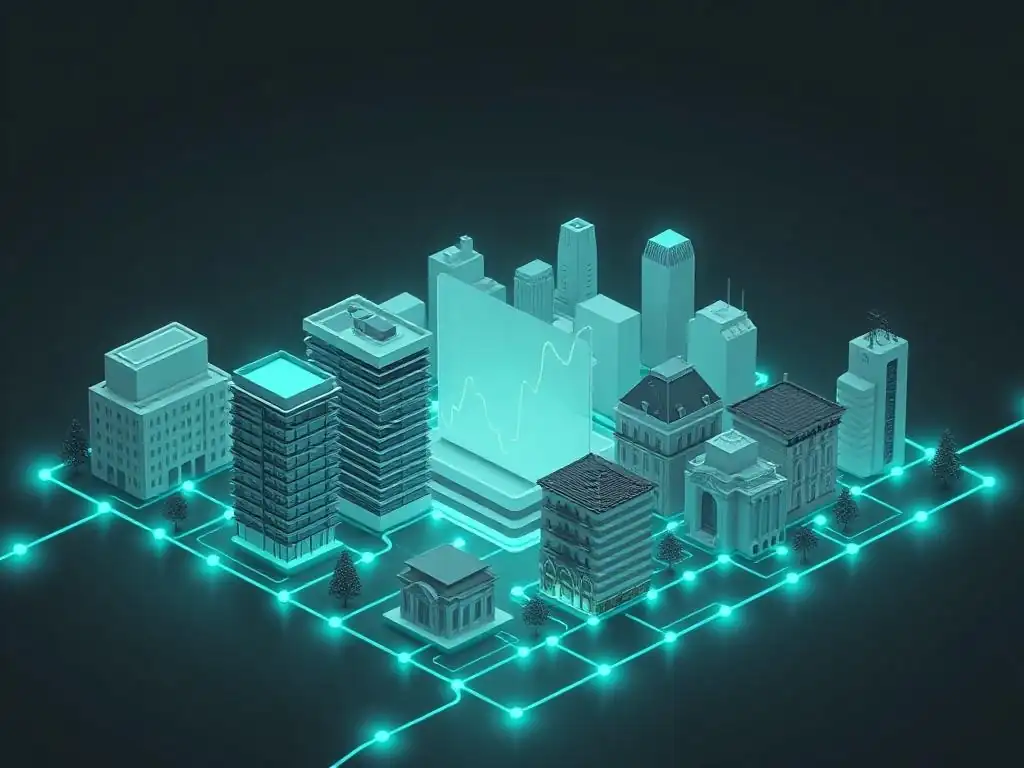
The most straightforward use case for tokenized real estate is enabling fractional ownership. This applies to both high-value commercial properties, like office buildings, shopping centers, or hotels, and residential properties, including individual homes or apartment complexes. By tokenizing, say, a $50 million commercial building into 50,000 tokens worth $1,000 each, a much wider pool of investors can gain exposure to this asset class.
Similarly, a residential property valued at $500,000 could be tokenized into 5,000 tokens at $100 each. This allows individuals to invest in real estate markets in different cities or countries without the need for large down payments, mortgages, or navigating complex international property laws directly. These tokenized assets decentralized finance platforms are designed to facilitate the trading and management of these fractional shares, creating new investment opportunities previously limited by geographical and financial constraints.
Real Estate-Backed Lending and Borrowing Platforms
Integrating tokenized real estate into decentralized finance opens up possibilities for innovative lending and borrowing models. Token holders can potentially use their real estate tokens as collateral to borrow stablecoins or other cryptocurrencies on DeFi lending platforms. Traditionally, obtaining a loan against real estate is a lengthy process involving banks and appraisals.
With tokenized assets, provided the platform supports the specific real estate token and has a reliable method for valuing the collateral (which remains a key challenge), users could potentially access liquidity against their property holdings more quickly and efficiently. This creates a novel way for property owners to access capital without selling their assets and introduces a new class of collateral into the DeFi ecosystem. As the market for tokenized assets decentralized finance matures, we may see specialized protocols emerge specifically for real estate-backed financial products.
Decentralized Autonomous Organizations (DAOs) for Property Management
Decentralized Autonomous Organizations (DAOs) offer a governance model that aligns well with the collective ownership inherent in tokenized real estate. A DAO can be established for a tokenized property or portfolio, allowing token holders to participate in key decisions regarding property management. This could include voting on major repairs, selecting property managers, approving budgets, or setting rental terms.
Using a DAO structure provides a transparent and democratic way for fractional owners to have a say in the operation of the asset they collectively own. Decisions are proposed and voted on by token holders, with outcomes automatically executed by smart contracts. This model enhances investor engagement and ensures that the management of the physical asset aligns with the interests of the tokenized assets decentralized finance community holding ownership stakes.
Benefits of Combining Tokenized Real Estate and Decentralized Finance
Increased Liquidity and Faster Transaction Settlement
As discussed, one of the primary benefits is the significant increase in liquidity for real estate investments. By breaking down properties into smaller, tradable units, tokenization allows investors to buy and sell portions of properties more easily than dealing with whole physical assets. Transactions involving tokens settle much faster on a blockchain compared to traditional property sales, which can take weeks or months due to legal and administrative processes.
Trading tokenized assets decentralized finance platforms allows for near-instantaneous transfer of ownership on the blockchain ledger, subject only to network confirmation times (typically minutes). This speed and ease of transfer make real estate a more dynamic asset class, appealing to a wider range of investors who might be deterred by the traditional market's illiquidity and slow pace.
Enhanced Transparency and Reduced Intermediary Costs
Blockchain technology brings inherent transparency to the ownership and transaction history of tokenized real estate. Every transfer of a token is recorded on the public ledger, creating an immutable and auditable trail. This reduces the potential for fraudulent claims and increases trust among participants.
Furthermore, tokenization and DeFi can significantly reduce the number and cost of intermediaries involved in real estate transactions. Traditional processes involve real estate agents (charging commissions often ranging from 3% to 6%), lawyers, escrow agents, and title companies. By automating aspects of ownership transfer and income distribution via smart contracts on tokenized assets decentralized finance platforms, many of these costs and dependencies can be reduced or eliminated, making investments more cost-effective.
Greater Accessibility and Inclusivity for Real Estate Investors
Tokenization lowers the financial barrier to entry for real estate investment, making it accessible to individuals who previously could not afford to buy entire properties. This fractional ownership allows investors to participate with smaller capital amounts, enabling portfolio diversification across different properties, types, and geographical locations.
This inclusivity expands the potential investor base beyond accredited investors and institutions to include retail investors globally. The permissionless nature of tokenized assets decentralized finance platforms means that anyone with a crypto wallet and internet access can potentially invest, opening up global investment opportunities and democratizing access to an asset class that has historically been a significant wealth builder but largely inaccessible to many.
New Revenue Streams for Property Owners Through DeFi Yield Farming
Integrating tokenized assets decentralized finance can create novel revenue streams for property owners and token holders. Beyond traditional rental income, token holders might be able to participate in DeFi yield farming strategies using their real estate tokens (or stablecoins earned from rent distribution).
While still an emerging area, protocols could potentially allow staking real estate tokens to earn protocol rewards, or using tokens as collateral in lending protocols to borrow assets that are then used in yield-generating activities. This allows the underlying value of the real estate to be leveraged within the dynamic DeFi ecosystem, potentially generating returns beyond traditional rental yields and property appreciation, adding another layer of financial utility to the tokenized asset.
Challenges and Risks Associated with Real Estate Tokenization in DeFi
Regulatory Compliance with Securities Laws and KYC/AML Requirements
One of the most significant hurdles for tokenized real estate is navigating the complex and often uncertain regulatory landscape. Real estate tokens are frequently classified as securities, meaning they are subject to stringent regulations similar to stocks or bonds. This requires issuers to comply with securities laws in relevant jurisdictions, which can involve costly registration processes and ongoing reporting requirements.
Furthermore, tokenized assets decentralized finance platforms dealing with these securities must implement robust Know Your Customer (KYC) and Anti-Money Laundering (AML) procedures to prevent illicit activities, often requiring users to verify their identity. Achieving global regulatory clarity and harmonization for tokenized real estate is an ongoing process, and non-compliance poses significant legal risks for issuers and platforms alike.
Security Risks and Smart Contract Vulnerabilities
Like any technology, blockchain and smart contracts are not immune to security risks. Smart contracts, which automate the logic for managing tokenized real estate (e.g., distributing rent), can contain vulnerabilities or bugs. If exploited, these vulnerabilities could lead to the loss of funds, incorrect distribution of income, or even compromise the ownership structure represented by the tokens.
While rigorous auditing of smart contracts by multiple independent parties is standard practice in the DeFi space, risks remain. The interaction between multiple protocols within tokenized assets decentralized finance ecosystems also introduces complexity and potential points of failure. Ensuring the security and integrity of the underlying smart contracts and the platforms they interact with is paramount for investor confidence and the successful adoption of tokenized real estate.
Price Volatility of Real Estate Tokens and Underlying Asset Valuation
While real estate itself is generally less volatile than cryptocurrencies, the tokens representing it can be subject to market fluctuations influenced by both the underlying property's performance and the broader crypto or security token market sentiment. The price of a real estate token on a secondary market might deviate from the current appraised value of the physical asset due to supply/demand dynamics on the trading platform.
Moreover, accurately and frequently valuing the underlying physical property remains challenging. Traditional appraisals are costly and periodic (e.g., annually). In a dynamic DeFi environment, protocols might require more frequent and reliable valuation data to function effectively, for example, for lending protocols using the tokens as collateral. Discrepancies between token price and asset value, and the inherent difficulty in real-time valuation of physical property, pose risks for tokenized assets decentralized finance participants.
Ensuring Accurate Valuation and Custody of Physical Properties
The disconnect between the digital token and the physical asset presents ongoing operational and trust challenges. While the tokens trade on-chain, the physical property requires management, maintenance, insurance, and potentially physical security. Ensuring that the physical asset is well-maintained and its value preserved directly impacts the long-term value of the tokens.
Custody of the physical property typically remains with a legal entity (the SPV) managed by a professional team, or a trusted third party. Investors holding tokens rely on this entity to properly manage the asset. Ensuring accountability, transparency, and reliable reporting on the physical property's status, expenses, and income is critical. Establishing trust mechanisms that bridge the gap between the decentralized digital ownership and the centralized physical custody is vital for the success of tokenized assets decentralized finance initiatives involving real estate.
The Future of Tokenized Real Estate in DeFi: Trends and Predictions
The Growth of Institutional Investment in Tokenized Real Estate
A significant trend expected to shape the future of tokenized real estate in DeFi is the increasing involvement of institutional investors. Large financial institutions, asset managers, and real estate investment firms are exploring tokenization as a way to improve liquidity, reduce costs, and offer new products to their clients. While retail adoption is growing, institutional capital can provide the scale and legitimacy needed for the market to mature.
We are already seeing major players conduct pilot projects or express interest in the space. The potential for large-scale capital to flow into tokenized assets decentralized finance platforms focused on real estate could significantly boost market depth and trading volume. Institutional participation often necessitates higher standards for compliance, security, and due diligence, which can help professionalize the tokenized real estate market as a whole.
Development of New DeFi Protocols Specifically for Real Estate
As tokenized real estate becomes more prevalent, there is a growing need for DeFi protocols tailored specifically to the nuances of this asset class. Current DeFi protocols are largely designed for highly liquid, fungible cryptocurrencies. Real estate tokens, even when fractionalized, have different risk profiles, valuation challenges, and income generation models (rent vs. block rewards).
Future developments are likely to include specialized lending platforms that better accommodate real estate collateral, decentralized exchanges optimized for less frequently traded security tokens, and protocols designed for managing property-specific governance and income distribution. These specialized tokenized assets decentralized finance protocols will be crucial for unlocking the full potential of real estate within the decentralized financial ecosystem, providing the necessary infrastructure for complex real estate-related financial activities.
Integration of Real Estate Tokenization with Metaverse and Virtual Land
An intriguing future trend is the potential integration of real estate tokenization with the burgeoning metaverse and virtual world ecosystems. While virtual land itself is a digital asset, its value is often speculative and tied to platform popularity. Tokenized real estate could bridge the physical and virtual worlds, allowing ownership or economic rights in physical properties to be represented or utilized within virtual environments.
Imagine using tokens representing fractional ownership in a physical art gallery to gain access to its virtual twin in the metaverse, or using rental income from a tokenized apartment building to purchase virtual goods. This convergence could create new use cases and demand for tokenized assets decentralized finance initiatives by linking tangible value to digital experiences, blurring the lines between physical and virtual economies and opening up innovative revenue models and forms of interaction.
Case Studies: Examples of Successful Real Estate Tokenization Projects in DeFi
Aspen Digital: Tokenized St. Regis Aspen Resort
One of the earliest and most prominent examples of real estate tokenization is the St. Regis Aspen Resort. In 2018, equity in the entity that owns the luxury hotel in Aspen, Colorado, was tokenized by Aspen Digital (formerly Templum Markets and Elevated Returns). Approximately $18 million worth of security tokens, called ASPEN coins, were issued, representing fractional ownership in the resort's equity.
These tokenized assets decentralized finance efforts aimed to provide investors with exposure to a high-value trophy asset that would typically be inaccessible to most. While the initial trading was limited to regulated platforms due to securities laws, it demonstrated the technical feasibility of tokenizing a large, complex real estate asset. This case study highlighted the potential for increased accessibility to institutional-grade real estate investments through tokenization, paving the way for future projects.
RealT: Fractionalized Ownership of US Real Estate
RealT is a platform that has successfully tokenized fractional ownership of numerous residential properties in the United States, primarily focusing on single-family homes and apartment units in markets like Detroit, Cleveland, and Chicago. RealT purchases properties, renovates them, finds tenants, and then tokenizes the ownership of the legal entity holding the property. Each token represents a share of the equity in that specific property.
Investors worldwide can purchase these tokens, gaining the right to a proportional share of the rental income, which is distributed weekly to token holders' wallets, often automatically via smart contracts. RealT's model exemplifies how tokenized assets decentralized finance can democratize access to income-generating real estate, allowing global investors to easily own small fractions of US rental properties and receive passive income directly on-chain. As of late 2023, RealT had tokenized well over 150 properties, demonstrating a scalable model for fractional residential real estate ownership.
Conclusion: Tokenized Real Estate as a Catalyst for DeFi Adoption
The Transformative Potential of Tokenized Real Estate in Democratizing Investment
The integration of tokenized real estate into decentralized finance represents a significant step towards blurring the lines between traditional and decentralized finance. By transforming illiquid physical properties into divisible, tradable digital tokens, tokenization unlocks unprecedented levels of liquidity and accessibility in the real estate market. This innovation has the potential to democratize real estate investment, allowing individuals with smaller capital to participate in ownership and benefit from an asset class historically dominated by the wealthy and institutional players.
The benefits extend beyond accessibility, offering enhanced transparency, reduced transaction costs, and the potential for new financial activities like real estate-backed lending within the DeFi ecosystem. While considerable challenges remain, particularly concerning regulation, valuation, and the bridging of physical and digital realms, ongoing developments in legal frameworks, technology, and specialized DeFi protocols are paving the way for wider adoption.
The successful integration of tokenized assets decentralized finance is not just about digitizing property; it's about creating a more open, efficient, and inclusive global investment landscape where real estate can be accessed and leveraged by anyone, anywhere, fundamentally transforming how we invest in and interact with property.
Frequently Asked Questions
What are tokenized assets and why are they relevant to decentralized finance (DeFi)?
Tokenized assets represent ownership of a real-world asset, like real estate or commodities, on a blockchain. This allows them to be traded and used within DeFi protocols, unlocking liquidity and new financial opportunities.
How does the integration of tokenized assets impact the DeFi ecosystem?
It introduces real-world value and stability to the often volatile DeFi space, attracting traditional investors and broadening the use cases beyond purely digital assets. This helps to create a more robust and mature DeFi market.
What are some of the potential benefits of using tokenized assets in decentralized finance?
Benefits include increased liquidity for traditionally illiquid assets, fractional ownership allowing for broader participation, and automated, transparent transactions enabled by smart contracts within DeFi.
What are the key regulatory considerations for integrating tokenized assets into DeFi?
Regulatory frameworks are still evolving, but key considerations include compliance with securities laws, KYC/AML requirements, and ensuring investor protection within the decentralized environment.
What is the future outlook for tokenized assets and their role in shaping the future of decentralized finance?
The future looks promising, with expectations for wider adoption of tokenized assets across various industries, driving further innovation and growth in DeFi. This integration is expected to lead to a more interoperable and accessible financial system.
Final Reflection: Bridging the Digital and Physical Worlds
The exploration of tokenized assets in decentralized finance reveals a profound shift in how we perceive and interact with value. No longer confined to traditional financial systems, real-world assets are finding new life and accessibility within the innovative landscape of DeFi, promising increased liquidity, transparency, and efficiency for a global audience. This integration isn't just a technological advancement; it's a fundamental reimagining of ownership and investment.
The ongoing convergence of DeFi and real-world assets is undeniably shaping the future of finance. This evolution resonates deeply because it democratizes access to investment opportunities previously reserved for a select few, fostering a more inclusive and equitable financial ecosystem. The future of finance is decentralized, and the future of assets is tokenized.
This quote encapsulates the transformative potential of this integration, highlighting the power of blockchain technology to unlock value and empower individuals.
As we stand at the cusp of this new era, let us embrace the possibilities that tokenized assets and decentralized finance offer. Consider how you can leverage these advancements to diversify your investments, support innovative projects, and contribute to a more transparent and accessible financial future. The power to shape this future lies within each of us, and the time to act is now.
Unlock Your DeFi Potential: Start Bridging the Gap Now!
Thank you for exploring the exciting intersection of DeFi and Real-World Assets with us. We hope you've gained valuable insights into how tokenization is revolutionizing finance. Now, let's put that knowledge into action!
Here are a few steps you can take to dive deeper into this groundbreaking space:
- Explore DeFi platforms experimenting with RWAs: Identify at least three platforms integrating tokenized assets and analyze their approach to yield generation and risk management. This is your primary action - understanding real-world implementations.
- Research the regulatory landscape: Stay informed about legal and compliance considerations related to RWAs in your jurisdiction. This is critical for responsible participation.
- Share this article with your network: Help spread awareness about the potential of DeFi and Real-World Assets by sharing this article on social media and within your professional circles.
What unique Real-World Asset do you believe would benefit most from tokenization, and how could it reshape the DeFi landscape? Share your thoughts in the comments below!
Leave a Reply