
Demystifying Tokenization: Transforming Traditional Assets with Blockchain

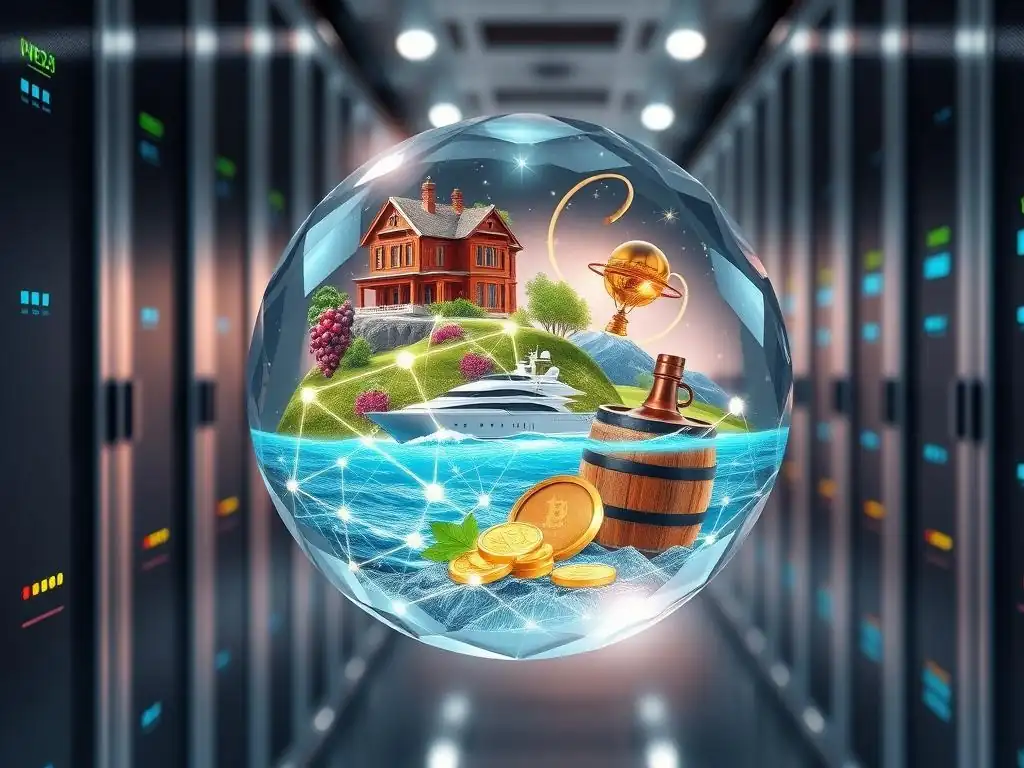
Welcome to Blockchain Trends, your compass in the rapidly evolving world of decentralized technology. Are you ready to unlock the hidden value within traditional assets? Dive into our exploration of blockchain asset tokenization benefits and discover how this groundbreaking process is revolutionizing industries far beyond cryptocurrency. Uncover the secrets to increased liquidity, fractional ownership, and streamlined processes – and see why tokenization is poised to reshape the future of finance and beyond. Learn more now and see how you can benefit from this transformative technology.
- Demystifying Tokenization: Transforming Traditional Assets with Blockchain
- The Benefits of Blockchain Asset Tokenization
-
Traditional Assets Ripe for Tokenization
- Tokenizing Real Estate Assets: Opportunities and Challenges
- Tokenizing Art and Collectibles: Expanding Market Reach
- Tokenizing Commodities: Enhancing Supply Chain Transparency
- Tokenizing Intellectual Property: Simplifying Licensing and Royalties
- Tokenizing Private Equity and Venture Capital: Democratizing Investment
- The Process of Tokenizing Assets on a Blockchain
- The Future of Blockchain Asset Tokenization
- Risks and Challenges of Blockchain Asset Tokenization
- Case Studies: Successful Examples of Asset Tokenization
- Conclusion: The Transformative Power of Blockchain Asset Tokenization
-
Frequently Asked Questions
- What are the main blockchain asset tokenization benefits for traditional businesses?
- How does blockchain asset tokenization improve liquidity in illiquid markets?
- What role does blockchain asset tokenization play in the future of decentralized finance (DeFi)?
- What are the key regulatory considerations surrounding blockchain asset tokenization?
- How can blockchain asset tokenization transform supply chain management?
- Final Reflection: Embracing the Tokenized Future
- Unleash the Power of Tokenization!
Demystifying Tokenization: Transforming Traditional Assets with Blockchain
What is Tokenization of Assets on the Blockchain?
Tokenization of assets on the blockchain is the process of converting rights to an asset into a digital token on a blockchain network. This digital representation can then be easily stored, transferred, and recorded on the distributed ledger. Essentially, it breaks down the ownership or economic rights of a physical or intangible asset into programmable digital units, making them tradable and manageable in a highly efficient and secure manner. This process leverages the inherent characteristics of blockchain technology, such as immutability, transparency, and decentralization, to create a new paradigm for asset management and ownership.
This transformation applies to a vast array of asset classes, ranging from traditional real estate and fine art to less liquid assets like private equity and intellectual property. Each token typically represents a specific share or unit of the underlying asset. For example, a single token might represent one square foot of a property or a percentage of a painting's value.
The smart contract governing these tokens defines the rules of ownership, transfer, and any associated rights or obligations, ensuring that the digital representation accurately reflects the real-world asset and its associated legal framework. This fundamental shift unlocks significant potential for liquidity and accessibility in markets historically characterized by high barriers to entry and complex processes.
Key Concepts in Blockchain Tokenization
Several core concepts underpin the process of blockchain asset tokenization. At the heart of it is the token, which is the digital representation of the asset or its fractional ownership. These tokens exist on a blockchain and are governed by smart contracts, self-executing contracts with the terms of the agreement directly written into code.
Smart contracts automate the management, transfer, and other operations related to the tokenized asset, removing the need for intermediaries in many cases. Another crucial concept is fractional ownership, enabled by tokenization, which allows multiple individuals to own a small portion of a high-value asset, making investment in such assets more accessible.
Furthermore, understanding different token standards is vital. For instance, ERC-20 is a widely used standard on the Ethereum blockchain for fungible tokens (where each token is identical to another, like shares in a company), while ERC-721 is the standard for non-fungible tokens (NFTs), used for unique assets like a specific piece of art or a unique property title.
The blockchain network itself provides the secure, decentralized, and transparent ledger for recording all transactions related to the tokens. Finally, security tokens are a specific type of token representing ownership in an underlying asset, often subject to securities regulations, distinct from utility tokens or cryptocurrencies like Bitcoin or Ether.
The Role of Blockchain in Asset Tokenization
The blockchain serves as the foundational technology that makes asset tokenization possible and provides its core benefits. Its distributed and immutable ledger ensures that once a token is created and recorded, its ownership and transaction history are transparent and cannot be tampered with without consensus from the network participants. This inherent security and transparency drastically reduce the risk of fraud and disputes related to asset ownership and transfer. Unlike traditional databases, the decentralized nature of blockchain means there is no single point of failure, enhancing resilience and availability.
Moreover, blockchain enables programmable ownership and transfer through smart contracts. These contracts can automate various processes, such as dividend distribution for tokenized securities, royalty payments for tokenized intellectual property, or even the automatic transfer of ownership upon meeting certain conditions. This automation significantly reduces administrative overhead and speeds up transactions compared to traditional methods that involve extensive paperwork and manual verification. The timestamped and verifiable nature of blockchain records also provides a clear audit trail, further contributing to trust and efficiency in the management of tokenized assets.
The Benefits of Blockchain Asset Tokenization
Enhanced Liquidity Through Tokenization
One of the most significant blockchain asset tokenization benefits is the dramatic increase in asset liquidity. Many traditional assets, such as real estate, fine art, and private company equity, are inherently illiquid. Selling these assets can be a lengthy and complex process, often involving intermediaries, high transaction costs, and limited buyer pools.
Tokenization breaks down these assets into smaller, tradable units (tokens), making them more accessible to a wider range of investors. This fractionalization means that investors don't need to purchase the entire asset, but can instead buy tokens representing a portion of it, lowering the entry barrier and increasing the potential pool of buyers and sellers.
For example, a commercial property valued at $50 million could be tokenized into 50 million tokens, each representing $1 of value. Instead of needing a buyer for the entire property, individual investors could purchase tokens worth just a few hundred or thousand dollars. This ability to buy and sell small fractions of an asset on a digital marketplace or exchange significantly improves its tradability. While precise global data is still emerging, projections suggest that tokenized real estate markets could exceed $4 trillion in value by 2030, largely driven by this enhanced liquidity compared to the traditional real estate market.
Increased Accessibility and Fractional Ownership via Tokenization
Blockchain asset tokenization fundamentally increases accessibility to investment opportunities previously limited to wealthy individuals or institutional investors. High-value assets like luxury real estate, rare art pieces, or shares in promising startups typically require substantial capital outlay. Tokenization enables fractional ownership, allowing investors to own a small, affordable piece of these assets. This democratizes investment, opening up markets to a broader base of participants who can now diversify their portfolios with asset classes that were previously out of reach.
Consider the art market, where a single famous painting might sell for tens or hundreds of millions of dollars. Through tokenization, that painting can be represented by perhaps a million tokens, each available for a much lower price. This allows individuals with modest investment budgets to own a fraction of a valuable artwork.
This increased accessibility is not just theoretical; platforms are emerging globally facilitating this, enabling participation from investors in different geographical locations who might not have had access to such opportunities through traditional means. This expansion of the investor base is a core blockchain asset tokenization benefit, fostering greater market participation and potentially driving innovation in funding models.
Transparency and Traceability with Blockchain Tokenization
The use of blockchain technology inherently provides a high degree of transparency and traceability for tokenized assets. Every transaction involving the tokens – from initial issuance to subsequent transfers of ownership – is recorded on the public or permissioned ledger, depending on the blockchain used. This record is immutable and verifiable by anyone with access to the network, creating a clear and auditable history of the asset's ownership and movement. This contrasts sharply with traditional asset management, where ownership records can be fragmented, opaque, and difficult to verify.
For instance, tracking the provenance and ownership history of a physical asset like a diamond or a luxury good can be complex and prone to fraud. Tokenizing such assets, with each token linked to a unique identifier for the physical item, creates a digital twin on the blockchain. Every time the asset changes hands, the corresponding token transfer is recorded on the immutable ledger. This provides a verifiable, transparent, and tamper-proof history, significantly increasing trust among participants and simplifying due diligence. The transparency offered by blockchain asset tokenization is a critical advantage, reducing information asymmetry and enhancing market integrity.
Streamlined Processes and Reduced Costs with Tokenization
Blockchain asset tokenization significantly streamlines numerous processes associated with traditional asset management and transfer, leading to substantial cost reductions. Manual processes involving extensive paperwork, legal intermediaries, and administrative overhead are largely automated through smart contracts. For example, executing a real estate transaction traditionally involves numerous parties (agents, lawyers, escrow companies, title insurers), each adding costs and time. Tokenization can automate aspects like escrow, title verification (if integrated with digital identity solutions), and transfer of ownership upon payment, drastically reducing the need for manual intervention.
Furthermore, the ability to conduct peer-to-peer transactions on the blockchain eliminates the need for many traditional intermediaries, such as brokers or clearinghouses, thereby cutting down on associated fees. While specific cost savings vary greatly depending on the asset class and the complexity of the transaction, estimates suggest that tokenization could reduce transaction costs for real estate transfers by up to 50% or more in some scenarios. This efficiency gain and cost reduction are compelling blockchain asset tokenization benefits for both issuers and investors, making previously cost-prohibitive transactions more viable.
Improved Efficiency in Asset Management Thanks to Tokenization
Beyond transaction processing, blockchain asset tokenization enhances the overall efficiency of asset management. The digital nature of tokenized assets allows for easier tracking, reporting, and administration. Smart contracts can automate tasks like dividend or interest payments, voting rights distribution for tokenized shares, or even managing fractional rental income from tokenized properties. This automation frees up time and resources that would otherwise be spent on manual administrative tasks.
Moreover, the real-time nature of data on the blockchain provides stakeholders with instant access to information regarding asset ownership, value, and transaction history. This facilitates more informed decision-making and enables more dynamic portfolio management. For example, a fund holding tokenized assets can instantly verify its holdings and their current market value based on on-chain data, simplifying reporting and compliance. This level of operational efficiency is a key blockchain asset tokenization benefit, making the management of diverse and complex asset portfolios more manageable and less error-prone.
Traditional Assets Ripe for Tokenization
Tokenizing Real Estate Assets: Opportunities and Challenges
Real estate is widely considered one of the most promising asset classes for tokenization due to its high value, illiquidity, and complex ownership structures. Tokenizing real estate allows property owners to sell fractional ownership interests to a global pool of investors, unlocking trapped equity and increasing market liquidity. Investors gain access to real estate investments with smaller capital outlays than typically required, enabling portfolio diversification across different properties and geographies.
Opportunities include tokenizing commercial buildings, residential properties, development projects, and even real estate investment funds. Early projects have successfully tokenized portions of properties ranging from luxury apartments in New York to commercial buildings in Europe.
However, tokenizing real estate also presents significant challenges. Legal and regulatory hurdles are paramount, as property laws vary greatly by jurisdiction, and integrating blockchain-based ownership with traditional land registries and legal frameworks is complex. Valuation of tokenized fractions and ensuring their correlation to the underlying physical asset's value is another challenge. Furthermore, managing the physical asset (maintenance, tenants, property management) still requires traditional processes, which need to be seamlessly integrated with the digital token management. Despite these challenges, the potential for increased liquidity and accessibility is driving significant innovation and investment in this space.
Tokenizing Art and Collectibles: Expanding Market Reach
The art and collectibles market, known for its opacity, high values, and limited accessibility, is another prime candidate for blockchain asset tokenization. Tokenizing a painting, sculpture, rare wine collection, or collectible car allows multiple individuals to own a fraction of the item. This fractional ownership significantly expands the potential market reach beyond wealthy collectors and institutions to a broader base of art enthusiasts and investors. Platforms like Maecenas have demonstrated the feasibility, facilitating the fractional sale of artworks by artists such as Andy Warhol and Pablo Picasso.
The benefits here include enhanced liquidity for owners who can sell fractions rather than the entire piece, and increased accessibility for investors. However, challenges remain, including the subjective nature of art valuation, ensuring the physical security and preservation of the underlying asset, and establishing clear legal frameworks for fractional ownership rights in different jurisdictions. Authenticating the physical asset and linking it securely to its digital token representation is also critical. Despite these hurdles, tokenization is transforming the art market, making it more transparent and inclusive.
Tokenizing Commodities: Enhancing Supply Chain Transparency
Tokenizing commodities like gold, silver, oil, or agricultural products can bring unprecedented transparency and efficiency to their supply chains and trading. Each token can represent a specific unit of a commodity (e.g., one gram of gold, one barrel of oil) and can be traced throughout its journey from production to consumption on the blockchain. This provides a verifiable audit trail, combating issues like fraud, counterfeit goods, and unethical sourcing. It also simplifies trading and settlement, potentially reducing counterparty risk and transaction times.
Projects are exploring tokenizing physical gold, allowing investors to own fractional amounts of vaulted gold without the complexities of physical storage or traditional gold certificates. The challenge lies in securely linking the digital token to the physical commodity and ensuring reliable verification of the commodity's quantity and quality. Integrating blockchain systems with existing complex global supply chain logistics also requires significant effort. Nevertheless, the potential for increased efficiency, transparency, and reduced friction in commodity trading is a significant driver for tokenization in this sector.
Tokenizing Intellectual Property: Simplifying Licensing and Royalties

Intellectual property (IP), such as patents, copyrights, trademarks, and music rights, represents significant value but can be difficult to manage, license, and monetize effectively. Tokenizing IP allows creators and owners to sell fractional ownership or royalty rights to investors. This can provide new avenues for funding creative projects or R&D and offer investors a share in future revenues generated by the IP. Smart contracts can automate the distribution of royalties directly to token holders based on predefined rules and verifiable revenue streams.
For example, a musician could tokenize future royalty streams from their songs, selling tokens to fans or investors. When the song is streamed or licensed, the smart contract automatically distributes the corresponding royalty payments to the token holders. Challenges include accurately valuing IP, defining the scope of rights represented by the tokens, and navigating complex global IP laws. However, the potential to unlock value from intangible assets and streamline licensing and royalty distribution is a compelling blockchain asset tokenization benefit.
Tokenizing Private Equity and Venture Capital: Democratizing Investment
Private equity (PE) and venture capital (VC) investments are typically illiquid, have high minimum investment thresholds, and are primarily accessible to accredited investors and institutions. Tokenizing PE and VC fund interests or direct company equity can significantly democratize access to these asset classes. By issuing security tokens representing shares in a fund or a private company, issuers can lower the minimum investment amount and potentially reach a wider pool of investors globally. This can provide startups and private companies with new avenues for fundraising beyond traditional VC rounds or IPOs.
Platforms are emerging that facilitate the issuance and trading of security tokens representing equity in startups or interests in PE/VC funds. This increases liquidity for investors who might otherwise be locked into investments for many years. Challenges include complying with stringent securities regulations in various jurisdictions, managing investor relations for a potentially larger and more diverse investor base, and ensuring secondary market liquidity for these security tokens. Despite the regulatory complexities, the potential to broaden access to high-growth private investment opportunities is a major driver for blockchain asset tokenization in this sector.
The Process of Tokenizing Assets on a Blockchain
Legal Considerations for Blockchain Asset Tokenization
The legal framework surrounding blockchain asset tokenization is complex and varies significantly across jurisdictions. One of the primary considerations is determining whether the token constitutes a security under existing laws. If a token is deemed a security, its issuance and trading must comply with stringent regulations governing securities offerings and exchanges, such as registration requirements and investor accreditation rules. Failure to comply can result in significant legal penalties. Legal teams must carefully analyze the nature of the asset being tokenized and the characteristics of the token to make this determination.
Furthermore, legal frameworks must address the relationship between the digital token and the underlying physical or intangible asset. How is legal ownership or rights transfer enforced in the physical world when the token changes hands on the blockchain? This often requires legal agreements that legally link the token holder's rights to the underlying asset, potentially involving custodians or legal trusts. Property laws, contract laws, and financial regulations all play a role and must be navigated carefully to ensure the tokenization is legally sound and enforceable.
Technical Infrastructure for Asset Tokenization
Implementing blockchain asset tokenization requires a robust technical infrastructure. This typically involves selecting an appropriate blockchain platform (e.g., Ethereum, Binance Smart Chain, Polygon, or a private/permissioned blockchain depending on the use case and regulatory requirements). The choice depends on factors like scalability needs, transaction costs (gas fees), security requirements, and whether the asset requires a public or private ledger. Developing or utilizing smart contracts is central to the process. These contracts automate the token's lifecycle, including issuance, transfer rules, and potentially dividend or royalty distribution.
Additionally, the infrastructure must include secure methods for linking the digital token to the real-world asset, which might involve trusted oracles or integration with existing asset registries where possible. Secure digital wallets are needed for investors to hold and manage their tokens. Platforms facilitating token issuance and trading require robust security measures, compliance features (like Know Your Customer/Anti-Money Laundering), and often integration with traditional financial systems for fiat currency on-ramps and off-ramps. The technical complexity requires expertise in blockchain development, cybersecurity, and integration with existing enterprise systems.
Smart Contracts and Token Standards (ERC-20, ERC-721)
Smart contracts are the engine behind blockchain asset tokenization. They are self-executing code deployed on the blockchain that define the rules and logic governing the token. For example, a smart contract for a tokenized property might contain rules about how rental income is distributed among token holders or how voting rights are assigned for property management decisions. These contracts ensure that operations are performed automatically and transparently according to the predefined terms.
Token standards provide a common set of rules for creating and managing tokens on a specific blockchain, ensuring interoperability between different applications and wallets. ERC-20 is the most common standard for fungible tokens on Ethereum, suitable for assets like company shares or commodities where each token is interchangeable. ERC-721 is the standard for non-fungible tokens (NFTs), used for unique assets like a specific artwork or a deed to a property, where each token has distinct characteristics and value.
Other standards like ERC-1155 offer hybrid functionality. Choosing and correctly implementing the appropriate token standard is crucial for the functionality and usability of the tokenized asset.
Security Best Practices for Tokenized Assets
Security is paramount in blockchain asset tokenization. While blockchain technology itself is highly secure due to its cryptographic nature and distributed consensus, vulnerabilities can exist at other layers. Smart contracts can contain bugs or vulnerabilities that malicious actors could exploit, potentially leading to loss of funds or tokens. Rigorous auditing of smart contract code by independent security firms is therefore essential before deployment.
Securing the infrastructure surrounding the tokenized assets is also critical. This includes securing the platforms used for token issuance and trading, implementing strong access controls, and protecting private keys used to control token ownership. Custodial solutions for tokenized assets must employ institutional-grade security measures. Furthermore, linking the digital token to the physical asset requires processes to prevent fraud, such as independent verification and secure storage of the physical asset. Adhering to best practices in cybersecurity, including penetration testing and continuous monitoring, is crucial to protect tokenized assets from theft and manipulation.
The Future of Blockchain Asset Tokenization
Regulatory Landscape for Tokenized Assets
The regulatory landscape for tokenized assets is rapidly evolving globally. Regulators are grappling with how to apply existing financial regulations, designed for traditional markets, to novel blockchain-based assets. There is no single, unified approach; different jurisdictions are adopting varying stances, ranging from permissive to highly restrictive. A key focus for regulators is determining when a token constitutes a security, which triggers significant compliance obligations.
In some regions, like parts of Europe and certain US states, regulators are developing specific frameworks for digital assets and security tokens, aiming to provide clarity and foster innovation while protecting investors. Other countries remain hesitant, pending further understanding of the technology and its risks. The lack of regulatory harmonization across borders poses challenges for global tokenization projects. However, as the market matures and regulatory clarity increases, it is expected to significantly boost institutional participation and market growth. Navigating this complex and changing landscape requires expert legal counsel and proactive engagement with regulatory bodies.
The Growth of Security Token Offerings (STOs)
Security Token Offerings (STOs) are poised for significant growth as a method for companies to raise capital by issuing security tokens. Unlike Initial Coin Offerings (ICOs) which often involved utility tokens with unclear regulatory status, STOs explicitly frame tokens as securities and comply with relevant regulations. This makes STOs a more legitimate and safer fundraising method for both issuers and investors, particularly institutional ones who require regulatory certainty.
STOs can represent equity, debt, or other financial instruments tied to real-world assets or company revenues. They combine the efficiency and global reach of blockchain fundraising with the investor protection provided by securities laws. While the volume of STOs is still relatively small compared to traditional IPOs or private placements, the infrastructure for issuing and trading security tokens is developing rapidly. Analysts predict substantial growth in the security token market over the next decade, potentially reaching trillions of dollars in value, as more traditional financial assets are tokenized via STOs.
Decentralized Finance (DeFi) and Tokenized Assets
Decentralized Finance (DeFi) is an ecosystem of financial applications built on blockchain, primarily Ethereum, that operate without traditional intermediaries. Tokenized assets are becoming increasingly integrated into the DeFi space, creating new opportunities for investors. Tokenized real estate, art, or private equity can potentially be used as collateral for decentralized loans, traded on decentralized exchanges (DEXs), or used in other DeFi protocols like yield farming.
This integration unlocks additional liquidity and utility for tokenized assets beyond simple ownership transfer. For example, an investor holding tokens representing fractional ownership in a property could potentially borrow stablecoins against these tokens through a DeFi lending protocol. This allows them to access capital without selling their asset tokens. While the integration of less liquid tokenized assets into DeFi presents challenges related to price discovery and oracle reliability, the potential for creating a more interconnected and efficient global financial system is immense.
Tokenization of Carbon Credits and ESG Assets
Blockchain asset tokenization is also playing a growing role in Environmental, Social, and Governance (ESG) initiatives, particularly in the tokenization of carbon credits and other environmental assets. Tokenizing carbon credits makes them more transparent, traceable, and tradable. Each token can represent a verified reduction or removal of a specific amount of greenhouse gas emissions (e.g., one ton of CO2).
This process can help combat issues of double-counting and lack of transparency often found in traditional carbon markets. Projects can issue tokenized carbon credits on the blockchain, allowing companies and individuals to easily purchase, trade, or retire them to offset their emissions. This increased efficiency and transparency can incentivize more investment in carbon reduction projects. Similarly, other ESG-related assets, such as renewable energy certificates or impact investment shares, can be tokenized, providing investors with verifiable and traceable ways to support sustainable initiatives. This application highlights the potential of blockchain asset tokenization to facilitate positive environmental and social impact.
Risks and Challenges of Blockchain Asset Tokenization
Regulatory Uncertainty and Compliance
One of the most significant risks facing blockchain asset tokenization is the ongoing regulatory uncertainty. The lack of clear and consistent regulations across different jurisdictions creates legal ambiguity for issuers, platforms, and investors. Projects operating internationally must navigate a complex web of rules that can change rapidly. The risk of a token being retroactively classified as a security in a jurisdiction where it wasn't initially treated as such is a major concern.
Ensuring compliance with evolving regulations, including securities laws, anti-money laundering (AML), and know your customer (KYC) requirements, adds complexity and cost to tokenization projects. This uncertainty can deter institutional investors and traditional companies from fully embracing tokenization until the legal landscape becomes more stable and predictable. Industry participants are actively engaging with regulators to help shape future frameworks, but achieving global regulatory harmony is a long-term challenge.
Security Vulnerabilities and Hacking Risks
Despite the inherent security features of blockchain, tokenized assets are still susceptible to security risks. Smart contracts, which govern the tokens, can contain vulnerabilities if not coded and audited properly. Exploits of smart contract bugs have led to significant losses in the past, such as the DAO hack on Ethereum, which resulted in tens of millions of dollars worth of Ether being stolen.
Furthermore, the platforms and wallets used to issue, manage, and trade tokenized assets are potential targets for hackers. Phishing attacks, private key compromises, and exploits of platform security weaknesses can lead to the theft of tokenized assets. While blockchain technology itself is robust, the surrounding infrastructure requires stringent security measures. Ensuring the security of tokenized assets requires continuous vigilance, secure coding practices, regular security audits, and robust infrastructure protection.
Scalability Issues and Transaction Costs
The underlying blockchain network's scalability can pose a challenge for widespread blockchain asset tokenization, particularly for public blockchains like Ethereum, which can experience network congestion and high transaction costs (gas fees) during periods of high activity. While Layer 2 scaling solutions and alternative blockchains are emerging to address these issues, scalability remains a concern for processing a high volume of asset tokenization transactions efficiently and affordably.
High transaction costs can make it uneconomical to tokenize and trade low-value assets or process frequent small transactions, potentially limiting the types of assets that can be viably tokenized on certain networks. For example, tokenizing a large number of very small items might be cost-prohibitive due to gas fees. While private or permissioned blockchains can offer higher scalability and lower costs, they sacrifice some of the decentralization and transparency benefits of public chains. Finding the right balance between scalability, cost, and decentralization is crucial for the success of tokenization initiatives.
Addressing Liquidity Concerns in Tokenized Asset Markets
While tokenization enhances liquidity compared to traditional illiquid assets, achieving sufficient liquidity in the secondary markets for tokenized assets is still a challenge. The volume of trading for many tokenized assets remains relatively low compared to established financial markets. This can make it difficult for token holders to sell their tokens quickly or at a desired price, especially for niche or less popular assets.
Building liquid secondary markets requires attracting a critical mass of buyers and sellers, establishing reliable price discovery mechanisms, and potentially integrating with larger financial ecosystems. Regulatory hurdles can also restrict who can trade certain security tokens, limiting the potential pool of participants. Efforts to improve liquidity include listing tokens on multiple compliant exchanges, developing automated market makers (AMMs) for tokenized assets, and fostering interoperability between different tokenization platforms. Overcoming this liquidity challenge is key to realizing the full blockchain asset tokenization benefits for investors.
Case Studies: Successful Examples of Asset Tokenization
Case Study 1: RealT - Real Estate Tokenization on Ethereum
RealT is a prominent example of successful real estate tokenization, primarily operating on the Ethereum blockchain and increasingly utilizing the Gnosis Chain (formerly xDai) for lower transaction costs. RealT allows investors to buy fractional ownership of US residential and commercial properties, primarily located in Detroit, Michigan, and Cleveland, Ohio. Each property is held by a US-based Limited Liability Company (LLC), and investors receive security tokens representing shares in that LLC. These tokens entitle holders to a pro-rata share of the rental income generated by the property, distributed weekly in stablecoins.
RealT has tokenized dozens of properties, allowing global investors to participate in the US real estate market with investment amounts as low as $50-$100 per property token. This demonstrates the power of blockchain asset tokenization benefits in increasing accessibility and providing passive income streams from real assets. The platform manages property acquisition, renovation, tenant management, and rental income distribution, abstracting away the complexities of physical property ownership for token holders. While still a niche market compared to traditional real estate, RealT's model showcases a viable approach to tokenizing income-generating real assets.
Case Study 2: Maecenas - Art Tokenization Platform Analysis
Maecenas was an early pioneer in the art tokenization space, aiming to democratize access to fine art investments. The platform facilitated the fractional sale of high-value artworks through tokenization. One notable example involved the tokenization of a portion of Andy Warhol's "14 Small Electric Chairs" in 2018. Investors purchased tokens representing a percentage of the artwork's value, making it possible to own a piece of a multi-million dollar painting with a significantly smaller investment.
Maecenas partnered with art galleries and brokers to source valuable artworks and used an auction-based system for the initial sale of tokens. This case study highlighted the potential to unlock liquidity for art owners and lower the entry barrier for art investors. While Maecenas faced operational challenges and regulatory hurdles, its work demonstrated the technical feasibility and market interest in tokenizing unique, high-value collectibles. It paved the way for subsequent platforms exploring similar models and underscored the unique blockchain asset tokenization benefits for illiquid luxury assets.
Key Takeaways from Successful Asset Tokenization Projects
Successful asset tokenization projects, like RealT and early efforts by platforms such as Maecenas, offer several key takeaways. Firstly, clear legal structuring is paramount. Projects must carefully navigate existing regulations, often structuring entities (like LLCs or trusts) to hold the physical asset and issue tokens representing interests in those entities. Secondly, providing tangible benefits to token holders, such as passive income (rental yield from RealT) or potential appreciation, is crucial for attracting investors.
Thirdly, robust technical infrastructure, including well-audited smart contracts and secure platforms, is essential for trust and functionality. Fourthly, managing the underlying physical asset (real estate management, art storage) requires integrating traditional processes with the blockchain token layer. Finally, focusing on increasing accessibility and liquidity for assets that were previously illiquid or exclusive is a core driver for successful adoption. These case studies demonstrate that while challenges exist, the blockchain asset tokenization benefits are real and achievable with careful planning and execution.
Conclusion: The Transformative Power of Blockchain Asset Tokenization
Blockchain Asset Tokenization: A New Era for Asset Management
Blockchain asset tokenization is ushering in a new era for asset management, poised to transform how we own, trade, and interact with a vast range of assets. By converting rights to physical and intangible assets into digital tokens on a blockchain, tokenization unlocks unprecedented levels of liquidity, accessibility, and efficiency. Assets that were once illiquid and reserved for a select few, such as real estate, fine art, and private equity, can now be fractionalized and made available to a global pool of investors with lower entry barriers.
The core blockchain asset tokenization benefits—enhanced liquidity, fractional ownership, increased transparency and traceability, streamlined processes, and improved management efficiency—are fundamentally reshaping traditional markets. While challenges related to regulation, security, and scalability persist, the rapid pace of technological development and growing interest from both retail and institutional players indicate a strong trajectory for this market. As regulatory clarity increases and infrastructure matures, tokenization is set to become a mainstream method for managing and exchanging value, democratizing investment and creating more dynamic and efficient asset markets globally.
Frequently Asked Questions
What are the main blockchain asset tokenization benefits for traditional businesses?
Tokenization allows for fractional ownership, increased liquidity, and streamlined processes. It can also lead to greater transparency and accessibility for a wider range of investors.
How does blockchain asset tokenization improve liquidity in illiquid markets?
By breaking down large assets into smaller, tradeable tokens, tokenization lowers the barrier to entry for investors. This creates a more active and liquid market for previously illiquid assets.
What role does blockchain asset tokenization play in the future of decentralized finance (DeFi)?
Tokenization enables real-world assets (RWAs) to be integrated into DeFi, expanding the ecosystem beyond cryptocurrencies. This allows for more diverse investment opportunities and innovative financial products.
What are the key regulatory considerations surrounding blockchain asset tokenization?
Regulations are still evolving, but compliance with securities laws and Know Your Customer (KYC) / Anti-Money Laundering (AML) requirements is crucial. Businesses need to ensure they are operating within the legal framework.
How can blockchain asset tokenization transform supply chain management?
Tokenizing assets within the supply chain creates a transparent and immutable record of ownership and provenance. This improves efficiency, reduces fraud, and enhances traceability.
Final Reflection: Embracing the Tokenized Future
The journey through demystifying tokenization reveals that blockchain asset tokenization benefits are no longer a distant promise, but a tangible reality reshaping industries today. From fractional ownership of real estate to streamlined supply chains, the potential to unlock liquidity, increase accessibility, and enhance transparency is profoundly impacting how we interact with assets. This isn't just about technology; it's about democratizing access and redefining value in a digital age.
The transformative power of tokenization continues to ripple through the cultural and social landscape, challenging traditional notions of ownership and investment. Witnessing this evolution firsthand underscores the importance of understanding and embracing these changes, not just as technological advancements, but as fundamental shifts in how we perceive and interact with the world around us. The future of finance is decentralized, and tokenization is the key to unlocking its full potential.
This quote encapsulates the profound impact tokenization will have on shaping a more inclusive and efficient financial ecosystem.
As we stand at the cusp of this tokenized future, I invite you to reflect on the possibilities presented by blockchain asset tokenization. Consider how these benefits can be applied in your own sphere of influence, whether it's exploring new investment opportunities, supporting innovative projects, or simply advocating for a more transparent and accessible financial system. The power to shape this future lies within each of us, and by embracing the potential of tokenization, we can collectively build a more equitable and prosperous world.
Unleash the Power of Tokenization!
Thanks for diving into the world of tokenization and learning how it's revolutionizing traditional assets. Now it's time to put that knowledge into action and explore the opportunities this exciting technology offers!
Here are some actionable steps you can take today:
- Begin researching a specific asset you believe would benefit most from tokenization. Consider real estate, art, or even intellectual property.
- Join the conversation! Share this article with your network on social media and tag us @BlockchainTrends. Let’s get more people thinking about the possibilities.
- Explore other articles on blockchaintrends.org to deepen your understanding of blockchain technology and its various applications.
What unique asset class do you envision becoming tokenized, and how would it disrupt the market? Share your thoughts in the comments below!
Leave a Reply