
Enterprise Asset Tokenization: Streamlining Operations and Unlocking Corporate Value


Welcome to Blockchain Trends, your trusted source for navigating the ever-evolving landscape of blockchain technology. Discover how blockchain is revolutionizing industries beyond cryptocurrency. Intrigued by the possibility of unlocking hidden value within your business? Our latest article delves into the blockchain asset tokenization benefits businesses can reap, from streamlining operations to creating entirely new revenue streams. Learn how tokenization can transform your assets and reshape your future – are you ready to explore the possibilities?
Enterprise Asset Tokenization: Revolutionizing Operations and Unlocking Value
- Introduction: The Growing Importance of Asset Tokenization
- Benefits of Blockchain Asset Tokenization for Businesses
- Streamlining Operations with Enterprise Asset Tokenization
- Unlocking Corporate Value through Tokenized Assets
- Implementing Enterprise Asset Tokenization: Critical Considerations
- Addressing Challenges in Enterprise Asset Tokenization
- The Future of Enterprise Asset Tokenization: Trends and Outlook
- Conclusion: Tokenization for an Efficient and Valuable Future
-
Frequently Asked Questions
- How does blockchain asset tokenization benefit businesses specifically?
- What are the key operational benefits of using blockchain for asset tokenization?
- Beyond liquidity, what other advantages does asset tokenization offer for enterprise applications?
- How does the regulatory landscape impact the implementation of blockchain asset tokenization for businesses?
- What is the future outlook for blockchain asset tokenization in the context of decentralized systems?
- Final Reflection: Embracing the Tokenized Future
- Unleash the Potential of Your Assets!
Introduction: The Growing Importance of Asset Tokenization
The digital transformation sweeping across industries is increasingly focusing on the fundamental units of value: assets. From real estate and fine art to intellectual property and corporate shares, assets are the bedrock of economic activity. Traditionally, managing, transferring, and investing in these assets has been fraught with inefficiencies, high costs, and limited accessibility, often due to reliance on manual processes, intermediaries, and illiquid markets. This landscape is now being fundamentally altered by the advent of blockchain technology and, specifically, asset tokenization.
Asset tokenization represents a paradigm shift, moving beyond the realm of cryptocurrencies to apply the principles of blockchain to a vast array of real-world and digital assets. It offers a path to digitize ownership, streamline transactions, and create new avenues for value creation. For enterprises, this isn't just about adopting a new technology; it's about rethinking how assets are managed, financed, and leveraged to drive operational efficiency and unlock significant corporate value in an increasingly digital global economy.
Understanding Asset Tokenization Fundamentals
Asset tokenization is the process of representing ownership rights or fractional interests in an asset as a digital token on a blockchain. This process typically involves identifying the asset, determining the legal framework for its tokenization, creating a smart contract that defines the token's rules (e.g., ownership, transferability, rights), and issuing the tokens on a chosen blockchain platform. These tokens then serve as verifiable, immutable records of ownership or rights, allowing for transparent and secure management and transfer.
Tokens can represent a diverse range of assets. Security tokens, for instance, can represent equity, debt, or fractional ownership in real estate or investment funds, adhering to securities regulations. Utility tokens grant access to a product or service, while non-fungible tokens (NFTs) represent unique assets like digital art, collectibles, or even unique real-world items. For enterprises, understanding these token types is crucial for applying the technology effectively, whether tokenizing corporate stock, fractionalizing ownership of a commercial building, or creating unique tokens for tracking high-value goods in a supply chain.
Why Businesses Adopt Tokenization: Beyond Initial Interest
Initial interest in blockchain was often tied to cryptocurrencies, but businesses are now exploring tokenization for tangible, strategic advantages that extend far beyond speculative value. The primary drivers include the potential for significant cost reductions, enhanced operational efficiencies, and the ability to tap into new pools of capital and liquidity. Tokenization offers a pathway to modernize outdated systems for asset management and transfer, replacing slow, paper-based processes with automated, digital workflows powered by smart contracts.
Furthermore, businesses are adopting tokenization to create innovative business models and enhance customer engagement. Tokenized loyalty programs, fractionalized ownership in products or services, and the ability to easily transfer value represented by tokens open up new possibilities for interaction and revenue generation. The transparency and trust inherent in blockchain technology also contribute to stronger relationships with stakeholders, providing verifiable proof of ownership and transaction history, which is particularly valuable in complex ecosystems like supply chains or syndicated loans.
Benefits of Blockchain Asset Tokenization for Businesses
Blockchain asset tokenization benefits businesses across numerous dimensions, fundamentally altering how assets are perceived, managed, and exchanged. These advantages stem directly from the core properties of blockchain technology – immutability, transparency, and decentralization – applied to the representation of value.
Enhanced Liquidity through Fractional Ownership
One of the most significant advantages of blockchain asset tokenization benefits businesses is the enhancement of asset liquidity, primarily through fractional ownership. Large, indivisible assets such as commercial real estate properties, expensive machinery, or even valuable artwork can be digitally divided into thousands or millions of tokens, each representing a small percentage of ownership. This allows a much broader range of investors, who might otherwise be priced out, to acquire a stake in these assets.
This expanded investor base and the inherent divisibility of tokens on a blockchain lead to significantly improved liquidity compared to traditional markets for these assets. Instead of searching for a single buyer for an entire multi-million dollar property, token holders can sell their smaller, tokenized portions more easily on secondary markets. Estimates suggest that tokenization could unlock trillions of dollars in value currently held in illiquid assets globally, potentially transforming markets like real estate, which boasts a global market value exceeding $300 trillion, by making smaller, more frequent transactions feasible.
Improved Transparency and Auditability in Asset Tracking
Blockchain's distributed and immutable ledger provides an unparalleled level of transparency and auditability for tokenized assets. Every transaction involving a token – from its initial issuance to subsequent transfers of ownership – is recorded on the blockchain, creating a permanent and tamper-proof history. This eliminates reliance on disparate, often manual, record-keeping systems that are prone to errors and manipulation.
For businesses, this means a dramatic improvement in asset tracking and verification. In supply chains, for example, tokenizing goods allows for instant verification of provenance and ownership at each step, significantly reducing the risk of counterfeiting or fraud. Auditing processes become simpler and faster, as all relevant transaction data is readily accessible and verifiable on the blockchain. Studies and pilot programs in supply chain finance have shown that blockchain-based tracking, enabled by tokenization, can reduce disputes and reconciliation efforts by 30-50%, leading to substantial operational savings and increased trust among participants.
Reduced Costs and Increased Operational Efficiency
The automation capabilities of smart contracts, coupled with the elimination of intermediaries, are key reasons why blockchain asset tokenization benefits businesses by reducing costs and boosting operational efficiency. Traditional asset transactions often involve multiple parties – brokers, lawyers, custodians, clearinghouses – each adding fees and complexity. Smart contracts can automate many of the functions performed by these intermediaries, such as escrow, payment distribution, and compliance checks, directly executing predefined rules when conditions are met.
Consider the process of transferring ownership of a private company's shares or a piece of real estate. This can take weeks or months and incur significant legal and administrative fees, potentially amounting to 6-10% of the transaction value for real estate. Tokenization, facilitated by smart contracts and peer-to-peer transfers on a blockchain, can potentially reduce settlement times from days or weeks to minutes or hours and drastically cut associated fees, potentially bringing transaction costs down to 1-2% or even less in some cases. This streamlining frees up resources and accelerates business velocity.
Expanded Access to Capital Markets
Blockchain asset tokenization benefits businesses by significantly expanding their access to capital markets, particularly for small and medium-sized enterprises (SMEs) and private companies that traditionally face high barriers to raising funds. Issuing traditional securities (like stocks or bonds) involves costly and complex processes, often limiting access to large institutional investors or requiring going public. Security tokens, however, can represent these same financial instruments but are issued and managed on a blockchain.
This tokenized format lowers the administrative and legal costs associated with issuing securities, making smaller funding rounds economically viable. Furthermore, security tokens can be offered to a wider pool of global investors, including accredited and potentially even retail investors (depending on jurisdiction and regulation), via online platforms. The security token market is projected by some analysts to grow into a multi-trillion dollar market within the next decade, representing a significant new avenue for companies to raise capital, bypass traditional gatekeepers, and diversify their investor base beyond geographical limitations.
Streamlining Operations with Enterprise Asset Tokenization
Beyond direct financial benefits, enterprise asset tokenization provides practical tools for streamlining various operational processes, making them more efficient, transparent, and automated.
Asset Tokenization in Supply Chain Optimization
In complex supply chains, tracking the movement and ownership of goods can be challenging, leading to inefficiencies, delays, and disputes. Asset tokenization offers a solution by creating a digital representation for each unit or batch of goods on a blockchain. As the physical asset moves through the supply chain, its corresponding token is transferred or updated on the ledger, providing a real-time, immutable record of its location, condition (if linked to IoT sensors), and ownership history.
This token-based tracking enables automated processes, such as triggering payments via smart contracts once a shipment reaches a specific checkpoint or verifying the authenticity and provenance of luxury goods or pharmaceuticals. For instance, pilot programs tracking high-value shipments have demonstrated a reduction in manual checks and paperwork by over 40%, decreasing transit times and improving trust among suppliers, logistics providers, and buyers. The global trade finance gap, estimated to be over $1.5 trillion, could also be partially addressed by tokenizing trade assets like invoices and bills of lading, making them easier to finance and transfer.
Tokenizing Real Estate for Efficiency and Accessibility
Real estate is a prime example of an asset class historically plagued by illiquidity, high transaction costs, and complex legal processes. Tokenizing real estate assets, whether entire buildings or fractional shares, addresses these challenges directly. Each token represents a verifiable, immutable claim on a portion of the property, recorded on a blockchain.
This not only enables fractional ownership, making investment accessible to more people, but also significantly streamlines the transaction process. Smart contracts can automate aspects of the sale, such as the transfer of tokens upon payment, reducing the need for lengthy escrow periods and extensive paperwork. While traditional real estate transactions can take months to complete, tokenized real estate transfers could potentially be settled in days or even hours, drastically cutting administrative overhead and costs. Platforms leveraging tokenization for real estate have demonstrated the feasibility of trading fractional interests in properties worth millions, previously only accessible to large investors.
Tokenization for Intellectual Property Licensing and Monetization
Intellectual property (IP), including patents, copyrights, music rights, and trademarks, represents significant intangible value for businesses. However, licensing and monetizing IP can be complex, involving opaque royalty distribution systems and difficulties in tracking usage. Tokenization provides a mechanism to represent ownership or licensing rights for IP on a blockchain, allowing for more granular control and automated distribution of royalties.
By tokenizing IP, companies can create fractional ownership in royalties from a song, a patent portfolio, or a piece of digital content, making these assets investable for a wider audience. Smart contracts can automate the collection and distribution of royalties based on predefined rules and verifiable usage data.
This creates new revenue streams and simplifies the licensing process. For example, tokenizing music rights allows artists and rights holders to sell fractional stakes in future earnings and ensures transparent, automated payout of royalties based on verifiable streaming or sales data, potentially improving efficiency in the global music industry, valued at over $25 billion.
Optimizing Equipment Lifecycle Management through Digital Twins and Tokens
Industrial equipment and machinery represent significant capital investments for many enterprises. Managing their lifecycle – from deployment and maintenance to eventual decommissioning – is crucial for operational efficiency. Combining asset tokenization with digital twin technology can optimize this process. A digital twin is a virtual replica of a physical asset, while a token on a blockchain can represent ownership or specific rights associated with the physical equipment.
This combination allows for real-time tracking of equipment status, usage data, and maintenance history, all recorded immutably via the token and its associated data on the blockchain. Smart contracts can automate maintenance schedules based on usage data from the digital twin, or facilitate pay-per-use models where access to the equipment is granted based on token ownership or usage rights. This enhances asset utilization, enables predictive maintenance, and simplifies tracking ownership and contractual obligations throughout the equipment's operational life. For instance, tracking high-value industrial assets worth billions globally can lead to significant savings by optimizing maintenance schedules and reducing downtime.
Unlocking Corporate Value through Tokenized Assets
Beyond operational efficiencies, blockchain asset tokenization benefits businesses by directly contributing to the bottom line and enhancing strategic positioning.
Attracting Diverse Investors with Tokenized Securities
Tokenizing corporate equity, debt, or other financial instruments as security tokens significantly broadens the potential investor base beyond traditional channels. Private placements are often limited to a small number of accredited investors, whereas security token offerings (STOs) can be structured to include a much wider pool, including international investors and potentially a larger segment of retail investors, depending on regulatory compliance.
This expanded reach means companies can access capital from individuals and institutions globally who were previously excluded from private markets due to geographical barriers, high investment minimums, or lack of access to traditional networks. Estimates suggest there are potentially tens of millions of accredited investors globally, but billions of individuals with disposable income who could participate in tokenized private markets. By attracting this diverse group, companies can increase the demand for their securities, potentially leading to more favorable funding terms and greater capital availability.
Generating New Revenue Streams through Tokenized Asset Platforms
Tokenization can open up entirely new business models and revenue streams for enterprises. Companies with significant asset portfolios – whether real estate, IP, or even data – can leverage their expertise to create platforms for tokenizing and managing these assets, not just for themselves but also for third parties. This positions them as service providers in the emerging tokenized economy.
For example, a large real estate firm could build a platform to tokenize its own properties for fractional sale and then offer this service to other property owners, generating fees for issuance, management, and potentially secondary trading. Similarly, a media company could create a platform for tokenizing and licensing digital content. These platforms can generate revenue through transaction fees, service charges, or by taking a percentage of asset sales. The growth of the tokenization market itself, projected to reach billions in market value for tokenized assets, creates a fertile ground for such platform-based business models.
Strengthening Corporate Governance and Compliance via Blockchain
Implementing blockchain asset tokenization benefits businesses by providing a robust and transparent framework for corporate governance and compliance, particularly concerning ownership and shareholder management. Smart contracts can automate many aspects of corporate actions related to tokenized shares, such as dividend distributions, voting rights, and cap table management.
The blockchain provides an immutable record of all token holders and transactions, simplifying compliance with securities regulations and Know Your Customer (KYC) / Anti-Money Laundering (AML) requirements. Audits of shareholder registers become instantaneous and verifiable directly on the ledger. Furthermore, smart contracts can enforce governance rules automatically, such as voting proxies or quorum requirements for shareholder meetings. This level of automation and transparency reduces administrative burden, minimizes the risk of human error or fraud in record-keeping, and provides a clear, auditable trail for regulators, enhancing trust and accountability within the corporate structure.
Implementing Enterprise Asset Tokenization: Critical Considerations
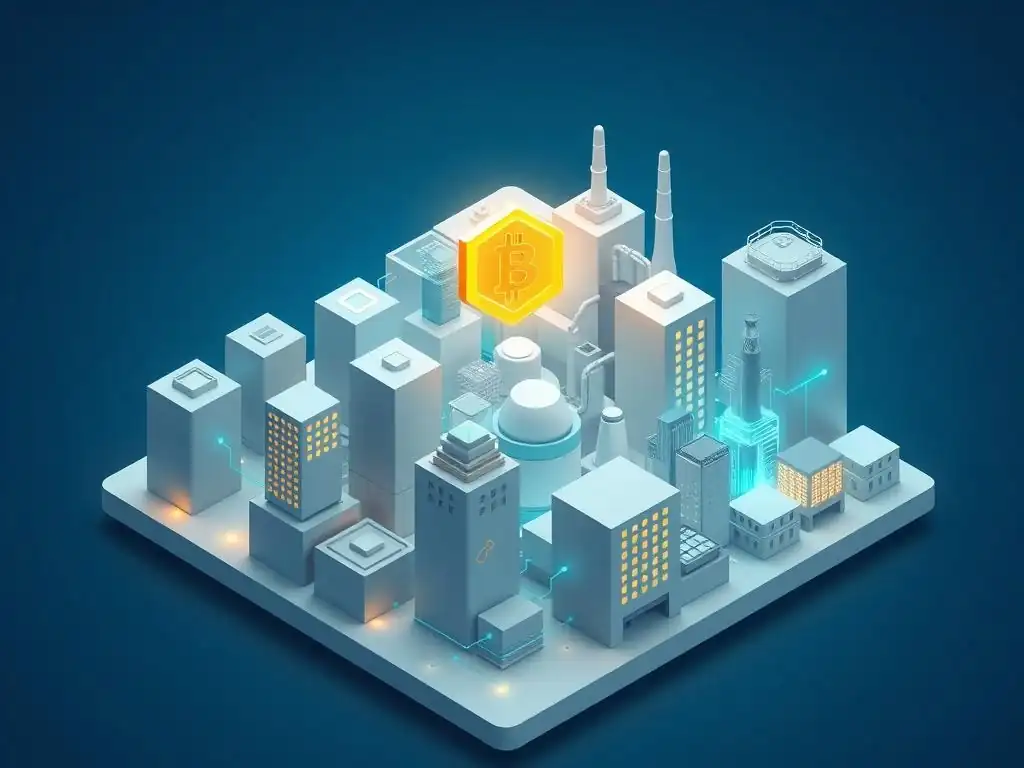
Implementing enterprise asset tokenization is a strategic undertaking that requires careful consideration of technical, legal, and operational factors.
Selecting a Suitable Blockchain Platform for Asset Tokenization
Choosing the right blockchain platform is a foundational decision for any enterprise pursuing asset tokenization. Options range from public blockchains (like Ethereum, Tezos, Solana) to permissioned consortium blockchains (like Hyperledger Fabric, Corda) and private blockchains. Each type offers different trade-offs in terms of decentralization, security model, transaction speed, cost structure, and regulatory compliance suitability.
Factors to consider include the required transaction throughput (TPS - transactions per second), the need for privacy versus transparency, the cost of transactions (gas fees), smart contract capabilities, the maturity of the developer ecosystem, and the regulatory acceptance of the platform in relevant jurisdictions. For instance, tokenizing high-frequency trading assets might require a platform capable of thousands of TPS with predictable transaction costs, while tokenizing real estate might prioritize regulatory compliance features and robust identity management over raw speed.
Average transaction costs on busy public chains can sometimes be several dollars, whereas private chains or Layer 2 solutions can offer costs well below a cent.
Navigating the complex and evolving regulatory landscape is perhaps the most critical challenge in implementing enterprise asset tokenization, particularly for security tokens. Regulations vary significantly across jurisdictions and depending on how the tokenized asset is classified (e.g., as a security, commodity, or utility). Businesses must ensure full compliance with securities laws (like the SEC regulations in the US or MiFID II in Europe), anti-money laundering (AML) laws, and Know Your Customer (KYC) requirements for all token holders.
This necessitates close collaboration with legal experts specializing in digital assets and securities law in all relevant operational geographies. Smart contracts must be designed to enforce compliance rules, such as restricting token transfers to verified investors or adhering to holding periods. Jurisdictions like Switzerland, Singapore, and the EU (with its MiCA regulation) are developing clearer frameworks for digital assets, but navigating the global patchwork requires diligence. A single non-compliant issuance or transfer can have significant legal repercussions.
Ensuring Robust Security for Tokenized Asset Ecosystems
The security of the tokenized asset ecosystem is paramount. While the blockchain itself is designed to be secure and immutable, vulnerabilities can exist at other layers, including smart contracts, wallet management, and the platforms interacting with the blockchain. Risks include smart contract bugs leading to loss of assets, theft of private keys, platform hacks, and regulatory risks due to non-compliance.
Implementing robust security measures is essential. This includes rigorous auditing of smart contracts by independent third parties – a critical step, as vulnerabilities in smart contracts have historically led to the loss of hundreds of millions, if not billions, of dollars in other blockchain applications. Secure custody solutions for private keys, robust cybersecurity practices for all connected systems, and continuous monitoring are also necessary. Businesses must adopt a comprehensive security strategy that covers the entire lifecycle of the tokenized asset and all components of the ecosystem.
Integrating Tokenization Platforms with Existing IT Infrastructure
Successfully implementing enterprise asset tokenization requires seamless integration with existing legacy IT systems, such as Enterprise Resource Planning (ERP), Customer Relationship Management (CRM), accounting software, and legal databases. The blockchain platform holding the tokenized assets and managing transactions cannot operate in isolation; it needs to exchange data with these core business systems to update records, verify customer information (for KYC/AML), trigger accounting entries, and manage associated physical assets.
This integration often involves developing APIs (Application Programming Interfaces) or using middleware to connect the blockchain layer with traditional databases and applications. Challenges can include data mapping, ensuring data consistency across systems, and managing the flow of information in real-time. A well-designed integration is crucial for realizing the full operational efficiency benefits of tokenization, avoiding data silos, and ensuring that tokenized asset data is reflected accurately in traditional financial and operational reports. For instance, integrating a tokenized inventory system with an ERP is necessary to ensure real-time stock levels are reflected accurately across the business.
Addressing Challenges in Enterprise Asset Tokenization
While the benefits are significant, enterprises exploring asset tokenization must also be prepared to address several technical and operational challenges inherent in the technology.
Managing Scalability for High-Volume Asset Tokenization
Scalability remains a key consideration for enterprise-grade tokenization, particularly for assets that require high transaction volumes or frequent updates. Many public blockchains can face limitations in the number of transactions they can process per second (TPS), leading to congestion and increased costs during peak times. While Bitcoin handles around 7 TPS and Ethereum currently manages about 15-30 TPS on its mainnet, enterprise applications, such as high-frequency trading of tokenized securities or micro-payments for tokenized services, may require throughputs comparable to traditional payment networks like Visa, which handles thousands of TPS.
Enterprises must select or build on platforms designed for higher scalability, such as certain permissioned DLTs or public blockchains utilizing more efficient consensus mechanisms or Layer 2 scaling solutions. Stress testing the chosen platform with anticipated transaction loads is crucial. The ability to manage and index a vast number of individual tokens, potentially millions or billions representing fractional ownership in large asset pools, also adds a layer of technical complexity that requires robust database and indexing solutions alongside the blockchain ledger.
Achieving Interoperability Across Blockchain Networks
As the adoption of blockchain grows, assets and data may reside on different, isolated blockchain networks. Achieving interoperability – the ability for assets, data, or smart contracts on one blockchain to interact with those on another – is a significant challenge. A tokenized asset issued on one platform might need to be traded on an exchange built on a different blockchain, or data about a tokenized supply chain item on a consortium chain might need to be accessible to a public blockchain application.
Lack of interoperability can create fragmented markets and hinder the seamless flow of tokenized assets and information across the digital ecosystem. Solutions are being developed, including cross-chain bridges, atomic swaps, and standardized protocols (like the ERC standards on Ethereum or initiatives like Polkadot or Cosmos aiming for cross-chain communication). Enterprises need to consider the interoperability needs of their tokenized assets and choose platforms or develop strategies that allow for necessary interactions with other relevant networks and traditional systems.
Simplifying Smart Contract Development and Management
Smart contracts are the engine of tokenization, automating rules and processes. However, developing secure, efficient, and error-free smart contracts requires specialized expertise and is prone to risks. Bugs in smart contract code can lead to unintended consequences, including the locking or loss of assets, as demonstrated by numerous incidents in the broader blockchain space. Furthermore, managing smart contracts over their lifecycle – including potential upgrades or bug fixes – adds complexity.
Addressing this challenge involves leveraging robust development tools and frameworks, utilizing standardized smart contract templates where possible, and, crucially, conducting thorough independent audits of all smart contract code before deployment. Some platforms are also exploring no-code or low-code solutions to simplify the creation of basic tokenization smart contracts for less technical users. Enterprises must invest in skilled blockchain developers or partner with experienced development firms and auditors to mitigate the risks associated with smart contract complexity.
The Future of Enterprise Asset Tokenization: Trends and Outlook
The landscape of enterprise asset tokenization is rapidly evolving, driven by technological advancements, increasing regulatory clarity, and growing market interest.
Convergence of Tokenization and Decentralized Finance (DeFi)
A significant trend is the increasing convergence of asset tokenization with Decentralized Finance (DeFi). While DeFi initially focused on crypto-native assets, there is a growing movement to bring tokenized real-world assets (RWAs) onto DeFi protocols. This involves creating tokens representing assets like real estate, invoices, or carbon credits and integrating them into DeFi lending, borrowing, and trading platforms.
This convergence unlocks significant liquidity and financial opportunities for previously illiquid traditional assets. Owners of tokenized real estate, for example, could potentially use their tokens as collateral for DeFi loans. This integration bridges the gap between traditional finance and decentralized protocols, creating new capital efficiencies and potentially democratizing access to a wider range of financial services built around tokenized assets. The market for tokenized RWAs in DeFi is already valued in the billions of dollars and is expected to grow substantially.
Tokenization's Role in the Metaverse and Digital Ownership
As the concept of the metaverse and digital worlds gains traction, tokenization, particularly through NFTs and potentially fractionalized NFTs, is becoming fundamental to establishing and managing digital ownership. In these virtual environments, tokens can represent ownership of digital land, virtual goods, avatars, digital art, and other unique digital assets.
This application of tokenization allows for the creation of verifiable scarcity, unique identity, and transferability for digital items, enabling vibrant digital economies. Businesses operating in or building for the metaverse are leveraging tokenization to create digital assets that users can truly own, trade, and utilize across different virtual spaces. The market for digital collectibles and metaverse assets, powered by tokenization, has already seen sales in the billions, highlighting the potential for new forms of value creation and ownership in digital realms.
Evolving Regulatory Landscape for Tokenized Assets Globally
The regulatory environment for tokenized assets is maturing globally, moving from a phase of uncertainty to one where jurisdictions are actively developing clearer guidelines. Regulatory bodies worldwide are recognizing the potential of tokenization while also seeking to protect investors and ensure market integrity.
Key developments include the classification of different types of tokens, the establishment of frameworks for security token offerings (STOs), and the integration of digital assets into existing financial regulations. The European Union's Markets in Crypto-Assets (MiCA) regulation, for instance, provides a comprehensive framework for various digital assets. Countries like Switzerland and Singapore have also been proactive in establishing clear rules for tokenization. While challenges remain in achieving international harmonization, the trend towards clearer and more predictable regulation is a positive sign for enterprise adoption, reducing legal uncertainty and facilitating broader market participation.
Conclusion: Tokenization for an Efficient and Valuable Future
Enterprise asset tokenization represents a powerful application of blockchain technology with the potential to fundamentally transform how businesses manage, transact, and derive value from their assets. By converting rights or ownership into digital tokens on a blockchain, companies can unlock unprecedented levels of liquidity, transparency, and efficiency across various operational domains.
Key Benefits of Blockchain Asset Tokenization for Businesses
The core advantages that highlight how blockchain asset tokenization benefits businesses include enhanced liquidity through fractionalization, vastly improved transparency and auditability in asset tracking, significant reductions in costs and increases in operational efficiency by eliminating intermediaries and automating processes, and expanded access to capital markets by lowering barriers to investment and enabling global participation. Furthermore, tokenization streamlines specific operations like supply chain management and real estate transactions and creates new avenues for unlocking corporate value through diverse investor pools and novel revenue streams.
These benefits collectively position tokenization as a strategic imperative for businesses seeking to remain competitive in the digital age.
Resources for Businesses Exploring Tokenization
For businesses considering enterprise asset tokenization, thorough research and expert consultation are essential next steps. It is advisable to conduct a detailed feasibility study to understand the potential applications within their specific industry and asset classes. Engaging with legal and regulatory experts specializing in digital assets is critical to navigate the complex compliance landscape.
Furthermore, exploring pilot projects focused on specific use cases can provide practical experience and validate the technology's benefits before a broader implementation. Researching different blockchain platforms and their suitability for enterprise needs, as well as understanding the technical requirements for integrating tokenization with existing IT infrastructure, are also crucial areas of focus.
Frequently Asked Questions
How does blockchain asset tokenization benefit businesses specifically?
Tokenization allows businesses to fractionalize ownership of assets, making them more liquid and accessible to a wider range of investors, ultimately unlocking corporate value.
What are the key operational benefits of using blockchain for asset tokenization?
Blockchain provides enhanced transparency and efficiency in asset management, reducing the need for intermediaries and streamlining administrative processes, leading to cost savings.
Beyond liquidity, what other advantages does asset tokenization offer for enterprise applications?
Tokenization enables automated compliance through smart contracts, increases investor engagement via decentralized governance, and facilitates easier global trading of assets.
How does the regulatory landscape impact the implementation of blockchain asset tokenization for businesses?
The regulatory environment is still evolving, requiring careful consideration of securities laws and compliance requirements to ensure legal and ethical tokenization practices and avoid potential legal pitfalls.
What is the future outlook for blockchain asset tokenization in the context of decentralized systems?
Tokenization is expected to play a crucial role in the future of decentralized finance (DeFi) and enterprise applications, bridging the gap between traditional finance and the new digital economy by creating more accessible and efficient markets.
Final Reflection: Embracing the Tokenized Future
The exploration of blockchain asset tokenization benefits businesses has revealed a powerful paradigm shift, moving beyond theoretical possibilities to tangible operational improvements and unlocked corporate value. The potential to streamline operations, enhance liquidity, and democratize access to investment opportunities is no longer a distant dream, but a rapidly approaching reality reshaping the financial landscape.
This transformative technology has profoundly influenced, and continues to influence, the way we perceive and interact with assets. The ability to fractionalize ownership and create more liquid markets is democratizing investment opportunities and fostering a more inclusive financial ecosystem. The future of finance is tokenization, and it's happening now.
- Michael Green, CEO of Blockstream. This quote encapsulates the urgency and inevitability of this technological revolution, urging us to consider its implications for our own financial strategies and business models.
As we stand on the cusp of this tokenized future, let us not be passive observers. Instead, let us embrace the potential of blockchain asset tokenization to unlock new avenues for growth, efficiency, and inclusivity. Consider how these principles can be applied within your own sphere of influence, whether as an entrepreneur, investor, or simply a curious individual seeking to understand the evolving world around you. The future is being built, token by token, and your participation is crucial in shaping its trajectory.
Unleash the Potential of Your Assets!
Thanks for diving into the world of Enterprise Asset Tokenization and discovering how it can revolutionize your operations and unlock hidden value. Now, let's put that knowledge into action!
Here's how you can get started:
- Begin exploring the feasibility of tokenizing one of your company's underutilized assets. Think beyond traditional real estate or equipment – are there patents, licenses, or even data sets that could be tokenized?
- Share this article with your leadership team to spark internal discussions about the strategic advantages of asset tokenization within your organization.
- Research case studies of companies successfully implementing asset tokenization within your industry to inspire future projects.
Ready to revolutionize your asset management strategy and discover new avenues for growth?
Leave a Reply