
The Future of Asset Ownership: Predictions and Trends in the Tokenization Market


Welcome to Blockchain Trends, your go-to source for navigating the evolving world of blockchain technology. Beyond the hype surrounding cryptocurrencies, a revolution is brewing, transforming industries and redefining how we interact with assets. Intrigued by the possibilities? Then delve into our latest article, "The Future of Asset Ownership: Predictions and Trends in the Tokenization Market," where we explore innovative tokenized asset investment strategies that are reshaping finance and beyond. Discover how you can participate in this paradigm shift and unlock new opportunities.
The Future of Asset Ownership: Predictions and Trends in the Tokenization Market
- Introduction: Understanding the Tokenization Revolution
- Current State of the Tokenization Market: A Snapshot
-
Predictions and Trends Shaping the Future of Asset Tokenization
- Trend 1: Increased Institutional Adoption of Tokenized Assets
- Trend 2: The Rise of Real-World Asset (RWA) Tokenization
- Trend 3: Evolution of Decentralized Finance (DeFi) and Tokenized Assets
- Trend 4: Enhanced Security and Compliance in Tokenized Asset Offerings
- Trend 5: The Impact of Layer-2 Solutions on Tokenized Asset Trading
- Tokenized Asset Investment Strategies: A Deep Dive
- Challenges and Opportunities in the Tokenization Market
- Case Studies: Successful Implementations of Asset Tokenization
- Conclusion: The Future is Tokenized – Embracing the New Era of Asset Ownership
-
Frequently Asked Questions
- What are the main benefits of using tokenized asset investment strategies?
- How does blockchain technology facilitate tokenized asset investment strategies?
- What are some potential risks associated with tokenized asset investment strategies?
- Beyond cryptocurrencies, what types of assets are being tokenized using tokenized asset investment strategies?
- How might regulations impact the future of tokenized asset investment strategies?
- Final Reflection: Embracing the Tokenized Tomorrow
- Unleash Your Tokenization Potential!
Introduction: Understanding the Tokenization Revolution
What is Asset Tokenization and Why Does it Matter?
Asset tokenization is the process of issuing a digital token on a blockchain that represents ownership or rights to an underlying asset. This asset can be tangible, such as real estate, art, or commodities, or intangible, like intellectual property, company shares, or carbon credits. Each token is essentially a digital certificate of ownership, immutable and verifiable on the distributed ledger. This process breaks down traditional barriers to ownership and transfer, creating a more efficient, liquid, and accessible market for a wide range of assets.
The significance of tokenization lies in its ability to transform illiquid assets into highly divisible and tradable digital units. This not only facilitates fractional ownership, allowing multiple investors to own a piece of a high-value asset, but also automates processes like dividend distribution or royalty payments through smart contracts. By leveraging blockchain technology, tokenization enhances transparency, reduces transaction costs by eliminating intermediaries, and enables 24/7 trading across global markets.
The Growing Significance of Tokenized Asset Investment Strategies
As the tokenization market matures, developing effective tokenized asset investment strategies is becoming increasingly crucial for both institutional and individual investors. Tokenization unlocks new avenues for portfolio diversification by providing access to asset classes previously difficult or impossible to invest in directly, such as fractional real estate or specific pieces of fine art. These strategies involve understanding the unique characteristics of tokenized assets, including their underlying value, the blockchain platform they reside on, and the smart contracts governing their terms.
Implementing successful tokenized asset investment strategies requires navigating a new digital landscape. Investors must evaluate the technical security of the tokens and platforms, assess the regulatory compliance of the issuance, and understand the liquidity mechanisms available for trading these digital representations of value. Furthermore, the integration of tokenized assets into decentralized finance (DeFi) protocols presents opportunities for yield generation through lending, borrowing, or staking, adding another layer of complexity and potential return to these strategies.
Current State of the Tokenization Market: A Snapshot
Market Size and Growth Projections for Tokenized Assets
The tokenization market is currently in a nascent but rapidly expanding phase. While precise global figures vary depending on the source and scope (e.g., including only regulated securities tokens or broader asset types), estimates consistently point towards substantial growth. A report by the Boston Consulting Group (BCG) and ADDX in 2022 projected that tokenized illiquid assets could reach a market size of \$16 trillion by 2030. This figure encompasses a wide array of assets, from real estate and private equity to infrastructure and natural resources, highlighting the immense potential waiting to be unlocked through tokenization.
This projected growth is driven by increasing awareness of the benefits of tokenization, including enhanced liquidity, reduced costs, and increased transparency. While the current market size for regulated security tokens is significantly smaller, perhaps in the low billions of dollars, the pipeline of projects and the increasing interest from financial institutions suggest that the market is poised for exponential growth. The expansion is expected across various asset classes, with real estate and private markets often cited as having the most immediate potential for widespread adoption.
Key Players and Platforms Driving Tokenization Adoption
A diverse ecosystem of key players and platforms is driving the adoption of asset tokenization. This includes established financial institutions experimenting with tokenized securities, blockchain infrastructure providers offering tokenization platforms, and specialized startups focusing on specific asset classes like real estate or art. Large banks and financial services firms like JPMorgan Chase (with its Onyx platform) and Goldman Sachs are actively exploring or implementing blockchain-based systems for issuing and trading tokenized assets, particularly in areas like fixed income and repurchase agreements.
Beyond traditional finance, platforms like Polymath, Securitize, and Tokeny provide the technology stack for creating and managing security tokens compliant with regulations. Additionally, platforms like Centrifuge are bridging the gap between DeFi and real-world assets by enabling the tokenization of invoices and other forms of credit. These varied entities are building the necessary infrastructure, developing compliant frameworks, and launching pilot projects that demonstrate the practical benefits of tokenization, paving the way for broader market acceptance and facilitating new tokenized asset investment strategies.
Navigating the regulatory landscape is one of the most critical challenges and defining factors for the tokenization market, particularly for tokenized securities. Jurisdictions worldwide are grappling with how to apply existing securities laws to novel digital assets. Regulatory bodies like the SEC in the United States, BaFin in Germany, and the FCA in the UK are issuing guidance, bringing enforcement actions, and proposing new rules to bring clarity to this space. The classification of a token as a security, utility, or other asset type significantly impacts the legal requirements for its issuance, trading, and ownership.
Compliance with regulations such as KYC (Know Your Customer) and AML (Anti-Money Laundering) is paramount for platforms and issuers dealing with tokenized securities. Many platforms are developing sophisticated compliance mechanisms integrated into the token's smart contract or the platform's architecture. While regulatory uncertainty remains in some areas, progress is being made.
Countries like Liechtenstein, Switzerland, and Singapore have taken steps to create more favorable legal frameworks for blockchain-based assets, attracting businesses and fostering innovation in tokenized asset investment strategies. The ongoing dialogue between regulators and industry participants is essential for establishing clear rules that protect investors while enabling market growth.
Predictions and Trends Shaping the Future of Asset Tokenization
Trend 1: Increased Institutional Adoption of Tokenized Assets
Why Institutions are Embracing Tokenization
Institutional investors, including asset managers, banks, and hedge funds, are increasingly exploring and embracing asset tokenization due to its potential to enhance efficiency, reduce costs, and open up new investment opportunities. Tokenization streamlines processes such as issuance, settlement, and corporate actions (like dividend payments) by automating them via smart contracts on a blockchain. This automation can significantly lower operational overhead compared to traditional financial systems. Furthermore, blockchain's inherent transparency and immutability reduce counterparty risk and simplify reconciliation processes, which are major attractions for institutions dealing with large volumes of transactions.
Moreover, tokenization offers institutions access to previously illiquid markets and enables greater granularity in portfolio construction. For example, tokenizing private credit or real estate allows institutions to invest in smaller, more specific tranches than typically possible in traditional markets. This enhanced access and efficiency are driving significant pilot programs and strategic investments by major financial players. For instance, institutions are actively exploring the tokenization of bonds, equities, and alternative investments to improve trading velocity and back-office operations, laying the groundwork for sophisticated tokenized asset investment strategies at scale.
Impact on Liquidity and Market Access
The institutional embrace of tokenization is poised to have a profound impact on the liquidity and market access of various asset classes. By bringing assets onto blockchain rails, institutions can leverage global, 24/7 trading infrastructure, potentially increasing trading volumes and reducing the liquidity premium associated with illiquid assets. Tokenization allows for fractional ownership, meaning institutions (and retail investors) can buy or sell smaller units of assets like real estate or private equity funds, making them more accessible and easier to trade than their traditional counterparts.
This increased liquidity and fractionalization facilitate easier portfolio rebalancing and offer greater flexibility in executing tokenized asset investment strategies. As more institutions participate, the network effect grows, attracting more buyers and sellers to tokenized markets. While challenges remain in building deep liquidity pools comparable to major stock exchanges, the trend of institutional involvement suggests a future where tokenized assets are integrated into mainstream financial markets, significantly improving their tradability and expanding the pool of potential investors globally.
Trend 2: The Rise of Real-World Asset (RWA) Tokenization
Tokenizing Real Estate: Opportunities and Challenges
Tokenizing real estate assets presents significant opportunities by addressing inherent inefficiencies in the traditional property market, such as illiquidity, high transaction costs, and lack of transparency. By issuing tokens representing ownership in a property or a share of its rental income, investors can participate with smaller capital outlays, enabling fractional ownership of high-value properties. This democratizes access to real estate investment, which has historically been limited to accredited investors or those with substantial capital. Platforms like Harbor (though discontinued, demonstrated the concept) and newer initiatives like Securitize Markets and various regional platforms are pioneering real estate tokenization.
However, tokenizing real estate also faces substantial challenges. Legal frameworks around property ownership vary significantly across jurisdictions, making it complex to ensure that the digital token accurately represents legal rights to the physical asset. Valuation, property management, and regulatory compliance (like anti-money laundering checks on token holders) add layers of complexity. Furthermore, ensuring liquidity for tokenized real estate requires building robust secondary markets. Despite these hurdles, the potential to unlock trillions in real estate value through enhanced liquidity and accessibility makes this a key area for the future of tokenized asset investment strategies.
Tokenizing Commodities: Enhancing Transparency and Efficiency
Tokenizing commodities like gold, silver, oil, or agricultural products offers the potential to enhance transparency and efficiency in markets often plagued by complex supply chains and intermediaries. Tokens can represent a specific quantity and quality of a physical commodity held in storage, providing verifiable proof of ownership on a blockchain.
This can simplify trading, reduce settlement times, and potentially lower storage and insurance costs associated with physical handling. For example, Paxos offers PAXG, a gold-backed token where each token represents one fine troy ounce of London Good Delivery gold stored in secure vaults, offering a liquid and easily transferable digital alternative to physical gold ownership.
The primary opportunities lie in creating more accessible and divisible forms of commodity investment, facilitating easier hedging strategies, and improving supply chain tracking and provenance. Challenges include ensuring the reliable auditing and verification of the physical assets backing the tokens, managing storage logistics, and navigating commodity-specific regulations. Despite these operational complexities, the efficiency gains and increased transparency offered by tokenization are driving interest, particularly in precious metals and other easily standardized commodities, opening new avenues for tokenized asset investment strategies focused on tangible goods.
Tokenizing Art and Collectibles: Democratizing Access to Alternative Investments
The high-value art and collectibles market, historically exclusive and illiquid, is another prime candidate for tokenization. Tokenizing a piece of art or a collectible allows it to be divided into numerous smaller tokens, making it accessible to a much broader base of investors. This fractional ownership model enables individuals to invest in high-value assets like a Picasso painting or a rare vintage car without needing to purchase the entire item. Platforms like Masterworks have popularized this approach for fine art, allowing investors to buy shares (represented by digital tokens) in specific paintings.
This trend democratizes access to alternative investments that can offer significant returns but were previously only available to the ultra-wealthy. It also provides artists and collectors with new ways to monetize their assets and potentially increase their liquidity. Challenges include accurate valuation of unique items, ensuring the physical security and provenance of the underlying asset, and managing the legal rights associated with fractional ownership. Despite these challenges, the ability to broaden participation in the art and collectibles market through fractionalized tokenized asset investment strategies is a powerful driver for adoption in this niche.
Trend 3: Evolution of Decentralized Finance (DeFi) and Tokenized Assets
Integrating Tokenized Assets into DeFi Protocols
The integration of tokenized assets, particularly Real-World Assets (RWAs), into Decentralized Finance (DeFi) protocols represents a significant evolution for both ecosystems. While DeFi initially focused on crypto-native assets like Ether or stablecoins, bringing tokenized real estate, invoices, or private credit onto platforms like Aave or Compound unlocks vast amounts of previously siloed value. This integration allows RWA tokens to be used as collateral for borrowing, participate in liquidity pools for trading, or be utilized in other DeFi primitives, expanding the utility and potential returns for holders of these tokenized assets.
Platforms like Centrifuge and MakerDAO (which has explored using tokenized real estate mortgages and invoices as collateral for DAI) are at the forefront of this integration. This trend blurs the lines between traditional finance and decentralized finance, creating new hybrid models. The ability to leverage illiquid real-world assets within the highly efficient and composable DeFi ecosystem offers exciting possibilities for unlocking trapped capital and generating yield, fundamentally changing the landscape for tokenized asset investment strategies.
Yield Generation Strategies with Tokenized Assets
The integration into DeFi opens up numerous yield generation strategies for tokenized asset holders. Instead of simply holding a tokenized share of a property, investors can deposit that tokenized asset into a lending protocol to earn interest, use it as collateral to borrow other assets for trading or yield farming, or provide liquidity to decentralized exchanges trading the tokenized asset to earn trading fees. This allows investors to earn passive income or leverage their positions in ways that are often more complex or expensive in traditional markets.
Specific tokenized asset investment strategies might involve depositing tokenized real estate fractions into a protocol offering yield based on rental income distribution, or using tokenized invoices as collateral in a platform that allows borrowing stablecoins against future receivables. The composability of DeFi protocols means these strategies can be combined, creating complex but potentially highly profitable avenues for investors willing to navigate the risks inherent in the decentralized ecosystem.
The Role of Smart Contracts in Automating Asset Management
Smart contracts are the backbone enabling the automated management of tokenized assets, revolutionizing processes like dividend distribution, royalty payments, and cap table management. Unlike traditional systems that require manual intervention and intermediaries, smart contracts execute predefined actions automatically when specific conditions are met, as coded directly onto the blockchain. For a tokenized security representing company equity, a smart contract can be programmed to automatically distribute dividends proportionally to all token holders based on the on-chain record of ownership.
This automation significantly reduces administrative overhead, minimizes the potential for human error, and ensures that distributions or other corporate actions are transparently executed according to the terms embedded in the token. For tokenized asset investment strategies, this means greater certainty and efficiency in receiving returns or managing rights associated with their holdings. The reliance on immutable code, however, also highlights the critical importance of rigorous auditing and testing of smart contracts to prevent bugs or vulnerabilities that could impact the underlying assets or the rights of token holders.
Trend 4: Enhanced Security and Compliance in Tokenized Asset Offerings
Addressing Security Concerns in Tokenized Assets
Security is paramount in the tokenization market, encompassing both the security of the underlying blockchain infrastructure and the specific smart contracts governing the tokens. While blockchains like Ethereum or reputable enterprise ledgers offer robust cryptographic security, vulnerabilities can arise at the application layer, particularly within the smart contracts developed for token issuance and management. A single bug in a smart contract could potentially freeze assets, allow unauthorized access, or incorrectly execute terms.
To address these concerns, rigorous security audits by independent third parties are becoming standard practice for tokenization platforms and specific asset tokenization projects. Formal verification methods are also being explored to mathematically prove the correctness of smart contract code. Furthermore, platforms are implementing multi-signature wallets for asset custody, robust access controls, and continuous monitoring to detect and respond to potential threats. These enhanced security measures are crucial for building trust and encouraging wider adoption, particularly among risk-averse institutional investors pursuing tokenized asset investment strategies.
KYC/AML Compliance for Tokenized Securities
For tokenized assets classified as securities, strict adherence to Know Your Customer (KYC) and Anti-Money Laundering (AML) regulations is non-negotiable. Issuers and platforms must verify the identity of investors and monitor transactions to prevent illicit activities. While public blockchains are permissionless, tokenization platforms for securities often operate on permissioned ledgers or implement access controls at the token level. This means that only verified and authorized participants can hold or trade the tokens.
Compliance solutions are being integrated directly into token standards (like ERC-1400 for security tokens) or platform architectures. These solutions allow issuers to restrict token transfers to whitelisted addresses, enforce ownership limits, and report transaction data to relevant authorities when required. While this adds a layer of complexity compared to purely permissionless crypto assets, it is essential for operating within legal frameworks and facilitating compliant tokenized asset investment strategies for institutional and retail investors alike. The development of sophisticated, blockchain-native compliance tools is a key trend enabling the growth of regulated tokenized markets.
Trend 5: The Impact of Layer-2 Solutions on Tokenized Asset Trading
Improving Scalability and Reducing Transaction Costs
The widespread adoption of tokenized assets, especially for high-frequency trading or micro-tokenization, requires blockchain infrastructure that can handle a much larger volume of transactions than many current Layer-1 networks like Ethereum mainnet can support efficiently or affordably. High gas fees and network congestion on Layer-1 can make frequent trading or transferring of tokenized assets prohibitively expensive and slow. Layer-2 scaling solutions, such as rollups (Optimistic and Zero-Knowledge) and sidechains, offer a solution by processing transactions off the main chain and then settling them back on Layer-1 in a more efficient manner.
These Layer-2 solutions significantly improve scalability by increasing transaction throughput and drastically reduce transaction costs. For example, trading tokenized assets on a Layer-2 network can cost a fraction of the price compared to executing the same trade directly on Ethereum Layer-1. This cost reduction and speed increase are critical for enabling liquid secondary markets for tokenized assets and making frequent tokenized asset investment strategies involving rebalancing or active trading economically viable for a wider range of investors.
The Future of Tokenized Asset Exchanges
The future of tokenized asset exchanges is likely to be shaped by the capabilities offered by Layer-2 solutions and the increasing demand for regulated trading venues. While decentralized exchanges (DEXs) on Layer-1 exist, their usability for tokenized securities is often limited by compliance requirements and transaction costs. Dedicated security token exchanges (STOs) are emerging, offering regulated environments for trading these assets. However, integrating Layer-2 technology into both decentralized and centralized tokenized asset exchanges is key to providing the speed, cost-efficiency, and scalability needed for a liquid global market.
We may see a hybrid model where centralized exchanges handle KYC/AML and fiat on/off ramps, while leveraging Layer-2 solutions for high-speed, low-cost trading execution. Alternatively, compliant DEXs utilizing Layer-2 technology could emerge, offering automated compliance checks within a decentralized framework. The evolution of these trading platforms, powered by scaling solutions, is essential for facilitating robust tokenized asset investment strategies and unlocking the full potential of this market.
Tokenized Asset Investment Strategies: A Deep Dive
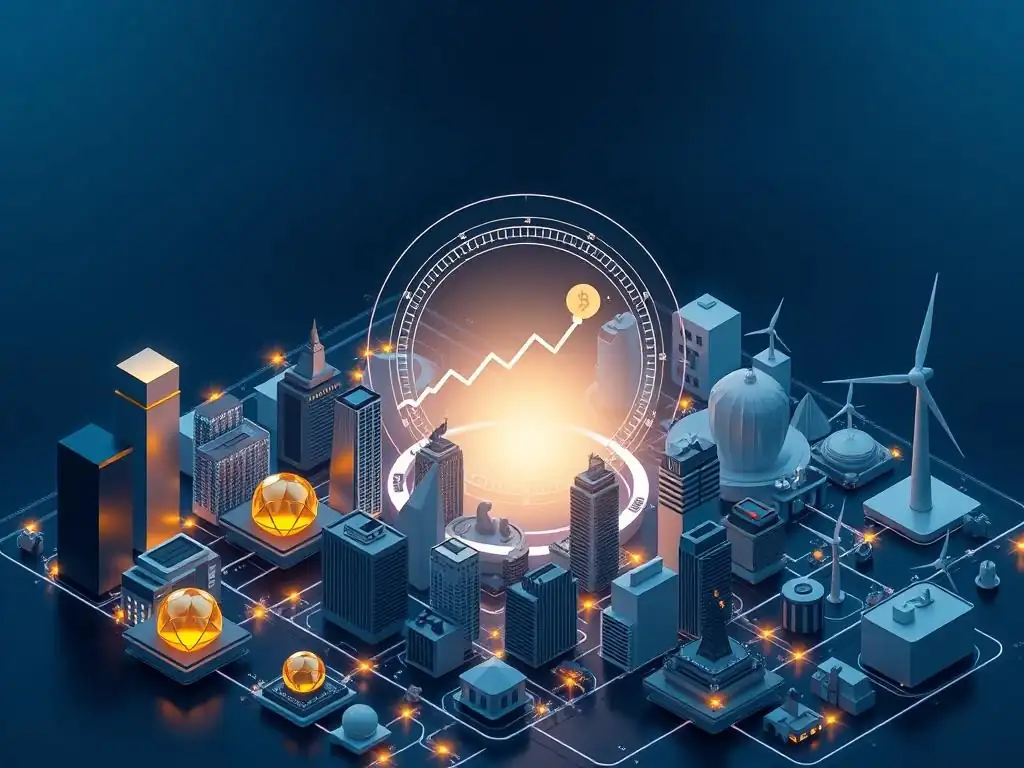
Portfolio Diversification with Tokenized Assets
Including Tokenized Assets in Traditional Investment Portfolios
Incorporating tokenized assets into traditional investment portfolios offers compelling opportunities for diversification, potentially enhancing risk-adjusted returns. Tokenization provides access to asset classes that may have low correlation with traditional stocks and bonds, such as real estate, fine art, private equity, or infrastructure. By adding tokenized fractions of these assets, investors can spread risk across a wider range of economic sectors and market behaviors. For instance, an investor might add tokenized shares of a commercial property development to a portfolio predominantly composed of publicly traded equities and fixed income.
The ability to invest in smaller increments through fractionalization makes it feasible for a broader range of investors to access these alternative asset classes. This allows for more granular portfolio construction and tailoring to specific risk profiles and investment goals. However, investors must conduct thorough due diligence on the underlying asset and the tokenization platform, as the risks associated with these investments can differ significantly from traditional securities. Understanding the specific characteristics and illiquidity risk (despite the aim for increased liquidity) of different tokenized assets is crucial for effective diversification strategies.
Risk Management Considerations for Tokenized Securities
Effective risk management is paramount when developing tokenized asset investment strategies, particularly for tokenized securities. While tokenization enhances liquidity and transparency, it also introduces new technical and regulatory risks. Investors must consider the smart contract risk – the possibility of bugs or vulnerabilities in the code governing the token. Furthermore, the regulatory status of tokenized securities can be uncertain in some jurisdictions, potentially leading to legal challenges or market disruptions.
Custody risk is another important factor; investors need secure methods for storing their private keys or relying on reputable, regulated custodians for their tokenized holdings. Market risk, similar to traditional assets, applies to the underlying value of the asset. However, liquidity risk, while potentially reduced by tokenization, still exists, especially for niche or newly tokenized assets where secondary markets may not yet be deep. Implementing rigorous due diligence processes, understanding the legal and technical frameworks of the specific tokens, and using secure storage solutions are essential components of a robust risk management strategy for tokenized asset investments.
Strategies for Generating Returns with Tokenized Assets
Staking and Yield Farming with Tokenized Assets
While staking is typically associated with proof-of-stake cryptocurrencies, the concept of earning passive income on tokenized assets is expanding, particularly through integration with DeFi. For certain types of tokenized assets, like those representing income-generating real estate or revenue shares from a business, the underlying cash flows can be distributed automatically to token holders via smart contracts, functioning similarly to traditional dividends or interest payments.
In the context of DeFi, tokenized assets (especially RWA tokens) can be deposited into lending protocols to earn yield from borrowers, or used in yield farming strategies by providing liquidity to decentralized exchanges or participating in liquidity mining programs, earning protocol tokens or trading fees.
For example, an investor holding tokenized fractional ownership in a rental property might receive automated rental income distributions directly to their wallet. Alternatively, that same investor could deposit their tokenized property share into a DeFi lending protocol that accepts RWA collateral, earning interest from users borrowing funds against other assets. These yield generation strategies offer new ways to earn returns beyond simple capital appreciation, adding complexity and potential profitability to tokenized asset investment strategies.
Lending and Borrowing Tokenized Assets
Lending and borrowing protocols within DeFi are increasingly supporting tokenized assets, creating new opportunities for investors. Holders of tokenized assets can deposit them into a lending pool to earn interest from borrowers. This allows asset owners to retain ownership of their underlying asset while earning a return on it. Conversely, investors can borrow funds using their tokenized assets as collateral, enabling leverage or providing access to capital without selling their holdings.
This capability is particularly powerful for potentially illiquid tokenized assets like real estate or private equity. Instead of needing to sell a fractional share to access cash, an investor can use their tokenized share as collateral in a DeFi protocol to borrow stablecoins or other cryptocurrencies. This enhances the capital efficiency of tokenized holdings.
However, investors must be aware of the risks, such as liquidation risk if the value of their collateralized tokenized asset falls below a certain threshold, and smart contract risk associated with the lending protocol itself. Utilizing lending and borrowing platforms responsibly is a key aspect of advanced tokenized asset investment strategies.
Evaluating Tokenized Asset Projects: Due Diligence and Risk Assessment
Key Metrics for Assessing Tokenized Assets
Evaluating tokenized asset projects requires a blend of traditional investment analysis and blockchain-specific considerations. Key metrics for assessing the underlying asset include its fundamental value, potential for appreciation, income-generating capacity (if applicable), and market demand. For tokenized real estate, this means analyzing property location, rental yields, and market trends. For tokenized equity, it involves standard financial analysis of the company.
Specific to tokenization, investors must evaluate the quality of the tokenization platform or issuer, examining their track record, compliance procedures, and technical expertise. The legal framework supporting the token is critical – does it genuinely represent ownership or rights? Investors should also assess the token's technical implementation, including the security of the smart contract (ideally with audit reports) and the blockchain network it resides on. Furthermore, evaluating the potential liquidity of the token on secondary markets is crucial for exit strategies, making it a vital metric for developing robust tokenized asset investment strategies.
Identifying Potential Risks and Mitigation Strategies
Identifying potential risks is a fundamental part of due diligence for tokenized asset investments. These risks include regulatory uncertainty (the possibility of unfavorable rule changes), technical risks (smart contract bugs, platform hacks), custody risks (loss of private keys), and liquidity risks (difficulty selling the token). Market risk related to the underlying asset's value fluctuations is also present, as in traditional investing.
Mitigation strategies involve thorough research into the regulatory environment of the issuer and target investors, choosing platforms with strong security track records and audited smart contracts, utilizing secure storage solutions (hardware wallets or regulated custodians), and assessing the depth and volume of secondary markets where the token can be traded. Diversification across different tokenized asset classes and platforms can also help mitigate specific risks. A comprehensive risk assessment and the implementation of appropriate mitigation strategies are indispensable for navigating the complexities of tokenized asset investment strategies successfully.
Challenges and Opportunities in the Tokenization Market
Overcoming Regulatory Hurdles and Uncertainty
One of the most significant challenges facing the widespread adoption of asset tokenization is the fragmented and often uncertain regulatory landscape. Different countries and even different regions within countries have varying approaches to classifying and regulating tokenized assets, particularly those deemed securities. This lack of global harmonization creates complexity for issuers operating across borders and for investors navigating compliance requirements. The process of obtaining regulatory approval for tokenized offerings can be lengthy and expensive, hindering innovation and scalability.
However, this challenge also presents an opportunity. As regulators gain a better understanding of the technology, clearer guidelines are being developed. Collaborative efforts between industry participants and regulatory bodies can help shape frameworks that protect investors while fostering market growth. Jurisdictions that establish clear and favorable regulations are likely to attract significant investment and innovation in the tokenization space. Overcoming regulatory hurdles through proactive engagement and compliance is key to unlocking the market's full potential and facilitating compliant tokenized asset investment strategies.
Addressing Security and Custody Concerns
Ensuring the security and proper custody of tokenized assets is another critical challenge. While blockchain technology is inherently secure, the interface between the physical or traditional asset and its digital representation, as well as the smart contracts and platforms involved, can introduce vulnerabilities. Hacks, smart contract exploits, and the risk of losing private keys are serious concerns for investors and institutions. For tokenized physical assets, ensuring the security and verification of the underlying asset is also paramount.
Addressing these concerns involves implementing stringent security measures at every layer, from smart contract development and auditing to platform security and user education on private key management. The development of regulated, institutional-grade custody solutions specifically designed for digital assets, including tokenized securities, is crucial. As the market matures, the availability of reliable custody providers and robust security protocols will build confidence and facilitate larger-scale participation, particularly from institutions seeking secure methods for executing their tokenized asset investment strategies.
Educating Investors and Promoting Wider Adoption
A significant barrier to wider adoption of tokenized assets is a lack of understanding among potential investors and the general public. The concepts of blockchain, tokens, and smart contracts can be complex, leading to skepticism and hesitancy. Many potential investors are unaware of the benefits of tokenization or how to access and invest in tokenized assets safely and effectively. This knowledge gap limits market participation and liquidity.
Promoting wider adoption requires concerted efforts in investor education. This includes clear and accessible information about what tokenized assets are, how they work, the opportunities and risks involved, and how to engage in tokenized asset investment strategies. Industry participants, regulators, and media outlets all have a role to play in demystifying tokenization. As understanding grows and successful case studies become more prominent, confidence will increase, driving greater participation and accelerating the growth of the tokenization market.
Case Studies: Successful Implementations of Asset Tokenization
Analyzing the Impact of Tokenization on Specific Industries
Case studies provide concrete examples of how asset tokenization is already impacting specific industries, moving beyond theoretical potential to real-world application.
Example 1: Real Estate Tokenization
A notable example is the tokenization of the St. Regis Aspen Resort in Colorado. This project, facilitated by platforms like Templum and Elevated Returns, involved issuing digital tokens representing fractional ownership in the luxury hotel. The goal was to provide greater liquidity and accessibility compared to traditional private equity real estate investments.
Investors could buy tokens representing shares in the Special Purpose Vehicle (SPV) that owns the hotel, with the tokens traded on a regulated alternative trading system (ATS). While facing its own set of challenges and market dynamics, this case demonstrated the technical feasibility and regulatory pathway for tokenizing high-value real estate, offering insights into the practicalities of tokenized asset investment strategies in property.
Example 2: Fine Art Tokenization
Masterworks has successfully built a platform focused on tokenizing fractional ownership of expensive works of art by renowned artists like Banksy or Andy Warhol. They acquire physical paintings, file them with the SEC, and issue shares in the artwork represented by tokens.
These tokens can then be bought and sold on their secondary market. This model has opened up the fine art market to a broader range of investors who previously could not afford an entire masterpiece, illustrating how tokenization democratizes access to alternative assets and creates new tokenized asset investment strategies focused on collectibles.
Example 3: Private Equity/Venture Capital Tokenization
Platforms like Securitize and Tokeny have facilitated the tokenization of shares in private companies and venture capital funds. This allows for greater liquidity for early investors and employees (through secondary trading opportunities) and enables fund managers to potentially broaden their investor base by allowing smaller minimum investments via fractional tokens. While still an evolving space, these cases demonstrate tokenization's potential to transform traditionally illiquid private markets, offering new avenues for tokenized asset investment strategies focused on private capital.
These case studies highlight the diverse applications of tokenization and provide valuable lessons regarding the technical, regulatory, and market-specific considerations for successful implementation. They showcase the tangible benefits – increased liquidity, fractional ownership, and reduced friction – that are driving the future of asset ownership.
Conclusion: The Future is Tokenized – Embracing the New Era of Asset Ownership
Key Takeaways and Future Outlook for Tokenized Asset Investment Strategies
The tokenization of assets is not merely a technological trend but a fundamental shift poised to redefine asset ownership and investment. Key takeaways include the power of fractionalization to democratize access, the potential for enhanced liquidity and reduced costs through blockchain efficiency, and the emergence of new yield generation opportunities, particularly via integration with DeFi. The market is growing, driven by technological advancements, increasing institutional interest, and the potential to unlock value from traditionally illiquid assets like real estate and private equity.
The future outlook for tokenized asset investment strategies is one of increasing sophistication and integration into mainstream finance. We can anticipate more regulated offerings, greater clarity in legal frameworks, and the development of more mature secondary markets. As Layer-2 solutions improve scalability and costs, and as security and compliance measures become more robust, tokenized assets will become a more accessible and attractive component of diversified investment portfolios. The evolution of platforms and infrastructure will further enable complex tokenized asset investment strategies, from basic portfolio allocation to advanced yield farming and lending.
The Transformative Potential of Tokenization for the Global Economy
The transformative potential of tokenization extends far beyond investment portfolios; it holds the key to unlocking trillions of dollars in value across the global economy. By making assets more liquid, transparent, and easily transferable, tokenization can stimulate economic activity, facilitate capital formation for businesses of all sizes, and create more efficient markets. For instance, tokenizing infrastructure projects could enable broader public participation in financing, or tokenizing supply chain assets could improve efficiency and reduce financing costs for businesses.
Tokenization can also foster financial inclusion by lowering the barriers to entry for investment in high-value assets. This new era of asset ownership, powered by blockchain and smart contracts, promises a future where value flows more freely, ownership is more transparent, and investment opportunities are accessible to a global audience, fundamentally reshaping financial markets and driving economic innovation. The journey is still unfolding, but the trajectory towards a tokenized future is clear.
Frequently Asked Questions
What are the main benefits of using tokenized asset investment strategies?
Tokenization offers fractional ownership, increasing accessibility for a wider range of investors. It also enhances liquidity and can streamline trading processes compared to traditional asset markets.
How does blockchain technology facilitate tokenized asset investment strategies?
Blockchain provides a secure and transparent ledger for recording ownership. This immutability and transparency build trust and efficiency in the asset management process, crucial for tokenized assets.
What are some potential risks associated with tokenized asset investment strategies?
Risks include regulatory uncertainty surrounding tokenized assets and the potential for market volatility, especially in newer asset classes. Smart contract vulnerabilities are also a concern.
Beyond cryptocurrencies, what types of assets are being tokenized using tokenized asset investment strategies?
Real estate, art, commodities, and even intellectual property are increasingly being tokenized. This allows for new investment opportunities and unlocks the value of previously illiquid assets.
How might regulations impact the future of tokenized asset investment strategies?
Clear and consistent regulations are crucial for the mainstream adoption of tokenized asset investment strategies. Uncertainty or restrictive rules could hinder growth, while supportive frameworks can foster innovation and investor confidence.
Final Reflection: Embracing the Tokenized Tomorrow
The journey through the landscape of tokenized assets reveals a profound shift in how we perceive and interact with ownership. The democratization of investment opportunities, once confined to traditional financial institutions, is now within reach for a broader audience. This transformation, driven by blockchain technology, promises a future where fractional ownership and enhanced liquidity redefine the very essence of asset management.
The impact of tokenization extends far beyond mere financial transactions; it's reshaping the cultural and social fabric of investment. This movement empowers individuals to participate in markets previously inaccessible, fostering a sense of ownership and shared prosperity. The future of finance is decentralized, and tokenization is the key to unlocking its full potential.
This quote encapsulates the transformative power of tokenization, highlighting its ability to democratize access and foster a more inclusive financial ecosystem.
As we stand on the cusp of this tokenized revolution, let us embrace the opportunities it presents with open minds and a spirit of innovation. Consider how you can leverage tokenized asset investment strategies to diversify your portfolio, support projects you believe in, and actively participate in shaping the future of finance. The power to build a more equitable and accessible financial world lies within each of us.
Okay, I'm ready to craft a compelling CTA for the end of the "The Future of Asset Ownership: Predictions and Trends in the Tokenization Market" article for Blockchain Trends (blockchaintrends.org). Here it is:
Unleash Your Tokenization Potential!
Thank you for exploring the future of asset ownership with us! We hope you've gained valuable insights into the tokenization market and its exciting possibilities. Now, it's time to put that knowledge into action.
Here are a few steps you can take to further your understanding and involvement:
- Dive deeper by researching a specific asset class ripe for tokenization, such as real estate, art, or intellectual property. Discover the unique challenges and opportunities within that sector.
- Explore Blockchain Trends's other articles on tokenization and digital assets to gain a broader perspective on the evolving landscape.
- Share this article with your network and start a conversation about the potential impact of tokenization on their industries!
What type of asset tokenization do you find most compelling, and what innovative use case are you most excited to witness?
Leave a Reply