
Inflation vs. Deflation: Choosing the Right Token Supply Model

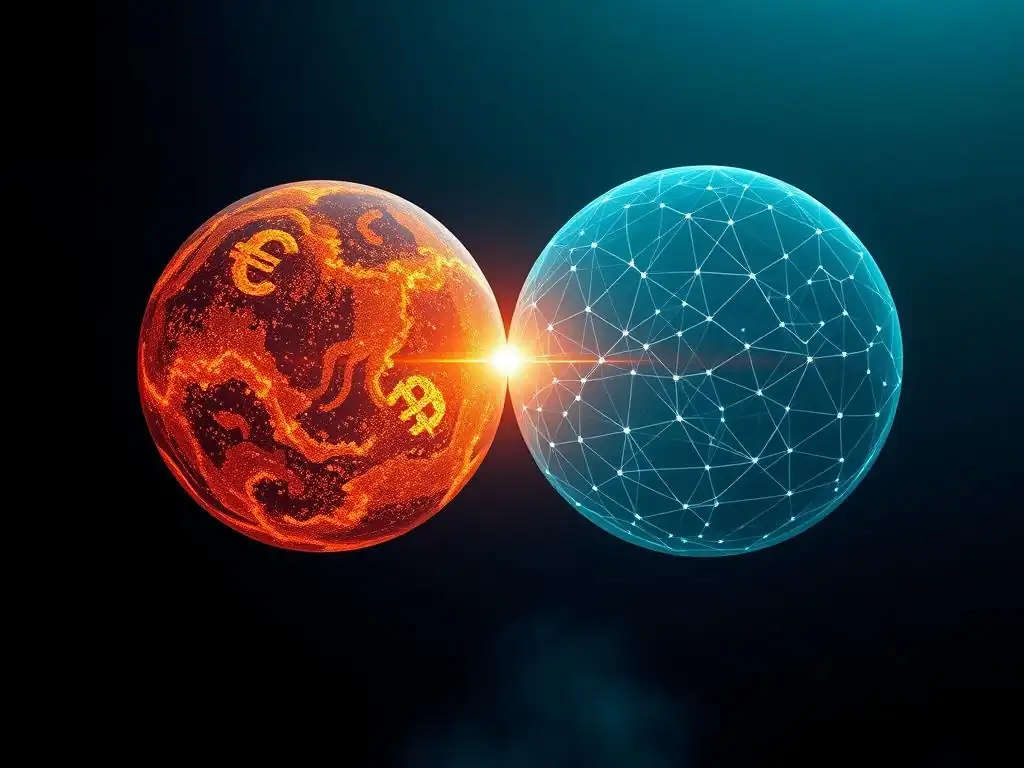
Welcome to Blockchain Trends, your guide to understanding the revolutionary impact of blockchain technology.
Are you intrigued by the intricate mechanics that drive successful blockchain projects? Dive into the crucial world of tokenomics and discover the secrets behind sustainable digital economies. This week, we unravel the complexities of blockchain token supply models, exploring the critical debate between inflation and deflation. Which model reigns supreme? Prepare to have your assumptions challenged as we delve into the practical considerations and long-term implications. Read on to find out!
- Fixed Supply vs. Dynamic Supply: Choosing the Right Blockchain Token Supply Model
- What is a Fixed Token Supply?
- What is a Dynamic Token Supply?
- Fixed vs. Dynamic: A Comparative Analysis of Blockchain Token Supply Models
- Real-World Examples of Fixed and Dynamic Blockchain Tokens
- Designing the Optimal Token Supply Model for Your Blockchain Project
- The Future of Blockchain Token Supply Models
-
Frequently Asked Questions
- What are the fundamental differences between inflation and deflation in the context of blockchain token supply models?
- Why is understanding blockchain token supply models crucial for investors and project creators?
- How do inflationary blockchain token supply models typically incentivize network participation?
- What are some potential drawbacks of deflationary blockchain token supply models?
- Besides inflation and deflation, what other factors should be considered when designing blockchain token supply models?
- Final Reflection: Navigating the Token Supply Seas
- Ignite Your Crypto Strategy!
Fixed Supply vs. Dynamic Supply: Choosing the Right Blockchain Token Supply Model
The Importance of Tokenomics in Blockchain Projects
Tokenomics, the economics of a token, is a foundational element for any blockchain project's long-term viability and success. It encompasses the design of a token's creation, distribution, management, and destruction mechanisms, fundamentally shaping user incentives, network security, and overall ecosystem health.
A well-designed tokenomics model aligns the interests of various stakeholders – users, developers, validators, and investors – encouraging participation and contribution while preventing malicious behavior. The specific approach to managing the total number of tokens in circulation, known as the token supply model, is a critical component of tokenomics, directly impacting the token's scarcity, value proposition, and the network's economic stability.
The choice between different blockchain token supply models is not merely a technical decision; it is a strategic one that reflects the project's goals and the intended behavior of its participants. For instance, a token designed for use as a store of value might prioritize scarcity through a fixed supply, while a token intended to power a complex decentralized application might require a dynamic supply to adapt to fluctuating network usage and resource demands.
Understanding these dynamics is crucial for anyone involved in building, investing in, or using blockchain technologies, as the token supply model significantly influences everything from inflationary pressures to network security budgets and the potential for future growth or contraction.
Exploring Different Blockchain Token Supply Models
Blockchain token supply models can broadly be categorized into fixed supply and dynamic supply. A fixed supply model dictates a predetermined, immutable maximum number of tokens that will ever exist. This is analogous to a finite resource like gold, where the total quantity is capped. This model is often chosen for tokens aiming to serve as a digital store of value or a scarce digital asset.
In contrast, a dynamic supply model allows the total number of tokens in circulation to change over time. This change can be governed by predefined algorithms, network activity, or decentralized governance mechanisms. Dynamic supplies can be inflationary, increasing the total number of tokens, or deflationary, decreasing the total number through mechanisms like burning. The flexibility of dynamic blockchain token supply models allows projects to adjust to evolving network conditions, incentivize specific behaviors, and manage economic stability in response to real-world factors.
What is a Fixed Token Supply?
How a Fixed Token Supply Works in Crypto
A fixed token supply model operates under the principle that there is a hard cap on the total number of tokens that will ever be created. Once this maximum supply is reached, no new tokens are minted. The process of reaching this cap typically involves a scheduled release mechanism, such as block rewards for miners or validators, which decrease over time until issuance stops entirely. This predictable issuance schedule allows participants to anticipate future supply levels with a high degree of certainty.
For example, Bitcoin (BTC), perhaps the most famous cryptocurrency, utilizes a fixed token supply model with a hard cap of 21 million BTC. The release schedule is governed by a process known as "halving," where the block reward given to miners for validating transactions is cut in half approximately every four years.
Starting with a block reward of 50 BTC, this has decreased to 25 BTC, then 12.5 BTC, 6.25 BTC, and is currently 3.125 BTC after the 2024 halving. This predictable reduction in issuance rate ensures that the 21 million cap is approached asymptotically, creating a known and finite supply over the long term.
The Benefits of a Fixed Token Model
Predictability and Scarcity
One of the primary advantages of a fixed blockchain token supply model is the inherent predictability it offers. Market participants know the maximum number of tokens that will ever exist, which eliminates uncertainty regarding future supply expansion. This transparency makes it easier for investors and users to model the token's potential value based on demand relative to a known, finite supply. The hard cap creates artificial scarcity, which, when combined with increasing demand, can theoretically lead to price appreciation over time, making the token attractive as a potential store of value.
The scarcity argument is a strong psychological factor driving adoption and investment in fixed-supply assets. Knowing that an asset is truly finite, unlike fiat currencies which can be printed indefinitely, provides a sense of security against potential inflationary pressures driven by supply increases. This predictability and scarcity are central to the value proposition of cryptocurrencies like Bitcoin, positioning them as "digital gold" due to their limited and verifiable supply, a key characteristic of effective stores of value throughout history.
Simplicity and Transparency
Fixed blockchain token supply models are generally simpler to design and understand compared to dynamic models. The rules governing issuance are typically straightforward and embedded directly into the protocol's code, making the supply schedule transparent and easily auditable by anyone. There are no complex algorithms or governance processes required to manage the token's total quantity once the initial parameters are set.
This simplicity fosters trust and reduces the potential for manipulation. Users and investors can verify the maximum supply and the issuance schedule themselves, without needing to rely on external authorities or complex economic models. This transparency contributes to the decentralized ethos of many blockchain projects, ensuring that a fundamental aspect of the token's economics is open and verifiable by the community.
The Drawbacks of a Fixed Token Supply
Limited Adaptability to Changing Network Needs
A significant drawback of a fixed blockchain token supply model is its lack of adaptability. The supply is predetermined and cannot easily adjust to changes in network usage, security requirements, or economic conditions. If a network experiences rapid growth, leading to increased transaction volume and demand for the token, a fixed supply cannot increase to accommodate this, potentially leading to high transaction fees or network congestion if the token is also used for network operations (like gas).
Conversely, if the network experiences a decline in activity, the fixed issuance schedule continues regardless, potentially leading to over-incentivization of miners/validators relative to actual network value or demand. This rigidity means the model cannot dynamically respond to unforeseen circumstances or optimize resource allocation based on real-time network needs, which can hinder scalability and long-term sustainability in certain use cases.
Potential for Inefficient Resource Allocation
In fixed-supply systems that rely on block rewards for security (like Proof-of-Work), the block reward decreases over time, eventually reaching zero as the supply cap is approached. At this point, network security must be funded solely by transaction fees. If transaction volume and fees are insufficient, the incentive for miners or validators to secure the network diminishes, potentially compromising security.
Furthermore, a fixed supply might not provide adequate incentives for future development, maintenance, or community building once issuance stops. Without a mechanism to create new tokens for funding purposes, the project might struggle to support ongoing operations or adapt to future technological changes. This potential reliance solely on transaction fees or external funding mechanisms highlights a potential inefficiency in allocating resources for the long-term health and security of the network under a strict fixed supply model.
What is a Dynamic Token Supply?
How a Dynamic Token Supply Works in Crypto
A dynamic blockchain token supply model allows the total number of tokens in existence to change over time. Unlike a fixed supply, there is no predetermined hard cap, or the cap is flexible and subject to change. The supply can increase through minting new tokens (inflation) or decrease through mechanisms like burning (deflation). The rate and direction of supply change are typically governed by predefined rules, network activity, or community consensus.
This flexibility allows dynamic models to respond to various factors, such as network congestion, the need to fund development, or the desire to maintain a certain level of economic stability. The mechanisms controlling the dynamism can be complex, involving algorithms that adjust issuance or destruction rates based on specific metrics, or governance processes where token holders vote on supply modifications.
Mechanisms for Achieving Dynamism in Blockchain Tokens
Algorithmic Adjustments
Many dynamic blockchain token supply models employ algorithmic mechanisms to automatically adjust the supply based on predefined conditions. These algorithms are embedded within the protocol and execute automatically when certain triggers are met. For instance, a protocol might increase token issuance when network usage is high to provide more incentives for validators or decrease issuance when usage is low.
Another common algorithmic mechanism is token burning, where tokens are permanently removed from circulation. Ethereum (ETH) implemented EIP-1559, which introduced a base fee for transactions that is burned instead of going to miners. This burning mechanism makes ETH's supply dynamic; while new ETH is still issued through proof-of-stake rewards, the amount burned varies with network activity, leading to periods of net inflation or deflation depending on transaction volume and staking rewards. This algorithmic approach provides a reactive way to manage supply based on real-time network conditions.
Governance-Based Modifications
Some dynamic blockchain token supply models allow the community or specific stakeholders to collectively decide on changes to the token supply through a governance process. This typically involves token holders voting on proposals to mint new tokens (e.g., for ecosystem grants or development funding), adjust inflation/deflation rates, or implement burning mechanisms.
Protocols like Decentraland (MANA) or MakerDAO (MKR) use governance mechanisms where token holders can propose and vote on various parameters, which can include aspects affecting the token supply. This approach provides flexibility and allows the community to adapt the tokenomics based on evolving project needs and market conditions. However, it also introduces complexity and potential risks related to voter apathy, centralization of voting power, or malicious governance attacks.
The Benefits of a Dynamic Token Model
Adaptability to Network Growth and Contraction
A major benefit of a dynamic blockchain token supply model is its ability to adapt to the changing scale and needs of the network. As a network grows and processes more transactions or supports more applications, a dynamic supply can increase to provide necessary incentives for validators or facilitate network operations without causing excessive fee pressure. This flexibility can be crucial for projects aiming for mass adoption and scaling.
Conversely, if network activity decreases, a dynamic model can potentially reduce issuance or implement burning to manage inflationary pressures or maintain a desired token price level. This responsiveness allows the tokenomics to remain aligned with the network's actual usage and value, potentially leading to a more sustainable ecosystem in the long run by preventing over- or under-incentivization of network participants.
Potential for Optimized Resource Allocation
Dynamic blockchain token supply models offer the potential to optimize the allocation of network resources over time. By adjusting issuance, tokens can be directed towards funding critical activities like protocol development, security audits, marketing, or ecosystem grants. This contrasts with fixed supply models where funding often relies on initial token sales or external sources.
Furthermore, dynamic models can use mechanisms like staking rewards (common in Proof-of-Stake systems) where new tokens are issued to incentivize users to lock up their tokens and secure the network. The issuance rate can sometimes be adjusted based on the participation rate or other network health metrics, ensuring that security is adequately funded without unnecessarily inflating the supply if participation is high. This ability to programmatically or via governance direct token flow towards essential functions enhances the potential for efficient resource distribution within the ecosystem.
The Drawbacks of a Dynamic Token Supply
Complexity and Potential for Manipulation
Dynamic blockchain token supply models are inherently more complex than fixed models. The rules governing supply changes can involve intricate algorithms or require active participation in governance, making them harder for the average user to fully understand and predict. This complexity can lead to confusion and make it difficult for participants to accurately assess the token's future supply and potential value.
Moreover, dynamic models, especially those reliant on governance, can be susceptible to manipulation. If a small group of token holders controls a significant portion of the voting power, they could potentially vote to implement supply changes that benefit themselves at the expense of other participants. Algorithmic models also require careful design to avoid unintended consequences or vulnerabilities that could be exploited to manipulate the supply.
Uncertainty and Difficulty in Valuation
The ability of a dynamic supply to change over time introduces a level of uncertainty that is absent in fixed-supply models. Without a hard cap or a completely predictable issuance schedule, it can be challenging for investors to forecast the total future supply. This uncertainty complicates valuation efforts, as the total number of tokens competing for market demand is not fixed.
This difficulty in predicting future supply can deter investors seeking long-term store-of-value assets where scarcity is a key factor. While dynamic models offer flexibility, this comes at the cost of the clear, predictable scarcity provided by fixed blockchain token supply models, potentially impacting the token's attractiveness for certain investment profiles.
Fixed vs. Dynamic: A Comparative Analysis of Blockchain Token Supply Models

Comparing Fixed and Dynamic Token Models Side-by-Side
When evaluating blockchain token supply models, the fundamental trade-off lies between predictability and adaptability. Fixed supply models prioritize predictability and scarcity, offering a clear, immutable maximum supply that is easy to understand and audit. This makes them well-suited for tokens intended primarily as a store of value or scarce digital collectibles. However, this predictability comes at the cost of flexibility, making it difficult for the tokenomics to adapt to changing network conditions or fund ongoing development.
Dynamic supply models, conversely, prioritize adaptability and responsiveness. They can adjust issuance or implement burning based on network activity, governance decisions, or predefined algorithms, allowing the tokenomics to evolve alongside the project. This flexibility can be beneficial for utility tokens, network security, and ecosystem funding. However, this dynamism introduces complexity and uncertainty regarding future supply levels, which can complicate valuation and potentially open the door to manipulation if not carefully designed and governed.
### Key Differences in Blockchain Token Supply Models

*   **Predictability:**
    *   Fixed: High (Maximum supply is known)
    *   Dynamic: Low to Medium (Future supply can change)
*   **Scarcity:**
    *   Fixed: High (Hard cap creates inherent scarcity)
    *   Dynamic: Variable (Can be inflationary or deflationary)
*   **Adaptability:**
    *   Fixed: Low (Difficult to adjust to changing needs)
    *   Dynamic: High (Can respond to network growth/contraction)
*   **Complexity:**
    *   Fixed: Low (Simple rules)
    *   Dynamic: High (Complex algorithms or governance)
*   **Valuation:**
    *   Fixed: Easier (Supply is known)
    *   Dynamic: More difficult (Supply is uncertain)
*   **Use Cases:**
    *   Fixed: Store of value, scarce collectibles
    *   Dynamic: Utility tokens, network security, ecosystem funding
Key Factors to Consider When Choosing a Token Supply Model
Project Goals and Objectives
The most crucial factor in selecting a blockchain token supply model is aligning it with the project's core goals and objectives. Is the token primarily intended to function as a decentralized store of value, like Bitcoin? If so, a fixed supply model emphasizing scarcity and predictability might be the most appropriate choice. The goal of providing a reliable hedge against inflation or a non-sovereign store of wealth strongly favors a predictable, capped supply.
Alternatively, is the token designed to power a complex decentralized application, incentivize network participants (like validators or developers), or facilitate governance? Projects focused on building vibrant ecosystems, funding ongoing development, or maintaining network security through staking rewards often find dynamic supply models more suitable. The ability to adjust supply allows the project to better incentivize specific behaviors and adapt to the evolving needs of the platform and its users, aligning the tokenomics with the functional requirements of the application or protocol.
Target Audience and User Behavior
Understanding the target audience and anticipating user behavior is also vital. If the project aims to attract long-term holders who value stability and scarcity, a fixed supply might be more appealing. The clear, finite nature of the supply can be a significant draw for individuals looking for an asset with predictable economic properties, similar to traditional scarce commodities.
Conversely, if the target audience is primarily users who interact frequently with the application or participate actively in network operations, a dynamic supply model might be better equipped to manage transaction costs, provide ongoing usage incentives, or reward active participation through mechanisms like staking or yield farming funded by new issuance. The model should encourage the desired user actions and align the token's economic incentives with the intended patterns of interaction within the ecosystem.
Network Security and Sustainability
The chosen blockchain token supply model must also support the long-term security and sustainability of the network. In Proof-of-Work systems with fixed supplies, reliance on transaction fees for security becomes critical as block rewards diminish. The model needs to ensure that sufficient incentives exist to maintain the required level of computational power or staking commitment to secure the network against attacks over the decades.
Dynamic models, particularly those utilizing Proof-of-Stake, can often incorporate supply adjustments specifically aimed at maintaining network security. Issuing new tokens to stakers provides a direct incentive to participate in consensus and secure the chain. The flexibility to adjust this issuance rate based on network conditions or the amount of staked capital can help ensure that the network remains secure and sustainable, even as the ecosystem evolves and the cost of security changes. Balancing the need for security incentives with potential inflationary pressures is a key challenge in designing such dynamic blockchain token supply models.
Real-World Examples of Fixed and Dynamic Blockchain Tokens
Case Study: A Fixed Supply Token Example (Bitcoin)
Bitcoin (BTC) stands as the quintessential example of a cryptocurrency employing a fixed blockchain token supply model. Its protocol is hardcoded to never exceed a total of 21 million coins. This design decision was fundamental to its creator Satoshi Nakamoto's vision of creating a decentralized, scarce digital currency resistant to inflation caused by arbitrary supply increases, contrasting sharply with the monetary policies of central banks.
The issuance of new Bitcoin occurs approximately every 10 minutes through block rewards paid to miners who validate transactions and add new blocks to the blockchain. This reward started at 50 BTC per block and is halved roughly every four years, a process known as the "halving." This predictable, decreasing issuance schedule ensures that the 21 million cap is approached gradually, with the final fraction of a Bitcoin expected to be mined around the year 2140. The fixed supply is a core component of Bitcoin's narrative as a store of value and its comparison to scarce assets like gold.
Case Study: A Dynamic Supply Token Example (Ethereum)
Ethereum (ETH), the second-largest cryptocurrency by market capitalization, provides a prominent example of a dynamic blockchain token supply model. Unlike Bitcoin, Ethereum does not have a hard, predetermined maximum supply cap. While there have been discussions and proposals regarding a potential cap, the protocol's design currently allows for the total supply to change over time based on issuance and burning mechanisms.
Initially operating on a Proof-of-Work consensus mechanism similar to Bitcoin, Ethereum issued new ETH through block rewards. However, with the transition to Proof-of-Stake (known as "The Merge"), the issuance mechanism changed significantly. New ETH is now issued to stakers who validate transactions.
Furthermore, the implementation of EIP-1559 introduced a mechanism where a portion of the transaction fees (the base fee) is burned, permanently removing ETH from circulation. The combination of variable issuance to stakers (dependent on the total amount staked) and variable burning (dependent on network transaction volume) makes Ethereum's supply dynamic, fluctuating between periods of net inflation and deflation depending on network conditions. For instance, during periods of high network activity, the burning rate can exceed the staking issuance rate, leading to a net decrease in total ETH supply over time.
Designing the Optimal Token Supply Model for Your Blockchain Project
Balancing Predictability and Adaptability for Sustainable Tokenomics
Designing an optimal blockchain token supply model requires carefully balancing the trade-offs between predictability and adaptability. While predictability can foster confidence and support a store-of-value narrative, excessive rigidity can hinder the project's ability to evolve and sustain itself. Conversely, while adaptability allows for responsiveness to changing conditions, too much dynamism can introduce uncertainty and complexity.
The key lies in choosing a model that aligns with the project's specific use case and long-term vision. A decentralized finance (DeFi) protocol might require a dynamic supply to incentivize liquidity providers and manage protocol stability, whereas a platform for digital art collectibles might benefit from the scarcity and predictability of a fixed supply. Sustainable tokenomics design ensures that the supply model supports network security, incentivizes desired behaviors, and provides a clear economic framework for participants, whether that framework emphasizes scarcity or flexibility.
Hybrid Token Supply Models: Combining Fixed and Dynamic Elements
Recognizing the limitations of purely fixed or dynamic approaches, some projects explore hybrid blockchain token supply models. These models attempt to combine elements of both to leverage their respective strengths. A hybrid model might, for example, have a large initial fixed supply but include a mechanism for future issuance under specific, limited circumstances, perhaps governed by a decentralized autonomous organization (DAO).
Another form of hybrid model might involve a fixed inflation rate rather than a fixed total supply, providing predictability in the rate of new token creation while allowing the total supply to grow indefinitely at a known pace. Or, a project might start with a dynamic supply that transitions to a fixed supply once certain milestones are met or a predefined cap is reached. These hybrid approaches offer greater flexibility in tailoring the tokenomics to complex project requirements, potentially providing some level of predictability while retaining mechanisms for adaptation or funding.
Adjusting Token Supply Over Time: Algorithmic and Governance-Based Approaches
For dynamic or hybrid blockchain token supply models, the specific mechanisms for adjusting supply over time are critical. Algorithmic approaches, like Ethereum's EIP-1559 burning mechanism or algorithms that adjust staking rewards based on network participation, offer automation and responsiveness based on predefined, transparent rules. These systems can react quickly to network conditions without requiring manual intervention or governance votes.
Governance-based approaches empower token holders to make decisions regarding supply adjustments. This allows for human judgment and community input in managing the token's economics, which can be beneficial for adapting to unforeseen circumstances or funding initiatives not covered by algorithms. However, this requires an active and engaged community and robust governance mechanisms to prevent malicious actors from manipulating the supply for their own benefit. Many successful dynamic models employ a combination of both, using algorithms for routine adjustments and reserving governance for significant policy changes.
The Future of Blockchain Token Supply Models
Emerging Trends in Tokenomics Design
The field of blockchain token supply models is continuously evolving as new projects experiment with innovative designs. Beyond the basic fixed and dynamic paradigms, emerging trends include more complex algorithmic stablecoins whose supply is programmatically adjusted to maintain a peg to another asset, often involving intricate minting and burning mechanisms. Another trend is the increasing integration of real-world assets (RWAs) or data feeds into tokenomics, potentially allowing supply adjustments to react to external economic indicators or asset values.
Furthermore, there is growing interest in tokenomics that actively manage supply to optimize specific network outcomes, such as minimizing transaction fees, maximizing network throughput, or ensuring a certain level of decentralization. As blockchain technology matures and is applied to a wider range of use cases, the design of blockchain token supply models will become even more sophisticated, incorporating feedback loops and complex economic models to achieve desired system properties and ensure long-term sustainability.
The Role of Governance in Token Supply Management
Governance is poised to play an increasingly significant role in the management of blockchain token supply models, particularly for dynamic systems. As projects become more decentralized, decisions about how to adjust issuance rates, implement burning mechanisms, or allocate newly minted tokens for ecosystem development will increasingly fall to the community of token holders.
Effective governance mechanisms are essential to ensure that these decisions are made transparently, fairly, and in the best interest of the network's long-term health. This involves designing robust voting systems, encouraging broad participation, and ensuring access to accurate information. The balance between algorithmic automation and human governance in managing token supply will be a key area of development, determining how adaptable and resilient blockchain ecosystems can be in the face of future challenges and opportunities.
The Impact of Token Supply on the Long-Term Success of Blockchain Projects
The choice and implementation of a blockchain token supply model have profound implications for a project's long-term success. A poorly designed model can lead to unintended inflation, insufficient incentives, governance failures, or an inability to adapt to market changes, potentially undermining the entire ecosystem. Conversely, a well-designed model can foster a thriving community, ensure network security, attract investment, and align the economic interests of all participants.
Ultimately, the optimal blockchain token supply model is not a one-size-fits-all solution. It must be carefully tailored to the project's unique goals, technology, community, and intended use case. As the blockchain space matures, a deeper understanding of tokenomics and the nuances of supply management will be critical for building sustainable, successful decentralized applications and protocols that can deliver on the transformative potential of this technology.
Frequently Asked Questions
What are the fundamental differences between inflation and deflation in the context of blockchain token supply models?
Inflationary models increase the total token supply over time, often through staking rewards or minting. Deflationary models decrease the total token supply, usually through burning or token buy-backs.
Why is understanding blockchain token supply models crucial for investors and project creators?
Understanding these models helps investors assess long-term token value and potential ROI. For project creators, choosing the right model can impact token adoption and community engagement.
How do inflationary blockchain token supply models typically incentivize network participation?
Inflationary models often incentivize participation by rewarding users with newly minted tokens for staking or providing liquidity. This encourages network security and stability.
What are some potential drawbacks of deflationary blockchain token supply models?
Aggressive deflation can lead to token scarcity, potentially hindering everyday use and accessibility. It may also create market volatility and price speculation.
Besides inflation and deflation, what other factors should be considered when designing blockchain token supply models?
Beyond the core model, factors like token utility, distribution mechanisms, and governance structures significantly impact a token's success and long-term sustainability.
The exploration of inflation and deflation within blockchain token supply models reveals more than just economic mechanics; it underscores the fundamental tension between incentivizing growth and preserving value in decentralized ecosystems. Understanding these competing forces is crucial, especially now, as blockchain technology matures and its applications extend far beyond simple cryptocurrency. The choices we make in designing these models will directly impact the long-term sustainability and adoption of blockchain solutions across various industries.
The ongoing debate surrounding inflationary and deflationary models highlights the complex interplay between economic theory and human behavior. This exploration has profoundly shaped my understanding of how tokenomics can either foster vibrant communities or lead to stagnation. The best way to predict the future is to create it.
- Peter Drucker. This quote resonates deeply, reminding us that the design choices we make today will shape the future of blockchain economies and their impact on society.
As we navigate the evolving landscape of blockchain technology, let us remember that the most effective token supply model is not simply a matter of choosing inflation or deflation. It's about crafting a system that aligns incentives, fosters participation, and ultimately serves the needs of the community it supports. Consider how you can apply these principles in your own projects and contributions to the blockchain space, ensuring that innovation leads to sustainable and equitable outcomes for all.
Ignite Your Crypto Strategy!
Thank you for exploring the intricacies of token supply models with us. We hope you've gained valuable insights into how inflation and deflation influence blockchain projects. Now, it's time to apply that knowledge.
Consider analyzing your favorite cryptocurrency projects to determine whether they employ inflationary or deflationary models and how these choices affect their long-term sustainability. Go beyond simply holding; strive to understand the underlying mechanisms.
You might also explore hybrid tokenomics models that blend inflation and deflation in innovative ways. Discover strategies that could shape the future of blockchain economies.
Share this article with fellow crypto enthusiasts to foster a discussion about the most effective token supply models for the industry’s future.
Is there a particular project whose tokenomics you find especially interesting? Share your thoughts in the comments below!
Leave a Reply