
The Legal Status of DAOs and Tokens: Decentralization Meets Regulation


Welcome to Blockchain Trends, your guide to understanding the revolutionary impact of blockchain technology beyond the hype.
Ever wondered how decentralization intersects with the established legal frameworks? Dive into our latest article where we tackle the complex landscape of DAOs legal regulation challenges. Explore the hurdles and opportunities as decentralized autonomous organizations navigate the world of compliance, and discover how regulators are grappling with this innovative technology. Read on and unravel the future of decentralized governance!
- DAOs and Token Legal Status: Navigating Decentralization's Regulatory Landscape
- Understanding the Legal Complexities of Decentralized Autonomous Organizations (DAOs)
- DAOs Legal Regulation Challenges: A Global Perspective
- Token Legal Status: Classifying and Regulating Digital Assets
- Examining the Legal Personality of DAOs
- Legal Implications of DAO Governance and Voting Mechanisms
- DAOs and Securities Laws: A Critical Analysis
- Regulatory Approaches to DAOs and Tokens Around the World
- Addressing the Legal Uncertainty Surrounding DAOs: Potential Solutions
- The Future of DAO and Token Regulation: A Look Ahead
- Mitigating Legal Risks in DAO Participation and Token Investment
-
Frequently Asked Questions
- What are the main legal challenges facing Decentralized Autonomous Organizations (DAOs)?
- How does the lack of a central authority in DAOs complicate legal regulation?
- What is the current regulatory landscape for DAOs and tokens, and how is it evolving?
- What are the potential legal risks associated with participating in a DAO?
- How might DAOs adapt to overcome legal and regulatory hurdles in the future?
- Final Reflection: Navigating the Uncharted Waters of Decentralization
- Unveil the Future: Shape the Legal Landscape of DAOs!
Blockchain Trends: Tokenization and Tokenomics - Legal Aspects of Tokenization
Understanding the Legal Complexities of Decentralized Autonomous Organizations (DAOs)
What are DAOs and How Do They Operate?
Decentralized Autonomous Organizations (DAOs) represent a novel organizational structure built on blockchain technology. At their core, DAOs are governed by rules encoded as computer programs, known as smart contracts, that run autonomously on a blockchain. These rules dictate how decisions are made, typically through token-based voting, and how treasury funds are managed. Unlike traditional companies with hierarchical management, DAOs aim to distribute power and ownership among their participants, often referred to as members or token holders, who collectively decide on the direction and operations of the organization. This decentralized model seeks to enhance transparency, immutability, and resistance to censorship.
The operation of a DAO is fundamentally driven by its smart contracts and the associated governance tokens. Members propose actions, such as deploying new features, allocating funds from the treasury, or modifying protocol parameters. These proposals are then put to a vote, where the weight of a member's vote is typically proportional to the amount of governance tokens they hold.
Once a proposal reaches a predefined consensus threshold (e.g., a certain percentage of votes or token weight), the smart contract automatically executes the approved action. This programmatic execution is a key differentiator from traditional organizations, where decisions require manual implementation by human agents, introducing potential points of failure or delay.
The Rise of DAOs: A New Era of Decentralized Governance
The emergence of DAOs signifies a significant shift towards decentralized forms of governance and coordination, particularly within the Web3 ecosystem. Initially popularized by projects like The DAO in 2016 (despite its infamous failure), the concept has evolved significantly. Today, DAOs govern a wide array of decentralized protocols, platforms, and investment funds, including major DeFi protocols like Uniswap, Aave, and MakerDAO, which collectively manage billions of dollars in assets. These organizations demonstrate the potential for large-scale, community-driven management of complex digital systems without relying on central authorities.
The growth in the number and scale of DAOs highlights their increasing importance in the digital economy. While precise figures are difficult to obtain due to their decentralized nature, estimates in early 2023 suggested thousands of active DAOs, with some controlling treasuries valued in the hundreds of millions or even billions of dollars (though these values are highly volatile).
This rapid expansion, however, has brought DAOs legal regulation challenges to the forefront. Existing legal frameworks, designed for traditional, centralized entities, struggle to accommodate the distributed nature, fluid membership, and automated operations characteristic of DAOs, creating significant legal uncertainty for participants and regulators alike.
DAOs Legal Regulation Challenges: A Global Perspective
Key Legal Challenges Facing DAOs: Liability, Governance, and Securities Laws
One of the most pressing DAOs legal regulation challenges is the question of legal liability. In a traditional organization, there are clear legal persons (like corporations or LLCs) responsible for actions and debts. For DAOs, the lack of a recognized legal status makes it unclear who is liable if the DAO incurs obligations, causes harm, or violates laws. Are the individual token holders liable? The core developers? The smart contract itself? Different jurisdictions may interpret this differently, potentially exposing participants to unlimited personal liability, which is a significant deterrent to broader adoption and participation.
Furthermore, the decentralized governance mechanisms, while innovative, present unique legal hurdles. How do traditional legal concepts like fiduciary duty, corporate governance standards, or shareholder rights apply in a system where decisions are made via automated token voting and executed by smart contracts? The transparency of on-chain voting is high, but the accountability for the outcomes of votes is ambiguous. Regulators and courts face the challenge of interpreting distributed decision-making processes through the lens of laws designed for board meetings and corporate resolutions, adding complexity to the DAOs legal regulation challenges.
The Absence of Clear Legal Frameworks for DAOs: A Regulatory Vacuum
Globally, there is a notable absence of comprehensive legal frameworks specifically tailored to DAOs. Most jurisdictions either attempt to fit DAOs into existing categories (like partnerships, unincorporated associations, or even corporations, often awkwardly) or simply have no explicit rules addressing them. This regulatory vacuum creates significant uncertainty for DAO operators, participants, and third parties interacting with DAOs. Without clear guidelines, DAOs risk inadvertently violating existing laws, particularly in areas like securities regulation, anti-money laundering (AML), and know-your-customer (KYC) requirements.
The lack of tailored regulation is a core aspect of DAOs legal regulation challenges. For instance, if a DAO is deemed an unincorporated association in a common law jurisdiction, its members might be treated as partners, potentially exposing them to joint and several liability for the DAO's actions.
Conversely, if a jurisdiction ignores the DAO's structure entirely, it might be treated as a nebulous group with no legal standing to enter contracts or own assets. This patchwork approach, or lack thereof, hinders legal certainty and makes it difficult for DAOs to operate predictably across different regions or even within a single country.
Token Legal Status: Classifying and Regulating Digital Assets
Token Classification: Utility Tokens, Security Tokens, and Governance Tokens
The legal status of tokens associated with DAOs or decentralized protocols is highly dependent on their characteristics and how they are offered and used. Regulators often attempt to classify tokens into categories like utility tokens, security tokens, and governance tokens, although the lines between these can be blurry. Utility tokens are typically intended to provide access to a product or service on a platform.
Security tokens, on the other hand, are digital assets that represent ownership in an underlying asset or enterprise, like equity or debt, and are subject to securities regulations. Governance tokens grant holders the right to vote on proposals and influence the future of a protocol or DAO.
While governance tokens are fundamental to DAO operations, their legal classification is a significant area of DAOs legal regulation challenges. Do they merely grant voting rights, or do they also convey economic rights akin to dividends or profit sharing, potentially classifying them as securities?
The US Securities and Exchange Commission (SEC) often uses the Howey Test to determine if an asset is an investment contract (and thus a security), looking for an investment of money in a common enterprise with an expectation of profits derived solely from the efforts of others. Many governance tokens, while primarily used for voting, may also gain value based on the success of the underlying protocol, which could trigger securities classification under this test or similar tests in other jurisdictions.
The Application of Securities Laws to Token Offerings (ICOs, STOs, IDOs)
The initial distribution of tokens, whether through Initial Coin Offerings (ICOs), Security Token Offerings (STOs), or Initial DAO Offerings (IDOs), is heavily scrutinized under existing securities laws worldwide. If the tokens being offered are deemed to be securities, the offering must comply with stringent registration and disclosure requirements, unless a specific exemption applies. Failure to comply can result in significant penalties, including fines and rescission rights for investors. Many early token offerings faced enforcement actions precisely because they failed to register tokens deemed securities, highlighting a major area of DAOs legal regulation challenges when it comes to fundraising.
STOs are specifically designed to comply with securities regulations by tokenizing traditional securities. However, the regulatory treatment of ICOs and IDOs, particularly those involving utility or governance tokens, remains highly uncertain. The US SEC, for example, has taken the stance that many tokens offered initially were unregistered securities. This regulatory risk impacts DAOs that rely on token sales for bootstrapping or ongoing funding, requiring careful consideration of token design, offering structure, and jurisdictional legal advice to navigate potential securities law pitfalls.
Examining the Legal Personality of DAOs
Are DAOs Legal Entities? Exploring Different Legal Structures
A fundamental aspect of DAOs legal regulation challenges is the question of whether a DAO constitutes a legal entity separate from its members. In most jurisdictions, the default answer is no. Without formal registration or recognition, a DAO is often treated as a general partnership or an unincorporated association by default. This designation carries significant implications, including potentially unlimited personal liability for participants, limited ability to enter into contracts in the DAO's name, and difficulties holding assets or suing/being sued as a collective.
Some jurisdictions are beginning to explore legal structures for DAOs. For instance, Wyoming in the US has enacted legislation allowing for the creation of Decentralized Autonomous Organization LLCs (DAO LLCs), which provide limited liability protection to members and legal recognition to the organization. Other approaches include wrapping a DAO within a traditional legal entity like a non-profit foundation or a limited liability company (LLC) to provide a legal shield and interface with the legacy legal system. These nascent legal structures represent attempts to address the gap, but their effectiveness and widespread adoption are still developing.
Challenges in Applying Traditional Legal Frameworks to DAOs
Applying traditional legal frameworks, designed for hierarchical, geographically bound organizations, to decentralized, borderless DAOs presents inherent difficulties. Concepts like "place of business," "registered agent," or "board of directors" don't map cleanly onto a distributed network of token holders interacting via smart contracts. Determining jurisdiction is particularly complex; if a DAO's servers are distributed globally and its members reside in dozens of countries, which country's laws apply? This jurisdictional ambiguity is a significant DAOs legal regulation challenge.
Furthermore, traditional legal processes, such as serving legal documents or enforcing judgments, are challenging when dealing with a decentralized organization without a clear physical address or legal representative. How do you serve a subpoena on a smart contract? How do you seize assets held in a decentralized treasury? These practical difficulties highlight the need for innovative legal thinking and potentially new legal mechanisms to interact effectively with decentralized entities.
Legal Implications of DAO Governance and Voting Mechanisms
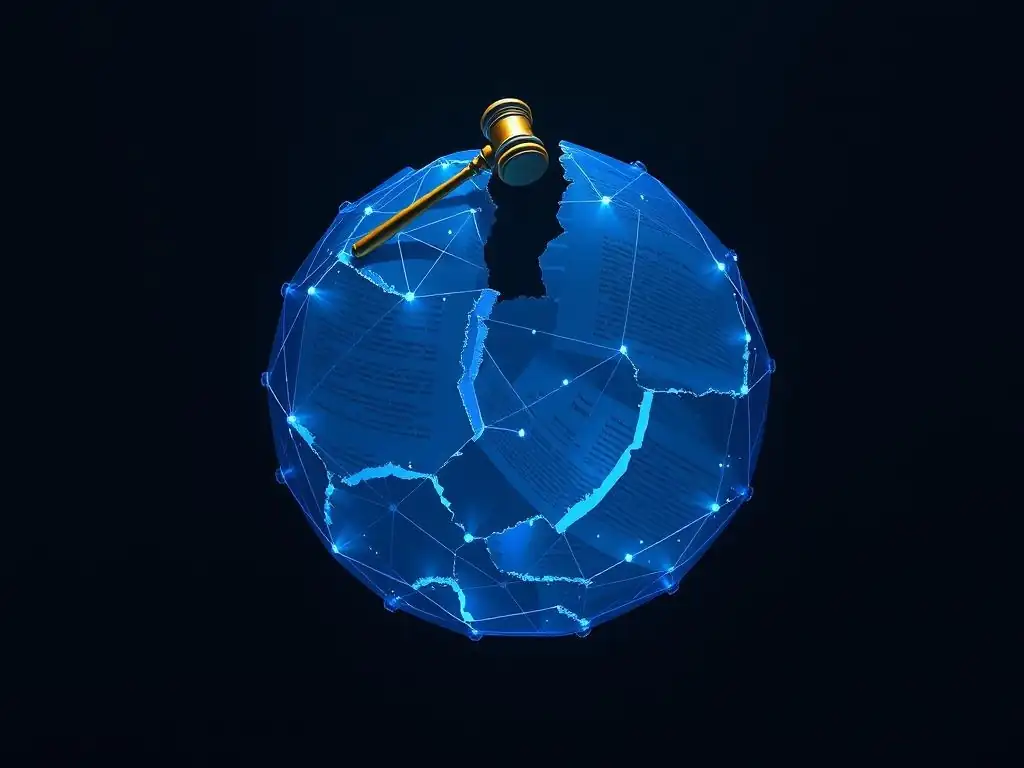
Liability and Accountability in Decentralized Governance Systems
The decentralized nature of DAO governance raises complex questions of liability and accountability. If a DAO votes to take an action that is later deemed illegal or harmful, who is responsible? Under a partnership model, all members might be jointly and severally liable. In a more complex DAO with different classes of token holders or delegated voting power, attributing responsibility becomes even harder. This lack of clear accountability for collective decisions is a major component of DAOs legal regulation challenges, potentially exposing participants to unforeseen legal risks.
Consider a DAO that votes to deploy a new protocol feature that infringes on existing patents or violates consumer protection laws. In a traditional company, the directors and officers would likely bear primary responsibility. In a DAO, the responsibility could potentially fall on the voters, the proposal creators, the core developers who implemented the code, or even the validators who processed the transactions. The legal system is not yet equipped to easily parse responsibility in such a distributed and automated decision-making environment.
The Role of Smart Contracts in DAO Legal Compliance
Smart contracts, the backbone of DAO operations, have a dual role regarding legal compliance. They can enforce rules transparently and automatically, potentially ensuring that the DAO operates according to its predefined parameters. For example, a smart contract could be programmed to prevent treasury funds from being spent without a successful governance vote, ensuring internal compliance with DAO rules.
However, smart contracts also pose DAOs legal regulation challenges. If a smart contract contains bugs, vulnerabilities, or is designed in a way that facilitates illegal activities (like facilitating unregistered securities transactions or violating sanctions), the immutability of the blockchain can lock in non-compliance. Furthermore, the legal status of a smart contract itself is debated; is it a binding agreement, a piece of code, or something else? Can a smart contract be sued? These questions underscore the difficulty in applying traditional contract law or tort law to automated, code-based interactions within a DAO.
DAOs and Securities Laws: A Critical Analysis
When Do DAO Tokens Qualify as Securities?
Determining when a DAO's native governance or utility token qualifies as a security is one of the most significant DAOs legal regulation challenges. In the US, the Howey Test is paramount: is there an investment of money, in a common enterprise, with an expectation of profits derived solely from the efforts of others?
Many DAO tokens represent an investment (money exchanged for tokens), are part of a common enterprise (the DAO/protocol), and their value often appreciates based on the efforts of the core team, community, and overall success of the protocol. The "solely from the efforts of others" prong has been interpreted broadly by courts.
The critical factors often considered by regulators include the degree of decentralization and the expectations of token holders. If a DAO starts with a small, centralized team controlling most aspects and tokens are marketed with promises of future profit based on the team's work, it strongly resembles an investment contract.
As a DAO becomes truly decentralized, with broad token distribution, active community governance, and no single entity controlling its development, the argument that its token is not a security based on the Howey Test might become stronger, particularly regarding the "efforts of others" prong, as profits may be seen as derived from the collective efforts of the decentralized community.
Avoiding Securities Law Violations in DAO Operations
To mitigate the risk of violating securities laws, DAOs and token issuers must carefully structure their token distributions and ongoing operations. This involves analyzing whether the token meets the criteria of a security in relevant jurisdictions before any public offering. If it does, the offering must comply with applicable securities laws, potentially requiring registration or reliance on specific exemptions (like Reg D or Reg A in the US). This is a major aspect of navigating DAOs legal regulation challenges.
For existing DAOs, ongoing activities can also raise securities concerns. For example, if a DAO decides to distribute a portion of its treasury profits to token holders in a way that resembles dividends, this action could reinforce the argument that the token is a security. DAOs must be mindful of how they market their tokens, what rights are attached to them, and how the protocol's success is communicated to token holders to avoid inadvertently triggering securities classification and its associated regulatory burdens. Legal counsel specializing in digital assets is often essential for navigating these complex issues.
Regulatory Approaches to DAOs and Tokens Around the World
Comparing Legal Frameworks: The US, Europe, and Asia
Regulatory approaches to DAOs and tokens vary significantly across major global regions, contributing to DAOs legal regulation challenges in a global context. The United States has primarily relied on applying existing securities, commodities, and money transmission laws to digital assets, often through enforcement actions by agencies like the SEC and CFTC. This approach has led to some clarity but also considerable uncertainty due to the lack of specific legislation tailored to decentralized technologies. Recent legislative proposals aim to provide more clarity but are still under debate.
In Europe, the approach is somewhat more fragmented but is moving towards comprehensive regulation with initiatives like the Markets in Crypto-Assets (MiCA) regulation. MiCA provides frameworks for classifying certain types of tokens (like utility tokens and asset-referenced tokens) and regulates service providers, but it does not explicitly create a legal status for DAOs themselves.
Member states may also have their own supplementary rules. Asian jurisdictions like Singapore, Hong Kong, and Japan have also implemented various regulations, often focusing on licensing requirements for virtual asset service providers and rules around token offerings, with differing stances on how DAOs fit into their existing legal structures.
Emerging Regulatory Trends in the DAO and Token Space
Several emerging regulatory trends reflect attempts to address DAOs legal regulation challenges. One trend is the exploration of specific legal wrappers or entity types for DAOs, as seen with Wyoming's DAO LLC law. Another is the focus on regulating specific activities conducted by DAOs or facilitated by their tokens, rather than trying to regulate the decentralized organization itself as a single entity. This might involve applying rules around financial services, data privacy, or consumer protection to the functions performed by a DAO or its underlying protocol.
Furthermore, regulators are increasingly considering the level of decentralization as a factor in determining regulatory treatment. Projects that are genuinely decentralized, with no identifiable controlling party, may face different regulatory scrutiny than those that are ostensibly decentralized but remain controlled by a core team or small group of token whales. This suggests a move towards a more nuanced, function-based or substance-over-form approach to regulating decentralized technologies, acknowledging that applying traditional entity-based regulations is often impractical.
Addressing the Legal Uncertainty Surrounding DAOs: Potential Solutions
Developing Clear Legal Frameworks for DAOs: A Call for Regulatory Clarity
One of the most crucial steps in addressing DAOs legal regulation challenges is the development of clear, tailored legal frameworks. This could involve creating new legal entity types specifically designed for DAOs, providing limited liability protection while accounting for their decentralized governance mechanisms. Such frameworks could clarify issues of legal personality, liability, and the capacity of DAOs to engage in legal actions or hold assets, reducing uncertainty for participants and fostering legitimate innovation.
Alternatively, or in parallel, existing laws could be amended or interpreted in ways that better accommodate decentralized structures. This requires careful consideration of how concepts like "control," "management," and "membership" apply in a distributed context. Regulatory sandboxes or pilot programs could also allow regulators and industry participants to experiment with different approaches and gather data before implementing broad regulations, helping to ensure that new rules are effective and do not stifle beneficial decentralized applications.
The Importance of Self-Regulation and Best Practices for DAOs
While awaiting formal regulatory clarity, self-regulation and the adoption of best practices within the DAO community are vital for mitigating DAOs legal regulation challenges. This includes adopting robust governance mechanisms that are transparent and resistant to manipulation, implementing strong security measures for smart contracts and treasuries, and considering legal implications in proposal design and execution. DAOs can also proactively seek legal counsel to understand their potential exposure under existing laws and structure their operations to minimize risks.
Examples of self-regulatory efforts include establishing clear community guidelines, adopting formal constitutions or meta-governance frameworks, and implementing mechanisms for dispute resolution. While self-regulation doesn't replace formal law, it can demonstrate a commitment to responsible operation, build trust with participants and potential regulators, and help shape expectations about how decentralized organizations should function. Adopting best practices for token distribution and utility can also help distinguish tokens from securities, addressing a major area of DAOs legal regulation challenges.
The Future of DAO and Token Regulation: A Look Ahead
The Evolving Legal Landscape: Adapting to Decentralized Technologies
The legal landscape surrounding DAOs and tokens is rapidly evolving as regulators and legal scholars grapple with how to apply existing laws to novel decentralized technologies. It is likely that we will see a combination of approaches: continued application of existing laws (especially securities and financial regulations), the development of specific legislation for digital assets and potentially DAOs, and international efforts to harmonize regulatory approaches. The unique nature of DAOs legal regulation challenges necessitates flexibility and adaptability from both the legal system and the decentralized ecosystem itself.
Future regulations may focus more on the functions performed by a DAO or protocol rather than its organizational form. For example, if a DAO operates a lending platform, it might be subject to lending regulations regardless of whether it's a recognized legal entity. If it facilitates trading, it might face exchange regulations. This functional approach could provide a more consistent way to regulate activities in the decentralized space, sidestepping some of the complexities of entity classification inherent in DAOs legal regulation challenges.
The Role of Technology in Facilitating DAO Legal Compliance
Technology itself can play a significant role in facilitating DAO legal compliance. Smart contracts can be designed with compliance in mind, for example, by including logic that restricts access based on geographic location or verified identity (where legally permissible and privacy-preserving). Zero-knowledge proofs and other privacy-enhancing technologies could potentially be used to verify compliance attributes (like identity or accreditation) without revealing sensitive underlying data, addressing privacy concerns associated with KYC/AML requirements.
Furthermore, tools are being developed to help DAOs manage their operations more professionally, such as platforms for treasury management, proposal tracking, and legal documentation. Future developments might include "compliance primitives" – modular smart contracts or protocols designed to help DAOs interact with the legal system or enforce certain regulatory requirements on-chain. While technology cannot solve all DAOs legal regulation challenges, it can provide mechanisms to help DAOs operate more predictably and align with legal expectations where possible.
Mitigating Legal Risks in DAO Participation and Token Investment
Due Diligence for DAO Members and Token Holders
For individuals considering participating in a DAO or investing in its tokens, performing thorough due diligence is paramount to mitigating legal risks. This involves understanding the DAO's governance structure, the rights and responsibilities associated with holding the tokens, and the level of decentralization. Potential participants should examine the DAO's white paper, governance documents, and the code of its smart contracts (if possible) to understand how decisions are made and what rules govern the organization.
Critically, individuals should assess the potential legal and regulatory risks associated with the specific DAO and its tokens in their jurisdiction. Are similar tokens being treated as securities elsewhere? Does the DAO have any stated legal strategy or structure (like a DAO LLC)? Understanding the potential for unlimited personal liability, regulatory enforcement actions against the DAO or its participants, and the lack of traditional legal recourse in the event of fraud or mismanagement is essential. This awareness helps navigate the complexities of DAOs legal regulation challenges from a participant's perspective.
Understanding the Risks Associated with Unregulated DAOs and Tokens
Participating in or investing in DAOs and tokens that operate in a regulatory vacuum carries significant risks. Without clear legal status, there is often no legal entity to hold accountable in case of disputes, hacks, or failures. Recovery of funds or assets from a decentralized treasury can be extremely difficult, if not impossible, through traditional legal channels. The lack of regulatory oversight means there are fewer protections for participants compared to traditional financial markets or corporate structures.
Furthermore, the legal status of tokens can change, potentially leading to regulatory actions that impact their value or usability. A token initially perceived as a utility token might later be deemed a security by regulators, potentially requiring the DAO to cease operations or face penalties. These uncertainties underscore the importance of recognizing that while decentralization offers benefits, it also introduces unique DAOs legal regulation challenges and risks that participants must understand and accept. Engaging with reputable projects that are actively considering and addressing legal compliance is a prudent approach.
Frequently Asked Questions
What are the main legal challenges facing Decentralized Autonomous Organizations (DAOs)?
DAOs face challenges due to their novel organizational structure, lacking traditional legal frameworks. This ambiguity creates issues surrounding liability, governance, and regulatory compliance.
The absence of a central authority makes it difficult to determine who is responsible for DAO actions. This lack of clear accountability hinders the application of traditional legal principles.
What is the current regulatory landscape for DAOs and tokens, and how is it evolving?
The regulatory landscape is still developing, with different jurisdictions adopting varying approaches. Some are exploring new legal entities to accommodate DAOs, while others apply existing laws to tokens and DAO activities.
What are the potential legal risks associated with participating in a DAO?
Participating in a DAO can expose members to potential legal risks, including liability for DAO actions, securities law violations, and tax implications. Due diligence is crucial before engaging.
How might DAOs adapt to overcome legal and regulatory hurdles in the future?
DAOs might adapt by adopting hybrid governance models, incorporating as legal entities, or utilizing smart contracts to ensure compliance with regulations. These strategies aim to bridge the gap between decentralization and legal frameworks.
The exploration of DAOs and their legal status, as outlined in this article, underscores a crucial point: the intersection of decentralized innovation and established legal frameworks is a complex and evolving landscape. The challenges in regulating DAOs, particularly concerning token classification and liability, are not merely academic exercises; they represent real-world hurdles that must be addressed to foster responsible growth in the decentralized space.
This ongoing dance between innovation and regulation profoundly impacts the cultural and social landscape. The very idea of decentralized governance challenges traditional power structures and invites us to rethink how organizations are formed and managed. The potential for DAOs to democratize access to resources and decision-making is immense, but it requires careful consideration of legal and ethical implications. The law must be stable, and yet it cannot stand still.
- Roscoe Pound. This quote perfectly encapsulates the dilemma facing regulators as they grapple with the rapidly evolving world of DAOs.
As we conclude this exploration of DAOs and their legal regulation challenges, I invite you to consider your own role in shaping this future. How can you contribute to a more informed and responsible approach to decentralized governance? Let us all strive to understand the nuances of this emerging technology and advocate for regulations that foster innovation while protecting individuals and society as a whole. The future of DAOs, and indeed the future of decentralized organizations, depends on our collective wisdom and proactive engagement.
Unveil the Future: Shape the Legal Landscape of DAOs!
Thank you for exploring the evolving legal landscape of decentralized autonomous organizations and tokens. You now have valuable insights into the challenges and opportunities at the intersection of decentralization and regulation. Now, let's put that knowledge into action!
Here are some steps you can take right now:
- Take our brief quiz on DAO legality to assess your understanding and discover areas for further learning. It takes less than five minutes!
- Share this article with your network and start a conversation about the future of DAO regulation within your community. Let's foster a more informed dialogue.
- Explore the resources provided by the Blockchain Trends Legal Initiative, which offers a directory of legal experts and educational materials dedicated to responsible innovation in DAOs.
What specific regulatory challenge do you think poses the greatest threat or provides the biggest opportunity for the widespread adoption of DAOs? Share your thoughts in the comments below!
Leave a Reply