
NFT Royalties Explained: Ensuring Fair Compensation for Creators in the Secondary Market

Welcome to Blockchain Trends, your compass in the rapidly evolving world of decentralized innovation. Forget just digital currencies; we're diving deep into the transformative power of blockchain across industries. Intrigued by the future of digital ownership? Today, we're unraveling a crucial piece of the puzzle: NFT creator royalty payments. How are these royalties structured, and what challenges do creators face in securing their fair share in the secondary market? Explore the complexities and opportunities within this evolving landscape and discover how blockchain is reshaping the future of digital art and beyond. Read on to learn more!
- Optimizing NFT Smart Contracts for Royalty Collection
- Case Studies: Successful NFT Projects Leveraging Royalties
- The Impact of NFT Creator Royalties on the Wider Blockchain Ecosystem
- Frequently Asked Questions
- Final Reflection: Empowering Creators Through NFT Royalties
- Secure Your Future: Embrace the Power of NFT Royalties!
Optimizing NFT Smart Contracts for Royalty Collection
Smart contracts form the technical backbone of NFT creator royalty payments, automating the distribution of funds upon secondary sales. Optimizing these contracts is crucial for ensuring reliability, efficiency, and transparency in royalty collection. A well-designed smart contract not only enforces the creator's right to ongoing compensation but also minimizes potential points of failure and unnecessary costs for both creators and collectors.
Effective optimization involves careful planning during the initial development phase, considering factors like royalty rate setting, recipient addresses, and the standards implemented. It's not just about functionality; it's about building a robust system that can handle numerous transactions securely and cost-effectively over the lifespan of the NFT collection.
Best Practices for Setting and Managing NFT Royalties
Setting the appropriate NFT creator royalty payment percentage is a critical decision. While some early collections experimented with rates as high as 20% or 30%, the market has largely settled on rates typically ranging between 5% and 10%. A common rate observed across many successful projects is around 5-7.5%.
Setting an excessively high rate can potentially deter secondary market activity, while a rate that is too low may not provide sufficient ongoing revenue to support the creator or project. This percentage is usually hardcoded or configurable within the smart contract, though making it configurable introduces complexity and potential governance considerations.
Beyond the rate, managing the recipient addresses is paramount. Smart contracts must accurately route the designated percentage of each secondary sale to the correct wallet(s). For projects involving multiple creators or a team, this might involve splitting royalties among several addresses according to predefined percentages. Implementing multi-signature wallets or secure, audited distribution mechanisms is a best practice to ensure funds are handled safely and transparently, protecting the NFT creator royalty payments from single points of failure or unauthorized access.
Considerations for Gas Fees and Transaction Costs
The blockchain network on which an NFT resides significantly impacts the cost associated with executing smart contract functions, including the distribution of NFT creator royalty payments. On Layer 1 networks like Ethereum, gas fees can fluctuate dramatically based on network congestion. While the primary gas cost of a secondary sale is typically borne by the buyer or seller (depending on the marketplace), the smart contract logic for splitting and sending royalties can add to the transaction complexity and, consequently, the gas cost. For contracts distributing royalties to multiple addresses, each transfer incurs additional gas.
To mitigate high gas costs, especially on Ethereum L1, creators can explore several strategies. One approach is to accumulate royalties over a period or until a certain threshold is reached before initiating transfers, reducing the frequency of transactions.
Another significant consideration is deploying NFTs on Layer 2 scaling solutions (like Polygon, Optimism, Arbitrum) or alternative Layer 1 blockchains (like Solana, Tezos) where transaction costs are substantially lower – often fractions of a cent compared to potentially tens or hundreds of dollars on Ethereum L1 during peak times. This makes the mechanics of NFT creator royalty payments far more efficient and less burdensome for smaller transactions.
Auditing NFT Smart Contracts to Ensure Royalty Compliance
Auditing NFT smart contracts is a non-negotiable step before deployment, especially when they involve financial mechanisms like NFT creator royalty payments. A professional smart contract audit involves a thorough review of the code by security experts to identify vulnerabilities, bugs, and potential exploits. For royalty-enabled contracts, auditors specifically verify that the royalty calculation logic is correct, the percentage is accurately applied, and the funds are securely directed to the designated recipient addresses without possibility of diversion or loss.
Audits build trust with potential collectors and marketplaces, demonstrating that the creator has taken due diligence to ensure the contract functions as intended and that the NFT creator royalty payments are protected. Common vulnerabilities in payment-splitting logic can include reentrancy attacks, integer overflows, or incorrect handling of transfer failures, all of which could jeopardize the flow of royalties. An audit report provides assurance that these risks have been addressed, contributing to the long-term stability and credibility of the NFT project and its commitment to fair creator compensation.
Case Studies: Successful NFT Projects Leveraging Royalties
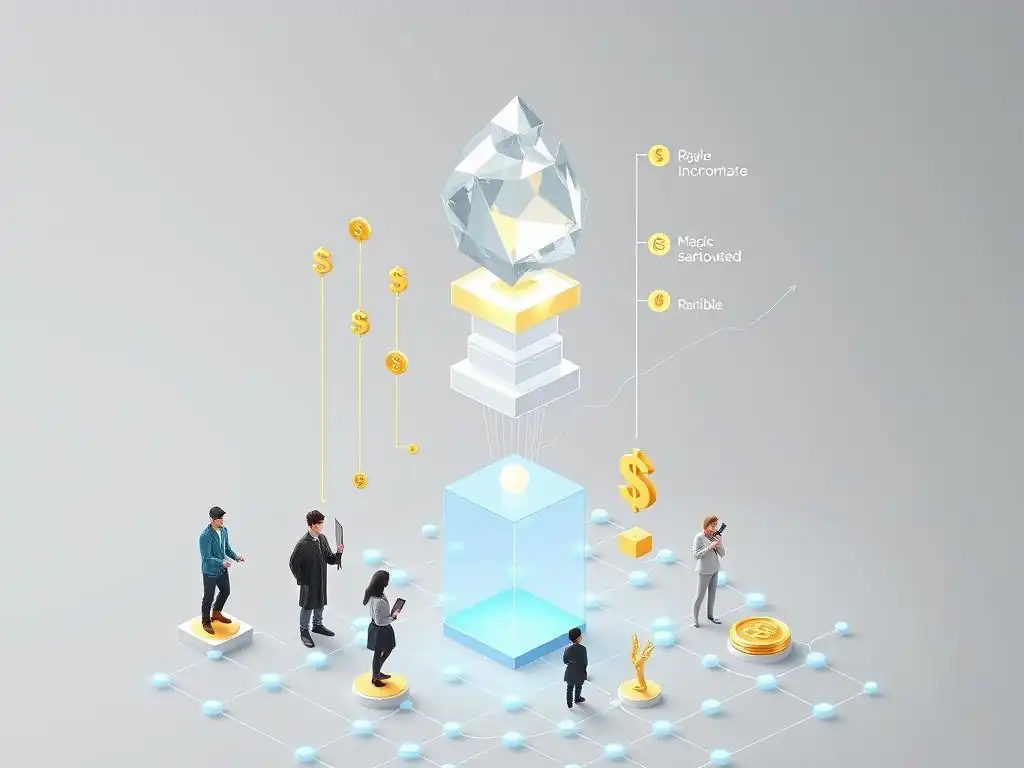
The implementation of NFT creator royalty payments has played a significant role in the sustainability and success of many prominent NFT projects. By providing a continuous revenue stream, royalties enable creators and teams to reinvest in their communities, develop new offerings, and build enduring brands. Examining successful projects offers valuable insights into how effective royalty structures can contribute to long-term growth and value creation in the NFT space.
These case studies highlight that it's not just the existence of royalties, but how they are integrated into the project's overall vision and community engagement strategy, that determines their ultimate impact. Royalties become a mechanism for aligning the incentives of creators, collectors, and the broader ecosystem.
Examining NFT Projects with Innovative Royalty Models (Bored Ape Yacht Club, Art Blocks)
Bored Ape Yacht Club (BAYC), created by Yuga Labs, is perhaps one of the most well-known examples of a project that effectively leveraged NFT creator royalty payments. While their initial sale generated significant funds, the ongoing secondary market activity and a standard royalty rate (often cited as 2.5% on major marketplaces before recent shifts) have provided a consistent, substantial revenue stream.
This revenue has been instrumental in funding the expansion of the BAYC ecosystem, including the creation of companion collections (Mutant Apes, Bored Ape Kennel Club), the launch of the ApeCoin ($APE) token, and ventures into gaming and metaverse experiences. The relatively modest royalty rate, combined with high trading volume, proved to be a powerful engine for reinvestment.
Art Blocks represents a different model within generative art, often featuring higher royalty rates, sometimes ranging from 10% to 15% or even higher, with a portion typically going to the platform/curator and the majority to the individual generative artist. Projects on Art Blocks, such as those by Dmitri Cherniak or Erick Calderon (Snowfro), have seen significant secondary sales.
The higher royalty percentage directly provides substantial ongoing income to the artists, allowing them to focus on their creative practice without relying solely on primary sales. This model has fostered a vibrant ecosystem for generative artists, demonstrating that higher rates can be sustainable and beneficial when aligned with the value proposition of unique, curated art.
Analyzing the Impact of Royalties on Project Sustainability
The consistent flow of NFT creator royalty payments is a cornerstone of project sustainability in the dynamic NFT market. Unlike traditional art sales or digital downloads which often provide a one-time payout, royalties create a recurring income stream tied to the secondary market value and activity of the digital asset.
For projects like BAYC, this has meant the ability to fund significant operational costs, marketing efforts, and ambitious expansion plans that have kept the project relevant and growing years after its launch. The estimated royalties generated by BAYC over time are substantial, providing a war chest for development far beyond the initial mint revenue.
For artists on platforms like Art Blocks, the ongoing royalty income provides financial stability that can support a career dedicated to creating complex, experimental generative art. Instead of needing to constantly launch new primary sales, artists can benefit from the long-term appreciation and trading of their existing works. This financial model encourages creators to build lasting value into their NFTs, as they directly benefit from their continued desirability and secondary market performance. The ability to rely on NFT creator royalty payments fosters a focus on quality and community building over short-term gains.
Lessons Learned from Successful NFT Royalty Implementations
Several key lessons emerge from successful NFT projects that have effectively utilized royalties. Firstly, clear communication with the community about the royalty structure and how the funds will be used is vital. Projects that transparently reinvest royalties back into the ecosystem – whether through development, events, or community grants – tend to build stronger, more loyal followings. BAYC's consistent reinvestment is a prime example of this.
Secondly, while higher royalty rates might seem appealing for maximizing income, a balanced rate (e.g., 5-10%) often proves more effective in fostering a healthy secondary market. Extremely high rates can discourage trading. Finally, implementing royalties using robust, audited smart contracts and adhering to emerging standards like ERC-2981 minimizes technical risks and builds confidence among marketplaces and collectors regarding the reliability of NFT creator royalty payments. Successful projects demonstrate that royalties are not just a technical feature, but a strategic element of their business model and community relationship.
The Impact of NFT Creator Royalties on the Wider Blockchain Ecosystem
The widespread adoption and implementation of NFT creator royalty payments are having a transformative effect on the broader blockchain and Web3 ecosystem. They are fundamentally altering economic models for digital content and art, shifting power dynamics, and creating new incentives for participation and value creation. This mechanism is proving to be a key factor in making the digital economy more equitable and sustainable for those who generate the creative capital.
The evolution of how NFT creator royalty payments are handled is also driving innovation in smart contract development, marketplace design, and decentralized finance (DeFi) principles applied to digital assets. It underscores the potential of blockchain to create programmable, fair economies for creators.
Fostering a More Equitable and Sustainable NFT Marketplace
NFT creator royalty payments are a powerful mechanism for fostering a more equitable marketplace compared to traditional digital content distribution models. In the past, creators often received a small percentage, if any, from secondary sales of their work, with the lion's share going to galleries, platforms, or collectors who profited from resales. With NFTs, the creator can be programmatically entitled to a percentage of every subsequent sale on the blockchain, ensuring they benefit directly from the long-term appreciation and trading of their work. This shifts significant value and revenue back into the hands of the creators.
This ongoing revenue stream contributes to the sustainability of the entire NFT ecosystem. It allows artists, musicians, writers, and other creators to build sustainable careers in the digital realm, reducing reliance on one-off sales or traditional gatekeepers. For instance, an artist who sells an NFT for 1 ETH might earn an additional 0.05-0.1 ETH (5-10% royalty) every time it is resold. Over many resales and potentially increasing value, these cumulative NFT creator royalty payments can far exceed the initial sale price, providing consistent income for future creative endeavors and community building.
Attracting and Retaining Talent in the NFT Space
The promise of ongoing NFT creator royalty payments is a major draw for creative talent looking to enter the Web3 space. Knowing that their work can potentially generate income for years to come, rather than just at the point of initial sale, provides a compelling financial incentive. This model is particularly attractive to artists and musicians who have traditionally struggled to earn sustainable income from secondary markets or streaming platforms that pay fractions of a cent. The potential for NFT creator royalty payments offers a path to greater financial independence and creative freedom.
This ability to attract and retain high-quality talent is crucial for the growth and innovation of the NFT ecosystem. As more established and emerging creators see the potential for sustainable income through royalties, they are more likely to invest their time and effort into creating compelling NFT projects. This influx of talent leads to more diverse, high-quality content, which in turn attracts more collectors and users to the space, creating a positive feedback loop for the entire ecosystem.
Strengthening the Connection Between Creators and Collectors
NFT creator royalty payments inherently strengthen the connection between creators and their collectors. When a collector purchases an NFT with an embedded royalty structure, they understand that a portion of any future resale value will directly support the original creator. This creates a sense of partnership; the collector becomes a patron whose future trading activity directly contributes to the creator's ability to continue producing work and building the project's ecosystem.
This shared incentive fosters a more engaged and supportive community. Collectors who believe in a creator's long-term potential are more likely to hold onto their NFTs or participate actively in the community, knowing that their engagement indirectly benefits the creator through potential royalty generation on secondary sales. This contrasts with traditional markets where the relationship often ends after the initial transaction. The transparency and automated nature of NFT creator royalty payments build trust and align the economic interests of creators and collectors, fostering a more collaborative and vibrant digital art and collectibles space.
Frequently Asked Questions
How do NFT creator royalty payments work?
NFT creator royalty payments are a percentage of secondary market sales that are automatically paid to the original creator. This is usually enforced through smart contracts embedded within the NFT.
Why are NFT creator royalty payments important?
They are crucial for ensuring fair compensation to creators for their work, even after the initial sale. This incentivizes creative production and fosters a sustainable NFT ecosystem.
What are some challenges facing NFT creator royalty payments?
One major challenge is the enforcement of royalties across different marketplaces and platforms. Some platforms have opted out of enforcing royalties, impacting creator earnings.
How can NFT creators ensure they receive royalty payments?
Creators should use platforms that actively support and enforce on-chain royalty standards. Also, carefully review the terms of service before minting their NFTs.
What is the future of NFT creator royalty payments?
The future likely involves standardized protocols and better enforcement mechanisms to guarantee creators receive their due compensation. Focus is on greater transparency and control for creators.
Final Reflection: Empowering Creators Through NFT Royalties
The intricacies of NFT creator royalty payments, as explored in this article, are not merely technical details; they represent a crucial battleground for fair compensation and sustainable artistic ecosystems in the digital age. The ability for creators to continuously benefit from the secondary market sales of their work is paramount to fostering innovation and encouraging artists to embrace the potential of blockchain technology.
This system, while still evolving, has profoundly influenced the cultural landscape, offering a tangible path towards decentralized ownership and creator empowerment. It's a shift away from traditional gatekeepers and towards a more direct connection between artists and their audiences. The power of the blockchain is not just in its technology, but in its ability to redistribute value and empower individuals.
This quote encapsulates the transformative potential of NFT royalties, offering a glimpse into a future where creators are fairly rewarded for their contributions.
As we navigate the complexities of this evolving landscape, let us remember that the future of digital art hinges on our collective commitment to supporting creators. Consider how you, as a collector, investor, or simply an admirer of art, can actively contribute to a system that values and sustains artistic creation. The choices we make today will shape the future of the metaverse and the lives of the artists who bring it to life.
Secure Your Future: Embrace the Power of NFT Royalties!
Thank you for exploring the topic of NFT royalties. We hope this article has helped you understand how creators can ensure fair compensation in the secondary market. Now, it’s time to take action!
Here's what you can do next:
- Learn More: Research platforms that offer strong royalty enforcement mechanisms. Knowing where your work is best protected is essential.
- Share Your Knowledge: Talk about the importance of NFT royalties with fellow creators and collectors. Sharing insights empowers everyone involved.
- Get Creative: Consider ways to incorporate royalty protections directly into your future NFT smart contracts, ensuring ongoing compensation and control for creators.
What innovative strategies do you think could further safeguard NFT royalties and support creators in the Web3 space? Share your thoughts below!
Leave a Reply