
NFT Tokenomics: Beyond Collectibles: Integrating Utility and Value in NFTs


Welcome to Blockchain Trends, your gateway to understanding the revolutionary power of blockchain, far beyond the realm of simple cryptocurrencies. Dive in and explore how blockchain is reshaping industries, from decentralized finance (DeFi) to enterprise solutions and beyond. Today, we're unlocking the secrets of NFT utility token economics. But what truly drives value beyond the art? Discover how innovative models are creating sustainable ecosystems and shaping the future of digital ownership. Ready to explore the evolving world of NFT tokenomics?
NFT Tokenomics: Beyond Collectibles: Integrating Utility and Value in NFTs
- Introduction to NFT Utility Token Economics
- Key Components of NFT Tokenomics Design
- Integrating Utility into NFTs: Use Cases and Examples
- Designing Sustainable NFT Tokenomics Models
- The Role of Smart Contracts in NFT Tokenomics
- Challenges and Considerations in NFT Tokenomics
- Measuring the Success of NFT Tokenomics
- The Future of NFT Utility Token Economics
- Conclusion: Optimizing NFT Value Through Strategic Tokenomics
-
Frequently Asked Questions
- What are the key differences between traditional NFTs and NFTs with utility?
- How does tokenomics apply to NFTs with utility?
- What are some examples of how NFTs are being used beyond simple collectibles?
- How can businesses leverage NFT utility token economics to create successful projects?
- What are the potential regulatory challenges surrounding NFTs and their utility?
- Final Reflection: Embracing the Evolving Landscape of NFT Utility
- Unlock the Future: Start Building Your NFT Ecosystem!
Introduction to NFT Utility Token Economics
The Evolution of NFTs: From Collectibles to Utility Tokens
Initially, Non-Fungible Tokens (NFTs) gained prominence primarily as digital collectibles, often associated with profile picture (PFP) projects and digital art. Early examples like CryptoPunks and Bored Ape Yacht Club demonstrated the power of digital scarcity and community, commanding significant market valuations based largely on aesthetic appeal, provenance, and social status. While this era established NFTs as a new asset class, the underlying tokenomics were relatively simple, focusing mainly on fixed supply and speculative demand. The value was derived more from cultural significance and market hype than inherent function.
However, the narrative quickly shifted as creators and projects began exploring ways to imbue NFTs with tangible utility, moving beyond mere digital artifacts. This evolution marked the beginning of true NFT utility token economics, where the token grants holders specific rights, access, or benefits. Projects started leveraging NFTs for exclusive access to events, communities, or content, effectively turning them into digital membership cards. Others integrated NFTs into decentralized applications (dApps), gaming platforms, and even real-world assets, demonstrating that an NFT could be a dynamic, functional component within a larger ecosystem, thus enhancing its long-term value proposition.
Understanding the Core Principles of NFT Tokenomics
At its heart, NFT tokenomics involves the design and implementation of the economic model governing a collection or project, focusing on how value is created, distributed, and sustained for individual tokens. Unlike fungible tokens where all units are identical and interchangeable, each NFT is unique or part of a specific, distinct set, requiring a tokenomic model that accounts for this non-fungibility. Key principles include defining the total supply, determining the initial distribution method (minting process, airdrops), establishing mechanisms for secondary market royalties, and crucially, integrating utility that drives demand beyond speculation.
A robust framework for NFT utility token economics considers factors like how the utility scales with the project's growth, how value accrues to the NFT holder over time, and how the tokenomics incentivize desired behaviors within the ecosystem. This requires careful consideration of supply dynamics relative to the potential demand generated by the utility. For instance, a utility that grants access to exclusive software might attract users who genuinely need that software, creating demand independent of market sentiment. Understanding these principles is fundamental to building sustainable NFT projects that offer lasting value.
Key Components of NFT Tokenomics Design
Supply and Demand Dynamics in NFT Markets
The interplay between supply and demand is a cornerstone of any economic model, and NFT utility token economics is no exception. The supply side is often characterized by a fixed, predetermined number of NFTs within a collection, such as the 10,000 items common in many PFP projects. However, supply can also involve dynamic elements, like time-limited minting windows, tiered releases, or even burning mechanisms where NFTs are destroyed to reduce circulating supply and potentially increase the scarcity of remaining tokens. The initial mint price and distribution method significantly influence the early supply landscape and price discovery.
Demand for NFTs, especially those with utility, is driven by a combination of factors. Speculative interest plays a role, but utility-driven demand stems from the tangible benefits an NFT provides. This could be access to a valuable service, participation in governance, in-game advantages, or fractional ownership of an asset. A strong community, compelling roadmap, and successful implementation of promised utility are critical in sustaining demand and counteracting downward price pressure. The tokenomics must align the incentives of holders, creators, and the ecosystem to foster organic, utility-based demand.
Utility Mechanisms: Driving Engagement and Value
Utility is the engine driving long-term value in NFT utility token economics, moving beyond ephemeral hype. These mechanisms are functions or benefits encoded within or linked to the NFT that provide tangible value to the holder. Examples range from simple access tokens for private Discord channels or exclusive events to complex integrations within decentralized applications. Some NFTs grant holders intellectual property rights or revenue shares from the project's activities.
More advanced utility mechanisms include staking NFTs to earn yield in the project's native fungible token, using NFTs as collateral in DeFi protocols, or enabling breeding/combining NFTs to create new assets, as seen in certain blockchain games. The effectiveness of utility mechanisms lies in their ability to create persistent demand and engagement that is tied to the NFT's function, rather than just its market price. Projects must carefully design utility to be valuable to their target audience and sustainable within their economic model.
Token Distribution Strategies for NFTs
The method by which NFTs are initially distributed is a critical component of their tokenomics design, influencing fairness, community building, and initial price discovery. Common strategies include public sales (mints), where anyone can purchase an NFT at a set or variable price; whitelists (allowlists), offering guaranteed or discounted access to specific individuals or groups; airdrops to existing token holders or community members; and auctions for rare pieces. Each method has implications for who acquires the NFTs and their initial cost basis.
Effective distribution strategies in NFT utility token economics aim to get tokens into the hands of genuine users and community members who value the utility, rather than solely speculators. Techniques like tiered pricing based on participation, rewarding early community engagement with whitelist spots, or distributing NFTs via airdrops to active users of a related protocol can help align holder incentives with the project's long-term goals. Transparency in the distribution process is also key to building trust within the community.
Integrating Utility into NFTs: Use Cases and Examples
NFTs as Access Passes: Unlocking Exclusive Content and Experiences
One of the most straightforward and effective applications of NFT utility token economics is using NFTs as digital access passes. Owning a specific NFT can grant holders exclusive access to online communities, such as private Discord servers or forums, allowing for direct interaction with project founders and fellow enthusiasts. This fosters a strong sense of belonging and provides a channel for feedback and governance participation.
Beyond online access, NFTs are increasingly used to unlock real-world experiences. This includes priority access or discounted tickets to conferences, concerts, or sporting events. For instance, certain music artists have issued NFTs that grant holders lifetime access to their shows or exclusive meet-and-greet opportunities. This type of utility directly translates the digital ownership of an NFT into tangible, desirable benefits, driving demand based on the value of the unlocked content or experience.
NFTs in Gaming: Enhancing Player Ownership and Engagement
Blockchain gaming is a prime area where NFT utility token economics is fundamentally reshaping traditional models. NFTs represent in-game assets such as characters, items, land, or cosmetic skins, granting players true ownership over digital goods that can be bought, sold, or traded on open marketplaces outside the game itself. This contrasts sharply with traditional gaming, where assets are typically locked within proprietary ecosystems.
The utility in gaming NFTs extends beyond ownership; it often impacts gameplay. An NFT character might have unique abilities, an item could provide in-game advantages, or digital land could generate passive income or serve as a space for building and social interaction. Play-to-earn models, popularized by games like Axie Infinity, demonstrate how utility-rich NFTs can enable players to earn fungible tokens or other valuable assets through gameplay, creating a vibrant in-game economy driven by the tokenomics of the digital items.
NFTs in Real Estate: Tokenizing Ownership and Streamlining Processes
The application of NFT utility token economics is expanding into the realm of physical assets, including real estate. Tokenizing real estate involves representing ownership or fractional ownership of a property as an NFT on a blockchain. This has the potential to make real estate investment more accessible, liquid, and transparent, lowering barriers to entry by allowing individuals to buy and sell fractions of high-value properties.
The utility of such an NFT lies in its representation of a legal claim to a portion of the underlying asset. This can include rights to rental income, appreciation in property value, or even usage rights. Tokenization through NFTs can streamline the complex and often lengthy processes involved in traditional real estate transactions, reducing reliance on intermediaries and potentially lowering costs. While still an emerging area, the integration of NFTs with real-world assets like real estate highlights the potential for profound economic shifts driven by advanced NFT utility.
NFTs and Decentralized Finance (DeFi): Exploring New Synergies
The convergence of NFTs and Decentralized Finance (DeFi) is unlocking novel opportunities for financial innovation, leveraging the unique characteristics of non-fungible tokens within financial protocols. NFT utility token economics in this context involves using NFTs as productive assets within DeFi ecosystems. For example, certain platforms allow users to stake their NFTs to earn yield, often in the form of fungible tokens, similar to staking traditional cryptocurrencies.
Furthermore, NFTs are being explored as collateral for decentralized loans. Protocols are developing ways to assess the value of unique digital assets, enabling holders to borrow funds against their NFTs without selling them. While challenges remain in accurately valuing illiquid and volatile NFT assets, successful implementation could unlock significant liquidity for NFT holders. This synergy between NFTs and DeFi showcases the potential for NFTs to evolve into more than just collectibles, becoming integral components of the decentralized financial infrastructure.
Designing Sustainable NFT Tokenomics Models
Combating Inflation and Maintaining Value Over Time
A key challenge in NFT utility token economics is designing models that maintain value over the long term and combat potential inflation, especially in ecosystems that issue fungible tokens as rewards. Simply issuing more NFTs or associated fungible tokens without corresponding value creation or demand can dilute the value of existing assets. Sustainable models incorporate mechanisms to manage supply and incentivize holding.
Burning mechanisms, where NFTs are permanently removed from circulation in exchange for upgrades, access, or other benefits, can help manage supply scarcity. Tying utility to ongoing engagement or performance metrics ensures that value accrues to active participants. Furthermore, linking the NFT's value or associated rewards to revenue generated by the project or underlying asset can create a more robust and less inflationary economic loop. Projects must continuously evaluate their tokenomics to ensure they promote sustainable value creation for holders.
Implementing Governance Mechanisms for NFT Projects
As NFT projects grow into complex ecosystems, implementing decentralized governance mechanisms becomes crucial, often leveraging the NFT utility itself. Granting NFT holders voting rights allows the community to have a say in key decisions, such as the use of treasury funds, future development priorities, changes to tokenomics, or intellectual property licensing. This empowers the community and aligns the project's direction with the interests of its most invested members.
Governance utility can be implemented by assigning one vote per NFT held, or through weighted voting systems that consider factors like the rarity of the NFT or the duration it has been held. Integrating governance into NFT utility token economics transforms holders from passive collectors into active participants in the project's evolution. This not only contributes to a more resilient and community-driven ecosystem but also adds a significant layer of utility to the NFT itself.
Building Community-Driven Tokenomics
A strong, engaged community is vital for the success and sustainability of any NFT project, and tokenomics can be designed to foster and reward community participation. Community-driven tokenomics involves structuring incentives that benefit active members, contributors, and long-term holders. This can include rewarding participation in governance, contributing content, promoting the project, or simply holding the NFT for extended periods.
Mechanisms such as airdrops of new tokens or NFTs to loyal holders, granting exclusive access to alpha groups or testing phases, or allocating a portion of project revenue to a community-controlled treasury are examples of how tokenomics can be used to cultivate a dedicated community. When the NFT utility token economics are designed to directly benefit and empower the community, it creates a virtuous cycle of engagement, contribution, and shared success, enhancing the project's overall value proposition.
The Role of Smart Contracts in NFT Tokenomics
Automating Utility and Reward Distribution
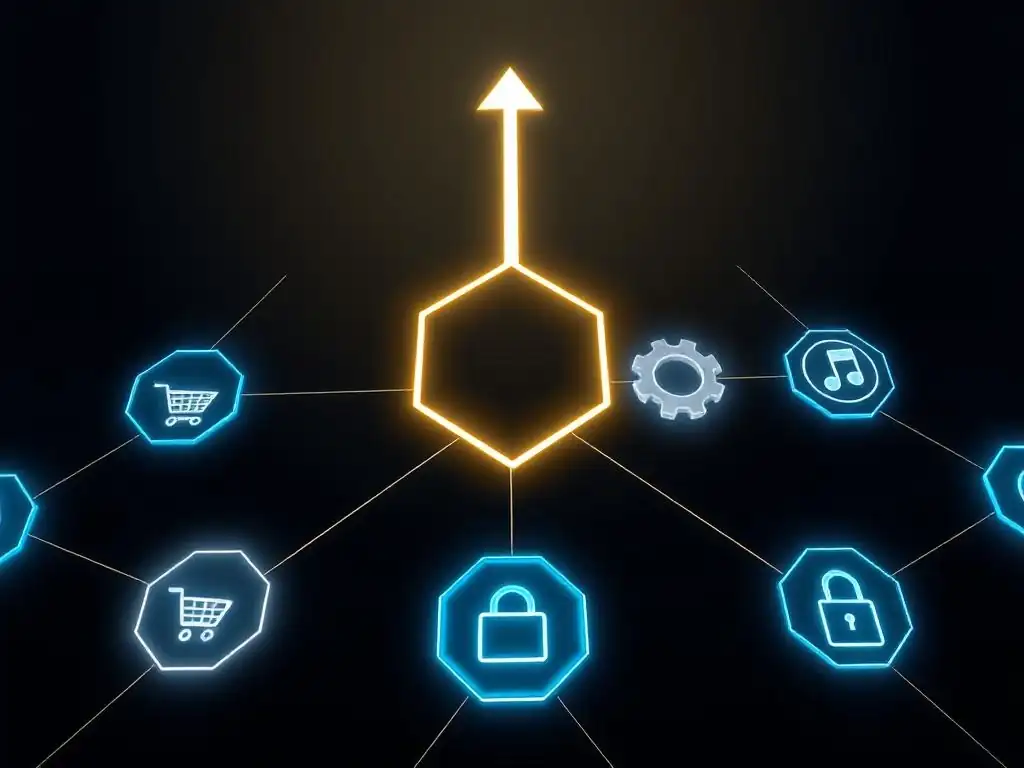
Smart contracts are the foundational technology enabling the complex and automated execution of NFT utility token economics. These self-executing contracts, with terms directly written into code, live on the blockchain and automatically enforce the rules of the NFT project. This automation is critical for delivering utility without manual intervention. For example, a smart contract can automatically check if a wallet holds a specific NFT before granting access to exclusive content or executing a transaction.
Furthermore, smart contracts handle the automated distribution of rewards associated with NFT utility, such as the dispersal of fungible tokens earned through staking or revenue sharing. They ensure that rewards are calculated and distributed accurately and transparently based on predefined rules, removing the need for trusted intermediaries. This automation enhances efficiency and reduces the potential for errors or manipulation in the execution of the project's tokenomics.
Ensuring Transparency and Security in NFT Transactions
The use of smart contracts inherently brings transparency and security to NFT transactions and the execution of their tokenomics. Since smart contracts reside on a public blockchain (like Ethereum or Solana), their code and execution history are typically verifiable by anyone. This transparency allows users to understand exactly how the NFT's utility functions and how rewards are distributed, building trust in the ecosystem.
Security is also significantly enhanced by smart contracts. Once deployed and verified, the logic of the contract is immutable and cannot be altered, preventing unauthorized changes to the rules governing the NFT's utility or ownership. While not immune to bugs, well-written and audited smart contracts provide a secure environment for managing digital assets and executing complex tokenomic interactions, underpinning the reliability of NFT utility token economics.
Smart Contract Audits for NFT Projects: Best Practices
Given the critical role of smart contracts in managing value and executing utility, conducting thorough security audits is an essential best practice for any serious NFT project. Smart contract vulnerabilities can lead to significant losses, ranging from exploits that drain project treasuries to flaws that compromise the integrity of the tokenomics or allow unauthorized access to user assets. Audits involve a detailed review of the smart contract code by security experts to identify potential bugs, vulnerabilities, and logical errors.
Engaging reputable third-party auditing firms provides an independent assessment of the contract's security posture. While audits do not guarantee invulnerability, they significantly reduce the risk of exploits by identifying and mitigating common attack vectors, such as re-entrancy attacks, integer overflows, or access control issues. Publicly sharing audit reports builds confidence within the community and demonstrates a commitment to security, which is paramount for the long-term success of NFT utility token economics.
Challenges and Considerations in NFT Tokenomics
Regulatory Landscape and Compliance
The evolving regulatory landscape presents a significant challenge for NFT utility token economics, particularly as NFTs move beyond simple collectibles and incorporate financial or access-granting utility. Different jurisdictions are grappling with how to classify NFTs – as digital art, securities, commodities, or something else entirely. NFTs that grant rights to revenue streams, fractional ownership of assets, or function similarly to investment contracts may fall under existing securities regulations, requiring compliance with registration and disclosure requirements.
Projects must navigate this complex environment, potentially seeking legal counsel to ensure their tokenomics design and utility mechanisms comply with relevant laws in the markets they operate in. Failure to comply can result in significant legal penalties, reputational damage, and disruption to the project. The uncertainty surrounding global NFT regulation adds a layer of risk that project teams must carefully consider and manage as they design and implement their NFT utility token economics.
Scalability and Transaction Fees on Different Blockchains
The choice of blockchain significantly impacts the scalability and cost-effectiveness of NFT transactions and the execution of utility. Blockchains like Ethereum, while popular for NFTs, can suffer from high gas fees and network congestion during periods of high demand, making frequent interactions with NFT utility (like claiming rewards or using items in a game) prohibitively expensive for users. This can hinder engagement and adoption, particularly for utility that requires frequent on-chain actions.
Alternative blockchains like Solana, Polygon, Flow, or Immutable X offer higher transaction throughput and lower fees, providing more scalable environments for NFT utility. However, each chain has its own trade-offs regarding decentralization, security, and ecosystem maturity. Projects must carefully evaluate the requirements of their specific utility mechanisms and target audience when selecting a blockchain, considering the balance between cost, speed, security, and the existing user base on that chain to optimize their NFT utility token economics.
The environmental impact of certain blockchain networks, particularly those using Proof-of-Work (PoW) consensus mechanisms like Ethereum (prior to its transition to Proof-of-Stake), has been a significant concern for the NFT space. The energy consumption associated with mining has drawn criticism and raised questions about the sustainability of NFTs. While many newer NFT projects are launching on or migrating to more energy-efficient Proof-of-Stake (PoS) blockchains, the perception and impact remain a challenge.
Projects focused on NFT utility token economics need to be mindful of their environmental footprint. Choosing energy-efficient blockchains, utilizing Layer 2 scaling solutions, or even exploring carbon offsetting initiatives can help mitigate these concerns. Communicating the project's approach to environmental sustainability transparently is crucial for building trust and appealing to environmentally conscious users and investors. Addressing this challenge is vital for the long-term viability and public acceptance of NFTs.
Measuring the Success of NFT Tokenomics
Key Performance Indicators (KPIs) for NFT Projects
Measuring the success of NFT utility token economics requires tracking specific Key Performance Indicators (KPIs) that go beyond simple floor price. While floor price and trading volume on secondary markets provide insights into market sentiment, they don't fully capture the effectiveness of utility. Important KPIs include the number of active holders utilizing the NFT's features, the rate of utility adoption (e.g., how many holders stake their NFTs or participate in governance), and the retention rate of holders over time.
Other crucial metrics involve tracking the value generated by the utility itself, such as the amount of fungible tokens distributed as rewards, the revenue generated from utility-gated access, or the activity within the project's ecosystem enabled by the NFTs. Analyzing these KPIs provides a clearer picture of whether the designed tokenomics are successfully driving engagement, creating value through utility, and fostering a sustainable ecosystem, offering insights beyond speculative trading activity.
Analyzing User Engagement and Retention Metrics
Deeply analyzing user engagement and retention metrics is fundamental to understanding the effectiveness of NFT utility token economics. High engagement with utility features, such as active participation in staking pools, frequent use of in-game assets, or consistent voting in governance proposals, indicates that the utility is providing tangible value and is being actively used by holders. Low engagement, conversely, might signal that the utility is not compelling or is too difficult to access.
Retention metrics, such as the percentage of holders who retain their NFTs over several months or years, are powerful indicators of long-term confidence in the project and the value derived from holding the asset. High retention, particularly among holders who acquired NFTs for their utility, suggests that the tokenomics are successfully incentivizing long-term participation. Tracking wallet activity, utility usage rates, and cohort retention analysis provides invaluable data for optimizing the NFT utility token economics.
Evaluating the Long-Term Value of NFT Assets
Ultimately, a key measure of success for NFT utility token economics is the long-term value sustained or created for the NFT assets. While short-term price fluctuations are common, sustainable value is built on the enduring utility and the health of the ecosystem. Evaluating long-term value involves looking beyond immediate market capitalization to consider the cumulative benefits accrued by holders through utility, the growth trajectory of the project's user base, and the resilience of the community.
This evaluation includes assessing the project's ability to deliver on its roadmap, adapt to market changes, and continuously enhance the utility offered by the NFTs. Projects that successfully integrate valuable, sustainable utility and foster a strong community are more likely to see their NFTs retain or increase value over time, demonstrating the effectiveness of their NFT utility token economics in creating assets with intrinsic worth beyond fleeting trends.
The Future of NFT Utility Token Economics
Emerging Trends and Innovations in NFT Tokenomics Design
The field of NFT utility token economics is rapidly evolving, with several emerging trends pushing the boundaries of what's possible. One key trend is the rise of dynamic NFTs, whose metadata and characteristics can change based on external factors or holder interactions, creating more complex and evolving utility. Another is the increased focus on interoperability, allowing NFTs and their utility to function across different platforms and metaverses, unlocking broader potential use cases.
Innovations are also occurring in how value is captured and distributed. This includes novel revenue-sharing models tied to NFT ownership, the development of sophisticated lending protocols specifically for illiquid NFT assets, and the exploration of bonding curves and other complex pricing mechanisms for minting and trading. These trends suggest a future where NFT utility token economics are highly sophisticated, interconnected, and deeply integrated into diverse digital and physical economies.
The Potential Impact of NFT Utility on Various Industries
The development of robust NFT utility token economics has the potential to significantly impact a wide range of industries beyond art and gaming. In the music industry, utility NFTs can provide artists with new revenue streams through direct fan engagement, royalty distribution, and exclusive content access. The fashion world is exploring NFTs for digital wearables, authentication of physical items, and access to virtual events.
Real estate, as mentioned, could see increased liquidity and fractionalization. The ticketing industry could combat fraud and enable secondary market royalties using utility NFTs. Even healthcare could potentially utilize NFTs for secure, patient-controlled access to medical records. The core concept of verifiable digital ownership combined with programmable utility opens up possibilities for reinventing processes and value exchange across countless sectors, highlighting the transformative power of advanced NFT utility token economics.
Predictions for the Future of NFT Market and Tokenomics
Looking ahead, it's likely that the NFT market will mature, with a stronger emphasis placed on projects offering genuine, sustainable utility rather than purely speculative assets. The tokenomics of NFT utility will become increasingly complex and tailored to specific use cases, incorporating elements of DeFi, governance, and cross-platform functionality. We may see greater standardization in certain types of utility, alongside continued innovation in novel applications.
Regulatory clarity, while a challenge, is also likely to increase over time, providing a more stable environment for utility-focused projects. Furthermore, advancements in blockchain technology and scaling solutions will make interacting with NFT utility more accessible and affordable for a broader audience. The future of NFT utility token economics points towards a world where non-fungible tokens are not just collectibles but integral, functional assets underpinning decentralized economies and digital interactions.
Conclusion: Optimizing NFT Value Through Strategic Tokenomics
The Importance of a Holistic Approach to NFT Design
Optimizing the value of Non-Fungible Tokens in the long term hinges on adopting a holistic approach to their design, where utility and tokenomics are not afterthoughts but central pillars. Simply creating a digital asset and hoping for speculative interest is insufficient for sustained success. Instead, projects must strategically integrate meaningful utility that resonates with their target audience and design tokenomics that incentivize long-term holding, active participation, and ecosystem growth.
This requires careful consideration of supply mechanics, distribution strategies, the specific utility mechanisms implemented, and how value is created and distributed within the ecosystem. A well-designed framework for NFT utility token economics aligns the interests of creators, holders, and the broader community, fostering a vibrant and sustainable environment. By prioritizing utility and thoughtful tokenomics, projects can unlock the true potential of NFTs as valuable, functional assets that extend far beyond the initial wave of digital collectibles.
Frequently Asked Questions
What are the key differences between traditional NFTs and NFTs with utility?
Traditional NFTs primarily function as digital collectibles or representations of ownership. NFTs with utility, on the other hand, offer additional functionalities such as access to exclusive content, voting rights, or in-game assets, enhancing their value beyond mere collectibility.
How does tokenomics apply to NFTs with utility?
NFT utility token economics focuses on designing the economic model around an NFT project, including token distribution, incentive mechanisms, and value accrual. This ensures the long-term sustainability and desirability of the NFT and its associated utility.
What are some examples of how NFTs are being used beyond simple collectibles?
NFTs are now being used to represent ownership of real-world assets, provide access to exclusive communities, and function as tickets for events. They are also integrated into DeFi platforms to create new financial instruments.
How can businesses leverage NFT utility token economics to create successful projects?
Businesses can create successful NFT projects by clearly defining the utility offered by the NFT, designing a sustainable tokenomics model that incentivizes participation, and building a strong community around the project.
What are the potential regulatory challenges surrounding NFTs and their utility?
The regulatory landscape for NFTs is still evolving, but potential challenges include securities law compliance, intellectual property rights issues, and consumer protection concerns. The clarity around these areas will significantly impact the future of NFT utility token economics.
Final Reflection: Embracing the Evolving Landscape of NFT Utility
The journey through the intricacies of NFT utility token economics reveals a landscape far beyond mere digital collectibles. The shift towards integrating tangible value and practical application into NFTs is not just a trend; it's a fundamental evolution reshaping how we perceive and interact with digital assets, and how they interact with the real world. This evolution promises to unlock unprecedented opportunities for creators, communities, and industries alike.
The impact of this shift is already being felt across various sectors, from gaming and art to real estate and supply chain management. The potential for NFTs to revolutionize ownership, access, and engagement is undeniable, and witnessing this transformation firsthand has been profoundly inspiring. The future of NFTs lies not just in their scarcity, but in their utility. They are not just collectibles; they are keys to experiences, access, and new forms of ownership.
This quote encapsulates the essence of the ongoing revolution, highlighting the transition from passive ownership to active participation within vibrant ecosystems.
As we stand at the cusp of this new era, I invite you to reflect on the possibilities that NFT utility unlocks. Consider how you can leverage these innovative tools to create, connect, and contribute to a more decentralized and empowered future. The power to shape this landscape lies within each of us. Embrace the challenge, explore the potential, and let us collectively build a future where digital assets truly serve the needs of humanity.
Unlock the Future: Start Building Your NFT Ecosystem!
Thank you for exploring the world of NFT tokenomics! We hope you now have a clearer understanding of how to add utility and value beyond simple collectibles. Now, it's time to apply that knowledge and shape the future of NFTs.
Here's how you can get started:
- Brainstorm and design your own NFT project that incorporates innovative utility mechanisms—think beyond just ownership and scarcity.
- Explore existing NFT projects and analyze their tokenomic models. What lessons can you learn from their successes and setbacks?
- Join the community forum to share your tokenomic ideas. Let's collaborate and build the next generation of valuable NFTs together!
What groundbreaking utility will you bring to your NFT project, and how will it change the way we think about digital ownership? Share your thoughts in the comments below!
Leave a Reply