
The Regulatory Tightrope: Classifying Tokens as Utility or Security

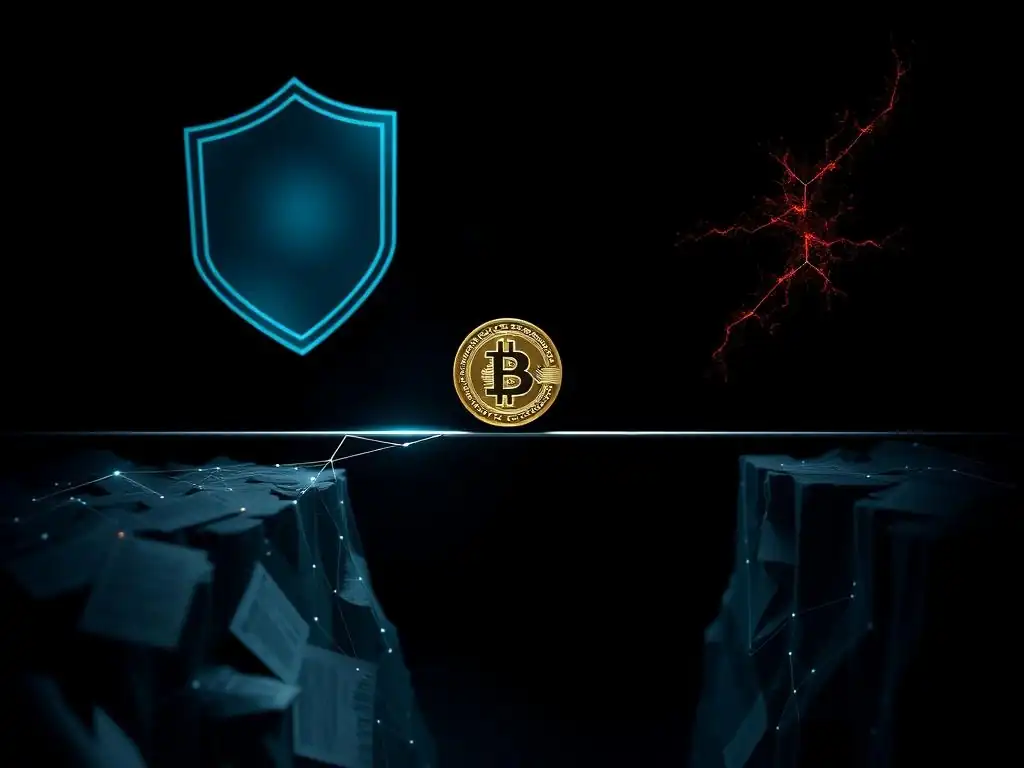
Welcome to Blockchain Trends, your compass in the rapidly evolving world of decentralized technology. Prepare to journey beyond the hype and delve into the real impact of blockchain on industries far beyond cryptocurrency.
Ever wondered how regulatory bodies are grappling with the complex challenge of defining digital assets? Our deep dive into blockchain token classification regulation explores the delicate balance between innovation and compliance, offering insights into how tokens are being categorized as either utility or security. This is more than just legal jargon; it's shaping the future of tokenization and the entire decentralized landscape. Intrigued? Let's unravel the regulatory tightrope together.
Navigating Digital Asset Regulation: Utility vs. Security Tokens
- Introduction: Achieving Clarity in Digital Asset Classification
- Understanding Security Tokens: Digital Representations of Securities
- Exploring Utility Tokens: Access and Functionality in Decentralized Systems
- Analyzing the "Howey Test" for Digital Asset Classification
- Global Regulatory Approaches to Digital Asset Classification
- Challenges in Digital Asset Classification
- Consequences of Incorrect Classification: Risks and Liabilities
- The Future of Digital Asset Regulation: Trends and Predictions
- Best Practices for Digital Asset Issuers: Ensuring Compliance
- Conclusion: Balancing Innovation and Investor Protection in the Digital Asset Ecosystem
-
Frequently Asked Questions
- How does the regulatory landscape currently define a "utility token" versus a "security token"?
- Why is accurate blockchain token classification so crucial for companies operating in the blockchain space?
- What are some of the challenges in determining blockchain token classification, given the evolving nature of the technology?
- How does DeFi complicate the regulation of blockchain tokens?
- What future trends are anticipated in blockchain token classification regulation?
- Final Reflection: Navigating the Blockchain Frontier
- Unravel Your Token's Future: Navigate the Regulatory Maze!
Introduction: Achieving Clarity in Digital Asset Classification
The Importance of Regulatory Clarity in the Digital Asset Space
The burgeoning digital asset market, powered by blockchain technology, presents significant opportunities for innovation and economic growth. However, the rapid evolution of these assets, from simple cryptocurrencies to complex tokenized securities and utility tokens, has outpaced existing regulatory frameworks. This lack of clarity in blockchain token classification regulation creates uncertainty for issuers, investors, and market participants alike. Regulatory bodies globally are grappling with how to apply traditional securities laws or develop new rules tailored to the unique characteristics of digital assets.
Clear guidelines on classifying digital assets are crucial for fostering a healthy and compliant ecosystem. Without definitive rules, projects face the risk of inadvertently violating securities laws, leading to enforcement actions, fines, and reputational damage. Investors, on the other hand, require robust protections against fraud and manipulation, which are typically provided through securities regulations. Establishing a clear framework for blockchain token classification regulation is paramount to unlocking the full potential of this technology while safeguarding market integrity and investor interests.
Defining Utility and Security Tokens: Foundational Concepts
At its core, the debate around digital asset classification often revolves around distinguishing between utility tokens and security tokens. A utility token is generally designed to provide access to a product or service, often within a specific platform or ecosystem. Its value is typically derived from its functional use case, rather than an expectation of profit from the efforts of others, although speculative value can still exist. Examples might include tokens used to pay for computing power, access premium content, or participate in a decentralized application's governance.
Conversely, a security token represents an investment contract or ownership in an underlying asset, such as equity, debt, real estate, or a share of profits. These tokens are subject to securities laws because they embody characteristics traditionally associated with securities, offering investors rights like dividends, voting rights, or a claim on assets. The classification hinges significantly on the economic reality of the token and the expectations of those who purchase it, regardless of the label the issuer applies. The core challenge in blockchain token classification regulation lies in applying these definitions consistently across a diverse range of digital assets.
Understanding Security Tokens: Digital Representations of Securities
Security Tokens: Ownership and Rights on the Blockchain
Security tokens represent a significant application of blockchain technology, allowing traditional assets or investment contracts to be digitized and traded on distributed ledgers. Unlike simple cryptocurrencies or utility tokens, security tokens grant holders verifiable ownership rights and entitlements typically associated with traditional securities. These rights can include fractional ownership of high-value assets like real estate or fine art, the right to receive a portion of a company's profits (like dividends), voting rights in a corporate structure, or claims on underlying debt.
The tokenization of securities offers potential benefits such as increased liquidity for illiquid assets, reduced transaction costs, faster settlement times, and greater transparency through the immutable ledger. For instance, a real estate project might issue tokens representing ownership in a building, allowing smaller investors to participate and enabling easier secondary market trading compared to traditional property sales. Ensuring proper blockchain token classification regulation is essential here, as these tokens must comply with stringent securities laws designed to protect investors and maintain market stability.
Regulatory Frameworks for Security Token Offerings (STOs)
Issuing security tokens typically involves navigating complex regulatory landscapes, often requiring registration with financial authorities or qualifying for specific exemptions. In jurisdictions like the United States, Security Token Offerings (STOs) are generally subject to the same regulations as traditional Initial Public Offerings (IPOs) or private placements. This means issuers must comply with rules regarding disclosure, investor accreditation, anti-fraud provisions, and ongoing reporting requirements.
For example, in the U.S., STOs often rely on exemptions like Regulation D (for accredited investors) or Regulation A (allowing offerings to non-accredited investors up to a certain threshold, approximately $75 million per year under Tier 2). Compliance involves filing offering circulars, conducting audits, and adhering to strict marketing rules. Failure to comply with these regulations can result in severe penalties, including rescission offers (forcing the issuer to buy back tokens), fines potentially reaching millions of dollars, and injunctions against future activities. This highlights the critical nature of understanding blockchain token classification regulation before launching any digital asset offering.
Key Characteristics of Securities-Classified Digital Assets
Identifying whether a digital asset is likely to be classified as a security involves examining several key characteristics, often through the lens of tests like the U.S. Howey Test or similar frameworks globally. A primary indicator is the expectation of profit derived from the efforts of others. If investors purchase a token primarily hoping its value will appreciate due to the development, management, or entrepreneurial efforts of the issuer or a third party, it strongly suggests the token is a security.
Other characteristics include the asset representing a share in an enterprise, granting rights akin to equity or debt holders, or being marketed as an investment opportunity rather than a means to access a service. For instance, a token promising a share of future profits from a platform or project, or one granting voting rights proportional to ownership in a decentralized autonomous organization (DAO) that operates a business, is likely to be scrutinized as a security. Understanding these characteristics is fundamental to navigating blockchain token classification regulation effectively.
Exploring Utility Tokens: Access and Functionality in Decentralized Systems
The Role of Utility Tokens in Platform Ecosystems
Utility tokens serve a distinct purpose within specific blockchain-based platforms and ecosystems: providing access to or enabling functionality within that environment. Their value is theoretically tied to the demand for the underlying service or product they facilitate. Users acquire utility tokens not primarily for investment gains based on the issuer's efforts, but because they need the tokens to perform an action, use a service, or participate in the network's operation.
Consider Filecoin (FIL), a token used to pay for storage and retrieval services on its decentralized storage network, or Basic Attention Token (BAT), used within the Brave browser ecosystem for advertising and content creator tipping. These tokens are designed to be consumed or used within their respective platforms. While their market value can fluctuate based on speculation and network adoption, their core function remains tied to utility. Navigating blockchain token classification regulation requires a careful analysis of this functional aspect versus any investment characteristics.
Distinguishing Utility Tokens from Investment Contracts
The line between a utility token and an investment contract can be blurry, and regulators often look beyond the label to the economic reality of the offering. A token initially designed for utility might still be deemed a security if it is sold primarily as an investment, with promises of future profits tied to the issuer's efforts, before the utility is fully functional or widely available. This is often referred to as the "pre-functional" or "speculative" phase problem.
Regulators apply tests like the Howey Test to determine if a utility token offering constitutes a security. Even if a token has a genuine utility, if it is sold with the emphasis on potential price appreciation driven by the development team's work, or if the network isn't operational at the time of sale, it increases the likelihood of being classified as a security. The key is whether the predominant factor for purchase is consumption of utility or expectation of investment returns. This nuance is central to the challenges in blockchain token classification regulation.
Regulatory Analysis of Utility Tokens: Substance Over Form
Regulatory bodies emphasize a "substance over form" approach when evaluating digital assets. They are less concerned with what an issuer calls a token (e.g., "utility token") and more concerned with its actual characteristics, how it is marketed, and the reasonable expectations of purchasers. If an offering bears the hallmarks of an investment, it will likely be treated as a security, regardless of its potential future utility.
For instance, the U.S. Securities and Exchange Commission (SEC) has taken action against numerous token offerings marketed as utility tokens but which, in their view, functioned as unregistered securities. The SEC's FinHub framework and statements from officials often highlight factors like decentralization (or lack thereof), how tokens are distributed, and the reliance on the issuer's ongoing efforts as key determinants. This regulatory stance underscores the need for issuers to conduct thorough legal analysis based on the actual nature and marketing of their digital asset, not just its intended use, to ensure compliance with blockchain token classification regulation.
Analyzing the "Howey Test" for Digital Asset Classification
Examining the Four Elements of the Howey Test
The Howey Test, derived from a 1946 U.S. Supreme Court case (SEC v. W.J. Howey Co.), is the foundational legal framework used in the United States to determine if something qualifies as an "investment contract," and thus a security subject to federal securities laws. The test has four key elements:
- An Investment of Money: The purchaser must contribute capital. This is usually straightforward in the context of token purchases.
- In a Common Enterprise: The fortunes of the investor are intertwined with those of the promoter or a third party, or with other investors. This can be vertical (investor's success tied to promoter) or horizontal (pooling of investor funds).
- With an Expectation of Profits: The purchaser must anticipate earning a return on their investment. This return doesn't have to be guaranteed but must be a significant motivation for the purchase.
- Solely From the Efforts of Others: The expected profits must come primarily from the managerial or entrepreneurial efforts of the promoter or a third party, rather than the efforts of the investor.
All four elements must be met for an asset to be classified as an investment contract under this test. The application of this test is central to blockchain token classification regulation in the U.S.
Case Studies: Applying the Howey Test to Specific Digital Assets
Applying the Howey Test to digital assets has led to various enforcement actions and legal interpretations.
- The DAO (Decentralized Autonomous Organization): In 2017, the SEC investigated The DAO, a decentralized venture capital fund. The SEC found that tokens issued by The DAO were securities because investors pooled funds in a common enterprise with the expectation of profits derived from the managerial efforts of the DAO's curators and promoters. The SEC's report highlighted that despite the decentralized structure, investors were relying on the efforts of a core group.
- Kik Interactive (Kin Token): The SEC sued Kik over its 2017 Kin token offering, arguing it was an unregistered securities offering. The court agreed, finding that Kik's sale of Kin tokens constituted an investment contract. Evidence showed Kik marketed Kin as an investment opportunity, promised efforts to increase its value and utility, and investors expected profits. The court noted that even though Kin had a potential future utility, it was sold predominantly as an investment before that utility was developed. This case reinforced the "substance over form" principle in blockchain token classification regulation.
These cases illustrate how the circumstances surrounding the offering and the representations made to investors are heavily weighted in the Howey analysis, often overriding the issuer's declared purpose for the token.
Challenges in Applying the Howey Test to Evolving Digital Asset Models
Applying a test developed in 1946 for orange groves to complex, decentralized digital assets presents significant challenges. One major challenge is the "solely from the efforts of others" prong, particularly with truly decentralized networks or DAOs where governance and development are distributed among many participants. As a network becomes more decentralized, the argument that investors are relying solely or primarily on the efforts of a central promoter weakens. However, regulators often look at the state of decentralization at the time of the offering.
Another challenge lies in evaluating the "expectation of profits." While speculation exists for virtually any asset, the Howey Test focuses on whether the primary motivation for purchase was investment returns based on others' efforts. Distinguishing genuine utility-driven purchases from speculation is difficult, especially for tokens with nascent utility. The evolving nature of digital asset models, including non-fungible tokens (NFTs) and complex DeFi protocols, continues to test the limits of the Howey Test and necessitate ongoing refinement of blockchain token classification regulation.
Global Regulatory Approaches to Digital Asset Classification
Comparative Analysis of Regulatory Frameworks Across Jurisdictions
Regulatory approaches to digital asset classification vary significantly across the globe, creating a fragmented international landscape. Some jurisdictions, like the United States, primarily rely on existing securities laws and tests like Howey, applying them to digital assets. Others, like Switzerland and Singapore, have developed more specific guidance or frameworks that explicitly categorize tokens based on their function (e.g., payment, utility, asset/security).
For instance, Switzerland's Financial Market Supervisory Authority (FINMA) distinguishes between payment tokens (intended as a means of payment), utility tokens (providing access to a service), and asset tokens (representing assets like debt or equity, treated like securities). Germany's BaFin also broadly aligns digital assets with existing financial instruments, often treating tokens representing ownership or claims as securities. This diversity in blockchain token classification regulation creates challenges for projects operating internationally.
Impact of Regulatory Differences on Digital Asset Issuance and Trading
The differing regulatory approaches have a direct impact on where digital asset projects choose to launch and where tokens can be traded. Jurisdictions with clearer, more accommodating frameworks for utility tokens (provided they meet specific criteria) may attract innovation. Conversely, jurisdictions with stringent interpretations that classify many tokens as securities impose higher compliance burdens, potentially deterring projects or driving them elsewhere.
Issuers must navigate these disparate rules when planning offerings, often seeking legal counsel in each target jurisdiction. Similarly, cryptocurrency exchanges and trading platforms face complex compliance requirements, needing to assess the classification of each asset they list according to the rules of the jurisdictions they operate in. This global regulatory divergence underscores the complexity inherent in blockchain token classification regulation for international participants.
The Need for Cross-Border Collaboration in Digital Asset Regulation
The borderless nature of blockchain technology and digital assets highlights the urgent need for greater cross-border regulatory collaboration and harmonization. Inconsistent rules can lead to regulatory arbitrage, where projects or activities migrate to jurisdictions with less stringent oversight, potentially undermining global market integrity and investor protection efforts. International bodies like the Financial Stability Board (FSB) and the International Organization of Securities Commissions (IOSCO) are working towards developing common principles and recommendations.
Increased dialogue and cooperation among national regulators could help establish more consistent standards for blockchain token classification regulation, anti-money laundering (AML), and market surveillance. While full harmonization may be a long-term goal, coordinated efforts to share information, identify risks, and align basic classification principles would significantly benefit the global digital asset ecosystem, providing greater certainty for businesses and enhanced protection for investors worldwide.
Challenges in Digital Asset Classification

Hybrid Token Models: Addressing Blurring Boundaries
One of the most significant challenges in blockchain token classification regulation is the emergence of hybrid token models. These tokens combine features of both utility and security tokens, making clear-cut classification difficult. For example, a token might grant access to a platform (utility) but also entitle holders to a share of the platform's revenue (security). How should such a token be classified, especially if the revenue share is contingent on the platform's success driven by the issuer's efforts?
Regulators are increasingly encountering tokens with complex rights structures, such as governance tokens in DAOs that also have staking rewards or potential claims on protocol fees. Applying traditional tests like Howey to these multi-faceted assets requires careful analysis of the predominant characteristics and the overall economic reality. This complexity means that each hybrid token often requires a bespoke legal analysis, adding layers of difficulty to blockchain token classification regulation.
Decentralization and Control: Implications for Regulatory Assessment
The degree of decentralization is a critical factor in the regulatory assessment of a digital asset, particularly under the "efforts of others" prong of the Howey Test. As a network matures and becomes truly decentralized – meaning no single entity or small group has control over its operation, development, or governance – the argument that investors are relying on a central promoter's efforts weakens. The SEC has indicated that tokens on a sufficiently decentralized network may no longer qualify as securities, even if they might have at one point.
However, assessing "sufficient decentralization" is subjective and lacks clear regulatory guidelines. Factors considered might include the distribution of token ownership, the control over code updates, the concentration of mining or validation power, and the ability of a founding team to unilaterally change the network's parameters. Many projects claim decentralization but retain significant control, creating a gray area. Determining the true level of decentralization is a key hurdle in applying blockchain token classification regulation.
Adapting Regulation to Evolving Digital Asset Technologies
The rapid pace of technological innovation in the digital asset space constantly presents new classification challenges. New models like DeFi protocols, NFTs with varying rights attached, and complex tokenomics structures push the boundaries of existing regulatory definitions. Regulators must constantly learn and adapt to understand the underlying technology and its economic implications.
Regulating DeFi, for instance, is particularly challenging due to its often pseudonymous nature and lack of central intermediaries. How does one apply securities laws to a protocol governed by smart contracts and decentralized governance tokens? Similarly, classifying NFTs depends heavily on what the NFT represents and the rights it confers; while many are treated as collectibles, some might represent fractional ownership in assets or provide access to revenue streams, potentially bringing them under securities regulations. This ongoing evolution necessitates flexible and forward-thinking approaches to blockchain token classification regulation.
Consequences of Incorrect Classification: Risks and Liabilities
Penalties for Securities Law Violations
Misclassifying a digital asset, particularly selling a security token without complying with registration requirements or qualifying for an exemption, carries significant legal consequences. Issuers found to have conducted an unregistered securities offering face potential enforcement actions from regulatory bodies like the SEC. Penalties can include cease-and-desist orders, disgorgement of funds raised (plus interest), and substantial civil monetary penalties.
For example, the SEC has imposed millions of dollars in fines on companies for conducting unregistered ICOs. In some cases, individuals involved in the offering, including founders and promoters, can also face personal liability. The legal costs associated with defending against such actions are also considerable, potentially bankrupting a project. Understanding and adhering to blockchain token classification regulation is therefore not just a matter of compliance but of survival for digital asset projects.
Reputational Risks and Investor Protection Concerns
Beyond legal penalties, incorrect classification severely impacts a project's reputation. An enforcement action or even a public inquiry from a regulator can erode investor confidence, making it difficult to raise future funds or gain adoption. Investors may view projects that fail to comply with regulations as risky or untrustworthy, leading to decreased token value and difficulty in building a community.
From an investor protection standpoint, misclassified securities offerings circumvent crucial safeguards. Investors in unregistered securities offerings often lack the detailed disclosure information typically required in registered offerings (like financial statements, risk factors, and management biographies). They also may not have the same legal recourse if things go wrong. Proper blockchain token classification regulation ensures investors receive appropriate information and protections, fostering trust in the digital asset market.
The Importance of Legal Due Diligence in Digital Asset Offerings
Given the severe consequences of incorrect classification, conducting thorough legal due diligence is paramount before launching any digital asset offering. This involves engaging experienced legal counsel specializing in securities law and digital assets to analyze the proposed token's structure, rights, intended use, marketing materials, and the overall ecosystem.
A comprehensive legal analysis should assess the likelihood of the token being classified as a security in all relevant jurisdictions, not just the issuer's home country. Based on this analysis, issuers can structure the offering to minimize regulatory risk, potentially modifying token rights, restricting participation to accredited investors, or delaying the offering until the network is sufficiently decentralized and utility is functional. Proactive legal due diligence is the best defense against potential violations of blockchain token classification regulation.
The Future of Digital Asset Regulation: Trends and Predictions
Regulatory Sandboxes and Innovation Initiatives
Recognizing the need to understand and adapt to rapidly evolving digital asset technology, several jurisdictions are implementing regulatory sandboxes and innovation hubs. These initiatives allow companies to test innovative financial products and services, including digital asset offerings, in a controlled environment under regulatory supervision. This provides regulators with hands-on experience and allows companies to receive tailored guidance.
Examples include the UK's Financial Conduct Authority (FCA) sandbox or Singapore's Monetary Authority of Singapore (MAS) sandbox. These programs facilitate dialogue between innovators and regulators, potentially leading to more informed and proportionate blockchain token classification regulation in the future. By fostering experimentation and learning, sandboxes can help bridge the gap between technological advancement and regulatory frameworks.
Potential for Tailored Regulations for Different Digital Asset Types
The current approach of trying to fit novel digital assets into existing, sometimes decades-old, regulatory boxes is challenging. There is a growing recognition among policymakers and regulators that a one-size-fits-all approach may not be appropriate. The future could see the development of more tailored regulatory frameworks specifically designed for different types of digital assets, acknowledging their unique characteristics and risks.
This might involve creating specific categories for utility tokens, stablecoins, or NFTs, each with regulations proportionate to their specific risks and functions. For instance, stablecoins might be subject to reserve requirements and redemption rules, distinct from regulations applied to security tokens representing equity. Such tailored approaches could provide greater clarity and reduce the burden on non-security tokens while ensuring appropriate oversight for assets that do pose securities-related risks, refining blockchain token classification regulation.
The Role of RegTech in Ensuring Regulatory Compliance
Regulatory technology (RegTech) is expected to play an increasingly vital role in helping digital asset firms navigate complex compliance requirements. RegTech solutions can automate processes like Know Your Customer (KYC) and Anti-Money Laundering (AML) checks, monitor transactions for suspicious activity, and assist with reporting obligations.
For blockchain token classification regulation specifically, RegTech could potentially help issuers assess the characteristics of their tokens against regulatory tests, monitor evolving regulatory guidance, and manage compliance documentation. As regulations become more complex and granular, leveraging technology will be crucial for firms to efficiently and accurately meet their obligations, reducing the risk of inadvertent non-compliance. The intersection of blockchain and RegTech holds promise for creating a more compliant and efficient digital asset market.
Best Practices for Digital Asset Issuers: Ensuring Compliance
Legal Risk Assessment Prior to Digital Asset Launch
Before launching any digital asset, an issuer must conduct a thorough legal risk assessment. This is the single most important step in ensuring compliance with blockchain token classification regulation. The assessment should involve experienced legal counsel and analyze the token's features, rights, intended use, method of distribution, marketing strategy, and the state of the underlying network (e.g., level of decentralization, functionality).
The assessment should consider the regulatory landscape in all relevant jurisdictions where the token will be offered or accessible. This proactive approach allows the issuer to identify potential classification risks early and make necessary adjustments to the token's structure or the offering terms to mitigate those risks, potentially avoiding significant legal issues down the line.
Implementing KYC/AML Compliance Procedures
Regardless of whether a token is classified as a utility or a security, robust Know Your Customer (KYC) and Anti-Money Laundering (AML) procedures are essential best practices, especially if the offering involves fiat currency or exchange with other convertible virtual assets. Many jurisdictions require entities involved in transferring value, including digital assets, to implement AML/KYC programs.
Implementing these procedures helps prevent the use of the digital asset for illicit activities and demonstrates a commitment to responsible financial practices. While the specific requirements vary by jurisdiction and the nature of the offering, collecting identity information and monitoring transactions are standard practices that enhance the legitimacy and compliance posture of any digital asset project, complementing efforts in blockchain token classification regulation.
Maintaining Transparency and Disclosure Throughout the Digital Asset Lifecycle
Transparency is a cornerstone of investor protection and regulatory compliance. Issuers should maintain clear and accurate disclosure about the digital asset, its technology, the team, the project's roadmap, and associated risks. This includes providing comprehensive whitepapers, updating investors on project progress, and being forthright about potential challenges.
For security tokens, disclosure requirements are often legally mandated and very detailed. For utility tokens, while formal securities-level disclosure may not be required, providing ample information about the token's utility and the platform's development builds trust and helps distinguish the token from a speculative investment. Ongoing communication and transparency with the community and potential purchasers are vital best practices for navigating the complexities of blockchain token classification regulation and building a sustainable project.
Conclusion: Balancing Innovation and Investor Protection in the Digital Asset Ecosystem
The Ongoing Evolution of Digital Asset Regulation
The regulatory landscape for digital assets is not static; it is continuously evolving in response to technological advancements, market developments, and increasing adoption. Regulators worldwide are actively studying the space, issuing guidance, and proposing new rules. This dynamic environment means that compliance with blockchain token classification regulation is an ongoing process, not a one-time event.
Projects must stay informed about regulatory changes in the jurisdictions where they operate and adapt their practices accordingly. What might be permissible today could change tomorrow as regulators gain a deeper understanding of the risks and opportunities presented by new digital asset models. This necessitates a proactive and flexible approach to compliance.
Proactive Engagement with Regulatory Bodies
Rather than viewing regulators solely as adversaries, digital asset projects should consider proactive engagement. Participating in public consultations, responding to requests for information, and seeking informal guidance or no-action letters where available can help shape regulatory outcomes and demonstrate a commitment to compliance.
Engaging with regulators provides an opportunity to educate them about specific technologies and business models, potentially leading to more nuanced and effective blockchain token classification regulation. Building a relationship based on transparency and cooperation can be beneficial for both the industry and the regulatory authorities.
Fostering a Sustainable Future for Digital Assets
Ultimately, achieving a balance between fostering innovation and ensuring robust investor protection is key to the sustainable growth of the digital asset ecosystem. Clear and effective blockchain token classification regulation is fundamental to this balance. By providing certainty for issuers and safeguards for investors, regulation can help the market mature, attract institutional participation, and unlock the full potential of blockchain technology beyond speculative use cases.
While challenges remain, including navigating hybrid tokens and achieving global consistency, continued dialogue, technological adaptation, and a commitment to compliance from market participants can pave the way for a future where digital assets are seamlessly integrated into the global financial system, operating within a framework that promotes both innovation and integrity.
Frequently Asked Questions
How does the regulatory landscape currently define a "utility token" versus a "security token"?
The distinction often hinges on the Howey Test, which assesses whether an investment of money in a common enterprise with the expectation of profit primarily from the efforts of others constitutes a security. A utility token ideally grants access to a product or service, not profits.
Why is accurate blockchain token classification so crucial for companies operating in the blockchain space?
Misclassification can lead to severe regulatory consequences, including fines, legal action, and even the shutdown of operations. Correct classification helps companies comply with securities laws and avoid legal pitfalls.
What are some of the challenges in determining blockchain token classification, given the evolving nature of the technology?
The lack of clear, consistent global standards is a major hurdle. Many tokens possess hybrid characteristics, blurring the lines between utility and security, making definitive classification difficult.
How does DeFi complicate the regulation of blockchain tokens?
DeFi protocols often involve complex financial instruments and automated market makers, making it harder to apply traditional securities laws. The decentralized nature of DeFi makes identifying and holding accountable responsible parties challenging.
What future trends are anticipated in blockchain token classification regulation?
Expect to see more tailored regulations that address the specific characteristics of different types of tokens and DeFi protocols. Greater international cooperation is also likely to emerge to harmonize regulatory approaches across jurisdictions.
The complexities explored in this article regarding blockchain token classification are not merely academic; they represent a critical juncture in the evolution of decentralized finance. The ambiguity surrounding whether a token is a utility or a security has profound implications for innovation, investment, and the very future of the blockchain ecosystem. Understanding these nuances is no longer optional, but essential for anyone participating in this rapidly evolving landscape.
The ongoing debate about blockchain token classification has deeply influenced the cultural and social landscape, shaping perceptions of trust, transparency, and the potential for decentralized systems to disrupt traditional finance. This regulatory tightrope walk underscores the need for informed dialogue and collaborative efforts between regulators, developers, and investors to foster a sustainable and innovative future for blockchain technology. The future of finance is decentralized, but its success hinges on establishing clear and consistent regulatory frameworks that protect consumers and encourage responsible innovation.
As we conclude this exploration of blockchain token classification regulation, I invite you to reflect on your own role in shaping the future of this technology. Consider how you can contribute to a more informed and responsible ecosystem, whether through advocating for clearer regulatory guidelines, supporting projects that prioritize compliance, or simply educating yourself and others about the complexities of this emerging field. The path forward requires collective effort and a commitment to building a blockchain future that is both innovative and secure.
Thank you for exploring the complexities of token classification with Blockchain Trends. Now that you've gained an understanding of the differences between utility and security tokens, it's time to take practical steps to ensure your project's compliance and success.
- Gain clarity: Identify key features of your token and evaluate how they influence its regulatory status. Use a reliable token classification framework to guide your assessment.
- Consult experts: Seek insights from legal professionals or firms experienced in blockchain regulation, and explore their resources to deepen your understanding.
- Share your insights: Engage with fellow blockchain enthusiasts on our community forum or social media to exchange opinions and gather diverse perspectives.
What do you see as the biggest regulatory challenge for your token project, and what strategies are you implementing to address it? Share your thoughts below!
Leave a Reply