
Security Token Offerings (STOs): The Future of Compliant Fundraising?

Welcome to Blockchain Trends, your compass in the ever-evolving world of decentralized innovation!
Intrigued by the potential of blockchain beyond Bitcoin? We delve into its transformative applications, from DeFi to enterprise solutions. This week, we ask a crucial question: is the future of compliant fundraising secured by Security Token Offerings (STOs)? Explore the possibilities and challenges ahead in our in-depth analysis – the answers might just surprise you. Dive in and discover the future of tokenization!
Security Token Offerings (STOs): The Future of Compliant Fundraising?
- Understanding Security Token Offerings (STOs) and Compliant Fundraising
- STOs vs. Traditional Fundraising Methods: A Detailed Comparison
- The Regulatory Landscape of Security Token Offerings
- The STO Process: A Step-by-Step Guide to Compliant Tokenization
- Use Cases and Real-World Examples of Successful STOs
- The Future of STOs: Trends and Predictions
- Frequently Asked Questions
- Final Reflection: Embracing the Future of Compliant Fundraising
- Ignite Your Investment Journey: Explore the World of STOs!
Understanding Security Token Offerings (STOs) and Compliant Fundraising
What are Security Tokens and How Do They Differ from Utility Tokens?
Security tokens represent ownership in an underlying asset, such as equity in a company, real estate, or investment funds. Unlike utility tokens, which are designed to provide access to a product or service within a specific ecosystem, security tokens are subject to federal securities regulations. The primary distinction lies in their purpose and the rights they grant holders. Security tokens bestow traditional investment rights, like dividends, voting rights, or profit sharing, making them legally recognized financial instruments. This classification means their issuance and trading fall under strict regulatory oversight, similar to traditional stocks or bonds.
The classification of a token as a security is often determined by tests like the Howey Test in the United States, which examines whether an investment involves an expectation of profits derived from the efforts of others. If a token meets the criteria of a security, it must comply with applicable securities laws, including registration requirements or qualifying for specific exemptions. This regulatory scrutiny is the defining feature of security tokens, differentiating them significantly from utility tokens, which are not typically regulated as securities and primarily function as digital vouchers or access keys within decentralized applications or platforms.
The Rise of STOs: A Shift Towards Regulated Tokenization
The emergence of Security Token Offerings (STOs) represents a significant evolution from the earlier Initial Coin Offerings (ICOs) era. Following widespread regulatory actions against many ICOs deemed unregistered securities offerings, the market shifted towards a more compliant approach. STOs provide a framework for issuing digital assets that explicitly adhere to securities laws, offering investors greater protection and issuers a clearer legal path for fundraising. This shift was driven by the need for legitimacy and investor confidence after the volatility and scams associated with unregulated ICOs.
STOs offer the potential benefits of tokenization – such as increased liquidity, fractional ownership, and global accessibility – while operating within established legal boundaries. This regulated environment attracts institutional investors and more conservative capital that may have been hesitant to participate in the less-regulated ICO market. The move towards STOs signals a maturation of the digital asset space, emphasizing compliance and investor safety as foundational elements for the future of compliant fundraising.
Key Benefits of STOs for Investors and Issuers
For issuers, STOs offer access to a broader pool of global investors and potentially lower fundraising costs compared to traditional methods like IPOs. The fractional nature of security tokens allows companies to tokenize assets that were previously illiquid or difficult to divide, such as real estate portfolios or private company equity. Furthermore, the inherent transparency of blockchain technology, when combined with regulatory compliance, can build trust and streamline processes like cap table management and dividend distribution. This efficiency contributes to the appeal of STOs for businesses seeking innovative yet compliant ways to raise capital.
Investors benefit from increased liquidity compared to traditional private investments, as security tokens can be traded on regulated security token exchanges. Fractional ownership lowers the barrier to entry for investing in high-value assets, making opportunities accessible to a wider range of investors. Crucially, the regulatory compliance inherent in STOs provides a layer of investor protection that was often absent in the ICO market, including requirements for disclosures, audits, and compliance with Know Your Customer (KYC) and Anti-Money Laundering (AML) regulations. These benefits collectively position STOs as a compelling alternative for compliant fundraising.
STOs vs. Traditional Fundraising Methods: A Detailed Comparison
STOs vs. IPOs: Accessibility, Cost, and Efficiency
Comparing STOs to Initial Public Offerings (IPOs) reveals stark differences, particularly in accessibility, cost, and efficiency. IPOs are notoriously expensive and time-consuming, often taking months or even years to complete and involving significant fees for underwriters, lawyers, and auditors. They are also typically only accessible to large, established companies and primarily target institutional investors during the initial phase. The process is highly centralized and involves complex regulatory hurdles specific to public markets.
STOs, conversely, can potentially offer a more streamlined and cost-effective fundraising process. While still requiring significant legal and technical expertise, the inherent efficiencies of blockchain technology can reduce administrative overhead.
Furthermore, STOs can cater to a wider range of companies, including small and medium-sized enterprises (SMEs), and can facilitate access for a broader base of investors, including accredited retail investors, depending on the specific regulatory exemptions used (e.g., Reg A+ or Reg D in the US). This increased accessibility and potential for greater efficiency make STOs an attractive alternative for compliant fundraising, particularly for companies not yet ready or suitable for a full IPO.
STOs vs. Venture Capital: Democratizing Investment Opportunities
When contrasted with traditional Venture Capital (VC) funding, STOs offer a pathway to democratize investment opportunities. VC funding is typically limited to a select group of accredited investors and specialized funds, often requiring substantial minimum investments. Access to promising startups and private companies via VC is exclusive and illiquid, with investors often locked in for many years before a potential exit event like an IPO or acquisition.
STOs can open up investment in private companies and assets to a much larger pool of accredited investors globally, breaking down geographical barriers. The ability to tokenize equity or debt allows companies to raise capital from a distributed network of investors. While liquidity on security token exchanges is still developing, the potential for secondary trading offers a significant advantage over the illiquidity of traditional VC investments. This democratizing effect is a core component of the potential of STOs for compliant fundraising, allowing more individuals to participate in early-stage or private asset investments.
How STOs Enhance Investor Protection and Transparency
A key advantage of STOs, particularly when compared to less regulated forms of digital asset fundraising, is the enhanced level of investor protection and transparency they offer. Because security tokens are subject to securities laws, issuers must comply with regulations that mandate disclosures, such as providing detailed whitepapers or offering memorandums that outline the investment risks, use of proceeds, and company financials. This contrasts sharply with the often minimal or misleading information provided in some past ICOs.
Blockchain technology itself contributes to transparency. The ownership records of security tokens are immutably stored on a distributed ledger, providing a clear and auditable trail of who owns what. Smart contracts can automate compliance functions, such as enforcing transfer restrictions based on investor accreditation status or automatically distributing dividends. While the specific level of protection depends on the jurisdiction and the regulatory framework followed, the commitment to compliance inherent in the STO model fundamentally aims to safeguard investors and provide a more transparent investment environment, crucial for the future of compliant fundraising.
The Regulatory Landscape of Security Token Offerings
Navigating the regulatory landscape for STOs is perhaps the most complex challenge facing issuers. Securities laws vary significantly from country to country, creating a fragmented global environment. What is considered a security and the requirements for its issuance and trading differ across jurisdictions. Issuers planning a global STO must understand and comply with the specific rules in every country where they intend to market or sell their tokens. This requires extensive legal counsel and careful structuring of the offering.
For instance, an STO targeting investors in the United States must comply with SEC regulations, potentially using exemptions like Regulation D (for accredited investors) or Regulation A+ (allowing limited offerings to non-accredited investors). Simultaneously, targeting European investors would necessitate compliance with frameworks like MiCA (Markets in Crypto-Assets Regulation) or specific national securities laws within EU member states. This patchwork of regulations means that a one-size-fits-all approach is impossible, and issuers must tailor their STO structure and marketing efforts to each target market, adding layers of complexity but ensuring STOs compliant fundraising future.
Key Regulatory Frameworks Impacting STOs: SEC, FINMA, MiCA
Several key regulatory bodies and frameworks worldwide are shaping the STO market. In the United States, the Securities and Exchange Commission (SEC) is the primary regulator. Issuers often utilize exemptions under the Securities Act of 1933, such as Regulation D (Rule 506(b) or 506(c)), Regulation A+ (Tier 1 or Tier 2), or Regulation S (for offshore offerings), to avoid full registration, which is often impractical for tokenized assets. Compliance with these rules dictates investor eligibility, offering size limits, and reporting requirements.
In Europe, Switzerland's Financial Market Supervisory Authority (FINMA) has been proactive in providing guidance and frameworks for blockchain-based assets, including security tokens, positioning Switzerland as a hub for compliant tokenization. The European Union's comprehensive MiCA regulation, while primarily focused on stablecoins and utility tokens, also addresses certain aspects relevant to crypto-assets that may qualify as securities under existing financial legislation, emphasizing investor protection and market integrity. Understanding and adhering to these diverse frameworks is paramount for ensuring STOs compliant fundraising future on a global scale.
Ensuring Compliance in STOs: KYC/AML Procedures and Investor Accreditation
Ensuring compliance in an STO goes beyond simply classifying the token correctly; it involves rigorous operational procedures. Know Your Customer (KYC) and Anti-Money Laundering (AML) checks are fundamental requirements for almost all regulated STOs. These procedures verify the identity of investors and assess the risk of illicit activities, preventing the use of STOs for money laundering or terrorist financing. Issuers or their platform providers must implement robust systems to collect and verify investor information, often using third-party service providers specializing in digital identity verification.
Furthermore, many STO exemptions, particularly in the US under Regulation D, require limiting participation to accredited investors who meet specific income or net worth thresholds. Verifying investor accreditation is a critical compliance step, involving the collection of documentation such as tax returns, bank statements, or letters from financial professionals. Implementing these KYC/AML and investor accreditation procedures adds operational complexity but is essential for maintaining regulatory compliance and building trust, underpinning the viability of STOs as a method for compliant fundraising.
The STO Process: A Step-by-Step Guide to Compliant Tokenization
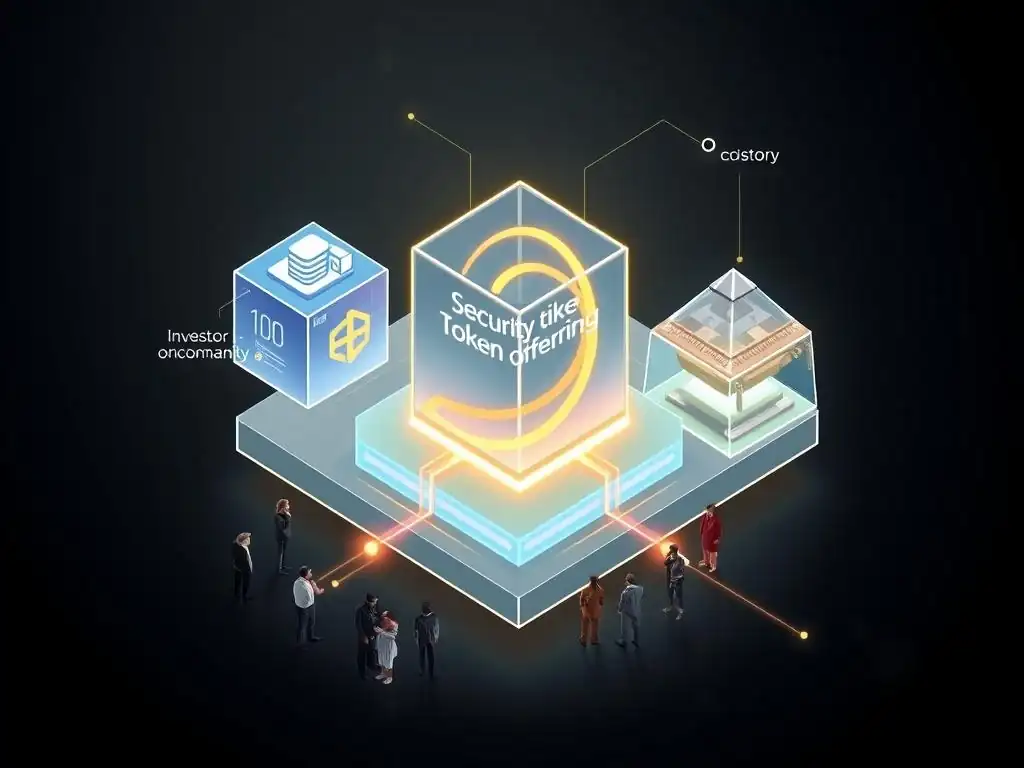
Defining the Security Token Structure and Legal Framework
The initial and most critical step in conducting an STO is defining the security token's structure and the underlying legal framework. This involves determining what asset is being tokenized (e.g., equity, debt, revenue share, real estate), the rights and obligations attached to the token, and how these align with the issuer's business model and fundraising goals. Crucially, this phase requires extensive consultation with legal experts specializing in securities law and blockchain technology in all relevant jurisdictions where the STO will be marketed.
Choosing the appropriate regulatory exemption (e.g., Reg D, Reg A+, Reg S) is fundamental, as it dictates the terms of the offering, including who can invest, the maximum amount that can be raised, and the ongoing reporting requirements. The legal structure will also define the relationship between the token holders and the underlying asset or entity. This foundational legal work ensures that the token is correctly classified and that the offering is structured from the outset to be compliant with applicable securities regulations, paving the way for a successful STOs compliant fundraising future.
Building the STO Platform and Technology Infrastructure
Once the legal framework is established, the next step involves building or selecting the technology infrastructure for the STO. This typically requires a dedicated STO platform that can handle the issuance, management, and potentially secondary trading of the security tokens. The platform must be capable of enforcing the rules embedded in the security token's smart contract, such as transfer restrictions based on investor accreditation or lock-up periods.
The technical infrastructure involves creating the security token itself, usually on a blockchain platform like Ethereum (often using standards like ERC-20 with additional features for security tokens, or specific security token standards like ERC-1400) or other enterprise-grade blockchains. The platform must integrate with KYC/AML providers and investor accreditation verification services. Security is paramount, requiring robust smart contract auditing and platform security measures to protect both the issuer and investors. This technological backbone is essential for the smooth and compliant execution of the STO.
Marketing and Distributing Security Tokens in a Compliant Manner
Marketing and distributing security tokens must be handled with extreme care to remain compliant with securities regulations. Unlike marketing utility tokens or cryptocurrencies, promotional activities for STOs are often subject to strict rules regarding advertising, solicitation, and communication with potential investors. The specific rules depend heavily on the chosen regulatory exemption and jurisdiction.
For example, under Reg D Rule 506(c) in the US, general solicitation is allowed, but all investors must be accredited, and the issuer must take reasonable steps to verify their accreditation. Under Rule 506(b), general solicitation is prohibited, but verification of accreditation is not strictly mandated (though still advisable).
Distribution typically occurs directly through the issuer's platform or via regulated broker-dealers and placement agents who specialize in securities offerings. The process involves onboarding investors, conducting required checks (KYC/AML, accreditation), processing investments, and distributing the security tokens to verified participants. Adhering strictly to marketing and distribution rules is vital to avoid regulatory penalties and ensure the legitimacy of the STO, securing its place in the STOs compliant fundraising future landscape.
Use Cases and Real-World Examples of Successful STOs
STOs in Real Estate: Tokenizing Property Ownership
One of the most compelling use cases for STOs is in the real estate sector, where they enable the tokenization of property ownership. Traditionally, investing in commercial real estate, large development projects, or even fractional ownership of properties has been illiquid and required significant capital. STOs allow the issuance of tokens that represent shares in a specific property, a portfolio of properties, or a real estate fund.
This allows investors to buy fractional ownership stakes, significantly lowering the entry barrier. For example, a commercial building valued at $50 million could be represented by 50 million security tokens, each worth $1. This enables investors to participate with much smaller amounts than required for direct property investment or traditional real estate fund minimums. Companies like Harbor (though later pivoting) and Red Swan have explored or executed real estate tokenization, aiming to provide greater liquidity and accessibility to this asset class through compliant STOs. This demonstrates the power of STOs for compliant fundraising in illiquid markets.
STOs in Private Equity: Accessing New Capital Markets
STOs are also transforming the private equity landscape by providing companies with new avenues for raising capital and offering investors access to opportunities previously confined to large institutions. Tokenizing equity in a private company allows it to raise funds from a broader base of accredited investors without undergoing a full IPO. This can be particularly attractive for growth-stage companies seeking significant capital injections.
Furthermore, STOs can be used to tokenize shares in private equity funds themselves, offering investors potential for greater liquidity than traditional fund structures which often have long lock-up periods. Companies like Polymath have built platforms specifically designed to facilitate the issuance of security tokens for private equity and other asset classes, contributing to the ecosystem for STOs compliant fundraising future. This allows private companies to tap into capital markets more flexibly and efficiently.
STOs in Art: Democratizing Access to Fine Art Investment
The art market, known for its high values, illiquidity, and lack of transparency, is another sector ripe for disruption by STOs. Investing in a masterpiece typically requires millions of dollars and involves opaque processes. STOs can tokenize ownership of individual artworks or collections, allowing multiple investors to own fractional shares.
This not only democratizes access to fine art investment, making it available to investors with more modest capital, but also introduces the potential for secondary market trading of these tokenized shares, offering liquidity in an otherwise illiquid asset class. Platforms like Maecenas have tokenized shares in artworks, such as Andy Warhol's 14 Small Electric Chairs, demonstrating the practical application of STOs in the art world. By bringing compliance and fractional ownership to art, STOs are creating new possibilities for compliant fundraising and investment in this historically exclusive market.
The Future of STOs: Trends and Predictions
The Growth Potential of the STO Market: Market Size Projections
Projections for the growth of the STO market indicate significant potential in the coming years. While still relatively nascent compared to traditional capital markets, the market size is expected to expand substantially as regulatory clarity increases and institutional adoption grows. Various market research reports offer differing figures, but many predict the security token market capitalization could reach hundreds of billions, potentially even trillions, of dollars by the late 2020s or early 2030s.
For example, some analyses suggest the market could exceed $4 trillion by 2030, driven by the tokenization of real estate, private equity, and other illiquid assets. While these are projections and subject to market dynamics and regulatory developments, they underscore the perceived potential for STOs to become a major force in global finance. The ability to tokenize vast amounts of currently illiquid assets represents a massive opportunity for STOs compliant fundraising future.
Technological Advancements Shaping the Future of STOs: Enhanced Security, Interoperability, and Decentralized Exchanges
Technological advancements are continuously shaping the future of STOs. Developments in blockchain protocols are leading to enhanced security features specifically designed for regulated assets, such as more sophisticated identity management and access control directly at the protocol level. Improved smart contract standards (beyond basic ERC-20) like ERC-1400 are enabling complex functionalities required for securities, including forced transfers, restricted token holders, and issuance/redemption rules.
Interoperability between different blockchain networks is also improving, which could facilitate easier transfer and management of security tokens across various platforms. Furthermore, the development of regulated decentralized exchanges (DEXs) specifically designed for security tokens holds the promise of providing more liquid and transparent secondary markets, addressing a current challenge for STOs. These technological strides are crucial for building the robust and efficient infrastructure needed for the widespread adoption of STOs compliant fundraising future.
The Impact of STOs on the Future of Compliant Fundraising
The cumulative impact of STOs points towards a future where compliant fundraising is more accessible, efficient, and liquid. By combining the regulatory adherence of traditional finance with the technological advantages of blockchain, STOs offer a powerful new mechanism for companies to raise capital and for investors to access opportunities. They are poised to bridge the gap between traditional securities markets and the digital asset space.
As regulatory frameworks mature and technology evolves, STOs are expected to become an increasingly standard method for capital formation, particularly for private companies and illiquid assets. Their ability to democratize investment, enhance transparency, and potentially offer greater liquidity positions them as a key component in the evolution of global finance. The successful implementation and adoption of STOs compliant fundraising future will depend on continued collaboration between issuers, investors, regulators, and technology providers to build a secure, compliant, and efficient ecosystem.
Frequently Asked Questions
What exactly are Security Token Offerings (STOs)?
STOs are a way to raise capital by issuing digital securities that represent ownership in an asset, like equity or debt. They differ from ICOs because they are compliant with securities regulations. This offers investors enhanced legal protection.
How do STOs differ from Initial Coin Offerings (ICOs)?
Unlike ICOs, STOs are subject to securities laws. This means they must adhere to regulations like KYC/AML. The legal framework gives investors greater confidence and protection.
What are the key benefits of using STOs for fundraising?
STOs offer enhanced transparency and efficiency through blockchain technology. They also provide access to a global investor base and potentially lower fundraising costs compared to traditional methods, and are compliant with regulations.
How does regulation impact the future of STOs?
Clear and consistent regulation is crucial for the adoption and growth of STOs. Regulatory clarity will boost investor confidence and attract more institutional investment in the long term.
What is the future outlook for STOs in the fundraising landscape?
STOs are poised to become a significant alternative fundraising method. As the regulatory landscape matures and technology advances, they offer a compliant and efficient way for companies to raise capital, potentially disrupting traditional IPOs.
Final Reflection: Embracing the Future of Compliant Fundraising
The exploration of Security Token Offerings (STOs) reveals more than just a novel fundraising mechanism; it highlights a fundamental shift towards democratized and transparent capital markets. The potential for STOs to revolutionize how companies raise capital, while simultaneously adhering to stringent regulatory frameworks, is not a distant dream, but a rapidly approaching reality. The need for compliant fundraising solutions has never been more critical, and STOs offer a compelling path forward.
The impact of STOs extends far beyond the financial realm, influencing the very fabric of trust and accessibility within investment opportunities. Witnessing the evolution of STOs from theoretical concept to tangible application underscores the power of innovation in shaping a more equitable financial landscape. The future of finance is decentralized, transparent, and compliant. STOs embody this vision, offering a pathway to a more inclusive and efficient capital market.
This sentiment resonates deeply, reminding us that the pursuit of financial innovation must always be tempered with a commitment to integrity and investor protection.
As we stand on the cusp of this new era of compliant fundraising, I invite you to consider the implications of STOs for your own financial future. Are you prepared to embrace the opportunities presented by this transformative technology? Reflect on how you can contribute to the responsible development and adoption of STOs, ensuring that they serve as a catalyst for positive change in the global financial ecosystem. The future of compliant fundraising is not just about technology; it's about building a more trustworthy and accessible financial world for all.
Ignite Your Investment Journey: Explore the World of STOs!
Thank you for diving into the world of Security Token Offerings with Blockchain Trends. We hope you've gained valuable insights into this exciting new landscape of compliant fundraising. Now, it's time to take your newfound knowledge and put it into action!
Here's how you can get started:
- Begin researching potential STOs. Explore platforms like tZERO or Securitize to find offerings that align with your investment goals and risk tolerance.
- Dive deeper into the regulatory landscape. Understand the specific rules and regulations in your jurisdiction regarding STOs.
- Join the conversation! Share this article with your network and spark discussions about the potential of STOs.
Ready to embrace the future of compliant fundraising? What's the first STO you'll be exploring?
Leave a Reply