
Security Tokens and Real Estate: Tokenizing Property Ownership

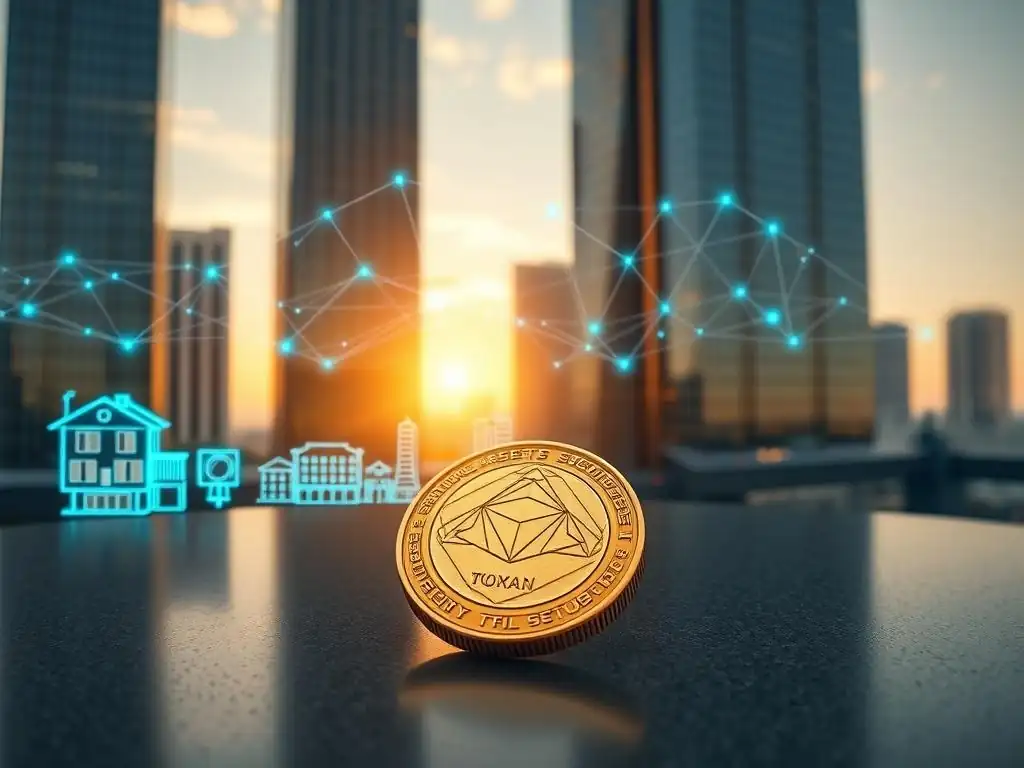
Welcome to Blockchain Trends, your guide to navigating the evolving landscape of blockchain technology!
Dive into the future as we explore the transformative power of blockchain beyond cryptocurrencies. This week, we're unraveling the intricacies of blockchain real estate tokenization security. Curious how tokenization can revolutionize property ownership while maintaining ironclad security? Let's unlock the potential – and the challenges – together.
- Blockchain Real Estate Tokenization Security: A New Era of Property Ownership
- Security Tokens and Real Estate: A Deep Dive
- Tokenizing Property Ownership: Practical Applications and Use Cases
- Advantages of Blockchain Real Estate Tokenization for Investors and Developers
- Challenges and Risks Associated with Real Estate Tokenization
- The Future of Blockchain Real Estate Tokenization: Trends and Predictions
- Conclusion: Blockchain Real Estate Tokenization Security - Transforming the Future of Property Investment
-
Frequently Asked Questions
- What are security tokens in the context of real estate tokenization?
- How does blockchain enhance the security of real estate transactions when tokenized?
- What are the primary security concerns related to blockchain real estate tokenization?
- How can real estate companies ensure the security of their tokenized properties?
- What are the potential benefits of using security tokens for real estate investment in terms of security and accessibility?
- Final Reflection: Democratizing Real Estate Through Blockchain
- Unveil Your Real Estate Future Now!
Blockchain Real Estate Tokenization Security: A New Era of Property Ownership
Understanding Tokenization and its Impact on Real Estate
What is Tokenization? A Simplified Explanation
Tokenization, in the context of assets, is the process of converting the rights to an asset into a digital token on a blockchain. Think of it like creating digital shares for a physical item, such as a piece of real estate. These digital tokens represent a fractional ownership or other defined rights (like debt) associated with the underlying asset. Each token holds specific information about the asset and the rights it represents, recorded immutably on a distributed ledger. This process allows large, illiquid assets to be broken down into smaller, more manageable, and transferable units.
This transformation from physical asset rights to digital tokens is fundamentally changing how value is exchanged and managed. For real estate, this means turning property ownership rights – which are typically recorded in cumbersome paper deeds or centralized digital registries – into digital tokens on a blockchain. This creates a digital representation that is verifiable, transparent, and potentially much easier to transfer, opening up new possibilities for how properties are bought, sold, and invested in. The security of this digital representation is paramount, forming the core of blockchain real estate tokenization security.
How Blockchain Technology Enables Real Estate Tokenization
Blockchain technology provides the foundational infrastructure for real estate tokenization by offering a secure, transparent, and decentralized ledger. When real estate rights are tokenized, the ownership information, transaction history, and specific rights associated with the tokens are recorded on a blockchain. This distributed ledger is inherently resistant to modification, as changes must be agreed upon by a network of participants, making it extremely difficult for fraudulent activities to occur undetected.
The use of blockchain ensures that there is a single, verifiable source of truth for token ownership and transaction history. Unlike traditional property records which can be fragmented across different registries and prone to errors or manipulation, a blockchain provides an immutable and transparent record. This inherent security and transparency offered by the underlying blockchain technology are critical components of the overall blockchain real estate tokenization security framework, building trust among participants and enabling efficient, verifiable transactions.
The Benefits of Tokenizing Real Estate Assets
Tokenizing real estate assets unlocks several significant benefits, primarily revolving around increased liquidity, accessibility, and efficiency. Historically, real estate has been one of the most illiquid asset classes due to high transaction costs, lengthy processes, and large investment thresholds. Tokenization breaks properties into smaller, digital units, making it easier and faster to buy and sell fractions of a property. This fractional ownership lowers the barrier to entry for investors who may not be able to afford an entire property, democratizing access to real estate investment.
Furthermore, tokenization leverages blockchain's transparency and automation capabilities to streamline processes. Due diligence, title transfers, and even dividend or rental income distribution can potentially be automated through smart contracts, reducing reliance on intermediaries and cutting down on time and costs. The global nature of blockchain networks also opens up real estate markets to international investors more easily. These efficiencies, combined with the enhanced transparency and security provided by the blockchain, contribute to a more robust and accessible real estate investment ecosystem.
Security Tokens and Real Estate: A Deep Dive
Defining Security Tokens: Compliance and Regulation
Security Tokens vs. Utility Tokens: Key Differences for Real Estate
The distinction between security tokens and utility tokens is crucial, particularly in the regulated world of real estate. A utility token is typically designed to provide access to a product or service within a specific ecosystem; its value is derived from its utility. In contrast, a security token represents ownership rights in an underlying asset, such as equity in a company, debt, or, in this case, real estate. Security tokens are essentially digital contracts for investment, promising future profits or benefits based on the performance of the underlying asset.
For real estate tokenization, the tokens issued usually fall under the category of security tokens because they represent an investment in a property with the expectation of earning returns (e.g., rental yield, appreciation). This classification is vital because security tokens are subject to stringent financial regulations designed to protect investors. Unlike utility tokens, which may have fewer regulatory hurdles, issuing and trading real estate security tokens requires compliance with securities laws, significantly impacting how projects are structured and marketed.
The Regulatory Landscape for Real Estate Security Tokens [e.g., SEC Regulations]
The regulatory landscape for real estate security tokens is complex and varies significantly across jurisdictions. In the United States, for instance, the Securities and Exchange Commission (SEC) generally views tokens representing investment contracts as securities, subject to federal securities laws like the Securities Act of 1933 and the Securities Exchange Act of 1934. This means issuers must comply with registration requirements or qualify for specific exemptions, such as Regulation D (often used for private placements) or Regulation S (for offerings outside the U.S.).
Compliance involves detailed disclosure requirements, investor accreditation checks (for certain exemptions), and adherence to anti-fraud provisions. Failure to comply can result in significant penalties. Other jurisdictions like the European Union, Singapore, and Switzerland are also developing frameworks, often classifying tokens based on their function (e.g., payment, utility, or investment tokens). Navigating this patchwork of regulations is one of the primary challenges for projects aiming to leverage blockchain real estate tokenization security, requiring careful legal structuring and adherence to know-your-customer (KYC) and anti-money laundering (AML) regulations to ensure investor protection and legal operation.
Blockchain Real Estate Tokenization Security: Ensuring Investor Protection
Smart Contracts and Security Audits in Real Estate Tokenization
Smart contracts are self-executing contracts with the terms of the agreement directly written into code on the blockchain. In real estate tokenization, smart contracts automate various processes, such as distributing rental income to token holders, managing voting rights on property decisions, or handling the transfer of tokens upon sale. The code dictates the logic, ensuring that actions are performed automatically and transparently when predefined conditions are met. This automation reduces the need for intermediaries and minimizes the risk of human error or intentional manipulation in the execution of contractual obligations.
However, the security of the smart contract code itself is paramount for blockchain real estate tokenization security. Flaws or vulnerabilities in the code can lead to significant losses. Therefore, rigorous security audits by independent third parties are essential before deploying smart contracts for tokenized real estate projects. These audits scrutinize the code for bugs, security loopholes, and potential attack vectors, ensuring that the smart contract behaves as intended and protects the assets and rights represented by the tokens. A thorough audit process is a critical step in building trust and ensuring the technical security of the tokenization platform.
Data Security and Privacy Considerations for Tokenized Properties
While blockchain provides inherent security for transaction history and ownership records, tokenizing real estate also involves handling sensitive data about the property, investors, and transactions. Ensuring the security and privacy of this data is a significant consideration for blockchain real estate tokenization security. Information like investor identities (collected for KYC/AML), property details, financial performance data, and potentially even details about tenants must be stored and managed securely, often off-chain or using privacy-preserving techniques if stored on-chain.
Platforms facilitating real estate tokenization must implement robust data security measures, including encryption, access controls, and compliance with relevant data protection regulations like GDPR in Europe or similar laws elsewhere. While the blockchain ledger itself is transparent, sensitive personal or financial data should not be directly exposed on the public chain unless specifically designed with privacy in mind (e.g., using zero-knowledge proofs). Balancing the transparency benefits of blockchain with the necessity for data privacy is a key challenge, requiring careful architectural design and adherence to best practices in data security to protect all parties involved.
Tokenizing Property Ownership: Practical Applications and Use Cases
Case Study: Successful Examples of Real Estate Tokenization Projects
Tokenizing Student Housing in Berlin
One notable early example of real estate tokenization involved tokenizing student housing in Berlin. This project aimed to provide investors with fractional ownership in a portfolio of student residences. Instead of buying an entire building, investors could purchase security tokens representing a portion of the equity in the portfolio. This lowered the minimum investment threshold significantly, reportedly allowing investments starting from a few hundred euros rather than hundreds of thousands.
The tokenization process involved setting up a special purpose vehicle (SPV) that legally owned the properties. The tokens represented shares in this SPV. Income generated from rent was automatically distributed to token holders via smart contracts, proportional to their ownership. This specific case demonstrated the potential for increased accessibility and automated income distribution through blockchain real estate tokenization security, opening up a previously less accessible asset class to a broader range of investors, including individuals seeking smaller, diversified real estate exposure.
Fractional Ownership of a Luxury Resort in the Maldives
Another compelling use case involved offering fractional ownership in a luxury resort development in the Maldives. This project tokenized equity in the resort, allowing investors globally to participate in the development and future revenues of a high-value asset. The total value of the resort was broken down into a specified number of security tokens, each representing a direct economic interest.
This project targeted both accredited and potentially non-accredited investors (depending on the regulatory structure used), enabling participation in a large-scale development that would typically require substantial capital. The token holders gained rights to a share of the resort's profits. This example highlights how tokenization can unlock investment opportunities in unique, high-value global assets, providing liquidity options for developers and diversification for investors, underpinned by the immutability and transparency of the blockchain ledger which enhances blockchain real estate tokenization security.
Exploring Different Models for Real Estate Token Offerings (RTOs)
Equity Tokens: Owning Shares in a Property
Equity tokens are perhaps the most common model for real estate tokenization. In this structure, the tokens represent direct ownership or shares in the legal entity that owns the real estate asset (often an SPV or trust). Holding these tokens is akin to holding stock in a company that owns property. Token holders typically have rights to a portion of the property's income (like rent) and a share of the appreciation in the property's value when it is eventually sold.
This model provides investors with a direct economic interest tied to the performance of the specific property or portfolio of properties. The number of tokens held determines the investor's proportional ownership and rights. The issuance of these tokens must comply with securities regulations, as they clearly represent an investment contract. The underlying blockchain real estate tokenization security ensures that the record of who owns which equity token is accurate and tamper-proof.
Debt Tokens: Lending to Real Estate Projects
Debt tokens represent a loan made to a real estate project or developer, secured by the underlying property. When an investor purchases a debt token, they are essentially acting as a lender, providing capital for property acquisition, development, or renovation. The token represents their claim on the loan and the right to receive periodic interest payments and the principal repayment according to the terms specified in the smart contract and offering documents.
This model provides developers with an alternative financing method outside of traditional bank loans or corporate bonds. For investors, it offers a way to earn fixed income secured by real estate assets. Debt tokens can be structured with varying levels of seniority and interest rates. The security of this model relies on the legal framework securing the debt against the property and the technical blockchain real estate tokenization security ensuring accurate tracking of debt ownership and payment schedules.
Hybrid Models: Combining Equity and Debt Features
Hybrid models combine elements of both equity and debt tokens to create more complex investment structures. For example, a token could offer a fixed interest payment (like debt) for a certain period, followed by a share of the property's profits or appreciation (like equity). Another hybrid could involve tokens that start as debt but convert to equity under specific conditions.
These models allow for greater flexibility in structuring real estate investments to meet specific project financing needs and investor risk/return preferences. They can be designed to offer preferred returns, profit participation, or other layered rights. While offering flexibility, hybrid models also add complexity to the legal and smart contract structuring. Ensuring the rules governing the hybrid rights are clearly defined and executed securely via smart contracts is crucial for the overall blockchain real estate tokenization security of the offering.
Advantages of Blockchain Real Estate Tokenization for Investors and Developers
Increased Liquidity and Accessibility in Real Estate Markets
Democratizing Real Estate Investment: Opening Doors to Smaller Investors
Traditionally, investing directly in real estate required significant capital, often hundreds of thousands or millions of dollars, effectively limiting participation to wealthy individuals and institutional investors. Blockchain real estate tokenization security fundamentally changes this by enabling fractional ownership. A property valued at $10 million could be tokenized into 10,000 tokens, each representing $1,000 of ownership. This drastically lowers the entry barrier, allowing individuals to invest with much smaller amounts, potentially enabling diversification across multiple properties or asset types.
This democratization means that a wider pool of individuals can now access real estate as an investment class, which was previously out of reach. It transforms real estate from an elite investment into one potentially accessible to the average investor looking to include physical assets in their portfolio. The ability to buy and sell these smaller units on secondary markets (once established) also enhances potential liquidity compared to traditional property sales.
Global Reach: Accessing International Real Estate Opportunities
Real estate investment has historically been geographically constrained, often requiring investors to navigate complex international laws, currency exchanges, and local market nuances. Tokenization, built on borderless blockchain technology, facilitates global participation. Investors from one country can more easily invest in tokenized properties located anywhere in the world, provided they comply with relevant regulations.
This global reach benefits both investors seeking diversification beyond their local market and developers seeking a wider pool of potential capital. A developer in Southeast Asia, for instance, could raise funds from investors in Europe, North America, and elsewhere by issuing security tokens. The transparency and immutability of the blockchain contribute to building trust across international borders, reinforcing the importance of blockchain real estate tokenization security for global transactions.
Reduced Costs and Increased Efficiency in Real Estate Transactions
Streamlining the Due Diligence Process
Traditional real estate transactions involve extensive and often redundant due diligence processes, including title searches, property inspections, legal reviews, and financial audits. This can be time-consuming and expensive. While tokenization doesn't eliminate the need for due diligence on the underlying asset, it can significantly streamline subsequent transfers of ownership. Once a property has been legally structured and tokenized, the information related to the asset and its legal ownership is linked to the tokens on the blockchain.
Future investors buying tokens are buying into an already vetted structure. While they may still conduct their own checks, the core information about the tokenized asset is readily accessible and verifiable on the ledger. Smart contracts can also automate parts of the process, such as verifying investor accreditation where required. Estimates suggest that tokenization could reduce overall transaction times from months to days or even hours for secondary trading, contributing to cost savings.
Automated Dividend Payments and Governance
Managing income distribution and investor relations for traditional real estate investments, especially for fractional ownership structures, can be administratively burdensome and costly. This involves collecting rent, calculating distributions, and manually sending payments to numerous investors. Similarly, managing voting rights or obtaining consent from multiple owners for property decisions can be cumbersome.
Smart contracts can automate these processes efficiently. Rental income or profits can be automatically distributed to token holders' digital wallets based on their token holdings, triggered by predefined conditions. Governance rights, such as voting on major property decisions, can also be encoded into smart contracts, allowing token holders to cast verifiable votes on the blockchain. This automation drastically reduces administrative overhead and associated costs, enhancing the operational efficiency enabled by blockchain real estate tokenization security.
Challenges and Risks Associated with Real Estate Tokenization
Regulatory Uncertainty and Compliance Hurdles
One of the most significant challenges facing real estate tokenization is the ongoing regulatory uncertainty in many jurisdictions. As a relatively new application of blockchain technology, regulators worldwide are still developing clear frameworks and guidelines for security tokens. This lack of clarity can create legal risks for issuers and investors. Projects must navigate complex and sometimes conflicting securities laws across different countries, particularly for offerings targeting a global investor base.
Ensuring full compliance with KYC/AML regulations, securities registration requirements (or valid exemptions), and investor protection laws adds significant complexity and cost to tokenization projects. The legal structuring of tokenized real estate deals requires expert legal counsel familiar with both real estate law and securities regulations pertaining to digital assets. The evolving nature of these regulations means that the legal environment for blockchain real estate tokenization security is constantly changing, posing an ongoing challenge for market participants.
Valuation and Price Discovery in Tokenized Real Estate Markets
Determining the fair market value of both the underlying tokenized property and the individual tokens themselves presents challenges. While the initial token offering price is set based on the property's valuation, the price discovery mechanism for tokens trading on secondary markets is still maturing. Unlike publicly traded stocks with established exchanges and large trading volumes, secondary markets for real estate security tokens are currently less liquid.
This limited liquidity can make it difficult to accurately price tokens and for investors to exit their positions easily. Establishing reliable and transparent valuation methods for tokenized real estate, especially for unique or illiquid properties, is crucial. Developing robust secondary trading platforms with sufficient volume is necessary to ensure efficient price discovery and provide the liquidity benefits that tokenization promises. The security and integrity of these valuation processes are key aspects of overall blockchain real estate tokenization security.
Technological Risks and Security Vulnerabilities
Despite the inherent security features of blockchain, real estate tokenization is not immune to technological risks. These include potential vulnerabilities in the smart contract code, risks associated with the underlying blockchain platform itself (though major blockchains like Ethereum or Tezos are highly tested), and risks related to the platforms and wallets used to hold and trade the tokens. Smart contract bugs can lead to frozen assets or incorrect execution of terms, as seen in past incidents in the broader decentralized finance (DeFi) space.
Furthermore, the security of investors' private keys, which control access to their tokens, is paramount. Loss or theft of private keys can result in the irreversible loss of assets. Platforms facilitating tokenization must implement stringent cybersecurity measures, conduct regular security audits of their infrastructure and smart contracts, and educate users on best practices for securing their digital assets. Addressing these technological risks is fundamental to ensuring robust blockchain real estate tokenization security and building investor confidence.
The Future of Blockchain Real Estate Tokenization: Trends and Predictions
The Growing Adoption of Security Tokens in the Real Estate Industry
The trend towards increased adoption of security tokens in the real estate industry is expected to continue. As regulatory clarity improves in key jurisdictions and successful case studies demonstrate the viability and benefits of tokenization, more property owners, developers, and investment firms are likely to explore this avenue. The potential for enhanced liquidity, broader investor reach, and reduced transaction costs is a powerful driver.
While still in its early stages, the market for tokenized real estate is projected to grow significantly. Reports and market analyses predict that the volume of tokenized real estate assets could reach billions, potentially trillions, of dollars in the coming decade. This growth will be fueled by the maturation of technology platforms, the development of more robust secondary markets, and increasing investor familiarity and confidence in digital assets backed by tangible assets. The focus on establishing secure and compliant frameworks will be central to this expansion, reinforcing the importance of blockchain real estate tokenization security.
The Integration of DeFi and Real Estate Tokenization
A key trend on the horizon is the increasing integration of tokenized real estate with the decentralized finance (DeFi) ecosystem. Once real estate assets are represented as liquid security tokens on a blockchain, they can potentially be used within DeFi protocols. This could include using tokenized property as collateral for decentralized loans, participating in liquidity pools that provide trading pairs for real estate tokens, or integrating them into decentralized exchanges for seamless trading.
This integration could unlock even greater liquidity and utility for real estate assets. Imagine borrowing against your fractional ownership of a property instantly through a DeFi protocol, or earning yield by providing liquidity for trading real estate tokens. This convergence is still nascent but holds immense potential to further transform real estate finance, provided that the legal and technical challenges of bridging traditional assets with DeFi protocols are successfully addressed, maintaining high standards of blockchain real estate tokenization security.
The Role of Blockchain in Revolutionizing Property Management
Beyond just ownership and investment, blockchain technology is poised to revolutionize aspects of property management. Smart contracts can automate rent collection, manage lease agreements, track maintenance history, and even facilitate transparent voting on property-related decisions among fractional owners. Immutability of records on the blockchain can provide a reliable audit trail for all property-related activities.
Using blockchain for property management can increase transparency and efficiency for both property managers and owners (including token holders). For example, a transparent record of maintenance requests and their resolution could be stored on a private or consortium chain, accessible to relevant parties. While not strictly part of blockchain real estate tokenization security in the investment sense, this application of blockchain further enhances the overall digital lifecycle of a property asset, creating a more integrated and efficient ecosystem.
Conclusion: Blockchain Real Estate Tokenization Security - Transforming the Future of Property Investment
Blockchain real estate tokenization represents a significant evolution in how property is owned, managed, and invested in. By converting illiquid real estate assets into divisible, digital security tokens on a blockchain, it promises enhanced liquidity, increased accessibility through fractional ownership, and greater efficiency in transactions and administration. This innovation opens up real estate investment to a broader global audience and streamlines processes for developers and investors alike.
However, realizing the full potential of this technology hinges critically on establishing robust blockchain real estate tokenization security. This encompasses navigating complex and evolving regulatory landscapes, ensuring the security and integrity of smart contracts, implementing stringent data protection measures, and developing liquid secondary markets with transparent valuation mechanisms. While challenges remain, the ongoing development of compliant frameworks, maturation of technology platforms, and successful case studies point towards a future where tokenized real estate becomes an increasingly common and impactful asset class, fundamentally transforming the landscape of property investment.
Frequently Asked Questions
What are security tokens in the context of real estate tokenization?
Security tokens are digital representations of ownership in an asset, like a property, that are subject to securities regulations. They are issued on a blockchain and offer fractional ownership, making real estate investment more accessible.
How does blockchain enhance the security of real estate transactions when tokenized?
Blockchain's immutability and transparency create a secure and auditable record of ownership. This reduces the risk of fraud and ensures that all transactions are easily verifiable by all parties involved.
Potential vulnerabilities include smart contract flaws, regulatory uncertainty, and custodial risks associated with managing digital assets. Robust security protocols and compliance frameworks are crucial.
How can real estate companies ensure the security of their tokenized properties?
Implementing thorough smart contract audits, employing multi-factor authentication, and adhering to relevant regulatory guidelines are essential. Choosing reputable custodians is also vital.
What are the potential benefits of using security tokens for real estate investment in terms of security and accessibility?
Security tokens offer increased liquidity, reduced transaction costs, and improved accessibility for smaller investors. The blockchain provides a transparent and secure platform for managing ownership records.
Final Reflection: Democratizing Real Estate Through Blockchain
The journey through the landscape of blockchain real estate tokenization security reveals a powerful truth: the future of property ownership is being reshaped by technology. The potential to fractionalize assets, increase liquidity, and democratize investment opportunities is no longer a distant dream, but a tangible reality unfolding before our eyes. The implications for both seasoned investors and aspiring homeowners are profound, promising a more accessible and efficient real estate market for all.
This shift towards tokenized real estate is not merely a technological advancement; it's a cultural and social evolution. It represents a fundamental change in how we perceive and interact with property, moving away from traditional barriers and towards a more inclusive ecosystem. The future of real estate is not about owning property; it's about accessing its value.
This quote encapsulates the essence of tokenization, highlighting the potential to unlock previously inaccessible wealth and empower individuals to participate in the real estate market on their own terms.
As we stand at the cusp of this transformative era, let us consider the possibilities that blockchain real estate tokenization security unlocks. Reflect on how these advancements can empower you to diversify your portfolio, access new investment opportunities, and contribute to a more equitable and transparent real estate landscape. The future of property ownership is being written now – will you be a part of it?
Unveil Your Real Estate Future Now!
Thank you for exploring the world of security tokens and real estate. We hope you now have a clearer understanding of how tokenization is transforming property ownership and opening new investment opportunities. It's time to put that knowledge into action!
Here are some ways to take the next step:
- Consider investing in a tokenized real estate project. Research platforms that offer current opportunities and perform thorough due diligence before making any commitments. This approach allows you to experience the advantages of fractional ownership firsthand.
- Follow Blockchain Trends on social media platforms like Twitter and LinkedIn to stay informed about the latest developments in real estate tokenization. Share this article with your network to help spread awareness.
- Explore the legal and regulatory frameworks related to security tokens in your region. Gaining this knowledge will empower you to make informed decisions.
Which tokenized real estate projects have caught your interest, and what questions do you have about investing in this innovative field? Share your thoughts in the comments below!
Leave a Reply