
Tokenization of Assets Explained: A Beginner's Guide to the Future of Ownership

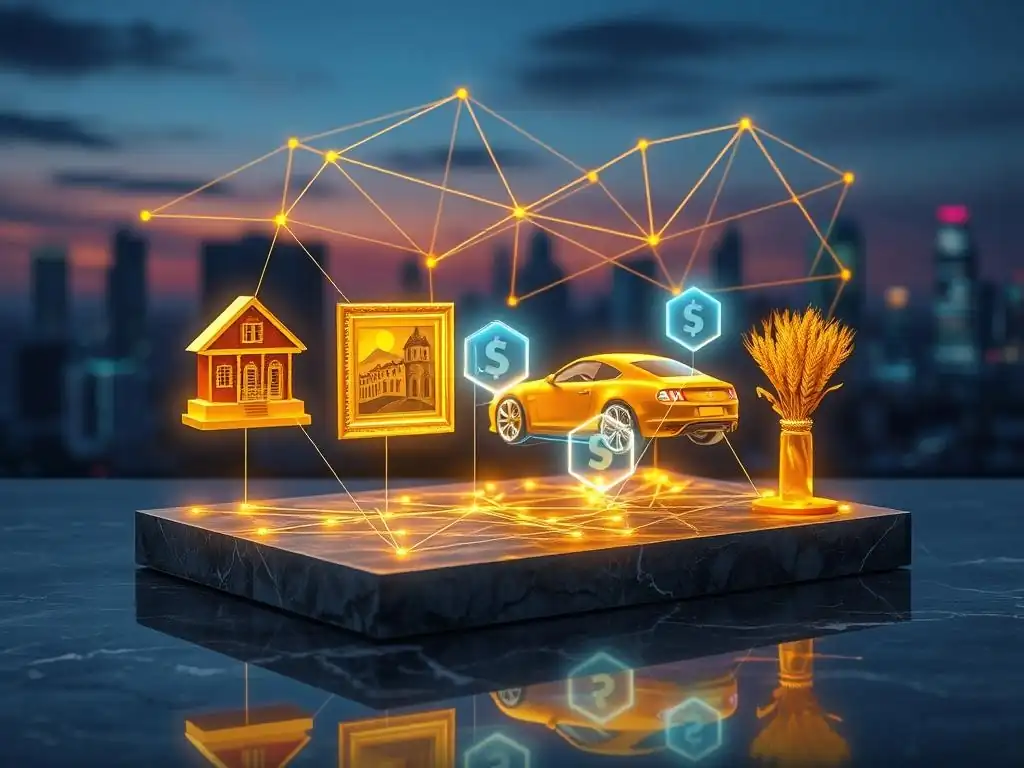
Welcome to Blockchain Trends, your compass in the rapidly evolving world of decentralized technology. Beyond the buzzwords, we delve into the real-world applications and transformative power of blockchain. Intrigued by the idea of fractional ownership and unlocking liquidity in previously illiquid markets? Then dive in and discover the revolutionary benefits of blockchain asset tokenization and how it's poised to reshape the future of ownership as we know it. Prepare to unravel the complexities and potential of tokenization in this comprehensive guide.
Tokenization of Assets Explained: A Guide to Fractional Ownership
- Introduction to Asset Tokenization
- What is Asset Tokenization?
- Benefits of Asset Tokenization
- The Legal and Regulatory Landscape
- Real-World Examples
- The Technology Behind Tokenization Platforms
- Challenges and Risks
- The Future of Asset Tokenization
- Conclusion: Embracing the Potential
- Frequently Asked Questions
- Final Reflection: Embracing the Tokenized Future
- Unlock the Future: Begin Your Tokenization Journey!
Introduction to Asset Tokenization
Understanding Tokenization
Tokenization represents a revolutionary application of blockchain technology, transforming traditional, often illiquid, assets into digital tokens on a distributed ledger. At its core, tokenization involves creating a digital representation, or token, of a real-world or digital asset. This process is distinct from simply digitizing a record; it imbues the digital representation with verifiable ownership, transferability, and programmability, leveraging the inherent properties of blockchain like immutability and transparency. It's about unlocking value by making assets more accessible and manageable in the digital realm.
This transformation allows for granular ownership and efficient transfer mechanisms previously challenging with physical assets or traditional digital records. By converting rights or value streams into tokens, we can subject them to the logic of smart contracts and the efficiency of blockchain networks. This foundational shift opens up a world of possibilities for how assets are owned, traded, and managed, laying the groundwork for significant blockchain asset tokenization benefits across various industries.
The Evolution of Asset Ownership
Historically, asset ownership has been rooted in physical possession or centralized ledgers maintained by institutions like banks, land registries, or art houses. Transferring ownership often involved cumbersome paperwork, multiple intermediaries, high transaction costs, and significant delays. This traditional model inherently limited liquidity, particularly for high-value, indivisible assets like real estate or fine art, making them inaccessible to all but the wealthiest individuals or large institutions.
The digital age introduced electronic records, streamlining some processes, but ownership and transfer typically remained within centralized systems. Tokenization represents the next evolutionary leap, moving ownership records onto decentralized, transparent, and secure blockchains. This paradigm shift enables fractional ownership on a global scale, reduces reliance on intermediaries, and facilitates near-instantaneous transfers, fundamentally altering the landscape of asset management and distribution and amplifying the potential blockchain asset tokenization benefits.
What is Asset Tokenization?
Defining Tokenization: Representing Assets Digitally
Asset tokenization is the process of converting the rights to an asset into a digital token on a blockchain. This token acts as a verifiable certificate of ownership or participation, recorded on a distributed ledger.
Tokens can be fungible, meaning each unit is identical and interchangeable (like shares of a company or units of a fund, often represented by standards like Ethereum's ERC-20), or non-fungible (NFTs), meaning each token is unique and represents a distinct asset or a unique piece of a larger asset (like a specific artwork or a fractional share of a unique property, often using standards like ERC-721 or ERC-1155).
The digital token is not just a copy; it represents the legally recognized rights and obligations tied to the underlying asset. This might include rights to future revenue streams (like rent from a property), voting rights (in a company), or the right to claim the physical asset under specific conditions. By encoding these rights into a token and managing it via smart contracts on a blockchain, the asset becomes programmable, divisible, and globally transferable, unlocking substantial efficiency and access improvements.
The Tokenization Process
The tokenization process typically involves several key steps, beginning with due diligence on the underlying asset and determining the legal structure for the token offering. This is followed by the technical phase: selecting a suitable blockchain platform (like Ethereum, Solana, or others) and creating the digital tokens according to a relevant standard. Smart contracts are then coded to embed the rules governing the token, such as ownership transfer conditions, dividend distribution mechanisms, or access controls.
Finally, the tokens are issued and distributed to investors or owners, often involving Know Your Customer (KYC) and Anti-Money Laundering (AML) checks for compliant offerings. The entire lifecycle of the token – from issuance to trading and potential redemption – is managed on the blockchain, providing a transparent and immutable record of all activities. This streamlined process, facilitated by blockchain technology, contributes significantly to the overall blockchain asset tokenization benefits.
Types of Assets Suitable for Tokenization: Real Estate, Fine Art, and Carbon Credits
A wide variety of assets, both tangible and intangible, are suitable for tokenization, especially those that are high-value, illiquid, or difficult to divide. Real estate is a prime example; properties, from residential buildings to commercial complexes, can be tokenized, allowing investors to buy fractional shares. This dramatically lowers the entry barrier for real estate investment, potentially opening up a market estimated to be worth trillions globally to a much wider pool of investors. Some reports suggest tokenized real estate could represent a significant percentage of global property value in the coming decade.
Fine art and collectibles also benefit immensely from tokenization. Instead of requiring millions to purchase a masterpiece, investors can own a fraction of the artwork represented by a token. This democratizes access to the exclusive art market. Similarly, carbon credits, which represent verified greenhouse gas reductions, are being tokenized. Tokenizing carbon credits enhances transparency, verifiability, and liquidity in environmental markets, allowing companies and individuals to more easily buy, sell, and retire credits to offset their emissions, showcasing specific blockchain asset tokenization benefits within environmental finance.
Benefits of Asset Tokenization
Enhanced Liquidity
One of the most compelling blockchain asset tokenization benefits is the dramatic improvement in asset liquidity. Traditional assets like real estate, private equity, or rare collectibles are notoriously illiquid; selling them typically takes a long time, involves complex processes, and incurs high costs. By converting these assets into digital tokens, they become much easier to buy, sell, and trade on secondary markets, potentially 24/7, globally.
Tokenization breaks down large, indivisible assets into smaller, manageable units (fractionalization), expanding the pool of potential buyers and sellers. This increased market depth and ease of transfer means that asset owners can potentially liquidate their holdings much faster and more efficiently than through traditional means. For investors, it means they are not locked into an investment for extended periods, providing greater flexibility and exit opportunities.
Increased Accessibility and Fractional Ownership
Tokenization democratizes investment by enabling fractional ownership of high-value assets. Assets that were previously only accessible to wealthy individuals or institutional investors due to their high price point can now be owned in small fractions represented by tokens. For example, instead of needing millions to buy a stake in a commercial building, an investor might purchase tokens representing just a few hundred or thousand dollars' worth.
This significantly lowers the minimum investment threshold and removes geographical barriers. An investor in one country can easily purchase a fractional stake in a property or artwork located anywhere in the world, provided they meet regulatory requirements. This expanded access to diverse asset classes is a major blockchain asset tokenization benefit, allowing a broader demographic of investors to build diversified portfolios that were previously out of reach.
Reduced Costs and Streamlined Processes
The traditional processes for buying, selling, and managing assets involve numerous intermediaries – brokers, lawyers, custodians, transfer agents – each adding complexity, time, and cost. Tokenization, powered by blockchain and smart contracts, can significantly reduce or even eliminate the need for many of these intermediaries. Smart contracts can automate tasks like verifying ownership, executing transfers, and distributing dividends or revenue, reducing manual effort and associated errors.
The result is a more streamlined and efficient process. Transaction costs, such as brokerage fees, legal fees, and administrative overhead, can be substantially lower in a tokenized ecosystem. The time taken to settle transactions is also drastically reduced, often from days or weeks to minutes or seconds, depending on the blockchain network. These cost and time efficiencies represent tangible blockchain asset tokenization benefits for both issuers and investors.
Improved Transparency and Security
Blockchain technology provides a transparent and immutable ledger of all transactions and ownership records. Once an asset is tokenized and its ownership is recorded on the blockchain, every subsequent transfer or change in ownership is also recorded publicly (though participant identities may be pseudonymous). This inherent transparency makes it difficult to commit fraud related to ownership or transaction history, as the record is verifiable by anyone on the network.
Furthermore, the cryptographic security of blockchain makes the ledger highly resistant to tampering or unauthorized alteration. Ownership records are secure and verifiable. Smart contracts execute according to predefined rules, reducing counterparty risk. While platform and user-side security remain crucial, the underlying blockchain provides a robust and trustworthy foundation for recording asset ownership and transfers, contributing significantly to the blockchain asset tokenization benefits related to trust and integrity.
Democratization of Investment Opportunities
Synthesizing the benefits of increased accessibility, fractional ownership, and reduced costs, tokenization leads to a significant democratization of investment. It breaks down the traditional silos that have historically separated different asset classes and limited participation to accredited investors or those with substantial capital. Private markets, such as venture capital or private equity funds, which were typically only open to a select few, can potentially be tokenized, allowing retail investors to participate.
This shift empowers a wider range of individuals to invest in asset classes previously reserved for the elite, offering greater potential for wealth creation and portfolio diversification. By lowering barriers to entry and making investment processes more efficient and transparent, tokenization creates a more inclusive financial ecosystem. This democratization is arguably one of the most impactful blockchain asset tokenization benefits, reshaping the landscape of global finance.
The Legal and Regulatory Landscape
The legal framework surrounding asset tokenization is still evolving, presenting significant challenges. A primary hurdle is classifying tokens within existing legal categories – are they securities, commodities, property, or something entirely new? This classification often determines which regulations apply, impacting issuance requirements, trading rules, and investor protections. Different jurisdictions may classify the same type of token differently, creating a complex patchwork of rules.
Furthermore, enforcing rights associated with tokenized assets across borders poses challenges. If a token represents a share in a physical asset in one country but is held by an investor in another, determining which legal system governs disputes or ownership claims can be complicated. Clear legal definitions and cross-border legal recognition are crucial for the widespread adoption and legal certainty of tokenized assets.
Regulatory Compliance and Security Token Offerings (STOs)
For tokens that represent securities (such as equity in a company or a share in a revenue-generating asset), issuers must comply with existing securities regulations. This has led to the emergence of Security Token Offerings (STOs), which are token issuances designed to adhere to securities laws, often involving registration with regulatory bodies or qualifying for specific exemptions. Compliance typically includes rigorous Know Your Customer (KYC) and Anti-Money Laundering (AML) checks for investors, as well as ongoing reporting requirements.
STOs aim to combine the efficiency and technological blockchain asset tokenization benefits with the legal compliance required to protect investors and ensure market integrity. Navigating these regulations requires careful legal structuring and often involves working with specialized legal counsel familiar with both securities law and blockchain technology. The regulatory burden, while necessary, can add complexity and cost compared to unregulated token issuances.
Jurisdictional Considerations: US and EU
The regulatory landscape for tokenization varies significantly across different jurisdictions. In the United States, the Securities and Exchange Commission (SEC) often uses the Howey Test to determine if a token is an investment contract and thus a security, subject to federal securities laws. This has led to cautious approaches for STOs, often leveraging exemptions like Regulation D or Regulation A+. State-level regulations also add layers of complexity.
In the European Union, efforts like the Markets in Crypto-Assets Regulation (MiCA) aim to create a more harmonized framework for various types of crypto-assets, including those representing securities or other regulated assets. MiCA provides clarity on classification and regulation for different types of tokens. However, specific implementations and interpretations can still vary among EU member states, requiring issuers and platforms to navigate multiple legal systems when operating internationally.
Real-World Examples

Tokenized Real Estate: Case Studies
Numerous projects have successfully tokenized real estate assets, demonstrating the practical blockchain asset tokenization benefits. For instance, platforms have tokenized shares of high-value commercial buildings in major cities like New York, allowing investors worldwide to purchase fractional ownership starting from relatively low amounts, such as $1,000 or less, compared to traditional minimums which could be $100,000 or more.
Another example involves tokenizing real estate funds or portfolios, providing investors with exposure to a diversified set of properties through a single token. These case studies highlight how tokenization increases liquidity by creating tradable digital shares and expands the investor base beyond geographical limitations, accelerating fundraising processes for property developers and making real estate investment more accessible.
Art Tokenization: Democratizing Fine Art Investment
Art tokenization has opened up the exclusive world of fine art investment. Platforms have tokenized ownership stakes in famous artworks, such as pieces by Picasso or Warhol. A painting worth millions can be divided into thousands or millions of tokens, each representing a small percentage of ownership. This allows art enthusiasts and investors with limited capital to own a piece of iconic art.
This model bypasses traditional art market barriers, such as high purchase prices and limited secondary market access for fractional interests. Token holders can potentially trade their ownership stakes on specialized platforms, creating liquidity for assets that were previously highly illiquid. This democratization of art ownership is a significant blockchain asset tokenization benefit for both artists and collectors.
Tokenizing Carbon Credits: Enhancing Environmental Markets
The tokenization of voluntary carbon credits is gaining traction as a way to improve transparency and efficiency in environmental markets. Projects that generate carbon credits (e.g., renewable energy initiatives, forestry projects) can issue these credits as tokens on a blockchain. Each token represents a verified unit of carbon reduction or removal.
Tokenizing carbon credits allows for immutable tracking of their origin, ownership, and retirement (when a credit is used to offset emissions), reducing risks like double-counting. It also facilitates easier trading on blockchain-based markets, potentially increasing liquidity and price discovery for these environmental assets. This application leverages blockchain asset tokenization benefits to support global sustainability efforts by creating more robust and transparent carbon markets.
The Technology Behind Tokenization Platforms
Blockchain Platforms: Ethereum and Solana
The foundation of asset tokenization lies in robust blockchain platforms capable of supporting smart contracts and managing digital assets. Ethereum has been a leading platform due to its mature ecosystem, extensive developer tools, and the widespread adoption of its token standards (ERC-20 for fungible tokens, ERC-721 and ERC-1155 for non-fungible tokens). Many initial security token offerings and tokenization projects were built on Ethereum.
Other platforms like Solana, Polygon, and Binance Smart Chain have also emerged as viable options, often offering advantages such as higher transaction throughput, lower gas fees, or specialized features. The choice of platform depends on factors like the type of asset being tokenized, the required transaction speed, cost considerations, and the regulatory environment. The underlying blockchain's stability, security, and scalability are critical for the success of tokenization initiatives.
Smart Contracts and Their Role
Smart contracts are self-executing programs stored on the blockchain that automatically enforce the rules and logic governing the tokenized asset. They are essential for managing the lifecycle of tokens, from issuance and transfer to the distribution of associated revenues or voting rights. For a tokenized property, for example, a smart contract might automatically distribute rental income proportionally to token holders' wallets.
These contracts eliminate the need for manual execution of terms by intermediaries, reducing the potential for errors and increasing efficiency. They can also embed compliance rules, such as restricting token transfers to only verified wallets or enforcing lock-up periods. The reliability and immutability of smart contracts, once deployed and audited, provide a high degree of automation and trust in the management of tokenized assets.
Security Considerations
While blockchain provides a secure foundation, the overall security of tokenization platforms and the assets they represent depends on multiple factors. Smart contracts, though powerful, can contain vulnerabilities if not coded meticulously and audited rigorously by independent security firms. Exploits in smart contracts have led to significant losses in the past.
Platform-level security is also paramount. The infrastructure hosting the tokenization platform, user authentication mechanisms, and integration points with other systems must be robustly secured against cyber threats. Furthermore, user-side security, such as the secure management of private keys and the use of secure wallets, is critical. Losing control of a private key means losing access to the tokenized assets, regardless of the underlying blockchain's security.
Challenges and Risks
Security Risks and Vulnerabilities
Despite the inherent security features of blockchain, the tokenization ecosystem is not immune to risks. While the distributed ledger is highly secure, the points of interaction with it – the tokenization platforms, smart contracts, wallets, and exchanges – can be potential vectors for attacks. Vulnerabilities in smart contract code, if not identified and remediated through audits, can be exploited by malicious actors to steal tokens or manipulate asset rules.
Furthermore, centralized components often used in tokenization platforms for compliance (like identity verification) or asset management can introduce single points of failure. Users also face risks such as phishing attacks targeting their private keys, malware affecting their wallets, or security breaches on exchanges where tokenized assets are traded. Ensuring end-to-end security requires a multi-layered approach addressing all components of the ecosystem.
Regulatory Uncertainty
The evolving and often fragmented regulatory landscape presents a significant challenge and risk for asset tokenization. Lack of clear legal definitions and consistent regulations across different countries can create uncertainty for both issuers and investors. Issuers face the risk that their token offering might be deemed non-compliant in certain jurisdictions, leading to legal challenges, fines, or even forced unwinding of the tokenization.
For investors, regulatory uncertainty can impact the liquidity and value of their tokenized assets. Potential regulatory crackdowns or changes in classification could limit the ability to trade tokens on exchanges, restrict the pool of eligible buyers, or create unfavorable conditions for holding or transferring the assets. Navigating this complex legal environment requires ongoing monitoring and adaptation.
Market Volatility
As a relatively new and rapidly developing market, tokenized assets can be subject to significant price volatility. This volatility can stem from various factors, including the nascent nature of secondary trading markets for specific tokenized assets, overall sentiment in the broader cryptocurrency market, and news related to regulation or platform performance.
While tokenization aims to improve liquidity, some tokenized assets, particularly those representing niche or highly specific underlying assets, may initially have limited trading volume, leading to wider bid-ask spreads and larger price swings. Investors in tokenized assets should be aware that, like other digital assets, their value can fluctuate significantly, presenting a market risk, especially for those seeking short-term liquidity.
The Future of Asset Tokenization
Market Growth
Industry analysts widely project significant growth in the asset tokenization market over the coming years. Estimates vary, but some reports suggest the market size could reach trillions of dollars within the next decade, driven by increasing institutional adoption and the tokenization of massive asset classes like real estate, private equity, debt, and infrastructure.
The compelling blockchain asset tokenization benefits – enhanced liquidity, increased accessibility, reduced costs, and improved transparency – are becoming increasingly recognized by traditional financial institutions and corporations. As regulatory clarity improves and technology matures, the pace of adoption is expected to accelerate, moving beyond early-stage projects to large-scale enterprise implementations across diverse sectors.
The Impact of Decentralized Finance (DeFi)
The growth of decentralized finance (DeFi) is closely intertwined with the future of asset tokenization. Tokenized real-world assets (RWAs) can serve as valuable collateral within DeFi lending protocols, potentially bringing more stability and tangible value into the DeFi ecosystem. Yield-generating tokenized assets, such as tokenized bonds or real estate shares providing rental income, can be integrated into DeFi yield farming or staking mechanisms.
DeFi platforms can also provide secondary trading venues for tokenized assets, further enhancing their liquidity beyond traditional exchanges. This synergy allows tokenized assets to participate in a wider range of financial activities, from borrowing and lending to automated market making, leveraging the power of decentralized protocols to unlock new use cases and enhance the blockchain asset tokenization benefits.
The Role of Tokenization in the Metaverse
Tokenization is poised to play a fundamental role in the emerging metaverse. In virtual worlds, digital assets like virtual land, buildings, avatars, clothing, and collectibles are represented as tokens, primarily NFTs (Non-Fungible Tokens). Tokenization provides verifiable digital ownership, scarcity, and the ability to freely trade these assets within and potentially across different virtual environments.
Beyond purely digital items, tokenization could bridge the physical and virtual worlds, allowing users in the metaverse to interact with or represent ownership of real-world tokenized assets. As the metaverse develops into persistent, interconnected digital spaces, tokenization will be crucial for establishing robust economies, enabling user-generated content ownership, and facilitating interoperability of assets, embodying the principles of asset tokenization in a digital dimension.
Future Trends
Looking ahead, several trends are likely to shape the future of asset tokenization. Increased regulatory clarity and harmonization across major global markets are anticipated, which will reduce uncertainty and encourage broader institutional participation. Technological advancements will likely improve interoperability between different blockchain networks, allowing tokenized assets to be transferred and traded more seamlessly across various platforms.
We may also see the tokenization of increasingly complex or novel asset types, including intellectual property rights, data sets, supply chain assets, and even unique experiences. The integration of tokenization with other emerging technologies like Artificial Intelligence (AI) and Internet of Things (IoT) could enable automated management and verification of tokenized assets. These developments point towards a future where tokenization is a ubiquitous mechanism for managing and exchanging value globally, further realizing the extensive blockchain asset tokenization benefits.
Conclusion: Embracing the Potential
Asset tokenization represents a profound evolution in how we conceive of and manage ownership. By transforming traditional and digital assets into programmable, divisible, and easily transferable tokens on a blockchain, it unlocks significant value through enhanced liquidity, increased accessibility, reduced costs, and improved transparency. These blockchain asset tokenization benefits are not merely theoretical; they are being demonstrated in real-world applications across diverse sectors like real estate, art, and environmental markets.
While challenges related to regulation, security, and market maturity remain, the technology is advancing rapidly, and adoption is steadily growing, particularly with increasing interest from institutional players and the synergistic developments in decentralized finance and the metaverse. Embracing the potential of asset tokenization means recognizing its capacity to create more efficient, inclusive, and dynamic markets, ultimately reshaping the future of ownership and investment for a digital age.
Frequently Asked Questions
What is blockchain asset tokenization?
It involves representing real-world assets like real estate or artwork as digital tokens on a blockchain. These tokens represent ownership rights and can be easily traded.
What are some of the key Blockchain asset tokenization benefits?
Tokenization can improve liquidity by allowing fractional ownership, enhance transparency through blockchain's immutability, and reduce transaction costs by streamlining processes.
How does tokenization differ from traditional asset ownership?
Traditional ownership often involves complex paperwork and intermediaries. Tokenization offers a more efficient and transparent way to represent and transfer ownership rights on a decentralized platform.
What types of assets can be tokenized?
Virtually any asset can be tokenized, including real estate, commodities, intellectual property, and even collectibles. The possibilities are vast.
What are the potential risks associated with blockchain asset tokenization?
Risks include regulatory uncertainty, security vulnerabilities in blockchain platforms, and the lack of standardization across different tokenization projects.
Final Reflection: Embracing the Tokenized Future
The journey through the world of asset tokenization reveals a profound shift in how we perceive and interact with ownership. The democratization of access to previously illiquid assets through blockchain technology is not merely a technological advancement, but a fundamental reshaping of economic landscapes. This new paradigm promises to unlock unprecedented opportunities for both investors and creators, fostering a more inclusive and efficient global marketplace.
The impact of tokenization extends far beyond the financial realm, influencing how we think about value, community, and participation. Witnessing this evolution firsthand underscores the importance of understanding and embracing these transformative technologies. The future is already here – it's just not evenly distributed.
- William Gibson. This quote resonates deeply as we stand on the cusp of a tokenized future, urging us to bridge the knowledge gap and ensure equitable access to its benefits.
As you consider the potential of blockchain asset tokenization benefits, I encourage you to reflect on your own role in this evolving ecosystem. How can you leverage these tools to unlock new opportunities, support innovative projects, and contribute to a more decentralized and accessible future? The power to shape this future lies within each of us; let us embrace it with curiosity, responsibility, and a commitment to building a more equitable world.
Unlock the Future: Begin Your Tokenization Journey!
Thank you for exploring the world of asset tokenization with Blockchain Trends! We hope this guide has demystified the process and sparked your excitement about the future of ownership. Are you ready to take the next step?
Here are a few ways to get started:
- Dive Deeper: Research a specific asset class you're passionate about—such as real estate, art, or intellectual property—and explore its potential for tokenization.
- Discover the Tools: Explore reputable platforms used for asset tokenization and the blockchains they operate on.
- Share Your Vision: Share this article with friends or colleagues who might be interested in learning about tokenization and its possibilities.
Which asset class are you most excited to see tokenized, and how do you think it will transform its industry? Share your thoughts in the comments below!
Leave a Reply