
Tokenization and International Law: Governing Global Digital Asset Transactions

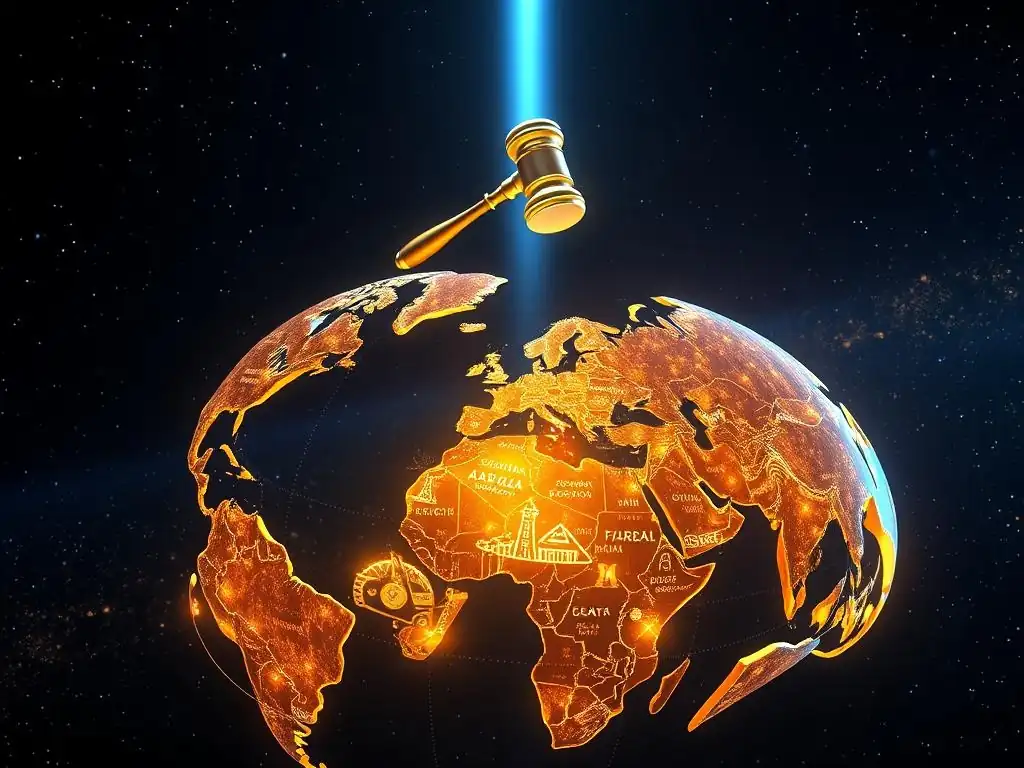
Welcome to Blockchain Trends, your compass in the ever-evolving world of decentralized innovation. Prepare to delve deeper than just cryptocurrency headlines; we're charting the course for blockchain's transformative impact across industries. Intrigued by the potential of digital assets but unsure of the legal landscape? Our in-depth analysis of Blockchain international asset regulation begins here, exploring the critical intersection of tokenization and global legal frameworks. Discover how international law is adapting to govern the future of digital asset transactions and unlock the potential that lies within. Read on to unravel the complexities and opportunities shaping this groundbreaking field…
-
Tokenization and International Law: Governing Global Digital Asset Transactions
- Introduction: The Rise of Tokenized Assets and the Need for International Legal Frameworks
- Understanding Tokenization: A Foundation for Cross-Border Asset Transactions
- The Current State of International Law and Digital Assets: A Fragmented Landscape
- Key Legal Challenges in Governing Global Digital Asset Transactions
- Potential Solutions and Approaches to International Blockchain Asset Regulation
- Case Studies: Examining Current Practices and Legal Battles
- The Future of Blockchain International Asset Regulation: Trends and Predictions
- Conclusion: Navigating the Complexities of Tokenization and International Law for a Decentralized Future
-
Frequently Asked Questions
- What is tokenization, and how does it relate to international asset regulation?
- Why is international asset regulation important in the context of blockchain technology?
- What are some of the key challenges in regulating tokenized assets internationally?
- How is DeFi (Decentralized Finance) affected by the lack of clear international asset regulation?
- What are some of the potential future directions for international asset regulation regarding blockchain?
- Final Reflection: Navigating the Tokenized Frontier
- Shape the Future of Digital Assets: Your Next Steps Await!
Tokenization and International Law: Governing Global Digital Asset Transactions
Introduction: The Rise of Tokenized Assets and the Need for International Legal Frameworks
The digital landscape is rapidly evolving, driven significantly by blockchain technology. One of its most transformative applications is tokenization – the process of converting rights to an asset into a digital token on a blockchain. This innovative approach allows for fractional ownership, increased liquidity, and greater accessibility to assets previously considered illiquid or difficult to transfer across borders. From real estate and fine art to corporate shares and intellectual property, assets are being digitized, creating a new class of global digital assets.
This proliferation of tokenized assets, however, operates within a legal vacuum when it comes to cross-border transactions. Traditional legal frameworks designed for physical assets or centralized financial systems often struggle to adequately address the unique characteristics of blockchain-based tokens, such as their borderless nature, immutability, and reliance on smart contracts. The lack of clear, harmonized international legal standards presents significant challenges for investors, businesses, and regulators alike, highlighting the urgent need for robust blockchain international asset regulation to govern these global digital asset transactions.
Understanding Tokenization: A Foundation for Cross-Border Asset Transactions
Defining Tokenization: Representing Assets on the Blockchain
Tokenization is the process of issuing a blockchain-based token that represents a real-world or digital asset. Essentially, it involves creating a digital twin of an asset on a distributed ledger.
This token serves as a programmable, verifiable, and transferable digital representation of the underlying asset or specific rights associated with it, such as ownership, usage rights, or revenue streams. Technical standards, like Ethereum's ERC-20 for fungible tokens (like currency or shares) and ERC-721 or ERC-1155 for non-fungible tokens (like unique art pieces or collectibles), provide the common language and rulesets necessary for these tokens to be created, managed, and traded across different platforms.
The core concept is to leverage the inherent properties of blockchain technology – transparency, security, and immutability – to manage asset ownership and transfer more efficiently. By encoding asset information and rules (like transfer restrictions or dividend distribution) directly into the token or associated smart contracts, tokenization streamlines processes that traditionally involve intermediaries, paper documentation, and manual verification. This digital representation facilitates easier division, transfer, and management of assets, paving the way for new forms of investment and global commerce.
Types of Tokenized Assets: Securities, Real Estate, Art, Intellectual Property
The scope of assets that can be tokenized is vast and continually expanding. Security tokens, representing ownership or economic rights in entities like companies or investment funds, are perhaps the most prominent example in the financial sector. These tokens are subject to securities regulations and are often issued through Security Token Offerings (STOs).
Real estate tokenization allows investors to buy fractional ownership in properties, making illiquid assets accessible to a broader global pool of investors; a single building valued at $50 million could be represented by 50 million tokens, each worth $1, allowing for micro-investments. Art and collectibles are tokenized as Non-Fungible Tokens (NFTs), proving unique ownership of digital or physical items. Intellectual property rights, licenses, and even carbon credits are also being explored for tokenization, enabling more granular trading and management of these assets.
The diversity of tokenized assets means that different regulatory considerations apply depending on the underlying asset type and the rights the token represents. A token representing a share in a company will likely fall under securities law, while a token representing ownership of a unique digital artwork might be treated differently. This inherent variability adds complexity to the challenge of developing consistent blockchain international asset regulation, as legal frameworks must accommodate this wide spectrum of asset classes.
The Benefits of Tokenization for Global Commerce: Increased Liquidity and Accessibility
Tokenization offers significant advantages that could reshape global commerce. One major benefit is increased liquidity for traditionally illiquid assets. Fractional ownership via tokens allows assets like high-value real estate or private equity stakes to be bought and sold in smaller units, attracting more investors and making it easier for existing owners to exit their positions. This enhanced liquidity can reduce the illiquidity discount often associated with such assets.
Furthermore, tokenization can lower transaction costs and increase accessibility. By removing intermediaries and automating processes through smart contracts, the costs associated with asset transfer, verification, and settlement can be significantly reduced. This opens up investment opportunities to a global audience, potentially democratizing access to asset classes previously limited to accredited investors or specific geographic regions.
For instance, a tokenized fund could theoretically accept investments from individuals worldwide, subject to compliance checks, whereas a traditional fund might face higher barriers. These benefits underscore the potential economic impact of tokenization, but also highlight the critical need for clear blockchain international asset regulation to ensure secure and compliant global markets.
The Current State of International Law and Digital Assets: A Fragmented Landscape
Existing International Legal Frameworks: UN Convention on Contracts for the International Sale of Goods (CISG), Hague Securities Convention
Existing international legal frameworks, such as the UN Convention on Contracts for the International Sale of Goods (CISG) and the Hague Securities Convention, provide some foundational principles for cross-border transactions but were not designed with digital assets or blockchain technology in mind. The CISG, for example, applies to contracts for the sale of goods between parties in countries that have ratified the convention. However, whether a digital asset, particularly a token representing an intangible right or a service, constitutes "goods" under the CISG is highly debatable and generally considered outside its scope.
The Hague Securities Convention (formally, the Convention on the Law Applicable to Certain Rights in Respect of Securities Held with an Intermediary) deals with the law governing rights in securities held through intermediaries. While security tokens are securities, the convention's focus on intermediaries (like brokers or custodians) holding securities on behalf of investors doesn't easily map onto the decentralized nature of some token holdings where investors hold tokens directly in their own wallets.
These frameworks, while valuable in their traditional domains, demonstrate the difficulty in retrofitting existing international law to the unique characteristics of tokenized assets and the blockchain infrastructure.
Challenges in Applying Existing Laws to Tokenized Assets: Jurisdiction and Enforcement
Applying traditional legal concepts like jurisdiction, situs (location of an asset), and enforcement to borderless, decentralized blockchain assets presents significant challenges. In a traditional transaction, jurisdiction is often determined by the location of the parties, the asset, or where the contract was formed or performed.
For a token on a blockchain, which exists simultaneously on potentially thousands of nodes globally, determining its "location" for legal purposes is complex. If a buyer in Germany purchases a tokenized security from a seller in Singapore, traded on a decentralized exchange hosted on servers in multiple countries, and the token represents a share in a company registered in Delaware, which country's laws apply?
Furthermore, enforcing judgments related to tokenized assets across borders is difficult. If a court in one country issues a ruling regarding the ownership or transfer of a token, its enforcement in another jurisdiction, especially against parties operating pseudonomously or across decentralized networks, is far from straightforward. This uncertainty regarding jurisdiction and enforcement is a major impediment to the development of robust blockchain international asset regulation and hinders the confidence required for widespread institutional adoption of tokenization for global transactions.
The Lack of Harmonization in National Regulations: A Barrier to Cross-Border Tokenization
Compounding the challenges at the international level is the significant divergence in how individual countries are regulating tokenized assets. Some countries, like Switzerland and Liechtenstein, have enacted specific legislation recognizing blockchain-based rights and tokenization (e.g., Switzerland's DLT Act). Others, like the United States, tend to apply existing securities and commodities laws, leading to ongoing debates and litigation over classification. The European Union is working towards a more harmonized approach with initiatives like the Markets in Crypto-Assets (MiCA) regulation, but implementation across member states still varies.
This patchwork of national regulations creates significant legal and operational hurdles for businesses operating with tokenized assets across borders. A token offering legal in one country might be deemed an unregistered security offering in another. Compliance requirements for AML/KYC, investor protection, and market conduct differ widely. This regulatory fragmentation increases costs, complexity, and legal risk, acting as a substantial barrier to seamless cross-border tokenization and the development of effective blockchain international asset regulation.
Key Legal Challenges in Governing Global Digital Asset Transactions
Defining the Legal Status of Tokenized Assets: Property Rights and Ownership
One of the foundational legal challenges is determining the precise legal status of a tokenized asset. Is a token representing a share in a company the same as the physical share certificate or the book-entry record? Does holding a token on a blockchain automatically equate to legal ownership of the underlying asset, or is it merely evidence of a contractual right? Legal systems around the world have different definitions of "property," and fitting intangible digital tokens into these definitions is complex.
Jurisdictions are grappling with this question. For example, under English law, there has been debate on whether crypto assets constitute property, with recent court decisions suggesting they can be treated as intangible property. Germany enacted legislation allowing electronic securities to be registered on a blockchain, granting them legal recognition akin to traditional securities. The lack of a globally accepted definition of a token's legal status creates uncertainty regarding property rights, transferability, and the rights of token holders in insolvency proceedings, making clear blockchain international asset regulation essential.
Cross-Border Recognition of Tokenized Assets: Enforceability of Smart Contracts
For tokenization to function effectively in global commerce, the legal recognition of tokenized assets and the enforceability of the smart contracts governing their transfer and use must be consistent across different jurisdictions. A smart contract is self-executing code where the terms of an agreement are directly written into lines of code. When triggered, the code automatically executes the agreed-upon actions, such as transferring tokens upon receipt of payment.
However, the legal status and enforceability of smart contracts vary significantly. Are they legally binding contracts? Can they modify or replace traditional legal agreements? What happens if there's a bug in the code or if the smart contract interacts with off-chain data feeds (oracles) that are manipulated? Ensuring that a smart contract executed in one country will be recognized and enforced by courts in another jurisdiction, particularly when dealing with complex transactions involving multiple parties and national laws, is a critical challenge for blockchain international asset regulation.
Anti-Money Laundering (AML) and Know Your Customer (KYC) Compliance in Tokenized Asset Transactions
Preventing the use of tokenized assets for illicit activities like money laundering and terrorist financing is a major focus for international bodies and national regulators. The Financial Action Task Force (FATF), a global money laundering and terrorist financing watchdog, has issued guidance requiring Virtual Asset Service Providers (VASPs), which can include platforms facilitating tokenized asset trading, to implement AML/KYC measures.
This includes verifying the identity of their customers and, crucially, complying with the "Travel Rule," which mandates VASPs to obtain and transmit required originator and beneficiary information in virtual asset transactions above a certain threshold (e.g., $1,000 USD or 1,000 EUR).
Implementing these requirements in the context of decentralized token transactions presents significant technical and operational challenges. How can a fully decentralized protocol comply with KYC? How can VASPs reliably share sensitive customer data across different blockchain networks and jurisdictions while respecting privacy laws? As the volume of cross-border tokenized asset transactions grows, effective and interoperable AML/KYC compliance mechanisms are paramount for legitimate market growth and robust blockchain international asset regulation.
Data Privacy and Security Regulations: GDPR and International Data Transfers
Tokenization and blockchain technology inherently involve handling data, which brings them under the purview of data privacy regulations like the European Union's General Data Protection Regulation (GDPR) or California's Consumer Privacy Act (CCPA). Blockchain's characteristic immutability, where data is difficult or impossible to delete, can conflict with the "right to erasure" or "right to be forgotten" under GDPR. Storing personal data on a public blockchain raises particular concerns.
Cross-border tokenized transactions often involve data transfers between different jurisdictions, each with its own data protection laws. Ensuring compliance with these varied regulations, especially when data is distributed across a global network of blockchain nodes, is complex. For example, if a tokenized asset transaction involves parties in the EU and the US, and personal data is recorded on a blockchain, both GDPR and US privacy laws might apply, requiring careful consideration of data minimization, consent, and transfer mechanisms. Navigating these data privacy landscapes is a key aspect of developing comprehensive blockchain international asset regulation.
Securities Laws and Tokenized Securities Offerings (STOs): Navigating International Compliance
Security tokens, which represent traditional securities like stocks, bonds, or investment fund units, are explicitly subject to securities regulations. However, the application of these laws to tokens issued and traded on blockchain networks is complex, particularly in a cross-border context. Determining whether a token constitutes a "security" varies significantly between jurisdictions, often based on tests like the Howey Test in the US (which looks for an investment of money in a common enterprise with an expectation of profits derived solely from the efforts of others) or similar criteria elsewhere.
Issuing a Security Token Offering (STO) globally requires navigating the securities laws of every jurisdiction where investors reside or where the offering is marketed. This means potentially complying with multiple registration requirements, disclosure rules, and investor suitability standards simultaneously. For instance, an STO targeting investors in the US, EU, and Singapore would need to satisfy the specific regulatory requirements of the SEC, ESMA (or national EU regulators), and the MAS, respectively. This multi-jurisdictional compliance burden is substantial and underscores the need for greater clarity and potential harmonization in blockchain international asset regulation concerning securities.
Potential Solutions and Approaches to International Blockchain Asset Regulation

Multilateral Agreements and Conventions: Towards a Unified Legal Framework
Given the borderless nature of blockchain and tokenized assets, the most effective approach to governing global digital asset transactions would ideally involve multilateral agreements or international conventions. Similar to how conventions like the CISG or treaties governing intellectual property rights were developed to facilitate cross-border commerce and protect rights internationally, a dedicated framework for tokenized assets could provide much-needed legal certainty. Such agreements could establish common definitions for different types of tokens, clarify jurisdictional rules for blockchain transactions, and set minimum standards for investor protection, AML/KYC, and data privacy.
While achieving a global consensus on complex legal issues is challenging and time-consuming, international cooperation is crucial. Initiatives within bodies like the United Nations Commission on International Trade Law (UNCITRAL) or the International Institute for the Unification of Private Law (UNIDROIT) could explore drafting model laws or conventions specifically addressing private international law issues related to digital assets. A unified approach would significantly reduce legal uncertainty and foster the growth of the global tokenized asset market by providing a predictable legal environment.
Model Laws and Guidelines for Tokenized Assets: Promoting Regulatory Convergence
In the absence of comprehensive multilateral conventions, the development of model laws and guidelines by international bodies or collaborations between national regulators can help promote regulatory convergence. Model laws provide templates that national legislatures can adapt and adopt, encouraging similar regulatory approaches across different countries without requiring formal treaty ratification. Examples include UNCITRAL's Model Law on Electronic Commerce, which has influenced e-commerce laws globally.
For tokenized assets, a model law could address issues such as the legal recognition of electronic signatures and records in a blockchain context, the enforceability of smart contracts, and rules for determining the location of a tokenized asset for legal purposes. Guidelines issued by international organizations, like those from FATF on virtual assets, also serve to steer national regulatory efforts towards common goals and standards, contributing to more consistent blockchain international asset regulation.
The Role of International Organizations: FATF, IOSCO, BIS
International organizations play a vital role in shaping blockchain international asset regulation by identifying risks, setting standards, and fostering cooperation among national authorities. The Financial Action Task Force (FATF) has been instrumental in pushing for global standards on AML/CFT for virtual assets and VASPs, issuing updated guidance in 2021 to clarify the application of its standards to various virtual asset activities and service providers.
The International Organization of Securities Commissions (IOSCO) focuses on securities markets and has published reports and recommendations on crypto-asset trading platforms and token offerings, aiming to ensure investor protection and market integrity. The Bank for International Settlements (BIS), through its various committees and innovation hub, researches and analyzes the impact of DLT and digital assets on the global financial system, informing central banks and financial regulators. These bodies provide platforms for dialogue, research, and standard-setting that are critical for building a coherent approach to blockchain international asset regulation.
Self-Regulatory Organizations (SROs) and Industry Standards: Shaping the Future of Tokenization Governance
Given the rapid pace of technological development and the complexities of regulating decentralized systems, self-regulatory organizations (SROs) and industry-led initiatives are emerging as important players in shaping governance frameworks for tokenized assets. Industry associations are developing codes of conduct, best practices, and technical standards for token issuance, trading, and custody. For example, industry bodies might establish standards for smart contract audits, data security protocols, or common approaches to token classification.
While SROs cannot replace governmental regulation, they can provide valuable expertise, promote responsible behavior within the industry, and develop agile standards that adapt quickly to technological changes. Collaboration between regulators and well-governed SROs can lead to more effective and practical blockchain international asset regulation, leveraging industry knowledge while ensuring public interest objectives are met.
The Importance of Technological Solutions: Blockchain-Based KYC/AML, Decentralized Identity Solutions
Technology itself can offer solutions to some of the regulatory challenges posed by tokenization. For instance, blockchain-based identity systems or verifiable credentials could facilitate compliance with KYC/AML requirements in a more efficient and privacy-preserving manner than traditional methods. Users could own and control their verified identity data, selectively sharing proofs of identity or accreditation without revealing underlying personal information, easing the burden of cross-border compliance for VASPs.
Similarly, technical standards for tokenized assets can embed compliance features directly into the token or smart contract level, automating certain regulatory checks. For example, a security token could be programmed to only be transferable to wallets that have been whitelisted after passing KYC/AML checks, or to restrict transfers to residents of certain jurisdictions. While these technological solutions require careful design and integration with legal frameworks, they represent a promising avenue for enabling compliant and efficient global digital asset transactions and supporting effective blockchain international asset regulation.
Case Studies: Examining Current Practices and Legal Battles
Case Study 1: The Ripple Lawsuit and its Implications for Cross-Border Payments
The ongoing legal battle between the U.S. Securities and Exchange Commission (SEC) and Ripple Labs Inc., concerning the digital asset XRP, offers a pivotal case study on applying existing securities laws to digital assets used in cross-border contexts. The SEC alleged that Ripple conducted an unregistered securities offering by selling XRP. Ripple argued that XRP functions as a currency and is used for facilitating faster, cheaper cross-border payments, distinguishing it from a security.
A key ruling in July 2023 partially favored Ripple, stating that programmatic sales of XRP on public exchanges did not constitute an investment contract (security), while direct sales to institutional investors did. This case highlights the significant global uncertainty surrounding the classification of digital assets and the challenges of applying national securities laws to assets traded globally across multiple platforms. The outcome and reasoning of this lawsuit are closely watched internationally as they could influence regulatory approaches to similar digital assets used for payments and value transfer, underscoring the complexities in establishing clear blockchain international asset regulation.
Case Study 2: FATF's Travel Rule Implementation Challenges for Virtual Asset Service Providers (VASPs)
The Financial Action Task Force (FATF)'s Recommendation 16, commonly known as the "Travel Rule," requires VASPs to obtain and transmit originator and beneficiary information for virtual asset transfers above a certain threshold. This rule aims to bring virtual asset transactions into line with requirements for traditional wire transfers, enhancing AML/CFT efforts. FATF set a deadline for countries to implement this rule and for VASPs to comply.
However, implementing the Travel Rule globally has faced significant hurdles. VASPs require technical solutions to securely transmit the required information between different, often competing, platforms operating in various jurisdictions. Different countries have adopted varying implementation timelines and specific requirements, leading to a fragmented landscape. Interoperability between different VASP compliance solutions remains a challenge, making seamless cross-border Travel Rule compliance difficult. This case study illustrates the practical difficulties in implementing international standards for blockchain-based activities and the need for technical and regulatory coordination to achieve effective blockchain international asset regulation.
Case Study 3: Jurisdictional Disputes Over DeFi Protocols and Smart Contract Governance
Decentralized Finance (DeFi) protocols, which rely on smart contracts and often lack a central governing entity or identifiable location, present unique jurisdictional challenges. These protocols enable activities like lending, borrowing, and trading directly between users via automated smart contracts on a blockchain. If something goes wrong – a smart contract bug causes losses, a protocol is exploited, or users engage in illicit activity – which jurisdiction's laws apply?
Determining who is responsible for the protocol (developers, token holders, users?) and where legal action can be taken is unclear. For example, disputes have arisen regarding the governance of decentralized autonomous organizations (DAOs) that manage some DeFi protocols; are DAO token holders liable for the protocol's actions? Courts are just beginning to grapple with these questions, often relying on limited precedents. The borderless and decentralized nature of DeFi makes applying traditional jurisdictional rules based on physical presence or incorporation difficult, posing a significant challenge for developing effective blockchain international asset regulation for decentralized applications.
The Future of Blockchain International Asset Regulation: Trends and Predictions
The Continued Evolution of International Legal Standards for Digital Assets
The trajectory of blockchain international asset regulation suggests a continued evolution towards more specific and potentially harmonized standards. While a single, comprehensive global convention may take years to materialize, expect to see ongoing efforts by international bodies like FATF, IOSCO, and potentially UNCITRAL to issue further guidance, recommendations, and possibly model legal provisions.
These efforts will likely focus on clarifying definitions, enhancing cross-border cooperation between regulators, and addressing key risks like AML/CFT, systemic stability, and investor protection. Regional initiatives, such as the EU's MiCA regulation, may also serve as templates or influence approaches in other parts of the world, fostering a degree of convergence.
Furthermore, expect national regulations to continue developing, informed by international discussions and domestic experiences. There may be a trend towards distinguishing more clearly between different types of tokens (e.g., utility, security, payment, stablecoin, NFT) and applying tailored regulatory approaches. The legal status of DAOs and the enforceability of smart contracts will also likely see increasing judicial and legislative attention in various jurisdictions.
The Growing Importance of Regulatory Clarity for Tokenization Adoption
The future widespread adoption of tokenization for mainstream financial activities and global commerce is heavily reliant on achieving greater regulatory clarity. Institutional investors, large corporations, and traditional financial institutions are hesitant to fully embrace tokenized assets due to the current legal uncertainties surrounding property rights, cross-border enforceability, compliance obligations, and potential regulatory changes.
As regulatory frameworks mature and become more predictable, the confidence required for significant capital flows into the tokenized asset market will increase. Clear rules regarding issuance, trading, custody, and settlement of tokenized securities, real estate, and other assets will unlock significant liquidity and efficiency gains. Therefore, the pace of innovation and adoption in the tokenization space will be closely tied to the progress made in establishing clear and workable blockchain international asset regulation.
The Potential for Blockchain to Facilitate International Legal Compliance
Ironically, the technology that creates many of the regulatory challenges also offers potential solutions for enhancing international legal compliance. Blockchain's inherent features – transparency (for public chains), immutability, and programmability – can be leveraged to build compliance directly into the infrastructure of global digital asset transactions.
For instance, regulatory requirements could potentially be encoded into smart contracts governing token transfers or embedded within decentralized identity solutions used for KYC/AML. Regulatory bodies could potentially use blockchain explorers to monitor transaction flows for suspicious activity. While significant technical and legal challenges remain in integrating these features effectively and ensuring privacy and security, the potential for blockchain technology to facilitate more compliant and transparent international asset transactions, rather than less, is a key area for future development and could significantly influence the shape of blockchain international asset regulation.
Tokenization represents a powerful technological shift with the potential to revolutionize global asset markets by increasing liquidity, accessibility, and efficiency. However, realizing this potential requires effectively navigating a complex and currently fragmented international legal landscape. The challenges are significant, ranging from defining the legal status of digital assets and ensuring cross-border enforceability of smart contracts to implementing global AML/KYC standards and harmonizing diverse national regulations.
Addressing these issues demands concerted effort from international bodies, national regulators, and the industry itself. While a fully unified global framework for blockchain international asset regulation may be a long-term goal, progress through multilateral cooperation, model laws, and industry standards is essential. As the technology and its applications continue to evolve, so too must the legal frameworks governing them, ultimately paving the way for a more secure, efficient, and compliant decentralized future for global digital asset transactions.
Frequently Asked Questions
What is tokenization, and how does it relate to international asset regulation?
Tokenization is the process of representing assets digitally on a blockchain. This process creates digital tokens that can be traded globally, raising concerns about international asset regulation due to the cross-border nature of transactions.
Why is international asset regulation important in the context of blockchain technology?
Because blockchain technology facilitates cross-border transactions of tokenized assets. This creates a need for harmonized international regulations to prevent illicit activities and ensure investor protection across different jurisdictions.
What are some of the key challenges in regulating tokenized assets internationally?
Challenges include the fragmented regulatory landscape, differing legal definitions of digital assets, and the difficulty in establishing jurisdiction over blockchain transactions that occur across multiple countries.
How is DeFi (Decentralized Finance) affected by the lack of clear international asset regulation?
DeFi, being inherently borderless, faces significant challenges. Regulatory uncertainty hinders adoption and innovation. It also creates opportunities for regulatory arbitrage, where entities seek out jurisdictions with the least stringent rules.
What are some of the potential future directions for international asset regulation regarding blockchain?
Future directions may involve international cooperation to develop common regulatory frameworks. These frameworks should focus on AML/KYC compliance, while also fostering innovation and protecting investors in the digital asset space.
Okay, here's a final reflection designed to close your article, "Tokenization and International Law: Governing Global Digital Asset Transactions," while optimizing for the keyword "Blockchain international asset regulation."
The exploration of tokenization and its intersection with international law underscores a critical juncture in global finance. The rise of blockchain technology demands a robust framework for international asset regulation, a necessity that transcends national borders and legal precedents. The complexities we've examined highlight the urgent need for collaborative governance to ensure fairness, security, and stability in the rapidly evolving digital asset landscape.
This journey into the intricacies of tokenization reveals its profound influence on the future of global commerce. The potential for blockchain to democratize access to assets and streamline international transactions is undeniable, yet the absence of clear regulatory guidelines poses significant risks. The future of law is not about predicting the future, but about enabling it.
This quote encapsulates the challenge before us: to proactively shape legal frameworks that foster innovation while mitigating potential harms in the tokenized world.
As we stand at the cusp of this digital revolution, let us not be passive observers. Consider how the principles of international cooperation and responsible innovation can be applied in your own spheres of influence. Reflect on the role you can play in advocating for clear, consistent, and equitable regulations that will unlock the transformative power of tokenization while safeguarding the integrity of the global financial system. The future of blockchain international asset regulation is not predetermined; it is being written now, and your voice matters.
Shape the Future of Digital Assets: Your Next Steps Await!
Thank you for exploring the complexities of tokenization and international law. We hope you've gained valuable insights into navigating the evolving landscape of global digital asset transactions. Now, let's turn that knowledge into action.
Are you ready to contribute to a more secure and compliant future for tokenization?
- Join the Conversation: Share this article on your favorite social media platform to spark discussion and raise awareness about the need for clear international regulations on digital assets.
- Advocate for Clarity: Contact your local representatives and share your thoughts on the importance of a comprehensive, internationally recognized legal framework to standardize digital asset tokenization.
- Explore Further: Dive deeper into specific case studies of cross-border tokenized asset transactions to better understand the real-world implications of current legal gaps.
What international law or regulation do you believe is most urgently needed to govern tokenized asset transactions? Share your thoughts in the comments below!
Leave a Reply