
Tokenization for SMEs: Accessing Capital and Streamlining Asset Management for Small Businesses

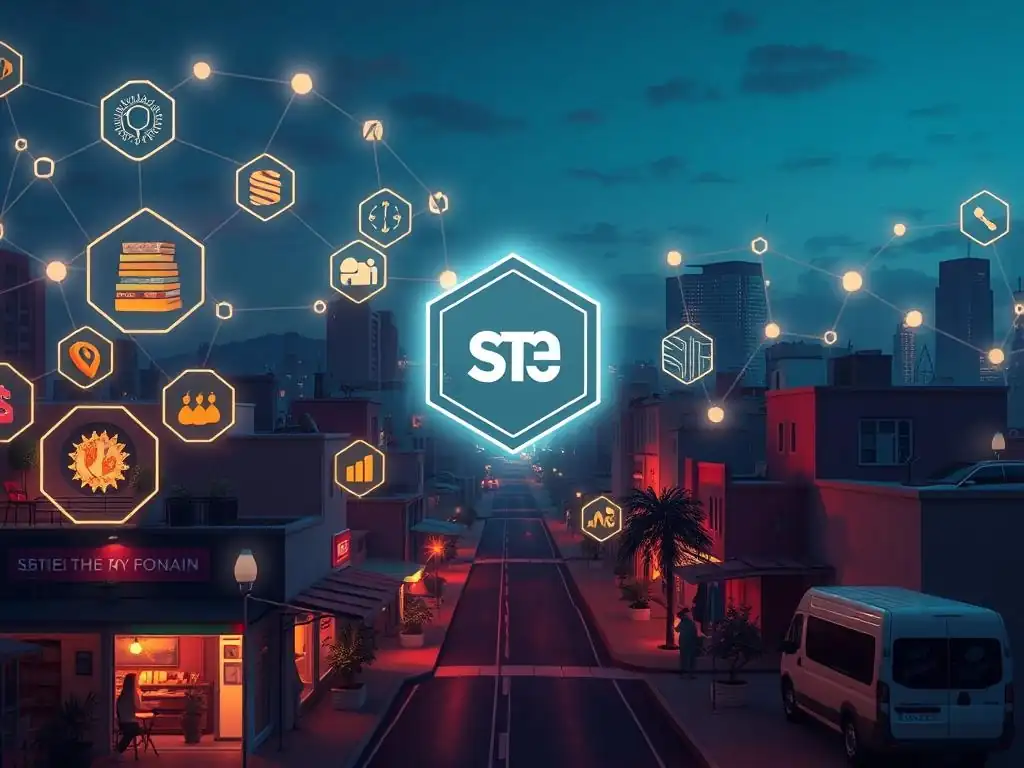
Welcome to Blockchain Trends, your guide to the evolving world of blockchain technology. Beyond the buzz of cryptocurrencies, discover the real-world applications transforming industries. Are you ready to unlock the potential of Blockchain SME asset tokenization? This article delves into how small and medium-sized enterprises are leveraging tokenization to access capital and revolutionize asset management. Explore how this innovative approach is paving the way for a more efficient and accessible financial future for SMEs.
Tokenization for SMEs: Accessing Capital and Streamlining Asset Management
- Blockchain Asset Tokenization: An Introduction
- Unlocking Capital Through Asset Tokenization
- Streamlining Asset Management with Blockchain Technology
- Practical Applications of Asset Tokenization
- Legal and Regulatory Considerations
- Case Studies: Successful Asset Tokenization Initiatives
- The Future of Asset Tokenization
- Getting Started: A Step-by-Step Guide
- Overcoming Implementation Challenges
-
Frequently Asked Questions
- What is asset tokenization and how does it benefit SMEs?
- How can blockchain technology facilitate asset tokenization for SMEs?
- What types of assets can SMEs tokenize using blockchain?
- What are the regulatory considerations surrounding blockchain SME asset tokenization?
- What are the key challenges SMEs might face when implementing blockchain asset tokenization?
- Final Reflection: Democratizing Finance Through Tokenization
- Unlock Your SME's Potential: Dive into Tokenization!
Blockchain Asset Tokenization: An Introduction
Understanding Tokenization and its Relevance
Tokenization is the process of converting rights to an asset into a digital token on a blockchain. This digital representation can then be easily stored, transferred, and recorded. Unlike traditional digital records, which are often centralized and prone to manipulation, blockchain tokens leverage the security, transparency, and immutability of distributed ledger technology.
This means that once an asset is tokenized, its ownership history and transactions are recorded on a decentralized network, providing a single source of truth. The relevance of tokenization extends far beyond cryptocurrencies; it offers a new paradigm for representing and managing value across diverse asset classes, from real estate and art to intellectual property and even future revenue streams.
The core concept involves creating a smart contract on a blockchain that defines the rules and properties of the token, linking it to the underlying asset. This contract governs how the token behaves – for instance, how it can be transferred, who can own it, and how it might distribute dividends or profits.
The token essentially represents a fractional ownership stake or a specific right associated with the asset. This ability to fractionalize large, illiquid assets is a significant advantage, lowering the barrier to entry for investors and increasing the potential pool of buyers or lenders, which is particularly relevant for facilitating Blockchain SME asset tokenization.
Why Tokenization Matters for Small and Medium Enterprises
Small and Medium Enterprises (SMEs) often face significant hurdles in accessing traditional capital markets and managing their assets efficiently. Tokenization offers a potential solution to these challenges by providing alternative funding avenues and modernizing asset management processes. For instance, tokenizing illiquid assets like machinery, inventory, or even contracts can unlock value that was previously difficult to leverage. This process, often referred to as Blockchain SME asset tokenization, can turn static balance sheet items into dynamic, tradable digital assets.
Furthermore, the transparency and automation capabilities inherent in blockchain technology can dramatically improve asset tracking, verification, and transfer. For an SME, this could mean faster audits, reduced administrative costs associated with asset documentation, and enhanced trust among stakeholders, including potential investors or partners. By embracing asset tokenization, SMEs can tap into global pools of capital and streamline internal operations, positioning themselves for growth in an increasingly digital economy. The efficiency gains from automated processes via smart contracts can also free up valuable resources, allowing SMEs to focus on their core business activities.
Unlocking Capital Through Asset Tokenization
Traditional Funding Challenges Faced by SMEs
SMEs routinely encounter difficulties when seeking traditional financing. Banks often perceive them as higher risk compared to larger corporations, leading to stricter lending criteria, higher interest rates, and requirements for substantial collateral. According to various reports, a significant percentage of SME loan applications are rejected, and even when approved, the process can be time-consuming, often taking weeks or months. For example, a 2023 survey indicated that around 30-40% of SMEs struggle to access the funding they need, often citing complex application processes and insufficient collateral as major barriers.
Equity financing through traditional means, such as venture capital or IPOs, is often inaccessible or unsuitable for the vast majority of SMEs due to high costs, stringent requirements, and the need for significant scale or growth potential. This leaves many small businesses reliant on personal savings, retained earnings, or limited bank loans, severely restricting their ability to invest in expansion, R&D, or simply manage cash flow during challenging periods. The reliance on these limited options highlights the critical need for alternative funding mechanisms that are more accessible and flexible for the SME sector.
Tokenization: Alternative Funding Options
Asset tokenization provides a novel pathway for SMEs to access capital by allowing them to fractionalize and sell ownership or revenue rights of their assets as digital tokens. Instead of taking out a large loan against a physical asset, an SME could tokenize a portion of its machinery, real estate, or even future receivables. These tokens can then be offered to a broader pool of investors, potentially including individuals or smaller investment firms who might not typically participate in traditional private equity or debt markets. This is a key benefit of Blockchain SME asset tokenization.
This approach can be more flexible than traditional debt or equity, allowing SMEs to raise capital tailored to specific needs or asset types. For instance, an SME could tokenize a specific piece of equipment to fund its upgrade, or tokenize a portion of future subscription revenue to smooth out cash flow. Platforms facilitating such token offerings can connect SMEs directly with investors globally, bypassing traditional financial intermediaries and potentially reducing associated costs and timeframes. While still an evolving market, this presents a significant opportunity for SMEs seeking non-dilutive or more accessible forms of financing.
Tokenizing Assets for Capital: A Practical Approach
The practical process of tokenizing assets for capital typically involves several steps. First, the SME must identify suitable assets or revenue streams that can be legally and technically tokenized. This requires due diligence on the asset's value, legal ownership, and any existing encumbrances. Next, the SME needs to choose a suitable blockchain platform (e.g., Ethereum, Polygon, Stellar) and a tokenization service provider or build the necessary infrastructure. This involves creating a smart contract that defines the token's characteristics, such as the total supply, fractional units, rights associated with ownership (e.g., revenue share, voting rights), and transfer restrictions.
Once the technical infrastructure is in place, the SME prepares the token offering. This involves creating documentation similar to a prospectus, detailing the asset being tokenized, the terms of the token sale, the use of proceeds, and the risks involved. Legal and regulatory compliance is crucial at this stage.
The tokens are then offered for sale, often through a dedicated platform or marketplace. Funds raised from the sale are transferred to the SME, and the tokens are distributed to investors. Post-tokenization, the smart contract manages the token's lifecycle, potentially automating dividend payments or other distributions based on the asset's performance, showcasing the power of Blockchain SME asset tokenization in action.
Streamlining Asset Management with Blockchain Technology
The Inefficiencies of Traditional Asset Management
Traditional asset management within SMEs often relies on disparate systems, manual processes, and paper-based records. Tracking the lifecycle of physical assets, managing depreciation schedules, conducting inventories, and verifying ownership can be labor-intensive, prone to errors, and lack real-time visibility. For example, maintaining an accurate, up-to-date register of all company assets, from IT equipment to machinery and vehicles, can be a significant administrative burden, especially as the business grows. This fragmentation makes it difficult to get a holistic view of the company's assets, assess their value accurately, or efficiently manage their maintenance and disposal.
Furthermore, transferring ownership of traditional assets typically involves complex legal procedures, extensive paperwork, and reliance on intermediaries, leading to delays and costs. Verifying the provenance or history of an asset can also be challenging, potentially involving sifting through historical documents and relying on third-party attestations. These inefficiencies not only consume valuable resources but can also introduce risks related to data accuracy, security, and compliance, hindering effective decision-making regarding asset utilization and investment.
Tokenized Assets: Enhancing Transparency and Traceability
Tokenizing assets on a blockchain fundamentally changes how they are managed by embedding ownership and transaction history directly into a secure, immutable digital ledger. Each token represents a specific asset or fractional share, and every transaction involving that token – its creation, transfer, or destruction – is recorded on the blockchain. This creates a transparent and verifiable history accessible to authorized parties. For a tokenized piece of machinery, for example, its entire lifecycle, from purchase (represented by the token's creation) to maintenance records (potentially linked or recorded via the token) and eventual sale, is chronicled on the ledger.
This inherent transparency and traceability significantly reduce the need for manual record-keeping and third-party verification. Stakeholders, such as auditors, regulators, or potential buyers, can verify the asset's history and ownership status by inspecting the blockchain data. This enhanced visibility minimizes the risk of fraud, disputes over ownership, and errors in asset records. The application of Blockchain SME asset tokenization in this context provides a single, reliable source of truth for all asset-related information, streamlining audits and improving overall operational efficiency.
Benefits of Blockchain-Based Asset Management
Implementing a blockchain-based system for asset management through tokenization offers numerous benefits for SMEs. Firstly, it dramatically improves efficiency by automating processes like ownership transfer and verification via smart contracts, reducing the time and cost associated with manual paperwork and intermediaries. Secondly, it enhances accuracy and reduces errors by providing a tamper-proof record of all asset-related transactions. This leads to more reliable asset valuations and depreciation calculations.
Thirdly, it increases security by distributing asset records across a decentralized network, making them resistant to single points of failure or malicious attacks on centralized databases. Fourthly, it provides greater transparency, allowing stakeholders to verify asset details and transaction histories independently. Finally, it unlocks liquidity for previously illiquid assets, as tokenization makes fractional ownership and transfer easier, potentially opening up new avenues for leveraging assets or facilitating easier sale when needed. For an SME, these benefits translate into reduced operational costs, improved financial reporting, and enhanced ability to manage and leverage their valuable assets effectively.
Practical Applications of Asset Tokenization
Real Estate Tokenization
Tokenizing real estate involves representing ownership rights or fractional shares of properties as digital tokens on a blockchain. For SMEs, this could apply to commercial property they own or wish to invest in. Traditionally, investing in commercial real estate requires significant capital, lengthy legal processes, and can be highly illiquid. Tokenization breaks down these barriers by allowing properties to be fractionalized into many tokens, each representing a small percentage of ownership. This lowers the entry point for investors and makes exiting an investment potentially faster and easier by selling tokens on a secondary market.
Consider an SME that owns its office building valued at $2 million. Instead of taking out a traditional mortgage or selling the entire property, the SME could tokenize 40% of the building's value into, say, 2 million tokens priced at $0.40 each. Selling these tokens could raise $800,000 in capital, which the SME could use for expansion or operations, while retaining control of the building.
Investors buying the tokens would receive a share of rental income or appreciation proportional to their token holdings. This application of Blockchain SME asset tokenization makes real estate investment more accessible and provides SMEs with a flexible way to unlock value from their property assets.
Tokenizing Intellectual Property
Intellectual Property (IP), such as patents, copyrights, trademarks, or creative works, represents significant value for many SMEs, particularly in technology, media, or creative industries. However, IP is often difficult to value, manage, and monetize effectively. Tokenization offers a way to represent ownership, usage rights, or revenue streams derived from IP as digital tokens. This can facilitate easier licensing, transfer of ownership, or even fractional investment in specific IP assets.
For instance, a software development SME might tokenize a patent for a unique algorithm. Tokens could represent a right to a percentage of future licensing revenue generated by that patent. Selling these tokens allows the SME to raise funds based on the potential future value of the IP without selling the patent outright or taking on debt.
Similarly, a media company could tokenize revenue shares from a film or music catalog. Tokenization provides a transparent and efficient mechanism for managing IP rights and unlocking its economic potential, making complex assets like patents or copyrights more tangible and tradable through Blockchain SME asset tokenization.
Supply Chain Optimization Through Tokenized Assets
Tokenization can also play a crucial role in optimizing supply chain management for SMEs, particularly when combined with asset tracking. By tokenizing goods or components as they move through the supply chain, businesses can create a transparent and immutable record of their journey. Each token could represent a specific batch of raw materials, a finished product, or even a container, with its associated data (origin, quality checks, location, ownership changes) recorded on the blockchain linked to the token.
This level of transparency helps SMEs verify the authenticity and provenance of goods, reduce the risk of counterfeiting, and improve inventory management. For example, a food production SME could tokenize batches of produce, tracking them from farm to table. Consumers or partners could scan a QR code linked to the token to see the product's history.
Furthermore, tokenizing invoices or purchase orders related to these assets can facilitate faster financing (e.g., invoice factoring) based on verifiable, tokenized records. While not strictly asset tokenization in the sense of ownership transfer, this application leverages tokens to represent and track physical assets within a process, enhancing efficiency and trust within the supply chain context relevant to many SMEs.
Legal and Regulatory Considerations

The legal and regulatory landscape surrounding asset tokenization is still evolving globally, presenting challenges for SMEs considering this path. Regulations vary significantly by jurisdiction and depend heavily on how the token is classified – for example, as a security, a commodity, or a utility token. Issuing tokens that are deemed securities typically triggers stringent requirements comparable to traditional securities offerings, including registration, disclosure obligations, and investor protection rules. Navigating these complex rules requires careful legal counsel to ensure compliance.
SMEs must identify the relevant regulatory bodies in their operating region and target markets and understand their stance on tokenized assets. For instance, regulations under bodies like the SEC in the United States, ESMA in the European Union, or similar authorities elsewhere will dictate the legal framework. Failing to comply with securities laws or other financial regulations can result in significant penalties, fines, and legal challenges. Therefore, conducting thorough legal due diligence is a non-negotiable first step for any SME exploring Blockchain SME asset tokenization.
Compliance Requirements
Compliance requirements for asset tokenization involve several key areas. Firstly, Anti-Money Laundering (AML) and Know Your Customer (KYC) regulations are paramount. Platforms and issuers involved in token sales must implement robust procedures to verify the identity of investors and monitor transactions for suspicious activity, especially if the tokens are offered publicly or to a broad investor base. These requirements are designed to prevent the use of tokenization for illicit financial activities.
Secondly, depending on the nature of the asset and the token structure, ongoing reporting and disclosure obligations may apply, similar to those for publicly traded securities. This could include regular updates on the performance of the underlying asset, financial reports, or notification of material events. Thirdly, data privacy regulations, such as GDPR in Europe, must be considered, particularly concerning the collection and storage of investor data. Ensuring compliance with these varied requirements adds complexity but is essential for the legitimacy and long-term viability of any Blockchain SME asset tokenization initiative.
Mitigating Risks
SMEs venturing into asset tokenization face several risks that need proactive mitigation. Regulatory risk is significant, given the evolving legal landscape; staying updated and obtaining expert legal advice is crucial. Market risk exists if there is insufficient investor demand for the tokenized asset or if the value of the underlying asset declines. Conducting thorough market research and structuring the token offering attractively are key mitigation strategies.
Technical risks, such as smart contract vulnerabilities or platform security breaches, can lead to loss of assets or investor funds. Engaging experienced blockchain developers and security auditors, and choosing reputable tokenization platforms with proven security records are essential. Operational risks include managing the token lifecycle, handling investor relations, and ensuring ongoing compliance.
Establishing clear internal processes and potentially partnering with specialized service providers can help manage these. Finally, reputational risk is high if the project fails or is associated with non-compliance or security issues. Transparency, clear communication with investors, and a commitment to best practices in Blockchain SME asset tokenization are vital for building trust.
Case Studies: Successful Asset Tokenization Initiatives
[Case Study 1]: Manufacturing SME Tokenizing Inventory for Working Capital
A hypothetical manufacturing SME, "Precision Parts Co.", faced seasonal cash flow challenges due to large inventory holdings required before peak production periods. Traditional bank lines of credit were expensive and required extensive collateral. Precision Parts decided to explore Blockchain SME asset tokenization of a portion of its finished goods inventory, valued at approximately $1 million. They partnered with a tokenization platform to issue "Inventory Tokens" representing a claim on a specific, segregated batch of finished parts.
They tokenized 50% of this inventory, issuing 500,000 tokens priced at $1 each, representing $500,000 in value. These tokens were sold to a small group of accredited investors via a private offering facilitated by the platform.
The smart contract ensured that as the underlying inventory was sold through normal business operations, a portion of the revenue was automatically directed to a smart contract wallet, which then distributed the funds proportionally to token holders on a quarterly basis, essentially providing investors with a revenue share tied to inventory turnover. This initiative successfully raised $480,000 (after minor platform fees) within a month, providing Precision Parts Co. with the necessary working capital without debt or equity dilution, and demonstrating a practical application of tokenizing a tangible SME asset.
[Case Study 2]: Renewable Energy SME Tokenizing Future Revenue Streams
"GreenWatts Solutions," a renewable energy SME specializing in installing solar panels for commercial buildings, sought funding to acquire larger projects requiring significant upfront investment. Traditional project financing was complex and slow. GreenWatts decided to tokenize a portion of the future revenue streams generated by long-term power purchase agreements (PPAs) from recently completed solar installations. They tokenized 15% of the projected revenue from two large projects over the next five years, estimated to be worth $1.2 million.
They issued "Solar Revenue Tokens" via a public offering on a regulated tokenization platform, targeting impact investors and individuals interested in renewable energy. The smart contract was programmed to receive a percentage of the actual revenue generated by the PPAs each month and automatically distribute it to token holders. The offering successfully raised $1.1 million, attracting over 200 investors globally.
This allowed GreenWatts Solutions to secure funding for two new projects immediately. This case illustrates how Blockchain SME asset tokenization can unlock capital from intangible future revenue streams, enabling SMEs in sectors like renewable energy to scale more rapidly than traditional financing might allow.
Lessons Learned from Successful Tokenization Projects
Successful Blockchain SME asset tokenization projects often share common characteristics. Firstly, clear identification and valuation of the underlying asset or revenue stream are paramount. Investors need confidence in what their token represents and its potential value. Precision Parts Co.'s success relied on accurately valuing its inventory and establishing a clear link between inventory sales and token holder returns.
Secondly, choosing the right platform and legal structure is critical. GreenWatts Solutions' public offering required a platform capable of handling regulatory compliance for retail investors. Partnering with experienced legal counsel early in the process is essential to navigate the complex regulatory landscape and structure the offering correctly. Finally, transparent communication with potential investors about the risks and potential returns is vital for building trust and achieving funding goals. Both cases demonstrate that while the assets and structures vary, a solid foundation of asset clarity, legal compliance, and investor trust is key to unlocking capital through tokenization.
The Future of Asset Tokenization
Emerging Trends
Several emerging trends are shaping the future of Blockchain SME asset tokenization. One significant trend is the increasing clarity and development of regulatory frameworks in various jurisdictions. As regulators gain a better understanding of tokenized assets, clearer guidelines are being established, which should reduce uncertainty and encourage broader adoption by institutional investors and traditional financial players. This regulatory evolution is crucial for creating a stable environment for SMEs to confidently engage with tokenization.
Another trend is the development of more sophisticated and user-friendly tokenization platforms. These platforms are lowering the technical barrier to entry, offering standardized templates and compliance tools that make it easier for non-technical SMEs to issue and manage tokens. Furthermore, the integration of tokenization with other technologies like Decentralized Finance (DeFi) protocols could open up new possibilities for tokenized assets to be used as collateral or traded on decentralized exchanges, potentially increasing liquidity and utility for SME-issued tokens.
Predictions for Growth
Market predictions suggest significant growth in the asset tokenization space over the next decade, with estimates varying widely but generally pointing towards a multi-trillion dollar market cap. While initial growth has been dominated by larger, more liquid assets like real estate and financial instruments, the increasing focus on enterprise applications and the development of SME-focused solutions indicate that Blockchain SME asset tokenization is poised for substantial expansion.
As the technology matures, costs decrease, and regulatory clarity improves, tokenization is expected to become a more mainstream financing and asset management tool for SMEs. Predictions often highlight areas like fractional ownership of tangible assets, supply chain finance tokenization, and IP monetization as key growth drivers within the SME sector. While precise figures are hard to predict, the underlying drivers – the need for alternative capital access and efficient asset management – suggest a strong trajectory for tokenization adoption by small and medium businesses globally.
Preparing for the Tokenization Revolution
SMEs that want to capitalize on the future of asset tokenization should begin preparing now. The first step is education: understanding what tokenization is, how it works, and its potential applications for their specific business model and assets. This involves researching the technology, exploring different platforms, and learning about the experiences of early adopters.
Secondly, SMEs should assess their own assets and capital needs to identify potential opportunities for tokenization. Are there illiquid assets on the balance sheet that could be tokenized? Are there future revenue streams that could be leveraged? Do current asset management processes suffer from significant inefficiencies that tokenization could address? Finally, building relationships with legal experts specializing in blockchain and digital assets, as well as exploring potential partnerships with tokenization platforms or service providers, will be crucial steps in laying the groundwork for a successful Blockchain SME asset tokenization strategy when the time is right.
Getting Started: A Step-by-Step Guide
Assessing Suitability for Tokenization
Before embarking on a tokenization journey, an SME must carefully assess whether it's a suitable path for their specific needs and assets. This involves a thorough internal review. First, identify the problem you are trying to solve: Is it accessing capital, improving asset management, or both? Tokenization should be a solution to a real business challenge, not just a pursuit of a trendy technology.
Next, evaluate potential assets for tokenization. Are they legally owned by the SME? Can their value be reasonably determined? Are there any existing liens or encumbrances? Consider both tangible assets (like real estate or machinery) and intangible ones (like IP or revenue contracts). Also, assess the potential investor base for your tokenized asset – is there a market for fractional ownership or revenue shares of this type of asset? A realistic assessment of these factors is crucial for determining the feasibility and potential success of Blockchain SME asset tokenization.
Choosing the Right Blockchain Platform
Selecting the appropriate blockchain platform is a critical decision that impacts the technical feasibility, cost, security, and liquidity of the tokenized asset. Different blockchains offer varying features, consensus mechanisms, transaction speeds, and fee structures. Public blockchains like Ethereum or Polygon offer high decentralization and access to broad networks but can have variable transaction costs (gas fees). Enterprise-focused blockchains like Hyperledger Fabric or Corda might be suitable for private, permissioned networks focusing on specific industry consortia or B2B applications, offering more control and predictable costs.
Factors to consider include the platform's security track record, scalability, regulatory compliance features, the cost of token issuance and transactions, and the availability of developer tools and support. Furthermore, consider the ecosystem around the platform – are there existing marketplaces or protocols that could facilitate secondary trading of the tokenized assets? The choice of platform significantly influences the technical underpinnings of the Blockchain SME asset tokenization process.
Building Your Tokenization Strategy
Developing a comprehensive tokenization strategy involves defining the goals, scope, and execution plan for the initiative. This goes beyond just the technical process of creating tokens. The strategy should clearly articulate what assets are being tokenized, the structure of the token offering (e.g., fractional ownership, revenue share), the target investor audience (e.g., accredited investors, retail), and the mechanism for the token sale.
The strategy must also include a detailed legal and compliance plan, outlining how the SME will navigate relevant regulations (securities law, AML/KYC, data privacy). A marketing and investor relations plan is also essential to attract investors and communicate the value proposition effectively. Finally, the strategy should address the ongoing management of the tokenized asset and tokens post-issuance, including how revenue distribution will be handled (if applicable) and how the SME will interact with token holders. A well-defined strategy is the roadmap for successful Blockchain SME asset tokenization.
Overcoming Implementation Challenges
Addressing Technical Hurdles
Implementing Blockchain SME asset tokenization can involve technical hurdles, particularly for businesses without in-house blockchain expertise. Creating smart contracts requires specialized development skills and rigorous auditing to prevent vulnerabilities. Integrating the blockchain platform with existing business systems (e.g., accounting software, asset management databases) can also be complex.
SMEs can address these challenges by partnering with experienced tokenization platforms or blockchain development firms. These providers often offer pre-built smart contract templates, APIs for integration, and technical support. Utilizing established, audited tokenization protocols can also reduce the risk of smart contract errors. Investing in or outsourcing technical expertise ensures that the tokenization process is secure, efficient, and correctly implemented, forming a solid technical foundation for the tokenized assets.
Building Trust and Adoption
One of the significant challenges for any new financial or technological approach is building trust and encouraging adoption among investors, partners, and even internal stakeholders. Asset tokenization, particularly for less common assets or smaller issuers like SMEs, requires demonstrating legitimacy and security. Transparency is key; clearly communicating the details of the underlying asset, the token structure, and the legal framework helps build investor confidence.
Utilizing reputable platforms with strong security track records and undergoing independent audits of smart contracts can also bolster trust. For internal adoption, educating employees about the benefits and processes of tokenization is important. Highlighting successful case studies and demonstrating clear value propositions, such as improved access to capital or streamlined operations through Blockchain SME asset tokenization, can help overcome skepticism and drive broader acceptance.
Securing Tokenized Assets: Best Practices
Securing tokenized assets involves protecting both the underlying asset and the digital tokens themselves. For the underlying physical or intangible asset, traditional security measures remain relevant (e.g., physical security for real estate, legal protection for IP). However, the tokens, being digital, require robust cybersecurity practices. This includes securing the private keys that control the tokens, which are equivalent to owning the asset.
Best practices for securing tokens include using secure, multi-signature wallets, storing private keys offline in hardware wallets where possible, and implementing strong access controls. For platforms or SMEs managing tokens on behalf of others, regular security audits, penetration testing, and compliance with industry security standards (like ISO 27001) are essential. Educating token holders on basic crypto security practices is also important if tokens are held in individual wallets. A multi-layered security approach, combining traditional and blockchain-specific measures, is crucial for the integrity of Blockchain SME asset tokenization.
Frequently Asked Questions
What is asset tokenization and how does it benefit SMEs?
Asset tokenization is the process of representing ownership rights to an asset (like real estate or intellectual property) as digital tokens on a blockchain. This allows SMEs to fractionalize assets, making them more accessible to a wider pool of investors and unlocking new capital.
How can blockchain technology facilitate asset tokenization for SMEs?
Blockchain provides a secure, transparent, and immutable ledger for tracking ownership and transactions related to tokenized assets. This enhanced transparency can increase investor confidence and reduce administrative overhead for SMEs.
What types of assets can SMEs tokenize using blockchain?
SMEs can tokenize a wide range of assets, including real estate, intellectual property (patents, trademarks), accounts receivable, and even future revenue streams, depending on legal and regulatory frameworks.
What are the regulatory considerations surrounding blockchain SME asset tokenization?
Regulations are still evolving, but generally, tokenized assets are subject to securities laws. SMEs need to ensure compliance with KYC/AML requirements, securities regulations, and tax laws in relevant jurisdictions.
What are the key challenges SMEs might face when implementing blockchain asset tokenization?
Challenges include the initial setup costs, understanding complex legal and regulatory landscapes, ensuring adequate cybersecurity, and educating potential investors about the benefits and risks of blockchain-based tokenized assets.
Okay, here's a final reflection crafted to fit your article's theme, structure, and keyword goals:
Final Reflection: Democratizing Finance Through Tokenization
The journey of exploring Blockchain SME asset tokenization reveals a powerful shift in how small businesses can access capital and manage their assets. No longer confined by traditional financial gatekeepers, SMEs now have the potential to unlock unprecedented opportunities for growth and innovation through this transformative technology. The implications are profound, suggesting a future where financial inclusion is not just a buzzword, but a tangible reality for entrepreneurs worldwide.
The ongoing influence of tokenization on the SME landscape is undeniable, reshaping the very fabric of how small businesses interact with the financial world. It's about more than just raising funds; it's about building stronger communities and fostering greater transparency. As the saying goes, The best way to predict the future is to create it.
Tokenization empowers SMEs to actively shape their financial destinies and contribute to a more equitable and dynamic global economy.
Now, consider the possibilities. How can you, as an entrepreneur or investor, embrace the potential of blockchain SME asset tokenization? Reflect on the ways this technology can unlock new avenues for growth, streamline your operations, and connect you with a wider network of supporters. The future of SME finance is being written today – be a part of the revolution and help build a more inclusive and prosperous world for all.
Unlock Your SME's Potential: Dive into Tokenization!
Thank you for exploring how tokenization can revolutionize your small business. You've gained valuable insights into accessing capital and streamlining asset management. Now, it's time to put that knowledge into action.
Start by researching platforms tailored for small and medium-sized enterprises that facilitate tokenization. Consider experimenting with fractionalizing one of your existing assets to create a test token—think creatively about assets that could benefit from this approach.
Share this article with other business owners who might find it useful, and help foster a community of innovative SMEs.
What is the first asset in your business you'd consider tokenizing, and why? Share your thoughts in the comments below!
Leave a Reply