
Tokenization Trends to Watch in 2024: Innovations and Growth Drivers in the Industry


Welcome to Blockchain Trends, your definitive guide to understanding the revolutionary impact of blockchain technology! Forget just cryptocurrencies; we're diving deep into the real-world applications shaping our future. Curious about how blockchain is transforming industries? Our latest article unpacks crucial insights into Blockchain tokenization investment trends, revealing the innovations and growth drivers you need to know in 2024. Discover how tokenization is unlocking new opportunities and reshaping the financial landscape – the potential is enormous, and the possibilities are just beginning.
- Blockchain Tokenization Investment Trends: What to Watch in 2024
- Key Tokenization Trends Driving Growth in 2024
- Innovations in Blockchain Tokenization Technology
- Navigating the Challenges and Risks of Tokenization Investments
- The Future of Blockchain Tokenization Investment
- Conclusion: Capitalizing on Blockchain Tokenization Investment Trends
-
Frequently Asked Questions
- What exactly is blockchain tokenization and why is it gaining traction?
- How are DeFi platforms utilizing blockchain tokenization?
- What are the key enterprise applications of blockchain tokenization beyond finance?
- What are some of the regulatory challenges surrounding blockchain tokenization investment trends?
- What are some future trends to watch related to blockchain tokenization investment trends?
- Final Reflection: Embracing the Tokenized Future
- Unlock the Future: Start Your Tokenization Journey Today!
Blockchain Tokenization Investment Trends: What to Watch in 2024
Defining Tokenization: A Primer for Blockchain Investors
Tokenization, in the context of blockchain technology, is the process of converting rights to an asset into a digital token on a blockchain network. This digital representation can then be easily stored, transferred, and recorded, offering enhanced liquidity and transparency compared to traditional asset management. The token itself can represent ownership, fractional ownership, or specific rights associated with the underlying asset, which can range from real estate and art to commodities and intellectual property. Understanding this foundational concept is crucial for navigating the evolving landscape of blockchain tokenization investment trends.
The core mechanism involves issuing tokens on a blockchain, such as Ethereum, Polygon, or Solana, which are linked to the underlying asset through legal frameworks and smart contracts. These smart contracts automate the transfer of ownership and enforce rules governing the token, such as distribution of dividends from a tokenized property or royalties from tokenized music rights. This digital abstraction simplifies complex ownership structures and enables novel forms of investment and asset management, significantly impacting blockchain tokenization investment strategies.
The Growth of Real-World Asset (RWA) Tokenization
Real-World Asset (RWA) tokenization has emerged as a significant driver in the blockchain space, extending the benefits of distributed ledger technology beyond native digital assets like cryptocurrencies. This involves issuing tokens that represent tangible or intangible assets existing outside the blockchain world, such as real estate, corporate debt, fine art, or even carbon credits.
The market for tokenized RWAs is gaining substantial traction, with projections suggesting significant growth. For instance, a report by BCG and Polymath estimated the potential size of the tokenized illiquid asset market to reach $16.1 trillion by 2030, highlighting the immense potential attracting blockchain tokenization investment.
This growth is fueled by the promise of increased liquidity for historically illiquid assets, fractional ownership opportunities that lower investment barriers, and enhanced transparency provided by the blockchain ledger. Early examples include platforms tokenizing luxury real estate, allowing investors to buy fractions of properties, or projects tokenizing debt instruments, making corporate bonds accessible to a wider range of investors globally. These developments are fundamentally reshaping how investors approach asset classes and are a key area within current blockchain tokenization investment trends.
Tokenization Beyond Finance: Exploring Diverse Applications
While financial assets are a primary focus, tokenization's potential extends far beyond traditional finance, unlocking new opportunities and use cases across various industries. Supply chain management, for example, can utilize tokens to represent goods as they move through the chain, providing immutable tracking and proof of ownership at each step. This enhances transparency, reduces fraud, and streamlines logistics. In the gaming industry, non-fungible tokens (NFTs) are used to represent unique in-game assets, allowing players true ownership and the ability to trade these items outside the game environment, creating new digital economies.
Other applications include tokenizing intellectual property rights, enabling creators to fractionalize ownership and distribute royalties automatically via smart contracts, or tokenizing carbon credits to facilitate more efficient and transparent environmental markets. The healthcare sector is exploring tokenization for patient data, allowing individuals to control access to their health records while potentially earning tokens for sharing anonymized data for research. These diverse applications illustrate the broad transformative power of tokenization, influencing where blockchain tokenization investment is flowing.
Key Tokenization Trends Driving Growth in 2024
Trend 1: Increased Institutional Adoption of Tokenized Assets
Institutional players, including large banks, asset managers, and corporations, are increasingly exploring and adopting tokenized assets, marking a significant shift in the market. This trend is driven by the potential for increased efficiency, reduced costs, and access to new pools of liquidity offered by blockchain technology.
Major financial institutions have launched pilot programs and platforms to issue and manage tokenized bonds, funds, and other securities. For example, in late 2022, the European Investment Bank (EIB) issued a £50 million digital bond on a private blockchain, demonstrating the viability of tokenized debt instruments for large-scale financing, signaling growing institutional interest in blockchain tokenization investment.
This institutional embrace is crucial for the maturation of the tokenization market. Their participation brings significant capital, expertise, and credibility, which can help overcome challenges related to liquidity and market acceptance. As more regulated entities enter the space, they contribute to developing robust infrastructure and clear operational standards, paving the way for wider adoption and solidifying tokenized assets as a legitimate asset class within traditional finance. This trend is a major factor influencing blockchain tokenization investment strategies in 2024.
Impact of Regulatory Clarity on Institutional Investment
Regulatory clarity is a critical catalyst for increased institutional adoption of tokenized assets. Institutions operate under strict compliance requirements, and uncertainty regarding the legal status, ownership rights, and regulatory treatment of tokenized assets has historically been a barrier. As jurisdictions globally begin to provide clearer guidelines and frameworks for digital assets, it significantly reduces the perceived risk for these entities. For instance, countries like Switzerland and Germany have introduced specific legislation addressing blockchain and tokenized securities, providing a clearer path for regulated financial institutions to engage.
The development of comprehensive regulatory frameworks helps define how tokenized securities are classified, how offerings must be conducted (e.g., through Security Token Offerings or STOs), and how trading platforms must operate. This clarity instills confidence in institutional investors, allowing them to allocate capital to tokenized assets within established legal boundaries. The ongoing progress in regulatory environments worldwide is expected to accelerate institutional participation in the blockchain tokenization investment space throughout 2024.
Tokenization as a Bridge to Traditional Finance
Tokenization is increasingly viewed as a crucial bridge connecting the traditional financial system with the decentralized world of blockchain. By representing traditional assets as digital tokens on a blockchain, it becomes possible to leverage the benefits of decentralized finance (DeFi) and distributed ledger technology while remaining within familiar asset classes and regulatory structures. This integration allows for innovations such as instant settlement, automated compliance via smart contracts, and 24/7 trading of assets that were previously limited to specific market hours.
Financial institutions are exploring tokenization to streamline processes like securities clearing and settlement, potentially reducing the multi-day cycles currently involved in traditional markets to near-instantaneous transactions. This efficiency gain, coupled with the ability to create more liquid markets for traditionally illiquid assets, makes tokenization a compelling proposition for modernizing financial infrastructure. The convergence facilitated by tokenization is a key theme driving blockchain tokenization investment and innovation in the financial sector.
Trend 2: Advancements in Tokenization Infrastructure and Platforms
The technological backbone supporting asset tokenization is rapidly evolving, with significant advancements in infrastructure and platform capabilities. New protocols and platforms are emerging that offer more efficient, secure, and scalable ways to issue, manage, and trade tokenized assets. These advancements address previous limitations related to throughput, cost (e.g., high gas fees on some networks), and complexity, making tokenization more accessible and practical for a wider range of assets and users. Improved interoperability solutions are also being developed to allow seamless transfer and interaction between different blockchain networks and tokenization platforms.
Innovations include the development of specialized blockchain networks optimized for asset tokenization and security tokens, offering features like built-in compliance modules and identity management layers. Furthermore, platforms are incorporating advanced cryptographic techniques and privacy-preserving technologies to meet the stringent requirements of institutional investors and regulated markets. This continuous improvement in the underlying technology is essential for scaling the tokenization market and supporting increased blockchain tokenization investment.
The Rise of User-Friendly Tokenization Platforms
A key development driving broader adoption is the emergence of more user-friendly tokenization platforms. These platforms are simplifying the complex process of issuing and managing tokenized assets, making it accessible not only to large corporations but also to small and medium-sized enterprises (SMEs) and individual asset owners. They often provide end-to-end solutions, covering everything from legal structuring and token issuance to investor management and secondary trading capabilities.
These platforms abstract away much of the underlying blockchain complexity, offering intuitive interfaces and standardized templates for different asset classes. This lowers the technical barrier to entry, enabling more entities to explore tokenization as a fundraising mechanism or a way to unlock liquidity from their assets. The availability of such accessible tools is democratizing access to tokenization, opening up new avenues for blockchain tokenization investment in smaller, niche asset classes.
Enhanced Security and Compliance Solutions for Tokenized Assets
Security and compliance are paramount concerns for tokenized assets, especially those representing regulated securities or valuable real-world property. Significant advancements are being made in developing robust security measures and compliance solutions specifically tailored for tokenization platforms and tokenized assets. This includes enhanced smart contract auditing practices, multi-signature security protocols for asset custody, and the integration of identity verification (KYC/AML) procedures directly into token transfer mechanisms.
Compliance solutions are evolving to meet diverse regulatory requirements across different jurisdictions and asset types. Platforms are integrating features like whitelisting of approved investors, transfer restrictions based on regulatory rules, and automated reporting capabilities. These enhanced security and compliance features build trust and mitigate risks, which is essential for attracting both institutional and retail blockchain tokenization investment.
Trend 3: Expansion of DeFi Applications for Tokenized RWAs
The integration of tokenized Real-World Assets (RWAs) into Decentralized Finance (DeFi) protocols is a major trend unlocking new possibilities for investors. Traditionally, DeFi has focused on native digital assets like cryptocurrencies and stablecoins. However, bringing tokenized assets like real estate, invoices, or commodities into DeFi expands the pool of assets available for activities like lending, borrowing, and yield farming. This creates novel investment strategies and increases the utility of tokenized RWAs beyond simple ownership transfer.
Platforms are emerging that allow tokenized assets to be used as collateral in DeFi lending protocols, enabling asset owners to borrow stablecoins or other cryptocurrencies against their tokenized property or other assets without selling them. This provides a new source of liquidity for asset owners and diversification opportunities for DeFi lenders. The potential for integrating a vast array of global assets into the efficient, transparent, and permissionless environment of DeFi is significant, driving interest in blockchain tokenization investment within this sector.
Integrating Tokenized Assets into DeFi Lending and Borrowing Protocols
The integration of tokenized RWAs into DeFi lending and borrowing protocols is a key area of innovation. Protocols are being developed or adapted to handle the unique characteristics of tokenized assets, including their valuation, legal enforceability, and liquidation procedures, which differ significantly from volatile cryptocurrencies. For example, a protocol might allow a user to deposit tokenized real estate as collateral to borrow stablecoins, with the terms and conditions governed by smart contracts.
Challenges remain, particularly around reliable valuation of illiquid RWAs in real-time and the legal complexities of enforcing collateral liquidation in a decentralized environment. However, ongoing development is addressing these issues through mechanisms like decentralized oracles for price feeds and legal wrappers that connect the on-chain token to the off-chain legal rights. Successful integration could unlock trillions of dollars worth of global assets for use within DeFi, profoundly impacting blockchain tokenization investment flows.
Yield Generation Opportunities with Tokenized Real Estate and Commodities
Tokenizing assets like real estate or commodities opens up new avenues for yield generation within the DeFi ecosystem. Investors can potentially earn yield by providing liquidity for pools of tokenized assets, participating in lending protocols where tokenized RWAs are used as collateral, or through other structured finance products built on top of tokenized assets. For instance, owning fractional tokens of a rental property could allow investors to automatically receive rental income distributions via smart contracts.
Similarly, tokenized commodities or invoices could be used in trade finance protocols, allowing investors to provide capital against these assets and earn interest. These opportunities allow investors to gain exposure to the yield potential of real-world assets through the efficiency and transparency of blockchain, contributing to the appeal of blockchain tokenization investment focused on income generation.
Trend 4: The Convergence of Tokenization and AI
The convergence of tokenization and Artificial Intelligence (AI) is an emerging trend with significant potential to enhance the efficiency, security, and intelligence of tokenized asset markets. AI can be applied at various stages of the tokenization lifecycle, from initial asset valuation and risk assessment to automated compliance checks and market analysis. This synergy can lead to more sophisticated and dynamic tokenization platforms and investment strategies.
For example, AI algorithms can analyze vast amounts of data related to an asset (e.g., real estate market data, historical performance of a company for tokenized equity) to provide more accurate and real-time valuations. AI can also be used to monitor tokenized asset markets for fraudulent activity or compliance breaches, enhancing security. The integration of AI is expected to make tokenization processes smarter and more efficient, influencing future blockchain tokenization investment decisions.
AI-Powered Valuation and Risk Management for Tokenized Assets
Accurate and dynamic valuation is critical for tokenized assets, especially for illiquid or complex RWAs. AI algorithms can significantly improve this process by analyzing diverse data points, including market trends, comparable sales, economic indicators, and even non-traditional data sources, to provide more precise and timely valuations. This is particularly valuable for assets like real estate or art, where traditional valuations can be infrequent and subjective.
Furthermore, AI can enhance risk management for tokenized asset portfolios. By analyzing market data, investor behavior, and asset-specific risks, AI can help identify potential vulnerabilities, predict market movements, and optimize portfolio allocation. This sophisticated risk assessment capability, powered by AI, adds another layer of confidence for investors considering blockchain tokenization investment.
Automating Tokenization Processes with Artificial Intelligence
AI can also be used to automate various aspects of the tokenization process itself, reducing manual effort and potential for errors. This includes using AI to verify asset documentation, perform automated compliance checks against regulatory requirements, and even assist in drafting smart contracts based on specified asset characteristics and rules.
Automating these processes can significantly lower the cost and time required to tokenize assets, making it more feasible for a wider range of asset types and sizes. This efficiency gain, driven by AI, is expected to accelerate the pace of tokenization and contribute to the growth of the blockchain tokenization investment market.
Trend 5: Growing Focus on Security Token Offerings (STOs)
Security Token Offerings (STOs) continue to gain prominence as a regulated and compliant method for raising capital using blockchain technology. Unlike unregulated Initial Coin Offerings (ICOs) that were prevalent in earlier years, STOs involve issuing digital tokens that are legally classified as securities. This means they are subject to existing securities regulations in the jurisdictions where they are offered, providing a layer of investor protection and legal certainty that is attractive to institutional investors and traditional financiers.
The focus on STOs reflects a maturation of the market, moving towards greater compliance and integration with traditional financial markets. Companies are increasingly choosing STOs to raise funds by tokenizing equity, debt, or investment fund shares, offering investors digital ownership rights backed by real-world assets or company value. This trend is a key indicator of the direction of compliant blockchain tokenization investment.
STOs as a Regulated Alternative to ICOs
STOs represent a significant evolution from the largely unregulated ICO boom. By adhering to securities laws, STOs provide potential investors with greater transparency regarding the underlying asset or company, clearer ownership rights, and legal recourse, which were often lacking in many ICOs. This regulatory compliance makes STOs a more viable option for established businesses and projects seeking significant capital from accredited and institutional investors who require adherence to financial regulations.
For example, an STO might involve issuing tokens representing shares in a real estate development project or equity in a startup, with the offering conducted in compliance with SEC regulations in the US or similar bodies elsewhere. This regulatory adherence is crucial for building trust and facilitating larger-scale blockchain tokenization investment.
The Future of Fundraising with Security Token Offerings
STOs are poised to become a significant part of the future fundraising landscape. They offer advantages over traditional methods like IPOs or private placements, including potentially lower costs, increased efficiency through automation via smart contracts, and broader access to a global pool of investors (within regulatory limits). While the STO market is still developing compared to traditional capital markets, its growth trajectory is steep.
As infrastructure improves and regulatory clarity increases globally, more companies are expected to leverage STOs to raise capital. This will not only provide new investment opportunities for those interested in blockchain tokenization investment but also reshape how businesses access funding, potentially democratizing access to private markets.
Innovations in Blockchain Tokenization Technology
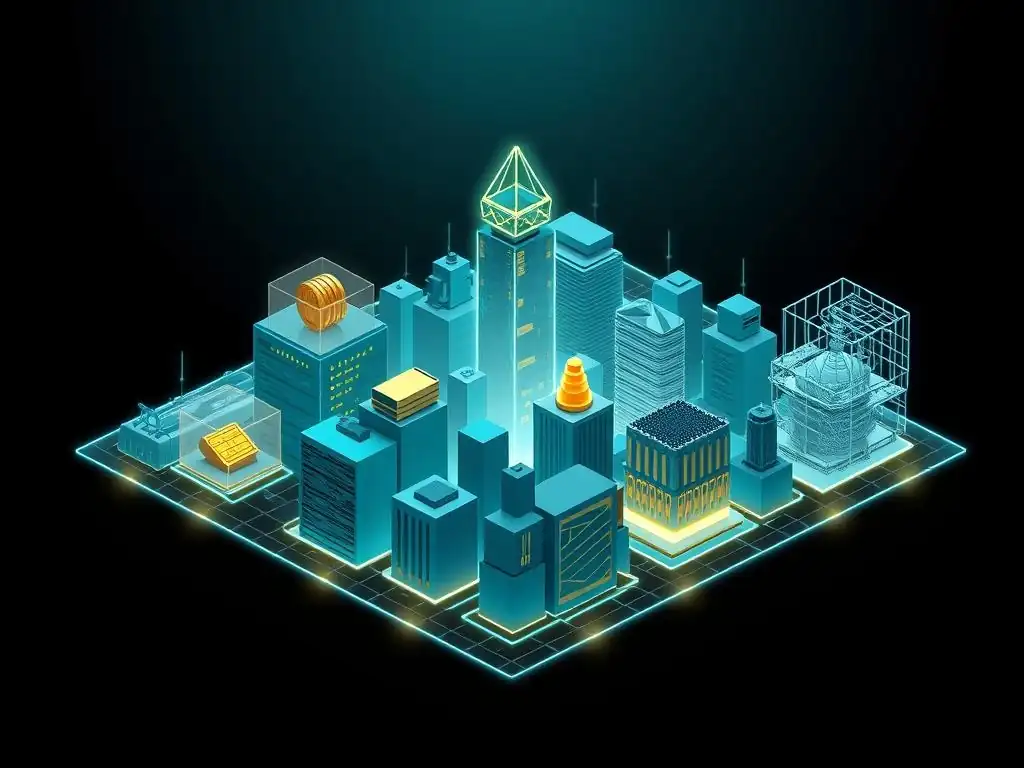
Fractionalization: Democratizing Access to High-Value Assets
Fractionalization is a core innovation enabled by tokenization that dramatically lowers the barrier to entry for investing in high-value assets. By dividing ownership of an asset into many smaller, individually tradable tokens, fractionalization allows investors to buy a portion of an asset they might not otherwise be able to afford entirely. This applies to assets like multi-million dollar properties, rare art pieces, luxury goods, or even shares in private companies.
For instance, a piece of real estate valued at $10 million could be tokenized into 10 million tokens, each representing $1 of ownership. An investor could then purchase just a few hundred or thousand dollars worth of tokens, gaining exposure to the asset's appreciation and potentially earning fractional rental income. This democratizes access to investment opportunities previously limited to wealthy individuals or institutional investors, broadening the scope of blockchain tokenization investment.
Programmable Ownership: Smart Contracts and Asset Management
Programmable ownership, facilitated by smart contracts, is another transformative innovation in tokenization. Smart contracts are self-executing contracts with the terms of the agreement directly written into code. When applied to tokenized assets, they can automate various aspects of asset management and ownership rights. This includes automatic distribution of dividends or rental income to token holders, automated voting rights for tokenized shares, or programmed transfer restrictions based on predefined conditions (e.g., investor accreditation status).
This automation reduces the need for intermediaries, lowers administrative costs, and increases efficiency and transparency in managing asset rights. For example, managing a pool of tokenized rental properties can involve smart contracts automatically collecting and distributing rent to token holders based on their proportional ownership. This programmable layer adds significant value to tokenized assets and influences blockchain tokenization investment strategies focused on passive income and automated governance.
Interoperability Solutions: Connecting Different Tokenization Platforms
As the tokenization ecosystem grows, assets are being issued on various blockchain networks and tokenization platforms. Interoperability solutions are becoming increasingly important to allow these tokenized assets to be seamlessly transferred, traded, and utilized across different platforms and blockchains. This includes developing cross-chain bridges, standardized token protocols (like ERC-3643 for security tokens), and decentralized exchanges that can handle assets from multiple networks.
Improved interoperability enhances liquidity by connecting disparate markets and provides investors with greater flexibility in managing their tokenized asset portfolios. It allows a tokenized asset issued on one chain to potentially be used as collateral in a DeFi protocol on another chain, unlocking greater utility. The development of robust interoperability is crucial for the long-term growth and interconnectedness of the blockchain tokenization investment market.
Regulatory Uncertainty and Compliance Hurdles
Despite progress, regulatory uncertainty remains a significant challenge for the tokenization market. The legal classification and treatment of various types of tokenized assets vary across jurisdictions, creating complex compliance requirements for issuers and platforms. Navigating this patchwork of regulations requires careful legal structuring and can be costly and time-consuming. Investors also face uncertainty regarding how their tokenized holdings will be treated under different legal frameworks.
Compliance hurdles include implementing robust Know Your Customer (KYC) and Anti-Money Laundering (AML) procedures for token holders, ensuring transfer restrictions are legally enforceable, and meeting reporting requirements for security tokens. While efforts are underway globally to provide clearer rules, the evolving regulatory landscape necessitates vigilance and expert legal counsel for both issuers and blockchain tokenization investment participants.
Security Risks and Vulnerabilities in Tokenized Asset Systems
Like any digital system, tokenized asset platforms and the underlying blockchain networks are subject to security risks. These can include vulnerabilities in smart contract code, potential hacks of platforms or individual wallets holding tokens, and risks associated with the management of the off-chain asset linked to the token. If the smart contract governing a tokenized asset has a bug, it could lead to loss of funds or unintended behavior.
Ensuring the security of the entire ecosystem, from the issuance platform to the custody solutions for tokens, is paramount. This requires rigorous smart contract audits, robust cybersecurity measures, and secure key management practices for investors. While blockchain technology itself offers high security, the surrounding infrastructure and human factors introduce potential vulnerabilities that need careful consideration when making blockchain tokenization investment decisions.
Liquidity and Market Maturity Considerations
While tokenization aims to improve liquidity for illiquid assets, the secondary markets for many tokenized assets are still nascent. Finding buyers or sellers for specific tokenized assets can be challenging, particularly for niche or recently tokenized assets. This lack of deep liquidity can make it difficult for investors to exit their positions quickly or at desired prices.
The market for tokenized assets is still maturing, with trading volumes significantly lower than those for traditional securities or major cryptocurrencies. Building liquid secondary markets requires critical mass – a sufficient number of buyers, sellers, and active trading platforms. Investors considering blockchain tokenization investment should carefully assess the potential for liquidity before committing capital, especially for less established tokenized asset classes.
The Future of Blockchain Tokenization Investment
Tokenization as a Catalyst for Financial Innovation
Tokenization is poised to act as a powerful catalyst for innovation across the financial industry. By digitizing traditional assets and making them programmable and easily transferable on a blockchain, it enables the creation of entirely new financial products and services. This includes novel forms of structured finance, automated investment vehicles, and more efficient capital markets.
The ability to fractionalize ownership, automate asset management via smart contracts, and potentially access global pools of investors simultaneously can lead to more efficient allocation of capital and creation of more tailored investment opportunities. This transformative potential positions tokenization at the forefront of financial evolution, driving long-term blockchain tokenization investment trends.
The Potential for Mass Adoption of Tokenized Assets
The long-term vision for tokenization involves the mass adoption of tokenized assets, where a significant portion of global assets, both financial and real-world, are represented and managed on blockchain networks. This would create a highly interconnected and efficient global asset market, offering unprecedented liquidity, transparency, and accessibility.
Achieving mass adoption requires overcoming current challenges related to regulation, infrastructure scalability, and market education. However, as technology improves, regulatory frameworks mature, and institutional participation grows, the path towards widespread adoption of tokenized assets becomes clearer, promising a future where blockchain tokenization investment is a mainstream activity.
Predictions for the Tokenization Market in 2024 and Beyond
Looking ahead to 2024 and beyond, several key predictions can be made for the tokenization market and blockchain tokenization investment. We are likely to see continued growth in RWA tokenization, particularly in areas like real estate, private equity, and debt. Institutional involvement is expected to deepen, with more pilot projects moving into production and large financial players launching dedicated tokenization services.
Regulatory clarity will likely continue to improve in key jurisdictions, providing a more stable environment for growth. Technological advancements will focus on enhancing scalability, security, and interoperability. While challenges remain, the fundamental benefits of tokenization—increased liquidity, fractionalization, and efficiency—suggest that the market is on a strong growth trajectory, making blockchain tokenization investment an increasingly significant area of focus.
Conclusion: Capitalizing on Blockchain Tokenization Investment Trends
Blockchain tokenization is rapidly transforming the landscape of asset ownership and investment, presenting both significant opportunities and unique challenges. The trends highlighted for 2024—increased institutional adoption, infrastructure advancements, DeFi integration, AI convergence, and the rise of STOs—underscore the market's evolution towards maturity and broader impact. Understanding these dynamics is essential for anyone looking to capitalize on blockchain tokenization investment.
While regulatory hurdles and market liquidity are areas that require careful navigation, the long-term potential for tokenization to unlock value from illiquid assets, democratize access to investment, and drive financial innovation is immense. As the ecosystem develops, staying informed about technological progress, regulatory changes, and emerging use cases will be key to identifying promising blockchain tokenization investment opportunities and effectively managing associated risks.
Frequently Asked Questions
What exactly is blockchain tokenization and why is it gaining traction?
Blockchain tokenization involves representing real-world assets as digital tokens on a blockchain. This allows for fractional ownership and increased liquidity, driving investor interest.
How are DeFi platforms utilizing blockchain tokenization?
DeFi platforms are leveraging tokenization to enable new financial products such as tokenized securities and real estate. This offers greater accessibility and efficiency compared to traditional markets.
What are the key enterprise applications of blockchain tokenization beyond finance?
Enterprises are using tokenization for supply chain management, loyalty programs, and digital identity. This improves transparency, efficiency, and data security.
What are some of the regulatory challenges surrounding blockchain tokenization investment trends?
Regulatory uncertainty remains a significant hurdle, particularly regarding security token offerings (STOs). Clearer guidelines are needed to foster sustainable growth in the industry.
Expect to see increased adoption of real-world asset (RWA) tokenization, greater institutional involvement, and the development of more sophisticated tokenization platforms.
Final Reflection: Embracing the Tokenized Future
The exploration of blockchain tokenization investment trends in 2024 reveals more than just technological advancements; it underscores a fundamental shift in how we perceive and interact with value. The rise of tokenization signifies a democratization of investment opportunities and a reimagining of asset ownership, moving us closer to a more inclusive and efficient financial ecosystem.
This evolution is not merely theoretical; it's actively reshaping the cultural and social landscape. The ability to fractionalize assets and unlock liquidity in previously illiquid markets has profound implications for both individual investors and large institutions. The future of finance is decentralized, and tokenization is the key to unlocking its potential.
This quote encapsulates the transformative power of tokenization, highlighting its capacity to democratize access and foster innovation across various sectors.
As we stand on the cusp of this tokenized future, let us embrace the opportunities it presents with both enthusiasm and responsibility. Consider how these trends can empower you to participate in new markets, diversify your portfolio, and contribute to a more equitable and transparent financial world. The future is being built, one token at a time; will you be a part of it?
Unlock the Future: Start Your Tokenization Journey Today!
Thank you for exploring the exciting world of tokenization with us! We hope you gained valuable insights into the trends shaping this dynamic industry. Now, it's time to apply what you've learned and take the next step.
Here are a few ways to continue your journey:
- Research a specific asset class to assess its potential for tokenization. Finding a niche where tokenization provides clear advantages is essential.
- Share your knowledge! Discuss these trends with your network and spark conversations about the future of tokenization.
- Discover new use cases for tokenization. Look beyond traditional assets like real estate or art and explore untapped markets for innovation.
What unconventional asset are you considering for tokenization, and what problem could it solve? Share your ideas in the comments below!
Leave a Reply