
Tokenizing Natural Resources: Promoting Sustainable and Transparent Resource Management via Blockchain

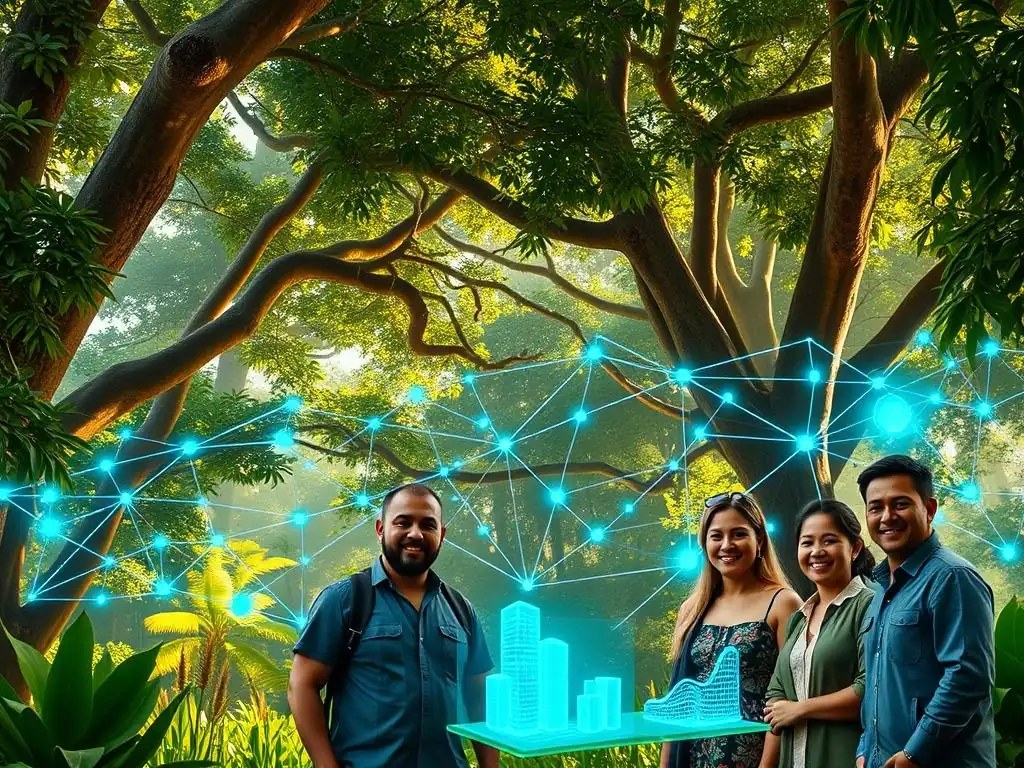
Welcome to Blockchain Trends, your go-to source for understanding the revolutionary impact of blockchain beyond the hype. Intrigued by how blockchain resource management transparency benefits are reshaping industries? Our latest deep dive explores how tokenizing natural resources is fostering sustainable practices and unprecedented transparency. Discover how this innovative approach is changing the game – and what it means for the future of resource management. Let's unlock the potential together!
Tokenizing Natural Resources: Promoting Sustainable and Transparent Resource Management via Blockchain
- Introduction: The Promise of Blockchain for Natural Resource Management
- Understanding Tokenization of Natural Resources
- Blockchain Resource Management Transparency Benefits: A Deep Dive
- Sustainable Resource Management Through Blockchain
- Real-World Applications of Blockchain in Resource Management
- Overcoming Challenges in Tokenizing Natural Resources
- The Future of Resource Management: A Blockchain-Powered Ecosystem
- Conclusion: Blockchain as a Catalyst for Sustainable and Transparent Resource Management
-
Frequently Asked Questions
- What are the primary benefits of tokenizing natural resources using blockchain?
- How does blockchain technology improve resource management transparency?
- Beyond cryptocurrencies, what are some specific enterprise applications of blockchain in natural resource management?
- What are some of the regulation challenges associated with tokenizing natural resources?
- How does tokenizing natural resources contribute to sustainable practices?
- Final Reflection: Embracing Transparency in Resource Stewardship
- Unleash the Power of Transparent Resource Management!
Introduction: The Promise of Blockchain for Natural Resource Management
The Urgent Need for Transparency and Sustainability in Resource Management
The management of natural resources globally faces significant challenges, primarily stemming from a lack of transparency and sustainable practices. Issues such as illegal logging, illicit mining, and unsustainable agricultural methods lead to environmental degradation, biodiversity loss, and social inequality.
The opaque nature of traditional supply chains makes it difficult to track the origin and journey of resources, enabling fraudulent activities and hindering efforts to ensure ethical sourcing and environmental compliance. Reports from organizations like the UN often highlight the vast scale of illegal resource extraction, estimated to be worth hundreds of billions of dollars annually, underscoring the critical need for more robust and verifiable systems.
Moreover, the current systems often fail to provide equitable benefits to local communities or adequately protect ecosystems. Complex intermediaries, fragmented data, and limited public access to information obscure accountability. This lack of visibility not only undermines conservation efforts but also erodes trust among stakeholders, from producers and consumers to governments and NGOs. Implementing mechanisms that ensure verifiable provenance, responsible extraction, and transparent distribution is paramount for fostering a future where natural resources are managed sustainably for the benefit of all.
How Blockchain Technology Can Revolutionize Resource Tracking and Accountability
Blockchain technology offers a transformative approach to addressing the inherent challenges in natural resource management by providing an immutable, transparent, and distributed ledger. This technology enables the creation of a single source of truth for resource data, tracking assets from their point of origin through the entire supply chain. By recording every transaction and transfer on a blockchain, it becomes virtually impossible to tamper with records without detection, drastically improving accountability. This inherent transparency contrasts sharply with traditional paper-based or centralized digital systems prone to manipulation and errors.
The application of blockchain in resource tracking can revolutionize how we monitor compliance with environmental regulations, verify ethical sourcing, and ensure fair trade practices. For instance, recording the coordinates of extraction sites, timestamps of transportation, and details of processing steps on a blockchain creates a verifiable history for each unit of resource. This granular level of tracking empowers consumers to make informed choices, allows regulators to enforce standards more effectively, and helps companies demonstrate their commitment to sustainability. Ultimately, blockchain provides the technological foundation for building trust and efficiency in complex resource value chains.
Understanding Tokenization of Natural Resources
What is Tokenization and How Does it Apply to Natural Resources?
Tokenization is the process of converting rights to an asset into a digital token on a blockchain. These tokens represent ownership or fractional ownership of the underlying asset, or a specific right associated with it, such as the right to a certain amount of carbon offset or a share of timber yield.
In the context of natural resources, tokenization involves creating digital representations of physical assets like minerals, timber, water rights, or even intangible environmental assets like carbon credits or biodiversity offsets. Each token is unique or represents a specific unit (like one ton of CO2 equivalent), and its transaction history is recorded on the blockchain.
Applying tokenization to natural resources allows for increased liquidity, fractional ownership, and streamlined transactions that were previously difficult or impossible with physical assets. For example, instead of trading entire land parcels or large quantities of raw materials in cumbersome processes, tokenization enables the trading of smaller, more manageable digital units. This can democratize investment in natural resource projects and facilitate more efficient market mechanisms. Furthermore, tokens can embed specific rules or smart contracts related to the resource, such as conditions for sustainable harvesting or distribution of royalties, automating compliance and management processes.
Examples of Natural Resources Suitable for Tokenization: Timber, Gold, Carbon Credits
Several natural resources are particularly well-suited for tokenization due to their distinct units, value, and the need for robust tracking.
- Timber: Individual trees, specific forest plots, or measured volumes of wood can be tokenized. Tokens can represent verified sustainable forestry practices, tracking timber from forest to product. This helps combat illegal logging, estimated to account for 15-30% of the global timber trade according to some estimates, by providing a transparent audit trail.
- Gold and Minerals: High-value minerals like gold are prime candidates. Tokens can represent specific bars or quantities of gold, linked to verifiable origin data from mines. Projects like Everledger have demonstrated tracking diamonds (another high-value mineral) from mine to retail, recording attributes like carat, cut, and provenance on a blockchain. This reduces the trade in conflict minerals and provides assurance to buyers.
- Carbon Credits: Perhaps one of the most prominent examples, carbon credits represent a reduction or removal of one ton of CO2 equivalent. Tokenizing carbon credits on a blockchain makes them more accessible, liquid, and transparently trackable. Platforms like Toucan Protocol have brought over 20 million tonnes of tokenized carbon onto public blockchains, creating new marketplaces and increasing participation in climate action. Other resources like water rights, agricultural commodities (coffee, cocoa), and even biodiversity units are also being explored for tokenization.
Benefits of Tokenizing Natural Resources: Enhanced Transparency and Efficiency
The tokenization of natural resources offers a multitude of benefits, primarily centered around enhanced transparency and increased operational efficiency. By converting physical assets into digital tokens on a blockchain, every transaction, ownership transfer, and associated data point (like origin, certifications, or environmental impact reports) is recorded on an immutable ledger. This creates a fully transparent history accessible to authorized parties, significantly reducing information asymmetry and building trust among stakeholders. This is a core aspect of achieving significant blockchain resource management transparency benefits.
Beyond transparency, tokenization dramatically improves efficiency by streamlining processes that were historically manual, slow, and costly. Trading tokenized assets can occur peer-to-peer on digital marketplaces, bypassing traditional intermediaries and reducing transaction times and fees. Smart contracts can automate royalty payments, enforce compliance rules, or trigger actions based on predefined conditions, reducing administrative overhead and human error. This increased efficiency makes resource markets more dynamic and accessible, potentially unlocking new investment opportunities and improving the overall management lifecycle of natural resources.
Blockchain Resource Management Transparency Benefits: A Deep Dive
Increased Traceability and Provenance of Natural Resources
One of the most significant blockchain resource management transparency benefits is the unprecedented level of traceability and provenance it enables for natural resources. By creating a digital twin or token for a resource unit (e.g., a log, a quantity of ore, a carbon credit), and recording its journey on a blockchain from its point of extraction or creation, stakeholders can verify its origin and track its path through the supply chain. Each handler, processor, and transporter can record their interaction with the resource on the ledger, creating an immutable chain of custody.
This detailed, step-by-step record allows anyone with access to the blockchain data to verify the resource's history, ensuring it comes from legitimate and authorized sources. For instance, a furniture manufacturer can scan a QR code on a product, trace the timber back to the specific forest, verify sustainable harvesting certifications recorded on the blockchain, and even see the date it was cut and transported. This level of verifiable provenance is crucial for combating illegal trade, ensuring ethical sourcing, and meeting increasing consumer and regulatory demands for transparency.
Reduced Corruption and Improved Governance in Resource Extraction
Corruption is a pervasive issue in the natural resource sector, often involving opaque licensing, illicit payments, and manipulation of production or export data. The inherent transparency and immutability of blockchain technology directly combat these issues, leading to improved governance. By recording licenses, permits, production volumes, royalty payments, and tax contributions on a distributed ledger, all transactions become auditable and resistant to tampering. This makes it significantly harder for corrupt actors to operate undetected.
Furthermore, blockchain can facilitate transparent revenue distribution to local communities or government entities. Smart contracts can automatically disburse funds based on predefined rules triggered by resource extraction or sales data recorded on the blockchain. This ensures that revenues reach their intended beneficiaries without being diverted or misappropriated, a common problem in resource-rich regions. Implementing these systems offers substantial blockchain resource management transparency benefits, fostering greater accountability and reducing the opportunities for illicit activities that plague the sector.
Enhanced Supply Chain Visibility and Accountability
Traditional natural resource supply chains are often complex, fragmented, and involve numerous intermediaries, making end-to-end visibility challenging. This opacity hinders efforts to ensure quality, verify compliance, and hold parties accountable when issues arise. Blockchain technology provides a shared, secure ledger that connects participants across the supply chain, offering enhanced visibility from the point of origin to the final consumer.
Each time a resource changes hands, is processed, or certified, the relevant information can be recorded on the blockchain. This creates a comprehensive, shared view of the supply chain status accessible to all authorized participants. Increased visibility allows for better inventory management, improved logistics, and faster identification of bottlenecks or deviations from standard practices.
More importantly, it significantly enhances accountability; every participant's actions related to the resource are logged, making it clear who is responsible at each stage. This robust audit trail is a key driver of blockchain resource management transparency benefits, building trust and efficiency throughout the value chain.
Sustainable Resource Management Through Blockchain
Promoting Responsible Resource Extraction and Utilization
Blockchain technology can play a pivotal role in promoting responsible resource extraction and utilization by providing verifiable data and incentivizing sustainable practices. By tracking resources from their point of origin, blockchain ensures that materials are extracted legally and in compliance with environmental regulations. Data points such as GPS coordinates of extraction sites, timestamps, volume extracted, and associated permits can be recorded on the blockchain, creating an immutable record that can be audited by regulators, NGOs, and consumers.
Moreover, blockchain can integrate data from sensors, satellite imagery, or third-party auditors directly onto the ledger, providing real-time or near-real-time monitoring of extraction activities and their environmental impact. For example, monitoring systems can record water usage, deforestation rates, or waste disposal practices, linking this data to the extracted resources. This level of verifiable data makes it significantly harder for companies to hide unsustainable practices and provides a strong basis for enforcing compliance and promoting responsible behavior throughout the extraction process.
Tracking Environmental Impact and Promoting Conservation Efforts
Beyond tracking the resources themselves, blockchain can be used to track and verify environmental impact data associated with resource management activities. This includes monitoring deforestation rates, land restoration efforts, water quality, pollution levels, and biodiversity metrics. Environmental data collected through various means (sensors, remote sensing, manual surveys) can be securely stored and shared on a blockchain, ensuring its integrity and providing a transparent record of environmental performance.
This transparency is crucial for promoting conservation efforts. For example, blockchain can track funding allocated for conservation projects, ensuring that funds reach their intended destination and are used effectively. Furthermore, it can verify the successful implementation of conservation activities, such as the planting of a specific number of trees or the protection of a certain area of habitat. By providing a trustworthy platform for tracking environmental outcomes, blockchain encourages investment in conservation and allows stakeholders to verify the positive impact of sustainable resource management initiatives.
Incentivizing Sustainable Practices with Token Rewards
Blockchain technology enables the creation of incentive mechanisms through tokenization, directly rewarding individuals and organizations for adopting sustainable practices. Sustainability tokens can be issued based on verifiable actions or achievements recorded on the blockchain, such as reducing carbon emissions, restoring degraded land, using sustainable harvesting techniques, or participating in recycling programs. These tokens can then be traded, redeemed for goods or services, or used within specific ecosystems.
For instance, a forestry project that successfully implements sustainable logging practices and reforests harvested areas could earn 'Sustainability Tokens' verifiable on a public blockchain. These tokens could then be sold on a marketplace, providing an additional revenue stream that directly rewards their responsible stewardship. Similarly, farmers who improve soil health or reduce water usage could earn tokens. This token-based incentive system provides a direct, tangible benefit for adopting environmentally friendly behaviors, aligning economic incentives with sustainability goals and fostering a more responsible approach to resource management.
Real-World Applications of Blockchain in Resource Management

Case Study 1: De Beers' Tracr - Diamond Tracking
De Beers, a leading diamond company, launched the Tracr platform, a blockchain-based system designed to track diamonds from mine to retailer. Diamonds are high-value, easily transportable assets often associated with issues of provenance and ethical sourcing (conflict diamonds). Tracr creates an immutable digital record for each registered diamond, recording its unique attributes, ownership history, and journey through the value chain.
The platform records data points such as the diamond's weight, color, clarity, cut, and also its origin mine. As the diamond moves from cutting and polishing factories to wholesalers and retailers, each transaction is recorded on the blockchain. This provides a tamper-proof audit trail that verifies the diamond's authenticity and ethical source. Participants on the platform, including miners, manufacturers, and retailers, contribute data, creating a shared, transparent view of the diamond's lifecycle. Tracr aims to enhance consumer trust by providing verifiable proof of provenance, a clear example of blockchain resource management transparency benefits in action.
Case Study 2: Open Forest Protocol - Verifying Forest Carbon Offsets
The Open Forest Protocol (OFP) is a decentralized network built on blockchain technology focused on measuring, reporting, and verifying (MRV) forest data to support carbon sequestration projects. Traditional carbon offset markets face challenges with double counting, lack of transparency, and difficulty in verifying the actual impact of projects. OFP addresses this by providing a transparent and decentralized platform for forest projects to submit data on growth, carbon sequestration, and other relevant metrics.
Data submitted to OFP is subject to a decentralized verification process involving independent validators on the network. Once verified, this data forms the basis for issuing tokenized carbon credits. By recording the MRV process and the issuance of credits on a blockchain, OFP ensures transparency and prevents double counting. Project data and verification reports are publicly accessible on the ledger, allowing anyone to audit the claims made by forest projects. This application demonstrates how blockchain can bring much-needed transparency and credibility to environmental markets.
Emerging Trends and Future Opportunities in Blockchain-Based Resource Management
The application of blockchain in resource management is rapidly evolving, with several emerging trends pointing towards significant future opportunities. One key trend is the integration of IoT (Internet of Things) devices with blockchain networks to automate data collection and reporting. Sensors in forests can automatically record temperature or humidity, drones can capture imagery for deforestation monitoring, and mining equipment can report extraction volumes directly to the blockchain, reducing manual data entry and potential for error.
Another trend is the development of decentralized autonomous organizations (DAOs) for resource governance. DAOs could potentially manage common pool resources like fisheries or forests, with stakeholders using tokens to vote on management decisions and smart contracts automating enforcement of rules. Furthermore, we are seeing increased interest in tokenizing a wider range of environmental assets, including biodiversity credits, water usage rights, and even ecosystem services, creating new markets for conservation and sustainable use. These developments suggest a future where blockchain is not just a tool for tracking, but a fundamental layer for decentralized, transparent, and sustainable resource governance.
Overcoming Challenges in Tokenizing Natural Resources
Addressing Regulatory Uncertainty and Compliance Issues
One of the significant hurdles in tokenizing natural resources is navigating the complex and often uncertain regulatory landscape. Regulations regarding digital assets, securities laws, and the specific governance of natural resources vary widely across jurisdictions. It is often unclear how existing laws apply to tokenized representations of physical assets or environmental credits. This uncertainty can deter potential investors and participants and slow down the adoption of blockchain-based solutions.
Addressing these challenges requires close collaboration between technology developers, resource managers, legal experts, and regulatory bodies. Clear frameworks need to be established that define the legal status of resource tokens, outline compliance requirements for token issuance and trading, and integrate blockchain solutions within existing environmental and resource management regulations. Pilot projects and regulatory sandboxes can help demonstrate the technology's benefits and inform the development of appropriate legal and policy guidelines, paving the way for mainstream adoption and realizing the full potential of blockchain resource management transparency benefits.
Ensuring Data Security and Integrity on the Blockchain
While blockchain is inherently secure and immutable once data is recorded, ensuring the integrity of the data before it is added to the ledger is crucial. The principle of "garbage in, garbage out" applies: if inaccurate, fraudulent, or incomplete data about a resource's origin, quantity, or environmental impact is entered into the system, the resulting blockchain record, though immutable, will be flawed. This is particularly challenging in remote or difficult-to-access extraction sites.
Strategies to enhance data integrity include using tamper-proof sensors and IoT devices for automated data collection, implementing robust data validation processes involving multiple parties (e.g., third-party auditors, community monitors), and utilizing digital identity solutions to ensure that data is submitted by authorized and verified entities. Combining blockchain with other technologies like secure hardware modules or decentralized identity systems can help build trust in the data source. Continuous monitoring and auditing of data inputs are essential to maintain the reliability and trustworthiness of the blockchain record and ensure accurate blockchain resource management transparency benefits.
Overcoming Technological Barriers and Scalability Concerns
Implementing blockchain solutions for tracking vast quantities of diverse natural resources across complex global supply chains presents significant technological challenges, particularly concerning scalability and interoperability. Public blockchains, while highly transparent, can face limitations in transaction speed and throughput, which might not be suitable for high-volume, real-time tracking required in certain resource sectors. Private or permissioned blockchains offer higher performance but may sacrifice some degree of decentralization and public transparency.
Furthermore, ensuring interoperability between different blockchain networks and legacy systems used by various stakeholders (governments, companies, logistics providers) is critical for seamless data flow. Developing user-friendly interfaces and integrating blockchain solutions with existing enterprise resource planning (ERP) systems is necessary for practical adoption. Ongoing advancements in blockchain technology, such as Layer 2 scaling solutions, sharding, and cross-chain protocols, are helping to address scalability and interoperability issues, making blockchain increasingly viable for large-scale natural resource management applications.
The Future of Resource Management: A Blockchain-Powered Ecosystem
The Potential for Decentralized Resource Governance
The application of blockchain technology opens up the possibility of moving towards more decentralized models for natural resource governance. Instead of relying solely on centralized government agencies or large corporations, blockchain can empower local communities, indigenous groups, and other stakeholders to participate more directly in decision-making processes regarding the resources in their regions. This can be facilitated through tokenized voting mechanisms within DAOs or by giving stakeholders verifiable access to resource data on the blockchain.
Decentralized governance can lead to more equitable and sustainable outcomes by ensuring that the voices and rights of those most directly affected by resource extraction are heard and respected. Smart contracts can automate the enforcement of community agreements, environmental regulations, and benefit-sharing mechanisms, reducing reliance on potentially corrupt or inefficient centralized authorities. While challenging to implement on a large scale, decentralized governance models offer a compelling vision for a more inclusive and responsible approach to managing the planet's resources, built on the foundation of blockchain resource management transparency benefits.
Creating a More Equitable and Sustainable Resource Economy
Blockchain and tokenization have the potential to reshape the natural resource economy into one that is more equitable and sustainable. By increasing transparency and reducing the power of intermediaries, tokenization can ensure fairer distribution of value generated from resource extraction, benefiting producers and local communities. Tokenized carbon credits and other environmental assets create new economic incentives for conservation and sustainable land use, allowing individuals and communities to earn revenue from protecting ecosystems.
Furthermore, the traceability provided by blockchain allows consumers to verify that the products they purchase are sourced ethically and sustainably, driving demand for responsibly managed resources. This creates a market pull that rewards companies committed to environmental and social responsibility. By making the resource value chain more transparent, efficient, and accountable, blockchain technology can help build an economy where the true environmental and social costs of resource extraction are better reflected, fostering a transition towards a truly sustainable resource future.
Predictions for the Adoption of Blockchain in the Natural Resource Sector
While still in relatively early stages for widespread adoption beyond specific pilot projects, the use of blockchain in the natural resource sector is predicted to grow significantly over the next decade. Initial adoption is likely to continue in high-value, easily quantifiable resources like minerals and timber, where the value proposition for traceability is immediate and clear. The environmental sector, particularly carbon markets, is also expected to see rapid growth in blockchain-based solutions due to the need for verifiable impact and transparent credit issuance.
As regulatory clarity improves and technological barriers decrease, we can expect to see blockchain integrated into the management of a wider range of resources, including water, agricultural commodities, and potentially even ecosystem services at a more granular level. Governments and international organizations are increasingly exploring blockchain for land registries, environmental monitoring, and supply chain regulation. While challenges remain, the compelling blockchain resource management transparency benefits and efficiency gains position the technology as a key enabler for the future of sustainable and responsible resource management.
Conclusion: Blockchain as a Catalyst for Sustainable and Transparent Resource Management
Recap of the Key Benefits of Tokenization
The tokenization of natural resources, powered by blockchain technology, offers a powerful pathway towards more sustainable and transparent resource management. The core benefits revolve around enhanced traceability and provenance, providing an immutable record of a resource's journey from origin to end-use. This transparency is instrumental in combating illegal extraction, ensuring ethical sourcing, and verifying compliance with environmental and social standards. The blockchain resource management transparency benefits are profound, creating trust in complex supply chains.
Beyond transparency, tokenization increases efficiency by streamlining transactions, reducing reliance on intermediaries, and enabling fractional ownership. It also facilitates improved governance by reducing opportunities for corruption and ensuring equitable distribution of revenues. Furthermore, blockchain enables innovative approaches to promoting sustainability, such as tracking environmental impact data with integrity and creating token-based incentives for responsible resource stewardship. These combined benefits underscore the transformative potential of tokenization for the natural resource sector.
Call to Action: Embracing Blockchain for a More Sustainable Future
Embracing blockchain technology is no longer just an option but an imperative for stakeholders committed to sustainable and responsible natural resource management. Governments need to explore supportive regulatory frameworks. Companies must invest in implementing blockchain-based tracking and transparency solutions. Consumers should demand verifiable provenance and sustainability data for the products they buy. Researchers and technologists must continue to innovate to overcome existing challenges related to scalability, data integrity, and interoperability.
By collectively adopting and developing blockchain solutions, we can build a global resource economy that is not only more efficient and secure but fundamentally more transparent, equitable, and sustainable. The journey requires collaboration and commitment, but the potential rewards—protecting ecosystems, empowering communities, and fostering trust—make it a worthy endeavor. Let us leverage the power of blockchain to forge a path towards a future where our planet's precious natural resources are managed responsibly for generations to come.
Frequently Asked Questions
What are the primary benefits of tokenizing natural resources using blockchain?
Tokenization enhances transparency and traceability in resource management. It also allows for fractional ownership and increased liquidity, attracting more investment.
How does blockchain technology improve resource management transparency?
Blockchain provides an immutable and auditable record of transactions and resource tracking. This reduces corruption and ensures accountability across the supply chain.
Beyond cryptocurrencies, what are some specific enterprise applications of blockchain in natural resource management?
Blockchain can be used for supply chain tracking, verifying sustainable sourcing, and automating royalty payments. It also facilitates decentralized data management for resource monitoring.
What are some of the regulation challenges associated with tokenizing natural resources?
Current regulations are often unclear regarding the legal status of resource-backed tokens. Addressing issues like compliance, security, and investor protection is crucial.
How does tokenizing natural resources contribute to sustainable practices?
Blockchain enables verifiable sustainable sourcing and promotes responsible resource extraction. It also empowers communities to participate in resource management decisions.
Final Reflection: Embracing Transparency in Resource Stewardship
The exploration of tokenizing natural resources through blockchain technology reveals a powerful convergence of innovation and responsibility. The potential for enhanced transparency, accountability, and sustainability in resource management is no longer a distant dream, but a tangible possibility within our grasp. This article has illuminated the pathways through which blockchain can revolutionize how we interact with and protect our planet's precious resources, offering a compelling vision for a more equitable and environmentally conscious future.
The impact of this technology extends far beyond mere efficiency gains; it fundamentally shifts the power dynamic, empowering local communities and fostering a sense of shared ownership. Witnessing the potential for blockchain to combat corruption and promote fair distribution of resource wealth is deeply inspiring, reminding us that technology, when ethically applied, can be a potent force for positive change. We do not inherit the earth from our ancestors; we borrow it from our children.
This timeless proverb underscores the urgency of adopting sustainable practices, and blockchain offers a crucial tool in fulfilling this intergenerational responsibility.
Now, as you reflect on the potential of blockchain resource management transparency benefits, consider your own role in shaping this future. How can you advocate for the adoption of these technologies within your community or industry? How can you contribute to the development of ethical frameworks that ensure equitable access and responsible stewardship? The future of our planet depends on our collective commitment to transparency and sustainability. Let us embrace the transformative power of blockchain to build a world where resources are managed with integrity, for the benefit of all.
Unleash the Power of Transparent Resource Management!
Thank you for exploring how blockchain can revolutionize natural resource management. Now that you've gained insights into the potential of tokenization for sustainability and transparency, you can take action to make a difference.
Consider researching and supporting initiatives that are actively tokenizing natural resources in your area or worldwide. Focus on projects that emphasize community involvement and environmental preservation. Your involvement can help drive positive change.
Share this article and your thoughts on social media to raise awareness. Use relevant hashtags and tag the publication to join the conversation. Together, we can build a community dedicated to sustainable resource management.
Additionally, explore existing environmental-focused cryptocurrencies to discover innovative solutions and support technologies that prioritize ecological well-being.
Is there a specific natural resource in your region that you believe could benefit most from tokenization? Share your thoughts in the comments below!
Leave a Reply