
Vesting Schedules Decoded: Ensuring LongTerm Commitment in Tokenomics


Welcome to Blockchain Trends, your guide to understanding the revolutionary impact of blockchain technology!
Delve into a world beyond just cryptocurrencies and discover how blockchain is reshaping industries. Ever wondered how projects ensure long-term commitment from their teams and investors? Our deep dive into blockchain token vesting schedules reveals the strategies and best practices that underpin sustainable tokenomics. Unlock the secrets to building robust and reliable decentralized ecosystems – the journey starts here!
- Blockchain Token Vesting Schedules: Fostering Long-Term Ecosystem Health
- Understanding Token Vesting in Blockchain Projects
- Why Use Blockchain Token Vesting Schedules?
- Types of Blockchain Token Vesting Schedules
- Designing Effective Blockchain Token Vesting Schedules
- Implementing Blockchain Token Vesting Schedules
- Best Practices for Communicating Vesting Schedules
- The Future of Blockchain Token Vesting Schedules
- Conclusion: Maximizing the Benefits of Blockchain Token Vesting
-
Frequently Asked Questions
- What are blockchain token vesting schedules, and why are they important?
- How do vesting schedules contribute to the sustainability of a blockchain project?
- What are the common types of vesting schedules used in blockchain tokenomics?
- What are the key factors to consider when designing a vesting schedule for a blockchain token?
- How do regulations impact the implementation of blockchain token vesting schedules?
- Final Reflection: Securing the Future with Time
- Ignite Your Tokenomics Strategy: Build for the Future!
Blockchain Token Vesting Schedules: Fostering Long-Term Ecosystem Health
Blockchain token vesting schedules are a critical component of tokenomics design, playing a pivotal role in aligning the incentives of project founders, team members, investors, and advisors with the long-term success and health of a blockchain ecosystem. These schedules dictate the release of tokens over a predefined period, preventing large quantities from flooding the market immediately after a token generation event (TGE) or distribution.
Effective blockchain token vesting schedules help stabilize token price volatility, encourage sustained contribution from core teams, and build trust within the community by demonstrating a commitment to the project's future rather than short-term gains. They are fundamental to creating sustainable token economies that can weather market fluctuations and achieve their stated objectives.
Understanding Token Vesting in Blockchain Projects
Token vesting is a mechanism used in blockchain projects to distribute tokens to recipients over time rather than all at once. This process is typically governed by a smart contract, ensuring automated and transparent execution according to predetermined rules.
What is a Blockchain Token Vesting Schedule?
A blockchain token vesting schedule is a predetermined timeline and set of rules outlining when and how a recipient will receive their allocated tokens. These schedules specify the total number of tokens to be vested, the duration of the vesting period, and the frequency or conditions under which tokens are released. For instance, a common schedule might involve a one-year "cliff" followed by linear vesting over the subsequent two or three years. This means no tokens are released for the first year, and then the remaining tokens are released gradually (e.g., monthly or quarterly) over the remaining period.
The design of a blockchain token vesting schedule is crucial and varies significantly depending on the recipient group (team, advisors, investors, community) and the project's specific goals. A well-designed schedule balances the need to reward early contributors and supporters with the necessity of preventing excessive token supply from hitting the market simultaneously, which could exert downward pressure on the token's value. It's a core element of robust tokenomics, ensuring that token distribution supports, rather than hinders, the project's growth trajectory.
The Importance of Vesting Schedules for Tokenomics
Blockchain token vesting schedules are paramount for establishing healthy and sustainable tokenomics. They directly impact token supply dynamics, which in turn influences market behavior and token price stability. By controlling the rate at which tokens enter circulation, vesting helps mitigate the risk of immediate sell-offs by early recipients who might be primarily interested in short-term profits. This is particularly important for fledgling projects where large token dumps could severely damage confidence and hinder development.
Furthermore, vesting schedules are instrumental in aligning the long-term interests of key stakeholders with the project's success. For example, a core development team with a significant portion of their tokens subject to a multi-year vesting schedule is strongly incentivized to continue working on the project and ensure its long-term viability. This commitment fosters a more dedicated and stable team, which is essential for navigating the challenges inherent in building and scaling a blockchain project. The careful implementation of blockchain token vesting schedules is a hallmark of a well-thought-out tokenomics model.
Vesting Schedules vs. Token Lockups: Key Differences
While often used in similar contexts, blockchain token vesting schedules and token lockups are distinct concepts. A token lockup is a simpler mechanism where a certain amount of tokens is simply held for a specified period, after which they are released all at once. For example, investors might agree to a six-month lockup on their tokens. After six months, the entire allocated amount becomes available to them simultaneously.
In contrast, a blockchain token vesting schedule involves a phased release of tokens over time, usually after an initial lockup or cliff period. Instead of receiving all tokens at once after the restriction period, the recipient receives them gradually according to the defined schedule. For instance, a vesting schedule might involve a one-year cliff followed by linear monthly releases over the next two years.
While a lockup prevents access for a period, vesting structures the release after (or sometimes including) an initial period. Both are mechanisms to control token supply, but vesting provides a more granular and prolonged distribution mechanism.
Why Use Blockchain Token Vesting Schedules?
Implementing blockchain token vesting schedules is a strategic decision driven by several key objectives aimed at fostering the long-term health and success of a blockchain project.
Aligning Incentives: Ensuring Long-Term Commitment
One of the primary reasons for employing blockchain token vesting schedules is to align the incentives of core team members, advisors, and early investors with the long-term vision of the project. When a significant portion of someone's token allocation is subject to a multi-year vesting period, their financial success becomes intrinsically linked to the project's sustained growth and adoption. This encourages them to remain actively involved, contribute meaningfully over time, and make decisions that benefit the project's longevity rather than seeking immediate profits.
For instance, if a founder's tokens vest over four years with a one-year cliff, they are incentivized to ensure the project survives and thrives for at least that period to realize the full value of their token allocation. This stands in contrast to a scenario where all tokens are released at once, potentially allowing early participants to exit quickly, leaving the project without committed leadership or resources. Effective blockchain token vesting schedules are thus fundamental to building a dedicated and stable team committed to the project's journey.
Mitigating Market Volatility Through Controlled Release
Blockchain token vesting schedules serve as a crucial tool for managing token supply and mitigating excessive market volatility, particularly in the early stages of a project's lifecycle. By releasing tokens gradually over time, vesting prevents a large influx of tokens onto exchanges simultaneously. A sudden surge in circulating supply, especially if coupled with selling pressure from early recipients, can significantly depress the token price and create an unfavorable market environment.
Consider a project that raised funds by selling tokens to private investors. If these investors received all their tokens at the Token Generation Event (TGE) with no vesting, they might be tempted to sell immediately upon listing to lock in profits, regardless of the project's development stage. A vesting schedule, however, phases out this risk by releasing tokens incrementally.
A common approach is to release perhaps 10% at TGE, with the remaining 90% vesting over 1-3 years. This controlled release mechanism provided by blockchain token vesting schedules helps absorb selling pressure over time, leading to potentially more stable price discovery and a healthier market.
Attracting and Retaining Core Contributors
Competitive blockchain token vesting schedules are essential for attracting and retaining top talent, including developers, researchers, and business strategists, who are critical to the project's success. In the highly competitive blockchain space, offering attractive token incentives is standard practice. However, the structure of these incentives, particularly the vesting terms, is often a key factor for potential contributors.
A well-structured vesting schedule demonstrates the project's commitment to its team and offers a clear path for them to benefit from the project's long-term success. It acts as a golden handcuffs mechanism, incentivizing team members to stay with the project for the duration of their vesting period to unlock their full token allocation.
Projects like Solana and Polygon, when scaling their teams, utilized multi-year vesting schedules for key hires, typically ranging from 3 to 4 years with a one-year cliff, to ensure long-term commitment from their core contributors and build robust development teams. This strategic use of blockchain token vesting schedules is vital for sustained innovation and execution.
Building Community Trust and Project Sustainability
Transparency around blockchain token vesting schedules is fundamental to building trust within the community and demonstrating a commitment to the project's sustainability. When a project clearly publishes its vesting schedules for the team, advisors, and early investors, it signals that these core groups are not simply looking for a quick exit but are invested in the long-term growth and adoption of the ecosystem.
This transparency helps manage community expectations regarding token supply and potential selling pressure. Communities are often wary of projects where large portions of tokens are held by insiders with no vesting, as this can lead to sudden market dumps. By implementing and clearly communicating robust blockchain token vesting schedules, projects foster confidence among community members, who are then more likely to participate actively, contribute to the ecosystem, and become long-term holders themselves, thereby enhancing overall project sustainability.
Types of Blockchain Token Vesting Schedules
Blockchain token vesting schedules come in various forms, each with its own characteristics and suitability for different scenarios. The choice of vesting type significantly impacts token distribution dynamics.
Linear Vesting: Gradual Token Distribution
Linear vesting is one of the simplest and most common types of blockchain token vesting schedules. In a linear schedule, tokens are released in equal increments over the entire vesting period, typically on a monthly or even daily basis. For example, a linear vesting schedule over 24 months would release 1/24th of the total vested tokens each month. This provides a steady and predictable flow of tokens into circulation.
This method is favored for its simplicity and predictability. It avoids large, sudden token releases and provides a constant, albeit gradual, increase in circulating supply. Many employee stock option plans and early crypto project team vesting schedules initially adopted linear models. While straightforward, linear vesting might not always perfectly align with project milestones or significant achievements, as the release is purely time-based. Nevertheless, it remains a foundational type of blockchain token vesting schedule due to its ease of implementation and understanding.
Cliff Vesting: Initial Token Release After a Defined Period
Cliff vesting is a type of blockchain token vesting schedule that includes an initial period during which no tokens are released. Only after this "cliff" period has passed does the regular vesting schedule begin, and often the tokens accumulated during the cliff are released all at once. A typical cliff period is one year.
For example, a vesting schedule might have a one-year cliff followed by linear monthly vesting over the next three years. This means after 12 months, the recipient receives 1/4th of their total allocation (the amount that would have vested linearly during the first year), and then receives 1/36th of the remaining tokens each month for the next 36 months.
The primary purpose of a cliff is to ensure that recipients, particularly team members or advisors, remain with the project for a minimum duration before any tokens are vested. If they leave before the cliff date, they receive no vested tokens. This mechanism is a strong incentive for initial commitment and is widely used in employment contracts and advisor agreements within the blockchain space. Implementing a cliff alongside a vesting schedule strengthens the commitment requirement significantly.
Graded Vesting: Increasing Token Release Over Time
Graded vesting, also known as accelerated or backloaded vesting, is a type of blockchain token vesting schedule where the percentage or amount of tokens released increases over time. Instead of releasing tokens in equal increments, the release schedule might start with smaller percentages in the early periods and gradually increase in later periods. For example, a schedule might release 20% in year one, 30% in year two, and 50% in year three.
This model can be designed to further incentivize long-term commitment, as a larger proportion of tokens is tied to later stages of the project's development and the contributor's tenure. It can also be used to reflect increasing value contribution over time. While less common than linear or cliff vesting, graded schedules offer flexibility in tailoring the release rate to specific project needs or roles. Designing these blockchain token vesting schedules requires careful consideration to ensure fairness and alignment with contribution expectations.
Milestone-Based Vesting: Token Release Tied to Project Achievements
Milestone-based vesting is a type of blockchain token vesting schedule where the release of tokens is contingent upon the achievement of specific, predefined project milestones rather than simply the passage of time. These milestones could be technical achievements (e.g., launching a testnet, deploying a mainnet, integrating a key feature), business development goals (e.g., securing a major partnership, reaching a certain user count), or financial targets.
This approach directly links token value accrual for recipients to tangible progress and success of the project. It strongly incentivizes contributors to focus on achieving critical goals. For example, tokens allocated to the development team might vest upon the successful launch of the mainnet or the completion of a specific protocol upgrade. While potentially highly motivating, milestone-based blockchain token vesting schedules require clearly defined, measurable, and achievable milestones and robust mechanisms (often requiring oracle or manual verification) to trigger the release, which can add complexity compared to time-based methods.
Time-Based Vesting: Token Release Based on Predetermined Dates
Time-based vesting is the most prevalent form of blockchain token vesting schedule, where the release of tokens is solely determined by the passage of time. This includes both linear vesting and cliff vesting followed by linear or graded release. The schedule specifies specific dates or intervals when tokens become available to the recipient, regardless of project progress or performance.
Examples include monthly releases over 3 years, quarterly releases over 5 years, or a single release annually. This method is straightforward to implement and manage, especially via smart contracts, as it relies purely on verifiable timestamps. While it doesn't directly incentivize milestone achievement, it provides predictability and a consistent supply schedule. Most blockchain token vesting schedules for core teams and investors incorporate a significant time-based component, often combined with a cliff, due to its administrative simplicity and effectiveness in ensuring long-term presence.
Designing Effective Blockchain Token Vesting Schedules
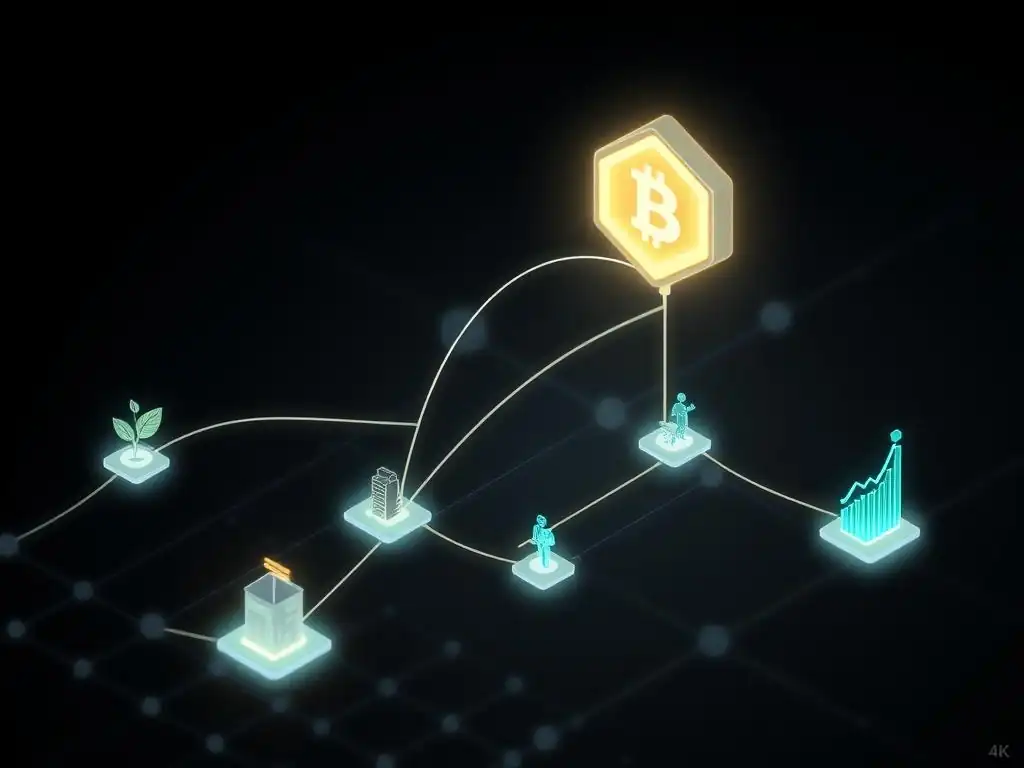
Designing effective blockchain token vesting schedules is a complex process that requires careful consideration of various factors to balance the interests of all stakeholders and promote the project's long-term health.
Key Considerations for Vesting Schedule Design
When designing blockchain token vesting schedules, several key considerations must be taken into account. First and foremost is the specific role and contribution of the recipient group. Team members and founders typically have longer vesting periods (e.g., 3-4 years with a 1-year cliff) compared to advisors (often shorter, e.g., 1-2 years, potentially milestone-based) or early investors (varying widely, but often with shorter cliffs or immediate partial release). The total token supply and its allocation across different groups also heavily influence the design; releasing too many tokens too quickly from any single group can destabilize the market.
Furthermore, market conditions and industry standards play a role. What is considered a "standard" vesting schedule can evolve. For instance, early crypto projects might have had shorter vesting periods, while more recent projects often adopt longer schedules akin to traditional tech startup equity vesting. Regulatory considerations, if applicable, might also influence design choices. Ultimately, effective blockchain token vesting schedules are tailored to the unique circumstances and goals of the specific project and its ecosystem participants.
Determining the Vesting Period: Balancing Project Needs and Contributor Incentives
Determining the appropriate vesting period is a critical step in designing blockchain token vesting schedules. The period must be long enough to incentivize genuine long-term commitment from recipients, particularly the core team, but not so long that it becomes demotivating or unattractive to potential contributors or investors. A common range for team vesting in the blockchain space is 3 to 4 years, often accompanied by a one-year cliff. This duration aligns with typical startup development cycles and provides a strong incentive for key personnel to see the project through significant development phases.
For investors, the vesting period might be shorter, perhaps 1-2 years, or involve a structure with a larger initial unlock at TGE (e.g., 10-20%) followed by linear vesting. Advisors might have even shorter periods or milestone-based vesting tied to specific deliverables. The decision on the vesting period for blockchain token vesting schedules must balance the project's need for sustained contribution and controlled supply with the recipient's desire for a reasonable path to liquidity and reward for their early support or work.
Calculating Vesting Percentages and Token Allocation
Calculating vesting percentages and determining the total token allocation for each stakeholder group is a fundamental aspect of tokenomics and directly informs blockchain token vesting schedules. The total token supply is typically divided among various categories: team, advisors, investors (seed, private, public rounds), community/ecosystem growth, foundation reserves, etc. The percentage allocated to each group varies significantly based on the project type, fundraising strategy, and community focus. For example, a project with a strong emphasis on decentralized community governance might allocate a larger percentage to community rewards and a smaller percentage to investors compared to a venture-backed enterprise blockchain solution.
Once the total allocation for a group is determined (e.g., 20% of the total supply for the team), the vesting schedule dictates how this allocation is released over time. If the team allocation vests linearly over 4 years, each year 5% of the total supply is released to the team collectively (or proportionally to individual team members based on internal agreements). Precision in these calculations and clarity in communicating them are vital for building trust and managing expectations around blockchain token vesting schedules.
Structuring Vesting for Different Stakeholder Groups
Effective blockchain token vesting schedules are not one-size-fits-all; they are carefully structured to suit the specific roles and contributions of different stakeholder groups. Core team members and founders, whose sustained effort is paramount for the project's existence, typically have the longest vesting periods (e.g., 4 years with a 1-year cliff). This aligns their incentives with the project's long-term trajectory.
Investors, particularly those in early funding rounds, often have shorter vesting periods or more favorable terms, such as a larger initial unlock at TGE. This acknowledges their financial risk and provides a quicker path to potential liquidity. Advisors might have shorter vesting periods, perhaps 1-2 years, and their vesting could be partially or wholly tied to specific milestones or the duration of their engagement.
Community allocations, often reserved for airdrops, grants, or ecosystem incentives, may have entirely different distribution models, sometimes involving immediate release or vesting tied to participation metrics. Tailoring blockchain token vesting schedules to each group is essential for maximizing their effectiveness.
Implementing Blockchain Token Vesting Schedules
Implementing blockchain token vesting schedules typically involves leveraging smart contract technology to automate the release process, ensuring transparency and immutability.
Smart Contract Platforms for Automated Vesting (e.g., Ethereum, Solana)
The implementation of blockchain token vesting schedules is predominantly handled through smart contracts deployed on robust blockchain platforms like Ethereum, Solana, Binance Smart Chain, or others. These smart contracts are programmed with the specific rules of the vesting schedule, including the total amount to be vested, the vesting start date, the cliff date (if any), the vesting period, and the release frequency (e.g., monthly, daily). Once deployed, the smart contract automatically releases the specified amount of tokens to the recipient's wallet according to the predetermined schedule.
Using smart contracts for blockchain token vesting schedules removes the need for manual intervention, eliminates potential human error, and provides a high degree of transparency and trust. Anyone can audit the smart contract code to verify the vesting rules, and the token releases are recorded immutably on the blockchain. This automated approach is a cornerstone of modern tokenomics implementation, providing a reliable and verifiable method for token distribution over time.
Vesting Schedule Audits: Ensuring Security and Transparency
Given that blockchain token vesting schedules are often managed by smart contracts holding significant amounts of tokens, conducting thorough smart contract audits is crucial. An audit involves a detailed review of the smart contract code by independent security experts to identify any vulnerabilities, bugs, or logical errors that could potentially compromise the security of the vested tokens or lead to incorrect vesting execution.
Audits ensure that the vesting logic accurately reflects the intended schedule and that the contract is resistant to attacks. A publicly available audit report provides confidence to investors, team members, and the community that the blockchain token vesting schedules are implemented securely and will function as designed. Reputable projects prioritize auditing their vesting contracts as a standard security measure, similar to auditing their core protocol contracts.
Decentralized Vesting Platforms and Tools
Beyond custom smart contract deployments, a growing ecosystem of decentralized platforms and tools exists to facilitate the creation and management of blockchain token vesting schedules. These platforms often provide user-friendly interfaces for defining vesting terms and automatically generate and deploy the necessary smart contracts on various blockchains. Some platforms offer features like batch vesting for multiple recipients, integration with token standards (like ERC-20), and dashboards for tracking vesting progress.
These tools lower the technical barrier for projects implementing blockchain token vesting schedules and can streamline the process. While using such platforms, it is still important to understand the underlying smart contract logic and ensure the platform itself is reputable and has undergone security audits. Utilizing these tools can make the management of complex blockchain token vesting schedules more efficient and accessible for projects.
Best Practices for Communicating Vesting Schedules
Clear and transparent communication of blockchain token vesting schedules is just as important as the technical implementation. It builds trust and manages expectations among all stakeholders.
Transparency and Clarity in Tokenomics Documentation
Providing clear, detailed, and easily accessible documentation regarding blockchain token vesting schedules is a best practice that cannot be overstated. The project's whitepaper, tokenomics paper, or a dedicated section on its website should explicitly outline the total token supply, the allocation breakdown across different groups (team, advisors, investors, ecosystem, etc. ), and the specific vesting schedules for each group.
This documentation should specify the vesting period duration, any cliff periods, the release frequency (e.g., monthly, quarterly), and the percentage or amount released at each interval. Using diagrams or charts to visualize the token release schedule over time can be highly effective in conveying complex information simply. Transparently publishing blockchain token vesting schedules demonstrates integrity and helps stakeholders understand the long-term supply dynamics of the token.
Communicating Vesting Schedules to Investors, Team, and Community
Effective communication of blockchain token vesting schedules needs to be tailored to different audiences. For investors, particularly those in private rounds, detailed vesting terms are typically included in investment agreements. Public communication, such as blog posts or announcements, should summarize the key aspects of investor vesting without necessarily revealing individual terms. For the team and advisors, vesting schedules are part of their compensation agreements and should be clearly explained during onboarding.
Communicating vesting schedules to the broader community, often via project updates or AMAs, is crucial for managing expectations about circulating supply and potential selling pressure. Using clear, non-technical language where possible and being prepared to answer questions about the rationale behind the chosen blockchain token vesting schedules fosters a more informed and supportive community.
Regularly Updating Stakeholders on Vesting Progress
Maintaining ongoing communication about the status of blockchain token vesting schedules is a best practice that enhances transparency. Projects can provide regular updates on how much of the team, advisor, or investor tokens have vested and are now in circulation. This can be done through periodic reports, dashboards on the project website, or announcements.
For example, a project might publish a quarterly report showing the current circulating supply, the amount of tokens that vested in the past quarter for each group, and the projected vesting schedule for the upcoming periods. This proactive approach to communicating vesting progress using blockchain token vesting schedules demonstrates accountability and helps the community and market participants stay informed about key supply metrics.
The Future of Blockchain Token Vesting Schedules
Blockchain token vesting schedules are not static; they are evolving alongside the broader decentralized landscape, particularly with the rise of decentralized autonomous organizations (DAOs) and new governance models.
Evolving Vesting Models for Decentralized Governance
As blockchain projects move towards more decentralized governance structures, the traditional models of blockchain token vesting schedules, heavily focused on core teams and investors, are beginning to evolve. Future vesting models may increasingly incorporate mechanisms that reward active participation in decentralized governance. This could involve vesting schedules for tokens allocated to DAO contributors or tokens that unlock based on voting activity or successful proposal implementation.
Such models aim to align the incentives of token holders with the health and effective operation of the decentralized governance system. They could also be used to prevent governance capture by ensuring that control is gradually distributed over time to active and engaged participants. Exploring innovative blockchain token vesting schedules is key to fostering robust and sustainable decentralized governance.
Vesting Schedules and the Rise of DAOs
The rise of DAOs presents both opportunities and challenges for blockchain token vesting schedules. DAOs often distribute tokens to a wide range of contributors, from core developers to community managers and content creators. Designing vesting schedules for such diverse and sometimes transient contributors requires flexible and potentially automated systems. Milestone-based or contribution-based vesting, where tokens vest upon completion of specific tasks or achievement of predefined goals within the DAO structure, may become more prevalent.
Furthermore, vesting within DAOs can be used to encourage long-term engagement in governance and operations. Tokens granted for specific contributions might vest over a period, incentivizing contributors to remain involved and ensuring that those who have a stake in the DAO's future are the ones making decisions. The integration of blockchain token vesting schedules into DAO frameworks is an active area of development.
Vesting and its role in combating Sybil Attacks.
Blockchain token vesting schedules can play a subtle but important role in mitigating the risk of Sybil attacks, particularly in governance systems. A Sybil attack occurs when a single entity controls multiple identities or wallets to gain disproportionate influence. In token-weighted governance, an attacker might accumulate a large number of tokens across many addresses to swing votes.
While not a direct defense, vesting can make it more expensive and time-consuming for an attacker to consolidate enough immediately available voting power. If a significant portion of tokens is locked under vesting schedules, an attacker would need to acquire vested tokens (which might be more expensive or difficult to source in large quantities) or wait for their acquired tokens to vest, delaying their ability to launch a coordinated attack. By controlling the release of tokens, blockchain token vesting schedules indirectly contribute to the security and integrity of token-based governance mechanisms.
Conclusion: Maximizing the Benefits of Blockchain Token Vesting
Blockchain token vesting schedules are far more than just administrative procedures; they are fundamental strategic tools in tokenomics design that profoundly impact the long-term health, stability, and success of blockchain projects. By carefully controlling the release of tokens over time, projects can effectively align the incentives of key stakeholders, mitigate market volatility, attract and retain talent, and build essential trust within the community.
The Long-Term Impact of Effective Vesting on Blockchain Projects
The long-term impact of implementing effective blockchain token vesting schedules is significant. Projects with well-designed and transparent vesting schedules are generally perceived as more credible and sustainable. They are better positioned to attract serious, long-term investors and contributors who are aligned with the project's vision rather than short-term speculators. This leads to greater team stability, more focused development, and a healthier, more resilient token market.
Ultimately, robust blockchain token vesting schedules contribute to a more equitable distribution of value over time, rewarding sustained contribution and commitment. They help prevent scenarios where early participants dump tokens, leaving the project vulnerable, and instead foster an environment where everyone is incentivized to work towards collective success. The careful crafting and implementation of blockchain token vesting schedules are indicative of a mature and forward-thinking project.
Key Takeaways for Designing and Implementing Vesting Schedules
Designing and implementing effective blockchain token vesting schedules requires careful planning and consideration. Key takeaways include the necessity of tailoring schedules to different stakeholder groups, determining appropriate vesting periods and cliff durations based on project needs and industry standards, and ensuring transparency through clear documentation and communication.
Furthermore, leveraging smart contracts for automated and secure implementation is crucial, coupled with necessary security audits. Projects should also stay abreast of evolving vesting models, particularly in the context of decentralized governance and DAOs. By prioritizing well-designed blockchain token vesting schedules, projects can lay a strong foundation for long-term growth, stability, and community trust, maximizing the potential of their tokenomics model.
Frequently Asked Questions
What are blockchain token vesting schedules, and why are they important?
Token vesting schedules are pre-determined plans that release tokens over a specific period. They are important for ensuring long-term commitment and preventing early dumping of tokens by founders, team members, and investors.
How do vesting schedules contribute to the sustainability of a blockchain project?
Vesting schedules align the interests of stakeholders with the long-term success of the project. By gradually releasing tokens, they discourage short-term profit-taking and encourage continued dedication to the project's growth.
What are the common types of vesting schedules used in blockchain tokenomics?
Common types include linear vesting, cliff vesting, and graded vesting. Linear vesting releases tokens evenly over time, cliff vesting releases a large chunk after a set period, and graded vesting combines both.
What are the key factors to consider when designing a vesting schedule for a blockchain token?
Consider the project's stage, the team's commitment, and investor expectations. A well-designed schedule should balance incentivizing participation with protecting the token's value and the interests of the community.
How do regulations impact the implementation of blockchain token vesting schedules?
Regulations are evolving, and projects must ensure their vesting schedules comply with applicable laws. Clarity on token classification and disclosure requirements are crucial aspects to consider.
Final Reflection: Securing the Future with Time
The intricate dance of blockchain token vesting schedules, as we've explored, is far more than just a technical detail; it's a cornerstone of sustainable growth and trust in the decentralized world. The strategic implementation of these schedules directly impacts the long-term viability of blockchain projects, influencing everything from investor confidence to team motivation in today's volatile crypto landscape. Understanding and applying these principles is crucial for anyone seeking to build or participate in a successful blockchain ecosystem.
The impact of well-designed vesting schedules resonates far beyond the initial token distribution. They shape the very culture of a project, fostering a sense of shared ownership and commitment. My own observation is that projects with transparent and fair vesting schedules tend to attract more dedicated and long-term oriented community members. This, in turn, creates a more resilient and vibrant ecosystem. The best time to plant a tree was 20 years ago. The second best time is now.
- Chinese Proverb. This proverb perfectly encapsulates the essence of vesting: delayed gratification for long-term gain.
Now, as you navigate the exciting yet complex world of blockchain, I urge you to consider the power of time. Think critically about the vesting schedules of the projects you support, and if you're building your own, design them with integrity and foresight. Let's collectively strive to build blockchain ecosystems that are not just innovative, but also sustainable, equitable, and built to last. The future of decentralized technology depends on our commitment to these principles.
Ignite Your Tokenomics Strategy: Build for the Future!
Thanks for diving into the world of vesting schedules and their vital role in creating sustainable tokenomics! We hope you’ve gained a deeper understanding of how to foster long-term commitment within your blockchain project. Now, it's time to put that knowledge into action!
Here's how you can take the next step:
- Craft your ideal vesting schedule: Take the time to meticulously design a vesting schedule that aligns with your project's specific goals and the contributions of your team, advisors, and investors. Consider different vesting models and find the sweet spot that encourages loyalty and mitigates early abandonment.
- Explore the potential of hybrid vesting models: Look into incorporating strategies like cliff periods followed by linear vesting, or even dynamic vesting based on project milestones, to create a more nuanced and effective system.
- Share this knowledge! Help fellow blockchain enthusiasts by sharing this article on your favorite social media platform. Let's build a community that understands and appreciates the importance of well-structured vesting schedules.
What innovative vesting schedule are you considering for your next project, and how do you plan to incentivize long-term commitment beyond just monetary gains?
Leave a Reply