
Web3 for Creators: How Decentralization Empowers Artists and Innovators

Welcome to Blockchain Trends, your go-to source for understanding the revolutionary power of blockchain. Beyond the hype of cryptocurrencies lies a universe of possibilities. In this deep dive, we explore how decentralized creator monetization strategies are reshaping the landscape for artists and innovators alike. Curious to know how Web3 is empowering creators and disrupting traditional models? Keep reading to unlock the secrets of tokenization and a future where creators truly own their work.
- Decentralized Creator Monetization Strategies: Taking Control of Your Income
-
Frequently Asked Questions
- How does blockchain technology enable decentralized creator monetization strategies?
- What are some examples of Web3 platforms that support decentralized creator monetization?
- What are the benefits of decentralized creator monetization compared to traditional methods?
- What are the challenges associated with adopting decentralized creator monetization strategies?
- How might regulations impact the future of decentralized creator monetization strategies?
- Final Reflection: Embracing the Decentralized Future of Creativity
- Ignite Your Creative Freedom: Start Building on Web3 Today!
Decentralized Creator Monetization Strategies: Taking Control of Your Income
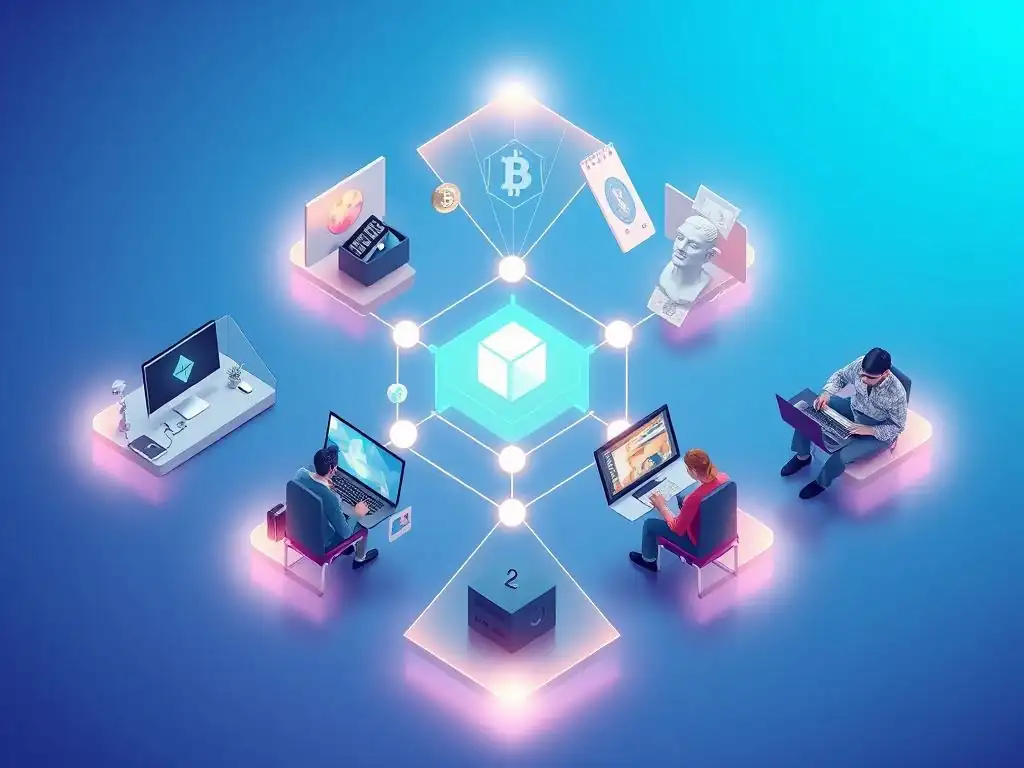
Direct Fan Funding Through Crypto: Cutting Out the Middleman
One of the most significant advantages Web3 offers creators is the ability to receive funding directly from their audience, bypassing traditional intermediaries that often take substantial cuts. Platforms built on blockchain technology allow fans to send cryptocurrencies or stablecoins directly to a creator's digital wallet.
This peer-to-peer transaction model ensures that a much larger percentage of the financial contribution goes straight to the creator, enabling more efficient and equitable decentralized creator monetization strategies. Unlike platforms that might take 10-30% or more of a transaction, blockchain transfers often incur only nominal network fees, dramatically increasing the creator's net income from fan support.
This direct funding model fosters a closer relationship between creators and their most dedicated fans. Services like Patreon or Buy Me a Coffee introduced direct support but still operate on centralized infrastructure and often charge service fees. In contrast, a creator could simply share a public wallet address on a blockchain like Ethereum or Polygon and receive payments directly.
While precise global figures are hard to aggregate due to the decentralized nature, anecdotal evidence and platform data suggest a growing trend. For instance, some decentralized platforms designed for creator tipping or donations report facilitating millions of dollars in direct transfers annually, highlighting the potential for creators to build sustainable incomes through these decentralized creator monetization strategies without relying on traditional payment processors or platform-specific features.
NFT Sales and Royalties: A New Revenue Stream for Digital Art
Non-Fungible Tokens (NFTs) have emerged as a revolutionary mechanism for creators, particularly digital artists, musicians, and writers, to monetize their work directly and establish ownership in the digital realm. By minting a unique digital asset as an NFT on a blockchain, creators can sell verifiable ownership of their digital creations.
This opens up a new market where digital art, music tracks, videos, or even tweets can be bought, sold, and traded like physical collectibles. The initial sale of an NFT can generate significant income, as demonstrated by artists like Beeple, whose "Everydays: The First 5000 Days" NFT sold for a staggering $69 million at Christie's in 2021, showcasing the immense potential for high-value transactions within these decentralized creator monetization strategies.
Beyond the primary sale, NFTs offer creators the unprecedented ability to earn passive income through programmable royalties. When an NFT is resold on a secondary market, a pre-set percentage of the sale price is automatically sent back to the original creator's wallet via smart contracts. This royalty rate can typically range from 5% to 15% or even higher, providing creators with a continuous revenue stream long after the initial sale.
This is a stark contrast to the traditional art market, where artists rarely benefit from secondary sales. For musicians, this means potentially earning royalties every time an NFT representing a song or album is traded, offering a fairer compensation model than traditional streaming services which often pay fractions of a cent per stream. These decentralized creator monetization strategies through NFTs are redefining how value flows from collectors and fans back to the creators themselves.
Tokenized Communities: Building Sustainable Creator Ecosystems
Tokenized communities represent an innovative approach to building and monetizing a dedicated audience by issuing social tokens or creator coins. These are fungible tokens specific to a creator or their community, which fans can purchase or earn. Owning these tokens can grant members access to exclusive content, private channels, early access to releases, voting rights on creative decisions, or even fractional ownership in the creator's future projects.
This transforms passive followers into active participants and stakeholders, deepening engagement and loyalty. The value of the token can potentially increase as the creator's popularity and community grow, creating a shared economic incentive.
These tokens facilitate unique decentralized creator monetization strategies by creating micro-economies around the creator's work. Creators can sell tokens directly, use them as rewards for engagement, or gate access to premium experiences based on token ownership. For example, a writer might require fans to hold a certain number of their creator tokens to access drafts of their next book or participate in a private Q&A session.
Platforms like Rally and Roll have enabled creators to launch their own social tokens, with some creators reporting generating significant revenue and building highly engaged communities. This model moves beyond simple transactions to build a sustainable ecosystem where the creator and their audience are economically aligned, offering a powerful framework for decentralized creator monetization strategies rooted in community ownership and participation.
Frequently Asked Questions
How does blockchain technology enable decentralized creator monetization strategies?
Blockchain allows for direct connections between creators and their audience, bypassing traditional intermediaries. This enables creators to receive direct payments through cryptocurrencies and NFTs, ensuring fairer compensation and greater control. Smart contracts automate revenue sharing and royalty distribution.
What are some examples of Web3 platforms that support decentralized creator monetization?
Platforms like Mirror, Audius, and Rarible utilize blockchain to allow creators to publish content, distribute music, and sell digital art directly to fans. These platforms often incorporate tokenomics to reward both creators and active community members.
What are the benefits of decentralized creator monetization compared to traditional methods?
Decentralized methods offer creators greater control over their content and earnings, reducing reliance on centralized platforms that often take significant cuts. They also provide more transparent and secure payment systems, fostering stronger creator-fan relationships.
What are the challenges associated with adopting decentralized creator monetization strategies?
Challenges include the complexity of blockchain technology, the volatility of cryptocurrencies, and the need for creators to understand and manage their own digital assets. User adoption also remains a hurdle, as many consumers are unfamiliar with Web3 technologies.
How might regulations impact the future of decentralized creator monetization strategies?
Regulatory uncertainty surrounding cryptocurrencies and NFTs could hinder the growth of decentralized platforms. Clear and supportive regulations are needed to foster innovation and ensure consumer protection, while avoiding stifling the potential of Web3 for creators.
Final Reflection: Embracing the Decentralized Future of Creativity
The exploration of Web3's potential for creators, as outlined in this article, underscores a critical shift: the power dynamic is fundamentally changing, placing artists and innovators at the heart of the creative economy. No longer beholden to centralized platforms and their often-opaque monetization models, creators now possess the tools to directly connect with their audiences, build sustainable revenue streams, and truly own their work. This isn't just a technological advancement; it's a cultural revolution.
The impact of decentralized creator monetization strategies extends far beyond mere financial gains. It fosters a sense of autonomy, encourages experimentation, and ultimately, unlocks a new era of artistic expression. This paradigm shift is profoundly personal for creators who have long felt constrained by the limitations of traditional systems. As the legendary artist Nina Simone so eloquently stated: I tell you what freedom is to me: no fear.
Web3 offers creators that very freedom – the freedom to create without fear of censorship, exploitation, or financial instability.
Now, as you reflect on the possibilities presented by Web3, consider how you can embrace this decentralized future. Whether you're a creator seeking new avenues for monetization or a supporter eager to empower artists, the time to act is now. Explore the tools, engage with the community, and become a part of this transformative movement. Let us collectively build a more equitable and vibrant creative landscape, where talent thrives and innovation knows no bounds.
Ignite Your Creative Freedom: Start Building on Web3 Today!
Thank you for exploring the transformative potential of Web3 for creators. We hope you've gained valuable insights into how decentralization can empower artists and innovators like you. Now, it's time to take the next step and unlock your creative freedom.
Here are a few ways to get started:
- Mint your first NFT! Experiment with platforms like OpenSea or Rarible to understand the process firsthand.
- Join a Web3 creator community—explore decentralized autonomous organizations related to your artistic discipline and connect with fellow innovators.
- Register a blockchain-based domain name to establish your unique Web3 identity.
Are you ready to build the future of creativity on the blockchain? What unique project are you inspired to create in the decentralized world of Web3?
Leave a Reply