
Beyond Tracking: Exploring the Power of Blockchain & IoT in Healthcare Data Management

Welcome to Blockchain Trends, your gateway to understanding the revolutionary impact of blockchain technology beyond the hype. This week, we delve into a critical application with immense potential: Blockchain healthcare data management. But how can this technology, coupled with the Internet of Things, transform patient care and data security? Discover the possibilities and challenges as we explore this exciting frontier, and unlock the future of healthcare data.
- The Convergence of Blockchain and IoT in Healthcare: A New Era of Data Security and Efficiency
-
Frequently Asked Questions
- What are the primary benefits of using blockchain for healthcare data management?
- How does the combination of blockchain and IoT enhance healthcare data security?
- What challenges exist in implementing blockchain solutions for healthcare data management?
- How can blockchain address concerns about patient data privacy in healthcare?
- Beyond data security, what other potential applications of blockchain exist in healthcare?
- Final Reflection: Embracing Trust in Healthcare's Digital Future
- Reimagine Healthcare: Take Control of Your Data!
The Convergence of Blockchain and IoT in Healthcare: A New Era of Data Security and Efficiency
Understanding the Synergistic Relationship: Blockchain, IoT, and Healthcare
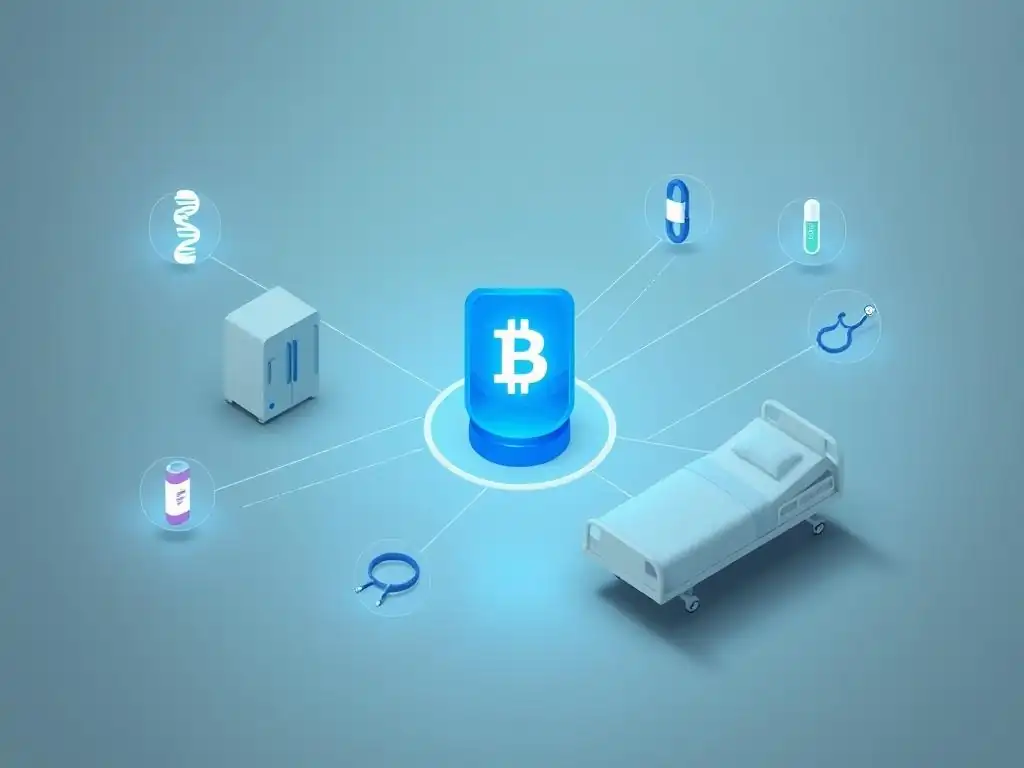
The convergence of Blockchain and the Internet of Things (IoT) presents a transformative synergy, particularly potent within the healthcare sector. IoT devices, encompassing wearables, sensors, and medical equipment, are becoming increasingly ubiquitous in healthcare settings, generating vast quantities of data from patient monitoring to equipment performance.
Blockchain technology, with its inherent security and transparency features, provides the ideal infrastructure to manage, secure, and leverage this data deluge effectively. This synergy is not merely about tracking data; it's about creating a robust, interconnected ecosystem where healthcare data is not only securely stored but also readily accessible and interoperable across different stakeholders, ultimately enhancing patient care and operational efficiency.
The power of this combination lies in their complementary strengths. IoT devices excel at data collection, capturing real-time information from diverse sources. However, the centralized nature of traditional IoT systems often creates vulnerabilities in data security and hinders seamless data sharing. Blockchain addresses these limitations by providing a decentralized, tamper-proof ledger for recording and verifying data generated by IoT devices.
Imagine a patient wearing a continuous glucose monitor (CGM) connected to a blockchain network. The CGM data, transmitted via IoT, is instantly recorded on the blockchain, ensuring its integrity and making it securely accessible to the patient's physician, specialists, and even authorized research institutions, all with patient-controlled permissions. This interconnectedness, secured by blockchain, unlocks unprecedented opportunities for data-driven healthcare innovation.
The Challenges of Traditional Healthcare Data Management Systems
Traditional healthcare data management systems are grappling with significant challenges in today's increasingly interconnected and data-rich environment. Many systems operate in silos, leading to fragmented patient records and hindering effective information sharing between hospitals, clinics, and specialists. This lack of interoperability can result in duplicated tests, delayed diagnoses, and increased administrative burdens.
For example, a patient moving between healthcare providers in different systems might find their medical history scattered across multiple databases, requiring manual retrieval and consolidation, a process prone to errors and delays. Studies have shown that inefficiencies stemming from poor data management contribute significantly to healthcare costs and can negatively impact patient outcomes.
Furthermore, the centralized architecture of many current healthcare data systems makes them attractive targets for cyberattacks. Data breaches in healthcare are increasingly common and costly, exposing sensitive patient information and eroding trust. In 2022 alone, the healthcare industry experienced a significant surge in cyberattacks, with the average cost of a healthcare data breach reaching over $10 million, according to IBM's Cost of a Data Breach Report.
These breaches not only involve financial losses but also severe reputational damage and potential harm to patients whose confidential medical details are compromised. The need for a more secure, decentralized, and interoperable approach to healthcare data management is becoming increasingly critical, driving the exploration and adoption of technologies like blockchain and IoT.
Frequently Asked Questions
What are the primary benefits of using blockchain for healthcare data management?
Blockchain provides enhanced security and privacy for sensitive patient information. It also enables improved data interoperability and streamlined data sharing among healthcare providers. Finally, it supports immutable audit trails for data access and modification.
How does the combination of blockchain and IoT enhance healthcare data security?
IoT devices generate vast amounts of data, which blockchain secures through decentralized storage and encryption. This combination creates a tamper-proof record of device data. It ensures data integrity and reduces the risk of unauthorized access.
What challenges exist in implementing blockchain solutions for healthcare data management?
Interoperability with existing systems poses a significant challenge. Issues such as regulatory uncertainty and the need for standardization can hinder adoption. Lastly, scalability concerns and the high initial cost of implementation should be considered.
How can blockchain address concerns about patient data privacy in healthcare?
Blockchain allows patients to have greater control over their data through permissioned access. Cryptographic techniques ensure data privacy and anonymity. Furthermore, the decentralized nature of blockchain reduces the risk of centralized data breaches.
Beyond data security, what other potential applications of blockchain exist in healthcare?
Blockchain can streamline supply chain management for pharmaceuticals, ensuring authenticity and preventing counterfeiting. It can also facilitate secure and transparent clinical trials and improve identity management for patients and healthcare professionals.
Final Reflection: Embracing Trust in Healthcare's Digital Future
The journey through exploring Blockchain and IoT's potential in healthcare data management reveals a crucial truth: the future of healthcare hinges on secure, transparent, and patient-centric data ecosystems. The limitations of traditional systems, plagued by fragmentation and vulnerability, are becoming increasingly apparent, making the promise of Blockchain and IoT not just appealing, but essential for building a more reliable and equitable healthcare landscape.
This exploration has underscored the profound impact that secure data management can have on patient outcomes and trust in the healthcare system. Witnessing the potential for enhanced data integrity and patient empowerment has solidified my belief in the transformative power of these technologies. The greatest wealth is health.
- Virgil. This quote resonates deeply, reminding us that safeguarding health data is paramount to protecting our most valuable asset.
As we stand on the cusp of this technological revolution, I urge you to consider the role you can play in shaping the future of healthcare. Reflect on how you can advocate for the adoption of secure and transparent data management practices, empowering patients and fostering a healthcare system built on trust and innovation. Let us collectively strive to build a future where healthcare data serves as a catalyst for improved well-being for all.
Reimagine Healthcare: Take Control of Your Data!
Thank you for exploring how blockchain and IoT can transform healthcare data management. We hope this article has inspired you to consider the benefits of enhanced security, transparency, and patient empowerment. Now, it’s time to turn that knowledge into action.
- Talk to your healthcare provider about their data security measures and ask whether they are considering integrating blockchain technology to safeguard your sensitive information. This is your first step.
- Learn more about organizations and initiatives that are advancing blockchain adoption in healthcare. Stay updated on the latest developments and innovations.
- Share this article with colleagues and friends interested in technology and healthcare. Together, we can promote understanding and adoption of these groundbreaking technologies!
What is the first step you will take to help create a more secure and transparent healthcare data system? Share your ideas in the comments below!
Leave a Reply