
Blockchain for IoT in Supply Chains: Tracking & Transparency Revolution


Welcome to Blockchain Trends, your go-to source for uncovering the real-world applications of blockchain technology. Ever wondered how blockchain can revolutionize industries beyond just cryptocurrencies?
Dive into our exploration of the groundbreaking intersection of blockchain and IoT, and discover the untapped potential of blockchain supply chain tracking benefits. Prepare to unlock a new understanding of how decentralized systems are forging a future of unparalleled transparency and efficiency. Intrigued? Let's explore the revolution together!
- Blockchain for IoT in Cold Chain Logistics: Ensuring Pharmaceutical Integrity
- Understanding Blockchain's Role in Enhancing Cold Chain Visibility
- Key Blockchain Cold Chain Tracking Benefits
-
Implementing Blockchain for IoT in Cold Chain Logistics: A Step-by-Step Approach
- Step 1: Identifying Critical Temperature Thresholds and Data Points
- Step 2: Selecting a Suitable Blockchain Platform (e.g., Hyperledger Fabric, Corda)
- Step 3: Integrating Temperature Sensors and GPS Devices
- Step 4: Developing Smart Contracts for Automated Alerts and Actions
- Step 5: Ensuring Data Security and Compliance with Regulatory Standards
- Use Cases: Blockchain and IoT Transforming Cold Chain Logistics
- Overcoming Challenges in Blockchain IoT Cold Chain Adoption
- The Future of Blockchain-Enabled IoT Cold Chains
- Conclusion: Embracing Blockchain for IoT for a Safer and More Efficient Cold Chain
-
Frequently Asked Questions
- What are the main blockchain supply chain tracking benefits for businesses using IoT devices?
- How does blockchain enhance the security of IoT data in supply chains?
- Can blockchain integration with IoT help reduce counterfeiting in supply chains?
- What role does decentralization play in improving supply chain resilience using blockchain and IoT?
- What are some of the challenges in implementing blockchain for IoT in supply chains?
- Final Reflection: Embracing the Transparent Future of Supply Chains
- Unleash Transparency: Revolutionize Your Supply Chain Now!
Blockchain for IoT in Cold Chain Logistics: Ensuring Pharmaceutical Integrity
The cold chain, a temperature-controlled supply chain, is crucial for preserving the integrity of temperature-sensitive goods, especially pharmaceuticals. Traditional cold chain monitoring systems often face challenges in maintaining complete visibility and data integrity across the entire journey from manufacturer to patient. However, the convergence of Blockchain and the Internet of Things (IoT) is revolutionizing cold chain logistics, offering unprecedented levels of tracking and transparency.
By combining the distributed ledger technology of blockchain with the real-time data collection capabilities of IoT sensors, a new era of secure, efficient, and reliable cold chain management is emerging, particularly vital for sensitive products like vaccines and biopharmaceuticals. This article will delve into the transformative potential of blockchain and IoT in cold chain logistics, focusing on the benefits, implementation, and future trends shaping this critical sector.
The Challenges of Traditional Cold Chain Monitoring
Traditional cold chain monitoring systems often rely on fragmented data, manual record-keeping, and centralized databases, which are susceptible to manipulation and single points of failure. Temperature excursions, deviations from the required temperature range, are a significant concern. According to a study by the Parenteral Drug Association (PDA), temperature deviations occur in approximately 25% of vaccine shipments, potentially compromising efficacy and leading to significant financial losses.
These excursions can happen at various points in the supply chain, from manufacturing and storage to transportation and last-mile delivery. Lack of real-time visibility makes it difficult to promptly identify and address these issues, resulting in product spoilage, regulatory non-compliance, and ultimately, risks to patient safety.
Furthermore, traditional systems often lack transparency and accountability. When temperature excursions occur, pinpointing the exact location and time of the deviation can be challenging, leading to disputes among stakeholders, including manufacturers, logistics providers, and distributors. The absence of a unified, tamper-proof record of temperature data makes it difficult to verify the authenticity and quality of temperature-sensitive products.
This opacity can erode trust within the supply chain and hinder effective risk management. The need for a more robust, transparent, and secure system for cold chain monitoring is therefore paramount, especially in the pharmaceutical industry where product integrity directly impacts patient health and well-being.
How Blockchain and IoT Address Cold Chain Vulnerabilities
Blockchain and IoT technologies, when integrated, offer a powerful solution to overcome the vulnerabilities inherent in traditional cold chain monitoring. IoT sensors, embedded in packaging or storage facilities, provide real-time, granular data on temperature, humidity, location, and other critical environmental parameters. This data is automatically and continuously recorded, eliminating the need for manual intervention and reducing the risk of human error.
Blockchain, acting as a secure and immutable ledger, then stores this IoT-generated data in a decentralized manner. Each data point is time-stamped and cryptographically secured, creating an auditable and transparent record of the product's journey through the cold chain.
This combination addresses the issues of data fragmentation and manipulation. The decentralized nature of blockchain ensures that no single entity can alter or tamper with the recorded data, fostering trust and accountability among all stakeholders. Any temperature excursion or deviation from pre-defined thresholds is immediately recorded on the blockchain, providing real-time alerts and enabling proactive intervention.
This enhanced visibility and data integrity significantly reduce the risk of product spoilage and counterfeit pharmaceuticals entering the supply chain. Moreover, the transparency offered by blockchain facilitates faster issue resolution and streamlines regulatory compliance, as all relevant data is readily available and verifiable by authorized parties.
Understanding Blockchain's Role in Enhancing Cold Chain Visibility
What is Blockchain Technology? A Brief Overview
Blockchain technology, at its core, is a distributed, immutable ledger that records transactions across many computers. Instead of relying on a central authority, blockchain uses a network of nodes to validate and record data in blocks that are cryptographically linked together, forming a chain. This structure makes it incredibly difficult to alter or tamper with the data once it has been recorded, as any modification would require changing all subsequent blocks and gaining consensus from the majority of the network. This inherent security and transparency are fundamental to blockchain's appeal across various industries.
In the context of supply chains, blockchain provides a shared, transparent record of product journey and conditions. Each step in the supply chain, from manufacturing to delivery, can be recorded as a transaction on the blockchain, creating a comprehensive and auditable history of the product. Smart contracts, self-executing contracts with the terms of the agreement directly written into code, can be deployed on blockchain to automate processes and enforce pre-defined conditions.
For example, a smart contract in a cold chain could automatically trigger alerts and initiate corrective actions if temperature readings fall outside the acceptable range, ensuring timely responses and minimizing potential damage. The decentralized and secure nature of blockchain makes it an ideal technology for enhancing trust and visibility in complex and geographically dispersed supply chains.
IoT Sensors as Data Providers: Real-Time Temperature Monitoring
The Internet of Things (IoT) plays a crucial role in providing real-time data for blockchain-based cold chain solutions. IoT sensors, small and cost-effective devices, can be integrated into product packaging, storage facilities, and transportation vehicles to continuously monitor environmental conditions. For cold chain logistics, temperature sensors are paramount, but humidity sensors, GPS trackers, and shock detectors can also be incorporated to provide a holistic view of the product's journey. These sensors wirelessly transmit data at pre-defined intervals to a network gateway, which then relays the information to the blockchain platform.
Modern temperature sensors offer high accuracy and reliability, capable of measuring temperatures within fractions of a degree Celsius. For example, digital temperature loggers commonly used in pharmaceutical transport can record temperatures with an accuracy of ±0.5°C. Some advanced sensors can even detect and record temperature fluctuations as minute as ±0.1°C, crucial for ultra-sensitive biologics.
The real-time nature of IoT sensor data is a significant advantage over traditional methods, which often relied on manual temperature checks at checkpoints or delayed data retrieval from data loggers. This continuous data stream, when combined with blockchain's immutability, creates a powerful system for proactive cold chain management and risk mitigation.
The Synergy: Blockchain and IoT Data Integration for Temperature-Sensitive Goods
The true power of blockchain in cold chain logistics is unleashed when integrated with IoT sensor data. IoT sensors act as the eyes and ears of the cold chain, constantly monitoring and collecting critical environmental data. Blockchain provides the secure and transparent platform to record, verify, and share this data among stakeholders. This synergy creates a closed-loop system where real-time data from IoT sensors is immutably recorded on the blockchain, providing a single source of truth for all parties involved. For temperature-sensitive goods like pharmaceuticals, this integration is particularly vital.
Imagine a shipment of vaccines equipped with IoT temperature sensors. As the vaccines travel through the supply chain, temperature data is continuously streamed and recorded on a blockchain. If, at any point, a temperature excursion occurs, the event is immediately logged on the blockchain, triggering alerts to relevant stakeholders.
This real-time visibility allows for immediate corrective action, such as rerouting the shipment or initiating quality checks. Furthermore, the immutable record on the blockchain provides irrefutable proof of the product's temperature history, crucial for regulatory compliance and establishing accountability. This seamless integration of IoT and blockchain not only enhances cold chain visibility but also builds trust and efficiency throughout the entire supply chain network.
Key Blockchain Cold Chain Tracking Benefits
Enhanced Traceability and Provenance of Pharmaceuticals
One of the most significant blockchain supply chain tracking benefits is the enhanced traceability and provenance it provides, especially crucial for pharmaceuticals. Blockchain enables the creation of a complete, auditable, and immutable record of a pharmaceutical product's journey from manufacturing to the point of dispensing. Each step, from raw material sourcing and manufacturing to packaging, storage, transportation, and delivery, can be recorded as a transaction on the blockchain. This creates a detailed digital trail, providing irrefutable evidence of the product's origin, handling, and custody throughout the supply chain.
This level of traceability is invaluable in combating counterfeit drugs, a major global health concern. The World Health Organization (WHO) estimates that counterfeit drugs account for approximately 10% of all medicines in low- and middle-income countries, and even higher in certain regions. By leveraging blockchain, pharmaceutical companies can provide consumers and healthcare providers with the ability to verify the authenticity of medications.
Scanning a unique identifier on the product packaging, linked to its blockchain record, can instantly reveal the entire product history, ensuring it is genuine and has been handled according to required standards. This enhanced provenance builds trust and protects patients from the dangers of spurious or substandard medications.
Improved Transparency and Accountability in Temperature Control
Blockchain supply chain tracking benefits also extend to significantly improved transparency and accountability in temperature control. In traditional cold chains, temperature data is often fragmented and lacks transparency, making it difficult to pinpoint responsibility for temperature excursions. Blockchain, combined with IoT sensors, creates a shared, transparent record of temperature data accessible to all authorized stakeholders. Every temperature reading captured by IoT sensors is immutably recorded on the blockchain, along with timestamps and location data, creating an undeniable audit trail.
This transparency fosters accountability among all parties involved in the cold chain, from manufacturers and logistics providers to distributors and retailers. If a temperature excursion occurs, the blockchain record provides clear evidence of when, where, and for how long the deviation occurred, making it easier to identify the responsible party and take corrective actions.
For example, if a shipment of temperature-sensitive vaccines experiences a temperature breach during transit, the blockchain record can quickly identify the segment of the journey and the responsible logistics provider, facilitating faster investigation and resolution. This increased transparency and accountability not only improve cold chain efficiency but also reduce disputes and build trust among stakeholders.
Increased Security and Data Integrity of Sensitive Information
Security and data integrity are paramount in the pharmaceutical cold chain, especially when dealing with sensitive information such as patient data and proprietary manufacturing processes. Blockchain supply chain tracking benefits include robust security features that protect against data breaches, tampering, and unauthorized access. The cryptographic nature of blockchain ensures that data is encrypted and secured, making it extremely difficult for malicious actors to alter or manipulate records. Furthermore, the decentralized architecture of blockchain eliminates single points of failure, making the system more resilient to cyberattacks.
Unlike centralized databases, which are vulnerable to single points of attack, blockchain distributes data across multiple nodes, making it significantly harder to compromise. Access to blockchain data is typically controlled through cryptographic keys and permissions, ensuring that only authorized parties can view or modify information. This enhanced security is particularly crucial for protecting sensitive pharmaceutical data, such as manufacturing details, batch numbers, and temperature logs, from unauthorized access or tampering. By leveraging blockchain's inherent security features, pharmaceutical companies can ensure the integrity and confidentiality of critical cold chain data, safeguarding product quality and patient safety.
Streamlined Processes and Reduced Spoilage
Blockchain supply chain tracking benefits also contribute to streamlined processes and a significant reduction in spoilage of temperature-sensitive goods. Traditional cold chain processes often involve manual data entry, paper-based records, and fragmented communication, leading to inefficiencies and delays. Blockchain, combined with IoT and smart contracts, automates many of these processes, streamlining operations and improving efficiency. For instance, smart contracts can automate temperature monitoring alerts, trigger automated notifications upon deviations, and even initiate automated re-ordering processes when inventory levels are low, based on real-time demand and spoilage data.
By providing real-time visibility and automated alerts, blockchain helps to proactively prevent spoilage. Prompt identification of temperature excursions allows for timely intervention, minimizing the risk of product damage and loss. According to industry estimates, pharmaceutical spoilage due to cold chain failures can cost billions of dollars annually. By reducing spoilage, blockchain not only saves costs but also contributes to a more sustainable and efficient supply chain. Furthermore, streamlined processes translate to faster delivery times, reduced administrative overhead, and improved overall operational efficiency within the cold chain network.
Real-Time Visibility and Predictive Analytics for Temperature Excursions
Real-time visibility is a cornerstone of blockchain supply chain tracking benefits in cold chain logistics. The combination of IoT sensors and blockchain provides stakeholders with an unprecedented level of insight into the location and condition of temperature-sensitive goods at every stage of the supply chain. This real-time data stream allows for proactive monitoring and immediate response to any deviations from pre-defined temperature thresholds. Dashboards and alerts can be configured to provide instant notifications when temperature excursions occur, enabling timely intervention and preventing potential spoilage.
Beyond real-time monitoring, blockchain-enabled cold chains can also facilitate predictive analytics. By analyzing historical temperature data collected on the blockchain, patterns and trends can be identified to predict potential temperature risks in specific routes, transportation modes, or storage facilities. Machine learning algorithms can be applied to this data to forecast potential temperature excursions, allowing for proactive adjustments to logistics plans, such as rerouting shipments or optimizing temperature control measures. This predictive capability significantly enhances cold chain resilience and enables a shift from reactive problem-solving to proactive risk management, ultimately minimizing spoilage and ensuring product integrity.
Implementing Blockchain for IoT in Cold Chain Logistics: A Step-by-Step Approach
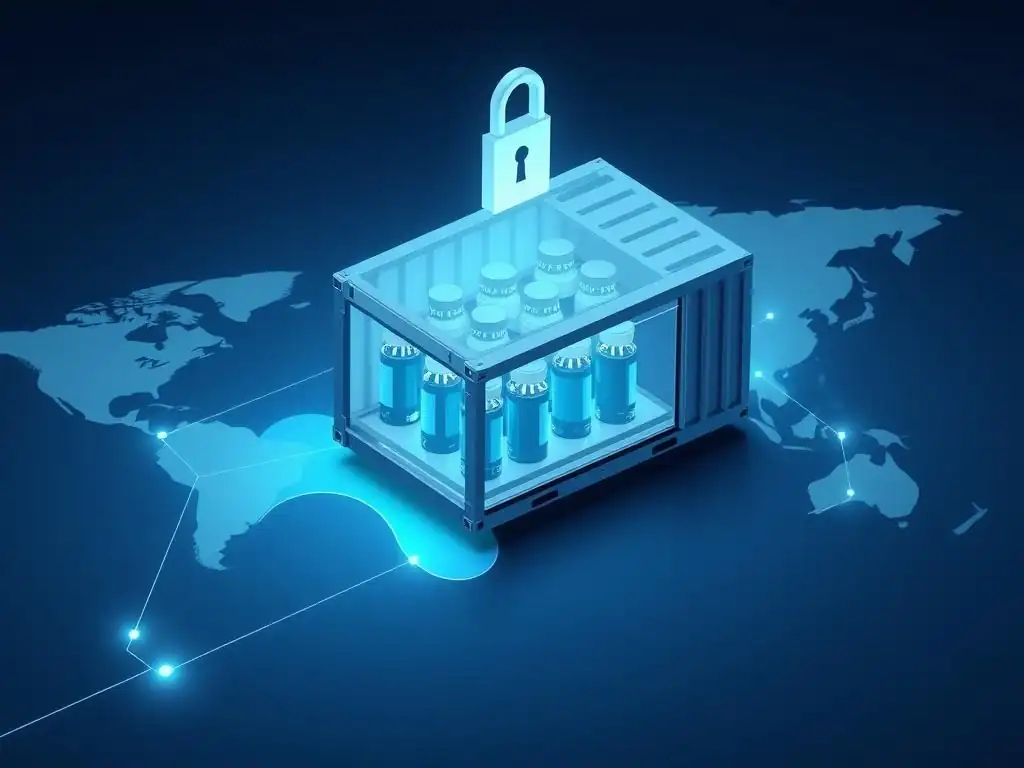
Step 1: Identifying Critical Temperature Thresholds and Data Points
The first step in implementing blockchain for IoT in cold chain logistics is to meticulously define critical temperature thresholds and identify essential data points to be tracked. This requires a thorough understanding of the specific temperature sensitivity of the pharmaceutical products being transported. For instance, vaccines often have very narrow temperature ranges, typically between 2°C and 8°C, while some biologics may require even more stringent temperature control, such as -20°C or even cryogenic temperatures. Exceeding these thresholds, even for a short duration, can compromise product efficacy and safety.
Beyond temperature, other relevant data points may include humidity levels, location, shock and vibration, and light exposure, depending on the sensitivity of the product. These thresholds and data points should be clearly documented and agreed upon by all stakeholders involved in the cold chain, including manufacturers, logistics providers, and regulatory bodies.
This step is crucial for setting the parameters for IoT sensor deployment and smart contract development, ensuring that the blockchain system accurately captures and responds to critical environmental conditions. For example, for a vaccine shipment, critical data points would include temperature readings every 5-15 minutes, GPS location updates, and timestamps for each temperature reading.
Step 2: Selecting a Suitable Blockchain Platform (e.g., Hyperledger Fabric, Corda)
Choosing the right blockchain platform is a critical decision that will significantly impact the performance, scalability, and security of the blockchain-enabled cold chain solution. Several blockchain platforms are suitable for enterprise applications, including Hyperledger Fabric, Corda, and Ethereum. Hyperledger Fabric, an open-source enterprise-grade permissioned blockchain platform hosted by the Linux Foundation, is well-suited for supply chain applications due to its modular architecture, scalability, and support for private and confidential transactions. Corda, another permissioned blockchain platform, is designed specifically for managing and recording financial agreements and is also applicable to supply chain scenarios requiring strong data privacy and control.
The selection process should consider factors such as the scale of the cold chain network, the number of stakeholders involved, data privacy requirements, transaction throughput needs, and integration capabilities with existing systems. For a large, complex cold chain network involving multiple pharmaceutical companies, logistics providers, and distributors, a permissioned blockchain platform like Hyperledger Fabric or Corda might be more appropriate due to its scalability and access control features.
For smaller networks or pilot projects, public blockchain platforms like Ethereum could be considered, although scalability and transaction costs might be factors to consider. The chosen platform should also offer robust security features, smart contract capabilities, and ease of integration with IoT devices and other enterprise systems.
Step 3: Integrating Temperature Sensors and GPS Devices
Seamless integration of IoT devices, particularly temperature sensors and GPS trackers, is essential for capturing real-time data and feeding it into the blockchain system. Temperature sensors should be selected based on their accuracy, reliability, and suitability for the specific temperature ranges required for the pharmaceutical products. Wireless temperature sensors that communicate via Bluetooth, Zigbee, or cellular networks are commonly used for cold chain applications, allowing for continuous data transmission without physical connections. GPS devices are integrated to provide real-time location tracking of shipments, enabling visibility into the geographic progression of temperature-sensitive goods.
The placement of sensors is also crucial for accurate temperature monitoring. Sensors should be strategically positioned within packaging or storage units to accurately reflect the temperature of the pharmaceutical products, avoiding placement near cooling elements or external surfaces that might not represent the internal temperature. Data from temperature sensors and GPS devices needs to be securely transmitted to a gateway and then to the blockchain platform.
This data transmission process should be robust and reliable, ensuring continuous data flow even in challenging environments. Consideration should be given to battery life for wireless sensors and network connectivity in remote locations to ensure uninterrupted data collection.
Step 4: Developing Smart Contracts for Automated Alerts and Actions
Smart contracts are self-executing agreements written in code and deployed on the blockchain. They are instrumental in automating processes and enforcing pre-defined rules within a blockchain-enabled cold chain. For cold chain logistics, smart contracts can be developed to automatically trigger alerts when temperature excursions occur, initiate corrective actions, and enforce contractual agreements between stakeholders. For example, a smart contract can be programmed to monitor temperature data from IoT sensors in real-time. If the temperature exceeds a pre-defined threshold, the smart contract automatically triggers an alert notification to relevant stakeholders, such as the logistics provider and the quality control team.
Smart contracts can also automate more complex actions, such as initiating a quality check process if a temperature excursion exceeds a critical limit, or even automatically rerouting a shipment to a different storage facility if prolonged temperature deviations are detected. Furthermore, smart contracts can be used to automate payment processes based on adherence to cold chain conditions.
For instance, a smart contract could automatically release payment to a logistics provider only if the temperature data recorded on the blockchain confirms that the shipment was maintained within the required temperature range throughout the journey. The development of robust and well-defined smart contracts is crucial for leveraging the full automation potential of blockchain in cold chain logistics.
Step 5: Ensuring Data Security and Compliance with Regulatory Standards
Data security and compliance with regulatory standards are paramount considerations throughout the implementation of blockchain for IoT in cold chain logistics. Pharmaceutical data is highly sensitive and subject to stringent regulations, such as HIPAA in the United States and GDPR in Europe. The blockchain system must be designed to ensure data privacy, confidentiality, and integrity, complying with all relevant regulatory requirements. This includes implementing robust access control mechanisms, encryption protocols, and audit trails to protect sensitive data from unauthorized access and breaches.
Compliance with pharmaceutical regulations, such as Good Distribution Practices (GDP) and Good Manufacturing Practices (GMP), is also crucial. The blockchain system should be designed to support regulatory compliance requirements, providing auditable and verifiable records of temperature data, chain of custody, and other relevant information. Data governance policies and procedures need to be established to ensure data quality, accuracy, and compliance with regulatory guidelines.
Regular audits and security assessments should be conducted to verify the security and compliance of the blockchain system. Collaboration with legal and regulatory experts is essential to ensure that the blockchain implementation meets all applicable data privacy and pharmaceutical regulatory requirements.
Use Cases: Blockchain and IoT Transforming Cold Chain Logistics
Vaccine Distribution: Maintaining Vaccine Efficacy
Vaccine distribution is perhaps the most critical application of blockchain and IoT in cold chain logistics. Vaccines are highly temperature-sensitive biological products, and maintaining their efficacy throughout the supply chain is paramount for public health. Temperature excursions can significantly reduce vaccine potency, rendering them ineffective and potentially leading to disease outbreaks. Blockchain-enabled IoT cold chains provide a robust solution for ensuring vaccine integrity from manufacturing to administration.
For example, during the COVID-19 pandemic, the distribution of mRNA vaccines, which require ultra-cold storage at -70°C, highlighted the critical need for reliable cold chain monitoring. Blockchain and IoT technologies were deployed to track vaccine shipments, monitor temperature conditions in real-time, and ensure that vaccines were maintained within the required temperature range. Companies like Modum and IBM Food Trust have developed blockchain-based platforms specifically for pharmaceutical cold chains, including vaccine distribution.
These platforms provide end-to-end visibility, automated alerts for temperature excursions, and immutable records of vaccine handling, ensuring vaccine efficacy and reducing wastage. The enhanced traceability and transparency offered by blockchain are crucial for building public trust in vaccine safety and efficacy.
Biopharmaceutical Transportation: Tracking Sensitive Biological Materials
Biopharmaceutical products, including biologics, biosimilars, and gene therapies, are often highly sensitive to temperature variations and require stringent cold chain management. These products are typically high-value and complex to manufacture, making their preservation during transportation even more critical. Blockchain and IoT solutions are increasingly being adopted to track and monitor biopharmaceutical shipments, ensuring their integrity and efficacy. For instance, monoclonal antibodies, a class of biopharmaceutical drugs used to treat various diseases, require precise temperature control throughout their journey.
Blockchain-based platforms can track the temperature, humidity, and location of biopharmaceutical shipments in real-time, providing manufacturers and logistics providers with complete visibility. Smart contracts can automate alerts for temperature excursions and trigger corrective actions, such as expedited delivery or temperature recovery measures. The immutable record on the blockchain provides verifiable proof of proper handling, which is essential for regulatory compliance and insurance purposes.
Companies like Chronicled have developed blockchain solutions specifically for the pharmaceutical and biopharmaceutical industries, focusing on supply chain visibility and product integrity. The use of blockchain and IoT in biopharmaceutical transportation minimizes the risk of product degradation, reduces spoilage, and ensures that patients receive effective and safe therapies.
Organ Transplant Logistics: Ensuring Organ Viability
Organ transplantation is a time-critical and highly sensitive medical procedure where the viability of the donated organ is paramount. Organs for transplantation have a limited shelf life and require precise temperature control and rapid transportation from the donor to the recipient. Blockchain and IoT technologies are being explored to enhance the efficiency and reliability of organ transplant logistics, ensuring organ viability and improving patient outcomes. Currently, organ tracking and logistics often rely on manual processes and fragmented systems, which can lead to delays and errors.
Blockchain-based platforms can provide a secure and transparent system for tracking organs throughout the transplant process, from procurement to transplantation. IoT sensors can monitor the temperature and condition of organs during transportation, ensuring that they are maintained within the required parameters. The immutable record on the blockchain can track the chain of custody, temperature logs, and transportation times, providing auditable proof of proper handling.
This enhanced visibility and traceability can help to reduce organ wastage, improve organ matching efficiency, and ensure that organs reach recipients in optimal condition. While still in early stages of adoption, blockchain and IoT hold significant promise for transforming organ transplant logistics and improving patient access to life-saving transplants.
Blood Bank Management: Monitoring Blood Product Integrity
Blood banks play a crucial role in ensuring a safe and reliable supply of blood products for transfusions. Blood products, such as red blood cells, platelets, and plasma, are temperature-sensitive and require strict cold chain management to maintain their quality and safety. Temperature excursions can compromise the efficacy and safety of blood products, potentially leading to adverse transfusion reactions. Blockchain and IoT solutions can enhance blood bank management by providing real-time monitoring of blood product temperature and ensuring traceability throughout the supply chain.
IoT sensors can be integrated into blood bags and storage facilities to continuously monitor temperature and other critical parameters. This data can be recorded on a blockchain, creating an immutable record of blood product handling and storage conditions. Smart contracts can automate alerts for temperature excursions and trigger quality control checks if deviations are detected.
Blockchain can also enhance traceability of blood products from donation to transfusion, improving inventory management and reducing wastage. For example, MediLedger, a blockchain network focused on the pharmaceutical industry, has explored applications in blood product supply chains. By leveraging blockchain and IoT, blood banks can enhance the safety and quality of blood products, improve inventory management, and streamline operations.
Overcoming Challenges in Blockchain IoT Cold Chain Adoption
Sensor Data Validation and Calibration
One of the key challenges in implementing blockchain-based IoT cold chains is ensuring the accuracy and reliability of sensor data. IoT sensors, while generally accurate, can be subject to calibration drift, environmental interference, or malfunction. If inaccurate or unreliable sensor data is recorded on the blockchain, it can undermine the integrity and trustworthiness of the entire system. Therefore, robust sensor data validation and calibration procedures are essential.
Regular calibration of temperature sensors should be implemented, adhering to established standards and guidelines. Calibration records should be maintained and auditable, ideally recorded on the blockchain itself to ensure transparency. Data validation techniques, such as anomaly detection algorithms and cross-sensor verification, can be employed to identify and flag potentially erroneous sensor readings.
Redundancy in sensor deployment can also be considered, using multiple sensors to monitor the same parameter and cross-validate readings. Furthermore, data quality checks should be incorporated into smart contracts, ensuring that only validated and reliable data is used for decision-making and automated actions. Addressing sensor data validation and calibration is crucial for building trust and confidence in blockchain-enabled IoT cold chain solutions.
Interoperability Between Different Cold Chain Stakeholders' Systems
The pharmaceutical cold chain typically involves multiple stakeholders, including manufacturers, logistics providers, distributors, and retailers, each often using different IT systems and data formats. Achieving interoperability between these disparate systems is a significant challenge for blockchain adoption. For blockchain to effectively enhance cold chain visibility and transparency across the entire network, seamless data exchange and communication between different stakeholders' systems are essential.
Standardization of data formats, communication protocols, and APIs is crucial for fostering interoperability. Industry-wide collaboration and the development of open standards are needed to facilitate data exchange between different blockchain platforms and legacy systems. Blockchain platforms that support interoperability features, such as cross-chain communication protocols and API gateways, should be considered. Middleware solutions can be implemented to bridge the gap between different systems and translate data formats. Addressing interoperability challenges is essential for realizing the full potential of blockchain in creating a truly connected and transparent cold chain ecosystem.
Data Privacy and Compliance with Healthcare Regulations (e.g., HIPAA)
Data privacy and compliance with healthcare regulations, such as HIPAA in the United States and GDPR in Europe, are paramount concerns in blockchain-enabled cold chain solutions for pharmaceuticals. Pharmaceutical data, including patient information, product details, and temperature logs, is highly sensitive and subject to strict privacy regulations. Blockchain systems must be designed to ensure data privacy and confidentiality while complying with all applicable regulations.
Permissioned blockchain platforms, which control access to data and network participation, are generally preferred for pharmaceutical applications due to their enhanced privacy features. Data encryption techniques, such as homomorphic encryption and zero-knowledge proofs, can be explored to further enhance data privacy while still enabling data processing and verification on the blockchain. Data minimization principles should be applied, collecting only the necessary data and avoiding the storage of personally identifiable information on the blockchain whenever possible.
Compliance with healthcare regulations requires careful consideration of data governance policies, access control mechanisms, and data retention policies. Legal and regulatory expertise is essential to ensure that blockchain implementations fully comply with data privacy requirements.
The Importance of Collaboration and Industry Standards
The successful adoption of blockchain and IoT in cold chain logistics requires strong collaboration among industry stakeholders and the development of industry standards. The fragmented nature of the cold chain and the diverse range of stakeholders involved necessitate a collaborative approach to address challenges and drive adoption. Pharmaceutical companies, logistics providers, technology vendors, and regulatory bodies need to work together to define common standards, protocols, and best practices for blockchain-enabled cold chains.
Industry consortia and working groups can play a crucial role in fostering collaboration and developing standards. These collaborations can focus on defining data formats, interoperability standards, security protocols, and regulatory compliance frameworks. Open-source initiatives and shared blockchain platforms can also promote collaboration and reduce fragmentation. Pilot projects and proof-of-concepts involving multiple stakeholders can help to validate blockchain solutions and demonstrate their benefits in real-world cold chain scenarios. Collaboration and industry standards are essential for overcoming adoption barriers, building trust, and accelerating the widespread implementation of blockchain and IoT in cold chain logistics.
The Future of Blockchain-Enabled IoT Cold Chains
The Rise of Decentralized Cold Chain Networks
The future of blockchain-enabled IoT cold chains points towards the rise of decentralized cold chain networks. Traditional cold chains often rely on centralized systems and intermediaries, creating potential bottlenecks and single points of failure. Blockchain's decentralized nature offers the opportunity to create more resilient, efficient, and transparent cold chain networks that are less reliant on central authorities. Decentralized cold chain networks can empower stakeholders, enhance data sharing, and improve overall network efficiency.
Decentralized autonomous organizations (DAOs) could potentially play a role in governing and managing future cold chain networks. DAOs are organizations that are governed by smart contracts and operate autonomously based on pre-defined rules. A DAO could be established to manage a blockchain-based cold chain network, ensuring fair governance, transparent decision-making, and equitable distribution of benefits among stakeholders. Decentralized cold chain networks can also foster greater collaboration and trust among stakeholders, as data and processes are transparent and verifiable by all participants. The shift towards decentralization promises to create more robust, resilient, and efficient cold chain ecosystems.
The Impact of AI and Machine Learning on Temperature Prediction
The integration of Artificial Intelligence (AI) and Machine Learning (ML) with blockchain-enabled IoT cold chains is poised to further revolutionize temperature management and predictive capabilities. AI and ML algorithms can analyze vast amounts of historical and real-time data collected from IoT sensors and recorded on the blockchain to identify patterns, predict temperature excursions, and optimize cold chain operations. Predictive analytics powered by AI and ML can enable proactive risk management and minimize spoilage.
For example, ML models can be trained to predict temperature fluctuations based on factors such as weather conditions, transportation routes, vehicle types, and storage facility characteristics. These predictive models can provide early warnings of potential temperature risks, allowing for proactive adjustments to logistics plans, such as rerouting shipments or optimizing temperature control settings.
AI can also be used to optimize temperature control systems in real-time, dynamically adjusting cooling parameters based on sensor data and predictive models. The combination of AI and blockchain-enabled IoT cold chains will lead to more intelligent, adaptive, and efficient temperature management, significantly reducing spoilage and improving product integrity.
The Role of Blockchain in Reducing Pharmaceutical Waste
Blockchain technology has a significant role to play in reducing pharmaceutical waste in cold chain logistics. Pharmaceutical waste is a major economic and environmental concern, with significant amounts of temperature-sensitive drugs being discarded due to spoilage or expiration. Blockchain-enabled cold chains can minimize pharmaceutical waste by improving visibility, traceability, and efficiency throughout the supply chain. Enhanced traceability allows for better inventory management and reduces the risk of expired medications being dispensed.
Real-time visibility into temperature conditions enables proactive intervention and prevents spoilage due to temperature excursions. Streamlined processes and reduced delays minimize the risk of product degradation and extend shelf life. Furthermore, blockchain can facilitate better demand forecasting and inventory optimization, ensuring that the right quantities of medications are available at the right time, reducing overstocking and subsequent wastage. By minimizing spoilage, improving inventory management, and optimizing supply chain efficiency, blockchain contributes to a more sustainable and less wasteful pharmaceutical cold chain, benefiting both businesses and the environment.
Conclusion: Embracing Blockchain for IoT for a Safer and More Efficient Cold Chain
The Transformative Power of Blockchain and IoT in Cold Chain Management
The convergence of blockchain and IoT is undeniably transforming cold chain management, particularly in the pharmaceutical industry. By addressing the limitations of traditional systems, this powerful combination offers unprecedented levels of tracking, transparency, security, and efficiency. Blockchain supply chain tracking benefits are realized through enhanced traceability and provenance of pharmaceuticals, improved transparency and accountability in temperature control, increased data security and integrity, streamlined processes, and real-time visibility for predictive analytics. These benefits translate to reduced spoilage, minimized risks, improved regulatory compliance, and ultimately, safer and more effective pharmaceutical products for patients.
The adoption of blockchain and IoT in cold chain logistics is not merely a technological upgrade; it represents a fundamental shift towards a more collaborative, transparent, and patient-centric approach to pharmaceutical supply chain management. By embracing these technologies, pharmaceutical companies and cold chain stakeholders can build trust, enhance operational efficiency, and ensure the integrity of temperature-sensitive medications, contributing to improved public health outcomes and a more sustainable pharmaceutical industry. The transformative power of blockchain and IoT in cold chain management is undeniable, paving the way for a safer and more efficient future for pharmaceutical logistics.
Future Outlook: The Continued Evolution of Blockchain Cold Chain Solutions
The future outlook for blockchain cold chain solutions is bright, with continued evolution and innovation expected in the coming years. As blockchain technology matures and adoption accelerates, we can anticipate wider implementation across the pharmaceutical industry and other temperature-sensitive sectors. Emerging trends, such as the rise of decentralized cold chain networks, the integration of AI and machine learning for predictive analytics, and the development of industry standards, will further enhance the capabilities and benefits of blockchain-enabled cold chains.
Advancements in IoT sensor technology, such as smaller, more energy-efficient, and more accurate sensors, will further improve data collection and monitoring capabilities. The increasing focus on sustainability and reducing pharmaceutical waste will drive further adoption of blockchain solutions to optimize cold chain efficiency and minimize spoilage.
Regulatory bodies are also increasingly recognizing the potential of blockchain to enhance supply chain transparency and security, potentially leading to supportive regulatory frameworks and incentives for adoption. The continued evolution of blockchain cold chain solutions promises to create even more resilient, efficient, and patient-centric pharmaceutical supply chains in the years to come, solidifying blockchain's role as a key enabler of a safer and more efficient cold chain ecosystem.
Frequently Asked Questions
What are the main blockchain supply chain tracking benefits for businesses using IoT devices?
Blockchain offers enhanced transparency by creating an immutable record of all transactions and movements, increasing trust and reducing fraud. It also improves supply chain efficiency through automation and real-time data sharing.
How does blockchain enhance the security of IoT data in supply chains?
Blockchain uses cryptographic hashing and a decentralized ledger to secure IoT data, making it extremely difficult for unauthorized parties to tamper with records. This provides a high level of data integrity and security.
Can blockchain integration with IoT help reduce counterfeiting in supply chains?
Yes, by providing a verifiable and transparent record of a product's journey from origin to consumer, blockchain can significantly reduce the risk of counterfeit goods entering the supply chain.
What role does decentralization play in improving supply chain resilience using blockchain and IoT?
Decentralization ensures that no single point of failure exists, making the supply chain more resilient to disruptions like cyberattacks or natural disasters. The distributed ledger ensures data remains accessible even if one node fails.
What are some of the challenges in implementing blockchain for IoT in supply chains?
Challenges include the scalability of blockchain networks to handle high volumes of IoT data, the integration complexity with existing systems, and the need for industry-wide collaboration to establish standards.
Final Reflection: Embracing the Transparent Future of Supply Chains
The exploration of blockchain's transformative potential in IoT-enabled supply chains culminates in a powerful realization: the future of commerce hinges on verifiable trust and unwavering transparency. We've seen how blockchain, coupled with IoT devices, can revolutionize supply chain tracking, offering unprecedented visibility and security. This isn't merely a technological advancement; it's a paradigm shift towards a more accountable and efficient global marketplace.
This revolution extends far beyond simple tracking. It's about fostering a deeper sense of responsibility and ethical sourcing within the entire supply chain ecosystem. From the origin of raw materials to the final delivery, blockchain empowers consumers and businesses alike to make informed decisions based on immutable data. Transparency and accountability are the cornerstones of a sustainable and ethical supply chain. Blockchain provides the tools to build that foundation.
This shift towards transparency is not just a trend; it's a fundamental requirement for building trust in an increasingly complex world.
Now, consider the implications of this newfound transparency in your own life. How can you, as a consumer, a business owner, or simply an informed citizen, demand greater accountability from the supply chains that impact your daily life? Let the insights gleaned from this exploration of blockchain supply chain tracking benefits inspire you to advocate for a more transparent and ethical future, where every product tells a story of integrity and responsibility.
Unleash Transparency: Revolutionize Your Supply Chain Now!
Thank you for exploring how blockchain and IoT are transforming supply chains. You now have valuable insights into creating more transparent and efficient systems. It’s time to put that knowledge into action!
Here are a few steps to get started:
- Identify a specific area within your supply chain where a pilot project using blockchain and IoT could make a difference. Focus on a key challenge, such as tracking high-value items or verifying product authenticity.
- Consider experimenting with open-source blockchain platforms to develop a proof of concept. Dive in, learn as you go, and refine your approach.
- Share this article with a colleague passionate about supply chain innovation and discuss potential collaborations to implement these technologies.
What’s the biggest obstacle in your supply chain that you’re ready to address with blockchain and IoT? Share your thoughts in the comments below!
Leave a Reply