
Building Trust in IoT Systems: The Smart Contract Advantage


Welcome to Blockchain Trends, your compass in the ever-evolving world of decentralized technology. Delve into the transformative power of blockchain beyond the headlines, exploring its impact on finance, enterprise, and beyond. Ever wondered how to truly secure the Internet of Things? Our featured article uncovers how smart contracts are revolutionizing IoT trust, offering a glimpse into the future of secure, automated systems. Discover the advantages and explore how this powerful combination can shape a more reliable digital landscape. Read on to find out more!
Building Trust in IoT Systems: The Smart Contract Advantage
- Introduction: The Need for Trust in IoT Ecosystems
- Smart Contracts: A Blockchain-Based Solution for IoT Trust
- Leveraging Smart Contracts to Secure IoT Data Exchange
- Use Cases: Smart Contracts and IoT Trust in Action
- Benefits of Using Smart Contracts for IoT Trust
- Overcoming the Challenges of Implementing Smart Contracts in IoT
- The Future of Smart Contracts and IoT: A Vision of Trusted Automation
- Conclusion: Smart Contracts as Key Enablers of Trustworthy IoT Deployments
-
Frequently Asked Questions
- How can smart contracts improve trust in IoT systems?
- What are the key benefits of using blockchain with IoT, specifically for trust?
- What is the role of "Smart contract IoT trust" in the context of enterprise applications?
- How does regulation impact the adoption of smart contracts for IoT trust?
- What is the future outlook for decentralized systems leveraging smart contracts and IoT?
- Final Reflection: Forging a Future of Trusted Connections
- Unleash the Potential of Secure IoT: Start Building Now!
Introduction: The Need for Trust in IoT Ecosystems
The Growing Importance of IoT Device Security
The Internet of Things (IoT) is rapidly expanding, connecting billions of devices across homes, cities, and industries. Estimates suggest that by 2025, there will be over 75 billion connected IoT devices globally, a massive increase from the approximately 30 billion in 2020. This exponential growth, while offering unprecedented opportunities for automation and data-driven insights, simultaneously amplifies the attack surface for malicious actors.
Each connected device represents a potential entry point into a network, and vulnerabilities in these devices can have far-reaching consequences. For instance, the Mirai botnet attack in 2016, which leveraged compromised IoT devices like security cameras, disrupted major websites and online services, highlighting the real-world impact of inadequate IoT security.
As IoT permeates critical infrastructure, from smart grids to healthcare systems, ensuring the security and trustworthiness of these devices becomes paramount for societal well-being and economic stability. Therefore, establishing robust security measures for IoT devices is no longer an option, but a critical necessity.
Challenges in Establishing Trust in Traditional IoT Architectures
Traditional IoT architectures often rely on centralized servers and cloud platforms for device management, data processing, and security. This centralized approach presents several challenges to establishing trust. Firstly, it creates single points of failure. If the central server is compromised, the entire IoT ecosystem can become vulnerable.
Secondly, data privacy concerns arise as sensitive data collected by IoT devices is often stored and processed in centralized locations, potentially exposing it to unauthorized access or misuse. Furthermore, traditional IoT systems often lack transparency. Users and stakeholders may have limited visibility into how data is being handled and processed, making it difficult to verify the integrity and authenticity of the data.
For example, in many smart home systems, user data flows through proprietary cloud platforms, leaving users with little control or insight into how their information is being used. Establishing trust in these opaque, centralized systems is increasingly difficult in an era where data breaches and privacy violations are becoming more frequent and impactful. The need for a more decentralized, transparent, and secure approach to IoT architectures is evident to build genuine smart contract IoT trust.
Smart Contracts: A Blockchain-Based Solution for IoT Trust
How Smart Contracts Enhance IoT Security and Reliability
Smart contracts, self-executing agreements written in code and deployed on a blockchain, offer a paradigm shift in enhancing IoT security and reliability. Blockchain's inherent characteristics – decentralization, immutability, and transparency – directly address the vulnerabilities of traditional centralized IoT systems. Decentralization eliminates single points of failure, as no single entity controls the network.
Immutability ensures that once a smart contract is deployed and transactions are recorded on the blockchain, they cannot be altered, providing a tamper-proof audit trail. Transparency, a core tenet of blockchain, allows all participants with permission to view the smart contract code and transaction history, fostering accountability and verifiable operations.
For instance, if a smart contract governs data exchange between IoT sensors in a smart factory, the terms of data sharing are transparently defined in the code, and every data transaction is immutably recorded on the blockchain, enhancing both security and reliability of the entire industrial IoT system. This inherent security and reliability of smart contracts, underpinned by blockchain technology, are foundational to building smart contract IoT trust.
Smart Contracts as Automated Trust Anchors for IoT Data
Smart contracts act as automated trust anchors for IoT data by codifying and enforcing pre-defined rules and agreements between devices and systems without the need for intermediaries. Imagine a scenario in supply chain management where temperature-sensitive goods are monitored by IoT sensors.
A smart contract can be programmed to automatically trigger alerts and actions based on temperature readings. For example, if the temperature of a shipment of vaccines exceeds a safe threshold defined in the smart contract, the contract can automatically notify stakeholders, initiate a quality control check, and even halt the shipment, all without manual intervention.
This automated execution, based on verifiable data from IoT devices and governed by immutable smart contract logic, establishes a high degree of trust in the data and the processes it triggers. Smart contracts, therefore, transform trust from being reliant on intermediaries to being embedded in the system's code and verifiable through the transparent and immutable blockchain, significantly enhancing smart contract IoT trust.
Leveraging Smart Contracts to Secure IoT Data Exchange
Smart Contract-Enabled Data Authentication and Verification in IoT
Securing data exchange in IoT networks is crucial, and smart contracts offer powerful mechanisms for data authentication and verification. In a typical IoT ecosystem, devices generate vast amounts of data, and ensuring the authenticity of this data is paramount. Smart contracts can be used to implement robust access control and data provenance tracking.
For instance, each IoT device can be assigned a unique digital identity on the blockchain, and smart contracts can define rules for which devices are authorized to access and transmit data. When a device sends data, the smart contract can automatically verify the device's identity and the integrity of the data before allowing it to be processed or stored. Consider a smart grid scenario where smart meters are sending energy consumption data.
Smart contracts can ensure that only authenticated smart meters can transmit data and that the data has not been tampered with during transmission, preventing fraudulent data injection and maintaining the integrity of the smart grid's operations. This smart contract enabled authentication and verification is a cornerstone of building smart contract IoT trust in data exchange.
Ensuring Data Integrity in IoT Networks with Blockchain
Blockchain's inherent properties are instrumental in ensuring data integrity within IoT networks. Data recorded on a blockchain is cryptographically secured and tamper-evident. Each block of data is linked to the previous block using cryptographic hashes, creating a chain of records that is virtually impossible to alter retroactively without detection.
When IoT devices transmit data, these data transactions can be recorded on the blockchain via smart contracts. This ensures that every piece of data collected, processed, and exchanged within the IoT network is immutably logged, providing an auditable and verifiable record of all activities.
For example, in a connected vehicle network, sensor data related to vehicle performance, location, and driving behavior can be recorded on a blockchain using smart contracts. This creates an immutable record of vehicle data, which can be used for various purposes, such as insurance claims, accident investigations, and vehicle maintenance tracking, all while ensuring the highest level of data integrity and fostering smart contract IoT trust.
Use Cases: Smart Contracts and IoT Trust in Action
Supply Chain Management: Tracking and Verifying Product Provenance with Smart Contracts
Supply chain management is a prime area where smart contracts and IoT can synergistically build trust and efficiency. Imagine tracking high-value goods, like pharmaceuticals or luxury items, throughout their journey from origin to consumer. IoT sensors can monitor critical parameters such as temperature, humidity, and location, and this data can be recorded on a blockchain using smart contracts.
For example, a smart contract can be designed to automatically verify the provenance of a product at each stage of the supply chain. If a sensor detects a temperature breach during transit, the smart contract can flag the shipment for inspection and automatically update the product's provenance record on the blockchain, making this information transparently available to all stakeholders. This level of traceability and verifiable provenance, enabled by smart contracts and IoT, significantly reduces counterfeiting, improves supply chain visibility, and enhances smart contract IoT trust among all participants.
Smart Agriculture: Automated Irrigation and Resource Optimization Through Trusted Data
Smart agriculture is transforming farming practices through IoT and data-driven automation. In precision agriculture, IoT sensors are deployed to monitor soil moisture, temperature, and nutrient levels. Smart contracts can be used to automate irrigation systems based on this sensor data, optimizing water usage and improving crop yields.
For instance, a smart contract can be programmed to automatically trigger irrigation systems when soil moisture levels fall below a pre-defined threshold, as measured by IoT sensors. This automated irrigation, driven by trusted sensor data and executed by smart contracts, ensures efficient water management and reduces reliance on manual intervention.
Furthermore, the data collected by IoT sensors and the actions triggered by smart contracts can be immutably recorded on the blockchain, providing a verifiable record of resource usage and crop conditions. This combination of automation and trusted data, facilitated by smart contracts and IoT, is crucial for sustainable and efficient smart agriculture practices, enhancing smart contract IoT trust in automated farming systems.
Healthcare IoT: Secure and Auditable Remote Patient Monitoring
Healthcare IoT is revolutionizing patient care through remote monitoring and personalized medicine. Wearable devices and medical sensors continuously collect patient data, which can be used for remote diagnostics, proactive interventions, and improved patient outcomes. However, the sensitivity of healthcare data demands the highest levels of security and privacy.
Smart contracts can play a vital role in securing and auditing remote patient monitoring systems. For example, smart contracts can be used to manage access to patient data, ensuring that only authorized healthcare providers can access specific patient information. Furthermore, smart contracts can automate data sharing agreements between patients and healthcare providers, ensuring patient consent and data ownership are respected.
Consider a scenario where a patient uses a wearable device to monitor their heart rate. A smart contract can ensure that this data is securely transmitted to the patient's physician and that access is auditable and transparent. This secure and auditable data management, facilitated by smart contracts in healthcare IoT, is essential for building smart contract IoT trust in remote patient monitoring and telehealth applications.
Benefits of Using Smart Contracts for IoT Trust
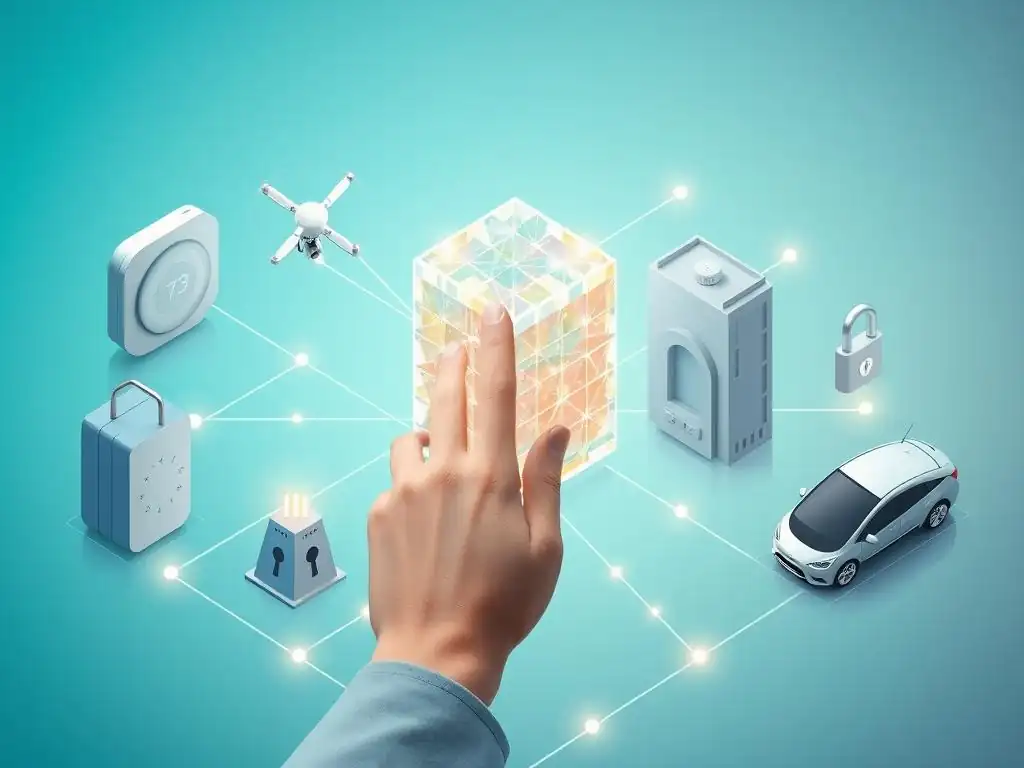
Enhanced Security and Reduced Risk of Data Tampering
One of the primary benefits of using smart contracts in IoT is enhanced security and a significantly reduced risk of data tampering. Traditional IoT systems, often relying on centralized databases, are vulnerable to single points of failure and data breaches. Smart contracts, deployed on decentralized blockchains, eliminate these vulnerabilities.
The immutable nature of blockchain ensures that once data is recorded via a smart contract, it cannot be altered or deleted, providing a tamper-proof record of IoT device activities and data transactions. This immutability is critical for applications where data integrity is paramount, such as supply chain tracking, financial transactions in IoT, and critical infrastructure monitoring. By leveraging smart contracts, IoT systems can achieve a higher level of security and data integrity, significantly reducing the risk of data manipulation and fostering smart contract IoT trust.
Increased Transparency and Accountability in IoT Processes
Smart contracts inherently promote transparency and accountability in IoT processes. The code of a smart contract is publicly auditable (depending on the blockchain platform), allowing stakeholders to understand the logic and rules governing the system. Furthermore, every transaction executed by a smart contract is recorded on the blockchain, creating a transparent and immutable audit trail of all activities.
This transparency is particularly valuable in complex IoT ecosystems where multiple stakeholders are involved. For example, in a smart city application involving multiple IoT devices and service providers, smart contracts can ensure that data sharing and service delivery are transparently governed and auditable. This increased transparency and accountability, facilitated by smart contracts, builds confidence among users and stakeholders and strengthens smart contract IoT trust in the overall system.
Automation and Efficiency Gains in IoT Operations
Smart contracts enable significant automation and efficiency gains in IoT operations by automating processes and eliminating the need for manual intervention. By codifying business logic and rules into smart contracts, repetitive tasks and decision-making processes can be automated, reducing operational costs and improving efficiency. For instance, in smart manufacturing, smart contracts can automate machine-to-machine interactions, triggering maintenance schedules based on sensor data or automatically ordering replacement parts when inventory levels fall below a certain threshold.
This automation not only streamlines operations but also reduces the potential for human error and improves response times. The efficiency gains achieved through smart contract-driven automation contribute to more cost-effective and responsive IoT deployments, further enhancing the value proposition of smart contract IoT trust.
Overcoming the Challenges of Implementing Smart Contracts in IoT
Addressing Scalability Issues in IoT Blockchain Integration
Integrating blockchain and smart contracts with IoT systems presents scalability challenges. IoT networks can generate massive volumes of data from numerous devices, and traditional blockchain networks may struggle to handle this throughput efficiently. While blockchain technology is constantly evolving, with solutions like layer-2 scaling solutions (e.g., state channels, rollups) and sharding being developed, scalability remains a key consideration for large-scale IoT deployments.
For example, processing millions of transactions per second from IoT sensors in a smart city environment may require specialized blockchain solutions or hybrid architectures that combine on-chain and off-chain data processing. Addressing these scalability challenges is crucial for realizing the full potential of smart contract IoT trust in large and complex IoT ecosystems.
Smart Contract Security Audits for IoT Applications
Security audits are paramount for smart contracts, especially in IoT applications where vulnerabilities can have real-world consequences. Smart contracts, once deployed, are immutable, meaning bugs or vulnerabilities cannot be easily patched. Therefore, rigorous security audits by independent experts are essential before deploying smart contracts in IoT systems.
These audits should identify potential vulnerabilities in the smart contract code, ensuring that it is robust, secure, and functions as intended. For example, a smart contract controlling critical infrastructure like a smart grid must undergo thorough security audits to prevent malicious exploitation and ensure the reliability of the energy supply. Prioritizing smart contract security audits is a critical step in building and maintaining smart contract IoT trust in real-world deployments.
The Importance of Interoperability Between IoT Devices and Blockchain Platforms
Interoperability is crucial for seamless integration between diverse IoT devices and various blockchain platforms. The IoT landscape is characterized by a wide range of devices using different communication protocols and data formats. Similarly, multiple blockchain platforms exist, each with its own characteristics and functionalities. Ensuring interoperability between these diverse ecosystems is essential for realizing the full potential of smart contracts in IoT.
Standardized protocols and interoperability solutions are needed to enable seamless data exchange and communication between IoT devices and blockchain networks. For example, enabling a smart contract deployed on one blockchain to interact with data from IoT devices using different communication protocols requires interoperability solutions and standardized interfaces. Enhancing interoperability is key to fostering wider adoption and maximizing the benefits of smart contract IoT trust across the diverse IoT landscape.
The Future of Smart Contracts and IoT: A Vision of Trusted Automation
The Convergence of Blockchain, IoT, and Artificial Intelligence
The future of trusted automation lies in the convergence of blockchain, IoT, and Artificial Intelligence (AI). IoT provides the data, blockchain provides the trust and security, and AI provides the intelligence to analyze data and make autonomous decisions. This synergistic combination has the potential to create truly intelligent and trusted automated systems.
For example, in a smart factory, IoT sensors can collect data on machine performance, AI algorithms can analyze this data to predict maintenance needs, and smart contracts can automatically trigger maintenance schedules and order replacement parts, all in a secure and transparent manner. This convergence of technologies will drive the next wave of innovation in trusted automation, enhancing efficiency, security, and resilience across various industries, and solidifying smart contract IoT trust as a foundational element.
Smart Contracts as a Foundation for Decentralized IoT Networks
Smart contracts are poised to become the foundation for decentralized IoT networks, moving away from centralized architectures towards more resilient and secure distributed systems. Decentralized IoT networks, powered by blockchain and smart contracts, eliminate single points of failure, improve data privacy, and empower users with greater control over their data. Imagine a future where smart homes are interconnected in a decentralized network, with smart contracts governing data sharing and device interactions directly between users, without relying on centralized cloud platforms.
This decentralized approach enhances security, privacy, and resilience, paving the way for a more trustworthy and user-centric Internet of Things. Smart contracts will be instrumental in building these decentralized IoT networks, fostering greater smart contract IoT trust and user empowerment.
Conclusion: Smart Contracts as Key Enablers of Trustworthy IoT Deployments
Recap: Smart Contracts and the Future of Secure IoT Ecosystems
Smart contracts offer a powerful solution for building trust in IoT ecosystems. By leveraging the security, transparency, and immutability of blockchain technology, smart contracts enhance IoT security, data integrity, and operational efficiency. From securing data exchange and automating processes to enabling transparent supply chains and secure healthcare monitoring, smart contracts are proving to be key enablers of trustworthy IoT deployments. While challenges related to scalability, security audits, and interoperability need to be addressed, the benefits of using smart contracts to build smart contract IoT trust are undeniable.
Building a More Secure and Reliable Internet of Things with Smart Contracts
As the Internet of Things continues to expand and permeate all aspects of our lives, the need for trust and security becomes increasingly critical. Smart contracts, with their inherent security features and automation capabilities, are essential tools for building a more secure, reliable, and trustworthy Internet of Things. By embracing smart contract technology, we can unlock the full potential of IoT while mitigating the risks associated with centralized and vulnerable architectures, ultimately creating a future where smart contract IoT trust is the cornerstone of connected systems.
Frequently Asked Questions
How can smart contracts improve trust in IoT systems?
Smart contracts enable automated and immutable agreements between IoT devices, creating trust without intermediaries. This ensures data integrity and reliable execution of pre-defined actions.
What are the key benefits of using blockchain with IoT, specifically for trust?
Blockchain provides a decentralized and transparent ledger, while smart contracts automate trust. Together, they enhance data security, provenance tracking, and secure device communication.
What is the role of "Smart contract IoT trust" in the context of enterprise applications?
"Smart contract IoT trust" allows enterprises to securely manage and verify data from IoT devices. This is crucial for supply chain management, asset tracking, and industrial automation.
How does regulation impact the adoption of smart contracts for IoT trust?
Regulatory frameworks are still evolving, and clarity is needed regarding data privacy, liability, and cross-border transactions. This will influence the scalability and acceptance of blockchain-based IoT solutions.
What is the future outlook for decentralized systems leveraging smart contracts and IoT?
The future involves increased interoperability between blockchains and IoT devices, enabling more sophisticated and trustworthy decentralized applications. AI integration will further enhance automation and decision-making.
Final Reflection: Forging a Future of Trusted Connections
The exploration of smart contracts as a cornerstone for building trust in IoT systems reveals a critical need in our increasingly interconnected world. The promise of seamless data exchange and automated processes hinges entirely on the security and reliability of these systems. Without robust mechanisms to ensure data integrity and prevent malicious interference, the potential of IoT remains largely untapped, overshadowed by legitimate concerns about privacy and security breaches.
The integration of smart contracts into IoT isn't just a technological advancement; it's a fundamental shift in how we perceive and interact with connected devices. It represents a move towards a more transparent and accountable digital landscape, where trust is not simply assumed but actively built and maintained. This is particularly important as IoT permeates every aspect of our lives, from smart homes to critical infrastructure. Trust is the glue of life. It's the most essential ingredient in effective communication. It's the foundational principle that holds all relationships together.
- Stephen Covey. This quote underscores the imperative of establishing trust in the digital realm, especially as it becomes increasingly intertwined with our physical world.
As we stand on the cusp of a truly interconnected future, let us not underestimate the power of smart contracts to revolutionize the way we build and interact with IoT systems. Consider how you can advocate for and implement these trust-building technologies in your own sphere of influence. By embracing transparency, security, and accountability, we can collectively pave the way for a future where the potential of IoT is fully realized, benefiting individuals and society as a whole.
Unleash the Potential of Secure IoT: Start Building Now!
Thank you for exploring how smart contracts can transform trust in IoT systems. You've now discovered how blockchain technology can help create more secure and reliable connected devices. Are you ready to take the next step?
Here are some actions you can take today:
- Begin developing a prototype IoT security solution using smart contracts. This hands-on approach will help you understand the practical benefits and potential challenges. Feel free to experiment!
- Share this article with your colleagues and start a conversation about innovative IoT security solutions. Let's spread the knowledge!
- Explore other articles on blockchain applications to discover additional opportunities in the field.
What exciting IoT project are you most eager to secure with smart contracts? Share your thoughts in the comments below!
Leave a Reply