
The Connected Car Revolution: Blockchain & IoT for Secure and Autonomous Vehicles


Welcome to Blockchain Trends, your guide to understanding the real-world impact of blockchain technology. Forget just cryptocurrency – we delve into the cutting-edge applications shaping industries worldwide.
Ready to discover how blockchain is revolutionizing the automotive industry? Dive into our analysis of Blockchain automotive security solutions and explore how decentralized ledger technology, combined with IoT, is forging a safer, more secure future for connected and autonomous vehicles. What vulnerabilities are being addressed, and how can this technology prevent future cyberattacks? Keep reading to find out!
- The Connected Car Revolution: Blockchain & IoT for Secure and Autonomous Vehicles
- Blockchain Automotive Security Solutions: A New Paradigm
- IoT and Blockchain Integration: Powering Autonomous Vehicle Security
- Use Cases: Blockchain Applications in Automotive Security
- Benefits of Blockchain Integration for Automotive Manufacturers
- Challenges and Considerations for Implementing Blockchain in Automotive
- The Future of Blockchain in Automotive Security
- Conclusion: Driving Towards a Secure and Autonomous Future with Blockchain Automotive Security Solutions
-
Frequently Asked Questions
- What are some key benefits of using blockchain in automotive security?
- How can blockchain address the vulnerabilities of IoT devices in cars?
- What role does blockchain play in securing autonomous vehicle data?
- How might blockchain enhance the transparency of the automotive supply chain?
- What are the potential regulatory challenges for implementing blockchain in automotive security?
- Final Reflection: Navigating the Road Ahead with Trust
- Drive the Future: Embrace Secure & Autonomous Mobility!
The Connected Car Revolution: Blockchain & IoT for Secure and Autonomous Vehicles
The Expanding Landscape of IoT in Automotive
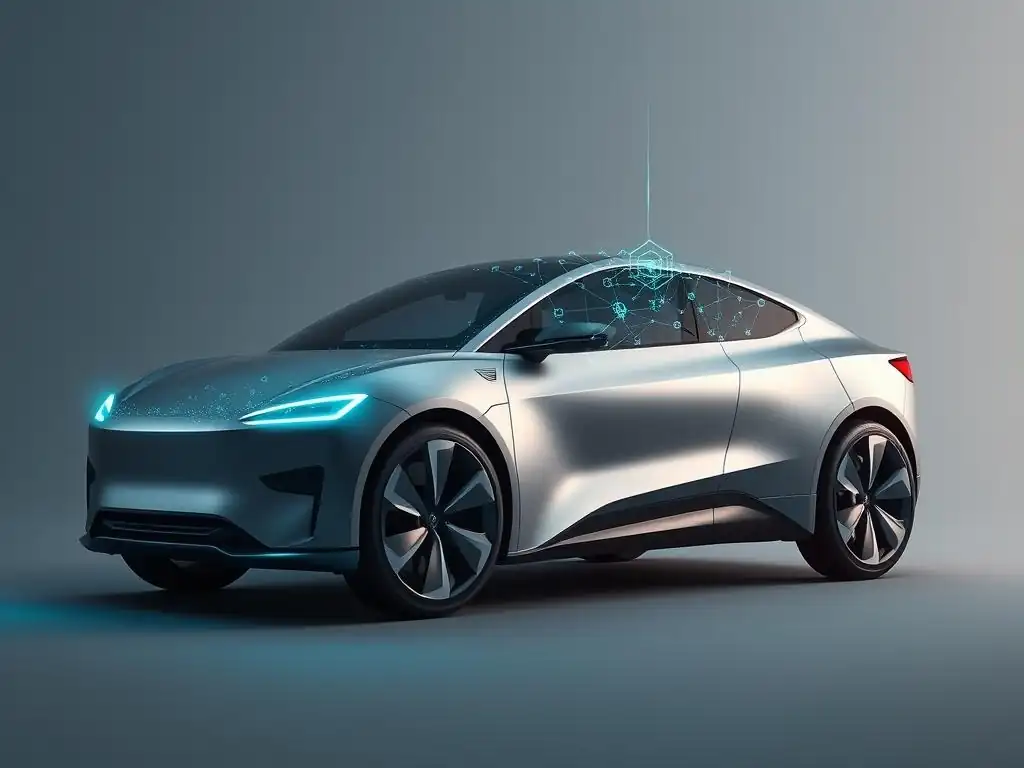
The automotive industry is undergoing a monumental transformation, driven by the proliferation of the Internet of Things (IoT). Modern vehicles are no longer just modes of transportation; they are becoming increasingly sophisticated interconnected devices on wheels. This evolution encompasses everything from advanced infotainment systems and telematics to complex driver-assistance systems (ADAS) and the burgeoning field of autonomous driving.
Industry reports project that the number of connected cars will reach over 77 million by 2025, a significant jump from approximately 50 million in 2020. This exponential growth signifies a deeper integration of technology into our daily commutes and transportation infrastructure, fundamentally changing how we interact with our vehicles and the world around us.
This expansion is fueled by advancements in sensor technology, cloud computing, and mobile connectivity. Vehicles now incorporate hundreds of sensors, generating vast amounts of data related to vehicle performance, driver behavior, and the surrounding environment. This data is crucial for improving vehicle safety, optimizing fuel efficiency, and enabling new services such as predictive maintenance and personalized in-car experiences. Furthermore, the rise of electric vehicles and shared mobility services further amplifies the complexity and interconnectedness of the automotive ecosystem, making robust security measures more critical than ever.
Security Challenges in the Connected Car Ecosystem
The increasing connectivity and sophistication of modern vehicles, while offering numerous benefits, also introduce significant security vulnerabilities. Connected cars, acting as mobile data hubs, are susceptible to a wide range of cyber threats, mirroring those faced by other IoT devices and even traditional IT systems. These threats range from unauthorized access and data breaches to more critical scenarios like remote vehicle control and manipulation of safety-critical systems. A report by Upstream Security highlighted a staggering 99% increase in automotive cyberattacks between 2018 and 2021, demonstrating the escalating risk landscape.
The potential consequences of successful cyberattacks on connected cars are far-reaching and potentially devastating. Compromised infotainment systems can expose personal data, while breaches of telematics systems could lead to vehicle theft or unauthorized tracking. More critically, malicious actors gaining control over braking systems, steering, or acceleration could cause accidents, endangering drivers, passengers, and pedestrians. The distributed and complex nature of the automotive supply chain, involving numerous suppliers and software components, further complicates security efforts and expands the attack surface. Therefore, robust and innovative security solutions are paramount to ensure the safe and reliable operation of connected and autonomous vehicles.
Why Blockchain is Crucial for Automotive Security
In the face of escalating cybersecurity threats, blockchain technology emerges as a compelling solution to fortify the automotive industry. Blockchain, with its inherent security features of decentralization, immutability, and transparency, offers a paradigm shift in how vehicle data and communications can be protected. Unlike traditional centralized security systems, blockchain's distributed ledger technology makes it significantly more resistant to single points of failure and manipulation. Every transaction or data entry on a blockchain is cryptographically secured and validated by a network of participants, making tampering extremely difficult and computationally expensive.
The automotive sector, heavily reliant on data integrity and secure communication, can leverage blockchain to address numerous security challenges. From securing over-the-air (OTA) software updates and protecting sensor data to ensuring the integrity of vehicle transactions and supply chain traceability, blockchain's capabilities are uniquely suited for the demands of the connected car ecosystem. By implementing blockchain automotive security solutions, manufacturers can build a more resilient and trustworthy environment for the next generation of vehicles, fostering greater consumer confidence and paving the way for the widespread adoption of autonomous driving technologies.
Blockchain Automotive Security Solutions: A New Paradigm
Blockchain's Role in Securing Vehicle Data and Communications
Blockchain technology offers a robust framework for securing the vast amounts of data generated and exchanged by connected vehicles. In a traditional centralized system, vehicle data is often stored in a single server, making it a vulnerable target for cyberattacks. Blockchain's decentralized nature distributes this data across a network of nodes, eliminating the single point of failure and significantly enhancing security. Each data record, or transaction, is encrypted and added to a block, which is then linked to the previous block, forming a chain that is virtually tamper-proof.
This immutability and transparency are particularly valuable for securing vehicle communications. For example, vehicle-to-vehicle (V2V) and vehicle-to-infrastructure (V2I) communications, crucial for autonomous driving, can be secured using blockchain. By verifying the authenticity and integrity of messages exchanged between vehicles and infrastructure elements on a blockchain, the risk of malicious actors injecting false data or intercepting critical communications is drastically reduced. Furthermore, blockchain can facilitate secure data sharing between automotive stakeholders, such as manufacturers, suppliers, and service providers, while maintaining data privacy and control.
Addressing Data Breaches and Cyberattacks in Connected Cars
Connected cars, with their extensive software and network connectivity, are prime targets for data breaches and cyberattacks. Traditional security measures, while important, may not be sufficient to counter the increasingly sophisticated threats. Blockchain automotive security solutions provide an additional layer of defense by leveraging cryptographic techniques and distributed consensus mechanisms to protect against unauthorized access and data manipulation. For instance, blockchain-based identity management systems can ensure that only authorized users and devices can access vehicle systems and data.
The immutable nature of blockchain records provides a verifiable audit trail of all vehicle data and transactions. This audit trail is invaluable in the event of a security breach, enabling rapid detection, incident response, and forensic analysis. Moreover, blockchain can be used to secure software updates for vehicles. By digitally signing software updates using blockchain-based cryptographic keys, manufacturers can ensure that updates are authentic and have not been tampered with, preventing malicious software from being installed on vehicles. This is particularly crucial for over-the-air (OTA) updates, which are becoming increasingly common in modern vehicles.
Enhancing Trust and Transparency in Vehicle Transactions
Beyond security, blockchain technology can significantly enhance trust and transparency in various automotive transactions. The automotive industry involves a complex web of transactions, from vehicle sales and ownership transfers to maintenance records and insurance claims. Traditional systems for managing these transactions are often fragmented, inefficient, and prone to fraud. Blockchain offers a secure and transparent platform for recording and verifying these transactions, fostering greater trust among all stakeholders.
For example, blockchain can be used to create a transparent and immutable record of vehicle ownership. This can streamline the process of buying and selling used cars, reducing the risk of fraud and disputes over ownership. Similarly, blockchain can be used to track vehicle maintenance records, providing a verifiable history of repairs and servicing. This can increase transparency for buyers of used vehicles and improve trust in the automotive service industry. Furthermore, blockchain can facilitate secure and transparent insurance claims processing, reducing fraud and speeding up payouts.
IoT and Blockchain Integration: Powering Autonomous Vehicle Security
Secure Over-the-Air (OTA) Updates with Blockchain
Over-the-air (OTA) updates are becoming increasingly vital for modern vehicles, allowing manufacturers to remotely deploy software updates, bug fixes, and new features. However, the OTA process presents a significant security risk if not properly secured. A compromised OTA system could allow malicious actors to inject malware into vehicles, potentially gaining control of critical functions. Blockchain technology offers a robust solution to secure OTA updates, ensuring their integrity and authenticity.
By leveraging blockchain, manufacturers can digitally sign software updates with cryptographic keys stored on a distributed ledger. Vehicles can then verify the authenticity of updates by checking the blockchain before installation. This ensures that only authorized updates from the manufacturer are installed, preventing malicious software from being deployed. The immutability of blockchain records provides a verifiable audit trail of all OTA updates, further enhancing security and accountability. This blockchain-based approach to securing OTA updates is crucial for maintaining the long-term security and reliability of connected and autonomous vehicles.
Protecting Autonomous Vehicle Sensor Data with Blockchain
Autonomous vehicles rely heavily on a multitude of sensors, including cameras, lidar, and radar, to perceive their environment and make driving decisions. The integrity and security of this sensor data are paramount for safe autonomous operation. If sensor data is compromised or manipulated, it could lead to incorrect driving decisions and potentially catastrophic accidents. Blockchain can play a critical role in protecting autonomous vehicle sensor data from tampering and ensuring its reliability.
Blockchain can be used to create a secure and immutable record of sensor data. As sensor data is generated, it can be cryptographically hashed and recorded on a blockchain. This creates a verifiable timestamp and ensures that the data has not been altered. In the event of an incident or accident, this blockchain-based sensor data log can be used to verify the accuracy of sensor readings and reconstruct the events leading up to the incident. Furthermore, blockchain can facilitate secure sharing of sensor data between autonomous vehicles and infrastructure, enhancing situational awareness and improving overall safety.
Blockchain-Based Identity and Access Management for Autonomous Fleets
As autonomous vehicle fleets become more prevalent, managing vehicle identity and access control becomes increasingly complex. Traditional centralized systems for managing vehicle keys and access credentials can be vulnerable to security breaches and single points of failure. Blockchain-based identity and access management (IAM) systems offer a decentralized and secure solution for managing autonomous fleets.
Blockchain can be used to create decentralized digital identities for each vehicle in a fleet. These digital identities can be stored on a blockchain and associated with cryptographic keys, allowing for secure authentication and authorization. Access to vehicle systems and data can be granted and revoked based on these blockchain-based identities, ensuring that only authorized personnel and systems can interact with the vehicles. This decentralized approach to IAM enhances security, improves operational efficiency, and reduces the risk of unauthorized access and control of autonomous vehicle fleets.
Use Cases: Blockchain Applications in Automotive Security
Supply Chain Traceability for Vehicle Components using Blockchain
The automotive supply chain is incredibly complex, involving numerous suppliers and manufacturers across the globe. Ensuring the authenticity and provenance of vehicle components is crucial for safety and quality control. Counterfeit parts can compromise vehicle performance and safety, while a lack of transparency in the supply chain can hinder recalls and quality assurance efforts. Blockchain technology provides a powerful solution for enhancing supply chain traceability in the automotive industry.
By implementing a blockchain-based supply chain tracking system, automotive manufacturers can create an immutable record of the journey of each component, from raw material sourcing to vehicle assembly. Each participant in the supply chain, from suppliers to manufacturers and distributors, can record information on the blockchain, creating a transparent and auditable trail. This enhanced traceability can help identify and prevent counterfeit parts from entering the supply chain, improve quality control, and streamline recall processes. Several automotive companies are already exploring blockchain solutions for supply chain management, recognizing its potential to enhance transparency and efficiency.
Secure Vehicle-to-Vehicle (V2V) Communication with Blockchain
Vehicle-to-vehicle (V2V) communication is a cornerstone of future autonomous driving systems, enabling vehicles to share information about their location, speed, and intended maneuvers. However, the security of V2V communication is paramount. Malicious actors could exploit vulnerabilities in V2V networks to inject false data, disrupt traffic flow, or even cause accidents. Blockchain offers a secure and reliable framework for securing V2V communication.
Blockchain can be used to establish a secure communication channel between vehicles. By using blockchain-based digital signatures and encryption, vehicles can authenticate each other and ensure the integrity and confidentiality of exchanged messages. The decentralized nature of blockchain makes V2V networks more resilient to attacks and single points of failure. Furthermore, blockchain can facilitate secure data sharing and collaboration among vehicles, enabling more efficient and safer traffic management. Pilot projects exploring blockchain for V2V communication are underway, demonstrating its potential to revolutionize automotive safety and efficiency.
Managing Vehicle Identity and Ownership with Blockchain Technology
Managing vehicle identity and ownership using traditional paper-based systems is often cumbersome, inefficient, and prone to fraud. Lost or forged documents, bureaucratic delays, and lack of transparency can create significant challenges for vehicle owners, regulators, and law enforcement agencies. Blockchain technology provides a secure and transparent solution for managing vehicle identity and ownership digitally.
Blockchain can be used to create a digital vehicle identity (VID) for each vehicle, stored securely on a distributed ledger. This VID can contain verifiable information about the vehicle's history, ownership, maintenance records, and other relevant data. Ownership transfers can be recorded on the blockchain, creating an immutable and transparent record of ownership history.
This blockchain-based system can streamline vehicle registration, ownership transfers, and insurance processes, reducing fraud, improving efficiency, and enhancing transparency for all stakeholders. Governments and automotive organizations are exploring the use of blockchain for vehicle identity and ownership management, recognizing its potential to modernize and secure these critical processes.
Benefits of Blockchain Integration for Automotive Manufacturers
Improved Cybersecurity Posture for Connected Vehicles
Integrating blockchain automotive security solutions directly translates to a significantly improved cybersecurity posture for connected vehicles. By leveraging blockchain's inherent security features, manufacturers can proactively address emerging threats and vulnerabilities in the connected car ecosystem. The decentralized and immutable nature of blockchain makes it significantly harder for cybercriminals to compromise vehicle systems, steal data, or manipulate critical functions.
Blockchain enhances security across various aspects of connected vehicle operations, from securing OTA updates and protecting sensor data to managing vehicle identities and securing V2V communications. This comprehensive approach to security reduces the attack surface and minimizes the risk of successful cyberattacks. For automotive manufacturers, this translates to reduced financial losses from data breaches, product recalls, and reputational damage. Moreover, a strong cybersecurity posture is becoming a key differentiator in the automotive market, building customer trust and confidence in connected vehicle technology.
Reduced Risk of Data Tampering and Fraud
Data integrity and authenticity are paramount in the automotive industry, particularly as vehicles become increasingly data-driven and autonomous. Traditional centralized systems are vulnerable to data tampering and fraud, which can have serious consequences for safety, reliability, and consumer trust. Blockchain technology, with its immutable ledger and cryptographic security, significantly reduces the risk of data tampering and fraud in automotive applications.
The immutability of blockchain records ensures that once data is recorded, it cannot be altered or deleted. This is crucial for applications such as vehicle maintenance records, supply chain traceability, and vehicle ownership history, where data integrity is essential. Furthermore, blockchain's cryptographic mechanisms prevent unauthorized data modification and ensure the authenticity of data sources. By reducing the risk of data tampering and fraud, blockchain enhances trust and transparency across the automotive ecosystem, benefiting manufacturers, consumers, and regulators alike.
Increased Customer Trust and Brand Reputation
In an era of increasing cybersecurity awareness and data privacy concerns, customer trust is paramount for automotive manufacturers. Consumers are increasingly concerned about the security of their personal data and the potential risks associated with connected vehicles. By proactively implementing blockchain automotive security solutions, manufacturers can demonstrate their commitment to cybersecurity and data protection, fostering increased customer trust and enhancing brand reputation.
Blockchain's transparent and auditable nature can build confidence among consumers that their data is secure and their vehicles are protected from cyber threats. Manufacturers who embrace blockchain security solutions can differentiate themselves in the market by offering vehicles with superior security features. This can lead to increased customer loyalty, positive brand perception, and a competitive advantage in the rapidly evolving automotive landscape. Ultimately, investing in blockchain automotive security solutions is an investment in building long-term customer trust and brand value.
Challenges and Considerations for Implementing Blockchain in Automotive
Scalability and Performance Issues
While blockchain offers significant security benefits, scalability and performance remain key challenges for its widespread adoption in the automotive industry. The automotive sector generates massive volumes of data from millions of connected vehicles, requiring blockchain solutions to handle high transaction throughput and low latency. Traditional blockchain networks, particularly public blockchains, may struggle to meet these demanding performance requirements.
Private or consortium blockchains, specifically designed for enterprise applications, can offer improved scalability and performance compared to public blockchains. However, even these private blockchain solutions need to be carefully designed and optimized to handle the scale and speed of automotive data and transactions. Research and development efforts are ongoing to address blockchain scalability challenges, including techniques like sharding, layer-2 solutions, and optimized consensus mechanisms. Overcoming these scalability and performance hurdles is crucial for realizing the full potential of blockchain in automotive security.
Regulatory and Compliance Considerations
The automotive industry is heavily regulated, with stringent safety and compliance standards. Implementing blockchain solutions in automotive must consider these regulatory and compliance requirements. Data privacy regulations, such as GDPR and CCPA, are particularly relevant, as blockchain systems must be designed to protect personal data and comply with data privacy principles.
Furthermore, automotive safety regulations may need to be adapted to accommodate blockchain-based security solutions. Standards bodies and regulatory agencies are actively working to develop guidelines and frameworks for the secure and compliant use of blockchain in the automotive sector. Manufacturers must carefully navigate these regulatory and compliance landscapes to ensure that their blockchain implementations meet all applicable requirements. Collaboration between industry stakeholders, regulators, and technology providers is essential to develop clear and consistent regulatory frameworks for blockchain in automotive.
The Importance of Interoperability and Standardization
Interoperability and standardization are critical for the successful adoption of blockchain in the automotive industry. The automotive ecosystem is highly fragmented, involving numerous manufacturers, suppliers, and service providers. For blockchain solutions to be effective, they must be interoperable across different vehicle brands, platforms, and systems. Lack of interoperability could create silos, hinder data sharing, and limit the benefits of blockchain technology.
Standardization efforts are essential to ensure interoperability and promote wider adoption of blockchain in automotive. Industry consortia and standards organizations are working to develop common standards for blockchain protocols, data formats, and APIs in the automotive context. These standardization efforts will facilitate seamless integration of blockchain solutions across the automotive ecosystem, enabling greater collaboration, innovation, and security. Open standards and collaborative approaches are key to unlocking the full potential of blockchain for automotive security and beyond.
The Future of Blockchain in Automotive Security
Emerging Trends and Innovations in Blockchain-Based Automotive Solutions
The field of blockchain automotive security solutions is rapidly evolving, with emerging trends and innovations continuously shaping its future. One key trend is the increasing focus on decentralized identity and access management (IAM) solutions for vehicles and autonomous fleets. Blockchain-based IAM systems are becoming more sophisticated, offering enhanced security, privacy, and control over vehicle access and data.
Another emerging trend is the integration of blockchain with other emerging technologies, such as artificial intelligence (AI) and edge computing, to create even more robust and intelligent automotive security solutions. AI can be used to analyze blockchain data and detect anomalies or threats, while edge computing can enable faster and more efficient blockchain processing within vehicles. Furthermore, research and development are ongoing in areas such as zero-knowledge proofs and homomorphic encryption to enhance data privacy and security in blockchain-based automotive applications.
The Potential for Decentralized Autonomous Organizations (DAOs) in Automotive
Decentralized Autonomous Organizations (DAOs) represent a novel organizational model enabled by blockchain technology. DAOs are self-governing organizations that operate autonomously based on smart contracts and community consensus. In the automotive context, DAOs have the potential to revolutionize various aspects of the industry, from vehicle ownership and management to mobility services and data sharing.
For example, a DAO could be established to manage a fleet of autonomous vehicles, enabling decentralized decision-making, transparent governance, and shared ownership. DAOs could also facilitate decentralized marketplaces for automotive data and services, creating new economic models and opportunities. While DAOs are still in their early stages of development, their potential to disrupt and transform the automotive industry is significant, particularly in areas related to decentralized governance and autonomous operations.
The Role of Blockchain in Shaping the Future of Mobility
Blockchain technology is poised to play a transformative role in shaping the future of mobility. Beyond automotive security, blockchain has applications across the entire mobility ecosystem, including shared mobility services, electric vehicle charging infrastructure, and smart city transportation systems. Blockchain can enable more efficient, transparent, and secure mobility services, benefiting both consumers and service providers.
For example, blockchain can facilitate secure and transparent payment systems for ride-sharing and car-sharing services. It can also be used to manage electric vehicle charging infrastructure, ensuring fair and transparent pricing and access. In smart cities, blockchain can enable secure data sharing and coordination among different transportation systems, optimizing traffic flow and improving overall urban mobility. As the mobility landscape continues to evolve, blockchain is expected to become an increasingly integral technology, driving innovation and creating new possibilities for a more connected and efficient future of transportation.
Conclusion: Driving Towards a Secure and Autonomous Future with Blockchain Automotive Security Solutions
Blockchain and IoT: A Synergistic Approach to Automotive Security
The convergence of blockchain and IoT in the automotive sector represents a synergistic approach to enhancing vehicle security and enabling the future of autonomous driving. IoT provides the connectivity and data generation capabilities essential for connected and autonomous vehicles, while blockchain provides the security, transparency, and immutability needed to protect these complex systems. Together, blockchain and IoT create a powerful combination for building a more secure and trustworthy automotive ecosystem.
Blockchain addresses critical security challenges inherent in connected car environments, such as data breaches, cyberattacks, and data manipulation. By securing vehicle data, communications, and transactions, blockchain fosters greater confidence in connected vehicle technology and paves the way for the safe and widespread adoption of autonomous vehicles. The ongoing integration of blockchain and IoT is driving innovation in automotive security and shaping the future of transportation.
Embracing Blockchain for a Safer and More Connected Automotive Ecosystem
Embracing blockchain automotive security solutions is no longer just an option, but a necessity for automotive manufacturers seeking to build safer, more secure, and more trustworthy vehicles. As vehicles become increasingly connected and autonomous, the risks associated with cybersecurity threats will only continue to escalate. Proactive adoption of blockchain technology is essential to mitigate these risks and ensure the safety and reliability of the next generation of vehicles.
Blockchain offers a paradigm shift in automotive security, moving away from traditional centralized systems to a more decentralized, resilient, and transparent approach. By investing in blockchain automotive security solutions, manufacturers can not only improve their cybersecurity posture but also enhance customer trust, strengthen brand reputation, and gain a competitive advantage in the rapidly evolving automotive market. The future of automotive is undoubtedly connected and increasingly autonomous, and blockchain is a critical technology for driving towards a safer and more secure future for mobility.
Frequently Asked Questions
What are some key benefits of using blockchain in automotive security?
Blockchain offers immutable record-keeping, enhancing supply chain transparency, and providing a secure platform for over-the-air software updates, all crucial for the safety and integrity of connected vehicles.
How can blockchain address the vulnerabilities of IoT devices in cars?
By creating a decentralized and verifiable ledger, blockchain can secure communication between IoT devices, prevent data tampering, and establish a robust identity management system for each device.
What role does blockchain play in securing autonomous vehicle data?
Blockchain enables secure storage and sharing of critical sensor data used by autonomous vehicles, ensuring data integrity and preventing malicious alterations that could compromise driving safety.
How might blockchain enhance the transparency of the automotive supply chain?
Using blockchain, manufacturers can track the entire lifecycle of vehicle components, from origin to installation, ensuring authenticity and preventing counterfeit parts from entering the supply chain, ultimately enhancing vehicle safety and reliability.
What are the potential regulatory challenges for implementing blockchain in automotive security?
Standardization across the industry, data privacy concerns, and legal frameworks for smart contracts and decentralized systems pose significant regulatory hurdles for widespread adoption of blockchain automotive security solutions.
The journey towards fully autonomous vehicles is paved with technological innovation, but its success hinges on something more fundamental: trust in the security and integrity of these systems. As we've explored, blockchain technology, intertwined with the Internet of Things, offers a potent solution for bolstering automotive security and fostering that crucial trust in a future where cars are increasingly connected and autonomous.
The integration of blockchain into automotive systems isn't just about preventing hacks; it's about fundamentally reshaping the relationship between vehicles, manufacturers, and drivers. This paradigm shift, where data is transparently and securely managed, has the potential to revolutionize not only transportation but also our understanding of ownership and responsibility. Security is not a product, but a process.
- Bruce Schneier. This quote underscores the ongoing nature of the challenge and the necessity for continuous innovation and adaptation in the face of evolving threats.
Now, as we stand at the cusp of this connected car revolution, it's time to consider your role in shaping its future. How can you, as a consumer, a developer, or a policymaker, advocate for the adoption of robust blockchain automotive security solutions? Let us all strive to ensure that the road ahead is not only technologically advanced but also safe, secure, and built on a foundation of unwavering trust.
Drive the Future: Embrace Secure & Autonomous Mobility!
Thank you for exploring the revolutionary potential of blockchain and IoT in shaping the future of connected vehicles. We hope this article has illuminated the exciting possibilities for enhanced security and autonomy on our roads. Now, it's time to take the wheel and get involved!
Here are some ways you can contribute to this exciting technological evolution:
- Deepen your understanding by exploring real-world blockchain projects within the automotive industry. Research which companies are leading the charge and how they're implementing these technologies. This is the most impactful first step.
- Join the conversation! Share this article on your social media platforms and spark discussions about the potential benefits and challenges of blockchain-secured autonomous vehicles. Let's get more people thinking about this!
- Consider attending a blockchain or automotive technology conference. Many of these events feature presentations and workshops focused on the intersection of these technologies, offering networking opportunities with industry leaders.
What innovative blockchain application are you most excited to see implemented in the next generation of vehicles? Share your thoughts in the comments below!
Leave a Reply