
The Convergence of Decentralization and Connectivity: Blockchain & IoT's Shared Future


Welcome to Blockchain Trends, your gateway to understanding the revolutionary impact of blockchain technology beyond the hype.
Dive in to explore the fascinating world of decentralized finance, enterprise applications, and the evolving regulatory landscape. But first, are you ready to unravel the potential of Blockchain IoT connectivity future? Discover how these two powerful technologies are converging to reshape industries and redefine our connected world, and why this convergence is shaping the next era of innovation. Prepare to explore the cutting edge.
-
The Convergence of Decentralization and Connectivity: Blockchain & IoT's Shared Future
- Introduction: Exploring the Symbiotic Relationship Between Blockchain and IoT
- Understanding the Fundamentals: Blockchain and IoT Defined
- The Synergies: How Blockchain Enhances IoT Security and Efficiency
- Blockchain IoT Connectivity Future: Use Cases and Applications
- Addressing the Challenges of Blockchain and IoT Integration
- The Future of Decentralized Connectivity: Blockchain and IoT Trends
- Conclusion: Embracing the Transformative Potential of Blockchain IoT Connectivity
-
Frequently Asked Questions
- What are the main benefits of combining Blockchain and IoT?
- How does Blockchain enhance the security of IoT devices?
- What are some real-world examples of Blockchain IoT connectivity in action?
- What are the regulatory challenges surrounding the adoption of Blockchain IoT solutions?
- What does the future hold for Blockchain IoT connectivity?
- Final Reflection: Embracing the Blockchain IoT Connectivity Future
- Ignite Your IoT Revolution!
Introduction: Exploring the Symbiotic Relationship Between Blockchain and IoT
The Internet of Things (IoT) and blockchain technology, while distinct in their origins and primary functions, are rapidly converging to create a powerful synergy that promises to redefine industries and reshape the digital landscape. IoT, with its vast network of interconnected devices generating massive amounts of data, faces challenges in security, scalability, and data management. Blockchain, renowned for its decentralized, secure, and transparent nature, offers compelling solutions to these very challenges.
This convergence is not merely about integrating two technologies; it’s about forging a symbiotic relationship where each enhances the other, unlocking unprecedented levels of efficiency, security, and trust in connected systems. This article will delve into the intricacies of this convergence, exploring the foundational principles, synergistic benefits, real-world applications, challenges, and the exciting future of blockchain and IoT's shared trajectory.
Understanding the Fundamentals: Blockchain and IoT Defined
To fully grasp the potential of the blockchain IoT connectivity future, it's crucial to understand the core principles of each technology individually. Blockchain and IoT, while often discussed together, represent fundamentally different approaches to data management and connectivity, respectively. By understanding their unique characteristics, we can appreciate the power of their combined capabilities.
What is Blockchain Technology? A Decentralized Ledger Explained
Blockchain technology, at its heart, is a decentralized, distributed, and immutable ledger. Imagine a digital record book that is duplicated across many computers in a network. Each "block" in this chain contains a set of transactions, and once a block is added to the chain, it cannot be altered or deleted, ensuring data integrity and transparency.
This immutability is achieved through cryptographic hashing, linking each block to the previous one, creating a chain that is extremely difficult to tamper with. Decentralization is a key feature, meaning no single entity controls the blockchain, making it resistant to single points of failure and censorship. Originally conceived as the backbone for cryptocurrencies like Bitcoin, blockchain's applications have expanded far beyond digital currencies, proving its versatility in securing data, tracking assets, and establishing trust in various digital interactions.
What is IoT (Internet of Things)? Connecting Devices and Data
The Internet of Things (IoT) describes the network of physical objects—"things"—that are embedded with sensors, software, and network connectivity, allowing them to collect and exchange data. These "things" can range from everyday household appliances like smart refrigerators and thermostats to sophisticated industrial tools, medical devices, and transportation systems. The core purpose of IoT is to create a world where devices communicate with each other and with central systems, enabling automation, data-driven insights, and remote control.
By 2023, the number of connected IoT devices worldwide is estimated to have surpassed 15 billion, and projections indicate this number could reach over 29 billion by 2027. This massive influx of data from diverse sources presents both opportunities and challenges, particularly in managing, securing, and leveraging this vast information flow effectively.
The Synergies: How Blockchain Enhances IoT Security and Efficiency
The inherent characteristics of blockchain technology directly address some of the most pressing concerns surrounding IoT deployments, particularly in security and efficiency. The decentralized and immutable nature of blockchain offers solutions to vulnerabilities that are often exploited in traditional centralized IoT systems. This synergy is paving the way for more robust, reliable, and trustworthy IoT networks.
Enhanced IoT Security with Blockchain's Immutable Ledger
Traditional IoT systems often rely on centralized servers, creating single points of failure and making them vulnerable to cyberattacks. If a central server is compromised, the entire network can be at risk. Blockchain's decentralized architecture distributes data across multiple nodes, eliminating this single point of failure. Furthermore, the immutability of the blockchain ledger ensures that once data is recorded, it cannot be altered retroactively.
This is crucial for IoT, where data integrity is paramount for applications like sensor readings in industrial control systems or patient data in healthcare devices. For example, in supply chain tracking, blockchain can provide an unalterable record of product provenance, significantly reducing counterfeiting and fraud. The cryptographic security inherent in blockchain further strengthens IoT security by making it extremely difficult for malicious actors to tamper with data or inject false information into the network.
Improved Data Integrity and Trust in IoT Networks
The vast amounts of data generated by IoT devices require robust mechanisms to ensure data integrity and trust. In many IoT applications, data accuracy is critical for decision-making and operational efficiency. Blockchain's consensus mechanisms, which require multiple network participants to validate transactions, ensure that data recorded on the blockchain is accurate and trustworthy. This is particularly important in scenarios where multiple parties need to rely on IoT data, such as in collaborative manufacturing or shared mobility platforms.
By providing a transparent and auditable record of all data transactions, blockchain fosters trust among stakeholders in IoT ecosystems. Consider a smart agriculture scenario where IoT sensors monitor soil conditions and weather patterns. Blockchain can secure this data, ensuring farmers and agricultural companies can trust the information to make informed decisions about irrigation and fertilization, leading to optimized resource utilization and improved yields.
Blockchain-Enabled Automation and Smart Contracts for IoT Devices
Smart contracts, self-executing contracts with the terms of the agreement directly written into code, are a powerful feature of blockchain technology that can significantly enhance automation in IoT systems. These contracts automatically execute predefined actions when specific conditions are met, eliminating the need for manual intervention and reducing the potential for human error. In IoT, smart contracts can automate various processes, such as device provisioning, access control, and data exchange.
For instance, in a smart parking system, a smart contract could automatically release payment when an IoT sensor confirms a car has parked in a designated spot. Similarly, in supply chain management, smart contracts can automate payments upon confirmation of delivery milestones tracked by IoT sensors, streamlining operations and reducing administrative overhead. This combination of blockchain and smart contracts creates a more efficient and autonomous IoT ecosystem, driving down costs and improving operational agility.
Blockchain IoT Connectivity Future: Use Cases and Applications
The convergence of blockchain and IoT is not just theoretical; it's rapidly manifesting in a diverse range of real-world applications. The ability to secure and manage IoT data with blockchain's decentralized and immutable ledger opens up new possibilities across various industries. From supply chain optimization to enhanced security in smart homes, the use cases are vast and continuously expanding, shaping the blockchain IoT connectivity future.
Smart Supply Chain Management: Tracking and Tracing Assets with Blockchain and IoT
Supply chain management is one of the most prominent areas where blockchain and IoT are creating transformative solutions. IoT sensors, embedded in products or shipping containers, can provide real-time data on location, temperature, humidity, and other critical parameters throughout the supply chain. When this data is recorded on a blockchain, it creates an immutable and transparent record of product journey from origin to consumer.
This enhanced traceability helps combat counterfeiting, improves product recall efficiency, and provides consumers with greater transparency about the products they purchase. For example, pharmaceutical companies are exploring blockchain and IoT to track temperature-sensitive drugs throughout their journey, ensuring they remain within safe temperature ranges, thus maintaining efficacy and patient safety.
Luxury goods companies use this technology to verify authenticity and provenance, protecting brand reputation and consumer trust. The global supply chain management market is expected to reach \$42.46 billion by 2027, and blockchain IoT solutions are poised to capture a significant share of this market by providing enhanced transparency and security.
Secure Smart Homes and Buildings: Leveraging Blockchain for IoT Device Authentication
Smart homes and buildings are becoming increasingly reliant on IoT devices, from smart locks and thermostats to security cameras and lighting systems. However, the proliferation of these connected devices also introduces new security vulnerabilities. Blockchain can play a crucial role in securing smart environments by providing decentralized and robust device authentication and access control. By using blockchain for identity management, each IoT device can have a unique digital identity that is securely stored and managed on the blockchain.
This makes it significantly harder for hackers to compromise devices or gain unauthorized access to smart home networks. Furthermore, blockchain-based access control systems can ensure that only authorized users and devices can interact with smart home systems, enhancing privacy and security. Companies like IBM and Samsung are actively developing blockchain-based IoT security solutions for smart homes, recognizing the growing need for robust security in these increasingly connected environments.
Decentralized Energy Grids: Managing Energy Distribution with Blockchain and IoT
The traditional centralized energy grid faces challenges in efficiency, resilience, and the integration of renewable energy sources. Decentralized energy grids, leveraging blockchain and IoT, offer a more flexible and sustainable approach to energy management. IoT sensors deployed across the grid can provide real-time data on energy production and consumption, while blockchain can facilitate peer-to-peer energy trading and optimize energy distribution.
Consumers with solar panels, for example, can sell excess energy directly to their neighbors through a blockchain-based platform, creating a more efficient and localized energy market. Blockchain's transparency and security can also enhance the resilience of the grid by making it less vulnerable to cyberattacks and single points of failure. Projects like the Brooklyn Microgrid and LO3 Energy are pioneering blockchain-based decentralized energy solutions, demonstrating the potential for more democratic, efficient, and sustainable energy systems.
Healthcare IoT: Securing Patient Data and Medical Devices with Blockchain
The healthcare industry is rapidly adopting IoT devices for remote patient monitoring, wearable health trackers, and smart medical equipment. However, the sensitive nature of patient data and the critical function of medical devices necessitate the highest levels of security and privacy. Blockchain can address these needs by providing a secure and auditable platform for managing healthcare IoT data.
Patient data collected by wearable devices or remote monitoring systems can be securely stored on a blockchain, giving patients greater control over their data and ensuring privacy compliance. Blockchain can also enhance the security of medical devices, preventing unauthorized access and tampering, which is crucial for devices like insulin pumps or pacemakers.
Furthermore, blockchain can streamline clinical trials, improve supply chain transparency for pharmaceuticals, and enhance the overall efficiency of healthcare operations. Studies indicate that the global healthcare blockchain market is projected to reach \$8.9 billion by 2029, driven by the increasing need for secure and interoperable healthcare data management solutions.
Industrial IoT (IIoT): Optimizing Manufacturing Processes with Blockchain-Based Solutions
Industrial IoT (IIoT) refers to the use of IoT technologies in industrial settings, such as manufacturing plants, factories, and industrial automation systems. IIoT generates vast amounts of data from sensors, machines, and production lines, offering opportunities for process optimization, predictive maintenance, and improved efficiency. Blockchain can enhance IIoT by providing secure data management, improved supply chain visibility, and streamlined automation.
In manufacturing, blockchain can be used to track the provenance of raw materials, monitor production processes in real-time, and ensure the quality of finished goods. Smart contracts can automate workflows and payments based on sensor data from manufacturing equipment, reducing downtime and improving operational efficiency.
For instance, BMW is exploring blockchain for supply chain traceability in its automotive manufacturing, ensuring the authenticity of parts and materials. The adoption of blockchain in IIoT is expected to grow significantly as industries seek to leverage data-driven insights and enhance security in increasingly complex and interconnected industrial environments.
Addressing the Challenges of Blockchain and IoT Integration
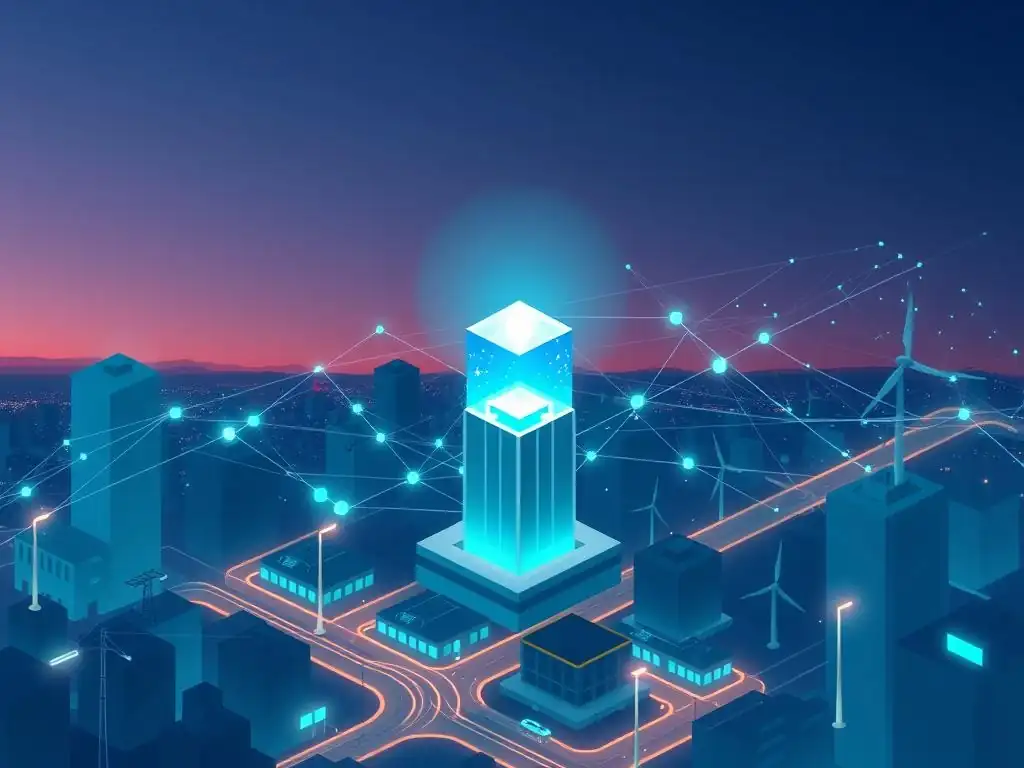
Despite the immense potential of blockchain and IoT integration, several challenges need to be addressed for widespread adoption. These challenges range from technical limitations like scalability and interoperability to regulatory hurdles and data privacy concerns. Overcoming these obstacles is crucial to realizing the full potential of the blockchain IoT connectivity future.
Scalability Issues in Blockchain-Based IoT Systems
One of the primary challenges is scalability. Many existing blockchain platforms, particularly those based on proof-of-work consensus mechanisms, struggle to handle the massive data volumes and transaction frequencies generated by large-scale IoT deployments. For example, Bitcoin's blockchain can process only a limited number of transactions per second, which is insufficient for applications involving thousands or millions of IoT devices generating data continuously.
While newer blockchain platforms are emerging with improved scalability, such as those using proof-of-stake or sharding techniques, further advancements are needed to meet the demands of massive IoT networks. Layer-2 scaling solutions, like state channels and rollups, are also being explored to offload transaction processing from the main blockchain, improving scalability for IoT applications. Finding scalable blockchain solutions that can handle the data deluge of IoT remains a critical area of research and development.
Interoperability Challenges Between Different Blockchain and IoT Platforms
Interoperability is another significant hurdle. The IoT landscape is fragmented, with numerous different protocols, standards, and platforms. Similarly, there are various blockchain platforms, each with its own architecture and functionalities. Ensuring seamless communication and data exchange between different blockchain and IoT platforms is crucial for realizing the full potential of integrated systems.
Lack of interoperability can lead to data silos, hinder cross-platform collaboration, and limit the scalability of blockchain IoT solutions. Industry consortia and standardization bodies are working to develop interoperability standards and protocols for blockchain and IoT, but progress is still needed to achieve truly seamless integration across diverse ecosystems. Technologies like cross-chain bridges and atomic swaps are being developed to enable interoperability between different blockchain networks, which could also facilitate interoperability in blockchain IoT environments.
Regulatory Considerations and Compliance for Blockchain IoT Implementations
The regulatory landscape for both blockchain and IoT is still evolving, creating uncertainties for businesses seeking to deploy integrated solutions. Data privacy regulations, such as GDPR in Europe and CCPA in California, impose strict requirements on the collection, storage, and processing of personal data, which can be complex to navigate in decentralized blockchain IoT systems. Industry-specific regulations, such as HIPAA in healthcare or financial regulations in fintech, also need to be considered when implementing blockchain IoT solutions in regulated sectors.
Furthermore, legal frameworks for smart contracts and decentralized autonomous organizations (DAOs) are still under development, creating legal ambiguities for blockchain-based automation in IoT. Businesses need to carefully consider regulatory compliance and legal implications when designing and deploying blockchain IoT solutions, and engage with legal experts to ensure adherence to relevant regulations.
Data Privacy Concerns and Solutions in Decentralized IoT Networks
While blockchain offers enhanced security, it also raises data privacy concerns, particularly given its inherent transparency. Storing sensitive IoT data directly on a public blockchain may not be desirable due to privacy implications. While blockchain data is pseudonymous, not anonymous, and sophisticated techniques can potentially link blockchain addresses to real-world identities. Solutions to address data privacy concerns in blockchain IoT include using private or permissioned blockchains, where access to data is restricted to authorized participants.
Encryption techniques, such as homomorphic encryption and zero-knowledge proofs, can also be employed to enable data processing and analysis on blockchain without revealing the underlying data itself. Furthermore, techniques like differential privacy can be used to add noise to data to protect individual privacy while still enabling meaningful data analysis. Balancing data transparency and privacy is a critical consideration in designing responsible and privacy-preserving blockchain IoT systems.
The Future of Decentralized Connectivity: Blockchain and IoT Trends
Looking ahead, the future of blockchain and IoT connectivity is poised for continued innovation and growth. Several key trends are shaping this trajectory, promising to unlock even greater potential and address some of the existing challenges. These trends point towards a more intelligent, efficient, and secure decentralized and connected future.
Edge Computing and Blockchain Integration for Enhanced IoT Performance
Edge computing, which involves processing data closer to the source of generation (i.e., at the "edge" of the network, near IoT devices), is becoming increasingly important for enhancing the performance and efficiency of IoT systems. Integrating edge computing with blockchain can further optimize blockchain IoT solutions. By processing data locally at the edge, latency can be reduced, bandwidth consumption can be minimized, and real-time decision-making can be enabled. Edge devices can pre-process and filter IoT data before recording relevant information on the blockchain, improving scalability and efficiency. Furthermore, edge computing can enhance privacy by processing sensitive data locally and only storing anonymized or aggregated data on the blockchain. The combination of edge computing and blockchain offers a powerful architecture for building more scalable, responsive, and privacy-preserving blockchain IoT applications. Companies like Dell and Cisco are actively exploring edge computing solutions for blockchain IoT, recognizing the synergistic benefits of these technologies.
The Role of AI and Machine Learning in Optimizing Blockchain IoT Solutions
Artificial intelligence (AI) and machine learning (ML) are increasingly being integrated with both blockchain and IoT to unlock new levels of intelligence and automation. AI and ML can analyze the vast amounts of data generated by IoT devices to derive valuable insights, predict patterns, and optimize system performance. When combined with blockchain, AI and ML can enhance data security, improve decision-making, and automate complex processes in IoT ecosystems.
For example, AI algorithms can be used to detect anomalies and security threats in IoT networks, leveraging blockchain for secure audit trails and incident response. ML models can be trained on blockchain-secured IoT data to predict equipment failures in industrial settings, enabling proactive maintenance and reducing downtime. The integration of AI, ML, blockchain, and IoT is creating a powerful synergy that is driving innovation across various industries, enabling more intelligent, autonomous, and data-driven systems.
Blockchain-Based Identity Management for Secure IoT Device Authentication
Securing the identity of IoT devices is paramount for ensuring the integrity and security of IoT networks. Blockchain-based identity management solutions offer a robust and decentralized approach to device authentication and authorization. By leveraging blockchain's decentralized ledger, each IoT device can be assigned a unique digital identity that is securely stored and managed on the blockchain. This eliminates the need for centralized identity providers, reducing single points of failure and enhancing security.
Blockchain-based identity solutions can also simplify device onboarding and management, making it easier to deploy and scale IoT networks securely. Furthermore, blockchain can enable fine-grained access control, ensuring that only authorized devices and users can access specific resources and data within the IoT ecosystem. Projects like Sovrin and uPort are developing blockchain-based identity management solutions that can be applied to secure IoT device authentication, paving the way for more secure and trustworthy IoT deployments.
Emerging Standards and Protocols for Interoperable Blockchain and IoT Ecosystems
The lack of standardized protocols and frameworks has been a barrier to widespread adoption of blockchain and IoT integration. However, there is growing recognition of the need for interoperability standards to facilitate seamless communication and data exchange between diverse blockchain and IoT platforms. Industry consortia, such as the IEEE and the IETF, are actively working on developing standards and protocols for blockchain IoT interoperability.
These standards aim to address issues like data formats, communication protocols, security requirements, and governance models. Emerging protocols like Hyperledger Fabric, Corda, and Ethereum are also evolving to support interoperability features and provide frameworks for building blockchain IoT solutions. The development and adoption of interoperability standards and protocols are crucial for fostering a more open, collaborative, and scalable blockchain IoT ecosystem, accelerating innovation and wider adoption across industries.
Conclusion: Embracing the Transformative Potential of Blockchain IoT Connectivity
The convergence of blockchain and IoT represents a paradigm shift in how we approach connectivity, security, and data management in the digital age. By addressing the inherent limitations of traditional centralized IoT systems with the decentralized and secure nature of blockchain, we are unlocking a new era of possibilities. While challenges remain, the ongoing advancements and emerging trends indicate a bright future for blockchain IoT connectivity.
The Promise of a Secure, Decentralized, and Connected Future
The blockchain IoT connectivity future holds immense promise for creating a more secure, decentralized, and connected world. The combined power of these technologies can transform industries, enhance efficiency, and improve the lives of individuals. From secure supply chains and smart homes to decentralized energy grids and healthcare innovations, the applications are vast and transformative.
As blockchain and IoT technologies continue to mature and converge, we can expect to see even more innovative use cases emerge, shaping a future where connectivity is not only ubiquitous but also secure, transparent, and trustworthy. Embracing this transformative potential is key to unlocking the full benefits of the blockchain IoT connectivity future and building a more robust and resilient digital infrastructure for generations to come.
Frequently Asked Questions
What are the main benefits of combining Blockchain and IoT?
The convergence of Blockchain and IoT offers enhanced security, improved data integrity, and increased automation across various industries. This synergy fosters trust and efficiency in decentralized systems.
How does Blockchain enhance the security of IoT devices?
Blockchain provides a tamper-proof ledger for IoT data, making it extremely difficult for malicious actors to compromise device information or control. This enhances overall system security and reduces vulnerabilities.
What are some real-world examples of Blockchain IoT connectivity in action?
Supply chain management, smart agriculture, and energy grids are key examples. Blockchain ensures traceability and transparency in these sectors, optimizing processes and reducing fraud.
What are the regulatory challenges surrounding the adoption of Blockchain IoT solutions?
Lack of clear regulatory frameworks and concerns about data privacy and cross-border data transfer are significant hurdles. Harmonized regulations are needed to foster innovation.
What does the future hold for Blockchain IoT connectivity?
The future points towards widespread adoption, driven by advancements in scalability and interoperability. We can expect more decentralized and secure systems across various industries.
Final Reflection: Embracing the Blockchain IoT Connectivity Future
The exploration of the Blockchain IoT connectivity future reveals a landscape ripe with potential, yet fraught with challenges. As we've seen, the convergence of these technologies promises unprecedented levels of security, transparency, and efficiency across various industries. However, realizing this vision requires addressing critical issues of scalability, interoperability, and regulatory uncertainty. The journey towards a truly decentralized and connected world is just beginning, and its success hinges on our collective commitment to innovation and responsible development.
The impact of Blockchain and IoT is already subtly reshaping our world, from supply chain management to smart city infrastructure. Witnessing this evolution firsthand underscores the profound responsibility we have to ensure these technologies are used ethically and for the benefit of all. As the lines between the physical and digital realms continue to blur, the need for secure and transparent systems becomes ever more critical. The future is already here – it's just not evenly distributed.
- William Gibson. This quote perfectly encapsulates the current state of Blockchain and IoT; the potential is immense, but its equitable distribution and application remain our greatest challenge.
Now, more than ever, is the time to consider your role in shaping this future. Reflect on the possibilities presented by Blockchain IoT connectivity and how you can contribute to its responsible development. Whether you're a developer, an entrepreneur, a policymaker, or simply a curious individual, your understanding and engagement are crucial. Embrace the challenge, explore the opportunities, and let us collectively build a future where decentralization and connectivity empower us all.
Ignite Your IoT Revolution!
Thank you for exploring the exciting intersection of blockchain and IoT with us! Now that you understand the potential, it’s time to put that knowledge into action and become part of shaping the future.
Here are a few steps you can take right now:
- Research and identify an IoT application that could benefit most from blockchain technology and start outlining a proof-of-concept. This is your chance to become a pioneer!
- Share this article with your network and spark a discussion about the challenges and opportunities of integrating blockchain and IoT.
- Contribute to or learn from existing blockchain-based IoT projects on platforms like GitHub – you might just discover the missing piece of your own innovative solution.
What’s one small, actionable step you’ll take this week to explore the possibilities of blockchain and IoT? Share your ideas in the comments below!
Leave a Reply