
Future Trends: Edge Computing and Blockchain for Faster IoT Security Responses


Welcome to Blockchain Trends, your gateway to understanding the profound impact of blockchain technology beyond the hype. Are you ready to explore how blockchain is revolutionizing industries far beyond cryptocurrency? This week, we delve into a critical intersection: Blockchain IoT security trends. Discover how the synergy of blockchain and edge computing is forging a new era of faster, more secure IoT responses, and what this means for the future of connected devices. Intrigued? Let's unlock the potential together.
Future Trends: Edge Computing and Blockchain for Enhanced IoT Security
- Introduction: The Convergence of Blockchain, Edge Computing, and IoT Security
- Understanding the Core Technologies
- The Problem: Security Challenges in Traditional IoT Architectures
- Solution: Combining Edge Computing and Blockchain for Enhanced IoT Security
- Benefits of Edge-Blockchain Integration for IoT Security
- Real-World Applications and Use Cases
- Implementing Edge-Blockchain Solutions for IoT Security
- Future Trends and Predictions in Blockchain IoT Security
- Challenges and Limitations
- Conclusion: The Future of Secure IoT with Edge Computing and Blockchain
-
Frequently Asked Questions
- How does blockchain enhance IoT security in edge computing environments?
- What are the main benefits of using edge computing in conjunction with blockchain for IoT security?
- What are the key "Blockchain IoT security trends" to watch regarding edge computing?
- What challenges exist in implementing blockchain-based IoT security solutions with edge computing?
- How does regulation impact the adoption of blockchain-based IoT security solutions in edge environments?
- Final Reflection: Securing Tomorrow's Connections
- Uncover the Future: Secure Your IoT Today!
Introduction: The Convergence of Blockchain, Edge Computing, and IoT Security
The Growing Need for Enhanced Security in IoT Networks
The Internet of Things (IoT) has experienced explosive growth, connecting billions of devices across various sectors, from smart homes to industrial automation and healthcare. This interconnectedness, while offering unprecedented convenience and efficiency, also presents a significantly expanded attack surface for malicious actors. Traditional security models, often centralized and perimeter-based, are proving increasingly inadequate to protect these sprawling and diverse IoT ecosystems.
The sheer volume of data generated by IoT devices, coupled with their often-limited processing capabilities, creates vulnerabilities that can be exploited to compromise entire networks, disrupt critical services, and steal sensitive information. As IoT becomes more deeply integrated into our daily lives and critical infrastructure, the need for robust and scalable security solutions becomes paramount.
Exploring Blockchain IoT Security Trends: A New Paradigm
Emerging trends in cybersecurity are pointing towards decentralized and distributed solutions to address the inherent weaknesses of centralized IoT security architectures. Among these innovative approaches, the convergence of blockchain technology and edge computing stands out as a particularly promising paradigm shift. Blockchain, with its inherent properties of decentralization, immutability, and transparency, offers a robust foundation for securing IoT networks.
Combined with edge computing, which brings processing power closer to the data source, we can achieve faster response times, reduced latency, and enhanced data privacy within IoT ecosystems. This synergy is not just theoretical; it represents a tangible evolution in Blockchain IoT security trends, offering practical solutions to real-world challenges in securing the ever-expanding landscape of connected devices.
Understanding the Core Technologies
Edge Computing: Bringing Processing Closer to Data Sources
Edge computing is a distributed computing paradigm that brings computation and data storage closer to the location where data is actually generated. In the context of IoT, this means processing data at or near the edge of the network, rather than transmitting it all to a centralized cloud or data center.
Imagine a smart factory with hundreds of sensors monitoring equipment performance. Instead of sending all sensor data to a distant server for analysis, edge computing allows for real-time processing right within the factory, using local servers or even the sensors themselves if they have sufficient processing power.
This localized processing drastically reduces latency, minimizes bandwidth consumption, and enhances data privacy by keeping sensitive data closer to its origin. According to a report by Gartner, by 2025, 75% of enterprise-generated data will be created and processed outside the traditional, centralized data center or cloud, highlighting the rapid adoption and importance of edge computing.
Blockchain Technology: A Decentralized Security Solution
Blockchain technology, initially popularized by cryptocurrencies like Bitcoin, is fundamentally a decentralized and distributed ledger system. Data on a blockchain is organized into blocks, which are cryptographically linked together and distributed across a network of participants. This distributed nature eliminates single points of failure and makes the system highly resistant to tampering and censorship.
Each transaction or piece of data recorded on the blockchain is verified by multiple nodes in the network through consensus mechanisms, ensuring data integrity and transparency. In essence, blockchain provides an immutable and auditable record of events, making it an ideal technology for applications requiring trust and security without relying on a central authority. The inherent security features of blockchain, including cryptographic hashing and distributed consensus, position it as a powerful tool for addressing security vulnerabilities in various domains, including IoT.
IoT (Internet of Things): The Expanding Network of Connected Devices
The Internet of Things (IoT) encompasses a vast and rapidly growing network of physical devices, vehicles, buildings, and other items embedded with electronics, software, sensors, actuators, and network connectivity. These "things" collect and exchange data, enabling remote monitoring, control, and automation across diverse sectors. From smart thermostats and wearable fitness trackers in homes to sophisticated industrial sensors and connected medical devices in hospitals, IoT devices are becoming increasingly ubiquitous.
Industry analysts at Statista predict that the number of connected IoT devices worldwide will reach over 75 billion by 2025, showcasing the sheer scale and expansion of this interconnected ecosystem. This massive proliferation of devices, each potentially vulnerable, underscores the critical need for robust security measures to protect the integrity and reliability of IoT networks and the sensitive data they handle.
The Problem: Security Challenges in Traditional IoT Architectures
Centralized Systems: Single Points of Failure
Traditional IoT architectures often rely on centralized systems, where data from numerous devices is aggregated and processed in a central cloud or data center. While this approach simplifies management to some extent, it creates significant security vulnerabilities. The central server becomes a single point of failure, meaning that if this central node is compromised, the entire IoT network can be affected.
Attackers can target this central point to gain access to vast amounts of data, disrupt services, or even take control of connected devices. For example, a Distributed Denial of Service (DDoS) attack targeting the central server of a smart city's IoT infrastructure could potentially cripple essential services like traffic management and public safety systems. This centralized model inherently concentrates risk, making IoT systems more susceptible to large-scale attacks and systemic failures.
Latency Issues: Slow Response Times in Critical Situations
Centralized IoT architectures also suffer from latency issues, particularly when dealing with applications requiring real-time responses. Transmitting data from edge devices to a distant central server for processing and then sending commands back introduces delays. In critical applications like industrial automation or autonomous vehicles, these latency issues can have severe consequences.
For instance, in a manufacturing plant, a delay in detecting a critical equipment malfunction due to network latency could lead to significant damage and production downtime. Similarly, in autonomous driving, slow response times in processing sensor data could result in accidents. The need for near-instantaneous responses in many IoT applications necessitates minimizing latency, which is a significant limitation of centralized cloud-based architectures.
Scalability Concerns: Managing Exponential IoT Device Growth
The exponential growth of IoT devices poses significant scalability challenges for traditional centralized architectures. As the number of connected devices increases dramatically, the central server must handle an ever-increasing volume of data and processing requests. This can lead to performance bottlenecks, system overload, and ultimately, network instability. Scaling up centralized infrastructure to accommodate this growth can be costly and complex, requiring significant investments in hardware, software, and network bandwidth.
Furthermore, the geographical distribution of IoT devices adds another layer of complexity to scalability. Managing and securing millions or even billions of devices spread across vast geographical areas becomes increasingly difficult with centralized systems. The traditional model struggles to keep pace with the rapid expansion of the IoT ecosystem, making it less sustainable for long-term growth and reliability.
Solution: Combining Edge Computing and Blockchain for Enhanced IoT Security
Leveraging Edge Computing to Reduce Latency in IoT Security
Edge computing directly addresses the latency issues inherent in centralized IoT architectures. By processing data closer to the source, at the edge of the network, edge computing minimizes the distance data needs to travel, significantly reducing latency. In security applications, this speed advantage is critical for faster threat detection and response times.
For example, edge devices can analyze sensor data in real-time to detect anomalies or security breaches locally and initiate immediate responses, such as isolating compromised devices or triggering alerts, without relying on a distant central server. This near real-time processing at the edge is especially crucial for time-sensitive IoT applications where immediate action is required to mitigate security risks and maintain operational integrity. By distributing processing closer to the devices, edge computing creates a more responsive and agile security framework for IoT.
Blockchain technology provides a decentralized and secure mechanism for managing device identities, authentication, and authorization within IoT networks. Instead of relying on a central authority to verify device identities, blockchain allows for a distributed ledger of device credentials, making it more resistant to single points of failure and tampering. When a new IoT device joins the network, its identity can be registered on the blockchain, and subsequent authentication and authorization processes can be validated against this decentralized ledger.
This approach enhances security by eliminating the vulnerabilities associated with centralized identity management systems and provides a transparent and auditable record of device access and permissions. Blockchain's decentralized nature ensures that even if some nodes in the network are compromised, the integrity of the device identity and access control system remains intact, bolstering overall IoT security.
Improved Data Integrity and Tamper-Proofing with Blockchain Technology
Blockchain's inherent immutability and cryptographic security mechanisms make it an ideal technology for ensuring data integrity and preventing data tampering in IoT systems. Once data is recorded on a blockchain, it becomes extremely difficult to alter or delete, as any modification would require altering all subsequent blocks in the chain and gaining consensus from the network. This tamper-proof nature is crucial for maintaining the integrity of sensor data, audit trails, and security logs in IoT environments.
For example, sensor readings from industrial equipment or medical devices, recorded on a blockchain, can be trusted as authentic and unaltered, providing a reliable basis for decision-making and compliance. Blockchain's data integrity features are particularly valuable in applications where data accuracy and provenance are paramount, such as supply chain tracking, healthcare monitoring, and critical infrastructure management.
Benefits of Edge-Blockchain Integration for IoT Security
Faster Threat Detection and Response Times
The integration of edge computing and blockchain significantly accelerates threat detection and response times in IoT networks. Edge computing enables real-time analysis of data at the source, allowing for immediate identification of security anomalies or malicious activities. Blockchain enhances this by providing a secure and auditable platform for sharing threat intelligence and coordinating responses across the decentralized network.
For instance, if an edge device detects a potential intrusion, it can immediately alert other edge devices and initiate localized mitigation measures, while simultaneously recording the incident on the blockchain for broader network awareness and forensic analysis. This combination of edge-based real-time detection and blockchain-enabled decentralized coordination leads to significantly faster and more effective responses to security threats compared to traditional centralized approaches.
Enhanced Data Privacy and Security for IoT Devices
Edge computing and blockchain together contribute to enhanced data privacy and security for IoT devices. Edge computing minimizes the need to transmit sensitive data to centralized servers, reducing the risk of data interception and exposure during transit. Blockchain's decentralized and secure nature further enhances data privacy by providing granular access control and data encryption mechanisms.
Data recorded on a blockchain can be encrypted and access can be restricted to authorized devices and users, ensuring that sensitive information remains confidential and protected from unauthorized access. Furthermore, blockchain's transparency allows for audit trails of data access and usage, promoting accountability and deterring misuse of data. This synergistic combination of edge and blockchain provides a robust framework for protecting data privacy and security throughout the IoT ecosystem.
Improved Scalability and Reliability of IoT Networks
The distributed nature of both edge computing and blockchain contributes to improved scalability and reliability of IoT networks. Edge computing distributes processing and storage across numerous edge devices, reducing the load on central servers and preventing single points of failure from overwhelming the system. Blockchain's decentralized architecture further enhances reliability by eliminating dependence on a central authority and distributing trust across the network.
If some nodes in the network fail, the blockchain continues to operate, ensuring continuous service availability. This distributed and resilient architecture allows IoT networks to scale more effectively to accommodate the exponential growth of connected devices and maintain reliable operation even in the face of component failures or network disruptions. The combination of edge and blockchain creates a more robust and scalable foundation for supporting the expanding IoT landscape.
Reduced Operational Costs Through Optimized Resource Utilization
Integrating edge computing and blockchain can lead to reduced operational costs for IoT deployments through optimized resource utilization. Edge computing minimizes bandwidth consumption by processing data locally, reducing the need to transmit large volumes of data to central servers and lowering network traffic costs. Blockchain's efficiency in managing device identities and transactions can streamline operational processes and reduce administrative overhead.
Furthermore, the decentralized and resilient nature of edge-blockchain solutions can reduce the need for expensive centralized infrastructure and redundant systems, leading to cost savings in hardware, software, and maintenance. By optimizing resource utilization and reducing reliance on costly centralized infrastructure, edge-blockchain integration offers a more cost-effective approach to securing and managing large-scale IoT deployments.
Real-World Applications and Use Cases
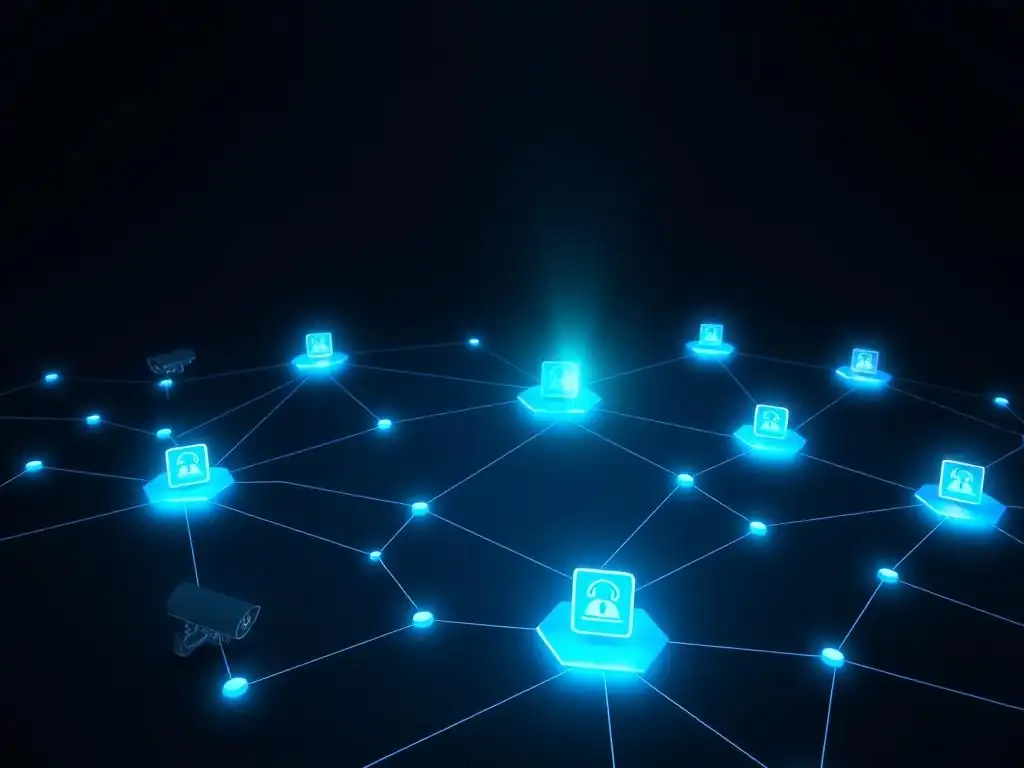
Smart City Security: Securing Critical Infrastructure
Smart cities, with their interconnected infrastructure of traffic management systems, energy grids, and public safety networks, are prime candidates for edge-blockchain security solutions. Securing critical infrastructure in smart cities requires robust and resilient systems that can withstand cyberattacks and ensure continuous operation. Edge computing can enable real-time monitoring and threat detection at the edge of the network, while blockchain can provide a secure and transparent platform for managing device identities, access control, and data integrity across the city's vast IoT ecosystem.
For example, blockchain-based identity management can secure access to traffic control systems, preventing unauthorized manipulation and ensuring smooth traffic flow. Edge computing can analyze sensor data from environmental monitoring systems to detect pollution spikes and trigger immediate alerts. The combination of edge and blockchain can create a more secure and resilient smart city infrastructure, protecting essential services and citizen safety.
Industrial IoT (IIoT): Protecting Manufacturing Processes
Industrial IoT (IIoT) in manufacturing environments relies heavily on connected sensors, actuators, and control systems to optimize production processes and improve efficiency. However, these interconnected systems are vulnerable to cyberattacks that can disrupt manufacturing operations, compromise intellectual property, and even pose safety risks. Edge-blockchain solutions can enhance IIoT security by providing real-time threat detection, secure data management, and tamper-proof audit trails for manufacturing processes.
Edge computing can analyze sensor data from production lines to detect anomalies indicative of equipment malfunctions or cyber intrusions, enabling proactive maintenance and security responses. Blockchain can secure the supply chain of manufacturing components, ensuring the authenticity and provenance of materials used in production. By integrating edge and blockchain, manufacturers can build more secure and resilient IIoT systems, protecting their operations and intellectual assets.
Healthcare IoT: Ensuring Data Integrity and Patient Privacy
Healthcare IoT, encompassing connected medical devices, wearable sensors, and remote patient monitoring systems, deals with highly sensitive patient data that requires stringent security and privacy protection. Edge-blockchain solutions can address the unique security and privacy challenges in healthcare IoT by providing secure data management, access control, and data integrity for patient information.
Edge computing can process patient data locally on wearable devices or in hospital networks, minimizing the transmission of sensitive data over public networks. Blockchain can provide a secure and auditable platform for managing patient identities, access permissions, and medical records, ensuring data privacy and compliance with regulations like HIPAA.
For example, blockchain can secure the integrity of data from remote patient monitoring devices, ensuring that healthcare providers have access to accurate and reliable information for diagnosis and treatment. The combination of edge and blockchain can create a more secure and privacy-preserving healthcare IoT ecosystem, fostering trust and improving patient care.
Supply Chain Security: Tracking and Verifying Goods
Supply chain security is crucial for ensuring the authenticity, provenance, and integrity of goods as they move through complex global networks. IoT devices, such as sensors and trackers, are increasingly used to monitor goods throughout the supply chain, but the data generated needs to be secured and verified. Edge-blockchain solutions can enhance supply chain security by providing real-time tracking, tamper-proof data records, and secure verification of goods.
Edge computing can process data from IoT trackers locally, enabling real-time visibility into the location and condition of goods. Blockchain can provide an immutable and transparent ledger of supply chain events, from origin to destination, verifying the authenticity and provenance of goods and preventing counterfeiting.
For instance, blockchain can track the temperature and humidity of temperature-sensitive goods like pharmaceuticals or food, ensuring product quality and safety throughout the supply chain. By combining edge and blockchain, businesses can build more secure and transparent supply chains, reducing fraud, improving efficiency, and enhancing consumer trust.
Implementing Edge-Blockchain Solutions for IoT Security
Key Considerations for Deployment
Implementing edge-blockchain solutions for IoT security requires careful consideration of several key factors. Firstly, scalability is paramount. The chosen blockchain platform and edge computing infrastructure must be able to handle the expected volume of data and transactions generated by the IoT network as it grows. Secondly, interoperability is crucial. Different IoT devices, edge devices, and blockchain platforms need to seamlessly communicate and exchange data. Standardized protocols and APIs are essential for ensuring interoperability.
Thirdly, security itself must be a primary consideration throughout the deployment process. Secure coding practices, robust cryptography, and regular security audits are necessary to protect the edge-blockchain solution from vulnerabilities. Finally, cost-effectiveness is important. The overall cost of deploying and maintaining the edge-blockchain solution should be balanced against the security benefits it provides. Careful planning and consideration of these key factors are essential for successful implementation.
Choosing the Right Blockchain Platform for IoT Security
Selecting the appropriate blockchain platform is critical for implementing secure IoT solutions. Several blockchain platforms are suitable for IoT applications, each with its own strengths and weaknesses. Public blockchains, like Ethereum, offer high levels of decentralization and transparency but may have limitations in terms of scalability and transaction speed for high-volume IoT data. Private blockchains, on the other hand, provide better control over access and scalability but may compromise on decentralization.
Consortium blockchains, involving a group of organizations, offer a balance between decentralization and control. When choosing a blockchain platform for IoT security, factors to consider include transaction throughput, latency, scalability, security features, energy efficiency, and development tools and support. Platforms like Hyperledger Fabric, Corda, and Ethereum are often considered for enterprise IoT blockchain deployments, each offering different trade-offs in terms of performance, security, and features.
Selecting Edge Computing Infrastructure and Devices
Choosing the right edge computing infrastructure and devices is crucial for effective edge-blockchain integration in IoT security. Edge computing infrastructure can range from on-premises edge servers and gateways to cloud-based edge services. The selection depends on the specific requirements of the IoT application, including data processing needs, latency requirements, and geographical distribution of devices. Edge devices themselves can vary widely in terms of processing power, storage capacity, and connectivity options.
Considerations for selecting edge devices include processing capabilities, memory, power consumption, ruggedness, security features, and cost. For example, resource-constrained IoT sensors may require lightweight edge gateways for initial data processing, while more complex applications may benefit from powerful edge servers capable of running sophisticated security analytics. The choice of edge computing infrastructure and devices should be aligned with the specific needs and constraints of the IoT deployment.
Developing Secure IoT Applications with Blockchain Integration
Developing secure IoT applications with blockchain integration requires a holistic approach that considers security at every stage of the development lifecycle. Secure coding practices are essential to prevent vulnerabilities in IoT application software. Strong authentication and authorization mechanisms are needed to control access to IoT devices and data. Data encryption should be implemented to protect sensitive information both in transit and at rest.
Regular security testing and vulnerability assessments are crucial for identifying and mitigating potential security risks. When integrating blockchain into IoT applications, developers need to carefully consider the blockchain platform's security features and ensure secure integration with IoT devices and edge infrastructure. Furthermore, privacy-preserving techniques, such as differential privacy and homomorphic encryption, can be incorporated to enhance data privacy in blockchain-based IoT applications. A proactive and security-focused development approach is paramount for building robust and trustworthy edge-blockchain solutions for IoT security.
Future Trends and Predictions in Blockchain IoT Security
The Rise of AI-Powered Security Solutions for IoT
The future of Blockchain IoT security trends is increasingly intertwined with Artificial Intelligence (AI). AI and Machine Learning (ML) algorithms are becoming essential for analyzing the vast amounts of data generated by IoT devices to detect anomalies, predict threats, and automate security responses. AI-powered security solutions can enhance edge computing capabilities by enabling intelligent threat detection and mitigation at the edge, reducing reliance on human intervention and improving response times.
For example, AI algorithms can be trained to identify patterns of malicious activity in IoT network traffic and automatically trigger security alerts or corrective actions. Integrating AI with blockchain can further enhance security by providing a secure and transparent platform for sharing AI-driven threat intelligence and coordinating automated responses across decentralized IoT networks. The convergence of AI and blockchain is poised to revolutionize IoT security, enabling proactive and intelligent defense against evolving cyber threats.
The Integration of Federated Learning for Enhanced Data Privacy
Federated Learning (FL) is an emerging machine learning approach that enables training AI models on decentralized data sources without directly sharing the raw data. In the context of Blockchain IoT security trends, Federated Learning holds significant promise for enhancing data privacy while leveraging the power of AI for security analytics. FL can be used to train AI models on data distributed across numerous edge devices in an IoT network, without requiring the data to be centralized or exposed to privacy risks. Blockchain can provide a secure and auditable platform for coordinating federated learning processes and ensuring the integrity of trained AI models. For example, FL can be used to train anomaly detection models on decentralized IoT sensor data, enhancing security without compromising data privacy. The integration of Federated Learning with blockchain can unlock the full potential of AI for IoT security while addressing growing concerns about data privacy and control.
The Evolution of Regulatory Frameworks for Blockchain and IoT
The regulatory landscape for both blockchain and IoT technologies is still evolving, and future trends in Blockchain IoT security will be significantly influenced by the development of regulatory frameworks. Governments and regulatory bodies worldwide are increasingly focusing on addressing the security, privacy, and ethical implications of these technologies. Regulations related to data privacy, cybersecurity standards, and liability for IoT device security are expected to become more stringent in the coming years.
Regulatory frameworks may also emerge specifically addressing the use of blockchain in IoT applications, particularly in sectors like healthcare and finance. Compliance with evolving regulations will be a critical consideration for organizations deploying edge-blockchain solutions for IoT security. Proactive engagement with regulatory developments and adherence to emerging standards will be essential for ensuring the long-term sustainability and responsible adoption of Blockchain IoT security trends.
Challenges and Limitations
Scalability Issues with Blockchain on Resource-Constrained IoT Devices
While blockchain offers significant security benefits for IoT, scalability remains a challenge, particularly when deploying blockchain directly on resource-constrained IoT devices. Many IoT devices have limited processing power, memory, and battery life, making it difficult to run computationally intensive blockchain protocols directly on these devices. Full blockchain nodes, with their requirement to store and process the entire blockchain ledger, are often impractical for resource-constrained IoT devices.
Lightweight blockchain solutions and optimized consensus mechanisms are being developed to address this scalability challenge, but further research and development are needed to enable efficient and scalable blockchain integration directly on a wide range of IoT devices. For many IoT deployments, edge computing can play a crucial role in offloading blockchain processing from resource-constrained devices, enabling scalability and reducing the burden on individual devices.
Interoperability Challenges Between Different Blockchain Platforms
Interoperability challenges between different blockchain platforms pose a limitation to the widespread adoption of blockchain for IoT security. Currently, different blockchain platforms often operate in silos, with limited ability to communicate or exchange data with each other. In complex IoT ecosystems that may involve multiple blockchain platforms or legacy systems, interoperability is essential for seamless data exchange and cross-platform security management.
Efforts are underway to develop interoperability solutions, such as cross-chain protocols and blockchain bridges, to enable communication and data sharing between different blockchain networks. Standardization initiatives and industry collaborations are also needed to promote interoperability and facilitate the integration of diverse blockchain platforms in IoT security solutions. Overcoming interoperability challenges is crucial for realizing the full potential of blockchain for securing heterogeneous and distributed IoT environments.
Regulatory Uncertainty and Compliance Requirements
Regulatory uncertainty surrounding blockchain and IoT technologies presents a challenge for organizations considering edge-blockchain solutions for IoT security. The lack of clear and consistent regulatory frameworks can create uncertainty about compliance requirements and legal liabilities. Regulations related to data privacy, cybersecurity, and data governance in IoT are still evolving, and organizations need to navigate a complex and often fragmented regulatory landscape.
Furthermore, the decentralized and cross-border nature of blockchain technology can raise jurisdictional challenges and complicate regulatory compliance. Organizations deploying edge-blockchain solutions for IoT security need to stay informed about evolving regulations, seek legal guidance, and implement robust compliance measures to mitigate regulatory risks and ensure responsible and lawful use of these technologies. Greater regulatory clarity and harmonization are needed to foster innovation and adoption of blockchain and IoT technologies while protecting user rights and promoting responsible development.
Conclusion: The Future of Secure IoT with Edge Computing and Blockchain
Embracing Decentralized Security for a More Resilient IoT Ecosystem
The future of IoT security lies in embracing decentralized and distributed security paradigms. Traditional centralized security models are proving inadequate to address the scale, complexity, and dynamic nature of modern IoT ecosystems. Edge computing and blockchain together offer a powerful combination for building more resilient, scalable, and secure IoT solutions.
Edge computing enhances responsiveness and reduces latency by bringing processing closer to data sources, while blockchain provides a decentralized and tamper-proof foundation for identity management, data integrity, and secure communication. By embracing decentralized security approaches, organizations can move away from vulnerable single points of failure and build more robust and adaptable IoT systems capable of withstanding evolving cyber threats. The shift towards decentralized security is not just a technological trend; it represents a fundamental paradigm shift in how we approach security in the interconnected world of IoT.
The Potential of Blockchain and Edge Computing to Transform IoT Security
Blockchain and edge computing have the transformative potential to revolutionize IoT security and address the growing challenges of securing billions of connected devices. The synergy between these technologies offers a compelling path towards building more secure, private, and reliable IoT ecosystems across diverse sectors. As IoT continues to expand and become more deeply integrated into critical infrastructure and daily life, the need for robust and scalable security solutions will only intensify.
Blockchain IoT security trends, driven by the convergence of edge computing and blockchain, represent a significant step forward in addressing these challenges and unlocking the full potential of the Internet of Things. By embracing these innovative technologies and investing in research and development, we can pave the way for a future where IoT is not only interconnected and intelligent but also inherently secure and trustworthy.
Frequently Asked Questions
How does blockchain enhance IoT security in edge computing environments?
Blockchain provides a decentralized and immutable ledger for IoT data. This helps to secure data integrity and prevent unauthorized access at the edge.
What are the main benefits of using edge computing in conjunction with blockchain for IoT security?
Combining edge computing and blockchain enables faster threat detection and response due to local processing. It also reduces latency and improves scalability for IoT devices.
What are the key "Blockchain IoT security trends" to watch regarding edge computing?
Look for trends involving decentralized identity management, secure data sharing, and automated smart contract execution closer to the IoT devices.
What challenges exist in implementing blockchain-based IoT security solutions with edge computing?
Scalability limitations of blockchain, integration complexities with legacy IoT systems, and the high computational cost can pose significant challenges.
How does regulation impact the adoption of blockchain-based IoT security solutions in edge environments?
Regulations surrounding data privacy, security standards, and cross-border data transfer can significantly influence the development and deployment of these solutions, requiring careful consideration of compliance requirements.
Final Reflection: Securing Tomorrow's Connections
The convergence of edge computing and blockchain technology, as explored in this article, isn't just a futuristic concept; it's a critical imperative for securing the burgeoning Internet of Things. As IoT devices proliferate and become increasingly intertwined with our daily lives, the vulnerabilities they introduce demand innovative and robust solutions. The decentralized security offered by blockchain, coupled with the real-time processing capabilities of edge computing, presents a powerful paradigm shift in how we approach IoT security challenges.
This fusion is profoundly shaping the landscape of cybersecurity, moving us away from centralized, reactive models towards distributed, proactive defenses. The potential for enhanced data integrity, tamper-proof transactions, and faster threat responses is immense, and it's personally inspiring to witness the evolution of these technologies. The future of IoT security lies in embracing decentralized and distributed architectures that can adapt to the dynamic nature of the threat landscape.
This quote encapsulates the essence of the shift we're witnessing, a move towards resilience and adaptability in the face of ever-evolving cyber threats.
Now, consider the implications of these advancements in your own life. How can you, as an individual or as part of an organization, embrace these Blockchain IoT security trends to safeguard your connected devices and data? The future of IoT security is not just a technological challenge; it's a shared responsibility. Let us all strive to understand, implement, and advocate for these innovative solutions, ensuring a safer and more secure connected world for generations to come.
Uncover the Future: Secure Your IoT Today!
Thank you for exploring how edge computing and blockchain are transforming IoT security. Now that you’re familiar with these innovative technologies, it’s time to take action and work towards building a safer, more resilient IoT ecosystem.
Here’s how you can get started:
- Dive Deep: Begin researching the most suitable edge computing platforms and blockchain solutions for your specific IoT application or industry. Consider starting with a proof of concept.
- Explore: Share these cutting-edge ideas with colleagues and your professional network.
- Become an expert: Seek out targeted training in either edge computing or blockchain technologies.
What are your initial thoughts on integrating blockchain with edge computing for IoT security? Share your insights in the comments below!
Leave a Reply