
Identity and Access Management (IAM) for IoT: Blockchain's Decentralized Solution


Welcome to Blockchain Trends, your go-to source for understanding the revolutionary impact of blockchain technology. Are you ready to explore how blockchain is transforming industries beyond just cryptocurrency? In this article, we delve into the fascinating intersection of Blockchain IoT identity management, uncovering how its decentralized nature offers a powerful solution to securing the ever-expanding world of connected devices. Curious to learn how blockchain can revolutionize IoT security and streamline access control? Read on to discover the future of trusted digital identities.
Identity and Access Management (IAM) for IoT: Blockchain's Decentralized Solution
- Introduction: The Growing Need for Secure IoT Identity Management
- Understanding Identity and Access Management (IAM) in the IoT Context
- Blockchain-Based Identity Solutions for IoT Security
- Decentralized Identity (DID) and Verifiable Credentials for IoT
- Blockchain IoT Identity Management: Use Cases and Applications
- Comparing Blockchain IAM Solutions with Traditional IoT Security Approaches
- Implementing Blockchain IoT Identity Management: Key Considerations
- The Future of Blockchain IoT Identity Management
- Conclusion: Securing the Future of IoT with Blockchain-Based Identity
-
Frequently Asked Questions
- How can blockchain enhance Identity and Access Management (IAM) for IoT devices?
- What role does blockchain play in securing IoT data transmission?
- What are the key benefits of using blockchain for IoT identity management?
- How does blockchain facilitate interoperability between different IoT devices and platforms?
- What are some of the challenges in implementing blockchain-based IAM for IoT?
- Final Reflection: Securing the Future of IoT with Decentralized Identity
- Revolutionize Your IoT Security: Explore Decentralized IAM!
Introduction: The Growing Need for Secure IoT Identity Management
The Vulnerabilities of Traditional IoT Security Models
Traditional IoT security models often rely on centralized architectures, creating single points of failure that are highly vulnerable to cyberattacks. These centralized systems are often characterized by weak device authentication methods, relying on default passwords or easily compromised credentials. For instance, the Mirai botnet attack in 2016 exploited default credentials on thousands of IoT devices like IP cameras and routers to launch massive DDoS attacks, highlighting the inherent weaknesses in relying on easily guessable or unchangeable passwords.
Furthermore, the sheer scale and heterogeneity of IoT deployments exacerbate these vulnerabilities. Managing millions, or even billions, of diverse devices with varying security capabilities through a central point becomes increasingly complex and prone to errors, leaving numerous entry points for malicious actors.
Another critical vulnerability lies in the data transmission and storage within traditional IoT systems. Data is often transmitted in unencrypted or poorly encrypted formats, making it susceptible to eavesdropping and manipulation during transit. Centralized data repositories also become attractive targets for large-scale data breaches.
Consider the increasing number of data breaches reported annually; in 2023, the average cost of a data breach reached \$4.45 million globally, according to IBM's Cost of a Data Breach Report. Within IoT ecosystems, breaches can expose sensitive user data, operational secrets, and critical infrastructure controls, potentially leading to significant financial losses, reputational damage, and even physical harm. The reliance on perimeter security in many traditional models also proves inadequate in IoT environments, as devices are often deployed outside of traditional network boundaries, requiring a more robust and distributed security approach.
Why Blockchain Offers a Superior Solution for IoT Identity
Blockchain technology, with its inherent decentralization, immutability, and cryptographic security, presents a compelling alternative to address the vulnerabilities of traditional IoT security models, particularly in identity and access management. Unlike centralized systems, blockchain distributes data and control across a network of nodes, eliminating single points of failure. This decentralized nature makes it significantly more resilient to attacks, as compromising a single node does not compromise the entire system.
The cryptographic hashing and consensus mechanisms inherent in blockchain ensure data integrity and tamper-proof records of device identities and access permissions. This means that once a device identity is recorded on the blockchain, it cannot be altered retroactively, providing a verifiable and auditable trail of device activity.
Moreover, blockchain's transparency and immutability enhance trust and accountability in IoT ecosystems. All transactions and data related to device identities and access rights are recorded on the distributed ledger, making them transparent and accessible to authorized participants. This transparency promotes accountability, as any unauthorized access or malicious activity can be readily traced and investigated.
For example, in supply chain management, blockchain can provide an immutable record of device ownership and location, ensuring the authenticity and provenance of goods. By leveraging these core features, blockchain offers a more robust, secure, and scalable foundation for managing identities and access in the increasingly complex and interconnected world of IoT, moving away from vulnerable centralized models towards a more resilient and trustworthy decentralized paradigm.
Understanding Identity and Access Management (IAM) in the IoT Context
Defining Identity and Access Management for Connected Devices
In the context of the Internet of Things (IoT), Identity and Access Management (IAM) refers to the framework, policies, and technologies used to manage and secure the identities of connected devices and control their access to resources and data. This encompasses the entire lifecycle of a device, from initial provisioning and authentication to authorization and ongoing monitoring.
IAM for IoT is not just about individual devices; it extends to managing the relationships between devices, users, applications, and services within the IoT ecosystem. It ensures that only authorized devices can connect to the network, access specific data, and perform designated actions.
Effective IAM in IoT is crucial for maintaining the integrity, confidentiality, and availability of IoT systems. It involves several key functions, including device registration and provisioning, authentication to verify the identity of a device, authorization to determine what resources a device can access, and auditing to track device activities and access attempts.
Consider a smart factory environment: IAM would be responsible for ensuring that only authorized sensors and actuators can communicate with the control systems, preventing unauthorized commands or data manipulation that could disrupt production processes or compromise safety. Without robust IAM, IoT deployments become susceptible to unauthorized access, data breaches, and operational disruptions, underscoring its fundamental importance in securing the expanding landscape of connected devices.
Challenges of Implementing IAM in Large-Scale IoT Deployments
Implementing IAM in large-scale IoT deployments presents a unique set of challenges that are often not encountered in traditional IT environments. The sheer volume and diversity of devices, ranging from resource-constrained sensors to powerful edge computing devices, create significant scalability and management complexities.
Imagine a smart city scenario with millions of sensors, traffic lights, and public transportation systems; managing identities and access permissions for such a vast and heterogeneous network requires solutions that can handle massive scale and device diversity efficiently. Traditional IAM solutions, designed for managing human users and relatively fewer endpoints, often struggle to cope with the scale and dynamism of IoT deployments.
Another major challenge stems from the resource constraints of many IoT devices. Many sensors and actuators are designed to be low-power and low-cost, limiting their processing capabilities and memory. Implementing complex security protocols and cryptographic algorithms on these resource-constrained devices can be computationally expensive and energy-intensive, potentially impacting their performance and battery life.
Furthermore, the distributed and often geographically dispersed nature of IoT deployments complicates centralized management and control. Devices may be deployed in remote locations with limited connectivity or intermittent network access, making it challenging to enforce consistent security policies and manage device identities effectively. These challenges necessitate innovative IAM solutions specifically tailored to the unique characteristics and constraints of large-scale IoT environments.
The Limitations of Centralized IAM Systems for IoT
Centralized Identity and Access Management (IAM) systems, while widely used in traditional IT, exhibit significant limitations when applied to the dynamic and distributed nature of IoT environments. A primary limitation is the inherent single point of failure. If the central IAM server is compromised or experiences downtime, the entire IoT ecosystem's security can be jeopardized, disrupting device authentication, authorization, and access control.
This centralized dependency becomes particularly problematic in critical infrastructure or industrial IoT applications where continuous operation and security are paramount. For example, in a smart grid, a centralized IAM failure could potentially lead to widespread blackouts or grid instability.
Scalability is another critical limitation of centralized IAM in IoT. As IoT deployments grow to encompass millions or billions of devices, the central IAM system can become a bottleneck, struggling to handle the massive volume of authentication requests, access control decisions, and device management operations. The latency associated with routing all IAM requests through a central server can also impact the real-time responsiveness required by many IoT applications.
Moreover, centralized systems often lack the agility and flexibility needed to adapt to the rapidly evolving landscape of IoT devices and applications. Integrating new device types, updating security policies, and managing device lifecycles can become cumbersome and inefficient in centralized IAM architectures, hindering the scalability and adaptability essential for thriving IoT ecosystems.
Blockchain-Based Identity Solutions for IoT Security
How Blockchain Solves IoT Identity Challenges: A Decentralized Approach
Blockchain technology provides a fundamentally different approach to IoT identity management by offering a decentralized and distributed architecture that directly addresses the limitations of centralized systems. Instead of relying on a single point of failure, blockchain distributes identity information and access control across a network of nodes. This decentralization enhances resilience and eliminates the vulnerabilities associated with central servers. Each device, or authorized entity, can participate in the blockchain network, contributing to the security and integrity of the identity system. This distributed nature inherently makes the system more robust against attacks and outages.
Furthermore, blockchain's cryptographic security mechanisms, such as hashing and digital signatures, ensure the integrity and authenticity of device identities. Each device's identity and associated attributes are recorded on the blockchain in an immutable and tamper-proof manner. This means that once an identity is registered, it cannot be altered or forged without the consensus of the network, providing a high level of trust and security.
For example, in a connected vehicle ecosystem, blockchain can securely manage the identities of vehicles, ensuring that only authorized vehicles can access charging stations or participate in vehicle-to-vehicle communication. By leveraging decentralization and cryptography, blockchain offers a more secure, resilient, and trustworthy foundation for managing IoT device identities compared to traditional centralized approaches.
Key Features of Blockchain IAM for IoT: Security, Transparency, and Auditability
Blockchain-based IAM solutions for IoT offer several key features that significantly enhance security, transparency, and auditability compared to traditional systems. Security is paramount, and blockchain's decentralized and cryptographic nature inherently strengthens IoT identity management. The distributed ledger eliminates single points of failure, while cryptographic hashing and digital signatures ensure data integrity and prevent unauthorized modifications of device identities and access permissions. This robust security foundation is crucial for protecting sensitive IoT data and preventing malicious activities.
Transparency is another significant advantage. All transactions and data related to device identities and access control are recorded on the blockchain and are transparent to authorized participants in the network. This transparency fosters trust and accountability, as all actions are auditable and verifiable.
For instance, in a pharmaceutical supply chain using blockchain for IoT device identity and tracking, stakeholders can transparently verify the provenance and authenticity of medications at each stage of the supply chain. Auditability is directly linked to transparency; blockchain provides an immutable audit trail of all device identity-related events, enabling efficient monitoring, compliance checks, and incident response. This comprehensive audit trail simplifies regulatory compliance and facilitates the investigation of security breaches, enhancing the overall security posture of IoT ecosystems.
Enhancing IoT Device Authentication with Blockchain Technology
Blockchain technology significantly enhances IoT device authentication by moving away from vulnerable password-based systems and towards more secure cryptographic authentication methods. Using blockchain, each device can possess a unique cryptographic identity, represented by a public and private key pair. The private key, securely stored on the device, is used to digitally sign authentication requests, while the public key, recorded on the blockchain, serves as the device's verifiable identity. This eliminates the reliance on easily compromised passwords and provides a much stronger form of device authentication.
Furthermore, blockchain enables decentralized authentication mechanisms, reducing reliance on central authentication servers. Devices can authenticate each other directly or through distributed authentication protocols facilitated by the blockchain network. This decentralization enhances resilience and reduces the risk of single points of failure.
Consider a network of smart sensors in a precision agriculture setting; using blockchain-based authentication, sensors can securely verify each other's identity before exchanging data, ensuring data integrity and preventing malicious sensor spoofing. Blockchain can also facilitate multi-factor authentication for IoT devices, combining cryptographic keys with other authentication factors, such as biometric data or device location, further strengthening the authentication process and providing a layered security approach for sensitive IoT applications.
Decentralized Identity (DID) and Verifiable Credentials for IoT
Exploring Decentralized Identifiers (DIDs) for IoT Devices
Decentralized Identifiers (DIDs) are a cornerstone of blockchain-based identity solutions for IoT, offering a new paradigm for managing device identities. Unlike traditional identifiers that are controlled by centralized authorities, DIDs are self-sovereign and user-controlled. In the IoT context, this means that devices can own and control their own identities, independent of centralized registries or identity providers.
A DID is a globally unique identifier that resolves to a DID document, which contains information about the device, including its public keys, service endpoints, and other relevant attributes. This DID document is stored in a decentralized manner, often on a blockchain or distributed ledger, ensuring its availability and immutability.
For IoT devices, DIDs offer several advantages. They enhance privacy by minimizing reliance on centralized identity providers that may collect and track device data. DIDs also improve security by providing cryptographic ownership of identities, making it more difficult for attackers to impersonate devices.
Moreover, DIDs promote interoperability by providing a standardized way to represent device identities across different platforms and ecosystems. Imagine a smart building ecosystem; devices from various manufacturers, each with their own DID, can seamlessly interoperate and securely exchange data, as their identities are universally verifiable and not tied to proprietary systems. DIDs empower IoT devices with self-sovereign identities, paving the way for more secure, private, and interoperable IoT ecosystems.
Leveraging Verifiable Credentials for Secure IoT Access Control
Verifiable Credentials (VCs) are another crucial component of blockchain-based IAM for IoT, enabling secure and privacy-preserving access control. VCs are digitally signed, tamper-proof credentials that represent claims about a device or entity. In the IoT context, VCs can be used to assert various attributes of a device, such as its manufacturer, model, capabilities, security certifications, or access permissions. These credentials are issued by trusted authorities, such as device manufacturers, certification bodies, or network operators, and can be verified cryptographically by relying parties without needing to contact the issuer directly each time.
For IoT access control, VCs offer a more flexible and granular approach compared to traditional role-based access control. Devices can present VCs to prove their eligibility for accessing specific resources or services. For example, a smart grid device might present a VC demonstrating its compliance with specific security standards to gain access to critical grid infrastructure.
VCs enhance privacy because they allow devices to selectively disclose only the necessary information to prove their credentials, without revealing unnecessary personal or device data. Furthermore, VCs facilitate interoperability, as they are based on open standards and can be exchanged and verified across different systems and domains. By leveraging VCs, IoT systems can implement more secure, privacy-preserving, and interoperable access control mechanisms, enhancing the overall security and trustworthiness of IoT deployments.
Interoperability of DIDs and Blockchain-Based IoT IAM
The combination of Decentralized Identifiers (DIDs) and blockchain-based IAM frameworks is crucial for achieving interoperability in complex IoT ecosystems. DIDs provide a standardized and decentralized way to represent device identities, while blockchain provides the underlying infrastructure for secure identity management and verifiable credentials. This combination addresses a major challenge in IoT: the lack of interoperability between devices and systems from different vendors and domains. Without interoperable identity solutions, integrating diverse IoT devices and applications becomes complex and costly, hindering the widespread adoption and scalability of IoT.
Blockchain-based IAM solutions built on DIDs promote interoperability by providing a common foundation for identity management. Devices with DIDs can be recognized and authenticated across different blockchain networks and IoT platforms that adhere to DID standards. This allows for seamless data exchange and service integration between devices from different manufacturers and deployed in different environments.
For example, in a smart city, traffic sensors from one vendor can securely share data with traffic management systems from another vendor, because both systems recognize and trust the DIDs of the sensors. Furthermore, the use of verifiable credentials, issued and verified using blockchain and DIDs, enables interoperable access control policies across different IoT domains. By fostering interoperability, DIDs and blockchain-based IAM unlock the full potential of IoT, enabling seamless integration, data sharing, and collaboration across diverse devices and systems.
Blockchain IoT Identity Management: Use Cases and Applications
Securing Smart Homes with Blockchain-Based IAM
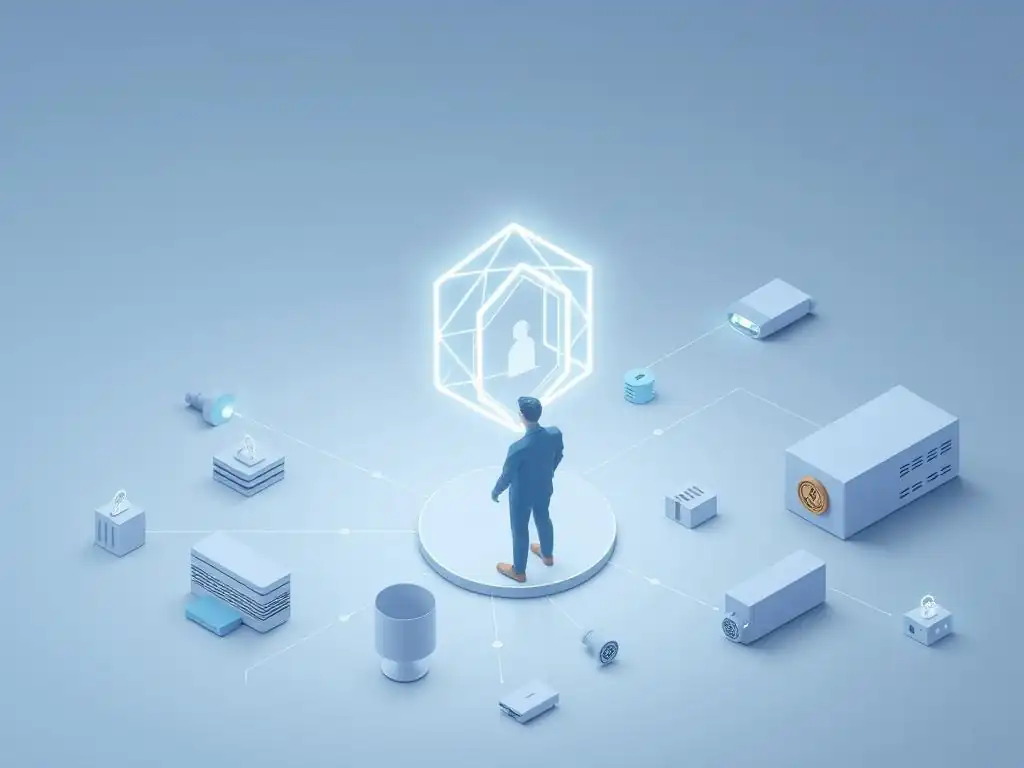
Blockchain-based IAM offers a robust solution to enhance the security of smart homes, addressing growing concerns about privacy and vulnerability to cyberattacks. Traditional smart home security often relies on centralized hubs and cloud services, creating single points of failure and potential privacy risks. Blockchain, with its decentralized and secure nature, can provide a more resilient and trustworthy foundation for managing smart home device identities and access control.
Imagine a smart home with numerous connected devices like smart locks, cameras, appliances, and lighting systems. Using blockchain IAM, each device can have a unique DID, and access permissions can be managed through verifiable credentials.
For instance, a homeowner can issue a VC to a guest granting temporary access to the smart lock. This access can be automatically revoked after a specified period, enhancing security and control. Blockchain can also secure communication between smart home devices, preventing eavesdropping and unauthorized commands.
Consider smart cameras; blockchain can ensure that only authorized users can access camera feeds, preventing unauthorized surveillance and privacy breaches. Furthermore, blockchain's immutable audit trail provides a record of all device activities and access attempts, facilitating security monitoring and incident response. By implementing blockchain-based IAM, smart homes can become more secure, private, and resilient to cyber threats, fostering greater user trust and adoption of smart home technologies.
Blockchain for Supply Chain Traceability and Authentication
Blockchain IoT identity management significantly enhances supply chain traceability and authentication, addressing critical challenges related to counterfeit goods, product diversion, and lack of transparency. In traditional supply chains, tracking products and verifying their authenticity can be complex and prone to fraud. Integrating IoT devices with blockchain-based IAM provides a secure and transparent solution for tracking goods throughout the supply chain and verifying their provenance at each stage.
Consider the pharmaceutical industry, where counterfeit drugs pose a serious threat to public health. Using blockchain and IoT, each batch of medication can be tagged with a unique identifier and its journey tracked from manufacturing to distribution.
IoT sensors, such as temperature and humidity sensors, can monitor storage conditions and ensure product integrity during transit. Blockchain's immutable ledger records all events, creating a verifiable and auditable trail of the product's journey. Consumers and stakeholders can then verify the authenticity and origin of products by scanning a QR code or using a mobile app to access the blockchain record.
This enhanced traceability and authentication helps combat counterfeiting, improves supply chain efficiency, and builds greater trust and transparency in the origin and quality of goods. Similar applications extend to food supply chains, luxury goods, and other industries where product authenticity and traceability are paramount.
Protecting Critical Infrastructure with Decentralized IoT Identity
Decentralized IoT identity management using blockchain offers a crucial layer of security for protecting critical infrastructure, such as power grids, water treatment plants, and transportation systems. These infrastructures are increasingly reliant on IoT devices for monitoring and control, making them vulnerable to cyberattacks that could have devastating consequences. Traditional centralized security models present single points of failure that are attractive targets for malicious actors.
Blockchain's decentralized architecture and robust security features provide a more resilient and trustworthy approach to securing critical infrastructure IoT devices. Imagine a smart grid with thousands of sensors, actuators, and control devices. Using blockchain IAM, each device can have a unique DID, and access to critical grid functions can be strictly controlled through verifiable credentials.
For example, only authorized control devices with valid VCs can send commands to grid actuators, preventing unauthorized manipulation of the power grid. Blockchain's real-time monitoring capabilities and immutable audit trail enhance situational awareness and facilitate rapid detection and response to security incidents.
Consider water treatment plants; blockchain can secure the identities of sensors and control systems, ensuring that only authorized personnel can access and modify critical parameters, preventing malicious tampering with water quality. By implementing decentralized IoT identity management with blockchain, critical infrastructure operators can significantly enhance the security and resilience of their systems, mitigating the risks of cyberattacks and ensuring the reliable operation of essential services.
Comparing Blockchain IAM Solutions with Traditional IoT Security Approaches
Blockchain vs. Centralized IAM: A Detailed Comparison
When comparing blockchain-based IAM solutions with traditional centralized IAM for IoT, several key differences emerge across critical aspects like security, scalability, transparency, and cost. In terms of security, blockchain offers a clear advantage due to its decentralized and cryptographic nature. Centralized systems are vulnerable to single points of failure and are attractive targets for attackers, while blockchain's distributed ledger and consensus mechanisms enhance resilience and data integrity. Cryptographic authentication methods in blockchain are also significantly stronger than password-based systems often used in traditional IAM.
Scalability presents a more nuanced comparison. Traditional centralized IAM systems can struggle to scale to the massive number of devices in large-scale IoT deployments, potentially creating bottlenecks. While blockchain scalability is still an evolving area, various solutions like sharding and layer-2 scaling are being developed to address this challenge. For certain IoT use cases, permissioned or private blockchains can offer better scalability than public blockchains.
Transparency is a key differentiator; blockchain provides inherent transparency and auditability due to its distributed ledger, whereas centralized systems often lack transparency and can be opaque in their operations. In terms of cost, initial implementation costs for blockchain solutions might be higher than traditional IAM, but the long-term operational costs and reduced risk of security breaches can offset this initial investment. Furthermore, the reduced reliance on intermediaries and increased efficiency in blockchain systems can lead to cost savings over time.
Advantages of Blockchain-Based Identity over Traditional Methods
Blockchain-based identity management offers several distinct advantages over traditional methods in the context of IoT security, primarily in areas of enhanced security, improved privacy, increased trust, and greater efficiency. Enhanced security is a core benefit. Blockchain's decentralized architecture eliminates single points of failure, and its cryptographic mechanisms provide stronger authentication and data integrity compared to traditional password-based systems and centralized databases. This significantly reduces the attack surface and mitigates the risks of data breaches and unauthorized access.
Improved privacy is another key advantage. Blockchain-based solutions, particularly those leveraging Decentralized Identifiers (DIDs) and Verifiable Credentials (VCs), empower devices and users with greater control over their identity data. This contrasts with traditional systems where identity data is often centrally stored and managed, raising privacy concerns. Increased trust is fostered by blockchain's transparency and immutability.
The distributed ledger provides a verifiable and auditable record of all identity-related transactions, enhancing trust among participants in the IoT ecosystem. Finally, greater efficiency can be achieved through blockchain by streamlining identity verification processes, reducing reliance on intermediaries, and automating access control mechanisms using smart contracts. These advantages collectively position blockchain-based identity management as a superior approach for securing the increasingly complex and interconnected world of IoT.
Addressing the Scalability and Performance Concerns of Blockchain in IoT
While blockchain offers compelling security benefits for IoT identity management, scalability and performance concerns are often raised as potential limitations. Public blockchains, in particular, can face challenges in handling the high transaction throughput and low latency required by some IoT applications. However, various strategies and blockchain architectures are being developed to address these concerns and enhance the scalability and performance of blockchain in IoT contexts.
One approach is the use of permissioned or private blockchains. These blockchains, where network participation is controlled, can achieve higher transaction speeds and lower latency compared to public blockchains, making them suitable for enterprise IoT applications.
Layer-2 scaling solutions, such as state channels and sidechains, are also being explored to offload transaction processing from the main blockchain, improving scalability without compromising security. Furthermore, advancements in blockchain technology itself, such as sharding and improved consensus mechanisms, are continuously increasing the throughput and efficiency of blockchain networks.
For resource-constrained IoT devices, lightweight blockchain protocols and edge computing architectures are being developed to minimize the computational overhead and energy consumption associated with blockchain operations. By leveraging these technological advancements and choosing appropriate blockchain architectures, scalability and performance concerns can be effectively addressed, enabling the widespread adoption of blockchain-based IAM solutions for diverse IoT applications.
Implementing Blockchain IoT Identity Management: Key Considerations
Choosing the Right Blockchain Platform for IoT IAM
Selecting the appropriate blockchain platform is a critical decision when implementing blockchain-based IAM for IoT, as different platforms offer varying characteristics in terms of performance, security, privacy, and features. The choice depends heavily on the specific requirements of the IoT application, including the scale of deployment, security needs, data privacy regulations, and desired level of decentralization.
For applications requiring high throughput and low latency, permissioned blockchains or private blockchains might be more suitable than public blockchains. Platforms like Hyperledger Fabric, R3 Corda, and Quorum are designed for enterprise use cases and offer features like access control, data privacy, and modularity.
Public blockchains, such as Ethereum or Polygon, offer greater decentralization and transparency but may have lower transaction speeds and higher gas fees. However, layer-2 solutions on public blockchains are improving their scalability and performance. Considerations also include the maturity of the blockchain platform, the availability of developer tools and libraries, and the size and activity of the developer community.
Interoperability with existing IoT infrastructure and other blockchain networks is also an important factor. For applications with stringent data privacy requirements, platforms that support privacy-enhancing technologies like zero-knowledge proofs or confidential transactions might be necessary. Careful evaluation of these factors and a thorough understanding of the application's needs are essential for choosing the right blockchain platform for IoT IAM implementation.
Integrating Blockchain with Existing IoT Infrastructure
Integrating blockchain-based IAM with existing IoT infrastructure presents both technical and organizational challenges, requiring careful planning and a phased approach. Many legacy IoT systems were not designed with blockchain integration in mind, and retrofitting blockchain IAM can involve modifications to device firmware, communication protocols, and application software. Interoperability issues between blockchain platforms and existing IoT protocols, such as MQTT or CoAP, need to be addressed. Gateway devices and edge computing platforms can play a crucial role in bridging the gap between legacy IoT devices and blockchain networks, translating communication protocols and providing necessary processing power.
Data migration from existing centralized IAM systems to a blockchain-based system needs to be handled securely and efficiently. Organizational considerations include training personnel on blockchain technologies and IAM principles, establishing clear governance models for managing blockchain-based identities, and ensuring alignment with existing security policies and procedures.
A phased implementation approach, starting with pilot projects and gradually expanding the scope of blockchain IAM, is recommended to mitigate risks and allow for iterative learning and adaptation. Collaboration between IoT device manufacturers, software developers, and blockchain experts is essential for successful integration and realizing the full benefits of blockchain-based IAM in existing IoT deployments.
Addressing Regulatory Compliance and Data Privacy Issues
Implementing blockchain IoT identity management requires careful consideration of regulatory compliance and data privacy issues, as IoT data often involves sensitive personal information or critical operational data. Regulations like GDPR (General Data Protection Regulation) and CCPA (California Consumer Privacy Act) impose strict requirements on data processing, storage, and consent. Blockchain's immutable nature and distributed storage raise specific challenges for compliance with data erasure and modification requests under GDPR's "right to be forgotten". Solutions like data off-chain storage with cryptographic links to blockchain records, or privacy-preserving blockchain technologies, are being explored to address these challenges.
Data localization requirements in some jurisdictions may also impact the choice of blockchain platform and deployment architecture. Transparency requirements of blockchain need to be balanced with data privacy concerns. Permissioned blockchains and private blockchains offer greater control over data access and visibility compared to public blockchains, which can be advantageous for compliance.
Implementing robust access control mechanisms, data encryption, and anonymization techniques is crucial for protecting data privacy in blockchain-based IoT IAM systems. Legal and regulatory frameworks for blockchain technology are still evolving, and organizations need to stay informed about relevant regulations and seek legal counsel to ensure compliance when implementing blockchain IoT IAM solutions.
The Future of Blockchain IoT Identity Management
Emerging Trends in Decentralized IoT Security
The future of IoT security is increasingly leaning towards decentralized approaches, with blockchain-based IAM at the forefront of emerging trends. One prominent trend is the growing adoption of Decentralized Identifiers (DIDs) and Verifiable Credentials (VCs) as foundational building blocks for IoT identity and access management. Standardization efforts around DIDs and VCs are accelerating interoperability and facilitating wider adoption across different IoT ecosystems.
Another trend is the integration of AI and machine learning with blockchain-based IAM to enhance threat detection, anomaly detection, and automated security responses in IoT environments. AI can analyze blockchain data to identify suspicious device activities or access patterns, improving real-time security monitoring.
Edge computing is also playing a crucial role in decentralized IoT security. Processing security functions closer to the edge, rather than relying solely on cloud-based systems, reduces latency, improves resilience, and enhances data privacy. Blockchain-based IAM solutions are being increasingly deployed on edge devices and gateways to provide localized security and control.
Furthermore, advancements in privacy-enhancing technologies (PETs), such as zero-knowledge proofs and secure multi-party computation, are being integrated with blockchain to address data privacy concerns in IoT and enable secure data sharing and collaboration without compromising confidentiality. These emerging trends collectively point towards a future where decentralized, AI-powered, and privacy-centric blockchain-based IAM solutions become the norm for securing the expanding landscape of connected devices.
The Role of Blockchain in Enabling Secure and Scalable IoT Ecosystems
Blockchain technology is poised to play a transformative role in enabling secure and scalable IoT ecosystems by providing a robust and trustworthy foundation for identity management, data security, and interoperability. By decentralizing identity and access control, blockchain eliminates single points of failure and enhances the resilience of IoT systems against cyberattacks. Its cryptographic security mechanisms provide stronger authentication and data integrity compared to traditional methods, reducing the risk of unauthorized access and data manipulation. Blockchain's transparency and auditability foster trust and accountability among participants in IoT ecosystems, facilitating collaboration and data sharing.
Moreover, blockchain can enhance the scalability of IoT deployments by enabling distributed identity management and reducing reliance on centralized infrastructure. Smart contracts on blockchain can automate access control policies and streamline device onboarding and management processes, improving operational efficiency.
Interoperability, a major challenge in IoT, is also addressed by blockchain-based IAM through standardized identity frameworks like DIDs and VCs, enabling seamless integration and data exchange between devices and systems from different vendors and domains. By addressing these key challenges, blockchain is paving the way for the development of secure, scalable, and interoperable IoT ecosystems that can unlock the full potential of connected devices and drive innovation across various industries.
Overcoming Challenges and Realizing the Full Potential of Blockchain IoT Identity Management
Realizing the full potential of blockchain IoT identity management requires overcoming several remaining challenges related to scalability, interoperability, standardization, and regulatory clarity. While blockchain scalability solutions are advancing, further improvements are needed to handle the massive scale and real-time requirements of certain IoT applications. Continued research and development in areas like sharding, layer-2 scaling, and lightweight blockchain protocols are crucial. Interoperability remains a key focus, and ongoing standardization efforts around DIDs, VCs, and blockchain communication protocols are essential for enabling seamless integration across diverse IoT ecosystems.
Lack of regulatory clarity and evolving legal frameworks for blockchain technology pose challenges for widespread adoption. Clearer guidelines and regulations are needed to address data privacy, liability, and cross-border data transfer issues in blockchain-based IoT deployments. Education and awareness about the benefits and best practices of blockchain IoT IAM are also crucial for driving adoption across industries. Addressing these challenges through technological innovation, standardization, regulatory clarity, and education will pave the way for realizing the full potential of blockchain in securing and transforming the future of the Internet of Things, creating more secure, trustworthy, and interconnected ecosystems.
Conclusion: Securing the Future of IoT with Blockchain-Based Identity
The Transformative Impact of Blockchain on IoT Security
Blockchain technology is poised to have a transformative impact on IoT security, fundamentally reshaping how devices are identified, authenticated, and managed. By replacing vulnerable centralized systems with decentralized and cryptographic solutions, blockchain offers a more robust and resilient security paradigm for the increasingly interconnected world of IoT. This transformation extends beyond just security; blockchain's inherent transparency, immutability, and auditability foster greater trust and accountability in IoT ecosystems, paving the way for new business models and collaborative applications.
The shift from password-based authentication to cryptographic identities and verifiable credentials, enabled by blockchain, significantly enhances device security and mitigates risks of unauthorized access and data breaches. Decentralized Identity (DID) frameworks empower devices and users with greater control over their identities and data, improving privacy and reducing reliance on centralized authorities. Furthermore, blockchain's ability to streamline identity management processes and automate access control through smart contracts improves operational efficiency and reduces administrative overhead. This transformative impact positions blockchain as a key enabler for securing the future growth and evolution of the Internet of Things.
Embracing Decentralized Identity for a More Secure and Trustworthy IoT Landscape
Embracing decentralized identity, powered by blockchain technology, is crucial for building a more secure and trustworthy IoT landscape. As the number and diversity of connected devices continue to explode, traditional centralized security models become increasingly inadequate and vulnerable. Decentralized identity offers a scalable, resilient, and privacy-preserving alternative that addresses the inherent limitations of centralized approaches. By empowering devices with self-sovereign identities and enabling secure and transparent access control, blockchain-based IAM lays the foundation for a more secure and trustworthy IoT ecosystem.
This shift towards decentralized identity is not just a technological advancement; it represents a paradigm shift in how we approach security and trust in the digital age. It promotes user empowerment, data privacy, and collaborative security models.
As the IoT continues to permeate all aspects of our lives, from smart homes and cities to critical infrastructure and industrial systems, embracing decentralized identity and blockchain-based IAM is essential for realizing the full potential of connected devices while mitigating the growing risks of cyber threats and privacy violations. Securing the future of IoT hinges on embracing decentralized identity as the cornerstone of a more secure and trustworthy digital world.
Frequently Asked Questions
How can blockchain enhance Identity and Access Management (IAM) for IoT devices?
Blockchain offers a decentralized and immutable ledger that can securely store and verify device identities, reducing reliance on centralized servers. This improves security and trust in the IoT ecosystem by mitigating single points of failure.
What role does blockchain play in securing IoT data transmission?
Blockchain can ensure data integrity and authenticity by creating a tamper-proof audit trail of all data transactions between IoT devices. This makes it harder for malicious actors to intercept or alter sensitive information.
What are the key benefits of using blockchain for IoT identity management?
The primary benefits include increased security, improved scalability, and enhanced data privacy. Decentralized identity solutions eliminate the need for central authorities, reducing the risk of data breaches.
How does blockchain facilitate interoperability between different IoT devices and platforms?
Blockchain can establish a common trust layer allowing devices from various manufacturers to securely communicate and share data. This promotes interoperability and standardization in the fragmented IoT landscape.
What are some of the challenges in implementing blockchain-based IAM for IoT?
Scalability, energy consumption, and regulatory uncertainty are significant hurdles. Overcoming these challenges requires addressing technical limitations and regulatory compliance within the IoT environment.
Okay, here's a final reflection designed to close your article "Identity and Access Management (IAM) for IoT: Blockchain's Decentralized Solution," optimized for the keyword "Blockchain IoT identity management," and following your requested structure:
Final Reflection: Securing the Future of IoT with Decentralized Identity
The intricate dance between the burgeoning Internet of Things and the critical need for robust security has never been more apparent. Blockchain IoT identity management is no longer a futuristic concept; it's a vital necessity for ensuring the integrity and trustworthiness of the interconnected world we are rapidly building. The challenges outlined in this article highlight the urgent need for innovative solutions that can scale to meet the demands of a decentralized and increasingly complex IoT ecosystem.
The promise of blockchain in revolutionizing IAM for IoT extends far beyond mere technological advancement. It represents a fundamental shift in how we perceive and manage digital identity, empowering devices and users alike with greater control and transparency. This paradigm shift resonates deeply, as it speaks to a future where trust is not centralized in a single authority, but distributed across a secure and immutable network. The future of identity will be decentralized, verifiable, and user-centric.
- Don Tapscott, Blockchain Research Institute.
As we stand on the cusp of a truly interconnected world, let us not underestimate the power of decentralized solutions like blockchain to safeguard our digital identities and secure the future of IoT. Consider how you can contribute to this evolution, whether through supporting open-source initiatives, advocating for secure development practices, or simply educating yourself and others about the transformative potential of Blockchain IoT identity management. The future of trust in the IoT ecosystem rests, in part, on your understanding and engagement.
Revolutionize Your IoT Security: Explore Decentralized IAM!
Thank you for exploring the potential of decentralized Identity and Access Management for IoT. You've seen how blockchain can provide a secure and efficient alternative to traditional IAM methods. Now, it's time to take action.
Here are some steps you can take today:
- Research blockchain-based IAM platforms that suit your specific IoT security requirements. This is your first move toward meaningful improvements.
- Share this article with your network to start a conversation about how decentralized IAM can shape the future of IoT security.
- Join our community forum to connect with industry experts and discuss practical strategies for implementing IAM solutions.
What are your thoughts on applying blockchain-based IAM to your IoT projects? We invite you to share your ideas and challenges in the comments below!
Leave a Reply