
Innovation Imperative: How to Solve the Toughest BlockchainIoT Challenges


Welcome to Blockchain Trends, your compass in the rapidly evolving landscape of decentralized innovation. Beyond the buzzwords, we delve into the real-world applications of blockchain technology. Curious about integrating blockchain with the Internet of Things? This article, " Innovation Imperative: How to Solve the Toughest BlockchainIoT Challenges," unpacks the critical hurdles and groundbreaking solutions shaping the future of this powerful synergy. Discover how blockchain is revolutionizing IoT, and the challenges that must be overcome to realize its full potential. Dive in to explore what's next!
Revolutionizing Industries: Solving Critical Challenges with Blockchain and IoT
- The Synergy of Blockchain and IoT: A Transformative Partnership
- Addressing Core Challenges in Blockchain IoT Integration
-
Solutions for Blockchain IoT Challenges: A Holistic Strategy
- Fortifying Security: Implementing Advanced Encryption and Authentication
- Scaling Blockchain for IoT: Optimizing Performance and Efficiency
- Enabling Interoperability: Fostering Seamless Communication
- Guaranteeing Data Integrity: Establishing Trust and Transparency
- Navigating Regulatory Landscapes: Ensuring Compliance and Trust
- Real-World Applications: Blockchain IoT Success Stories
- The Future of Blockchain and IoT: Innovations and Opportunities
- Conclusion: Driving Innovation and Overcoming Barriers in Blockchain IoT
-
Frequently Asked Questions
- What are the primary challenges in integrating Blockchain and IoT?
- How can Blockchain enhance the security of IoT devices?
- What are some real-world applications where Blockchain and IoT are being effectively combined?
- What solutions are being developed to address the scalability issues of Blockchain in IoT environments?
- What regulatory considerations are important when deploying BlockchainIoT solutions?
- Final Reflection: Bridging the Physical and Digital Worlds
- Ignite Your BlockchainIoT Future!
The Synergy of Blockchain and IoT: A Transformative Partnership
Blockchain's Role in Enhancing IoT Security and Trust
The convergence of blockchain and the Internet of Things (IoT) represents a paradigm shift in how we approach data security, transparency, and operational efficiency across various sectors. Blockchain technology, with its inherent characteristics of decentralization, immutability, and cryptographic security, offers robust solutions to address the critical vulnerabilities prevalent in traditional IoT ecosystems. IoT networks, often composed of millions of interconnected devices, are susceptible to single points of failure and data manipulation.
By integrating blockchain, we introduce a distributed ledger system that ensures data integrity and provenance, making it significantly harder for malicious actors to tamper with sensitive information. This enhanced security is not just about preventing cyberattacks; it's about building trust in the data generated and utilized by IoT devices, which is paramount for informed decision-making and reliable automated processes.
Furthermore, blockchain's consensus mechanisms play a crucial role in establishing trust within IoT networks. In a typical IoT setup, devices communicate and exchange data, often relying on centralized servers for coordination and validation. This centralized architecture presents a potential bottleneck and a target for attacks.
Blockchain, on the other hand, distributes trust across the network participants. Consensus algorithms, such as Proof-of-Stake or Proof-of-Authority, ensure that transactions and data entries are verified by multiple nodes before being added to the blockchain, creating a tamper-proof and auditable record. This distributed trust model is particularly beneficial in applications like supply chain management and environmental monitoring, where data accuracy and transparency are essential for accountability and compliance.
Unlocking New Possibilities: Applications Across Industries
The combined power of blockchain and IoT is not merely theoretical; it is rapidly translating into tangible applications across diverse industries, unlocking new levels of efficiency, security, and transparency. In supply chain management, for example, integrating IoT sensors with blockchain allows for real-time tracking of goods, ensuring provenance and authenticity from origin to consumer. Imagine tracking temperature-sensitive pharmaceuticals across a global supply chain, with IoT devices constantly monitoring conditions and recording data on an immutable blockchain.
This eliminates counterfeiting, reduces spoilage, and enhances patient safety. According to a report by Transparency Market Research, the global blockchain supply chain market is projected to reach \$9.85 billion by 2025, driven by the need for enhanced traceability and security in complex supply networks.
Beyond supply chains, the energy sector is witnessing a transformation through blockchain and IoT. Smart grids, powered by IoT sensors and devices, can leverage blockchain for secure and transparent energy trading, peer-to-peer energy distribution, and optimized grid management. Consider microgrids in remote communities, where individuals can generate and trade renewable energy using smart meters connected to a blockchain-based platform.
This decentralized energy marketplace fosters energy independence, reduces reliance on centralized utilities, and promotes the adoption of sustainable energy sources. Moreover, in manufacturing, blockchain IoT solutions are enabling predictive maintenance, optimized production processes, and improved quality control. By analyzing data from IoT sensors embedded in machinery and recording it on a blockchain, manufacturers can proactively identify potential equipment failures, streamline operations, and enhance product quality, leading to significant cost savings and increased efficiency.
Addressing Core Challenges in Blockchain IoT Integration
Securing Vulnerable IoT Devices and Blockchain Networks
One of the paramount Blockchain IoT challenges solutions must address is security. IoT devices, often designed with limited processing power and memory, are inherently vulnerable to cyber threats. Many devices lack robust security features and are deployed in unsecured environments, making them easy targets for malware and botnet recruitment.
A 2020 report by Palo Alto Networks found that 98% of IoT traffic is unencrypted, exposing sensitive data transmitted by these devices. Furthermore, the sheer scale of IoT deployments magnifies the attack surface, as a single compromised device can potentially serve as an entry point to the entire network. This vulnerability is compounded by the fact that many IoT devices operate with default passwords and outdated firmware, making them susceptible to known exploits.
Simultaneously, blockchain networks, while inherently secure, are not immune to vulnerabilities, especially when integrated with IoT systems. The security of a blockchain IoT system is only as strong as its weakest link, which often resides in the IoT devices themselves or in the interfaces connecting them to the blockchain. For instance, if the private keys used to authenticate IoT devices and sign transactions are compromised, malicious actors can gain unauthorized access to the blockchain network and manipulate data or control devices.
Moreover, Denial-of-Service (DoS) attacks targeting IoT devices can indirectly impact the blockchain network by disrupting data flow and hindering consensus processes. Therefore, a holistic security approach is crucial, addressing vulnerabilities at both the IoT device level and the blockchain network level to ensure the overall integrity and resilience of the integrated system.
Overcoming Scalability Limitations in Decentralized IoT Systems
Scalability presents another significant hurdle in realizing the full potential of Blockchain IoT. IoT networks often generate massive volumes of data from millions, or even billions, of devices in real-time. Traditional blockchain architectures, especially those employing Proof-of-Work consensus mechanisms, can struggle to handle this high throughput and low latency data flow.
For example, Bitcoin's blockchain can process only around 7 transactions per second (TPS), which is insufficient for many IoT applications requiring near real-time data processing. Ethereum, while more scalable, still faces limitations in handling the massive data streams generated by large-scale IoT deployments. This scalability bottleneck can lead to transaction congestion, delays in data processing, and increased transaction costs, hindering the practicality of blockchain IoT solutions for applications demanding high performance.
Furthermore, the decentralized nature of blockchain, while beneficial for security and trust, can also contribute to scalability challenges. Each node in a blockchain network typically needs to validate and store a copy of the entire blockchain, which can become resource-intensive as the network grows and transaction volume increases. This distributed ledger architecture can create overhead in terms of processing power, storage, and network bandwidth, potentially limiting the scalability of the system.
For IoT applications that require rapid data processing and low latency, such as autonomous vehicles or industrial automation, these scalability limitations can be a critical barrier to adoption. Therefore, innovative scaling solutions are essential to enable blockchain to effectively handle the demands of large-scale, data-intensive IoT deployments.
Bridging Interoperability Gaps Between Diverse Platforms
Interoperability is a critical factor for the widespread adoption of Blockchain IoT, yet it remains a substantial challenge. The IoT landscape is characterized by a fragmented ecosystem of diverse devices, communication protocols, data formats, and platforms. These heterogeneous systems often operate in silos, hindering seamless data exchange and collaboration. Similarly, the blockchain space comprises various platforms, each with its own architecture, consensus mechanism, and smart contract language. This lack of interoperability between different blockchain networks and between blockchain and legacy IoT systems creates significant barriers to building unified and integrated Blockchain IoT solutions.
The inability of different blockchain and IoT platforms to communicate and exchange data seamlessly restricts the potential for cross-platform applications and data sharing. For instance, if a smart city utilizes different blockchain platforms for managing various services like transportation, energy, and waste management, the lack of interoperability between these platforms can hinder the creation of a holistic and integrated smart city ecosystem.
Data silos prevent the aggregation and analysis of data from different sources, limiting the insights that can be derived and the overall efficiency of the system. Therefore, addressing interoperability gaps is crucial for unlocking the true potential of Blockchain IoT and enabling the development of seamless and interconnected solutions that span across diverse platforms and industries.
Ensuring Data Integrity and Trustworthy IoT Data Management
Maintaining data integrity and trustworthiness is paramount in Blockchain IoT systems, as the value of insights and decisions derived from IoT data heavily relies on its accuracy and reliability. Traditional IoT systems often face challenges in ensuring data integrity due to centralized data storage, potential data manipulation, and lack of transparency in data provenance. While blockchain offers inherent data integrity through its immutability and cryptographic security, challenges still arise in the context of IoT data management.
One key challenge is ensuring the accuracy and authenticity of data before it is recorded on the blockchain. IoT devices themselves can be compromised, malfunction, or provide inaccurate readings, leading to flawed data being immutably stored on the blockchain. "Garbage in, garbage out" remains a relevant concern even in blockchain-based systems.
Furthermore, managing the vast volume of IoT data on a blockchain efficiently and cost-effectively presents another challenge. Storing all raw IoT data directly on the blockchain can be prohibitively expensive and inefficient due to storage limitations and transaction fees. Therefore, strategies for selective data storage, data aggregation, and off-chain data management are necessary to optimize data management in Blockchain IoT systems while maintaining data integrity and traceability.
Ensuring data provenance, i.e., tracking the origin and history of data, is also crucial for establishing trust in IoT data. Blockchain can provide a transparent and auditable record of data provenance, but mechanisms for verifying the authenticity of data sources and preventing data tampering at the device level are equally important for achieving end-to-end data integrity and trustworthiness.
Regulatory complexities represent a significant Blockchain IoT challenges solutions must address, particularly for global deployments. The regulatory landscape for both blockchain and IoT technologies is still evolving and varies significantly across jurisdictions. This fragmented regulatory environment creates uncertainty and compliance challenges for organizations deploying Blockchain IoT solutions on a global scale.
Data privacy regulations, such as GDPR in Europe and CCPA in California, impose stringent requirements on the collection, processing, and storage of personal data, which are highly relevant to many IoT applications that collect user data. Compliance with these regulations requires careful consideration of data anonymization, data minimization, and user consent mechanisms within Blockchain IoT systems.
Furthermore, industry-specific regulations and standards, such as those in healthcare, finance, and transportation, add another layer of complexity. For example, in the healthcare sector, HIPAA in the US and similar regulations in other countries mandate strict security and privacy requirements for patient data. Blockchain IoT solutions in healthcare must be designed and implemented to comply with these specific regulatory requirements, which may involve implementing access controls, audit trails, and data encryption measures.
Cross-border data transfer regulations also pose challenges for global Blockchain IoT deployments, as restrictions on data transfer between countries may need to be addressed to ensure compliance. Navigating this complex and evolving regulatory landscape requires a proactive and adaptable approach, involving legal expertise, robust compliance frameworks, and ongoing monitoring of regulatory developments.
Solutions for Blockchain IoT Challenges: A Holistic Strategy
Fortifying Security: Implementing Advanced Encryption and Authentication
Securing Resource-Constrained IoT Devices from Cyber Threats
Addressing the security vulnerabilities of resource-constrained IoT devices requires a multi-faceted approach focused on implementing lightweight yet robust security mechanisms. Advanced encryption techniques, tailored for low-power devices, are crucial for protecting data both in transit and at rest. For instance, lightweight cryptographic algorithms like ChaCha20 and Poly1305 offer strong security with minimal computational overhead, making them suitable for resource-constrained IoT devices.
Secure boot processes and firmware updates are also essential to prevent malware infections and ensure devices are running trusted software. Implementing secure boot mechanisms verifies the integrity of the device firmware during startup, preventing the execution of compromised or malicious code. Regular firmware updates are necessary to patch security vulnerabilities and keep devices protected against emerging threats.
Furthermore, strong authentication and access control mechanisms are vital for securing IoT devices. Moving beyond default passwords and implementing multi-factor authentication (MFA), where feasible, can significantly enhance device security. Digital certificates and blockchain-based identity management solutions can provide robust device authentication and authorization, ensuring that only authorized devices and users can access the network and data.
Network segmentation and micro-segmentation can also limit the impact of a security breach by isolating vulnerable devices and restricting lateral movement of attackers within the network. By implementing these advanced security measures, organizations can significantly fortify the security posture of resource-constrained IoT devices and mitigate the risk of cyberattacks.
Enforcing Zero-Trust Principles for End-to-End Security
Adopting a Zero-Trust security model is paramount for achieving end-to-end security in Blockchain IoT ecosystems. The Zero-Trust principle operates on the assumption that no user or device should be automatically trusted, regardless of their location within or outside the network perimeter. This approach necessitates rigorous verification and authentication for every access request, regardless of origin.
In a Blockchain IoT context, Zero-Trust translates to implementing granular access controls, continuous monitoring, and strict identity verification for all devices, users, and applications interacting within the system. This includes verifying the identity and integrity of IoT devices before they are allowed to join the network and transmit data.
Implementing micro-segmentation based on Zero-Trust principles further enhances security by dividing the network into isolated segments, limiting the blast radius of any potential security breach. Each segment has its own set of security policies and access controls, preventing attackers from easily moving laterally across the network if they manage to compromise a device or endpoint. Continuous monitoring of network traffic and device behavior is also crucial for detecting and responding to anomalies and potential threats in real-time.
Security analytics and threat intelligence platforms can be integrated to proactively identify and mitigate security risks. By embracing a Zero-Trust security model, organizations can build more resilient and secure Blockchain IoT systems that are better protected against evolving cyber threats.
Scaling Blockchain for IoT: Optimizing Performance and Efficiency
Utilizing Directed Acyclic Graphs (DAGs) for High-Volume Data
For applications demanding high throughput and low latency data processing, Directed Acyclic Graphs (DAGs) offer a promising alternative to traditional blockchain architectures. DAG-based distributed ledgers, such as Hashgraph and IOTA, are designed to overcome the scalability limitations of traditional blockchains by eliminating the need for block creation and linear chain structures.
In DAG systems, transactions are directly linked to each other in a graph-like structure, allowing for parallel processing of transactions and significantly increasing throughput. This architecture enables DAGs to handle a much higher volume of transactions per second compared to traditional blockchains, making them well-suited for data-intensive IoT applications.
Furthermore, DAGs often employ lighter consensus mechanisms compared to Proof-of-Work, reducing the computational overhead and energy consumption associated with transaction validation. This efficiency is particularly beneficial for resource-constrained IoT environments. The asynchronous nature of DAG transactions also contributes to lower latency, as transactions can be processed and confirmed more quickly without waiting for block creation and confirmation cycles.
For IoT use cases that require near real-time data processing and high scalability, such as smart city infrastructure or industrial IoT deployments, DAG-based solutions can provide a significant performance advantage over traditional blockchains. However, it's important to note that DAG technologies are still relatively newer compared to established blockchains, and their security and maturity are continuously being evaluated and improved.
Implementing State Channels for Scalable Off-Chain Transactions
State channels provide a Layer-2 scaling solution for blockchain, enabling efficient and scalable off-chain transactions for IoT applications. State channels allow participants to conduct multiple transactions off the main blockchain, only settling the final state on the blockchain. This reduces the load on the main blockchain, increasing transaction throughput and lowering transaction costs.
In a Blockchain IoT context, state channels can be used for frequent micro-transactions between IoT devices or between devices and applications, such as automated payments for data streams or device-to-device communication. For example, in a smart grid application, state channels can facilitate rapid and low-cost energy trading between smart meters without clogging the main blockchain with every micro-transaction.
State channels work by creating a secure, off-chain communication channel between participants. Transactions within the channel are conducted privately and instantaneously, without requiring blockchain confirmation for each transaction. Only when the channel is closed is the final state of transactions recorded on the main blockchain.
This approach significantly reduces the number of transactions that need to be processed and stored on the main chain, improving scalability and efficiency. State channels are particularly well-suited for IoT applications that involve frequent, low-value transactions and require fast transaction speeds. However, state channels require careful design and implementation to ensure security and prevent disputes between participants.
Enabling Interoperability: Fostering Seamless Communication
Developing Universal Data Standards for Cross-Platform Compatibility
Addressing interoperability gaps in Blockchain IoT requires the development and adoption of universal data standards. Standardized data formats, protocols, and APIs are essential for enabling seamless communication and data exchange between diverse IoT devices, platforms, and blockchain networks. Industry-wide collaboration is crucial to define and promote these standards, ensuring that different vendors and developers adhere to common specifications.
Organizations like the IEEE, IETF, and W3C are actively working on developing standards for IoT and blockchain technologies, including data exchange formats, communication protocols, and security standards. Adopting these open standards can significantly improve interoperability and reduce fragmentation in the Blockchain IoT ecosystem.
Standardized data formats, such as JSON-LD or schema.org, can facilitate semantic interoperability, enabling different systems to understand and interpret data in a consistent manner. Standardized communication protocols, like MQTT or CoAP, can ensure seamless data transmission between IoT devices and platforms. Standardized APIs, such as RESTful APIs or GraphQL, can enable applications to easily access and exchange data with different blockchain networks and IoT platforms. By promoting the adoption of universal data standards, the Blockchain IoT industry can move towards a more interconnected and interoperable future, unlocking the full potential of this transformative technology.
Leveraging Blockchain Bridges for Interoperable Ecosystems
Blockchain bridges offer a technological solution for enabling interoperability between different blockchain networks, which is crucial for building interconnected Blockchain IoT ecosystems. Blockchain bridges allow for the transfer of assets and data between separate and independent blockchain networks, facilitating cross-chain communication and collaboration.
In a Blockchain IoT context, bridges can enable data generated on one blockchain network to be utilized on another blockchain network, or for smart contracts on different blockchains to interact with each other. For example, a bridge could connect a permissioned blockchain used for industrial IoT data management with a public blockchain used for supply chain tracking, enabling seamless data flow and cross-platform applications.
Different types of blockchain bridges exist, including centralized bridges, decentralized bridges, and atomic swap bridges, each with its own trade-offs in terms of security, speed, and trust. Decentralized bridges, often utilizing technologies like multi-signature schemes and secure multi-party computation, are generally considered more secure and trustless compared to centralized bridges. Atomic swaps enable direct peer-to-peer exchange of assets between different blockchains without relying on intermediaries. By leveraging blockchain bridge technologies, organizations can overcome the limitations of blockchain silos and build more interconnected and interoperable Blockchain IoT solutions, fostering greater collaboration and innovation across different platforms and ecosystems.
Guaranteeing Data Integrity: Establishing Trust and Transparency
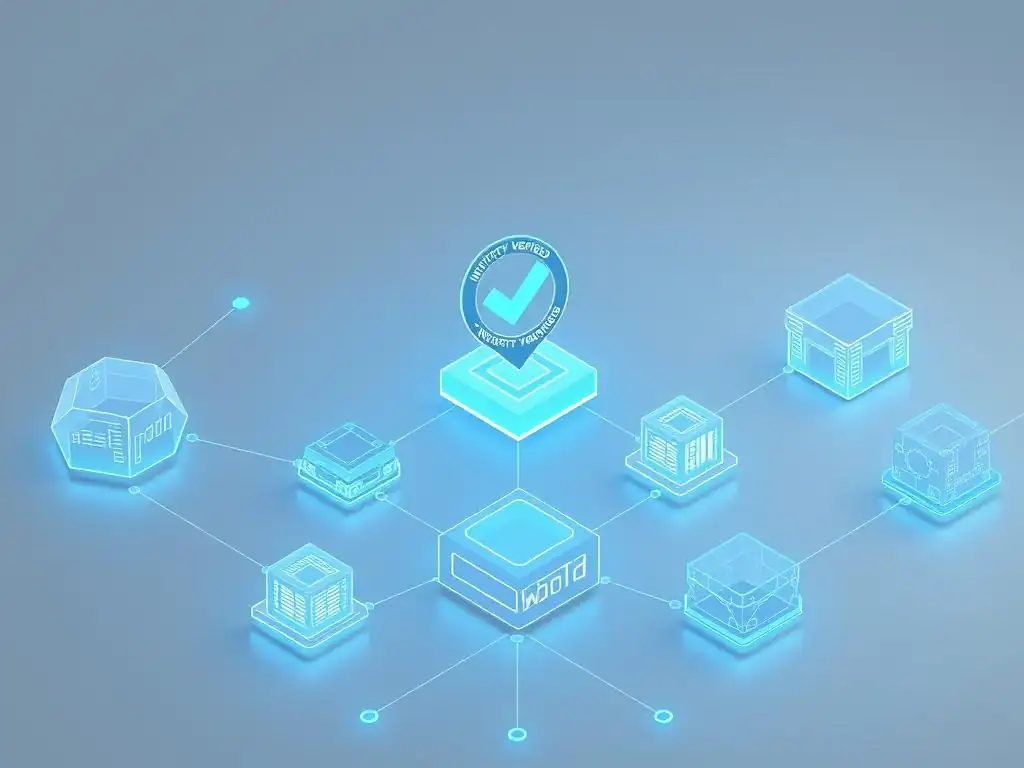
Implementing Decentralized Oracles for Real-World Data Validation
Decentralized oracles play a crucial role in ensuring data integrity and trustworthiness in Blockchain IoT systems by providing a secure and reliable bridge between real-world data and blockchain smart contracts. Oracles are entities that fetch external data from off-chain sources and feed it into blockchain networks, enabling smart contracts to interact with the real world.
However, relying on centralized oracles introduces a single point of failure and trust, potentially compromising data integrity. Decentralized oracles mitigate this risk by utilizing a network of independent and trustworthy data providers to validate and verify external data before it is fed into the blockchain.
Decentralized oracle networks, such as Chainlink and Band Protocol, employ various mechanisms to ensure data accuracy and reliability, including data aggregation from multiple sources, reputation systems for oracle providers, and staking mechanisms to incentivize honest behavior. By using decentralized oracles, Blockchain IoT applications can rely on verified and trustworthy real-world data to trigger smart contract execution and automate processes with confidence. For example, in a smart agriculture application, decentralized oracles can provide reliable weather data and sensor readings to smart contracts that automatically adjust irrigation systems based on real-time environmental conditions, ensuring data-driven and trustworthy automation.
Utilizing Hardware Security Modules (HSMs) for Data Protection
Hardware Security Modules (HSMs) provide a robust hardware-based security solution for protecting sensitive data and cryptographic keys in Blockchain IoT systems. HSMs are tamper-proof hardware devices designed to securely store and manage cryptographic keys, perform cryptographic operations, and protect sensitive data from unauthorized access. In a Blockchain IoT context, HSMs can be used to secure the private keys of IoT devices, blockchain nodes, and oracle providers, preventing key compromise and unauthorized access to the system. HSMs offer a higher level of security compared to software-based key management solutions, as they are designed to resist physical tampering and logical attacks.
HSMs are particularly valuable for protecting sensitive data at the edge, where IoT devices are often deployed in physically insecure environments. By storing cryptographic keys and performing cryptographic operations within an HSM, even if an IoT device is physically compromised, the sensitive keys and data remain protected.
HSMs can also be used to secure blockchain nodes and oracle providers, ensuring the integrity and confidentiality of cryptographic operations and data processing within the Blockchain IoT ecosystem. Utilizing HSMs for key management and data protection significantly enhances the overall security posture of Blockchain IoT systems, providing a strong foundation for trust and data integrity.
Implementing GDPR-Compliant Data Handling Practices
For Blockchain IoT deployments involving personal data, adhering to GDPR (General Data Protection Regulation) compliance is crucial, especially in the European Union. GDPR imposes stringent requirements on the collection, processing, and storage of personal data, including principles of data minimization, purpose limitation, and data subject rights. Blockchain IoT systems must be designed and implemented with GDPR compliance in mind, incorporating privacy-enhancing technologies and data handling practices.
Data minimization involves collecting only the necessary personal data for specific and legitimate purposes, avoiding unnecessary data collection. Purpose limitation requires that personal data is processed only for the purposes for which it was initially collected and not for incompatible purposes.
Implementing data anonymization and pseudonymization techniques can help reduce the risks associated with processing personal data on a blockchain. Data anonymization irreversibly removes personally identifiable information, while pseudonymization replaces direct identifiers with pseudonyms, reducing identifiability. Providing data subjects with control over their personal data is also essential for GDPR compliance, including mechanisms for data access, rectification, erasure, and data portability. Implementing consent management systems and transparent data processing policies are crucial for building trust and ensuring GDPR compliance in Blockchain IoT systems.
Adhering to Industry-Specific Security Standards and Certifications
In addition to general data privacy regulations, Blockchain IoT deployments in specific industries must comply with relevant industry-specific security standards and certifications. For example, in the healthcare sector, HIPAA (Health Insurance Portability and Accountability Act) in the US and similar regulations in other countries mandate strict security and privacy requirements for patient data.
Blockchain IoT solutions in healthcare must be designed and implemented to comply with HIPAA, which involves implementing administrative, physical, and technical safeguards to protect patient health information. Similarly, in the financial sector, PCI DSS (Payment Card Industry Data Security Standard) applies to systems that process credit card data.
In the industrial sector, standards like IEC 62443 address cybersecurity for industrial automation and control systems. Adhering to these industry-specific security standards and certifications demonstrates a commitment to security and compliance, building trust with customers, partners, and regulators. Obtaining relevant certifications, such as ISO 27001 for information security management or SOC 2 for security and availability, can further enhance credibility and demonstrate compliance with recognized security frameworks. Organizations deploying Blockchain IoT solutions should proactively identify and adhere to relevant industry-specific security standards and certifications to ensure compliance and build trust in their solutions.
Real-World Applications: Blockchain IoT Success Stories
[Case Study 1: Enhancing Pharmaceutical Supply Chain Transparency and Security]
The Future of Blockchain and IoT: Innovations and Opportunities
Synergistic Technologies: AI-Driven Analytics and Edge Computing Integration
The future of Blockchain IoT is inextricably linked to the synergistic integration of Artificial Intelligence (AI) and Edge Computing. AI-powered analytics can unlock the full potential of the massive datasets generated by IoT devices, providing valuable insights for optimization, automation, and predictive maintenance. Integrating AI algorithms with Blockchain IoT systems enables intelligent decision-making based on trusted and verified data.
For example, AI can analyze sensor data from industrial equipment recorded on a blockchain to predict potential failures and trigger proactive maintenance, minimizing downtime and maximizing efficiency. In smart cities, AI can analyze traffic data collected by IoT sensors and stored on a blockchain to optimize traffic flow, reduce congestion, and improve urban mobility.
Edge computing, which involves processing data closer to the source at the edge of the network, is also crucial for enhancing the performance and efficiency of Blockchain IoT systems. Processing data at the edge reduces latency, conserves bandwidth, and improves responsiveness, particularly for real-time IoT applications. Integrating edge computing with Blockchain IoT enables faster data processing, reduced reliance on centralized cloud infrastructure, and enhanced privacy by processing sensitive data locally.
Edge devices can perform pre-processing and filtering of IoT data before recording it on the blockchain, optimizing data management and reducing blockchain transaction load. The combination of AI, edge computing, and blockchain creates a powerful synergistic effect, enabling intelligent, scalable, and secure IoT solutions for a wide range of applications.
Revolutionizing Healthcare: Secure Data Sharing and Improved Patient Outcomes
Blockchain and IoT hold immense potential to revolutionize the healthcare industry, driving secure data sharing, improving patient outcomes, and enhancing operational efficiency. IoT devices, such as wearable sensors and medical devices, can generate continuous streams of patient health data, which can be securely recorded and shared on a blockchain. Blockchain-based Electronic Health Records (EHRs) can provide patients with greater control over their medical data, enabling secure and interoperable data sharing with healthcare providers, researchers, and other authorized parties. This patient-centric approach to healthcare data management can empower individuals, improve care coordination, and accelerate medical research.
Furthermore, Blockchain IoT can enhance the security and transparency of pharmaceutical supply chains, combating counterfeit drugs and ensuring drug provenance. IoT sensors can track temperature and humidity conditions during drug transportation, and blockchain can record this data immutably, ensuring the integrity and quality of pharmaceuticals throughout the supply chain.
Smart contracts can automate processes like insurance claims processing and medication dispensing, reducing administrative overhead and improving efficiency. The combination of blockchain and IoT in healthcare has the potential to transform patient care, improve data security, and drive innovation in medical research and pharmaceutical supply chains, ultimately leading to improved patient outcomes and a more efficient healthcare ecosystem.
Conclusion: Driving Innovation and Overcoming Barriers in Blockchain IoT
The convergence of blockchain and IoT presents a transformative opportunity to revolutionize industries, enhance security, and unlock new levels of efficiency and transparency. While significant Blockchain IoT challenges solutions exist, particularly in security, scalability, interoperability, data integrity, and regulatory compliance, innovative solutions are emerging to address these barriers. Advanced encryption, Zero-Trust security models, DAGs, state channels, universal data standards, blockchain bridges, decentralized oracles, and HSMs are just some of the technologies and strategies being employed to overcome these challenges and drive the adoption of Blockchain IoT.
The real-world applications and success stories of Blockchain IoT are growing, demonstrating the tangible benefits and transformative potential of this technology. From enhancing pharmaceutical supply chain transparency to transforming energy grids and revolutionizing healthcare, Blockchain IoT is poised to reshape industries and create new opportunities for innovation.
As synergistic technologies like AI and edge computing continue to integrate with Blockchain IoT, the future promises even more powerful and intelligent solutions that will drive efficiency, security, and trust in interconnected systems. Overcoming the remaining barriers through collaborative efforts, standardization, and continued technological advancements will be crucial to fully realize the innovation imperative and unlock the full potential of Blockchain IoT to transform our world.
Frequently Asked Questions
What are the primary challenges in integrating Blockchain and IoT?
The main hurdles include scalability limitations of blockchain, the high cost of transactions, and the security vulnerabilities inherent in IoT devices themselves.
How can Blockchain enhance the security of IoT devices?
Blockchain provides immutable records and decentralized authentication, making it harder for attackers to compromise the entire system. This adds a layer of trust and transparency.
What are some real-world applications where Blockchain and IoT are being effectively combined?
Supply chain management, healthcare data tracking, and smart energy grids are examples. These leverage blockchain's transparency and IoT's data collection capabilities.
What solutions are being developed to address the scalability issues of Blockchain in IoT environments?
Layer-2 scaling solutions, sidechains, and sharding are technologies being explored to improve transaction throughput and reduce network congestion, making blockchain more suitable for IoT scale.
What regulatory considerations are important when deploying BlockchainIoT solutions?
Data privacy regulations (like GDPR), security standards, and industry-specific compliance requirements need careful consideration. These are crucial for ensuring legal and ethical deployment of blockchain IoT solutions.
Final Reflection: Bridging the Physical and Digital Worlds
The convergence of blockchain and the Internet of Things (IoT) presents a transformative opportunity, yet as we've explored, it's fraught with significant hurdles. The need for robust, scalable, and secure solutions to Blockchain IoT challenges is no longer a futuristic aspiration, but a present-day imperative. The potential to revolutionize industries from supply chain management to healthcare hinges on our ability to overcome these obstacles and unlock the synergistic power of these two groundbreaking technologies.
The journey to realizing the full potential of Blockchain IoT is ongoing, shaping not only technological advancements but also the very fabric of our interconnected world. Witnessing the evolution of this space, from theoretical concepts to tangible applications, has underscored the profound impact it will have on our lives. As we navigate this complex landscape, it's crucial to remember the human element at the heart of innovation. The best way to predict the future is to create it.
- Peter Drucker. This quote reminds us that the solutions we seek are not merely technical, but also require vision, collaboration, and a commitment to ethical development.
Now, consider how you can contribute to this exciting future. Reflect on the challenges we've discussed and ask yourself: how can I leverage my skills and knowledge to build more secure, transparent, and efficient Blockchain IoT solutions? The future of this technology is not predetermined; it is being shaped by the choices we make today. Embrace the challenge, explore the possibilities, and become a part of the solution.
Okay, here's a Call to Action (CTA) for the end of the "Innovation Imperative: How to Solve the Toughest BlockchainIoT Challenges" article on Blockchain Trends (blockchaintrends.org):
Ignite Your BlockchainIoT Future!
Thanks for diving deep into the challenges and opportunities of BlockchainIoT. We hope you've gained valuable insights into navigating this innovative landscape. Now, let's turn those insights into action!
Here are a few ways to get started:
- Define a small-scale BlockchainIoT pilot project within your organization. Identify a specific use case where increased security and data transparency can deliver measurable benefits. This is your launchpad!
- Explore Blockchain Trends' forums and share your biggest BlockchainIoT challenge. Spark a discussion and learn from others in the community.
- Consider a "BlockchainIoT Hack Day" with your team. Dedicate a day to brainstorming unconventional solutions to real-world problems. You might be surprised by the results!
What's one unconventional BlockchainIoT solution you're excited to explore after reading this article? Share your thoughts below!
Leave a Reply