
Mitigating IoT Vulnerabilities: Blockchain's Proactive Security Measures


Welcome to Blockchain Trends, your compass in navigating the ever-evolving landscape of decentralized technologies! Beyond the buzzwords, we delve into blockchain's transformative power across diverse sectors. Are you ready to explore how blockchain is revolutionizing security in the Internet of Things? This article unveils cutting-edge Blockchain IoT security solutions, offering a glimpse into a future where interconnected devices are inherently more secure. Prepare to unlock the potential and learn how blockchain is stepping in to solve pressing vulnerabilities.
Mitigating IoT Vulnerabilities: Blockchain's Proactive Security Measures
- Introduction: The Growing Need for Enhanced IoT Security
- Blockchain IoT Security Solutions: A Proactive Approach
- How Blockchain Enhances IoT Security: Key Mechanisms
- Benefits of Implementing Blockchain-Based IoT Security
- Real-World Applications of Blockchain in IoT Security
- Overcoming Challenges in Implementing Blockchain IoT Security Solutions
- The Future of Blockchain IoT Security: Trends and Predictions
- Conclusion: Embracing Blockchain for a More Secure IoT Future
-
Frequently Asked Questions
- What are the primary security risks associated with traditional IoT deployments that Blockchain IoT security solutions aim to address?
- How does blockchain technology enhance the security of IoT devices and data, specifically regarding data integrity and access control?
- Can you explain how Blockchain IoT security solutions improve the scalability and efficiency of security management in large-scale IoT networks?
- What are some real-world examples of Blockchain IoT security solutions being implemented to secure IoT devices and data in industries like supply chain management or healthcare?
- What are some of the challenges and future directions for the adoption of Blockchain IoT security solutions, particularly concerning interoperability and regulatory compliance?
- Final Reflection: Securing Tomorrow's Connected World
- Unleash IoT Security: Fortify Your Devices Now!
Introduction: The Growing Need for Enhanced IoT Security
Understanding the Vulnerability Landscape in IoT Devices
The Internet of Things (IoT) has experienced exponential growth, connecting billions of devices from smart refrigerators to industrial sensors. This vast network, while offering unprecedented convenience and efficiency, has also significantly expanded the attack surface for cyber threats. IoT devices, often designed with limited processing power and memory, frequently lack robust security features, making them prime targets for malicious actors. Common vulnerabilities include weak default passwords, unencrypted communication protocols, and outdated firmware, creating numerous entry points for cyberattacks.
Recent statistics highlight the severity of this issue. A study by Palo Alto Networks in 2020 revealed that 98% of all IoT traffic is unencrypted, exposing sensitive data transmitted by these devices. Furthermore, research from Kaspersky in 2021 indicated a 117% increase in IoT attacks in the first half of the year compared to the same period in 2020. These figures underscore the urgent need for more sophisticated security measures to protect the rapidly expanding IoT ecosystem from evolving cyber threats and ensure the integrity and privacy of connected devices and the data they generate.
Why Traditional Security Measures Fall Short in IoT Ecosystems
Traditional security measures, designed for conventional IT systems, often prove inadequate when applied to the unique characteristics of IoT environments. Firewalls and intrusion detection systems, while effective in protecting network perimeters, struggle to manage the distributed and heterogeneous nature of IoT deployments. Many IoT devices operate on constrained networks with limited bandwidth and processing capabilities, making it challenging to implement resource-intensive security solutions.
Furthermore, the sheer scale of IoT deployments and the diversity of device types complicate security management. Centralized security models become bottlenecks when dealing with millions or billions of interconnected devices. Updating security patches across a vast and disparate IoT network is a logistical nightmare, often leaving devices vulnerable to known exploits for extended periods.
The lack of standardization in IoT protocols and device management also hinders the deployment of unified security solutions, creating fragmented and vulnerable ecosystems. The inherent limitations of traditional security approaches necessitate the exploration of novel paradigms like blockchain to address the specific security challenges posed by the IoT.
Blockchain IoT Security Solutions: A Proactive Approach
Leveraging Blockchain for Enhanced IoT Device Authentication
Blockchain technology offers a robust and decentralized framework for enhancing IoT device authentication, moving beyond traditional centralized and often vulnerable systems. By utilizing a distributed ledger, blockchain enables each IoT device to possess a unique and cryptographically secure digital identity. This identity, recorded on the blockchain, acts as an immutable record of the device's authenticity, significantly reducing the risk of device spoofing and unauthorized access.
Consider a scenario in smart agriculture where numerous sensors monitor soil conditions. Using blockchain-based authentication, each sensor's identity is verified against the distributed ledger before data is accepted. This prevents malicious actors from injecting false data into the system through compromised or rogue devices. Furthermore, blockchain facilitates mutual authentication between devices, ensuring that not only are devices verified upon joining the network, but also during ongoing communication. This continuous authentication process strengthens overall network security and provides a more proactive defense against unauthorized device interactions, a critical aspect of robust blockchain IoT security solutions.
Data Integrity and Tamper-Proofing in IoT Networks using Blockchain
Data integrity is paramount in IoT applications, especially in critical sectors like healthcare and industrial automation. Blockchain's inherent immutability and cryptographic hashing mechanisms provide an unparalleled solution for ensuring data integrity within IoT networks. When IoT devices generate data, it can be securely recorded on the blockchain in blocks linked chronologically and cryptographically. Any attempt to tamper with the data within a block would require altering the hash of that block and all subsequent blocks, a computationally infeasible task in a well-established blockchain network.
For example, in pharmaceutical supply chains, IoT sensors monitor temperature and humidity conditions of sensitive medications during transit. Data from these sensors, recorded on a blockchain, creates an immutable audit trail. If temperature excursions occur, the blockchain record provides irrefutable evidence, preventing the distribution of compromised drugs. This tamper-proof nature of blockchain ensures the integrity of IoT data throughout its lifecycle, fostering trust and reliability in IoT systems. This capability is a cornerstone of blockchain IoT security solutions, safeguarding against data manipulation and ensuring the accuracy of information derived from IoT devices.
How Blockchain Enhances IoT Security: Key Mechanisms
Decentralized Identity Management (DID) for IoT Devices
Decentralized Identity Management (DID) leveraging blockchain technology offers a transformative approach to securing IoT devices. Traditional identity management systems often rely on centralized authorities, creating single points of failure and vulnerability. DID, in contrast, empowers IoT devices with self-sovereign identities, controlled by the device owner or manufacturer rather than a central entity. Each device possesses a unique DID, anchored on a blockchain, allowing for verifiable and secure authentication without reliance on intermediaries.
Imagine a smart city infrastructure where traffic lights, surveillance cameras, and environmental sensors are interconnected. Using blockchain-based DID, each device can independently manage its identity and access permissions. This eliminates the risks associated with centralized identity servers being compromised, potentially disrupting the entire smart city network. Furthermore, DID promotes greater user privacy by reducing the amount of personal data shared with centralized authorities. This decentralized approach to identity management is a key mechanism through which blockchain enhances IoT security, fostering resilience and user control.
Secure Over-the-Air (OTA) Updates via Blockchain Validation
Over-the-Air (OTA) updates are crucial for maintaining the security and functionality of IoT devices, patching vulnerabilities and deploying new features. However, the OTA update process itself can be a significant security risk if compromised. Malicious actors could inject malware through fraudulent updates, gaining control of vast networks of IoT devices. Blockchain provides a secure validation mechanism for OTA updates, ensuring their authenticity and integrity.
By cryptographically signing software updates and recording the hash of the update file on the blockchain, devices can verify the legitimacy of updates before installation. When an IoT device receives an OTA update, it checks the blockchain to confirm the update's hash matches the signed version authorized by the manufacturer. This blockchain-based validation process prevents man-in-the-middle attacks and ensures that only authorized and untampered updates are installed, significantly enhancing the security of the OTA update mechanism and contributing to robust blockchain IoT security solutions.
Access Control Management using Smart Contracts in IoT
Smart contracts, self-executing agreements encoded on a blockchain, offer a powerful and automated mechanism for managing access control in IoT environments. Traditional access control systems often rely on complex configurations and manual interventions, prone to errors and vulnerabilities. Smart contracts can define granular access policies for IoT devices and data, automatically enforcing these policies based on predefined conditions.
Consider a smart factory with numerous interconnected machines and sensors. Smart contracts can be used to define access permissions for different users and devices based on their roles and responsibilities. For example, maintenance personnel might have temporary access to specific machine data for diagnostics, while production managers have broader access for monitoring overall performance.
These access rules, encoded in smart contracts, are automatically enforced by the blockchain, ensuring that only authorized entities can access specific IoT resources. This automated and tamper-proof access control mechanism significantly strengthens IoT security and streamlines access management processes, a vital component of advanced blockchain IoT security solutions.
Benefits of Implementing Blockchain-Based IoT Security
Improved Data Security and Privacy in IoT Environments
Implementing blockchain-based security solutions in IoT environments yields significant improvements in both data security and privacy. The inherent cryptographic features of blockchain, including hashing and encryption, protect sensitive IoT data from unauthorized access and manipulation. Data stored on a blockchain is inherently more secure than data stored in traditional centralized databases, which are more vulnerable to single points of failure and large-scale breaches.
Furthermore, blockchain can enhance user privacy by enabling selective data sharing and minimizing data exposure. Through mechanisms like zero-knowledge proofs and homomorphic encryption, blockchain allows for data processing and analysis without revealing the underlying sensitive information. For example, in smart healthcare, patient data collected by wearable IoT devices can be securely stored and shared on a blockchain, ensuring data privacy while enabling authorized healthcare providers to access necessary information for diagnosis and treatment. This combination of enhanced data security and privacy is a key benefit of adopting blockchain IoT security solutions.
Enhanced Trust and Transparency across IoT Networks
Blockchain technology fosters enhanced trust and transparency within IoT networks, addressing critical concerns about data provenance and accountability. The immutable and auditable nature of blockchain transactions provides a transparent record of all data exchanges and device interactions within the IoT ecosystem. This transparency builds trust among participants, as all actions are recorded and verifiable on the distributed ledger.
In supply chain management, for instance, tracking goods with IoT sensors and recording data on a blockchain provides a transparent and verifiable provenance trail. Consumers can scan a QR code on a product to access its journey from origin to destination, verifying its authenticity and origin. This enhanced transparency, facilitated by blockchain, combats counterfeiting and builds consumer trust. Similarly, in industrial IoT, transparent data logging on a blockchain enables accountability and facilitates efficient troubleshooting in case of system failures. This enhanced trust and transparency are crucial benefits of leveraging blockchain for IoT security.
Reduced Risk of Data Breaches and Cyberattacks in IoT Systems
By implementing blockchain IoT security solutions, organizations can significantly reduce the risk of data breaches and cyberattacks targeting their IoT systems. The decentralized and distributed nature of blockchain eliminates single points of failure, making it significantly more resilient to attacks compared to centralized security architectures. The cryptographic security mechanisms inherent in blockchain, such as strong encryption and consensus algorithms, make it extremely difficult for malicious actors to compromise the network or tamper with data.
A report by IBM in 2022 estimated that the average cost of a data breach is $4.24 million. By proactively securing IoT systems with blockchain, organizations can mitigate the financial and reputational damage associated with data breaches. Furthermore, blockchain's immutability and auditability provide a comprehensive record of security events, facilitating incident response and forensic analysis. This reduction in the risk of data breaches and cyberattacks is a compelling benefit for organizations seeking robust blockchain IoT security solutions to protect their connected devices and data.
Real-World Applications of Blockchain in IoT Security
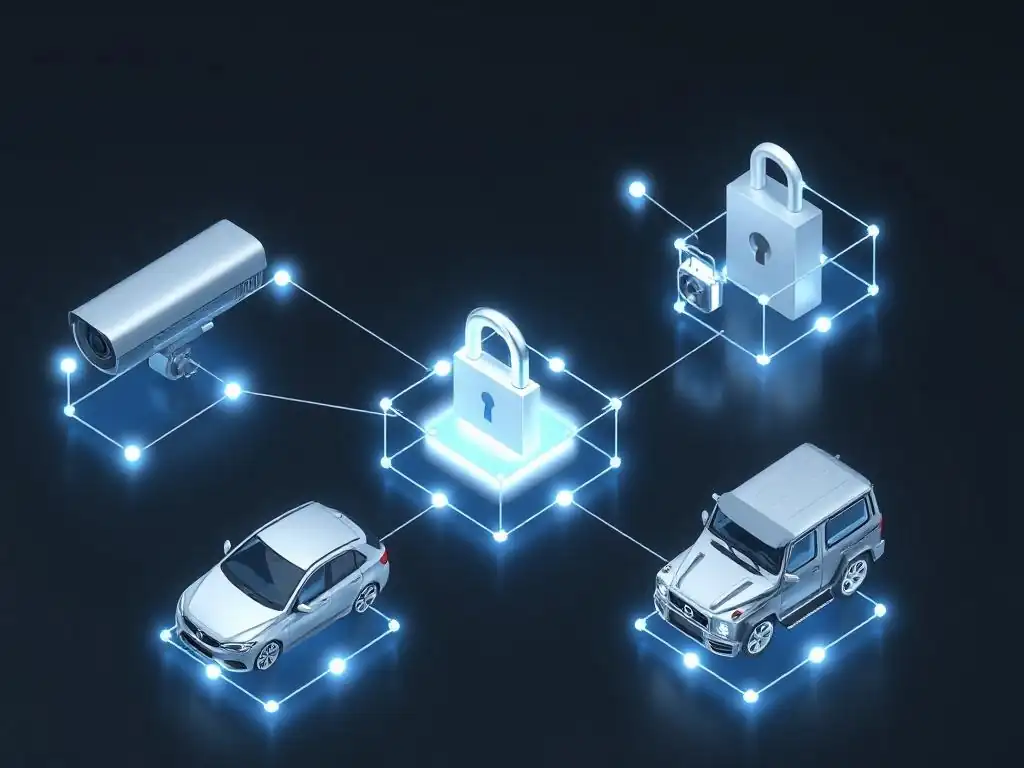
Blockchain for Supply Chain Security in IoT-Enabled Logistics
The integration of blockchain and IoT is revolutionizing supply chain security, particularly in logistics. IoT sensors embedded in shipments, combined with blockchain's immutable ledger, provide end-to-end visibility and traceability, combating counterfeiting and enhancing supply chain integrity. Temperature-sensitive goods, pharmaceuticals, and high-value items benefit significantly from this enhanced security.
For example, pharmaceutical giant Pfizer is exploring blockchain to track vaccines across their supply chain, ensuring temperature control and preventing counterfeit drugs from entering the market. Similarly, De Beers uses blockchain to track diamonds from mine to market, combating conflict diamonds and assuring consumers of ethical sourcing. These real-world examples demonstrate the tangible benefits of blockchain IoT security solutions in logistics, enhancing transparency, reducing fraud, and building trust across the supply chain.
Securing Smart Home Devices with Blockchain Technology
Smart home devices, while offering convenience, present significant security vulnerabilities due to their increasing number and often weak security configurations. Blockchain technology offers a decentralized and secure framework to protect smart home ecosystems. By leveraging blockchain for device authentication, access control, and data security, homeowners can enhance the security and privacy of their connected homes.
Companies like Filament are developing blockchain-based solutions for securing smart homes. Their technology utilizes blockchain to create secure identities for devices and manage access permissions, preventing unauthorized access and control. Imagine a smart lock secured by blockchain – unauthorized unlocking attempts would be recorded on the distributed ledger, providing a tamper-proof audit trail. Furthermore, blockchain can facilitate secure data sharing between smart home devices and authorized users, enhancing privacy and control over personal data within the smart home environment. These applications highlight the potential of blockchain IoT security solutions in safeguarding the growing smart home market.
Enhancing Industrial IoT (IIoT) Security with Blockchain Solutions
Industrial IoT (IIoT) systems, critical infrastructure in manufacturing, energy, and transportation, demand the highest levels of security. Cyberattacks on IIoT systems can have catastrophic consequences, ranging from production disruptions to safety hazards. Blockchain offers robust security solutions tailored to the specific needs of IIoT environments, enhancing resilience, data integrity, and operational security.
Bosch, a leading industrial technology provider, is exploring blockchain for securing its connected manufacturing systems. By leveraging blockchain for device authentication and secure data exchange, Bosch aims to create more resilient and secure IIoT environments. Consider a scenario in a smart factory where robotic arms and production line sensors communicate sensitive data.
Blockchain can ensure the integrity of this data, preventing malicious manipulation that could lead to production errors or safety incidents. Furthermore, blockchain can facilitate secure remote monitoring and control of IIoT devices, enhancing operational efficiency while maintaining robust security, illustrating the critical role of blockchain IoT security solutions in the industrial sector.
Overcoming Challenges in Implementing Blockchain IoT Security Solutions
Scalability Concerns in Blockchain-Based IoT Security Architectures
Scalability remains a significant challenge in implementing blockchain-based IoT security solutions, particularly for large-scale deployments with millions or billions of devices generating massive volumes of data. Traditional blockchain networks, like Bitcoin and Ethereum, often face limitations in transaction throughput and latency, potentially hindering their applicability in high-demand IoT scenarios.
However, advancements in blockchain technology are addressing these scalability concerns. Layer-2 scaling solutions, such as sidechains and state channels, aim to increase transaction processing capacity without compromising security. Furthermore, the development of more efficient consensus algorithms and blockchain architectures specifically designed for IoT, such as DAG-based blockchains (Directed Acyclic Graphs), offers promising avenues for overcoming scalability limitations. Ongoing research and development are crucial to ensure that blockchain IoT security solutions can scale effectively to meet the demands of ever-expanding IoT ecosystems.
Interoperability Issues between Blockchain and Existing IoT Infrastructure
Interoperability challenges arise when integrating blockchain-based security solutions with existing, often heterogeneous, IoT infrastructure. Many legacy IoT devices and systems were not designed with blockchain compatibility in mind, leading to integration complexities. Different communication protocols, data formats, and security standards across various IoT devices and blockchain platforms can hinder seamless interoperability.
Addressing these challenges requires standardization efforts and the development of interoperability protocols and middleware solutions. Industry consortia and standards bodies are working to establish common standards for blockchain and IoT integration, facilitating interoperability between different platforms and devices. Furthermore, the development of adapter layers and gateway technologies can bridge the gap between legacy IoT infrastructure and blockchain networks, enabling smoother integration. Overcoming interoperability hurdles is essential for widespread adoption of blockchain IoT security solutions in diverse and complex IoT environments.
Addressing Regulatory Compliance and Privacy Concerns
Regulatory compliance and privacy concerns present another set of challenges in deploying blockchain IoT security solutions. Regulations like GDPR (General Data Protection Regulation) and CCPA (California Consumer Privacy Act) impose stringent requirements on data privacy and security, which must be carefully considered when implementing blockchain in IoT. While blockchain enhances data security and transparency, it also raises questions about data immutability and the "right to be forgotten" under privacy regulations.
Solutions to address these concerns include implementing privacy-preserving blockchain technologies, such as zero-knowledge proofs and differential privacy, which allow for data processing and analysis without revealing sensitive personal information. Furthermore, careful consideration of data governance frameworks and compliance protocols is crucial when designing blockchain IoT security solutions. Engaging with regulatory bodies and legal experts is essential to ensure that blockchain implementations in IoT comply with relevant regulations and protect user privacy effectively.
The Future of Blockchain IoT Security: Trends and Predictions
Integration of AI and Blockchain for Predictive IoT Security
The future of blockchain IoT security is increasingly intertwined with Artificial Intelligence (AI). The integration of AI and blockchain holds immense potential for creating more intelligent and predictive security systems for IoT environments. AI algorithms can analyze vast amounts of IoT data, including device behavior and network traffic, to identify anomalies and predict potential security threats proactively.
Combined with blockchain's secure and auditable data management capabilities, AI-powered security systems can automatically respond to threats, isolate compromised devices, and implement preventative measures in real-time. For example, AI algorithms can learn normal device behavior patterns and detect deviations indicative of malicious activity. This anomaly detection, coupled with blockchain-based incident logging and response mechanisms, can significantly enhance the proactive security posture of IoT systems. This synergy between AI and blockchain is poised to drive the next generation of blockchain IoT security solutions.
The Role of Decentralized Autonomous Organizations (DAOs) in IoT Security Governance
Decentralized Autonomous Organizations (DAOs) are emerging as a novel governance model with significant implications for IoT security. DAOs, governed by smart contracts on a blockchain, enable decentralized and community-driven management of IoT networks and security protocols. This decentralized governance model can enhance transparency, resilience, and user participation in IoT security decision-making.
Imagine a DAO governing the security protocols for a city-wide smart sensor network. Decisions regarding security updates, access policies, and incident response could be made through transparent and democratic voting processes within the DAO, rather than by a centralized authority. This decentralized governance model can foster greater trust and accountability in IoT security management, empowering stakeholders and reducing the risks associated with centralized control. DAOs are likely to play an increasingly important role in shaping the future of IoT security governance.
The Evolving Landscape of Blockchain IoT Security Standards
The landscape of blockchain IoT security standards is continuously evolving, driven by industry collaboration and the need for interoperability and security best practices. Standardization efforts are crucial for fostering wider adoption of blockchain IoT security solutions and ensuring compatibility across different platforms and devices. Organizations like the IEEE, IETF, and ISO are actively developing standards and guidelines for blockchain and IoT integration, covering areas such as security protocols, identity management, and data exchange formats.
These evolving standards will provide a framework for developers and organizations to build secure and interoperable blockchain IoT solutions. Furthermore, standardization will facilitate regulatory compliance and promote trust in blockchain-based IoT security systems. The ongoing development and adoption of these standards are essential for realizing the full potential of blockchain in securing the future of the Internet of Things.
Conclusion: Embracing Blockchain for a More Secure IoT Future
Key Takeaways: Blockchain as a Cornerstone of IoT Security
Blockchain technology is emerging as a cornerstone of enhanced IoT security, offering proactive solutions to mitigate the growing vulnerabilities within connected ecosystems. Its decentralized nature, cryptographic security mechanisms, and immutability provide a robust foundation for securing IoT devices, data, and networks. Blockchain IoT security solutions offer significant benefits, including improved data security and privacy, enhanced trust and transparency, and reduced risk of cyberattacks. From securing supply chains to protecting smart homes and industrial infrastructure, blockchain's applications in IoT security are diverse and impactful.
While challenges remain in scalability, interoperability, and regulatory compliance, ongoing advancements and standardization efforts are paving the way for wider adoption. The integration of AI and the emergence of decentralized governance models further enhance the potential of blockchain to transform IoT security. Embracing blockchain IoT security solutions is no longer an option but a necessity in navigating the complex and evolving threat landscape of the Internet of Things.
Call to Action: Exploring and Implementing Blockchain IoT Security Solutions
As the IoT continues to expand and permeate every aspect of our lives, prioritizing security is paramount. Organizations and individuals must proactively explore and implement blockchain IoT security solutions to safeguard their connected devices and data. This involves understanding the specific security challenges within their IoT environments and identifying how blockchain can address these vulnerabilities. Experimentation, pilot projects, and collaboration with blockchain and IoT security experts are crucial steps in this journey.
By taking proactive measures to integrate blockchain into IoT security architectures, we can build a more secure, resilient, and trustworthy Internet of Things. Embracing blockchain for IoT security is an investment in a future where connected devices enhance our lives without compromising our security and privacy. The time to act is now, to explore and implement blockchain IoT security solutions and build a more secure connected world.
Frequently Asked Questions
What are the primary security risks associated with traditional IoT deployments that Blockchain IoT security solutions aim to address?
Traditional IoT deployments often suffer from centralized architectures creating single points of failure. This makes them vulnerable to cyberattacks, data breaches, and manipulation, which blockchain-based solutions can help mitigate.
How does blockchain technology enhance the security of IoT devices and data, specifically regarding data integrity and access control?
Blockchain provides immutable records ensuring data integrity and preventing unauthorized modifications. Its distributed ledger and smart contract capabilities allow for granular access control, limiting who can access and modify data.
Can you explain how Blockchain IoT security solutions improve the scalability and efficiency of security management in large-scale IoT networks?
Blockchain's decentralized nature eliminates the need for a central authority, streamlining security management. This decentralization enhances scalability and reduces latency, making it ideal for large IoT networks.
What are some real-world examples of Blockchain IoT security solutions being implemented to secure IoT devices and data in industries like supply chain management or healthcare?
In supply chain management, blockchain tracks goods, ensuring authenticity and preventing counterfeiting. In healthcare, it secures patient data, ensuring privacy and compliance with regulatory standards.
What are some of the challenges and future directions for the adoption of Blockchain IoT security solutions, particularly concerning interoperability and regulatory compliance?
Challenges include interoperability between different blockchain platforms and IoT devices, and navigating evolving regulatory landscapes. Future directions focus on standardization and developing robust frameworks for compliance.
Final Reflection: Securing Tomorrow's Connected World
The intricate web of the Internet of Things, while offering unprecedented convenience and efficiency, simultaneously presents a vast attack surface. The urgency of securing these interconnected devices cannot be overstated, as vulnerabilities in even the smallest sensor can have cascading consequences across entire systems. Blockchain technology, as explored in this article, offers a promising pathway towards proactive and robust IoT security solutions, moving beyond reactive patching to a more inherently secure architecture.
The potential of blockchain to revolutionize IoT security is profound, influencing not just technological advancements but also our trust in the digital infrastructure that increasingly governs our lives. The ability to verify data integrity and device identity through a decentralized and immutable ledger is crucial for fostering a secure and reliable IoT ecosystem. Security is always seen as too expensive until you need it.
This quote perfectly encapsulates the proactive approach blockchain brings, shifting the focus from damage control to preventative measures.
As we stand on the cusp of a hyper-connected future, let us not underestimate the power of proactive security measures. Consider how you can advocate for and implement blockchain-based solutions within your own sphere of influence, whether it's in your workplace, community, or personal projects. Embrace the potential of this technology to build a more secure, trustworthy, and resilient Internet of Things for all.
Unleash IoT Security: Fortify Your Devices Now!
Thank you for exploring how blockchain can revolutionize IoT security. Now that you understand the potential, it's time to move from theory to action and safeguard your connected world.
Here are a few steps you can take today:
- Start with a security audit: Assess the vulnerabilities of your existing IoT devices and identify potential weaknesses that blockchain solutions can address. This will be your primary line of defense.
- Explore open-source blockchain platforms to experiment with decentralized security solutions tailored for IoT.
- Share your insights with fellow enthusiasts on online forums to discuss innovative blockchain-based IoT security strategies.
What is one immediate vulnerability you will address in your IoT network, and how might a blockchain solution help?
Leave a Reply