
Powering Green IoT: Can Blockchain Reduce the Environmental Impact?


Welcome to Blockchain Trends, your compass in the rapidly evolving world of decentralized technology!
Ever wondered how blockchain can extend beyond finance and into tangible solutions for our planet? This article delves into the surprising intersection of Blockchain IoT environmental impact, exploring how this powerful combination can revolutionize sustainability efforts. Prepare to uncover innovative applications and assess whether this technological synergy can truly pave the way for a greener future. Intrigued? Let's explore!
- The Environmental Footprint of IoT: A Growing Concern
- Blockchain for Sustainable IoT: Addressing Environmental Challenges
- Blockchain-Based Solutions for Green IoT: Practical Applications
- Case Studies: Blockchain Improving IoT Sustainability
- Challenges and Opportunities for Blockchain-Driven Green IoT
- The Future of Green IoT: Blockchain's Role in a Sustainable Future
-
Frequently Asked Questions
- How can blockchain technology contribute to reducing the environmental impact of IoT devices?
- What role does blockchain play in promoting sustainable IoT solutions?
- What are some practical examples of using blockchain with IoT to address environmental challenges?
- How does blockchain help ensure data integrity when monitoring environmental parameters with IoT?
- What are the potential challenges in integrating blockchain and IoT for environmental sustainability?
- Final Reflection: Embracing Sustainable Innovation
- Ignite Change: Fuel a Sustainable IoT Future!
The Environmental Footprint of IoT: A Growing Concern
Understanding the Energy Consumption of IoT Devices
The Internet of Things (IoT) has rapidly expanded, connecting billions of devices across the globe, from smart thermostats in homes to sensors monitoring industrial equipment. While offering unprecedented convenience and efficiency, this interconnected web comes with a significant energy footprint. Consider smart home devices: each smart bulb, security camera, and voice assistant, while individually consuming minimal power, collectively contribute to a substantial energy demand.
A 2020 report by the American Council for an Energy-Efficient Economy (ACEEE) estimated that smart homes in the US alone consume as much electricity as 3.5 million homes annually, largely due to always-on devices. Furthermore, industrial IoT deployments, involving thousands of sensors and actuators in factories and infrastructure, amplify this energy consumption considerably. These devices, often operating 24/7 to collect and transmit data, require continuous power, adding to the overall energy burden and contributing to carbon emissions, especially when powered by non-renewable sources.
The energy consumption patterns of IoT devices vary greatly depending on their function and communication protocols. Low-power wide-area networks (LPWANs) like LoRaWAN and NB-IoT are designed for energy efficiency, enabling battery-operated devices to function for years. However, devices requiring higher bandwidth and processing power, such as those used in video surveillance or real-time analytics, consume significantly more energy.
For instance, a typical smart security camera can consume between 2 to 5 watts continuously, while a more complex industrial sensor might require even more power depending on its sensing capabilities and data transmission frequency. As the number of IoT devices proliferates, and their functionalities become more sophisticated, managing and mitigating their collective energy consumption becomes a critical challenge for environmental sustainability.
The Problem of E-Waste in the IoT Ecosystem
Beyond energy consumption during operation, the IoT ecosystem contributes significantly to the growing global problem of electronic waste (e-waste). The rapid pace of technological advancement and the relatively short lifespan of many IoT devices lead to a high turnover rate and a substantial volume of discarded electronics. Smartphones, tablets, and wearables, often considered part of the broader IoT landscape, are replaced frequently, contributing significantly to e-waste.
The United Nations University's Global E-waste Monitor 2020 reported that the world generated 53.6 million metric tons of e-waste in 2019, with Asia being the largest contributor. While the exact proportion attributed to IoT devices is challenging to quantify precisely, the increasing number of connected devices undoubtedly exacerbates the problem.
The composition of IoT devices further complicates the e-waste issue. Many devices contain hazardous materials like lead, mercury, and cadmium, which can leach into the environment if not properly recycled. Furthermore, the complex design and miniaturization of many IoT devices make recycling processes more challenging and costly.
According to the World Economic Forum, only about 20% of global e-waste is formally recycled, with a significant portion ending up in landfills or being informally processed, often in developing countries, leading to environmental pollution and health hazards. The increasing volume of IoT e-waste, coupled with low recycling rates and the presence of hazardous materials, presents a serious environmental challenge that demands urgent attention and innovative solutions.
The Carbon Emissions from IoT Data Processing and Storage
The vast amounts of data generated by billions of IoT devices need to be processed, analyzed, and stored, leading to substantial carbon emissions associated with data centers. These data centers, the backbone of the digital age, are energy-intensive facilities, consuming massive amounts of electricity to power servers, cooling systems, and network infrastructure.
A study by Greenpeace estimated that data centers globally accounted for approximately 1% of global electricity consumption in 2010, and this figure is projected to rise significantly with the exponential growth of data generation from IoT and other digital services. While data centers are becoming more energy-efficient, the sheer volume of data being processed continues to drive up overall energy consumption.
The carbon footprint of IoT data processing and storage is not solely attributed to data centers themselves but also to the energy mix used to power them. Data centers powered by renewable energy sources have a significantly lower carbon footprint compared to those relying on fossil fuels. However, the geographical distribution of data centers and the availability of renewable energy vary widely.
Furthermore, the lifecycle emissions associated with the manufacturing of servers, storage devices, and networking equipment also contribute to the overall carbon footprint of IoT data infrastructure. As IoT applications become more data-intensive, requiring real-time analytics and edge computing, the energy demands of data processing and storage are likely to increase, making it crucial to explore sustainable solutions to mitigate the associated carbon emissions.
Blockchain for Sustainable IoT: Addressing Environmental Challenges
Exploring Blockchain's Potential for Reducing IoT's Carbon Footprint
Blockchain technology, primarily known for its role in cryptocurrencies, offers a compelling suite of features that can be leveraged to address the environmental challenges posed by the growing IoT ecosystem. While blockchain itself can be energy-intensive depending on its consensus mechanism (like Proof-of-Work), its inherent characteristics of decentralization, transparency, and immutability can be strategically applied to optimize energy consumption, reduce e-waste, and minimize the carbon footprint of IoT data processing and storage.
The key lies in selectively applying blockchain's strengths to specific areas within the IoT ecosystem where it can deliver the most significant environmental benefits, rather than assuming a blanket solution.
Blockchain's potential for reducing IoT's carbon footprint stems from its ability to enable more efficient and transparent resource management. For instance, blockchain can facilitate decentralized energy grids, allowing for peer-to-peer energy trading and optimizing the distribution of renewable energy. In the context of IoT, this can empower smart devices to participate in energy markets, automatically adjust their consumption based on grid conditions, and prioritize renewable energy sources.
Furthermore, blockchain's transparency and traceability features can be used to track the lifecycle of IoT devices, promoting circular economy principles and facilitating responsible e-waste management. By fostering greater accountability and efficiency across the IoT value chain, blockchain can contribute significantly to a more sustainable and environmentally responsible IoT ecosystem.
How Decentralization Can Minimize Energy Waste in IoT Networks
Decentralization, a core tenet of blockchain technology, offers a pathway to minimize energy waste in IoT networks by distributing control and resources, reducing reliance on centralized infrastructure, and optimizing network efficiency. Traditional centralized IoT architectures often involve a hierarchical structure where a central server or cloud platform manages and processes data from numerous edge devices.
This centralized approach can lead to bottlenecks, single points of failure, and inefficient resource utilization, potentially resulting in energy waste. Decentralized IoT networks, powered by blockchain, can distribute processing and storage tasks across the network, reducing the burden on central servers and optimizing resource allocation.
In a decentralized IoT network, devices can communicate and transact directly with each other, reducing the need for intermediaries and streamlining data flow. This peer-to-peer communication can minimize latency, improve network resilience, and enhance energy efficiency. Furthermore, decentralized systems can leverage edge computing, processing data closer to the source, reducing the need to transmit vast amounts of data to centralized data centers. This edge-based processing can significantly reduce network traffic and energy consumption associated with data transmission and central server processing. By distributing control and computation, decentralized blockchain-based IoT networks can create more resilient, efficient, and energy-conscious infrastructures.
Blockchain's Role in Promoting Circular Economy Principles for IoT Devices
Blockchain technology can play a crucial role in promoting circular economy principles for IoT devices by enhancing traceability, transparency, and accountability throughout their lifecycle – from manufacturing to end-of-life management. The linear “take-make-dispose” model of consumption contributes significantly to resource depletion and e-waste accumulation. A circular economy, in contrast, aims to minimize waste and maximize resource utilization by extending product lifecycles, promoting reuse, repair, refurbishment, and recycling. Blockchain's immutable and transparent ledger can provide a robust platform for tracking and verifying the provenance, ownership, and condition of IoT devices, facilitating circular economy initiatives.
By recording key information about IoT devices on a blockchain, such as manufacturing details, maintenance history, and ownership transfers, it becomes easier to track devices throughout their lifecycle. This enhanced traceability can enable efficient reverse logistics for device returns, facilitate secondary markets for used devices, and improve the effectiveness of recycling programs.
For example, blockchain can be used to verify the authenticity of recycled materials, incentivizing responsible recycling practices and increasing consumer trust in recycled products. Furthermore, smart contracts on a blockchain can automate processes related to device leasing, sharing, and end-of-life management, fostering more sustainable consumption patterns and reducing e-waste generation.
Blockchain-Based Solutions for Green IoT: Practical Applications
Smart Contracts for Energy-Efficient IoT Device Management
Smart contracts, self-executing agreements encoded on a blockchain, offer a powerful tool for automating and optimizing energy-efficient management of IoT devices. These contracts can be programmed to trigger specific actions based on predefined conditions, such as energy prices, grid stability, or user preferences, enabling dynamic and responsive energy management. For instance, smart contracts can automatically adjust the power consumption of smart appliances based on real-time electricity prices, shifting energy usage to off-peak hours or periods of high renewable energy availability. This demand-side management can contribute to grid stability, reduce peak demand, and lower energy costs for consumers.
In industrial settings, smart contracts can optimize the energy consumption of manufacturing equipment and building management systems. For example, sensors in a factory can monitor energy usage and environmental conditions, triggering smart contracts to automatically adjust lighting, heating, and cooling systems based on occupancy and real-time data. Smart contracts can also be used to implement predictive maintenance schedules for IoT devices, optimizing their lifespan and reducing energy waste associated with device failures. By automating energy management decisions and enabling dynamic responses to changing conditions, smart contracts can significantly enhance the energy efficiency of IoT deployments across various sectors.
Decentralized Data Storage for Reducing IoT Data Center Energy Consumption
Decentralized data storage solutions, often leveraging blockchain technology, offer an alternative to traditional centralized data centers, potentially reducing the energy consumption associated with storing and managing the massive amounts of data generated by IoT devices. Centralized data centers are energy-intensive facilities, requiring significant power for servers, cooling, and infrastructure. Decentralized storage networks, such as IPFS (InterPlanetary File System) and Filecoin, distribute data across a network of nodes, eliminating the need for large, centralized facilities and potentially reducing energy consumption.
Decentralized storage networks can improve energy efficiency by leveraging geographically distributed storage locations, potentially reducing data transfer distances and network latency. Furthermore, some decentralized storage solutions incorporate energy-efficient storage mechanisms, such as data deduplication and compression, to minimize storage space and energy requirements.
While decentralized storage solutions are still evolving, they hold promise for reducing the carbon footprint of IoT data management by offering a more distributed and potentially more energy-efficient alternative to traditional centralized data centers. However, it is crucial to consider the energy consumption of the entire decentralized network, including the nodes and consensus mechanisms, to ensure overall energy savings.
Blockchain-Enabled Tracking for Sustainable IoT Supply Chains
Blockchain technology can significantly enhance the sustainability of IoT supply chains by providing transparent and immutable tracking of products and components from origin to end-of-life. Traditional supply chains often lack transparency, making it difficult to verify the origin of materials, track environmental impacts, and ensure ethical sourcing. Blockchain's ability to create a shared, auditable record of transactions and product information can address these challenges, enabling more sustainable and responsible supply chain practices.
For IoT devices, blockchain can track the origin of raw materials used in manufacturing, verify ethical labor practices, and monitor the environmental impact of production processes. This enhanced traceability can help consumers make informed purchasing decisions and incentivize companies to adopt more sustainable manufacturing practices. Furthermore, blockchain can be used to track the movement of IoT devices throughout the supply chain, ensuring product integrity and reducing counterfeiting. By providing greater transparency and accountability in IoT supply chains, blockchain can contribute to more sustainable and ethical sourcing, manufacturing, and distribution of IoT devices.
Case Studies: Blockchain Improving IoT Sustainability
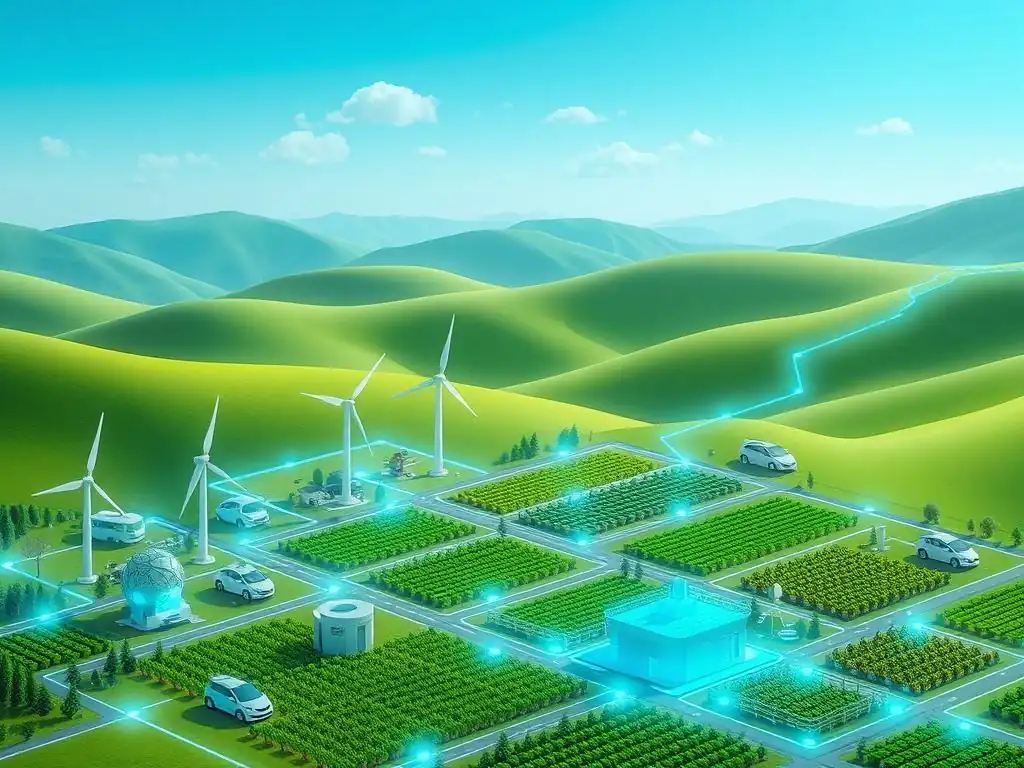
Helium Network - Decentralized Wireless Infrastructure for IoT
Helium Network exemplifies a real-world application of blockchain to create a decentralized wireless infrastructure for IoT, aiming to reduce reliance on traditional, energy-intensive telecom networks. Helium utilizes a blockchain and a network of user-deployed hotspots to provide long-range, low-power wireless connectivity for IoT devices. Instead of relying on centralized cellular towers, Helium leverages a distributed network of hotspots, typically low-power devices installed by individuals, creating a more energy-efficient and cost-effective alternative for IoT connectivity.
The Helium network's decentralized nature inherently promotes energy efficiency. Hotspots consume significantly less power than traditional cellular base stations, and the distributed architecture reduces the need for extensive and energy-intensive backhaul infrastructure. Furthermore, Helium's blockchain incentivizes network participation through cryptocurrency rewards, encouraging individuals to deploy and maintain hotspots, further expanding the network's coverage and resilience. By providing a decentralized and energy-efficient alternative to traditional wireless infrastructure, Helium demonstrates the potential of blockchain to reduce the environmental impact of IoT connectivity.
IBM Food Trust - Enhancing Traceability and Reducing Waste in the Food Supply Chain
IBM Food Trust, built on blockchain technology, showcases how enhanced traceability in the food supply chain can reduce waste and improve sustainability, indirectly impacting the environmental footprint of IoT devices used within the food industry. While not directly focused on IoT device sustainability, IBM Food Trust demonstrates the broader application of blockchain to improve supply chain efficiency and reduce environmental impact in sectors heavily reliant on IoT for monitoring and data collection. Food waste is a significant contributor to greenhouse gas emissions, and inefficient supply chains exacerbate this problem.
IBM Food Trust provides a transparent and immutable platform for tracking food products from farm to consumer. By recording information about food origin, processing, and transportation on a blockchain, it enhances traceability, improves food safety, and reduces food waste. This improved traceability can enable faster recalls in case of contamination, reduce spoilage due to inefficient logistics, and optimize inventory management. While IBM Food Trust's primary focus is food safety and efficiency, its impact on reducing food waste indirectly contributes to a more sustainable food system and highlights the potential of blockchain to improve sustainability in sectors utilizing IoT technologies.
Power Ledger - Peer-to-Peer Energy Trading for Renewable Integration
Power Ledger is a blockchain-based platform facilitating peer-to-peer (P2P) energy trading, directly promoting renewable energy integration and reducing reliance on fossil fuels, thereby contributing to a greener energy landscape for IoT devices and infrastructure. Power Ledger's platform enables households and businesses with renewable energy generation, like solar panels, to directly trade excess energy with their neighbors, bypassing traditional energy utilities and fostering a more decentralized and sustainable energy system.
By enabling P2P energy trading, Power Ledger promotes the adoption of renewable energy sources and reduces reliance on centralized, fossil fuel-based power plants. This decentralized energy marketplace can incentivize the deployment of distributed renewable energy generation and optimize energy distribution within communities.
In the context of IoT, Power Ledger's platform can enable smart devices to participate in P2P energy markets, automatically purchase renewable energy, and optimize their energy consumption based on grid conditions and renewable energy availability. By fostering a more decentralized and renewable energy system, Power Ledger directly contributes to a greener energy supply for IoT and other sectors.
Challenges and Opportunities for Blockchain-Driven Green IoT
Scalability Issues of Blockchain and IoT Networks
Scalability remains a significant challenge for the widespread adoption of blockchain in IoT applications, particularly in scenarios involving massive data volumes and high transaction rates. Both blockchain networks and IoT networks face scalability limitations independently, and their combination can exacerbate these challenges. Traditional blockchains, especially those using Proof-of-Work consensus mechanisms, have limited transaction throughput and can struggle to handle the massive data streams generated by billions of IoT devices. For example, Ethereum's mainnet, while popular, can process a limited number of transactions per second, which may be insufficient for large-scale IoT deployments.
Addressing scalability requires exploring various solutions, including layer-2 scaling solutions for blockchain (like state channels and rollups), sharding to partition blockchain networks, and optimizing consensus mechanisms for greater efficiency. For IoT networks, edge computing can reduce the data load on the blockchain by processing data closer to the source, and data aggregation techniques can minimize the number of transactions recorded on the blockchain. Finding scalable and energy-efficient blockchain solutions that can handle the demands of large-scale IoT deployments is crucial for realizing the full potential of blockchain-driven green IoT.
Regulatory Hurdles and Standardization Challenges for Green Blockchain IoT
Regulatory hurdles and a lack of standardization pose significant challenges to the widespread adoption of blockchain for green IoT applications. The regulatory landscape for both blockchain and IoT technologies is still evolving, and clear guidelines are often lacking, especially in the context of environmental applications. Concerns around data privacy, security, and cross-border data flows can create regulatory uncertainty and hinder the deployment of blockchain-based IoT solutions. Furthermore, the lack of standardized protocols and interoperability standards for blockchain and IoT can limit the scalability and widespread adoption of green IoT solutions.
Addressing these challenges requires proactive engagement with regulatory bodies to develop clear and supportive frameworks for blockchain and green technologies. Industry collaborations and standardization efforts are crucial to establish interoperable protocols and standards for blockchain-based IoT systems, ensuring seamless integration and wider adoption. Harmonizing regulatory approaches across different jurisdictions and promoting international cooperation are essential to foster a conducive environment for the development and deployment of green blockchain IoT solutions globally.
The Potential for Increased Transparency and Accountability in IoT Sustainability
Despite the challenges, blockchain offers significant opportunities to enhance transparency and accountability in IoT sustainability initiatives, fostering greater trust and driving more responsible environmental practices. Blockchain's immutable and transparent ledger can provide verifiable evidence of sustainability claims, enabling consumers and stakeholders to track the environmental impact of IoT products and services. For example, blockchain can be used to track carbon emissions associated with IoT devices throughout their lifecycle, providing consumers with transparent carbon footprint information.
Furthermore, blockchain can enhance accountability by recording and verifying environmental certifications and compliance with sustainability standards. Smart contracts can automate the enforcement of environmental regulations and incentivize sustainable practices through reward mechanisms. By fostering greater transparency and accountability, blockchain can empower consumers to make informed choices, encourage companies to adopt more sustainable practices, and drive the development of a more environmentally responsible IoT ecosystem.
The Future of Green IoT: Blockchain's Role in a Sustainable Future
Blockchain as a Catalyst for Sustainable IoT Innovation
Blockchain technology is poised to be a catalyst for significant innovation in sustainable IoT, driving the development of new solutions and business models that prioritize environmental responsibility. As awareness of the environmental impact of technology grows, and regulatory pressures increase, blockchain's unique capabilities in decentralization, transparency, and security will become increasingly valuable in building a more sustainable IoT ecosystem. We can expect to see further innovation in areas such as blockchain-based renewable energy microgrids for IoT, decentralized platforms for e-waste management, and transparent supply chains for sustainable IoT devices.
Blockchain can also foster new business models that incentivize sustainability in the IoT sector. For example, tokenized carbon credits linked to blockchain-verified environmental actions by IoT devices could create new revenue streams for sustainable practices. Decentralized autonomous organizations (DAOs) governed by blockchain principles could emerge to manage and operate sustainable IoT infrastructure, fostering community ownership and responsible resource management. Blockchain's ability to enable trust, transparency, and new forms of collaboration will be crucial in accelerating the transition towards a more sustainable IoT future.
Combining Blockchain with Other Green Technologies for Maximum Impact
The true potential of blockchain for green IoT will be amplified by its combination with other emerging green technologies, creating synergistic solutions with maximum environmental impact. Integrating blockchain with renewable energy technologies, artificial intelligence (AI), and edge computing can create powerful combinations for sustainable IoT. For example, AI-powered IoT devices can optimize energy consumption based on real-time data, and blockchain can be used to transparently track and verify the energy savings. Edge computing can reduce data transmission and processing burdens, while blockchain can ensure data integrity and security in decentralized edge networks.
Combining blockchain with renewable energy microgrids can create self-sufficient and sustainable energy systems for IoT deployments, especially in remote or off-grid locations. Furthermore, integrating blockchain with advanced materials and recycling technologies can create closed-loop systems for IoT device lifecycles, minimizing e-waste and maximizing resource utilization. By strategically combining blockchain with other green technologies, we can unlock new levels of efficiency, sustainability, and resilience in the IoT ecosystem.
Moving Towards a More Environmentally Responsible IoT Ecosystem with Blockchain
Moving towards a more environmentally responsible IoT ecosystem requires a concerted effort from technology developers, businesses, policymakers, and consumers, with blockchain playing a pivotal role in this transition. Adopting blockchain-based solutions for green IoT is not just about technological innovation; it requires a shift in mindset towards prioritizing sustainability and responsible resource management throughout the IoT value chain. Businesses need to embrace circular economy principles for IoT devices, consumers need to demand more sustainable products, and policymakers need to create supportive regulatory frameworks that incentivize green innovation.
Blockchain's transparency and accountability features can empower all stakeholders to contribute to a more sustainable IoT ecosystem. By providing verifiable evidence of environmental impact, blockchain can build trust and encourage responsible practices. As blockchain technology matures and becomes more scalable and energy-efficient, its role in enabling a greener and more sustainable IoT future will only become more significant. Embracing blockchain as a key enabler of sustainability is crucial for mitigating the environmental footprint of the rapidly expanding Internet of Things and building a more environmentally responsible technological future.
Frequently Asked Questions
How can blockchain technology contribute to reducing the environmental impact of IoT devices?
Blockchain enables transparency and accountability in data tracking for IoT devices, particularly in areas like energy consumption and waste management, leading to more efficient resource allocation and reduced environmental footprint.
What role does blockchain play in promoting sustainable IoT solutions?
Blockchain's immutable ledger facilitates the tracking of the entire lifecycle of IoT devices, from manufacturing to disposal, encouraging circular economy principles and minimizing waste.
What are some practical examples of using blockchain with IoT to address environmental challenges?
Smart grids using blockchain to track and optimize renewable energy distribution and waste management systems employing blockchain to verify recycling processes and reduce landfill waste are prime examples.
How does blockchain help ensure data integrity when monitoring environmental parameters with IoT?
Blockchain's decentralized and tamper-proof nature ensures the reliability and accuracy of data collected by IoT sensors, providing credible information for environmental monitoring and compliance.
What are the potential challenges in integrating blockchain and IoT for environmental sustainability?
Scalability limitations of some blockchain networks, the energy consumption of certain blockchain consensus mechanisms, and the need for standardized protocols for data exchange pose significant hurdles.
Final Reflection: Embracing Sustainable Innovation
The exploration of Blockchain's potential in powering a greener IoT reveals a critical intersection of technology and environmental responsibility. While the article has delved into the complexities of integrating these two powerful forces, the underlying message remains clear: the future of IoT must prioritize sustainability to mitigate its environmental footprint. The promise of a decentralized, transparent, and efficient system, powered by blockchain, offers a compelling pathway towards achieving this goal.
The impact of technology on our planet is undeniable, and the responsibility to mitigate its negative effects rests on our shoulders. This exploration has reinforced the urgent need to consider the environmental consequences of technological advancements, particularly as IoT continues to permeate every aspect of our lives. We are the first generation to feel the effect of climate change and the last generation who can do something about it.
- Barack Obama. This quote serves as a stark reminder that the time for passive observation is over; active engagement in sustainable innovation is paramount.
As you reflect on the potential of blockchain to reduce the environmental impact of IoT, consider how you can contribute to this vital movement. Let us all strive to be conscious consumers, responsible developers, and advocates for sustainable technologies. Embrace the challenge of building a future where innovation and environmental stewardship go hand in hand.
Ignite Change: Fuel a Sustainable IoT Future!
Thank you for exploring how blockchain technology can contribute to making the Internet of Things more environmentally friendly. With this knowledge, you can help drive meaningful change.
Here’s how you can get involved:
- Advocate for Sustainable Solutions: Start researching and promoting blockchain-based approaches within your organization or community to help reduce the carbon footprint of IoT devices.
- Explore Innovative Combinations: Investigate how blockchain can be integrated with emerging technologies, such as artificial intelligence, to develop sustainable solutions.
- Share the Message: Spread this article within your network and encourage discussions about the potential of blockchain to foster a greener IoT ecosystem. Collaborative ideas may emerge from these conversations.
In your opinion, which blockchain application, if adopted widely, could have the greatest impact on minimizing the environmental footprint of IoT devices? Share your thoughts in the comments below!
Leave a Reply