
Securing IoT Networks: How Blockchain's Decentralization Changes the Game

Welcome to Blockchain Trends, your compass in the ever-evolving world of decentralized technologies. Are you ready to uncover how blockchain is revolutionizing industries far beyond cryptocurrencies?
Dive in to discover how Blockchain IoT security solutions are emerging as a powerful force, fortifying vulnerable Internet of Things networks against escalating cyber threats. Is your organization ready to leverage the transformative potential of decentralized security? Explore the future of secure, interconnected devices and the role blockchain plays in shaping it.
Securing Smart Homes: How Decentralization Enhances Security
- Introduction: The Growing Need for Smart Home Security
- Understanding the Security Challenges in Smart Homes
- Blockchain-Based Smart Home Security: A Decentralized Paradigm
- Blockchain-Based Security Mechanisms for Smart Homes
- Use Cases: Blockchain Smart Home Security Solutions in Action
- Benefits of Blockchain for Smart Home Security
- Challenges and Limitations of Implementing Blockchain in Smart Homes
- The Future of Blockchain Smart Home Security Solutions
- Conclusion: Blockchain as a Game Changer for Smart Home Security
-
Frequently Asked Questions
- How can blockchain technology enhance the security of IoT devices?
- What are some key advantages of using blockchain for IoT security compared to traditional methods?
- What are some practical applications of Blockchain IoT security solutions in real-world scenarios?
- What are the main challenges in implementing Blockchain IoT security solutions?
- How does blockchain's decentralized nature contribute to the overall security of IoT networks?
- Final Reflection: Embracing Decentralized Trust in a Connected World
- Reinvent IoT Security: Your Next Step Awaits!
Introduction: The Growing Need for Smart Home Security
The Vulnerability of Traditional Smart Home Networks: A Centralized Weakness
Traditional smart home networks, while offering convenience and automation, inherently rely on centralized architectures. This centralization becomes a critical point of vulnerability. Typically, a smart home ecosystem is managed through a central hub or cloud server, acting as the brain of the operation. All devices – from smart lights and thermostats to security cameras and door locks – communicate and are controlled via this single point.
If this central hub is compromised, whether through a cyberattack, a system failure, or a vulnerability in the manufacturer's cloud infrastructure, the entire smart home network becomes susceptible. For instance, a successful Distributed Denial of Service (DDoS) attack on the central server could render all smart devices unresponsive, effectively shutting down the smart home functionalities and potentially disabling security measures. This single point of failure is a significant weakness exploited by malicious actors targeting smart homes.
The reliance on centralized servers also raises concerns about data privacy and control. Manufacturers often collect and store user data on their servers, creating vast repositories of personal information. These centralized databases are attractive targets for hackers seeking to steal sensitive data, ranging from daily routines and energy consumption patterns to video and audio recordings from smart devices.
Data breaches at companies managing smart home platforms have exposed millions of users' personal information in the past. Furthermore, users often have limited control over how their data is stored, used, and shared by these centralized entities, leading to a lack of transparency and trust in the security of their smart home systems. The inherent design of traditional smart home networks, with their centralized control and data management, presents a substantial security challenge.
Blockchain's Promise: Decentralized Security for Smart Home Devices
Blockchain technology offers a paradigm shift in how smart home security can be approached, moving away from vulnerable centralized systems to a more robust decentralized model. The core principle of blockchain – decentralization – distributes control and data across a network of nodes, eliminating the single point of failure inherent in traditional systems. In the context of smart homes, blockchain can be used to create a distributed ledger that manages device identities, access permissions, and data logs across multiple devices or nodes within a network.
This means that no single entity controls the entire system, making it significantly harder for attackers to compromise the whole network. Even if some nodes are attacked, the rest of the network can continue to function securely, maintaining the integrity and availability of the smart home system.
The inherent cryptographic security of blockchain further strengthens smart home defenses. Blockchain utilizes cryptographic techniques like hashing and digital signatures to secure data and transactions. This ensures that data stored on the blockchain is tamper-proof and verifiable.
In a smart home setting, this can be used to secure device communication, authenticate devices, and protect sensitive data transmitted within the network. For example, using blockchain, each smart device can have a unique digital identity, and all communication between devices can be encrypted and digitally signed, making it extremely difficult for unauthorized devices to infiltrate the network or for attackers to intercept and manipulate data. Blockchain's decentralized and cryptographically secure nature provides a strong foundation for building next-generation Blockchain IoT security solutions for smart homes, addressing the critical vulnerabilities of traditional systems.
Understanding the Security Challenges in Smart Homes
Smart Home Device Security Risks: A Landscape of Threats
The proliferation of smart home devices has expanded the attack surface for cybercriminals, creating a diverse landscape of security risks. These risks range from relatively minor inconveniences to serious threats to privacy and physical safety. One major category of risk involves data breaches and privacy violations. Many smart home devices collect vast amounts of personal data, including usage patterns, location information, and even audio and video recordings.
Poorly secured devices can be exploited to leak this sensitive data, leading to identity theft, stalking, or even blackmail. For example, unsecured smart cameras have been repeatedly compromised, allowing unauthorized access to live feeds and recorded footage. The interconnected nature of smart home devices also means that a vulnerability in one device can potentially be exploited to gain access to the entire network, amplifying the potential damage.
Beyond data breaches, smart home devices are also vulnerable to physical security threats. Smart locks, garage door openers, and alarm systems, when poorly secured, can be manipulated by attackers to gain unauthorized physical access to homes. Researchers have demonstrated vulnerabilities in popular smart lock systems that could be exploited to bypass security and unlock doors remotely.
Furthermore, compromised smart devices can be used as entry points for launching attacks on other devices on the home network, including computers and smartphones. Botnets, like Mirai, have demonstrated how vulnerable IoT devices, including smart home devices, can be recruited on a massive scale to launch large-scale cyberattacks, highlighting the broader implications of weak smart home security. The sheer volume and variety of interconnected devices in a smart home environment create a complex and challenging security landscape.
Common Smart Home Vulnerabilities and Exploitation Methods
Smart home devices often suffer from a range of common vulnerabilities, stemming from rushed product development, inadequate security testing, and a lack of security awareness among manufacturers and users. Weak default passwords are a notorious problem, with many devices shipped with easily guessable or publicly known default credentials. If users fail to change these passwords, their devices become trivially easy to compromise. Software vulnerabilities are also prevalent.
Many smart home devices run on embedded software that may contain bugs or security flaws that can be exploited by attackers. Outdated firmware is another significant issue. Manufacturers may not consistently provide security updates for older devices, leaving them vulnerable to known exploits. A study by the cybersecurity firm Zscaler found that IoT malware attacks increased by over 700% in the first half of 2020, demonstrating the escalating threat landscape.
Exploitation methods for these vulnerabilities are varied and evolving. Man-in-the-middle (MITM) attacks can intercept communication between devices and the cloud, allowing attackers to eavesdrop on data or inject malicious commands. Phishing attacks can trick users into revealing login credentials or installing malware that compromises their smart home network. Botnet infections, as mentioned previously, can turn smart devices into zombie nodes for launching DDoS attacks or spreading malware further.
Furthermore, vulnerabilities in cloud platforms that manage smart home devices can be exploited to gain widespread access to user accounts and device control. In 2016, the Mirai botnet leveraged default credentials on hundreds of thousands of IoT devices to launch massive DDoS attacks, disrupting major websites and illustrating the real-world impact of poorly secured smart home devices. These vulnerabilities and exploitation methods underscore the urgent need for robust security measures in smart home environments.
The Limitations of Traditional Security Approaches for Smart Homes
Traditional security approaches, often relying on perimeter-based defenses and centralized security models, are proving inadequate for the unique challenges of securing smart homes. Traditional cybersecurity often focuses on protecting networks with firewalls and intrusion detection systems, creating a secure perimeter around a network. However, in smart homes, the perimeter is blurred.
Smart devices are often directly connected to the internet, bypassing traditional network security measures. Moreover, the sheer number and diversity of devices, often from different manufacturers with varying security standards, make it difficult to establish a consistent security perimeter. Traditional antivirus software, designed for computers, is often not compatible with or effective on resource-constrained smart home devices.
Centralized security models, where security is managed from a central point, suffer from the same single point of failure vulnerabilities as traditional smart home architectures. If the central security system is compromised, the entire smart home becomes vulnerable. Furthermore, traditional security approaches often lack the transparency and auditability necessary for building trust in complex smart home ecosystems.
Users often have limited visibility into how their devices are secured and how their data is protected. Traditional security solutions also struggle to address the distributed nature of smart home environments, where devices are spread throughout the home and communicate wirelessly. The dynamic and decentralized nature of smart homes requires a new security paradigm that moves beyond traditional perimeter-based and centralized approaches, paving the way for decentralized solutions like Blockchain IoT security solutions.
Blockchain-Based Smart Home Security: A Decentralized Paradigm
What are Blockchain Smart Home Security Solutions? A Definition
Blockchain smart home security solutions leverage the inherent properties of blockchain technology – decentralization, immutability, and transparency – to enhance the security of smart home ecosystems. In essence, these solutions utilize blockchain as a foundational layer for managing device identities, access control, data security, and device management within a smart home network.
Instead of relying on centralized servers or hubs, Blockchain IoT security solutions distribute security functions across a network of nodes, making the system more resilient to attacks and single points of failure. These solutions aim to create a secure, transparent, and auditable environment for smart home devices to interact and operate, enhancing user trust and control over their connected homes.
A Blockchain-based approach to smart home security involves several key components. It typically includes a permissioned or private blockchain network tailored for the smart home environment. This network manages device identities using Decentralized Identifiers (DIDs), enabling secure device authentication and authorization. Smart contracts, self-executing contracts encoded on the blockchain, can automate security policies and access control rules.
Data generated by smart devices can be securely logged and stored on the blockchain, ensuring data integrity and providing tamper-proof audit trails. Furthermore, blockchain can facilitate secure Over-the-Air (OTA) updates for smart devices, ensuring devices are always running the latest security patches. Blockchain smart home security solutions represent a comprehensive and decentralized approach to addressing the evolving security challenges in the connected home environment.
How Blockchain Addresses Smart Home Security Concerns: A Layered Approach
Blockchain addresses smart home security concerns through a layered approach, tackling vulnerabilities at different levels of the smart home ecosystem. At the device level, blockchain can provide strong device identity and authentication mechanisms. Using Decentralized Identifiers (DIDs) and cryptographic keys managed on the blockchain, each device can have a unique and verifiable identity, preventing device spoofing and unauthorized device access. This layer of identity management forms the foundation for secure device communication and interaction within the smart home network, a critical component for effective Blockchain IoT security solutions.
At the network level, blockchain's decentralized architecture eliminates single points of failure. By distributing security functions across multiple nodes, the network becomes more resilient to attacks. Even if some nodes are compromised, the rest of the network can continue to operate securely. Smart contracts can automate security policies, such as access control rules and data sharing permissions, ensuring consistent and enforced security across the network.
At the data level, blockchain provides data integrity and confidentiality. Data stored on the blockchain is tamper-proof and auditable, ensuring the integrity of sensor data, security logs, and device configurations. Encryption techniques can be integrated with blockchain to protect sensitive data both in transit and at rest. This layered approach, addressing security concerns at the device, network, and data levels, makes blockchain a powerful tool for enhancing smart home security.
Key Features of Blockchain for Securing Smart Home Ecosystems: Immutability, Transparency, and Trust
Blockchain's inherent features of immutability, transparency, and trust are particularly well-suited for securing smart home ecosystems. Immutability, the property that data once recorded on the blockchain cannot be altered or deleted, is crucial for maintaining data integrity and auditability in smart homes. Security logs, device configurations, and access records stored on a blockchain become tamper-proof, providing a reliable audit trail for security incidents and compliance requirements. This immutability ensures that security-related data cannot be manipulated by attackers or malicious insiders, strengthening the overall security posture of the smart home.
Transparency in blockchain refers to the ability for authorized participants to view and verify transactions and data recorded on the blockchain. In a smart home context, transparency can enhance user trust and accountability. Users can potentially track device activity, data access, and security events recorded on the blockchain, providing greater visibility into the operation of their smart home systems.
This transparency can also facilitate security audits and investigations, making it easier to identify and address security vulnerabilities. The combination of immutability and transparency fosters trust in the security of the smart home ecosystem, as users and stakeholders can be confident in the integrity and verifiability of security-related information. These core features are essential for building robust and trustworthy Blockchain IoT security solutions.
Blockchain-Based Security Mechanisms for Smart Homes
Identity and Access Management (IAM) with Blockchain in Smart Homes
Decentralized Identity (DID) for Secure Device Authentication
Decentralized Identity (DID) is a cornerstone of blockchain-based Identity and Access Management (IAM) in smart homes, offering a secure and privacy-preserving method for device authentication. DIDs are unique, self-sovereign identifiers that are not controlled by any central authority. In a smart home context, each smart device can be assigned a DID, registered and managed on a blockchain.
This DID acts as the device's digital identity, allowing it to be securely authenticated and verified within the smart home network. When a device attempts to communicate or access resources, its DID can be used to verify its authenticity, preventing unauthorized devices from infiltrating the network and enhancing Blockchain IoT security.
The use of DIDs eliminates the reliance on centralized identity providers, which are often single points of failure and privacy risks. With DIDs, device identities are managed in a decentralized manner, giving users and device owners greater control over their digital identities. Furthermore, DIDs are cryptographically linked to public and private key pairs, enabling strong authentication mechanisms.
Digital signatures based on these key pairs can be used to verify device ownership and authenticity, ensuring that only authorized devices can participate in the smart home network. This decentralized approach to identity management strengthens the security of smart homes by providing robust and privacy-preserving device authentication, a critical aspect of Blockchain IoT security solutions.
Permissioned Blockchains for Controlled Access within Smart Home Networks
Permissioned blockchains are particularly well-suited for implementing controlled access within smart home networks, ensuring that only authorized devices and users can access specific resources and functionalities. Unlike public blockchains, permissioned blockchains require participants to be identified and authorized before they can join the network and participate in transactions. In a smart home setting, a permissioned blockchain can be used to create a closed and controlled environment where only registered smart devices and authorized users can access and interact with the network. This controlled access is crucial for maintaining security and preventing unauthorized access to sensitive smart home functions.
Within a permissioned blockchain network, access control policies can be implemented using smart contracts. Smart contracts can define rules for device authorization, user permissions, and data access. For example, a smart contract can specify that only certain devices are authorized to control the smart lock, or that only authorized users can access video recordings from security cameras.
These access control policies are enforced automatically by the smart contract, ensuring consistent and reliable access management within the smart home network. Permissioned blockchains provide a flexible and secure framework for implementing granular access control in smart homes, enhancing security and privacy while maintaining efficient operation, a key feature for effective Blockchain IoT security solutions.
Data Security and Integrity using Blockchain in Smart Homes
Data Encryption and Secure Storage on Blockchain
Data encryption and secure storage on blockchain are fundamental mechanisms for protecting sensitive data generated by smart home devices. Blockchain, by its nature, provides a secure and tamper-proof platform for data storage. However, for highly sensitive data, encryption adds an extra layer of protection.
Data generated by smart home devices, such as sensor readings, video recordings, and user activity logs, can be encrypted before being stored on the blockchain. This ensures that even if unauthorized parties were to gain access to the blockchain data, they would not be able to decipher the encrypted information without the appropriate decryption keys, enhancing Blockchain IoT security.
Various encryption techniques can be employed in conjunction with blockchain for smart home data security. Symmetric encryption, where the same key is used for encryption and decryption, can be used for efficient encryption of large volumes of data. Asymmetric encryption, using public and private key pairs, can be used for secure key exchange and access control.
Homomorphic encryption, an advanced technique, allows computations to be performed on encrypted data without decrypting it first, enabling privacy-preserving data analysis and processing. By combining encryption with the inherent security of blockchain, smart home data can be protected against unauthorized access, modification, and disclosure, ensuring data confidentiality and integrity.
Tamper-Proof Data Logs for Audit Trails and Accountability
Tamper-proof data logs, enabled by blockchain technology, provide robust audit trails and accountability mechanisms for smart home security events and device activities. All security-related events, such as device authentication attempts, access control decisions, security policy changes, and software updates, can be recorded as transactions on the blockchain. Once recorded, these logs are immutable and cannot be altered or deleted, providing a reliable and verifiable audit trail. This tamper-proof nature is crucial for security investigations, incident response, and compliance auditing in smart home environments, making Blockchain IoT security solutions more accountable.
These blockchain-based audit trails enhance accountability by providing a clear and auditable record of all security-relevant actions within the smart home. In case of a security breach or incident, these logs can be used to trace back the events, identify the source of the breach, and understand the extent of the damage.
Furthermore, tamper-proof data logs can be used to demonstrate compliance with security regulations and standards, providing evidence of due diligence in protecting user data and privacy. The immutability and transparency of blockchain-based data logs contribute to a more secure and accountable smart home environment, fostering trust and confidence in the security of connected homes.
Device Management and Security Updates via Blockchain
Over-the-Air (OTA) Updates Secured with Blockchain Technology
Over-the-Air (OTA) updates are essential for maintaining the security of smart home devices by patching vulnerabilities and delivering new security features. However, traditional OTA update mechanisms can be vulnerable to attacks, potentially allowing malicious actors to inject compromised updates and gain control of devices. Blockchain technology can significantly enhance the security of OTA updates for smart homes. By leveraging blockchain, the integrity and authenticity of OTA updates can be verified, ensuring that only legitimate updates from trusted sources are installed on devices. This is a critical aspect of robust Blockchain IoT security solutions.
Blockchain can be used to create a secure distribution channel for OTA updates. Software updates can be digitally signed by the manufacturer and the signature recorded on the blockchain. Smart devices can then verify the signature against the blockchain record before installing the update, ensuring that the update has not been tampered with and originates from a trusted source.
Furthermore, blockchain can provide an auditable record of all OTA updates, allowing users and manufacturers to track update deployments and verify device update status. This blockchain-secured OTA update mechanism reduces the risk of malicious updates and ensures that smart home devices are always running the latest and most secure software versions, significantly improving overall security.
Decentralized Device Registration and Management Systems
Decentralized device registration and management systems, powered by blockchain, offer a more secure and resilient alternative to traditional centralized device management platforms in smart homes. Traditional centralized systems are vulnerable to single points of failure and can be targeted by attackers to gain control over entire fleets of devices. Blockchain enables the creation of decentralized device registration and management systems where device identities, configurations, and management policies are distributed across a network of nodes, enhancing security and resilience. This decentralization is a core principle of Blockchain IoT security solutions.
In a decentralized device registration system, each device's identity and registration information can be stored on a blockchain. This creates a tamper-proof and auditable record of all registered devices. Device management policies, such as access control rules and update schedules, can also be encoded in smart contracts on the blockchain, ensuring consistent and automated policy enforcement.
Decentralized device management systems eliminate the single point of failure vulnerability of centralized platforms and enhance the overall security and resilience of smart home device management. This approach provides greater control and security for managing the growing number of devices in modern smart homes.
Use Cases: Blockchain Smart Home Security Solutions in Action
Smart Locks and Access Control with Blockchain
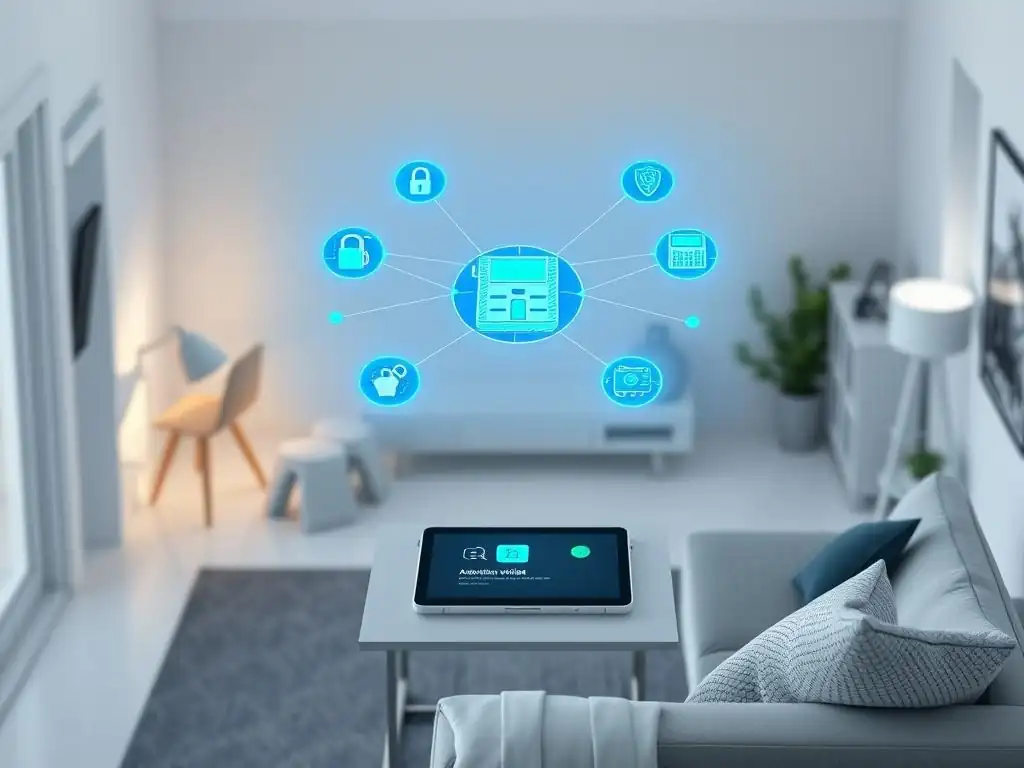
Smart locks, designed to enhance home security and convenience, are prime candidates for blockchain-based security solutions. Traditional smart locks, relying on centralized servers and digital keys, are vulnerable to hacking and digital key theft. Blockchain can revolutionize smart lock security by providing a decentralized and cryptographically secure platform for managing access control. Using blockchain, digital keys can be represented as non-fungible tokens (NFTs), each uniquely associated with a user and a smart lock. These NFTs can be securely stored and managed on a blockchain, making them resistant to duplication and theft, a practical example of Blockchain IoT security solutions.
Access permissions for smart locks can be managed through smart contracts. Smart contracts can define rules for granting and revoking access, setting time-based access permissions, and implementing multi-factor authentication. For example, a homeowner could grant temporary access to a guest by issuing an NFT-based digital key with a specific expiration date. Blockchain-based smart locks can also provide tamper-proof audit trails of all access events, logging who accessed the lock and when. This enhanced security and accountability make blockchain-powered smart locks a significant improvement over traditional systems, offering greater peace of mind for homeowners.
Energy Management and Security with Blockchain IoT
Energy management in smart homes, involving smart meters, thermostats, and energy-consuming appliances, can benefit significantly from Blockchain IoT security solutions. Smart energy grids and home energy management systems are increasingly interconnected, creating potential vulnerabilities. Blockchain can secure communication between smart meters, energy providers, and smart home devices, ensuring data integrity and preventing unauthorized manipulation of energy consumption data. This secure data exchange is crucial for accurate billing, grid stability, and preventing energy theft.
Blockchain can also enable secure and transparent energy trading within smart home communities. Smart contracts can automate peer-to-peer energy trading between households with solar panels or energy storage systems, creating microgrids and reducing reliance on centralized energy providers. Furthermore, blockchain can secure smart grid infrastructure against cyberattacks. By decentralizing control and securing data flows, blockchain can make smart grids more resilient to disruptions and attacks, ensuring a reliable and secure energy supply for smart homes and communities. This application highlights the broader impact of Blockchain IoT security solutions beyond just home security.
Home Automation and Security with Blockchain
Home automation systems, controlling lighting, appliances, entertainment systems, and security devices, can achieve enhanced security and reliability through blockchain integration. Traditional home automation systems often rely on centralized hubs or cloud platforms, creating single points of failure and potential security vulnerabilities. Blockchain can provide a decentralized and secure foundation for home automation, distributing control and data across a network of devices. This decentralized architecture enhances system resilience and reduces the risk of system-wide failures due to a single point of compromise.
Blockchain can secure communication between home automation devices, ensuring that commands and data are exchanged securely and reliably. Smart contracts can automate complex automation scenarios, such as security routines, energy saving schedules, and automated responses to security events. For example, a smart contract could automatically activate security cameras and lock doors in response to a detected intrusion.
Blockchain-based home automation systems can also provide enhanced privacy and data control for users. By decentralizing data storage and control, users gain greater ownership and transparency over their smart home data, making home automation more secure, reliable, and user-centric, a comprehensive application of Blockchain IoT security solutions.
Benefits of Blockchain for Smart Home Security
Enhanced Security and Data Integrity
The primary benefit of blockchain for smart home security is the enhanced security it provides compared to traditional centralized systems. Decentralization eliminates single points of failure, making the system more resilient to attacks. Cryptography secures data and communications, making it extremely difficult for attackers to intercept or manipulate information.
Immutable data logs ensure data integrity, providing tamper-proof records of security events and device activities. For instance, in a traditional smart home system, a compromised central hub could expose all connected devices. However, with Blockchain IoT security solutions, even if some nodes are attacked, the rest of the network remains secure, and the immutable ledger ensures data integrity is maintained.
Blockchain's cryptographic hashing and distributed consensus mechanisms guarantee that data stored on the blockchain is virtually tamper-proof. This is crucial for maintaining the integrity of security logs, device configurations, and sensor data in smart homes. In contrast to centralized databases that can be altered or deleted by malicious actors, blockchain-based data storage ensures that security-related information remains accurate and reliable, providing a solid foundation for building trustworthy Blockchain IoT security solutions. This inherent data integrity is a significant advantage for securing sensitive smart home environments.
Improved Transparency and Accountability
Blockchain's transparency and immutability contribute to improved transparency and accountability in smart home security. All transactions and data recorded on the blockchain are auditable and verifiable by authorized participants. This transparency enhances user trust and allows for easier identification and resolution of security incidents. For example, users can potentially track device access logs and security events recorded on the blockchain, providing greater visibility into the security posture of their smart home. This level of transparency is often lacking in traditional, opaque smart home systems.
The immutable nature of blockchain-based audit trails ensures accountability for security-related actions within the smart home. Every security event, access attempt, or policy change is permanently recorded on the blockchain, creating a clear and auditable record of activity. This accountability can deter malicious behavior and facilitate investigations in case of security breaches. In traditional systems, logs can be easily manipulated or deleted, hindering security investigations. Blockchain, however, provides a tamper-proof and transparent audit trail, enhancing accountability and trust in Blockchain IoT security solutions.
Blockchain's decentralized nature reduces reliance on centralized authorities in smart home security. Traditional smart home systems often depend on centralized cloud platforms and manufacturers for security management, creating single points of control and potential vulnerabilities. Blockchain distributes control across a network of nodes, eliminating the need for a central authority and enhancing system resilience. This decentralization empowers users and reduces their dependence on potentially vulnerable centralized entities.
By decentralizing identity management, access control, and data storage, blockchain-based smart home security solutions shift control away from centralized providers and towards users and the network itself. This reduced reliance on centralized authorities not only enhances security but also improves user privacy and data ownership. Users have greater control over their data and devices, and are less vulnerable to the risks associated with centralized data breaches and service disruptions. This shift towards decentralization is a key benefit of Blockchain IoT security solutions, aligning with the principles of user empowerment and data sovereignty.
Cost Savings through Automation and Efficiency
While initial implementation costs may exist, blockchain can lead to cost savings through automation and efficiency in the long run for smart home security. Smart contracts can automate security policies, access control rules, and device management tasks, reducing the need for manual intervention and administrative overhead. For example, automated access revocation through smart contracts can eliminate the need for manual key management in smart lock systems, saving time and resources. These automation capabilities can lead to significant operational efficiencies and cost reductions over time for Blockchain IoT security solutions.
Furthermore, blockchain can streamline security processes and reduce transaction costs associated with security operations. For example, secure OTA updates via blockchain can reduce the costs and complexities associated with traditional update distribution mechanisms. Decentralized identity management can simplify user authentication and authorization processes, reducing administrative overhead. While the initial investment in blockchain infrastructure may be a consideration, the long-term cost savings through automation, efficiency gains, and reduced security risks can make Blockchain IoT security solutions economically attractive for smart home deployments.
Challenges and Limitations of Implementing Blockchain in Smart Homes
Scalability Issues in Blockchain Smart Home Networks
Scalability issues pose a significant challenge for implementing blockchain in smart home networks. Traditional blockchain networks, particularly public blockchains, can suffer from limited transaction throughput and slow confirmation times, which may not be suitable for the real-time requirements of smart home environments. Smart homes can generate a high volume of data and require rapid responses to security events. Public blockchains might struggle to handle this scale of operations efficiently, potentially impacting the responsiveness and performance of Blockchain IoT security solutions.
Private and permissioned blockchains offer improved scalability compared to public blockchains, but they still face scalability limitations when deployed in large-scale smart home networks. The number of devices in a smart home can range from a few to hundreds, and each device generates data and requires security management. Scaling blockchain networks to accommodate a large number of devices and high transaction volumes while maintaining performance and security remains a technical challenge. Ongoing research and development efforts are focused on improving the scalability of blockchain technologies to address the demands of IoT applications, including smart homes.
Interoperability Challenges between Different Blockchain and Smart Home Platforms
Interoperability challenges between different blockchain platforms and smart home ecosystems represent another significant hurdle for widespread adoption of Blockchain IoT security solutions. The blockchain landscape is fragmented, with various blockchain platforms and protocols emerging, each with its own standards and specifications. Similarly, the smart home market is characterized by diverse ecosystems and proprietary technologies from different manufacturers. Achieving seamless interoperability between different blockchain platforms and smart home devices from various vendors is a complex task.
Lack of interoperability can hinder the seamless integration of blockchain security solutions into existing smart home environments. Devices from different manufacturers may not be compatible with the same blockchain platforms or protocols, creating silos and limiting the effectiveness of blockchain-based security across the entire smart home ecosystem. Standardization efforts are needed to promote interoperability between different blockchain platforms and smart home technologies, enabling seamless integration and wider adoption of Blockchain IoT security solutions. Addressing these interoperability challenges is crucial for realizing the full potential of blockchain in securing smart homes.
Regulatory and Legal Considerations for Blockchain Smart Home Security Solutions
Regulatory and legal considerations surrounding blockchain technology and data privacy pose further challenges for implementing Blockchain IoT security solutions in smart homes. The regulatory landscape for blockchain is still evolving, and legal frameworks for data privacy and security vary across jurisdictions. Smart homes collect vast amounts of personal data, raising concerns about data privacy and compliance with regulations like GDPR and CCPA. Implementing blockchain-based security solutions must consider these regulatory and legal requirements to ensure compliance and avoid legal risks.
Issues such as data ownership, data residency, and cross-border data transfers need to be carefully addressed when deploying blockchain in smart homes. Regulations regarding the use of cryptography and data encryption may also impact the implementation of blockchain security solutions. Furthermore, legal frameworks for smart contracts and digital identities are still developing, and their implications for smart home security need to be clarified. Navigating these regulatory and legal complexities is essential for ensuring responsible and compliant deployment of Blockchain IoT security solutions in the smart home domain.
The Future of Blockchain Smart Home Security Solutions
Emerging Trends in Blockchain Smart Home Security
Several emerging trends are shaping the future of Blockchain smart home security solutions. One key trend is the increasing focus on privacy-preserving blockchain technologies. Zero-knowledge proofs and homomorphic encryption are being explored to enhance data privacy in blockchain-based smart homes, allowing data processing and analysis without revealing sensitive information. These privacy-enhancing technologies are crucial for addressing growing privacy concerns and complying with data protection regulations in Blockchain IoT security solutions.
Another trend is the integration of edge computing with blockchain. Processing data closer to the source, at the edge of the network, can reduce latency, improve responsiveness, and enhance privacy in smart home environments. Combining edge computing with blockchain can enable secure and efficient data processing and decision-making within the smart home network itself, reducing reliance on cloud platforms and improving the performance of Blockchain IoT security solutions. Furthermore, the development of more scalable and interoperable blockchain platforms specifically designed for IoT applications is crucial for the future of blockchain smart home security.
The Role of AI and Machine Learning in Enhancing Blockchain Smart Home Security
AI and Machine Learning (ML) are poised to play a significant role in enhancing Blockchain smart home security in the future. AI and ML algorithms can analyze blockchain-based security logs and device activity data to detect anomalies, predict security threats, and automate security responses. For example, ML models can be trained to identify unusual patterns in device communication or access attempts, indicating potential security breaches. Integrating AI and ML with blockchain can enable proactive and intelligent security measures in smart homes, making Blockchain IoT security solutions more adaptive and effective.
AI can also be used to improve the scalability and efficiency of blockchain networks for smart homes. ML algorithms can optimize transaction processing, consensus mechanisms, and resource management in blockchain networks, addressing scalability challenges and improving overall performance. Furthermore, AI can enhance user experience and security management in blockchain-based smart homes. AI-powered interfaces can simplify user interaction with blockchain security systems and provide intelligent security recommendations and alerts, making Blockchain IoT security solutions more user-friendly and effective.
The Potential for Mass Adoption of Blockchain Smart Home Security Solutions
The potential for mass adoption of Blockchain smart home security solutions is significant, driven by the increasing demand for secure and privacy-preserving smart home technologies. As smart home adoption continues to grow, users are becoming more aware of the security and privacy risks associated with connected devices. Blockchain offers a compelling value proposition by addressing these concerns and providing a more secure and trustworthy foundation for smart home ecosystems. Growing awareness of these benefits is likely to drive increased demand for Blockchain IoT security solutions.
However, mass adoption will depend on overcoming the existing challenges and limitations, including scalability, interoperability, and regulatory hurdles. Continued advancements in blockchain technology, standardization efforts, and clearer regulatory frameworks will be crucial for paving the way for wider adoption. As blockchain technology matures and becomes more accessible, and as smart home users become more security-conscious, the potential for Blockchain smart home security solutions to become mainstream is substantial, transforming how we secure our connected homes in the future.
Conclusion: Blockchain as a Game Changer for Smart Home Security
Embracing Decentralization for a More Secure Smart Home Future
Blockchain technology stands as a game changer for smart home security, offering a fundamental shift from vulnerable centralized systems to robust decentralized architectures. By embracing decentralization, immutability, and transparency, blockchain provides a powerful toolkit for addressing the evolving security challenges in the connected home. Blockchain IoT security solutions promise to enhance data integrity, improve transparency, reduce reliance on centralized authorities, and potentially offer cost savings through automation, paving the way for a more secure smart home future.
While challenges related to scalability, interoperability, and regulation remain, ongoing advancements and growing industry interest suggest a bright future for blockchain in smart home security. As the smart home landscape continues to expand and become more integral to our daily lives, the need for robust and trustworthy security solutions will only intensify.
Blockchain, with its inherent security properties and decentralized paradigm, is uniquely positioned to meet this need, transforming the way we secure our smart homes and build a more secure and privacy-preserving connected future. Embracing decentralization and exploring the full potential of Blockchain IoT security solutions is crucial for realizing the vision of truly secure and intelligent smart homes.
Frequently Asked Questions
How can blockchain technology enhance the security of IoT devices?
Blockchain offers decentralized security by creating an immutable ledger of device interactions. This makes it significantly harder for attackers to tamper with IoT data and compromise devices.
What are some key advantages of using blockchain for IoT security compared to traditional methods?
Traditional methods often rely on centralized servers, making them vulnerable to single points of failure. Blockchain provides a more resilient and distributed security model, minimizing this risk.
What are some practical applications of Blockchain IoT security solutions in real-world scenarios?
These solutions can be used for supply chain tracking, secure smart home management, and enhanced industrial IoT security, preventing unauthorized access and data manipulation.
What are the main challenges in implementing Blockchain IoT security solutions?
Challenges include scalability issues due to the resource constraints of IoT devices, and the complexity of integrating blockchain with existing IoT infrastructure.
How does blockchain's decentralized nature contribute to the overall security of IoT networks?
Decentralization ensures that no single entity controls the network, reducing the risk of a single point of failure and making it more resistant to cyberattacks and data breaches.
Final Reflection: Embracing Decentralized Trust in a Connected World
The journey through the intricacies of securing IoT networks with blockchain technology reveals a profound truth: the future of interconnected devices hinges on decentralized trust. As we've explored, the inherent vulnerabilities of centralized systems are increasingly exposed in our hyper-connected world, making blockchain's immutable and transparent ledger a compelling solution for bolstering IoT security. The potential to revolutionize data integrity, device authentication, and overall network resilience is not just theoretical; it's a rapidly approaching reality.
The impact of blockchain on IoT security extends far beyond technological advancements; it's reshaping the very fabric of how we perceive and interact with the digital world. Witnessing the shift towards decentralized control empowers individuals and organizations alike, fostering a more secure and equitable ecosystem. The blockchain is more than just a technology; it's a shift in power, back to the people.
This quote encapsulates the essence of the transformation, highlighting the potential for increased transparency and accountability in a world increasingly reliant on interconnected devices.
Now, as you consider the implications of blockchain IoT security solutions, I invite you to reflect on your own role in shaping this future. How can you champion the adoption of these technologies within your own sphere of influence? How can you contribute to a more secure and trustworthy connected world? The power to build a safer, more resilient future lies within each of us. Embrace the potential of decentralized trust and become a catalyst for positive change in the age of the Internet of Things.
Reinvent IoT Security: Your Next Step Awaits!
Thank you for exploring the transformative potential of blockchain in securing IoT networks. We hope this article has shown how decentralization can enhance the safety and reliability of our interconnected devices. Now, it’s time to turn that knowledge into action!
Here are some steps you can take to further explore this exciting intersection of technologies:
- Initiate a proof of concept: Identify a small-scale IoT project within your organization or personal endeavors and explore integrating blockchain-based security measures. This practical experience will offer valuable insights.
- Dive deeper into emerging blockchain solutions: Research innovative projects designed specifically for IoT applications.
- Join the conversation: Share this article with colleagues and fellow tech enthusiasts passionate about IoT and blockchain, and spark meaningful discussions about building a more secure future.
How will you leverage blockchain to create a more secure and trustworthy IoT ecosystem? Share your thoughts in the comments below!
Leave a Reply