
From Sensors to Security: Blockchain's EndtoEnd IoT Data Management


Welcome to Blockchain Trends, your compass in the rapidly evolving world of decentralized innovation!
Ever wondered how to secure the vast ocean of data generated by the Internet of Things? Dive into our in-depth exploration of Blockchain IoT data security and discover how this powerful combination is revolutionizing data management from sensor to server. Prepare to unravel the potential of blockchain to forge a more secure and trustworthy future for IoT. Intrigued? Let's begin!
- From Sensors to Security: Blockchain's End-to-End IoT Data Management
- Blockchain IoT Data Security: A Comprehensive Overview
-
Implementing Blockchain for End-to-End IoT Data Management
- Securing IoT Data at the Source: Integrating Sensors with Blockchain Networks
- Secure Data Transmission: Blockchain-Based Protocols for IoT Communication
- Decentralized Data Storage: Leveraging Blockchain for IoT Data Repositories
- Access Control and Authorization: Managing IoT Data Permissions with Smart Contracts
-
Use Cases: Blockchain-Secured IoT Data in Action
- Supply Chain Management: Enhancing Traceability and Combating Counterfeiting with Blockchain IoT
- Healthcare: Protecting Patient Data and Securing Medical Devices using Blockchain
- Smart Cities: Improving Security and Efficiency in Urban IoT Infrastructure with Blockchain
- Energy Sector: Blockchain-Based IoT for Secure and Transparent Energy Trading and Distribution
-
Overcoming Challenges in Blockchain IoT Data Management
- Scalability Limitations of Blockchain in High-Volume IoT Environments
- Interoperability Challenges Between Diverse Blockchain and IoT Platforms
- Regulatory Landscape and Compliance Requirements for Blockchain IoT Implementations
- Costs Associated with Implementing and Maintaining Blockchain-Based IoT Systems
- The Future of Blockchain and IoT Data Security
- Conclusion: Embracing Blockchain for Secure and Transparent IoT Data Management
-
Frequently Asked Questions
- How does blockchain enhance IoT data security?
- What role does blockchain play in managing IoT data from sensors?
- Can blockchain improve the efficiency of IoT data management?
- Beyond security, what other benefits does blockchain offer for IoT applications?
- What are some of the regulatory challenges associated with using blockchain for IoT data?
- Final Reflection: Securing Tomorrow's Connections
- Unlock the Power of Secure IoT: Start Building Today!
From Sensors to Security: Blockchain's End-to-End IoT Data Management
The Proliferation of IoT Devices and the Growing Data Security Concerns
The Internet of Things (IoT) is experiencing exponential growth, transforming industries and daily life. Forecasts suggest that by 2025, the number of connected IoT devices worldwide will surpass 75 billion, a staggering increase from the estimated 35 billion in 2021. This massive expansion encompasses everything from smart home appliances and wearable technology to industrial sensors and connected vehicles.
While this proliferation offers unprecedented opportunities for efficiency, automation, and data-driven insights, it also introduces significant and escalating data security concerns. Each connected device represents a potential entry point for cyberattacks, and the sheer volume of data generated creates a vast attack surface that traditional security measures struggle to adequately protect.
The diverse nature of IoT devices, often characterized by limited processing power and varying security protocols, further complicates the landscape. Many devices are deployed in remote or unattended locations, making physical security challenging. Furthermore, the data collected by these devices is often sensitive, ranging from personal health information and location data to critical industrial control data.
Breaches in IoT data security can lead to severe consequences, including privacy violations, financial losses, operational disruptions, and even physical harm. Therefore, addressing IoT data security is not just an IT concern but a critical imperative for individuals, businesses, and society as a whole. The need for robust and innovative solutions to protect the integrity and confidentiality of IoT data is more pressing than ever.
Limitations of Centralized IoT Data Management Systems
Traditional IoT data management often relies on centralized systems, where data from numerous devices is aggregated and processed in a central cloud or data center. While seemingly efficient, this approach presents several critical limitations regarding security, scalability, and trust. Centralized systems create single points of failure and attractive targets for cyberattacks. A successful breach of the central server can compromise vast amounts of data from connected devices simultaneously. For instance, large-scale DDoS attacks targeting centralized IoT platforms have demonstrated the vulnerability of these architectures, potentially disrupting entire networks of devices and services.
Moreover, centralized systems struggle to handle the ever-increasing volume and velocity of data generated by the expanding IoT ecosystem. The sheer scale of data ingestion, processing, and storage can overwhelm centralized infrastructure, leading to performance bottlenecks and system failures. Furthermore, trust becomes a significant issue in centralized models.
Users and businesses must place complete faith in the central authority to manage and secure their data responsibly. This reliance can be problematic, especially in scenarios involving sensitive data or critical infrastructure, where data manipulation or unauthorized access can have devastating consequences. The lack of transparency and auditability in many centralized systems further exacerbates trust concerns, making it difficult to verify data integrity and trace data provenance.
Blockchain: A Solution for Enhanced IoT Security and Data Integrity
Blockchain technology offers a compelling alternative to centralized IoT data management, providing a decentralized, secure, and transparent framework to address the limitations of traditional systems. At its core, blockchain is a distributed ledger technology that records transactions across a network of computers. This inherent decentralization eliminates single points of failure and significantly enhances resilience against cyberattacks. Instead of relying on a central authority, blockchain distributes data and control across multiple participants, making it far more difficult for malicious actors to compromise the entire system.
The cryptographic nature of blockchain ensures data integrity and immutability. Once data is recorded on the blockchain, it is cryptographically sealed and virtually tamper-proof. Any attempt to alter the data would require compromising the consensus of the entire network, a computationally infeasible task.
This immutability is crucial for maintaining the integrity of IoT data, ensuring that information collected by sensors and devices remains accurate and trustworthy throughout its lifecycle. Furthermore, blockchain's inherent transparency and auditability provide a clear and verifiable record of all data transactions, enhancing trust and accountability within IoT networks. By leveraging these core features, blockchain emerges as a powerful solution for bolstering IoT data security and ensuring data integrity in an increasingly interconnected world.
Blockchain IoT Data Security: A Comprehensive Overview
Key Advantages of Blockchain in IoT Data Management
Integrating blockchain technology into IoT data management offers a multitude of key advantages, primarily focusing on enhanced security, improved data integrity, and increased operational efficiency. One of the most significant benefits is enhanced security. Blockchain's decentralized nature and cryptographic security mechanisms make it inherently more resistant to cyberattacks compared to centralized systems. The distributed ledger eliminates single points of failure, and the cryptographic hashing ensures data immutability, safeguarding IoT data from unauthorized access and tampering. This is particularly crucial in sensitive IoT applications, such as healthcare and industrial control systems, where data breaches can have severe repercussions.
Another key advantage is improved data integrity and provenance. Blockchain's immutable ledger provides a transparent and auditable record of all data transactions, ensuring that the data collected by IoT devices remains accurate and trustworthy. This is vital for applications requiring verifiable data trails, such as supply chain management and logistics, where tracking the provenance of goods and materials is essential. Furthermore, blockchain can streamline data sharing and interoperability between different IoT devices and platforms.
By establishing a common, secure, and transparent data layer, blockchain facilitates seamless data exchange and collaboration, breaking down data silos and fostering greater efficiency across IoT ecosystems. Finally, the use of smart contracts on blockchain enables automation and efficiency in IoT data management. Smart contracts can automate data validation, access control, and data processing tasks, reducing manual intervention and improving operational efficiency in complex IoT deployments.
Enhancing Data Security with Blockchain's Immutable Ledger Technology
Blockchain's immutable ledger technology is a cornerstone of its security proposition for IoT data management. Immutability, in this context, means that once data is recorded on the blockchain, it cannot be altered or deleted retroactively. This is achieved through cryptographic hashing, where each block of data is linked to the previous block using a unique cryptographic hash.
Any attempt to tamper with a block would change its hash, invalidating all subsequent blocks and making the alteration immediately detectable by the network participants. This inherent immutability is a critical security feature, particularly for IoT data, which is often vulnerable to manipulation and tampering.
In traditional centralized systems, data modification can occur relatively easily, often leaving little or no trace. However, with blockchain's immutable ledger, every data transaction is permanently recorded and auditable. This feature is paramount for maintaining the integrity of IoT data, ensuring that the information collected by sensors and devices remains trustworthy and reliable throughout its lifecycle.
For example, in supply chain applications, the immutable record of product location, temperature, and handling conditions on a blockchain provides irrefutable proof of provenance and authenticity, combating counterfeiting and ensuring product quality. The immutability of blockchain thus provides a robust foundation for building secure and trustworthy IoT data management systems, safeguarding data integrity against malicious actors and accidental alterations.
Improving Data Transparency and Auditability in IoT Networks
Transparency and auditability are inherent characteristics of blockchain technology that significantly enhance the security and trustworthiness of IoT networks. Blockchain's distributed ledger is, by design, transparent, meaning that all participants in the network have access to the recorded data. While the data is often pseudonymized or encrypted to protect privacy, the transactional history itself is publicly viewable, fostering transparency and accountability. This transparency is a significant departure from traditional centralized systems, where data access and visibility are often restricted and controlled by a single entity.
Auditability complements transparency by providing a clear and verifiable trail of all data transactions. Every action recorded on the blockchain is timestamped and cryptographically signed, creating an immutable audit log. This audit log allows for independent verification of data integrity and traceability of data provenance.
In the context of IoT, this auditability is crucial for ensuring accountability and resolving disputes. For instance, in smart grid applications, blockchain-based energy trading platforms provide a transparent and auditable record of energy transactions, facilitating fair and efficient energy distribution and dispute resolution. The combination of transparency and auditability in blockchain-based IoT systems builds trust among participants and strengthens the overall security posture by deterring malicious activities and enabling rapid detection and resolution of security incidents.
Streamlining IoT Data Provenance and Trust Verification
Data provenance, the ability to track the origin and history of data, is paramount in IoT environments where data integrity and trustworthiness are critical. Blockchain technology excels at streamlining IoT data provenance and trust verification due to its inherent immutability and transparency.
By recording each data transaction on the blockchain, a clear and auditable trail is established, documenting the entire journey of the data from its source to its destination. This traceability is invaluable for verifying the authenticity and reliability of IoT data, particularly in applications where data integrity is paramount, such as pharmaceutical supply chains or food safety monitoring.
Blockchain enables trust verification by allowing stakeholders to independently verify the provenance and integrity of IoT data. Using cryptographic hashes and digital signatures, participants can confirm that the data has not been tampered with and that it originated from a verified source. This eliminates the need to rely solely on centralized authorities for trust and verification, fostering a more decentralized and trustless environment.
For example, in connected vehicle applications, blockchain can track the provenance of vehicle maintenance records, ensuring that potential buyers have access to verifiable and trustworthy information about a vehicle's history. By streamlining data provenance and trust verification, blockchain empowers users and businesses to make informed decisions based on reliable and auditable IoT data, enhancing trust and security across the entire IoT ecosystem.
Implementing Blockchain for End-to-End IoT Data Management
Securing IoT Data at the Source: Integrating Sensors with Blockchain Networks
Securing IoT data at its origin, directly from sensors, is a critical step in establishing end-to-end blockchain IoT data security. Integrating sensors with blockchain networks involves embedding blockchain functionalities directly into sensor devices or connecting them to blockchain-enabled gateways. This allows sensors to directly record data onto the blockchain as it is collected, ensuring data integrity from the very beginning. For resource-constrained sensors, lightweight blockchain protocols and edge computing solutions are being developed to enable secure data transmission and blockchain integration without overburdening sensor processing capabilities.
One approach involves using specialized hardware security modules (HSMs) within sensors to manage cryptographic keys and secure blockchain transactions. Another strategy utilizes blockchain-enabled gateways to aggregate data from multiple sensors and batch-process transactions before recording them on the blockchain, optimizing efficiency for high-volume sensor deployments. Examples include projects deploying blockchain-integrated sensors for environmental monitoring, where sensor readings are directly recorded onto a public blockchain, providing verifiable and tamper-proof environmental data.
Furthermore, in industrial IoT settings, integrating sensors with private or consortium blockchains allows for secure and auditable data collection from machinery and equipment, enabling predictive maintenance and improved operational efficiency. Securing IoT data at the source with blockchain significantly reduces the risk of data manipulation or interception in the early stages of data collection and transmission.
Secure Data Transmission: Blockchain-Based Protocols for IoT Communication
Secure data transmission is paramount in IoT networks, where data travels across various communication channels and is vulnerable to interception and tampering. Blockchain-based protocols are emerging as robust solutions to secure IoT communication channels, ensuring data confidentiality and integrity during transmission. These protocols leverage blockchain's cryptographic mechanisms to encrypt data in transit and authenticate communication endpoints, preventing unauthorized access and man-in-the-middle attacks.
One example is the use of blockchain-based messaging protocols for secure device-to-device communication. These protocols utilize blockchain to establish secure identities for IoT devices and encrypt messages exchanged between them, ensuring confidentiality and authenticity. Furthermore, blockchain can be integrated with existing IoT communication protocols, such as MQTT or CoAP, to add a layer of security and auditability.
For instance, blockchain can be used to manage device identities and access control for MQTT brokers, ensuring that only authorized devices can publish and subscribe to specific topics. Research is also ongoing in developing lightweight blockchain protocols specifically tailored for resource-constrained IoT devices, enabling secure communication without excessive overhead. By implementing blockchain-based protocols for IoT communication, organizations can significantly strengthen the security of their IoT networks and protect sensitive data during transmission.
Decentralized Data Storage: Leveraging Blockchain for IoT Data Repositories
Decentralized data storage, powered by blockchain technology, offers a more secure and resilient alternative to traditional centralized data repositories for IoT data. Instead of storing data in a single, vulnerable location, decentralized storage distributes data across a network of nodes, making it significantly more resistant to data breaches and single points of failure. Blockchain itself can serve as a distributed ledger for storing metadata and cryptographic hashes of IoT data, while the actual data can be stored in off-chain decentralized storage solutions like IPFS (InterPlanetary File System) or Swarm, with links to the data hashes stored on the blockchain.
This approach combines the security and immutability of blockchain with the scalability and cost-effectiveness of decentralized storage networks. Data stored in decentralized repositories is typically encrypted and fragmented, further enhancing security and privacy. Access control mechanisms, often managed through smart contracts on the blockchain, ensure that only authorized entities can access and retrieve specific data.
Use cases for decentralized IoT data storage include secure storage of sensor data in smart cities, medical records in healthcare IoT, and supply chain data in logistics. By leveraging decentralized data storage, organizations can mitigate the risks associated with centralized data repositories, enhance data resilience, and improve the overall security posture of their IoT deployments.
Managing access control and authorization in complex IoT ecosystems is crucial for ensuring data privacy and security. Smart contracts on blockchain provide a powerful mechanism to define and enforce granular access control policies for IoT data. Smart contracts are self-executing agreements written in code and stored on the blockchain. They can automatically enforce predefined rules and conditions, ensuring that data access is granted only to authorized entities based on predefined permissions.
In IoT applications, smart contracts can be used to manage access to sensor data, device control, and network resources. For example, a smart contract can define that only authorized users with specific roles and permissions can access data from a particular sensor or control a specific IoT device. When a request for data access is made, the smart contract automatically verifies the requester's credentials and permissions against the predefined rules.
If the conditions are met, access is granted; otherwise, it is denied. This automated and decentralized access control mechanism eliminates the need for manual intervention and reduces the risk of human error or unauthorized access.
Furthermore, the transparent and auditable nature of smart contracts ensures that all access control policies and actions are recorded on the blockchain, providing a clear audit trail and enhancing accountability. By leveraging smart contracts for access control and authorization, organizations can implement robust and flexible data permission management systems in their IoT deployments, ensuring data privacy and security.
Use Cases: Blockchain-Secured IoT Data in Action
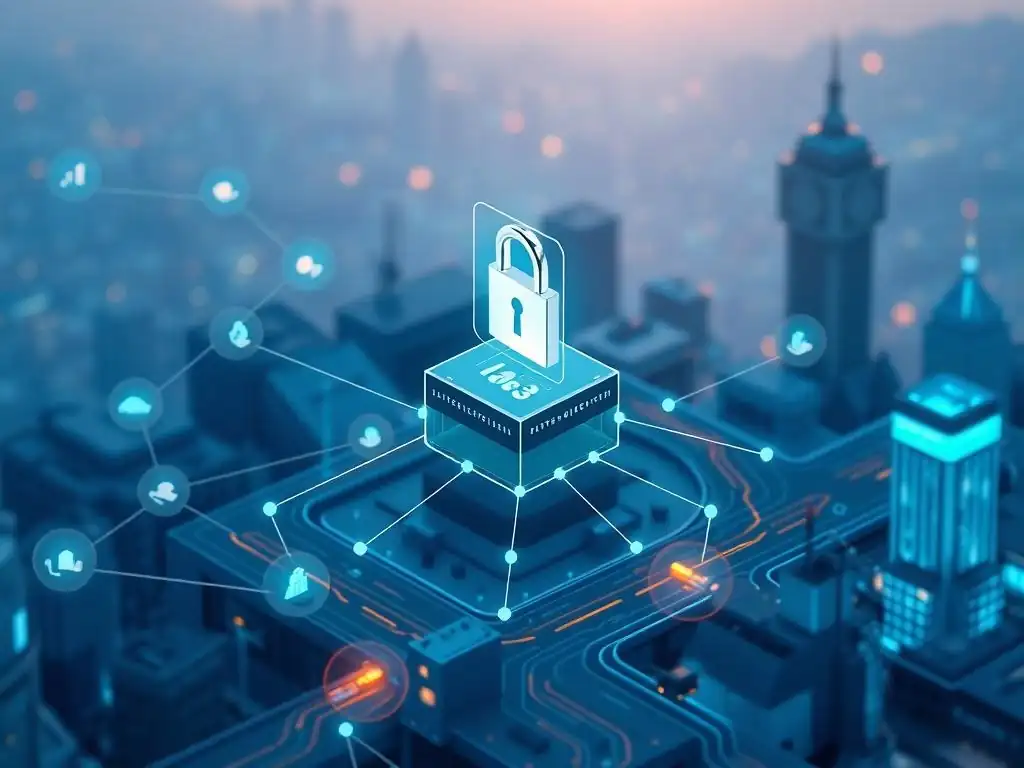
Supply Chain Management: Enhancing Traceability and Combating Counterfeiting with Blockchain IoT
Supply chain management is a prime use case for blockchain-secured IoT data, offering enhanced traceability, transparency, and counterfeit prevention. Integrating IoT sensors with blockchain allows for real-time tracking of goods throughout the supply chain, from origin to consumer. Sensors attached to products or shipping containers can continuously monitor location, temperature, humidity, and other critical parameters, with this data securely recorded on a blockchain. This creates an immutable and transparent record of the product's journey, verifiable by all stakeholders in the supply chain, including manufacturers, distributors, retailers, and consumers.
For example, consider the pharmaceutical industry, where counterfeiting is a major concern. Blockchain IoT can track medications from the manufacturing plant, through distribution channels, to the pharmacy, ensuring authenticity and preventing counterfeit drugs from entering the supply chain. Temperature sensors can monitor cold chain compliance for temperature-sensitive pharmaceuticals, guaranteeing product efficacy and safety.
Similarly, in the food industry, blockchain IoT can track the provenance of food products, providing consumers with verifiable information about the origin, processing, and handling of their food, enhancing food safety and building consumer trust. By leveraging blockchain IoT, supply chains become more resilient, efficient, and transparent, reducing fraud, improving product quality, and enhancing consumer confidence.
Healthcare: Protecting Patient Data and Securing Medical Devices using Blockchain
Healthcare is another critical sector where blockchain IoT data security offers significant benefits, particularly in protecting sensitive patient data and securing connected medical devices. The healthcare industry generates vast amounts of sensitive patient data from wearable devices, medical sensors, and electronic health records (EHRs). Blockchain can provide a secure and privacy-preserving framework for managing and sharing this data. Patient data can be encrypted and stored on a blockchain, with access controlled through smart contracts, ensuring that only authorized healthcare providers and patients themselves can access specific data.
For instance, wearable devices can securely transmit health data to a patient's blockchain-based personal health record, giving patients greater control over their data and enabling secure sharing with their doctors. Furthermore, blockchain can enhance the security of connected medical devices, such as insulin pumps and pacemakers, which are increasingly vulnerable to cyberattacks. Blockchain-based identity management and secure communication protocols can protect these devices from unauthorized access and manipulation, ensuring patient safety.
Real-world examples include projects using blockchain to secure medical device data and create interoperable EHR systems, improving data security, privacy, and efficiency in healthcare delivery. By implementing blockchain IoT data security, the healthcare industry can enhance patient data privacy, secure medical devices, and improve the overall quality of care.
Smart Cities: Improving Security and Efficiency in Urban IoT Infrastructure with Blockchain
Smart cities, with their dense networks of interconnected devices and sensors, are increasingly reliant on robust data security. Blockchain IoT data security offers solutions to enhance the security and efficiency of urban IoT infrastructure. Smart city applications, such as smart lighting, traffic management, environmental monitoring, and public safety systems, generate massive amounts of data that needs to be securely managed and processed. Blockchain can provide a secure and scalable platform for managing this data, ensuring data integrity, privacy, and transparency.
For example, in smart lighting systems, blockchain can secure the communication and control of streetlights, preventing unauthorized access and manipulation. In traffic management systems, blockchain can ensure the integrity of traffic data collected by sensors and cameras, improving traffic flow optimization and incident response. Environmental sensors deployed across a city can securely transmit data to a blockchain, creating a transparent and verifiable record of air quality, noise levels, and other environmental parameters, enabling data-driven urban planning and policy making.
Pilot projects are underway in cities worldwide, exploring the use of blockchain for various smart city applications, including secure data management, citizen identity management, and decentralized energy grids. By implementing blockchain IoT data security, smart cities can build more resilient, efficient, and citizen-centric urban environments.
Energy Sector: Blockchain-Based IoT for Secure and Transparent Energy Trading and Distribution
The energy sector is undergoing a transformation towards decentralized and renewable energy sources, creating new opportunities for blockchain-based IoT solutions. Blockchain IoT can enhance the security and transparency of energy trading and distribution, particularly in microgrids and peer-to-peer energy trading platforms. Smart meters and IoT devices deployed in energy grids can collect real-time data on energy consumption and production, with this data securely recorded on a blockchain. This creates a transparent and auditable record of energy transactions, facilitating peer-to-peer energy trading and improving grid efficiency.
For example, blockchain-based microgrids enable households with solar panels to directly trade excess energy with their neighbors, bypassing traditional energy intermediaries. Smart contracts can automate energy trading agreements, ensuring fair and transparent transactions. Furthermore, blockchain can enhance the security of smart grids, protecting critical infrastructure from cyberattacks.
Blockchain-based identity management and access control can secure smart grid devices and communication networks, preventing unauthorized access and manipulation. Real-world deployments of blockchain-based energy trading platforms are emerging, demonstrating the potential of blockchain IoT to revolutionize the energy sector, promoting decentralization, efficiency, and sustainability. By leveraging blockchain IoT data security, the energy sector can build more resilient, transparent, and efficient energy systems.
Overcoming Challenges in Blockchain IoT Data Management
Scalability Limitations of Blockchain in High-Volume IoT Environments
Scalability remains a significant challenge for blockchain technology, particularly when applied to high-volume IoT environments characterized by massive data generation and numerous devices. Traditional blockchain architectures, like Bitcoin and Ethereum, have inherent limitations in transaction throughput and processing speed, which can be insufficient for the demands of large-scale IoT deployments. For instance, a smart city with millions of sensors generating data continuously would overwhelm the transaction processing capacity of many public blockchains.
Several approaches are being explored to address blockchain scalability in IoT. Layer-2 scaling solutions, such as state channels and sidechains, aim to offload transaction processing from the main blockchain, improving throughput and reducing latency. Sharding, a technique that divides the blockchain into smaller, parallel shards, can also enhance scalability.
Furthermore, consortium and private blockchains, which have permissioned access and fewer nodes, can achieve higher transaction speeds compared to public blockchains. Data aggregation and edge computing techniques can also reduce the volume of data written to the blockchain by processing data closer to the source and only recording summarized or critical data on the blockchain. Ongoing research and development are focused on creating more scalable blockchain solutions specifically tailored for the demands of high-volume IoT applications, aiming to overcome scalability limitations and enable widespread adoption of blockchain IoT data security.
Interoperability Challenges Between Diverse Blockchain and IoT Platforms
Interoperability is another key challenge in blockchain IoT data management, stemming from the diverse landscape of blockchain platforms and IoT device ecosystems. Different blockchain platforms often use incompatible protocols and data formats, hindering seamless communication and data exchange between them. Similarly, the vast array of IoT devices and communication protocols creates fragmentation and interoperability issues. Lack of interoperability can create data silos, limit data sharing, and hinder the development of holistic blockchain IoT solutions.
Addressing interoperability requires standardization efforts and the development of interoperability solutions. Standardization initiatives are underway to define common protocols and data formats for blockchain and IoT, promoting interoperability at the protocol and data levels. Cross-chain communication protocols and bridges are being developed to enable data and value transfer between different blockchain platforms.
Middleware solutions and APIs can facilitate data integration and interoperability between diverse IoT devices and blockchain platforms. For example, projects are exploring the use of interoperability frameworks to connect different blockchain platforms used in supply chain management, enabling seamless tracking of goods across various blockchain networks. Overcoming interoperability challenges is crucial for realizing the full potential of blockchain IoT data security and enabling seamless integration across diverse ecosystems.
Regulatory Landscape and Compliance Requirements for Blockchain IoT Implementations
The regulatory landscape for blockchain and IoT is still evolving, creating uncertainty and challenges for blockchain IoT implementations. Regulations related to data privacy, security, and cross-border data transfer vary significantly across jurisdictions, posing compliance complexities for organizations deploying blockchain IoT solutions globally. For example, GDPR (General Data Protection Regulation) in Europe and CCPA (California Consumer Privacy Act) in the US impose stringent requirements for data privacy and security, which must be considered in blockchain IoT deployments.
Compliance with these regulations requires careful consideration of data governance, data minimization, and data security practices in blockchain IoT systems. Privacy-enhancing technologies (PETs), such as zero-knowledge proofs and homomorphic encryption, can help address data privacy concerns in blockchain IoT. Standardization and certification frameworks are emerging to guide organizations in complying with regulatory requirements for blockchain and IoT.
Furthermore, ongoing dialogue and collaboration between regulators, industry stakeholders, and technology developers are essential to shape a clear and harmonized regulatory framework that fosters innovation while addressing societal concerns related to blockchain and IoT. Navigating the evolving regulatory landscape and ensuring compliance are critical for the responsible and sustainable development of blockchain IoT data security solutions.
Costs Associated with Implementing and Maintaining Blockchain-Based IoT Systems
Implementing and maintaining blockchain-based IoT systems can involve significant costs, which need to be carefully considered in evaluating the feasibility and ROI of blockchain IoT deployments. Initial implementation costs can include hardware and software infrastructure, blockchain platform development or subscription fees, integration costs, and personnel training. Transaction fees on public blockchains can also add to operational costs, particularly for high-volume IoT applications. Furthermore, energy consumption of certain blockchain consensus mechanisms, like Proof-of-Work, can be substantial, contributing to operational expenses.
However, it is important to consider the long-term cost savings and benefits that blockchain IoT can offer. Enhanced security, improved data integrity, and increased efficiency can lead to reduced operational risks, lower insurance premiums, and new revenue streams. Cost-optimization strategies for blockchain IoT include using energy-efficient consensus mechanisms, leveraging layer-2 scaling solutions to reduce transaction fees, and adopting cost-effective blockchain platforms and cloud-based blockchain services.
Furthermore, the decreasing costs of hardware and blockchain technology over time can make blockchain IoT solutions more economically viable. A comprehensive cost-benefit analysis, considering both upfront and ongoing costs as well as potential savings and benefits, is crucial for making informed decisions about implementing blockchain-based IoT systems.
The Future of Blockchain and IoT Data Security
Emerging Trends in Blockchain IoT Data Management and Development
The field of blockchain IoT data management is rapidly evolving, with several emerging trends shaping its future trajectory. Edge computing and AI integration are gaining momentum, bringing data processing and analytics closer to the IoT devices at the edge of the network. This reduces latency, bandwidth consumption, and enhances real-time data processing capabilities, crucial for applications like autonomous vehicles and industrial automation. Lightweight blockchain protocols specifically designed for resource-constrained IoT devices are also emerging, enabling direct blockchain integration for a wider range of devices.
Privacy-enhancing technologies (PETs), such as zero-knowledge proofs, homomorphic encryption, and secure multi-party computation, are being increasingly integrated into blockchain IoT solutions to address data privacy concerns and comply with regulations like GDPR. Decentralized Identity (DID) solutions are gaining traction, providing secure and self-sovereign identities for IoT devices and users, enhancing security and privacy in IoT ecosystems.
Interoperability frameworks and cross-chain solutions are becoming more sophisticated, facilitating seamless data exchange and collaboration across diverse blockchain and IoT platforms. These emerging trends are driving innovation and expanding the capabilities of blockchain IoT data security, paving the way for wider adoption and more sophisticated applications.
The Role of Decentralized Identity (DID) in Secure IoT Ecosystems
Decentralized Identity (DID) is poised to play a crucial role in shaping the future of secure IoT ecosystems. DID provides a user-centric and privacy-preserving approach to identity management, empowering individuals and devices to control their own digital identities without relying on centralized intermediaries. In IoT, DID can enable secure device authentication, access control, and data ownership, enhancing security and privacy across the entire IoT ecosystem. Each IoT device can have a unique DID, anchored on a blockchain, providing a verifiable and tamper-proof identity.
DID can facilitate secure device-to-device communication, enabling devices to authenticate each other and establish secure communication channels. Furthermore, DID can empower users to control access to data generated by their IoT devices, granting granular permissions to authorized parties. Self-sovereign identity principles embedded in DID align with the decentralized nature of blockchain, creating a synergistic combination for building secure and privacy-preserving IoT ecosystems.
Real-world examples include projects using DID for secure device authentication in smart homes and for patient-controlled access to medical device data in healthcare IoT. The adoption of DID in blockchain IoT is expected to grow, fostering more secure, privacy-centric, and user-empowered IoT environments.
Convergence of AI and Blockchain for Enhanced IoT Data Analytics and Security
The convergence of Artificial Intelligence (AI) and blockchain is creating powerful synergies for enhancing both IoT data analytics and security. AI can leverage the secure and trusted data provided by blockchain-based IoT systems to perform advanced data analytics, generate valuable insights, and automate decision-making. Blockchain, in turn, can enhance the transparency, auditability, and security of AI algorithms and models used in IoT applications. For example, AI algorithms can be trained on blockchain-secured IoT data to detect anomalies, predict failures, and optimize performance in industrial IoT systems.
Blockchain can also be used to secure AI models and ensure their integrity, preventing tampering and malicious manipulation. Federated learning, a technique that enables AI model training across decentralized datasets without sharing raw data, can be combined with blockchain to enhance data privacy and security in AI-driven IoT analytics.
Furthermore, explainable AI (XAI), which aims to make AI decision-making more transparent and understandable, can be enhanced by blockchain's auditability and transparency. The convergence of AI and blockchain is driving innovation in various IoT applications, from predictive maintenance and smart manufacturing to personalized healthcare and autonomous systems, creating intelligent and secure IoT ecosystems.
Future Directions and Innovations in Blockchain-Based IoT Data Solutions
The future of blockchain-based IoT data solutions is bright, with ongoing research and development pushing the boundaries of innovation. Quantum-resistant cryptography is becoming increasingly important in blockchain IoT to address the potential threat of quantum computing to current cryptographic algorithms. Zero-knowledge proofs and other advanced privacy-enhancing technologies are being refined and integrated into blockchain IoT to further enhance data privacy and security. Interoperable blockchain platforms and cross-chain communication protocols are expected to mature, enabling seamless integration and data exchange across diverse IoT ecosystems.
Standardization efforts across blockchain and IoT are crucial for promoting interoperability, security, and wider adoption. Decentralized autonomous organizations (DAOs) are being explored as governance models for blockchain IoT networks, enabling community-driven management and decision-making. Furthermore, sustainability and energy efficiency are becoming increasingly important considerations in blockchain IoT development, driving research into more energy-efficient consensus mechanisms and blockchain architectures. These future directions and innovations promise to further enhance the capabilities, security, and scalability of blockchain-based IoT data solutions, paving the way for their widespread adoption across various industries and applications.
Conclusion: Embracing Blockchain for Secure and Transparent IoT Data Management
The integration of blockchain technology with the Internet of Things presents a transformative opportunity to revolutionize IoT data management, particularly in enhancing security and transparency. As the number of connected devices continues to surge, the vulnerabilities of traditional centralized systems become increasingly apparent.
Blockchain offers a robust and decentralized alternative, providing inherent security, immutability, and transparency that address the critical data security concerns in the expanding IoT landscape. From securing data at the source and ensuring secure data transmission to enabling decentralized data storage and granular access control, blockchain provides a comprehensive toolkit for building end-to-end secure IoT data management systems.
While challenges remain in areas such as scalability, interoperability, and regulatory compliance, ongoing innovation and development are actively addressing these limitations. Emerging trends like edge computing integration, lightweight blockchain protocols, and privacy-enhancing technologies are further strengthening the capabilities of blockchain IoT.
As use cases across diverse sectors like supply chain management, healthcare, smart cities, and energy demonstrate the tangible benefits of blockchain-secured IoT data, the momentum for adoption is building. Embracing blockchain for IoT data management is not merely an incremental improvement; it represents a paradigm shift towards more secure, transparent, and trustworthy IoT ecosystems, essential for realizing the full potential of the Internet of Things and building a more connected and secure future.
Frequently Asked Questions
How does blockchain enhance IoT data security?
Blockchain provides immutable records of data transactions, making it difficult for attackers to tamper with IoT data. Its decentralized nature also reduces the risk of a single point of failure.
What role does blockchain play in managing IoT data from sensors?
Blockchain can act as a secure ledger for recording data generated by IoT sensors. This ensures data integrity and allows for auditable data trails.
Can blockchain improve the efficiency of IoT data management?
Yes, blockchain can streamline data sharing between IoT devices and applications, reducing intermediaries and automating data validation processes. This leads to increased efficiency.
Beyond security, what other benefits does blockchain offer for IoT applications?
Blockchain enables smart contracts for automating actions based on IoT data, facilitates data monetization, and promotes transparency and trust within IoT ecosystems.
What are some of the regulatory challenges associated with using blockchain for IoT data?
Regulations around data privacy, cross-border data transfer, and blockchain technology itself are still evolving, requiring careful consideration when implementing blockchain-based IoT solutions.
Final Reflection: Securing Tomorrow's Connections
The journey from scattered sensor data to a unified, secure ecosystem, as explored in this article, highlights the critical need for robust Blockchain IoT data security in our increasingly interconnected world. The vulnerabilities inherent in traditional IoT systems are no longer theoretical concerns; they are actively exploited, demanding immediate and comprehensive solutions. The promise of blockchain, therefore, isn't just about technological advancement; it's about safeguarding the very foundations of our digital future.
The integration of blockchain into IoT data management is not merely a technical upgrade, but a paradigm shift that profoundly impacts trust and transparency. Witnessing the potential of this technology to revolutionize industries, from supply chain management to healthcare, underscores its immense importance. Data is the new oil, but blockchain is the refinery that transforms it into something truly valuable and secure.
This quote encapsulates the essence of our exploration, emphasizing the transformative power of blockchain in unlocking the full potential of IoT data while simultaneously mitigating its inherent risks.
As we conclude this exploration, consider the role you can play in fostering a more secure and reliable IoT landscape. Embrace the principles of decentralized security, advocate for transparent data practices, and explore the innovative solutions that blockchain offers. The future of IoT data security rests not just on technological advancements, but on our collective commitment to building a more trustworthy and resilient digital world.
Unlock the Power of Secure IoT: Start Building Today!
Thank you for exploring how blockchain can revolutionize IoT data management with us. We hope you've gained valuable insights into securing your IoT ecosystems. Ready to take control and build a more secure future?
Here's how you can get started:
- Implement a pilot project: Begin by applying blockchain to a small, manageable segment of your IoT data flow to validate its effectiveness.
- Explore new hardware: Research how blockchain enabled edge computing can improve data management and security at source.
- Share This Knowledge: Help others understand the potential by sharing this article on your social media.
What specific IoT security challenge will you tackle with blockchain first? Share your ideas in the comments below!
Leave a Reply