
Smart Contracts in Agriculture: Automating IoT Solutions for Farming

Welcome to Blockchain Trends, your go-to source for cutting-edge insights into the decentralized revolution!
Delve into the transformative power of blockchain technology beyond the hype. We're exploring its diverse applications, from DeFi and enterprise solutions to the evolving regulatory landscape. Today, we’re cultivating new ground with a deep dive into blockchain smart contracts for farming. Discover how these innovative agreements are automating IoT solutions and reshaping the future of agriculture. Intrigued by the possibilities? Read on to unearth the potential of decentralized farming!
- Blockchain Smart Contracts for Farming: Automating IoT Solutions
- Understanding Smart Contracts and IoT in Agriculture
- Benefits of Blockchain Smart Contracts for Farming
-
Use Cases: Smart Contracts and IoT Applications in Farming
- Automated Irrigation Systems Powered by Smart Contracts
- Smart Supply Chain Management for Agricultural Products
- Livestock Monitoring and Management with IoT and Smart Contracts
- Crop Insurance and Claim Automation Using Blockchain
- Precision Farming and Resource Optimization Through Decentralized Data
-
Challenges and Considerations for Implementing Smart Contracts in Agriculture
- Data Security and Privacy Concerns in Farming Environments
- Scalability Issues with Blockchain for Large-Scale Agricultural Operations
- Regulatory Compliance and Legal Frameworks for Smart Contracts in Agriculture
- Interoperability Challenges Between Different IoT Devices and Blockchain Platforms
- Overcoming the Digital Divide in Rural Farming Communities
- The Future of Blockchain and IoT in Agriculture
- Conclusion: Transforming Agriculture with Blockchain Smart Contracts
-
Frequently Asked Questions
- How can smart contracts automate farming processes?
- What role does IoT play in enabling smart contracts for farming?
- How do smart contracts improve transparency in agricultural supply chains?
- What are the potential benefits of using blockchain smart contracts for farming insurance?
- What are some of the challenges in implementing blockchain smart contracts for farming on a large scale?
- Final Reflection: Cultivating Trust with Blockchain
- Revolutionize Your Farm: Embrace the Smart Contract Future!
Blockchain Smart Contracts for Farming: Automating IoT Solutions
Introduction: Revolutionizing Agriculture with Smart Contracts and IoT
Agriculture, the backbone of civilization, is undergoing a significant transformation driven by technological advancements. The integration of the Internet of Things (IoT) and blockchain technology, particularly smart contracts, is paving the way for a more efficient, transparent, and sustainable agricultural sector. This innovative approach promises to address critical challenges such as supply chain inefficiencies, lack of transparency, and resource management issues that plague traditional farming practices. By automating processes and fostering trust, smart contracts and IoT are poised to revolutionize how food is produced, distributed, and consumed.
This article delves into the transformative potential of blockchain smart contracts in agriculture, specifically focusing on their synergy with IoT solutions. We will explore how these technologies are being used to automate various aspects of farming, from irrigation and supply chain management to livestock monitoring and crop insurance. Furthermore, we will examine the benefits, use cases, challenges, and future prospects of implementing blockchain smart contracts for farming, highlighting real-world examples and potential impacts on the agricultural industry.
Understanding Smart Contracts and IoT in Agriculture
Smart Contracts: Decentralized Agreements for Agricultural Automation
Smart contracts are self-executing contracts with the terms of the agreement directly written into code. These contracts operate on a blockchain, a decentralized and immutable ledger, ensuring transparency and security. In agriculture, smart contracts can automate various transactions and processes based on pre-defined conditions. For example, a smart contract could automatically release payment to a farmer upon verification of crop delivery and quality, eliminating the need for intermediaries and reducing delays.
The decentralized nature of blockchain underpinning smart contracts is particularly beneficial in agriculture. It fosters trust among stakeholders, including farmers, suppliers, buyers, and consumers, by providing a shared, verifiable record of transactions and agreements. Unlike traditional contracts that rely on centralized authorities and can be prone to manipulation or disputes, smart contracts offer a transparent and tamper-proof mechanism for managing agricultural agreements and workflows. This enhanced trust and efficiency can significantly streamline agricultural operations and improve overall supply chain resilience.
IoT Devices in Modern Agriculture: Enabling Data-Driven Decision Making
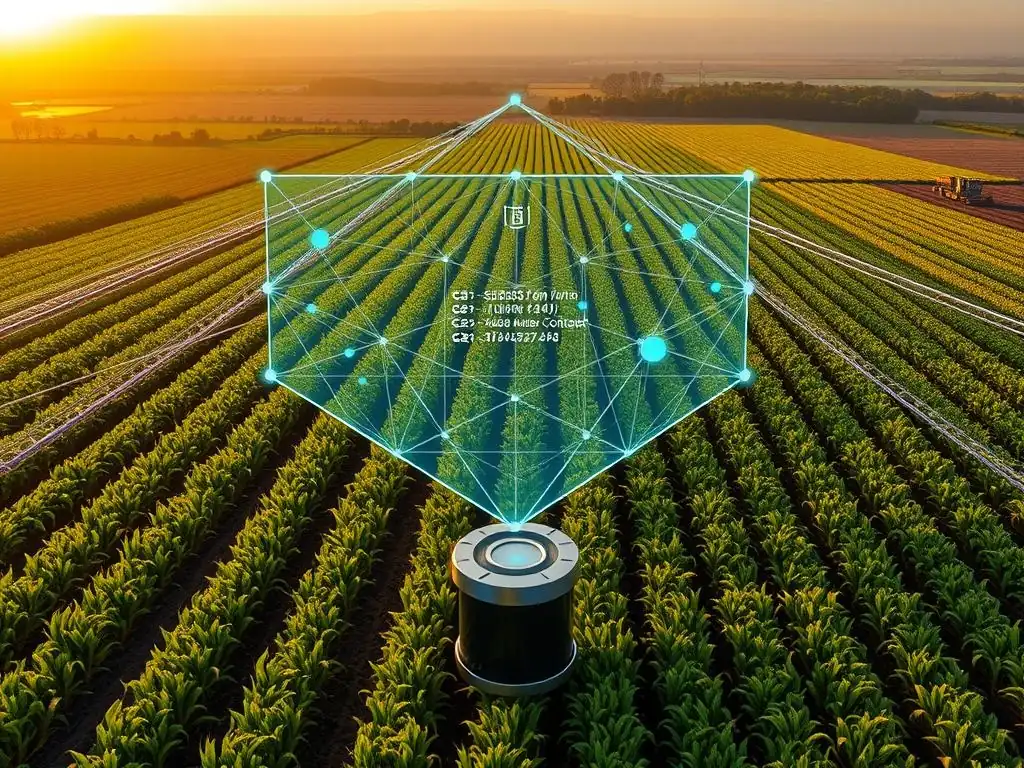
The Internet of Things (IoT) has become increasingly prevalent in modern agriculture, offering a network of interconnected devices, sensors, and software that collect and exchange data. In farming, IoT devices can monitor a wide range of environmental and operational factors, including soil moisture levels, temperature, humidity, crop health, and livestock conditions. For instance, soil moisture sensors deployed in fields can provide real-time data to farmers, enabling them to optimize irrigation schedules and reduce water waste.
The data generated by IoT devices is crucial for data-driven decision-making in agriculture. Farmers can leverage this information to improve resource management, enhance crop yields, and optimize livestock health. Precision farming techniques, enabled by IoT, allow for targeted interventions based on specific needs within a field or farm. This data-driven approach not only increases efficiency but also contributes to more sustainable agricultural practices by minimizing resource consumption and environmental impact. The integration of IoT data with smart contracts further amplifies these benefits, enabling automated responses and actions based on real-time conditions.
Integrating Blockchain, Smart Contracts, and IoT for Enhanced Agricultural Efficiency
The true power of these technologies emerges when blockchain, smart contracts, and IoT are integrated. IoT devices provide the real-world data that triggers and executes smart contracts on the blockchain. This synergy creates a closed-loop system where data from the physical environment automatically initiates actions and transactions defined within the smart contract, all recorded transparently and securely on the blockchain.
Consider a scenario where IoT sensors monitor temperature and humidity in a greenhouse. This data is fed into a blockchain platform, and a smart contract is programmed to automatically adjust ventilation and cooling systems based on pre-set thresholds. If the temperature exceeds a certain level, the smart contract automatically triggers the ventilation system to open, and this action is recorded on the blockchain.
This automated response, driven by IoT data and executed through a smart contract, ensures optimal growing conditions without manual intervention, leading to increased efficiency and reduced risks of crop damage due to environmental fluctuations. This integration exemplifies how blockchain smart contracts for farming, combined with IoT, can automate and optimize agricultural processes.
Benefits of Blockchain Smart Contracts for Farming
Enhanced Transparency and Traceability in the Food Supply Chain
One of the most significant benefits of blockchain smart contracts in agriculture is the enhanced transparency and traceability they bring to the food supply chain. By recording every step of the journey of agricultural products on a blockchain – from farm to consumer – a complete and verifiable audit trail is created. For example, using blockchain, consumers can scan a QR code on a product and instantly access information about its origin, production methods, processing details, and transportation history.
This level of transparency is crucial for building consumer trust and addressing concerns about food safety and authenticity. In cases of foodborne illness outbreaks, blockchain-based traceability systems can rapidly pinpoint the source of contamination, enabling quicker recalls and minimizing the impact on public health. Furthermore, transparency can help combat food fraud and counterfeiting, ensuring that consumers are getting genuine and ethically sourced products. Studies have shown that consumers are increasingly demanding transparency in the food supply chain, and blockchain technology offers a robust solution to meet this demand.
Improved Efficiency and Reduced Costs Through Automation
Smart contracts automate numerous processes in agriculture, leading to significant improvements in efficiency and reductions in operational costs. Manual processes, such as contract management, payment processing, and quality control, can be time-consuming, error-prone, and expensive. Smart contracts streamline these operations by automating tasks based on pre-defined conditions and data from IoT devices.
For instance, consider crop insurance claims. Traditionally, filing and processing claims can be a lengthy and bureaucratic process. With smart contracts and IoT, crop damage can be automatically assessed using data from drone imagery and weather sensors. If pre-defined parameters for crop loss are met, the smart contract can automatically trigger and process the insurance payout, eliminating manual assessments and reducing processing times from weeks to days, or even hours. This automation not only reduces administrative costs but also ensures faster payouts for farmers, improving their financial resilience.
Secure and Immutable Data Management for Agricultural Practices
Blockchain technology provides a secure and immutable platform for managing agricultural data. Data related to planting, harvesting, storage, and transportation, collected from IoT devices and other sources, can be recorded on the blockchain, creating a permanent and tamper-proof record. This immutability is crucial for ensuring data integrity and preventing data manipulation, which can be a significant concern in traditional centralized systems.
Secure data management is particularly important for sensitive agricultural information, such as farm records, production data, and land ownership details. Blockchain's cryptographic security and decentralized nature make it highly resistant to cyberattacks and data breaches. This enhanced security protects farmers' confidential information and ensures the integrity of agricultural data, fostering trust and reliability within the agricultural ecosystem. Furthermore, immutable data records can be used for compliance and regulatory purposes, simplifying audits and certifications.
Streamlined Payments and Reduced Intermediary Involvement
Smart contracts can streamline payment processes in agriculture by automating transactions and reducing the need for intermediaries. Traditional agricultural supply chains often involve multiple intermediaries, such as brokers, processors, and distributors, each taking a cut, which can increase costs and reduce farmer profits. Smart contracts can facilitate direct transactions between farmers and buyers, eliminating intermediaries and ensuring fairer prices for farmers.
For example, a smart contract can be programmed to automatically release payment to a farmer upon delivery of produce that meets pre-defined quality standards. This eliminates the need for escrow services or lengthy payment cycles, ensuring faster and more transparent payments. Reduced intermediary involvement not only lowers transaction costs but also increases efficiency and improves cash flow for farmers. Furthermore, smart contracts can facilitate cross-border payments, making international trade in agricultural products more seamless and efficient.
Use Cases: Smart Contracts and IoT Applications in Farming
Automated Irrigation Systems Powered by Smart Contracts
Water scarcity is a growing concern in agriculture, making efficient irrigation management crucial. Smart contracts, coupled with IoT-based irrigation systems, offer a solution for automated and optimized water usage. IoT sensors monitor soil moisture, weather conditions, and plant water needs. This data triggers smart contracts to automatically adjust irrigation schedules and water flow rates.
For instance, in vineyards in Napa Valley, California, some wineries are experimenting with smart irrigation systems. IoT sensors monitor soil moisture and evapotranspiration rates. When soil moisture levels fall below a certain threshold, a smart contract automatically activates the irrigation system to deliver a precise amount of water to specific vineyard blocks. This data-driven approach minimizes water waste, optimizes plant health, and reduces labor costs associated with manual irrigation management. Studies have shown that smart irrigation systems can reduce water consumption in agriculture by up to 30-50%.
Smart Supply Chain Management for Agricultural Products
Managing complex agricultural supply chains, especially for perishable goods, presents significant logistical challenges. Smart contracts and IoT can revolutionize agricultural supply chain management by providing real-time visibility, traceability, and automated processes across the entire chain – from farm to fork. IoT sensors can track the location, temperature, and humidity of agricultural products during transportation and storage.
Consider the transportation of fresh produce like mangoes from farms in India to consumers in Europe. IoT sensors embedded in shipping containers can monitor temperature and humidity throughout the journey. If temperature fluctuations exceed pre-defined limits, indicating potential spoilage, a smart contract can automatically trigger alerts to relevant stakeholders and initiate corrective actions, such as rerouting shipments or adjusting storage conditions. Furthermore, smart contracts can automate payments to logistics providers upon successful delivery of goods under pre-defined conditions, streamlining the entire supply chain and reducing delays and losses.
Livestock Monitoring and Management with IoT and Smart Contracts
Livestock farming benefits significantly from IoT and smart contract integration. IoT devices, such as wearable sensors on animals, can monitor vital signs like body temperature, heart rate, and activity levels. This data, combined with environmental sensors in barns or pastures, provides insights into animal health, welfare, and productivity.
In dairy farming, for example, wearable sensors on cows can detect early signs of illness or estrus cycles. This data is fed into a blockchain platform, and smart contracts can automate alerts to farmers for timely intervention, improving animal health and reproductive efficiency. Furthermore, smart contracts can automate the process of tracking milk production and quality, ensuring transparent and verifiable records. This data can be used for quality assurance, traceability, and automated payments to dairy farmers based on milk yield and quality parameters.
Crop Insurance and Claim Automation Using Blockchain
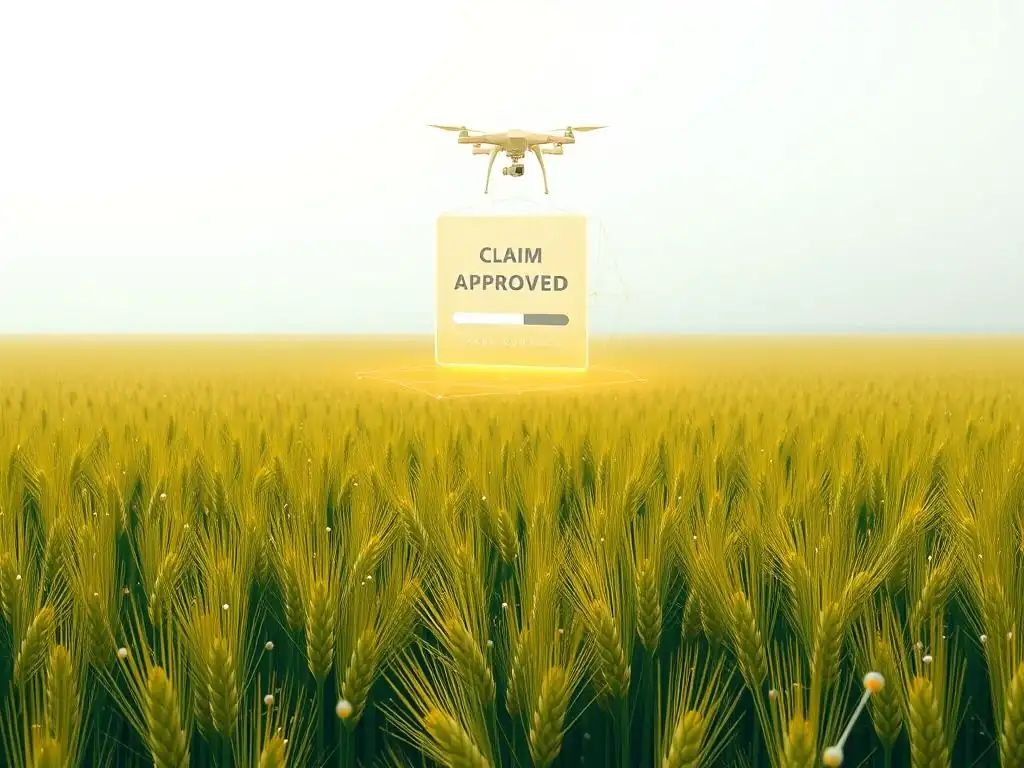
Traditional crop insurance processes are often slow, expensive, and prone to disputes. Blockchain smart contracts offer a more efficient and transparent system for crop insurance. IoT devices, such as weather stations, drones, and satellite imagery, can collect data on weather patterns, crop health, and yield. This data can be used to automatically assess crop damage and trigger insurance payouts.
For example, in regions prone to droughts, smart contracts can be linked to weather data from meteorological agencies. If rainfall levels fall below a pre-defined threshold during critical crop growth stages, the smart contract can automatically trigger an insurance payout to farmers without the need for manual claim assessments or lengthy verification processes. This parametric insurance approach, powered by blockchain and IoT, provides faster payouts, reduces administrative costs, and increases farmers' financial resilience against weather-related risks. Pilot programs using blockchain for crop insurance in developing countries have shown promising results in improving payout efficiency and transparency.
Precision Farming and Resource Optimization Through Decentralized Data
Precision farming aims to optimize resource utilization and maximize yields by tailoring agricultural practices to specific needs within a field. Blockchain and IoT can enhance precision farming by providing a decentralized and secure platform for collecting, sharing, and analyzing agricultural data. IoT sensors collect granular data on soil conditions, weather patterns, and crop health at different locations within a farm.
This data can be stored on a blockchain and accessed by various stakeholders, including farmers, agronomists, and researchers, fostering collaboration and data-driven decision-making. Smart contracts can automate the implementation of precision farming techniques based on this decentralized data. For instance, a smart contract could automatically adjust fertilizer application rates in different zones of a field based on real-time soil nutrient levels detected by IoT sensors. This precise and data-driven approach minimizes resource waste, optimizes crop yields, and promotes sustainable agricultural practices.
Challenges and Considerations for Implementing Smart Contracts in Agriculture
Data Security and Privacy Concerns in Farming Environments
While blockchain offers enhanced security, data security and privacy remain crucial considerations when implementing smart contracts in agriculture. Farming environments often involve diverse stakeholders, and data generated by IoT devices may include sensitive information about farm operations, crop yields, and farmer practices. Ensuring the privacy and security of this data is paramount.
Concerns about data breaches, unauthorized access, and data misuse need to be addressed. Implementing robust data encryption, access control mechanisms, and data governance policies is essential to protect sensitive agricultural data on blockchain platforms. Farmers need to be educated about data privacy risks and empowered to control their data. Solutions that allow farmers to selectively share their data while maintaining control over their privacy are crucial for fostering trust and adoption of blockchain-based agricultural systems.
Scalability Issues with Blockchain for Large-Scale Agricultural Operations
Blockchain technology, particularly public blockchains, can face scalability challenges when dealing with large volumes of transactions and data generated by large-scale agricultural operations. Traditional blockchain networks may have limitations in transaction processing speed and data storage capacity, which could hinder their applicability in vast agricultural landscapes with millions of transactions.
However, advancements in blockchain technology, such as layer-2 scaling solutions and private or consortium blockchains, are addressing these scalability concerns. Private or consortium blockchains, where access is restricted to authorized participants, can offer better scalability and performance for specific agricultural applications. Exploring and adopting scalable blockchain solutions tailored to the specific needs of large-scale agricultural operations is crucial for wider implementation of smart contracts in farming.
Regulatory Compliance and Legal Frameworks for Smart Contracts in Agriculture
The regulatory landscape for blockchain and smart contracts is still evolving globally. Legal frameworks for smart contracts in agriculture are not yet fully established, and issues related to legal validity, enforceability, and dispute resolution need to be addressed. Clarity on regulatory compliance and legal frameworks is essential for fostering trust and wider adoption of smart contracts in the agricultural sector.
Governments and regulatory bodies need to develop clear guidelines and regulations for the use of blockchain and smart contracts in agriculture, addressing aspects such as data privacy, consumer protection, and contract enforceability. Collaboration between technology developers, legal experts, and agricultural stakeholders is crucial for creating a supportive regulatory environment that promotes innovation while safeguarding the interests of all participants in the agricultural ecosystem.
Interoperability Challenges Between Different IoT Devices and Blockchain Platforms
The agricultural technology landscape is characterized by a diverse range of IoT devices and blockchain platforms. Interoperability challenges between different systems can hinder seamless data exchange and integration, limiting the potential benefits of smart contracts and IoT in agriculture. Ensuring interoperability between various IoT devices, blockchain platforms, and agricultural software systems is crucial for creating a cohesive and efficient agricultural technology ecosystem.
Standardization efforts and the development of open protocols are needed to facilitate interoperability between different agricultural technology solutions. Platforms that support cross-chain communication and data exchange can bridge the gap between different blockchain networks. Addressing interoperability challenges will enable seamless data flow and integration, maximizing the value of smart contracts and IoT for agricultural automation and efficiency.
Overcoming the Digital Divide in Rural Farming Communities
A significant challenge for implementing advanced technologies like blockchain and IoT in agriculture is the digital divide in rural farming communities. Many farmers, particularly in developing countries and remote areas, may lack access to internet connectivity, digital literacy, and the necessary infrastructure to adopt these technologies. Bridging this digital divide is essential for ensuring equitable access to the benefits of smart contracts and IoT in agriculture.
Initiatives to improve internet access in rural areas, provide digital literacy training for farmers, and develop user-friendly and affordable agricultural technology solutions are crucial for overcoming the digital divide. Government support, public-private partnerships, and community-based initiatives are needed to empower rural farming communities to adopt and benefit from these transformative technologies. Addressing the digital divide is not only essential for equitable technology adoption but also for ensuring the inclusivity and sustainability of agricultural development.
The Future of Blockchain and IoT in Agriculture
Emerging Trends and Innovations in Smart Farming
The future of blockchain and IoT in agriculture is marked by exciting emerging trends and innovations in smart farming. Advancements in sensor technology, drone technology, and satellite imagery are providing increasingly granular and real-time data for agricultural decision-making. The integration of 5G and other advanced communication technologies is enhancing connectivity and data transmission in rural areas, enabling wider deployment of IoT devices.
Edge computing, where data processing occurs closer to the source of data generation (e.g., on the farm itself), is gaining traction, reducing reliance on centralized cloud infrastructure and improving data processing speed and efficiency. Furthermore, the development of more user-friendly and affordable agricultural technology solutions is making smart farming accessible to a wider range of farmers. These emerging trends and innovations are paving the way for more sophisticated and impactful applications of blockchain and IoT in agriculture.
The Potential of AI and Machine Learning Integration with Blockchain-Based Agricultural Systems
The integration of Artificial Intelligence (AI) and Machine Learning (ML) with blockchain-based agricultural systems holds immense potential for further optimizing agricultural practices and enhancing decision-making. AI and ML algorithms can analyze the vast amounts of data generated by IoT devices and blockchain platforms to identify patterns, predict outcomes, and provide actionable insights for farmers.
For instance, AI-powered image recognition can analyze drone imagery to detect crop diseases or pest infestations at an early stage, enabling targeted interventions and reducing crop losses. ML algorithms can optimize irrigation schedules based on weather forecasts and plant water needs, minimizing water waste and maximizing yields. Furthermore, AI can enhance supply chain management by predicting demand fluctuations and optimizing logistics. The synergy between AI, ML, blockchain, and IoT promises to unlock new levels of efficiency, sustainability, and resilience in agriculture.
The Role of Decentralized Finance (DeFi) in Agricultural Funding
Decentralized Finance (DeFi) platforms, built on blockchain technology, are emerging as potential game-changers for agricultural funding. Traditional agricultural financing often involves intermediaries, high interest rates, and lengthy approval processes, particularly for smallholder farmers. DeFi offers alternative funding mechanisms, such as peer-to-peer lending, yield farming, and tokenized assets, that can provide farmers with more accessible, affordable, and transparent financing options.
DeFi platforms can connect farmers directly with investors, bypassing traditional financial institutions and reducing intermediary fees. Smart contracts can automate loan disbursement and repayment processes, improving efficiency and transparency. Tokenization of agricultural assets, such as crops or land, can create new investment opportunities and enhance liquidity in the agricultural sector. DeFi has the potential to democratize agricultural finance, empower farmers financially, and drive sustainable agricultural growth.
Future Outlook: Growth Projections and Market Opportunities
The future outlook for blockchain and IoT in agriculture is highly promising, with significant growth projections and market opportunities. Market research reports predict substantial growth in the smart agriculture market in the coming years, driven by increasing adoption of IoT, blockchain, and AI technologies. The global smart agriculture market is projected to reach billions of dollars in the next decade, with blockchain and IoT playing a key role in this growth.
The increasing demand for sustainable and traceable food, coupled with the need to improve agricultural efficiency and resilience in the face of climate change, is driving the adoption of these technologies. Governments and private sector organizations are increasingly investing in smart agriculture initiatives, creating a favorable ecosystem for innovation and growth. The future of agriculture is likely to be increasingly data-driven, automated, and transparent, with blockchain smart contracts and IoT playing a central role in transforming the sector.
Conclusion: Transforming Agriculture with Blockchain Smart Contracts
Blockchain smart contracts, in conjunction with IoT technologies, are revolutionizing agriculture by automating processes, enhancing transparency, and improving efficiency across the value chain. From precision irrigation and smart supply chain management to automated insurance and decentralized data platforms, the applications are vast and transformative.
While challenges related to data security, scalability, regulation, interoperability, and the digital divide need to be addressed, the potential benefits of these technologies for creating a more sustainable, efficient, and resilient agricultural sector are undeniable. As technology continues to evolve and adoption barriers are overcome, blockchain smart contracts for farming are poised to play an increasingly critical role in shaping the future of agriculture and ensuring global food security.
Frequently Asked Questions
How can smart contracts automate farming processes?
Smart contracts can automate tasks like irrigation scheduling based on real-time weather data and soil moisture levels, ensuring efficient resource allocation and reducing manual intervention. This leads to optimized crop yields.
What role does IoT play in enabling smart contracts for farming?
IoT sensors collect crucial data on temperature, humidity, soil conditions, etc., which are then fed into smart contracts. This data triggers automated actions within the contract, creating a closed-loop system for precise and data-driven farming.
How do smart contracts improve transparency in agricultural supply chains?
By recording every transaction and movement of goods on a blockchain, smart contracts provide immutable and transparent records. This allows consumers to track the origin and quality of their food, building trust and combating fraud.
What are the potential benefits of using blockchain smart contracts for farming insurance?
Smart contracts can automate insurance payouts based on predefined conditions, such as drought or pest infestations. This reduces processing times and ensures farmers receive compensation quickly and efficiently when needed.
What are some of the challenges in implementing blockchain smart contracts for farming on a large scale?
Challenges include the cost of implementing IoT infrastructure, the need for digital literacy among farmers, and regulatory uncertainties surrounding the use of blockchain technology in agriculture.
Final Reflection: Cultivating Trust with Blockchain
The potential of blockchain smart contracts for farming extends far beyond mere automation; it represents a fundamental shift towards transparency, efficiency, and trust in an industry vital to our very survival. The ability to seamlessly integrate IoT devices with immutable, self-executing agreements promises to revolutionize agricultural practices, mitigating risks and fostering a more equitable ecosystem for farmers and consumers alike.
The impact of this technology is already being felt, albeit in its nascent stages. Witnessing the early adoption of smart contracts in agriculture fuels a sense of optimism, knowing that we are contributing to a future where farmers are empowered and food systems are more resilient. The ultimate goal is to create a more sustainable and equitable food system, where farmers can thrive and consumers can access safe, affordable, and nutritious food.
This vision, once a distant dream, is now within reach, thanks to the transformative power of blockchain.
As we look ahead, let us not simply marvel at the technological advancements but actively participate in shaping their ethical and responsible implementation. Consider how you can support initiatives that promote blockchain adoption in agriculture, advocate for policies that protect farmers' rights, and educate yourself and others about the potential of this technology to create a more sustainable and just world. The future of farming is being written today, and your contribution matters.
Revolutionize Your Farm: Embrace the Smart Contract Future!
Thanks for diving into the world of smart contracts and their potential to transform agriculture! We hope you're now inspired to see how these technologies can optimize your farming operations and improve efficiency. Ready to take the next step?
Here are a few actions you can take today:
- Contact a smart contract developer specializing in agricultural solutions. This is your primary action! See how they can customize solutions for your specific needs and IoT devices.
- Explore existing open-source smart contract templates designed for agriculture and see if any can be adapted for your use case. Look for those focused on supply chain transparency or automated payments.
- Share this article with other farmers and agricultural enthusiasts to spark a conversation about the future of farming and the potential of blockchain technology.
What specific challenges on your farm do you think smart contracts could best address, and what steps are you already taking towards automation? Let's discuss in the comments below!
Leave a Reply