
Technical Deep Dive: Cryptography in Blockchain for IoT Device Authentication


Welcome to Blockchain Trends, your go-to source for understanding the revolutionary impact of blockchain technology.
Delve into the intricate world where blockchain extends far beyond cryptocurrencies. Are you ready to uncover how blockchain cryptography is revolutionizing IoT authentication? This article provides a technical deep dive into securing IoT devices using innovative decentralized solutions. Explore the potential, understand the challenges, and discover the future of secure connectivity.
- Technical Deep Dive: Blockchain Cryptography for Secure IoT Device Authentication
- Understanding the IoT Security Landscape and its Challenges
- Blockchain Technology: A Foundation for Secure IoT Authentication
- Core Cryptographic Principles in Blockchain for IoT Security
- Blockchain-Based Authentication Methods for IoT Devices: A Comparative Analysis
-
Implementing Blockchain Cryptography for IoT Device Authentication: A Step-by-Step Guide
- Step 1: Selecting the Appropriate Blockchain Platform for IoT
- Step 2: Integrating Cryptographic Libraries into IoT Device Firmware
- Step 3: Designing a Secure Key Management System for IoT Devices
- Step 4: Developing Smart Contracts for Authentication and Authorization
- Step 5: Testing and Deploying the Blockchain-Based IoT Authentication System
- Real-World Use Cases: Blockchain-Secured IoT Authentication in Action
- Overcoming Challenges and Future Trends in Blockchain Cryptography for IoT
- Conclusion: Securing the Future of IoT with Blockchain Cryptography
-
Frequently Asked Questions
- How does blockchain cryptography enhance IoT device authentication?
- What specific cryptographic techniques are used in blockchain-based IoT authentication?
- What are the benefits of using blockchain for IoT device authentication compared to traditional methods?
- What are the challenges in implementing blockchain cryptography for IoT device authentication?
- How can blockchain cryptography help in securing IoT data beyond authentication?
- Final Reflection: Securing the Future with Blockchain Cryptography
- Secure Your Future: Embark on Your IoT Security Journey Now!
Technical Deep Dive: Blockchain Cryptography for Secure IoT Device Authentication
Introduction: The Convergence of Blockchain, IoT, and Cryptographic Security
The Internet of Things (IoT) has exploded in recent years, connecting billions of devices from smart sensors in agriculture to sophisticated medical equipment. This interconnected ecosystem, while offering unprecedented convenience and efficiency, presents a complex and expanding attack surface. Simultaneously, blockchain technology, initially recognized for its role in cryptocurrencies, has matured to offer robust solutions for data integrity and secure transactions.
Cryptography, the bedrock of blockchain, plays a crucial role in bridging the gap between the security needs of IoT and the capabilities of blockchain. This article delves into the technical aspects of how blockchain cryptography can be leveraged to secure IoT device authentication, addressing the growing concerns surrounding IoT security and exploring practical implementations. We will explore the core cryptographic principles underpinning this convergence, analyze different blockchain-based authentication methods, and examine real-world applications where blockchain cryptography enhances the security of IoT ecosystems.
Understanding the IoT Security Landscape and its Challenges
Inherent Vulnerabilities of IoT Devices and Networks
IoT devices, by their very nature, often operate in resource-constrained environments. This limitation typically translates to reduced processing power, memory, and battery life, making it challenging to implement complex security measures directly on the devices. Furthermore, the sheer scale and distribution of IoT networks amplify vulnerabilities.
A study by Palo Alto Networks in 2020 revealed that 98% of all IoT traffic is unencrypted, exposing sensitive data to interception and manipulation. Consider smart city deployments, where thousands of sensors monitor traffic flow and environmental conditions. If these sensors are compromised due to weak security, attackers could manipulate data to cause traffic disruptions or even falsify environmental readings, leading to inaccurate decision-making and potential public safety risks.
Moreover, many IoT devices are deployed in physically accessible locations, increasing the risk of tampering and physical attacks, which can bypass software-based security measures. The diverse range of manufacturers and operating systems within the IoT ecosystem also complicates security management, creating fragmented security landscapes that are difficult to monitor and patch effectively.
The Need for Robust Authentication Mechanisms in IoT
Authentication is paramount in securing IoT ecosystems. It is the process of verifying the identity of a device or user attempting to access the network or its resources. In the context of IoT, strong authentication is essential to ensure that only authorized devices can participate in the network, transmit data, and execute commands.
Without robust authentication, malicious actors can easily impersonate legitimate devices, inject false data, eavesdrop on communications, or even take control of entire IoT systems. For example, in industrial IoT (IIoT) environments, where connected sensors and actuators control critical infrastructure like power grids or manufacturing plants, a lack of proper authentication could lead to catastrophic consequences. Imagine a scenario where an attacker gains access to an IIoT network by spoofing a sensor.
They could then manipulate sensor readings to disrupt production processes, cause equipment damage, or even trigger safety hazards. Therefore, implementing strong authentication mechanisms is not just about protecting data privacy; it's about ensuring the operational integrity, safety, and reliability of IoT deployments across various sectors.
Limitations of Traditional Security Approaches for IoT
Traditional security approaches, often relying on centralized servers and client-server architectures, face significant limitations when applied to the decentralized and dynamic nature of IoT. Centralized authentication systems can become single points of failure, vulnerable to distributed denial-of-service (DDoS) attacks that can cripple entire IoT networks. Moreover, the sheer volume of devices and data generated by IoT ecosystems strains the scalability of centralized security infrastructure.
For instance, consider a large-scale smart agriculture deployment with thousands of sensors monitoring soil conditions across vast farmlands. A centralized authentication server would need to handle a massive number of authentication requests and data streams, potentially leading to performance bottlenecks and delays. Traditional username/password-based authentication, often weak and easily compromised, is also inadequate for securing IoT devices, especially those with limited user interfaces.
Furthermore, managing and distributing security updates and patches across a vast and geographically dispersed IoT device fleet using traditional methods can be logistically complex and time-consuming, leaving devices vulnerable to known exploits for extended periods. These limitations highlight the need for more decentralized, scalable, and robust security solutions tailored to the unique challenges of IoT environments, paving the way for blockchain-based approaches.
Blockchain Technology: A Foundation for Secure IoT Authentication
Blockchain's Decentralized and Immutable Nature
Blockchain technology, at its core, is a decentralized, distributed, and immutable ledger. Decentralization means that no single entity controls the network, eliminating single points of failure and reducing the risk of centralized attacks. Instead of relying on a central authority, blockchain networks operate on a consensus mechanism, where multiple participants validate transactions and ensure the integrity of the data.
Immutability, achieved through cryptographic hashing and chain linking, ensures that once data is recorded on the blockchain, it cannot be altered or deleted retrospectively. Each block in the chain contains a cryptographic hash of the previous block, creating a tamper-proof record of transactions.
This inherent immutability and decentralization provide a strong foundation for building secure and trustworthy systems, particularly for applications like IoT authentication where data integrity and resistance to manipulation are critical. The decentralized nature also enhances scalability and resilience, as the network can continue to operate even if some nodes fail, unlike centralized systems that are vulnerable to single points of failure.
How Blockchain Enhances Trust and Security in IoT Ecosystems
Blockchain technology enhances trust and security in IoT ecosystems by providing transparency, data integrity, and robust authentication mechanisms. Transparency is achieved through the public and auditable nature of many blockchains. All transactions and data recorded on a public blockchain are visible to all participants, fostering accountability and reducing the potential for hidden manipulations.
Data integrity is guaranteed by the cryptographic hashing and immutability of the blockchain. Any attempt to tamper with data stored on the blockchain would be immediately detectable, as it would require altering the hashes of all subsequent blocks, which is computationally infeasible. For IoT authentication, blockchain can be used to create a decentralized and tamper-proof identity management system.
Each IoT device can be assigned a unique digital identity on the blockchain, and its authentication status and transaction history can be securely recorded and verified by all authorized participants in the network. This distributed and immutable record of device identities and activities builds trust among stakeholders in the IoT ecosystem, ensuring that devices are legitimate and data is trustworthy. For example, in a supply chain scenario using IoT sensors to track goods, blockchain can provide an immutable record of the goods' provenance and condition, enhancing transparency and trust among suppliers, distributors, and consumers.
Core Cryptographic Principles in Blockchain for IoT Security
Hashing Algorithms: Ensuring Data Integrity in IoT Blockchain
Hashing algorithms are fundamental cryptographic tools used in blockchain to ensure data integrity. A hash function takes an input of any size (e.g., a data packet from an IoT sensor) and produces a fixed-size output called a hash value or digest. Crucially, hash functions are designed to be deterministic (the same input always produces the same output), one-way (it's computationally infeasible to reverse the process and derive the original input from the hash), and collision-resistant (it's extremely difficult to find two different inputs that produce the same hash).
In blockchain for IoT, hashing algorithms like SHA-256 (Secure Hash Algorithm 256-bit) are used to create digital fingerprints of data. For example, when an IoT device transmits sensor data, the data can be hashed, and the hash value can be stored on the blockchain. If the data is tampered with during transmission or storage, recalculating the hash will produce a different value, immediately revealing the data corruption.
Moreover, hashing is essential for linking blocks together in a blockchain. Each block's header includes the hash of the previous block's header, creating a chain of blocks that is cryptographically secured. This chaining mechanism, enabled by hashing, is what provides the immutability and tamper-proof nature of blockchain data, vital for maintaining the integrity of IoT data recorded on the blockchain.
Digital Signatures: Authenticating IoT Device Identity and Transactions
Digital signatures are another cornerstone of blockchain cryptography, providing a robust mechanism for authenticating IoT device identity and verifying transactions. Digital signatures rely on asymmetric cryptography, also known as public-key cryptography, which uses key pairs: a private key and a public key. The private key is kept secret by the device owner, while the public key can be shared openly. To create a digital signature, an IoT device uses its private key to encrypt a hash of the data it wants to transmit.
This encrypted hash is the digital signature. Anyone with the device's corresponding public key can then verify the signature. Verification involves decrypting the signature using the public key and comparing the result with the hash of the received data. If they match, it proves two things: 1) the data has not been tampered with (integrity), and 2) the data originated from the device that possesses the corresponding private key (authentication and non-repudiation).
For example, in an IoT firmware update scenario, the software provider can digitally sign the update package using their private key. IoT devices can then verify the signature using the provider's public key before installing the update, ensuring that the update is authentic and hasn't been compromised by malicious actors. Common digital signature algorithms used in blockchain include RSA (Rivest-Shamir-Adleman) and ECDSA (Elliptic Curve Digital Signature Algorithm).
Public Key Infrastructure (PKI) and Blockchain-Based Identity Management for IoT
Public Key Infrastructure (PKI) is a framework for managing and distributing digital certificates, which are essential for establishing trust and secure communication in digital environments. In traditional PKI, a central Certificate Authority (CA) issues and manages digital certificates, binding public keys to identities. However, in the context of IoT, relying solely on centralized PKI can introduce scalability and single point of failure concerns, similar to traditional authentication approaches. Blockchain technology offers a way to decentralize and enhance PKI for IoT identity management.
Blockchain can be used to create a distributed and immutable registry of public keys and associated device identities. Instead of relying on a single CA, multiple entities in a consortium or permissioned blockchain network can participate in validating and registering device identities and public keys. This decentralized PKI leverages the inherent security and transparency of blockchain to create a more robust and resilient identity management system for IoT devices. For example, a blockchain-based PKI can be used to issue and manage digital certificates for IoT devices in a smart factory.
Each device's certificate, containing its public key and identity information, is recorded on the blockchain. Other devices and systems in the factory can then securely verify the authenticity of these certificates and establish secure communication channels, knowing that the identities are verifiably linked to the devices and managed in a decentralized and tamper-proof manner. This combination of blockchain and PKI principles provides a powerful approach to securing IoT device identities and enabling secure communication within IoT ecosystems.
Blockchain-Based Authentication Methods for IoT Devices: A Comparative Analysis
Decentralized Identity (DID) for IoT Devices on the Blockchain
Decentralized Identity (DID) is a W3C (World Wide Web Consortium) standard that provides a framework for creating self-sovereign digital identities. In the context of IoT, DIDs offer a way to assign unique and verifiable identities to IoT devices directly on the blockchain, without relying on centralized identity providers. A DID is a globally unique identifier that is associated with a DID document stored on a decentralized ledger, such as a blockchain. This DID document contains public keys, service endpoints, and other metadata related to the device's identity.
IoT devices can use their DIDs to authenticate themselves to other devices, applications, and services in a decentralized and privacy-preserving manner. The key advantage of using DIDs for IoT device authentication is that it gives devices greater control over their own identities and data. Devices are not dependent on centralized authorities for identity management, reducing the risks of single points of failure and censorship.
Furthermore, DIDs support selective disclosure, allowing devices to share only the necessary identity information required for a specific interaction, enhancing privacy. For instance, a smart sensor in a home can use its DID to authenticate itself to a smart home hub, granting access to sensor data without revealing unnecessary personal information. Several blockchain platforms, like Sovrin and Hyperledger Indy, are specifically designed to support DID implementations, making them suitable for building decentralized identity solutions for IoT ecosystems.
Proof-of-Authority (PoA) is a consensus mechanism often used in permissioned blockchains, which are well-suited for many IoT applications. PoA relies on a set of pre-selected, reputable validators to create new blocks and validate transactions. Validators are typically known and trusted entities, such as organizations or individuals with a vested interest in the network's integrity. In a PoA system, validators take turns proposing and validating blocks in a round-robin fashion or based on a predefined schedule.
The selection of validators is crucial in PoA, as the security and efficiency of the network depend on their trustworthiness and reliability. PoA is significantly more energy-efficient and faster than Proof-of-Work (PoW) consensus, which is used by Bitcoin and Ethereum, making it a practical choice for resource-constrained IoT environments. For IoT authentication, PoA can be used in a permissioned blockchain to create a secure and efficient authentication system. A consortium of trusted IoT device manufacturers or service providers can act as validators in a PoA blockchain.
When an IoT device joins the network or attempts to perform a transaction, its identity is verified by the validators based on predefined rules and criteria. Once authenticated, the device can participate in the network. PoA's efficiency and scalability make it a compelling consensus mechanism for IoT authentication, especially in industrial IoT and supply chain applications where performance and controlled access are paramount.
Consortium Blockchain for Permissioned IoT Network Authentication
Consortium blockchains offer a compelling architecture for securing IoT network authentication, particularly in scenarios where a group of organizations needs to collaborate and share data in a trusted and controlled environment. A consortium blockchain is a permissioned blockchain governed by a group of organizations, rather than being fully public or private. This model allows for a balance between decentralization and control, making it suitable for enterprise IoT applications. In a consortium blockchain for IoT authentication, participating organizations, such as device manufacturers, service providers, and regulatory bodies, can jointly operate the blockchain network and define the rules for device authentication and access control.
Each organization can run one or more validator nodes, ensuring distributed governance and resilience. When a new IoT device attempts to join the consortium network, it needs to be authenticated according to the rules defined by the consortium members. This authentication process can involve verifying the device's identity against a pre-approved list, checking its compliance with security standards, or obtaining approval from a designated authority within the consortium.
Once authenticated, the device's identity and access rights are recorded on the consortium blockchain, providing a transparent and auditable record. Consortium blockchains offer enhanced security, privacy, and efficiency compared to public blockchains for many enterprise IoT use cases. They enable collaboration and data sharing among trusted partners while maintaining control over access and data visibility, making them a powerful tool for securing complex IoT ecosystems, such as supply chains, healthcare networks, and industrial control systems.
Implementing Blockchain Cryptography for IoT Device Authentication: A Step-by-Step Guide
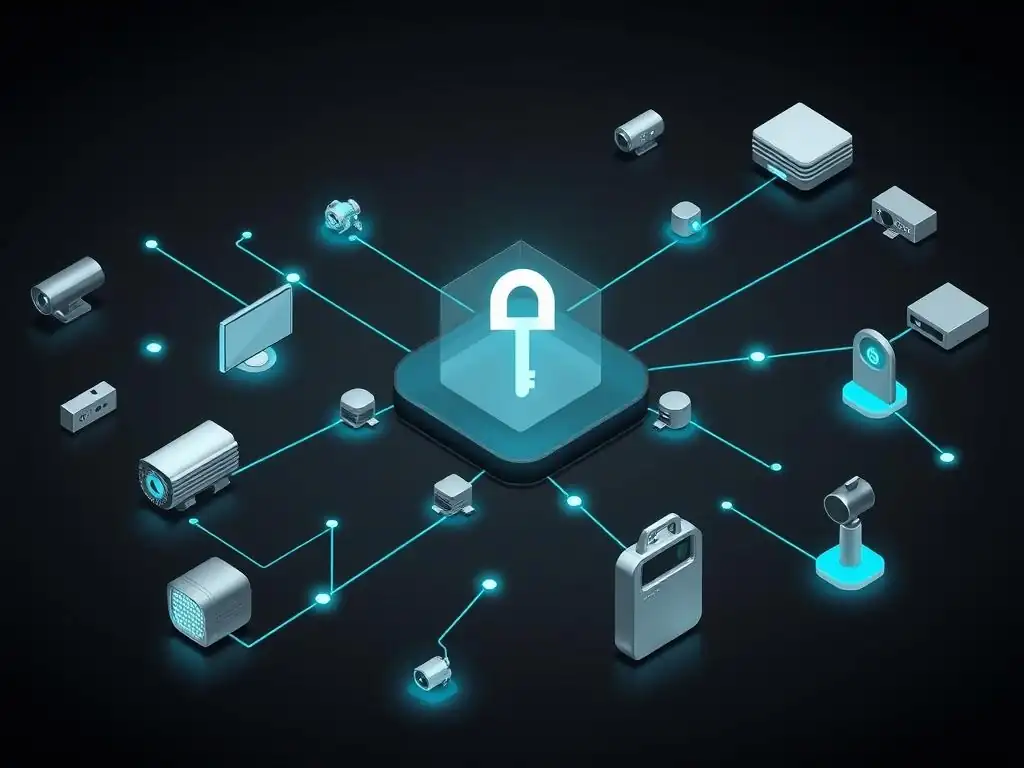
Step 1: Selecting the Appropriate Blockchain Platform for IoT
Choosing the right blockchain platform is a critical first step in implementing blockchain cryptography for IoT device authentication. Several blockchain platforms are suitable for IoT applications, each with its own strengths and weaknesses. For permissioned IoT networks, platforms like Hyperledger Fabric and Corda are popular choices. Hyperledger Fabric is a modular and highly configurable platform designed for enterprise use cases, offering features like channel-based privacy and pluggable consensus mechanisms.
Corda is specifically designed for financial applications but is also applicable to other industries, emphasizing data privacy and legal enforceability. For more public or hybrid IoT deployments, platforms like Ethereum and Polygon (a Layer-2 scaling solution for Ethereum) can be considered. Ethereum is the most widely used blockchain platform with a large developer community and a rich ecosystem of tools and libraries. Polygon provides faster and cheaper transactions compared to the main Ethereum chain, making it more suitable for high-volume IoT data.
When selecting a platform, consider factors such as scalability, transaction speed, security features, smart contract capabilities, developer support, and integration with existing IoT infrastructure. For resource-constrained IoT devices, platforms that support lightweight clients or off-chain processing might be preferred. Thoroughly evaluating the specific requirements of the IoT application and comparing the features and capabilities of different blockchain platforms is essential for making an informed decision.
Step 2: Integrating Cryptographic Libraries into IoT Device Firmware
Integrating cryptographic libraries into IoT device firmware is essential to enable on-device cryptographic operations needed for blockchain-based authentication. IoT devices often have limited processing power and memory, so choosing efficient and lightweight cryptographic libraries is crucial. Libraries like libsodium and mbed TLS are popular choices for embedded systems due to their performance, security, and small footprint. Libsodium is a modern and easy-to-use cryptographic library that provides a wide range of cryptographic primitives, including hashing, encryption, and digital signatures.
mbed TLS (formerly PolarSSL) is another widely used library, particularly for TLS/SSL and X.509 certificate handling, which are relevant for secure communication and PKI integration in IoT. When integrating cryptographic libraries, consider the specific cryptographic algorithms required for the chosen blockchain platform and authentication method. For example, if using ECDSA for digital signatures, ensure the library supports ECDSA with the appropriate curve (e.g., secp256k1 for Ethereum).
Careful optimization of cryptographic operations is often necessary to minimize resource consumption on IoT devices. This may involve techniques like hardware acceleration if available, or selecting algorithms and parameters that offer a good balance between security and performance. Secure coding practices are paramount when integrating cryptographic libraries to avoid vulnerabilities like buffer overflows or side-channel attacks.
Step 3: Designing a Secure Key Management System for IoT Devices
A robust key management system is paramount for securing cryptographic keys used by IoT devices for authentication and encryption. Compromised keys can completely undermine the security of the entire system, making secure key generation, storage, and handling critical. For IoT devices, secure key storage often involves using hardware security modules (HSMs) or secure enclaves, if available. HSMs are dedicated hardware devices designed to protect cryptographic keys and perform cryptographic operations in a tamper-resistant environment.
Secure enclaves are secure regions within a processor that provide a protected execution environment for sensitive code and data, including cryptographic keys. If HSMs or secure enclaves are not feasible due to cost or device constraints, alternative software-based key storage solutions should be carefully considered. These may involve encrypting keys with device-specific secrets or using trusted execution environments (TEEs) if supported by the device's operating system.
Key generation should be performed securely, ideally on the device itself or in a trusted environment, using cryptographically secure random number generators (CSRNGs). Key rotation and revocation mechanisms are also essential to manage keys throughout the device's lifecycle and respond to potential key compromises. A well-designed key management system should address key generation, storage, distribution, usage, rotation, revocation, and backup, ensuring the confidentiality and integrity of cryptographic keys throughout the IoT device lifecycle.
Smart contracts are self-executing contracts with the terms of the agreement directly written into code. In blockchain-based IoT authentication, smart contracts play a crucial role in defining and enforcing authentication and authorization policies. Smart contracts can be deployed on the chosen blockchain platform to manage device identities, access control rules, and transaction authorization. For example, a smart contract can be created to store a registry of authorized IoT devices and their associated public keys or DIDs.
When a device attempts to authenticate, the smart contract can verify its identity against this registry and grant or deny access based on predefined rules. Smart contracts can also implement more complex authorization logic, such as role-based access control (RBAC) or attribute-based access control (ABAC), allowing fine-grained control over device permissions and data access. For instance, a smart contract can define that only devices with specific roles (e.g., "sensor," "actuator," "gateway") are allowed to perform certain actions or access specific data resources. When developing smart contracts for IoT authentication, security is paramount.
Smart contracts should be carefully designed and thoroughly tested to prevent vulnerabilities like reentrancy attacks, integer overflows, or access control bypasses. Formal verification techniques can be used to mathematically prove the correctness and security of smart contracts. Auditing smart contracts by independent security experts is also a best practice before deploying them to a production blockchain network.
Step 5: Testing and Deploying the Blockchain-Based IoT Authentication System
Rigorous testing is crucial before deploying a blockchain-based IoT authentication system to ensure its functionality, security, and performance. Testing should encompass various aspects, including unit testing of individual components (e.g., cryptographic library integration, smart contracts), integration testing of the entire system (e.g., device authentication flows, transaction processing), and performance testing under realistic IoT network conditions (e.g., simulating a large number of devices and transactions). Security testing is particularly important, including vulnerability scanning, penetration testing, and code reviews to identify and address potential security flaws in the system.
Consider using specialized IoT security testing tools and methodologies to assess the system's resilience against common IoT attacks. Before full-scale deployment, consider conducting pilot projects or phased rollouts in controlled environments to validate the system's performance and identify any unforeseen issues. Monitoring and logging are essential after deployment to track system performance, detect anomalies, and respond to security incidents.
Implement robust monitoring dashboards and alerting systems to proactively identify and address potential problems. Regular security audits and updates are also necessary to maintain the security and integrity of the deployed system over time, especially as new vulnerabilities and threats emerge in the evolving IoT and blockchain landscape. Deployment should be planned carefully, considering factors like network infrastructure, device provisioning, and user training, to ensure a smooth transition and successful adoption of the blockchain-based IoT authentication system.
Real-World Use Cases: Blockchain-Secured IoT Authentication in Action
Supply Chain Management: Tracking and Authenticating Goods with IoT and Blockchain
Supply chain management is a compelling use case for blockchain-secured IoT authentication. Counterfeit goods, product tampering, and lack of transparency are significant challenges in global supply chains. By combining IoT sensors and blockchain technology, businesses can create transparent, traceable, and secure supply chains. IoT sensors, attached to goods or shipping containers, can track location, temperature, humidity, and other relevant environmental conditions throughout the supply chain journey.
This sensor data can be securely recorded on a blockchain, providing an immutable and auditable record of the goods' provenance and condition. Blockchain cryptography is used to authenticate the IoT sensors and ensure the integrity of the sensor data. For example, each sensor can have a unique digital identity on the blockchain, and its data transmissions can be digitally signed to verify their authenticity and prevent tampering.
This combination of IoT and blockchain enables real-time tracking of goods, reduces the risk of counterfeiting, improves product quality control, and enhances transparency for all stakeholders in the supply chain. A real-world example is the pharmaceutical industry, where blockchain-secured IoT can be used to track temperature-sensitive drugs throughout the supply chain, ensuring they are stored within the required temperature range and preventing spoilage. This enhances patient safety and reduces the risk of counterfeit drugs entering the market.
Smart Homes: Securing IoT Devices with Blockchain-Based Access Control
Smart homes are becoming increasingly popular, but security and privacy concerns remain significant barriers to wider adoption. Smart homes are filled with IoT devices, such as smart locks, cameras, lights, and appliances, which often communicate wirelessly and are vulnerable to hacking. Blockchain-based authentication can enhance the security of smart homes by providing decentralized and robust access control for IoT devices. Blockchain can be used to create a secure and transparent ledger of authorized devices and users in the smart home network.
Each smart home device can have a DID on the blockchain, and users can manage access permissions for these devices through smart contracts. For example, a smart lock can be controlled by a smart contract that verifies the identity of the user attempting to unlock the door using their DID and grants access based on predefined rules. Blockchain cryptography ensures that access control policies are enforced securely and transparently, and that unauthorized users cannot gain access to smart home devices.
Furthermore, blockchain can enhance user privacy by allowing users to control their own data and share it selectively with authorized devices and applications. For instance, a smart thermostat can share temperature data with a smart home energy management system only with the user's explicit consent, recorded on the blockchain. This decentralized and user-centric approach to security and privacy can build greater trust in smart home technology and accelerate its adoption.
Healthcare: Protecting Patient Data with Blockchain-Enabled IoT Devices
The healthcare sector is another area where blockchain-secured IoT authentication can offer significant benefits, particularly in protecting sensitive patient data collected by IoT medical devices. Wearable devices, remote patient monitoring systems, and implantable medical devices are increasingly used to collect and transmit patient health data. Securing this data is paramount to protect patient privacy and ensure the integrity of medical information. Blockchain can be used to create a secure and auditable platform for managing patient data collected by IoT medical devices.
Blockchain cryptography can be used to authenticate medical devices and encrypt patient data at the source, ensuring that only authorized parties can access and decrypt the data. Patient consent management can also be implemented using smart contracts on the blockchain, allowing patients to control who can access their health data and for what purpose. For example, a smart contract can record patient consent for sharing their wearable device data with their physician for remote monitoring. Blockchain's immutability ensures that patient consent records are tamper-proof and auditable, enhancing transparency and accountability.
Furthermore, blockchain can facilitate secure data sharing and interoperability between different healthcare providers and systems, while maintaining patient privacy and data security. For instance, patient data collected by a wearable device can be securely shared with a hospital's electronic health record (EHR) system through a blockchain-based data exchange platform, improving care coordination and reducing medical errors. This application of blockchain-secured IoT authentication in healthcare can significantly enhance patient data privacy, security, and interoperability, leading to improved patient outcomes and more efficient healthcare delivery.
Overcoming Challenges and Future Trends in Blockchain Cryptography for IoT
Scalability Issues in Blockchain-Based IoT Networks
Scalability remains a significant challenge for deploying blockchain in large-scale IoT networks. Traditional blockchain platforms, like Bitcoin and Ethereum, have limited transaction throughput and can struggle to handle the massive data volumes and transaction frequencies generated by millions or billions of IoT devices. As IoT deployments grow in size and complexity, the scalability limitations of blockchain can become a bottleneck, impacting performance and increasing transaction costs. Several approaches are being explored to address scalability issues in blockchain-based IoT networks.
Layer-2 scaling solutions, such as state channels and sidechains, can offload transaction processing from the main blockchain to improve scalability. Sharding, a technique to partition the blockchain into smaller, manageable shards, can also increase transaction throughput. Consensus mechanism optimizations, like Proof-of-Stake (PoS) and Delegated Proof-of-Stake (DPoS), offer better scalability compared to Proof-of-Work (PoW).
Furthermore, exploring alternative blockchain architectures, such as Directed Acyclic Graph (DAG)-based blockchains, which offer inherently higher scalability, is also promising for IoT applications. For example, IOTA is a DAG-based distributed ledger specifically designed for IoT data and micropayments, aiming to overcome the scalability limitations of traditional blockchains. Choosing the right blockchain platform and scalability solutions that match the specific requirements of the IoT application is crucial for successful large-scale deployments.
Interoperability Challenges between Different Blockchain Platforms and IoT Devices
Interoperability is another significant challenge in the fragmented landscape of blockchain and IoT technologies. Different blockchain platforms often use incompatible protocols and data formats, making it difficult to exchange data and interact seamlessly between them. Similarly, the diverse range of IoT devices and communication protocols can create interoperability challenges when integrating with blockchain systems. Addressing interoperability challenges is crucial to unlock the full potential of blockchain-secured IoT.
Standardization efforts are essential to promote interoperability between different blockchain platforms and IoT devices. Organizations like the IEEE and ISO are working on developing standards for blockchain and IoT interoperability. Cross-chain technologies, such as atomic swaps and blockchain bridges, can enable data and value transfer between different blockchain platforms.
Furthermore, developing open APIs and common data formats for IoT devices and blockchain applications can facilitate interoperability. For example, the Hyperledger Cactus project aims to provide a framework for cross-chain interoperability, enabling secure and transparent interactions between different blockchain platforms. Overcoming interoperability challenges will require collaboration across the blockchain and IoT ecosystems, fostering open standards and developing interoperable solutions to enable seamless integration and data exchange.
The Role of Zero-Knowledge Proofs (ZKPs) in Enhancing IoT Privacy
Zero-Knowledge Proofs (ZKPs) are a powerful cryptographic technique that can significantly enhance privacy in blockchain-based IoT systems. ZKPs allow one party (the prover) to prove to another party (the verifier) that a statement is true without revealing any information beyond the truth of the statement itself. In the context of IoT, ZKPs can be used to verify the authenticity or integrity of IoT data without disclosing the raw data itself.
This is particularly valuable for privacy-sensitive IoT applications, such as healthcare and smart homes, where users may be reluctant to share their raw data on a public blockchain. For example, in a smart healthcare scenario, a wearable device can use ZKPs to prove to a healthcare provider that a patient's vital signs are within a healthy range without revealing the actual vital sign readings. The healthcare provider can verify the ZKP and gain assurance that the patient's health is within acceptable parameters without accessing the raw, private data.
ZKPs can also be used to enhance privacy in IoT authentication. For instance, a device can prove its identity to a verifier using a ZKP without revealing its private key or other sensitive identity information. As ZKP technology matures and becomes more efficient, it is expected to play an increasingly important role in enhancing privacy and building trust in blockchain-secured IoT systems, particularly in applications where data privacy is paramount.
The Future of Blockchain-Based IoT Security: Edge Computing and AI Integration
The future of blockchain-based IoT security is likely to be shaped by the convergence of edge computing and artificial intelligence (AI). Edge computing, which involves processing data closer to the source of data generation (i.e., at the edge of the network, on or near IoT devices), can address scalability and latency challenges associated with cloud-based blockchain solutions for IoT. Processing authentication requests and data validation at the edge can reduce network traffic to the blockchain and improve response times, making blockchain-based authentication more efficient and responsive for IoT devices. AI can be integrated with blockchain to enhance IoT security in several ways.
AI-powered anomaly detection can be used to monitor IoT device behavior and identify suspicious activities or security breaches in real-time. Machine learning algorithms can analyze blockchain transaction data and IoT sensor data to detect patterns and predict potential security threats. AI can also be used to automate security responses and remediation actions in blockchain-secured IoT systems.
For example, AI can automatically revoke access permissions for compromised devices or trigger security alerts based on anomaly detection. The integration of edge computing and AI with blockchain cryptography promises to create more scalable, intelligent, and resilient security solutions for the increasingly complex and interconnected IoT landscape. This synergy will be crucial for securing the future of IoT and enabling the widespread adoption of trusted and secure IoT applications across various industries.
Conclusion: Securing the Future of IoT with Blockchain Cryptography
Key Takeaways: The Benefits of Blockchain Authentication for IoT Devices
Blockchain cryptography offers a compelling suite of benefits for securing IoT device authentication. Decentralization eliminates single points of failure and enhances resilience. Immutability ensures data integrity and auditability of device identities and transactions. Transparency fosters trust and accountability in IoT ecosystems. Robust cryptographic techniques, such as hashing, digital signatures, and ZKPs, provide strong security guarantees for device authentication and data protection.
Decentralized Identity (DID) empowers IoT devices with self-sovereign identities and enhances user privacy. Consortium blockchains and PoA consensus offer efficient and scalable solutions for permissioned IoT networks. By leveraging these benefits, blockchain cryptography can address the limitations of traditional security approaches and provide a more robust and trustworthy foundation for securing the rapidly expanding IoT landscape. Implementing blockchain-based authentication can significantly reduce the risk of device impersonation, data tampering, and unauthorized access, enhancing the overall security and reliability of IoT systems across various applications.
The Potential for Blockchain to Revolutionize IoT Security and Trust
Blockchain technology has the potential to revolutionize IoT security and trust by fundamentally changing how IoT devices are authenticated, managed, and interact with each other and the wider world. By moving away from centralized, vulnerable security models to decentralized, cryptographically secured systems, blockchain can create a more secure and trustworthy IoT ecosystem. This revolution extends beyond just security; it builds trust.
Blockchain's transparency and immutability foster greater trust among stakeholders in IoT ecosystems, from device manufacturers and service providers to end-users and regulators. This increased trust is essential for unlocking the full potential of IoT and enabling the widespread adoption of innovative IoT applications across industries and society.
As blockchain technology matures and scalability and interoperability challenges are addressed, its role in securing and transforming the IoT landscape will only become more significant. The convergence of blockchain, cryptography, and IoT is paving the way for a future where billions of interconnected devices operate securely, reliably, and transparently, driving innovation and creating new opportunities across all sectors.
Frequently Asked Questions
How does blockchain cryptography enhance IoT device authentication?
Blockchain cryptography provides a decentralized and immutable ledger for managing device identities and authentication keys. This makes it significantly harder for attackers to compromise the entire system by targeting a single point of failure. Strong cryptographic algorithms are employed to secure the authentication process.
What specific cryptographic techniques are used in blockchain-based IoT authentication?
Common techniques include public-key cryptography for device identification and digital signatures to verify data integrity. Hashing algorithms are used to create unique fingerprints of data, ensuring that any tampering can be detected. Zero-knowledge proofs can also be incorporated for privacy.
What are the benefits of using blockchain for IoT device authentication compared to traditional methods?
Blockchain offers enhanced security, transparency, and scalability compared to traditional centralized authentication systems. It eliminates the reliance on a single trusted authority, reducing the risk of single points of failure and potential data breaches. The immutable ledger also ensures data integrity.
What are the challenges in implementing blockchain cryptography for IoT device authentication?
Challenges include the computational overhead of cryptographic operations, which can be demanding for resource-constrained IoT devices. Scalability issues can arise when managing a large number of devices on the blockchain. Interoperability between different blockchain platforms and IoT devices also poses a challenge.
How can blockchain cryptography help in securing IoT data beyond authentication?
Beyond authentication, blockchain can secure IoT data through data encryption and access control mechanisms. Data can be stored on the blockchain in an encrypted format, accessible only to authorized parties. The immutability of the blockchain ensures data integrity and prevents unauthorized modification.
Final Reflection: Securing the Future with Blockchain Cryptography
The intricate dance between blockchain cryptography and IoT device authentication is no longer a theoretical exercise; it's a critical necessity shaping the security landscape of our increasingly connected world. As we've explored the technical depths of this synergy, it becomes undeniably clear that robust cryptographic solutions, anchored by the immutability of blockchain, are paramount in safeguarding the vast network of IoT devices that permeate our lives. The vulnerabilities inherent in traditional authentication methods are simply no match for the sophisticated threats targeting these devices, making the integration of blockchain cryptography not just a desirable upgrade, but an essential evolution.
The impact of this technology extends far beyond mere data protection; it's about building trust in the digital ecosystems we rely on. The ability to verify the authenticity and integrity of data transmitted by IoT devices is fundamental to fostering confidence in everything from smart homes to industrial automation. This trust, however, is not passively granted; it must be actively cultivated through the diligent implementation of secure cryptographic protocols and the continuous refinement of blockchain-based authentication mechanisms. Security is always excessive until it's not enough.
This quote underscores the constant vigilance required in the ever-evolving realm of cybersecurity, particularly when dealing with the complex interplay of blockchain, cryptography, and the vast, interconnected world of IoT.
Now, as you step away from this technical deep dive, consider the role you can play in shaping a more secure future. Reflect on the vulnerabilities you encounter in your own digital interactions and the potential for blockchain cryptography to address them. Embrace the challenge of understanding and implementing these technologies, and advocate for their adoption in the systems that govern our lives. The future of IoT security rests not just on the shoulders of experts, but on the collective awareness and proactive engagement of individuals like you.
Secure Your Future: Embark on Your IoT Security Journey Now!
Thank you for exploring the essential role of cryptography in protecting IoT devices with blockchain technology. We hope you've gained valuable insights into how these innovations can safeguard our increasingly connected world. Are you ready to make a difference?
Here’s how you can deepen your understanding and help create a more secure IoT environment:
- Implement a simple blockchain-based authentication system for a personal IoT project, such as smart home sensors or a connected garage door.
- Investigate lightweight cryptographic techniques that are suitable for resource-limited IoT devices.
- Share this article with colleagues or friends interested in the intersection of blockchain and IoT. Together, we can build a safer digital future!
What small step can you take today to improve the security of your IoT devices or network? Share your ideas in the comments below!
Leave a Reply