
The Tradeoffs of Decentralization: Blockchain for IoT Data Pros and Cons


Welcome to Blockchain Trends, your compass in the rapidly evolving world of decentralized technologies. Unraveling the potential beyond cryptocurrencies, we delve into the transformative applications of blockchain across industries. Intrigued by how to secure the billions of connected devices in the Internet of Things? Then dive into our latest exploration of Blockchain IoT data security and discover the complex tradeoffs between decentralization and practical implementation. Prepare to explore the pros, cons, and the exciting future where blockchain meets the IoT.
The Tradeoffs of Decentralization: Blockchain for IoT Data - Benefits and Drawbacks
- Introduction: Blockchain's Role in IoT Data Management
- The Benefits of Using Blockchain for IoT Data Management
- The Drawbacks of Blockchain Implementation in IoT
- Comparing Blockchain Solutions for IoT Data Management
- Real-World Applications and Case Studies
-
Overcoming the Challenges: Future Trends and Solutions
- Emerging Technologies: Sharding, Sidechains, and DAGs for IoT Blockchain Scalability
- Developing Lightweight Blockchain Protocols for Resource-Constrained IoT Devices
- Addressing Data Privacy Concerns with Zero-Knowledge Proofs in Blockchain IoT Systems
- The Role of Edge Computing in Enhancing Blockchain IoT Performance
- Conclusion: Weighing the Benefits and Drawbacks of Blockchain for IoT Data Management
-
Frequently Asked Questions
- How can blockchain enhance IoT data security?
- What are the primary benefits of using blockchain for IoT data management?
- What are the main challenges in implementing blockchain for IoT data security?
- How does decentralization impact the performance of IoT systems using blockchain?
- What are the potential regulatory implications of using blockchain for IoT data?
- Final Reflection: Embracing Decentralized Futures
- Unlock the Potential: Reimagine Your IoT Data Strategy!
Introduction: Blockchain's Role in IoT Data Management
Understanding the Convergence of Blockchain and IoT
The Internet of Things (IoT) has ushered in an era of unprecedented connectivity, with billions of devices generating vast quantities of data. From smart sensors in factories to wearables tracking health metrics, IoT devices are becoming integral to our daily lives and industrial operations. However, this explosion of data presents significant challenges, particularly in data management, security, and integrity. Traditional centralized systems often struggle to cope with the scale and complexity of IoT data, creating vulnerabilities and inefficiencies.
This is where blockchain technology emerges as a potentially transformative solution. Blockchain, initially famed for cryptocurrencies, offers a decentralized, secure, and transparent infrastructure that aligns remarkably well with the needs of IoT ecosystems. The convergence of blockchain and IoT aims to address critical issues related to data security, trust, and operational efficiency in interconnected device networks.
The synergy between blockchain and IoT stems from their complementary strengths. IoT excels at data generation and collection, while blockchain provides a robust framework for managing and securing this data. By integrating blockchain's decentralized ledger technology, IoT systems can move away from vulnerable centralized architectures, enhancing data security and fostering greater trust among participants. This convergence is not merely about adding blockchain as an afterthought; it's about fundamentally rethinking how IoT data is managed and utilized, paving the way for more resilient, transparent, and secure IoT applications across diverse sectors.
The Potential of Decentralized Data Management for IoT Devices
Decentralized data management, powered by blockchain, offers a compelling alternative to traditional centralized approaches for IoT devices. In centralized systems, a single point of failure exists, making the entire network vulnerable to breaches and data loss. Furthermore, centralized control can lead to data silos and lack of transparency, hindering data sharing and collaboration. Decentralization, in contrast, distributes data and control across a network of nodes, significantly reducing the risk of single points of failure and enhancing system resilience. This distributed nature is particularly beneficial for IoT environments characterized by numerous devices spread across wide geographical areas.
Blockchain's decentralized architecture ensures that data is not controlled by a single entity, fostering trust and transparency among stakeholders. For IoT applications, this means device data can be securely recorded and shared without relying on intermediaries. Imagine a smart agriculture scenario where sensors collect data on soil conditions, weather patterns, and crop health.
Using a blockchain-based system, farmers, suppliers, and consumers can access and verify this data, ensuring transparency and accountability throughout the food supply chain. This potential for enhanced trust and transparency makes decentralized data management a powerful tool for unlocking the full potential of IoT, fostering innovation, and creating more efficient and secure systems.
Key Considerations: Tradeoffs in Blockchain IoT Data Management
While the potential benefits of blockchain for IoT data management are substantial, it's crucial to acknowledge the inherent tradeoffs. Implementing blockchain in IoT is not a panacea and presents its own set of challenges. These tradeoffs revolve around factors such as scalability, computational resources, complexity, and regulatory considerations. For instance, while blockchain enhances security, certain blockchain architectures might struggle to handle the high transaction volumes generated by massive IoT deployments. Similarly, the computational overhead of blockchain operations can be a concern for resource-constrained IoT devices.
Understanding these tradeoffs is paramount for making informed decisions about blockchain adoption in IoT. It requires a careful evaluation of the specific requirements of each IoT application and a realistic assessment of blockchain's capabilities and limitations. Factors such as the scale of the IoT network, the sensitivity of the data, the available resources, and the regulatory environment all play a crucial role in determining whether blockchain is the right solution. This article will delve into both the benefits and drawbacks of using blockchain for IoT data, providing a balanced perspective to guide decision-making in this rapidly evolving field.
The Benefits of Using Blockchain for IoT Data Management
Enhanced IoT Data Security with Blockchain Technology
Immutable Data Storage for IoT Networks
One of the most significant advantages of blockchain for IoT data security is its immutable nature. Once data is recorded on a blockchain, it becomes virtually impossible to alter or delete retrospectively. This immutability is achieved through cryptographic hashing and distributed consensus mechanisms. In traditional IoT systems, data stored in centralized databases is susceptible to tampering or unauthorized modifications. A compromised database can lead to corrupted data, inaccurate analytics, and potentially severe operational disruptions. Blockchain's immutable ledger, however, provides a tamper-proof record of all IoT data transactions.
For example, consider a smart manufacturing environment where sensors monitor critical machinery performance. If sensor data is stored on a blockchain, any attempt to manipulate performance records to mask equipment failures would be immediately detectable. The immutable nature of the blockchain ensures the integrity of the data, providing a reliable foundation for predictive maintenance and operational optimization. This inherent data integrity is a cornerstone of enhanced blockchain IoT data security.
Decentralized Access Control for IoT Devices
Traditional IoT security often relies on centralized access control systems, which can be single points of failure and require complex key management infrastructure. Blockchain offers a decentralized approach to access control, leveraging cryptographic keys and smart contracts to manage device identities and permissions. In a blockchain-based IoT system, each device can have a unique digital identity on the blockchain, and access rights can be granularly defined and enforced through smart contracts. This decentralized access control mechanism reduces the reliance on central authorities and enhances the overall security posture of the IoT network.
Imagine a smart home scenario with numerous connected devices, from smart locks to security cameras. Using blockchain-based decentralized access control, homeowners can securely manage device access permissions without relying on a centralized cloud service. For instance, temporary access can be granted to guests or service providers, and permissions can be revoked instantly. This enhanced control over device access significantly strengthens blockchain IoT data security and reduces the risk of unauthorized access and control.
Preventing Data Tampering in IoT Ecosystems with Blockchain
Data tampering is a major concern in IoT ecosystems, particularly in applications where data integrity is paramount, such as healthcare and supply chain management. Blockchain's inherent properties make it exceptionally effective at preventing data tampering. The cryptographic hashing and consensus mechanisms ensure that any unauthorized modification to data on the blockchain would require altering subsequent blocks and gaining consensus from a majority of the network participants – a computationally infeasible task in most blockchain networks. This built-in tamper-evidence significantly enhances the security and trustworthiness of IoT data.
Consider the pharmaceutical supply chain, where counterfeit drugs pose a serious threat. By recording the provenance and journey of pharmaceutical products on a blockchain, from manufacturing to dispensing, it becomes extremely difficult to introduce counterfeit items into the supply chain. Any attempt to tamper with the recorded data would be immediately evident due to the blockchain's tamper-proof nature. This ability to prevent data tampering is a critical aspect of blockchain IoT data security and builds trust in sensitive IoT ecosystems.
Increased Transparency and Traceability in IoT Data Streams
Blockchain-Based Audit Trails for IoT Data
Blockchain's distributed ledger creates an immutable and transparent audit trail for all IoT data transactions. Every data point recorded on the blockchain is timestamped and linked to the previous record, forming a chronological chain of events. This audit trail provides a complete and verifiable history of IoT data, enabling stakeholders to track data provenance, identify anomalies, and ensure accountability. Traditional centralized systems often lack this level of transparency and auditability, making it difficult to trace data origins and identify the source of errors or fraudulent activities.
In industrial IoT applications, such as predictive maintenance for machinery, a blockchain-based audit trail can provide valuable insights into equipment performance and maintenance history. Every sensor reading, maintenance log, and repair record can be securely recorded on the blockchain, creating a comprehensive audit trail. This allows for detailed analysis of equipment lifecycle, identification of potential issues, and improved maintenance planning. The transparent audit trails enabled by blockchain significantly enhance the operational efficiency and reliability of IoT systems.
Improved Supply Chain Visibility with IoT and Blockchain
Combining IoT sensors with blockchain technology significantly enhances supply chain visibility. IoT devices can track products, shipments, and environmental conditions throughout the supply chain, while blockchain provides a secure and transparent platform for recording and sharing this data. Traditional supply chains often suffer from a lack of visibility, leading to inefficiencies, delays, and increased risks of counterfeiting and fraud. Blockchain-enabled IoT solutions provide end-to-end visibility, allowing stakeholders to track products from origin to consumer in real-time.
For instance, in the food industry, IoT sensors can monitor temperature, humidity, and location of perishable goods during transportation. This data, recorded on a blockchain, provides verifiable proof of product conditions throughout the supply chain. Retailers and consumers can access this information to ensure food safety and quality. This improved supply chain visibility, enabled by the combination of IoT and blockchain, reduces waste, enhances efficiency, and builds consumer trust.
Improved Data Integrity and Reliability for IoT Applications
Ensuring Data Accuracy with Blockchain Consensus Mechanisms
Blockchain consensus mechanisms are fundamental to ensuring data accuracy in IoT applications. These mechanisms, such as Proof-of-Work (PoW) or Proof-of-Stake (PoS), require multiple nodes in the network to validate and agree on new data before it is added to the blockchain. This distributed validation process significantly reduces the risk of errors and fraudulent data entries. In contrast, centralized systems rely on a single point of validation, which can be vulnerable to errors or manipulation.
In environmental monitoring using IoT sensors, data accuracy is crucial for reliable environmental reporting and decision-making. By leveraging blockchain consensus mechanisms, data collected from IoT sensors can be validated by multiple independent nodes, ensuring the accuracy and reliability of the environmental data. This enhanced data accuracy, guaranteed by blockchain consensus, is vital for building trust and confidence in IoT-driven environmental initiatives.
Resilience Against Single Points of Failure in IoT Infrastructure
Traditional centralized IoT infrastructures are susceptible to single points of failure. If the central server or database fails, the entire IoT system can be disrupted, leading to data loss and operational downtime. Blockchain's decentralized architecture inherently provides resilience against single points of failure. Data and processing are distributed across multiple nodes in the network, so the failure of one node does not compromise the entire system. This distributed resilience is particularly critical for mission-critical IoT applications that require continuous operation.
Consider critical infrastructure monitoring, such as pipelines or power grids, using IoT sensors. In a blockchain-based system, even if some nodes fail due to cyberattacks or technical issues, the network can continue to operate and maintain data integrity. This resilience against single points of failure ensures the continuous availability and reliability of IoT infrastructure, crucial for maintaining essential services and preventing disruptions.
Streamlined IoT Device Management and Automation
Smart Contracts for Automated IoT Device Control
Smart contracts, self-executing contracts with the terms of the agreement directly written into code, can automate various aspects of IoT device management and control. Deployed on a blockchain, smart contracts can automatically trigger actions based on predefined conditions and data received from IoT devices. This automation reduces the need for manual intervention, streamlines processes, and improves operational efficiency in IoT ecosystems. Traditional IoT device management often involves manual configuration and intervention, which can be time-consuming and error-prone.
In smart grids, smart contracts can automate energy distribution and demand response based on real-time data from IoT sensors and meters. For instance, smart contracts can automatically adjust energy supply based on fluctuating demand, optimize energy consumption, and facilitate peer-to-peer energy trading. This automated device control, enabled by smart contracts on blockchain, leads to more efficient and responsive IoT systems.
Reducing Operational Costs with Blockchain-Enabled IoT
By streamlining processes, automating tasks, and enhancing security, blockchain-enabled IoT solutions can contribute to significant operational cost reductions. Automation through smart contracts reduces manual labor and administrative overhead. Enhanced security minimizes the risk of data breaches and operational disruptions, which can be costly to remediate. Improved data integrity and transparency can also lead to more efficient resource utilization and reduced waste. While the initial implementation of blockchain might involve upfront costs, the long-term operational efficiencies can outweigh these initial investments.
In supply chain management, for example, blockchain-enabled IoT can automate payment processing, reduce paperwork, and minimize disputes. Smart contracts can automatically execute payments upon verification of shipment delivery and condition data from IoT sensors. This automation streamlines financial transactions, reduces administrative costs, and accelerates payment cycles, leading to overall operational cost savings.
The Drawbacks of Blockchain Implementation in IoT
Scalability Limitations of Blockchain for Massive IoT Deployments
Transaction Throughput Bottlenecks in Blockchain IoT Networks
A significant challenge in applying blockchain to massive IoT deployments is the inherent scalability limitations of many blockchain platforms. Traditional blockchain architectures, especially those relying on Proof-of-Work consensus, often exhibit limited transaction throughput compared to centralized databases. IoT networks, particularly in applications like smart cities or industrial automation, can generate extremely high volumes of data and transactions. Processing these vast amounts of data on a blockchain can lead to transaction bottlenecks and delays, hindering real-time performance.
For instance, public blockchains like Bitcoin and Ethereum can process a limited number of transactions per second, typically ranging from a few to tens of transactions per second. In contrast, large-scale IoT deployments can generate thousands or even millions of transactions per second. This mismatch in transaction throughput can create significant bottlenecks and limit the applicability of certain blockchain platforms for massive IoT applications. Addressing blockchain IoT data security at scale requires tackling these throughput limitations.
Addressing Scalability Issues with Layer-2 Solutions for IoT
To overcome the scalability limitations of base-layer blockchains for IoT, layer-2 solutions are being explored. Layer-2 solutions are built on top of an existing blockchain and aim to offload transaction processing from the main chain, thereby increasing throughput and reducing latency. Examples of layer-2 solutions include state channels, sidechains, and rollups. These solutions enable faster and cheaper transactions while still benefiting from the security and decentralization of the underlying blockchain.
For IoT applications, layer-2 solutions can enable efficient processing of high-volume data streams generated by numerous devices. For example, state channels can facilitate direct, off-chain communication and transaction processing between IoT devices, only committing aggregated or summarized data to the main blockchain periodically. Exploring and implementing appropriate layer-2 solutions is crucial for enabling scalable blockchain IoT data security and management in large-scale deployments.
High Computational Costs and Energy Consumption
Energy-Intensive Consensus Mechanisms in Blockchain
Certain blockchain consensus mechanisms, particularly Proof-of-Work (PoW), are known for their high energy consumption. PoW requires nodes to perform computationally intensive tasks to validate transactions and secure the network. This energy-intensive process can be a significant drawback for IoT applications, especially when considering the potential for deploying blockchain on resource-constrained IoT devices or in energy-sensitive environments. The environmental impact of energy-intensive blockchains is also a growing concern.
Bitcoin, as a prominent example of a PoW blockchain, consumes a substantial amount of energy globally. While PoW provides robust security, its energy footprint can be prohibitive for widespread adoption in IoT, particularly in battery-powered or remote IoT deployments. The computational cost and energy consumption of blockchain consensus mechanisms are critical considerations when evaluating blockchain IoT data security for resource-limited devices.
Exploring Energy-Efficient Blockchain Alternatives for IoT
To address the energy consumption concerns, researchers and developers are exploring energy-efficient blockchain alternatives for IoT. Proof-of-Stake (PoS) is a consensus mechanism that requires significantly less energy than PoW. In PoS, validators are chosen based on the number of tokens they hold and are willing to "stake," rather than through computationally intensive mining. Other energy-efficient consensus mechanisms, such as Delegated Proof-of-Stake (DPoS) and Proof-of-Authority (PoA), are also being considered for IoT applications.
Furthermore, lightweight blockchain protocols are being designed specifically for resource-constrained IoT devices. These protocols aim to minimize computational overhead and energy consumption while still providing adequate security and decentralization. Exploring and adopting energy-efficient blockchain alternatives and lightweight protocols is essential for making blockchain IoT data security sustainable and practical for diverse IoT deployments.
Complexity and Integration Hurdles
Integrating Blockchain with Existing IoT Infrastructure
Integrating blockchain technology into existing IoT infrastructure can be complex and challenging. Many legacy IoT systems were not designed with blockchain compatibility in mind. Retrofitting blockchain into these systems can require significant modifications to hardware, software, and communication protocols. Interoperability between blockchain platforms and existing IoT devices and systems is a major hurdle. Furthermore, the skillsets required to design, implement, and maintain blockchain-based IoT solutions are specialized and may not be readily available.
Integrating blockchain often involves developing custom APIs, middleware, and data bridges to facilitate communication and data exchange between IoT devices and the blockchain network. This integration complexity can increase development time, costs, and risks associated with blockchain IoT data security implementations. Careful planning, phased implementation, and the use of standardized integration approaches are crucial to overcome these hurdles.
Lack of Standardized Protocols for Blockchain IoT Data Security
The blockchain for IoT space is still relatively nascent, and a lack of standardized protocols for blockchain IoT data security and interoperability exists. This lack of standardization can create fragmentation and hinder widespread adoption. Different blockchain platforms and IoT device manufacturers may adopt proprietary solutions, making it difficult to achieve seamless integration and interoperability across different systems. The absence of common standards can also increase development costs and complexity.
Industry consortia and standardization bodies are working to develop standards for blockchain IoT data security and interoperability. These standards aim to define common protocols for data exchange, device authentication, access control, and smart contract execution in blockchain-based IoT systems. Adopting and promoting standardized protocols is crucial for fostering interoperability, reducing complexity, and accelerating the adoption of blockchain IoT data security solutions.
Regulatory Uncertainty and Compliance Issues
Navigating the Legal Landscape of Blockchain-Based IoT Solutions
The regulatory landscape surrounding blockchain technology and IoT is still evolving and often uncertain. Regulations related to data privacy, security, and cross-border data flows can vary significantly across jurisdictions. Navigating this complex legal landscape and ensuring compliance with relevant regulations is a significant challenge for organizations deploying blockchain-based IoT solutions. Regulatory uncertainty can also create hesitancy among businesses to adopt blockchain for IoT due to potential legal risks and compliance burdens.
For example, data privacy regulations like GDPR in Europe impose strict requirements on the processing and storage of personal data. Blockchain's immutable nature and decentralized data storage can raise challenges in complying with data erasure and modification requests under GDPR. Understanding and addressing these regulatory challenges is crucial for responsible and compliant implementation of blockchain IoT data security solutions.
Data Privacy Concerns in Decentralized IoT Networks
While decentralization offers security benefits, it can also raise data privacy concerns, particularly in the context of sensitive IoT data. In a public blockchain, transaction data is typically transparent and accessible to all network participants. While data can be encrypted, metadata and transaction patterns might still be visible, potentially revealing sensitive information. Balancing the benefits of transparency and security with the need for data privacy is a critical challenge in designing blockchain-based IoT solutions.
Techniques like zero-knowledge proofs and homomorphic encryption are being explored to enhance data privacy in blockchain-based IoT systems. These techniques allow for data verification and computation without revealing the underlying data itself. Implementing privacy-enhancing technologies and adopting privacy-preserving blockchain architectures are essential for addressing data privacy concerns and fostering trust in decentralized blockchain IoT data security solutions, especially when dealing with personal or confidential IoT data.
Comparing Blockchain Solutions for IoT Data Management
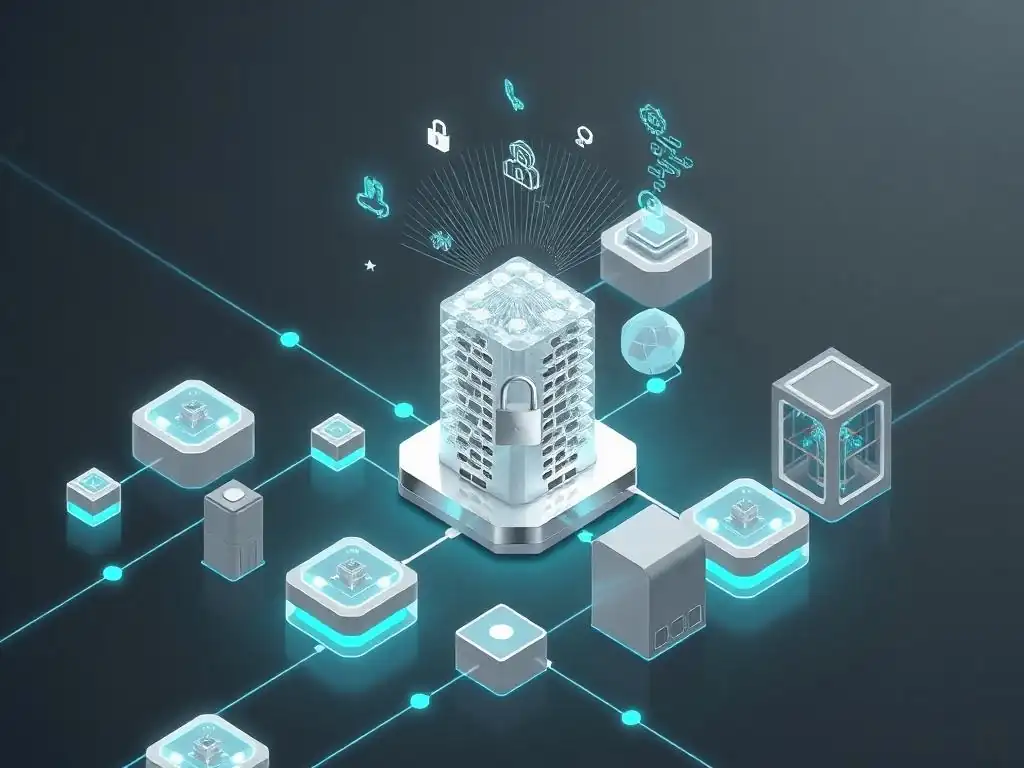
Permissioned vs. Permissionless Blockchains for IoT
Assessing the Security Tradeoffs of Different Blockchain Types
Permissioned and permissionless blockchains offer different security models and are suited for different IoT use cases. Permissionless blockchains, like Bitcoin and Ethereum, are open to anyone to join and participate in consensus, offering high levels of decentralization and censorship resistance. However, they can be less energy-efficient and may have lower transaction throughput. Permissioned blockchains, on the other hand, restrict network participation to authorized entities. This allows for higher transaction throughput, lower latency, and potentially more energy-efficient consensus mechanisms. However, they are less decentralized and may be more susceptible to collusion within the permissioned group.
For IoT applications requiring high levels of security and trust in a fully open and decentralized environment, permissionless blockchains might be preferred, despite potential scalability and energy concerns. For enterprise IoT applications where performance and efficiency are paramount and trust is established within a consortium of known participants, permissioned blockchains might be a more suitable choice. The security tradeoffs between permissioned and permissionless blockchains need to be carefully assessed based on the specific blockchain IoT data security requirements of each application.
Public vs. Private Blockchains for IoT Data
Choosing the Right Blockchain Architecture for Specific IoT Use Cases
The choice between public and private blockchains for IoT data management depends heavily on the specific use case and data sensitivity. Public blockchains are open and transparent, with data accessible to anyone. They offer high transparency and security due to their distributed nature and large network of participants.
However, they may have scalability and privacy limitations. Private blockchains, in contrast, are controlled by a single organization or a consortium and offer greater control over data access and privacy. They can also be more scalable and efficient than public blockchains, but they are less transparent and may be more vulnerable to centralized control.
For IoT applications involving sensitive data or requiring strict access control, such as healthcare or financial IoT, private or consortium blockchains might be preferred to ensure data confidentiality and compliance. For applications where transparency and public verifiability are paramount, such as supply chain tracking or environmental monitoring, public blockchains might be a better fit. Carefully evaluating the specific requirements of each IoT use case, particularly regarding data sensitivity and blockchain IoT data security needs, is crucial in selecting the appropriate blockchain architecture.
Comparison Table of Blockchain Platforms for IoT Data
| Feature | Public Blockchain (e.g., Ethereum) | Private Blockchain (e.g., Hyperledger Fabric) | Permissioned Blockchain (e.g., Corda) |
|---|---|---|---|
| Accessibility | Open to anyone | Restricted to authorized participants | Restricted to authorized participants |
| Transparency | High | Limited | Limited |
| Scalability | Lower | Higher | Higher |
| Security | High (Censorship Resistant) | Moderate (Dependent on Permissions) | Moderate (Dependent on Permissions) |
| Energy Efficiency | Lower (PoW) | Higher (PoA, Raft) | Higher (Raft, BFT) |
| Use Cases | Publicly verifiable data, open ecosystems | Enterprise applications, data privacy | Consortium applications, regulated industries |
| IoT Suitability | Suitable for some use cases, scalability challenges | Suitable for enterprise IoT, good control | Suitable for consortium IoT, compliance |
Real-World Applications and Case Studies
Blockchain IoT Data Security in Supply Chain Management
Supply chain management is a prime area where blockchain IoT data security can deliver significant benefits. Real-world examples are emerging, showcasing the practical application of this technology. For instance, pharmaceutical companies are using blockchain and IoT to track drugs from manufacturing to patients, combating counterfeit medications and ensuring drug provenance. By combining IoT sensors to monitor temperature and location with blockchain to record and verify data, supply chains become more transparent, secure, and efficient.
Companies like IBM and Maersk have collaborated on TradeLens, a blockchain-based platform aimed at digitizing global supply chains. While not exclusively IoT focused, TradeLens leverages IoT data for tracking shipments and improving visibility. These initiatives demonstrate the growing adoption of blockchain and IoT in supply chain management to enhance security, traceability, and operational efficiency.
Smart Cities and Blockchain-Based IoT Infrastructure
Smart cities, with their vast networks of sensors and connected devices, can greatly benefit from blockchain IoT data security solutions. Consider smart streetlights, traffic management systems, and environmental monitoring networks. Using blockchain to secure and manage data from these diverse IoT devices can enhance the resilience, transparency, and efficiency of smart city infrastructure. For example, parking sensors, air quality monitors, and public transportation trackers can all feed data into a blockchain, creating a secure and verifiable record of city operations.
Dubai, aiming to become a smart city, has explored blockchain applications across various sectors, including government services and urban planning. While specific large-scale blockchain IoT deployments in smart cities are still developing, pilot projects and initiatives are underway globally to explore the potential of this technology to improve urban living and infrastructure management.
Healthcare IoT Data Management using Blockchain
Healthcare IoT, encompassing wearables, medical devices, and remote patient monitoring systems, handles highly sensitive personal data. Blockchain IoT data security is particularly crucial in this domain to ensure data privacy, integrity, and security. Blockchain can be used to create secure and patient-centric healthcare data management systems, giving patients greater control over their medical records and enabling secure data sharing among healthcare providers.
Companies like MedRec are exploring blockchain solutions for managing electronic health records (EHRs). While not solely focused on IoT, the principles of secure and decentralized data management are directly applicable to healthcare IoT data. Blockchain can enhance the security and interoperability of healthcare IoT data, facilitating better patient care and more efficient healthcare operations while prioritizing patient data privacy.
Case Study: Tracking Pharmaceuticals with Blockchain and IoT
A compelling case study illustrating the power of blockchain IoT data security is the use of this technology for tracking pharmaceuticals. The pharmaceutical industry faces a significant challenge from counterfeit drugs, which pose serious health risks and economic losses. Combining IoT sensors with blockchain provides a robust solution for tracking and verifying the authenticity of pharmaceuticals throughout the supply chain.
Consider a scenario where temperature-sensitive medications are equipped with IoT sensors that continuously monitor temperature and location. This sensor data is recorded on a blockchain, creating an immutable and transparent record of the drug's journey and environmental conditions. Pharmacists and patients can then verify the authenticity and integrity of the medication by accessing the blockchain record, ensuring that the drugs have been stored and transported correctly and are not counterfeit. This case study highlights the practical benefits of blockchain and IoT in enhancing security and trust in critical supply chains like pharmaceuticals.
Overcoming the Challenges: Future Trends and Solutions
Emerging Technologies: Sharding, Sidechains, and DAGs for IoT Blockchain Scalability
To address the scalability challenges of blockchain for massive IoT deployments, emerging technologies like sharding, sidechains, and Directed Acyclic Graphs (DAGs) are being actively developed and explored. Sharding involves dividing the blockchain into smaller, manageable shards, allowing for parallel transaction processing. Sidechains are separate blockchains linked to the main chain, offloading transaction processing and improving scalability. DAGs offer an alternative data structure to traditional blockchains, potentially enabling higher throughput and faster transaction confirmation times.
These emerging technologies hold promise for enhancing the scalability of blockchain IoT data security solutions. While still under development and refinement, they represent a significant direction in research and development aimed at making blockchain more suitable for the demands of large-scale IoT networks. Continued innovation in these areas is crucial for unlocking the full potential of blockchain in IoT.
Developing Lightweight Blockchain Protocols for Resource-Constrained IoT Devices
For IoT devices with limited processing power, memory, and energy resources, lightweight blockchain protocols are essential. Researchers are developing blockchain protocols specifically designed to minimize computational overhead and energy consumption, making them suitable for deployment on resource-constrained IoT devices. These lightweight protocols often employ simplified consensus mechanisms, reduced block sizes, and optimized communication protocols.
Examples include protocols designed for edge computing environments and those tailored for specific IoT device capabilities. Developing and adopting lightweight blockchain protocols is critical for extending the reach of blockchain IoT data security to the vast majority of IoT devices, including sensors, actuators, and embedded systems.
Addressing Data Privacy Concerns with Zero-Knowledge Proofs in Blockchain IoT Systems
To mitigate data privacy concerns in blockchain-based IoT systems, privacy-enhancing technologies like zero-knowledge proofs (ZKPs) are gaining attention. ZKPs allow for the verification of information without revealing the information itself. In the context of IoT data, ZKPs can enable secure data sharing and computation while preserving data privacy. For example, IoT devices can generate ZKPs to prove data integrity or compliance with certain conditions without disclosing the raw data to the blockchain network.
Integrating ZKPs into blockchain IoT data security solutions can significantly enhance data privacy and address regulatory concerns, particularly in applications handling sensitive personal data. Further research and development in ZKP-based privacy solutions are crucial for fostering trust and wider adoption of blockchain in privacy-sensitive IoT domains.
The Role of Edge Computing in Enhancing Blockchain IoT Performance
Edge computing, which involves processing data closer to the source of data generation (i.e., at the edge of the network), can play a vital role in enhancing the performance of blockchain IoT data security systems. By performing pre-processing and filtering of IoT data at the edge, the volume of data transmitted to the blockchain can be reduced, alleviating network congestion and improving transaction processing times. Edge computing can also enable faster response times and reduced latency for IoT applications.
Furthermore, edge devices can perform certain blockchain operations locally, reducing the computational burden on resource-constrained IoT devices and improving overall system efficiency. The combination of edge computing and blockchain offers a powerful approach to addressing scalability, latency, and resource constraints in blockchain IoT data security for large-scale IoT deployments.
Conclusion: Weighing the Benefits and Drawbacks of Blockchain for IoT Data Management
The Future of Decentralized IoT Data Management
The future of IoT data management is increasingly leaning towards decentralized solutions, and blockchain technology is poised to play a significant role in this transformation. While challenges remain, the benefits of enhanced security, transparency, and data integrity offered by blockchain are compelling for numerous IoT applications. As blockchain technology matures and scalability solutions emerge, decentralized IoT data management is expected to become more prevalent, driving innovation and creating more robust and trustworthy IoT ecosystems.
The convergence of blockchain and IoT represents a paradigm shift in how we manage and secure data in interconnected device networks. This shift towards decentralization is driven by the need for greater security, transparency, and trust in an increasingly interconnected world. The future of blockchain IoT data security is bright, with ongoing research and development paving the way for wider adoption and transformative applications.
Making Informed Decisions About Blockchain Adoption in IoT
Adopting blockchain for IoT data management requires careful consideration of both the benefits and drawbacks. There is no one-size-fits-all solution, and the suitability of blockchain depends on the specific requirements of each IoT application. Factors such as scalability, performance, cost, regulatory compliance, and data privacy need to be thoroughly evaluated. A balanced approach, weighing the potential benefits against the implementation challenges, is crucial for making informed decisions about blockchain adoption in IoT.
Organizations considering blockchain for IoT should conduct pilot projects and proof-of-concepts to assess the feasibility and effectiveness of this technology in their specific context. Understanding the tradeoffs and carefully planning the implementation are key to realizing the full potential of blockchain IoT data security while mitigating potential risks and challenges.
Key Takeaways: Blockchain IoT Data Management
Blockchain offers significant advantages for IoT data management, particularly in enhancing security, transparency, and data integrity. Key benefits include immutable data storage, decentralized access control, improved supply chain visibility, and enhanced data reliability. However, drawbacks such as scalability limitations, computational costs, integration complexity, and regulatory uncertainty must be carefully considered.
Emerging technologies and ongoing research are addressing these challenges, making blockchain increasingly viable for a wider range of IoT applications. The future of blockchain IoT data security hinges on continued innovation, standardization, and a balanced approach to adoption, carefully weighing the benefits and drawbacks in each specific use case to unlock the transformative potential of this technology for the Internet of Things.
Frequently Asked Questions
How can blockchain enhance IoT data security?
Blockchain provides a secure and immutable ledger for storing IoT data, making it resistant to tampering. This decentralized approach eliminates single points of failure, enhancing overall security and data integrity.
What are the primary benefits of using blockchain for IoT data management?
Key benefits include increased transparency and trust, improved data provenance tracking, and enhanced security against cyberattacks. These features are crucial for sensitive IoT applications.
What are the main challenges in implementing blockchain for IoT data security?
Challenges include scalability limitations of some blockchain networks, the high computational costs associated with blockchain transactions, and the complexity of integrating blockchain with existing IoT infrastructure.
How does decentralization impact the performance of IoT systems using blockchain?
Decentralization can introduce latency due to consensus mechanisms, impacting real-time data processing. Careful consideration of network architecture and blockchain type is crucial for optimal performance.
What are the potential regulatory implications of using blockchain for IoT data?
Regulatory frameworks are still evolving, but issues surrounding data privacy, compliance, and security need careful attention. Understanding jurisdictional requirements is vital for responsible blockchain adoption in IoT.
Final Reflection: Embracing Decentralized Futures
The exploration of blockchain's potential in securing IoT data reveals a complex landscape of tradeoffs, yet the promise of enhanced security and data ownership remains profoundly relevant in our increasingly interconnected world. As IoT devices proliferate, the vulnerabilities they introduce become ever more critical to address, making the decentralized security offered by blockchain a compelling, albeit challenging, solution.
The ongoing debate surrounding the adoption of blockchain for IoT data underscores its transformative potential, influencing how we perceive data ownership and security in the digital age. This exploration has reinforced the importance of carefully weighing the benefits against the practical limitations of blockchain implementation. The future of the Internet of Things hinges on our ability to build trust and security into the very fabric of these interconnected devices. Blockchain offers a pathway, but it demands careful consideration and strategic implementation.
As we navigate this evolving technological landscape, let us not shy away from the complexities of decentralization. Instead, let us embrace the challenge of optimizing blockchain solutions for IoT data security, striving to create a future where data is not only secure but also empowers individuals and fosters innovation. Consider how you can contribute to this future, whether through research, development, or simply by advocating for responsible data practices. The future of secure IoT data is not predetermined; it is being shaped by the choices we make today.
Unlock the Potential: Reimagine Your IoT Data Strategy!
Thank you for exploring the complexities of decentralization in IoT data management with us. We hope this article has provided valuable insights into the advantages and challenges of using blockchain in this rapidly evolving field. Now it's time to put that knowledge into action!
Here are some immediate steps you can take to further your understanding and implementation of blockchain for IoT:
- Dive Deeper: Identify a specific IoT application in your current projects or area of interest and consider how blockchain could address its data management challenges. Reflect on the potential benefits and limitations we've discussed.
- Explore: Research alternative decentralized technologies and compare their suitability for IoT data management. Don't limit yourself to just one solution; evaluate the broader landscape of options.
- Share: Discuss this article with your colleagues and share your insights on how blockchain could revolutionize IoT data security and efficiency. Let's start a conversation!
What is the biggest obstacle you face in adopting blockchain for IoT data in your industry, and what innovative solution could help overcome it? Share your thoughts in the comments below!
Leave a Reply