
Decentralized Identity for Healthcare: Protecting Patient Data with Blockchain


Welcome to Blockchain Trends, your compass in the evolving world of decentralized technologies! Beyond the hype, blockchain is reshaping industries and redefining trust. Are you ready to discover how?
This week, we delve into a critical application of blockchain in a sector demanding utmost security: healthcare. Explore the potential of blockchain healthcare identity security and how it can revolutionize patient data protection. Prepare to uncover the innovative solutions that are poised to transform the way we safeguard sensitive medical information and build a more secure and patient-centric future. Intrigued? Read on to learn more!
- Introduction: The Need for Enhanced Data Security in Healthcare
- Understanding Decentralized Identity (DID) and Blockchain Technology
- Blockchain Healthcare Identity Security: Addressing Core Challenges
- Implementing Blockchain Solutions for Healthcare Identity Management
- Use Cases of Blockchain in Healthcare Identity Management
- The Benefits of Blockchain Healthcare Identity Security: A Deeper Dive
- Challenges and Considerations for Blockchain Adoption in Healthcare
- The Future of Decentralized Identity in Healthcare
- Conclusion: The Transformative Potential of Blockchain for Healthcare Data Protection
-
Frequently Asked Questions
- How does blockchain enhance healthcare identity security?
- What are the key benefits of using blockchain for healthcare identity management?
- How can blockchain address the challenges of data silos in healthcare?
- What role does decentralized identity play in improving patient privacy within the healthcare sector?
- What is the current regulatory landscape surrounding the use of blockchain for healthcare data management?
- Final Reflection: Embracing Trust in a Decentralized Future
- Unlock Your Data Sovereignty: Start Protecting Your Health Information Today!
Introduction: The Need for Enhanced Data Security in Healthcare
The Vulnerabilities of Traditional Healthcare Data Management
Traditional healthcare data management systems, predominantly centralized and siloed, are increasingly proving to be vulnerable in the face of evolving cyber threats. Hospitals and healthcare organizations are prime targets for cyberattacks due to the sensitive and valuable nature of patient data, which includes Personally Identifiable Information (PII), medical history, and financial details. Data breaches in healthcare are not hypothetical; they are a stark reality.
For instance, the 2015 Anthem breach exposed the personal information of nearly 79 million individuals, highlighting the massive scale of potential impact. More recently, in 2022, CommonSpirit Health, one of the largest non-profit hospital chains in the US, experienced a ransomware attack that disrupted services across multiple states and exposed patient data.
These incidents are not isolated cases but rather indicative of systemic weaknesses in current healthcare data infrastructure, often reliant on outdated technologies and lacking robust security protocols. The reliance on centralized databases creates single points of failure, making them attractive targets for malicious actors seeking to exploit these vulnerabilities for financial gain or disruption.
Further exacerbating these vulnerabilities is the lack of interoperability between different healthcare systems. Patient data is often fragmented across various hospitals, clinics, and insurance providers, each using disparate electronic health record (EHR) systems. This fragmentation not only hinders efficient care delivery but also creates more access points and potential weaknesses for data breaches.
When data is scattered and not easily accessible in a secure and unified manner, it becomes harder to track, manage, and protect effectively. Moreover, traditional access control mechanisms, often based on passwords and usernames, are susceptible to phishing attacks, social engineering, and insider threats, further compromising the security of sensitive patient information. The current landscape demands a paradigm shift towards more resilient and secure data management strategies in healthcare, moving beyond outdated centralized models to embrace innovative solutions that prioritize patient privacy and data integrity.
Why Decentralized Identity is Crucial for Patient Data Protection
Decentralized Identity (DID) emerges as a pivotal solution to address the critical vulnerabilities inherent in traditional healthcare data management and fortify patient data protection. Unlike centralized systems where identity and data are controlled by a single entity, DID empowers individuals with greater control over their own digital identities and personal health information (PHI). This paradigm shift towards patient-centric data ownership is fundamental to enhancing security and privacy in healthcare.
By leveraging blockchain technology, DID offers a secure, transparent, and auditable framework for managing and verifying digital identities without relying on central authorities. This decentralization inherently reduces the risk of large-scale data breaches, as there is no single point of failure for attackers to exploit. Instead, identity information is distributed across a network, making it significantly more resilient to cyberattacks.
The crucial advantage of DID lies in its ability to give patients agency over who accesses their health information and for what purpose. Patients can grant granular permissions to healthcare providers, researchers, or other relevant parties, controlling the flow of their data and ensuring that only authorized individuals have access. This patient-centric approach aligns with the principles of data privacy regulations like HIPAA and GDPR, which emphasize individual rights and control over personal data.
Furthermore, DID facilitates seamless and secure data sharing between different healthcare providers and systems, overcoming the challenges of data silos. Imagine a scenario where a patient visiting a specialist in another state can instantly and securely grant them access to their medical history from their primary care physician, without cumbersome paperwork or insecure data transfer methods.
This improved interoperability not only enhances the quality of care but also streamlines administrative processes and reduces the potential for errors. In essence, decentralized identity is not just about security; it is about empowering patients, fostering trust, and building a more efficient and patient-centric healthcare ecosystem, where blockchain healthcare identity security is paramount.
Understanding Decentralized Identity (DID) and Blockchain Technology
What is Decentralized Identity? A Comprehensive Explanation
Decentralized Identity (DID) represents a revolutionary approach to digital identity management, shifting away from traditional centralized models where identity is controlled by institutions or service providers. At its core, DID empowers individuals to create and control their own digital identities without dependence on central authorities. Think of it as owning your digital self, much like you own your physical identity documents.
A DID is essentially a set of verifiable digital credentials that an individual can create and manage independently. These credentials can represent various aspects of an individual's identity, such as their name, date of birth, professional certifications, or medical records. Crucially, these credentials are cryptographically secured and verifiable, allowing individuals to prove claims about themselves without relying on intermediaries.
The architecture of DID typically involves several key components. First, there is the Decentralized Identifier itself, a globally unique identifier that is resolvable to a DID Document. This DID Document contains public keys, service endpoints, and other metadata associated with the identity.
This document is stored in a decentralized data store, often a blockchain or a distributed ledger, ensuring its immutability and availability. Secondly, Verifiable Credentials (VCs) are digital documents that assert claims about the DID subject. These VCs are issued by trusted entities, known as issuers, and are cryptographically signed, making them tamper-proof and verifiable by any verifier.
For example, a hospital could issue a VC to a patient confirming their blood type. Finally, DID Wallets are software applications that allow individuals to manage their DIDs and VCs, enabling them to selectively share their credentials with verifiers as needed. This ecosystem of DIDs, VCs, and wallets forms the foundation of decentralized identity, offering a more secure, private, and user-centric approach to digital identity management, particularly relevant for enhancing blockchain healthcare identity security.
How Blockchain Enables Secure and Transparent Identity Management
Blockchain technology serves as the bedrock for secure and transparent decentralized identity management. Its inherent characteristics, such as immutability, cryptography, and decentralization, perfectly align with the core principles of DID. Blockchain acts as a distributed ledger, providing a secure and auditable record of DID-related information, such as DID Documents and the issuance and revocation of Verifiable Credentials.
When a DID Document is created or updated, the transaction is recorded on the blockchain, making it tamper-proof and transparently verifiable by anyone with access to the network. This immutability is crucial for ensuring the integrity of identity information, as it prevents unauthorized modifications or deletions.
Cryptography plays a central role in securing DID on the blockchain. Public-key cryptography is used to create and manage DIDs, enabling individuals to control their identities through private keys. These private keys are used to digitally sign transactions related to their DIDs and VCs, ensuring authenticity and non-repudiation. Verifiable Credentials are also cryptographically signed by issuers, guaranteeing their origin and integrity.
The decentralized nature of blockchain eliminates single points of failure and control, distributing identity information across a network of nodes. This distributed architecture enhances resilience against cyberattacks and censorship. Furthermore, blockchain's consensus mechanisms ensure that all participants in the network agree on the validity of transactions, fostering trust and transparency in the identity management process. By leveraging these features, blockchain provides a robust and secure infrastructure for DID, significantly enhancing blockchain healthcare identity security and patient data privacy.
Key Benefits of Blockchain-Based DIDs
Blockchain-based Decentralized Identities (DIDs) offer a multitude of compelling benefits, particularly within the healthcare sector where data security and patient privacy are paramount. One of the most significant advantages is enhanced security. By distributing identity information across a blockchain network and utilizing cryptography, DIDs are significantly more resistant to data breaches and identity theft compared to traditional centralized systems. The absence of a central point of failure makes it exponentially harder for attackers to compromise the entire system. Furthermore, the cryptographic nature of DIDs ensures the integrity and authenticity of identity data, preventing tampering and fraud.
Another key benefit is increased patient control and privacy. DIDs empower patients to own and manage their digital identities and health information directly. They can selectively share their data with healthcare providers and other authorized parties, granting granular access permissions and maintaining control over who can access their PHI and for what purpose. This patient-centric approach aligns with ethical principles and regulatory requirements, promoting transparency and trust in the healthcare system.
Improved data interoperability is also a major advantage. Blockchain-based DIDs can facilitate seamless and secure data exchange between different healthcare providers and systems, breaking down data silos and enabling a more holistic and coordinated approach to patient care. This interoperability reduces administrative burdens, minimizes errors, and enhances the efficiency of healthcare delivery.
The benefits of blockchain-based DIDs in healthcare are multifaceted, contributing to enhanced security, patient empowerment, improved interoperability, cost reduction, and increased trust, all crucial elements for strengthening blockchain healthcare identity security.
Blockchain Healthcare Identity Security: Addressing Core Challenges
The Challenges of Data Silos in Healthcare
Data silos represent a significant impediment to efficient and secure healthcare delivery. In the current fragmented healthcare landscape, patient data is often trapped within disparate systems operated by various hospitals, clinics, laboratories, and insurance providers. These silos prevent seamless data sharing and create inefficiencies, leading to duplicated tests, incomplete patient records, and fragmented care.
For instance, a patient might undergo the same diagnostic tests at different healthcare facilities because their records are not readily accessible across systems. This not only wastes resources but also delays diagnosis and treatment, potentially compromising patient outcomes. The lack of interoperability caused by data silos hinders the ability of healthcare providers to have a comprehensive and holistic view of a patient's medical history, which is crucial for making informed clinical decisions.
Beyond inefficiencies, data silos also pose significant security risks. When patient data is scattered across numerous isolated systems, it becomes more challenging to manage and secure effectively. Each silo represents a potential point of vulnerability, increasing the overall attack surface for cybercriminals.
The absence of a unified security framework across these disparate systems makes it difficult to implement consistent security protocols and monitor for threats. Moreover, data silos can impede compliance with data privacy regulations like HIPAA and GDPR. It becomes more complex to track and control patient data access and ensure data integrity when information is fragmented across multiple systems.
Breaking down these data silos and establishing secure and interoperable data sharing mechanisms is essential for improving both the efficiency and security of healthcare. Blockchain healthcare identity security solutions offer a promising approach to address this challenge by enabling secure and controlled data sharing while maintaining patient privacy and data integrity across different healthcare entities.
Meeting Regulatory Compliance: HIPAA and GDPR Considerations
Meeting stringent regulatory compliance requirements like HIPAA (Health Insurance Portability and Accountability Act) in the US and GDPR (General Data Protection Regulation) in Europe is a paramount concern for healthcare organizations. These regulations are designed to protect patient privacy and ensure the security of Protected Health Information (PHI). Traditional centralized healthcare data management systems often struggle to fully comply with these regulations due to their inherent vulnerabilities and lack of patient control.
HIPAA, for example, mandates stringent security measures for PHI and grants patients rights to access, amend, and control their health information. Similarly, GDPR emphasizes data minimization, purpose limitation, and the right to be forgotten, among other patient-centric principles.
Decentralized Identity (DID) solutions, particularly those built on blockchain, offer a powerful framework to enhance regulatory compliance in healthcare. By empowering patients with greater control over their PHI, DID aligns directly with the core principles of both HIPAA and GDPR. Patients can use DIDs to manage consent for data access, selectively sharing their information with authorized healthcare providers and researchers while maintaining granular control over permissions.
The inherent security features of blockchain, such as immutability and cryptography, contribute to meeting the security requirements outlined in these regulations. For instance, the auditable nature of blockchain transactions can provide a clear record of data access and modifications, facilitating compliance reporting and audits.
Furthermore, DID solutions can be designed to support data minimization principles by allowing patients to share only the necessary information for a specific purpose, rather than exposing their entire medical record. By adopting blockchain healthcare identity security solutions, healthcare organizations can strengthen their compliance posture, enhance patient trust, and mitigate the risks associated with regulatory non-compliance, including hefty fines and reputational damage.
Preventing Data Breaches and Identity Theft in Healthcare
Preventing data breaches and identity theft is a critical imperative in healthcare, given the sensitive and valuable nature of patient information. Traditional centralized systems, as discussed earlier, are increasingly vulnerable to cyberattacks, leading to large-scale data breaches that expose millions of patient records.
These breaches not only result in financial losses for healthcare organizations but also inflict significant harm on patients, including identity theft, financial fraud, and emotional distress. The healthcare sector is particularly attractive to cybercriminals due to the high value of medical data on the black market, where it can be used for various malicious purposes, including insurance fraud and prescription drug abuse.
Decentralized Identity (DID) offers a robust approach to bolster blockchain healthcare identity security and significantly reduce the risk of data breaches and identity theft. The decentralized architecture of DID eliminates single points of failure that are characteristic of centralized systems. By distributing identity information across a blockchain network, DID makes it exponentially more difficult for attackers to compromise large volumes of patient data in a single breach.
Furthermore, the cryptographic foundations of DID provide strong protection against unauthorized access and tampering. Private keys, controlled by individual patients, are required to authorize access to their data, ensuring that only authorized parties can access PHI.
Verifiable Credentials (VCs) further enhance security by allowing healthcare providers to verify patient identities and credentials in a secure and privacy-preserving manner, without relying on centralized databases that could be compromised. By implementing DID solutions, healthcare organizations can proactively strengthen their defenses against cyber threats, protect patient data, and build a more secure and trustworthy healthcare ecosystem.
Implementing Blockchain Solutions for Healthcare Identity Management
Permissioned vs. Permissionless Blockchains for Healthcare
When considering blockchain implementation for healthcare identity management, a crucial decision revolves around choosing between permissioned and permissionless blockchain networks. Permissionless blockchains, like Bitcoin and Ethereum, are public and open to anyone to participate in, offering high levels of decentralization and transparency. However, they often suffer from scalability limitations and can be less efficient for enterprise-level applications due to their open and consensus-intensive nature.
Permissioned blockchains, on the other hand, operate on a more controlled and private basis, requiring permission to join and participate in the network. These networks are typically governed by a consortium or a group of trusted organizations, offering enhanced scalability, efficiency, and privacy compared to permissionless blockchains.
For healthcare applications, particularly those involving sensitive patient data and regulatory compliance, permissioned blockchains are generally considered more suitable. The controlled access and governance structure of permissioned blockchains provide a more secure and compliant environment for managing PHI.
Healthcare organizations can form consortia to operate permissioned blockchain networks, ensuring that only authorized entities, such as hospitals, clinics, and insurance providers, can participate and access patient data. This controlled environment allows for the implementation of robust access control mechanisms and compliance with data privacy regulations like HIPAA and GDPR.
Furthermore, permissioned blockchains can offer faster transaction speeds and higher throughput compared to permissionless networks, which is essential for handling the high volume of data transactions in healthcare. While permissionless blockchains offer greater transparency and openness, the specific requirements of healthcare, particularly concerning patient privacy, security, and regulatory compliance, often make permissioned blockchains the preferred choice for implementing blockchain healthcare identity security solutions.
Developing a Healthcare DID Framework: Hyperledger Indy and Aries
Developing a robust and interoperable Decentralized Identity (DID) framework is essential for successful implementation of blockchain-based identity management in healthcare. Fortunately, several open-source projects and initiatives are actively contributing to the development of DID technologies, providing valuable building blocks for healthcare solutions. Two prominent examples are Hyperledger Indy and Aries, projects under the Hyperledger Foundation, a collaborative effort hosted by the Linux Foundation to advance cross-industry blockchain technologies.
Hyperledger Indy is specifically designed for decentralized identity, providing a distributed ledger purpose-built for DID, along with a comprehensive set of tools and libraries for creating and managing DIDs and Verifiable Credentials (VCs). Indy focuses on privacy, security, and scalability, making it well-suited for healthcare applications.
Hyperledger Aries builds upon Indy and focuses on enabling secure, private, and interoperable agent-to-agent interactions for decentralized identity. Aries provides a framework for building DID-enabled applications and services, including mobile wallets, credential issuers, and verifiers. It emphasizes interoperability and standards compliance, aiming to facilitate seamless communication and data exchange between different DID systems.
Together, Indy and Aries offer a powerful and comprehensive toolkit for developing healthcare DID frameworks. Healthcare organizations can leverage these open-source technologies to build their own DID solutions tailored to their specific needs and requirements.
For instance, a consortium of hospitals could use Indy to establish a permissioned blockchain network for managing patient DIDs and VCs, and utilize Aries to develop mobile wallets for patients to control and share their health information securely. By adopting established frameworks like Hyperledger Indy and Aries, healthcare organizations can accelerate the development and deployment of blockchain healthcare identity security solutions and ensure interoperability within the broader DID ecosystem.
Integrating DIDs with Existing Healthcare Systems: FHIR Integration
Successful adoption of Decentralized Identity (DID) in healthcare hinges on seamless integration with existing healthcare systems and infrastructure. Healthcare organizations have invested heavily in Electronic Health Record (EHR) systems, patient portals, and other IT infrastructure. Replacing these systems entirely with blockchain-based solutions is often impractical and cost-prohibitive.
Therefore, a pragmatic approach involves integrating DID solutions with existing systems to enhance security, interoperability, and patient control without disrupting established workflows. FHIR (Fast Healthcare Interoperability Resources) is a widely adopted standard for exchanging healthcare information electronically. FHIR provides a standardized and interoperable framework for representing and exchanging clinical and administrative data, making it an ideal candidate for integrating with DID systems.
Integrating DIDs with FHIR can enable secure and patient-centric data exchange within the existing healthcare ecosystem. For example, FHIR resources, such as patient records and clinical documents, can be linked to patient DIDs, allowing patients to control access to their data and grant permissions to authorized healthcare providers via their DID wallets. When a healthcare provider needs to access a patient's FHIR data, they can request access through the patient's DID, and the patient can grant or deny permission.
This integration ensures that data access is controlled by the patient and auditable through the blockchain. Furthermore, Verifiable Credentials (VCs) issued via DID can be used to verify the identities and credentials of healthcare providers and organizations, enhancing trust and security in data exchange.
For instance, a hospital could issue a VC to a physician confirming their credentials, which can be verified by other healthcare entities before granting access to patient data. By leveraging FHIR as the standard for data exchange and integrating it with DID frameworks, healthcare organizations can achieve a smooth transition towards blockchain healthcare identity security, enhancing both security and interoperability within the existing healthcare landscape.
Use Cases of Blockchain in Healthcare Identity Management
Secure Patient Data Sharing Among Healthcare Providers
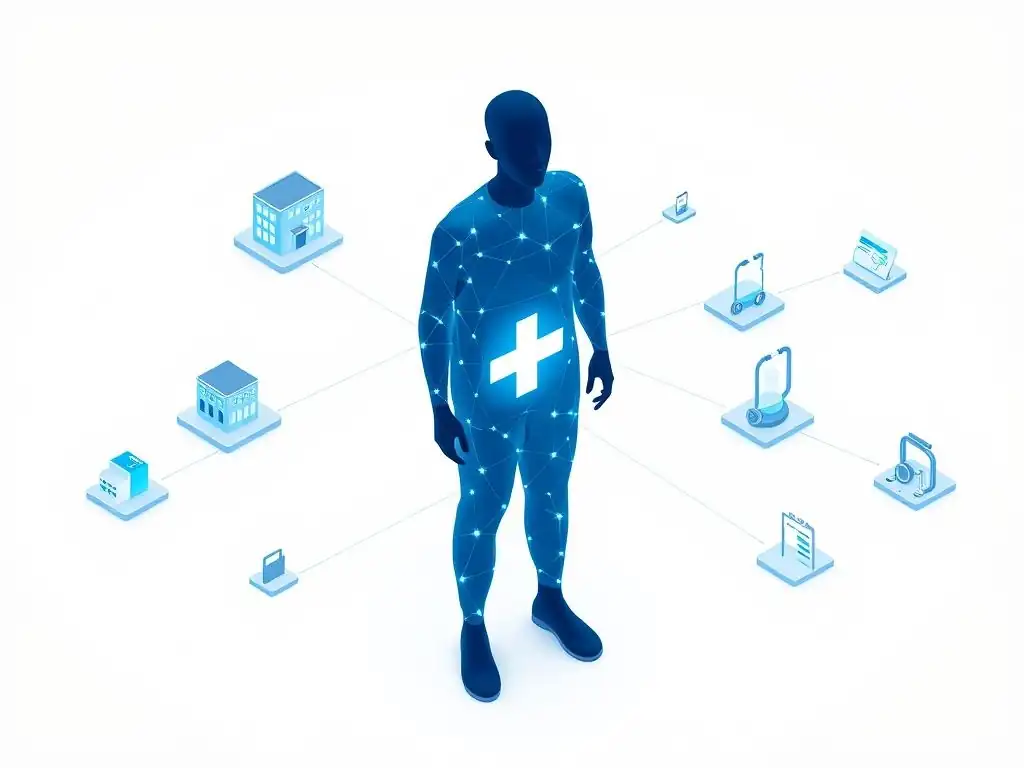
One of the most compelling use cases for blockchain healthcare identity security is facilitating secure patient data sharing among healthcare providers. As previously discussed, data silos hinder efficient and coordinated care. DID offers a solution to break down these silos while maintaining patient privacy and security. Imagine a patient seeing multiple specialists across different hospitals and clinics.
With a DID-based system, the patient can control who has access to their medical records, granting granular permissions to each provider as needed. When a specialist needs to access a patient's medical history, they can request access through the patient's DID. The patient, using their DID wallet, can then selectively grant access to specific parts of their medical record, ensuring that only necessary information is shared and patient privacy is protected.
This secure data sharing mechanism can significantly improve the quality of care. Providers gain access to a more complete and holistic view of a patient's medical history, leading to more accurate diagnoses, better treatment decisions, and reduced medical errors. It also eliminates the need for cumbersome and often insecure methods of data sharing, such as faxing or emailing paper records.
Furthermore, the blockchain provides an auditable trail of data access, enhancing transparency and accountability. For example, if a patient questions who accessed their records, the blockchain ledger can provide a clear and immutable record of access events. This enhanced data sharing capability, enabled by DID, streamlines workflows, improves patient care coordination, and ultimately contributes to a more efficient and patient-centric healthcare system, all while prioritizing blockchain healthcare identity security.
Streamlining Medical Record Management with Blockchain
Blockchain technology, through Decentralized Identity (DID) and Verifiable Credentials (VCs), can revolutionize medical record management, making it more efficient, secure, and patient-centric. Traditional medical record management systems are often plagued by inefficiencies, including manual processes, fragmented data, and security vulnerabilities. Blockchain offers a solution to address these challenges by providing a secure and immutable platform for managing medical records.
With DID, patients gain ownership and control over their medical records. Instead of records being stored in siloed systems controlled by individual healthcare providers, patients can hold a pointer to their records through their DID, granting access to authorized entities as needed.
VCs can be used to represent different types of medical records, such as lab results, medication lists, and discharge summaries. These VCs are issued by healthcare providers and cryptographically signed, ensuring their authenticity and integrity. Patients can store these VCs in their DID wallets and selectively share them with other providers, researchers, or insurance companies.
This streamlined approach to medical record management reduces administrative burdens, eliminates the need for physical records, and enhances data security. Imagine a scenario where a patient moves to a new city and needs to transfer their medical records to a new primary care physician. With a DID-based system, the patient can simply grant the new physician access to their records through their DID wallet, eliminating the need for lengthy paperwork and manual record transfers.
This efficiency not only saves time and resources but also reduces the risk of data loss or errors associated with traditional record management processes. By leveraging blockchain healthcare identity security, medical record management can become more patient-empowering, efficient, and secure.
Enhancing Pharmaceutical Supply Chain Security and Verification
The pharmaceutical supply chain is complex and vulnerable to counterfeiting and diversion, posing significant risks to patient safety and public health. Counterfeit drugs can contain harmful ingredients or lack the active pharmaceutical ingredients, leading to ineffective treatment or even adverse health outcomes. Traditional supply chain tracking methods are often inadequate to prevent counterfeiting and ensure the authenticity of medications. Blockchain technology, coupled with Decentralized Identity (DID), offers a powerful solution to enhance pharmaceutical supply chain security and verification, bolstering blockchain healthcare identity security in a different but crucial aspect.
Blockchain can provide an immutable and transparent record of the entire drug supply chain, from manufacturing to dispensing. Each step in the supply chain, such as manufacturing, packaging, distribution, and dispensing, can be recorded as a transaction on the blockchain, creating a tamper-proof audit trail. DID can be used to identify and verify the entities involved in the supply chain, such as manufacturers, distributors, and pharmacies.
Verifiable Credentials (VCs) can be issued to these entities, confirming their legitimacy and authorization to participate in the supply chain. For example, a pharmaceutical manufacturer could issue a VC to a distributor, verifying their authorization to distribute their drugs. This enhanced traceability and verification can significantly reduce the risk of counterfeit drugs entering the supply chain.
Patients and healthcare providers can also use blockchain-based systems to verify the authenticity of medications before dispensing or administration, providing an additional layer of security and ensuring patient safety. By leveraging blockchain and DID, the pharmaceutical industry can create a more secure and transparent supply chain, protecting patients from counterfeit drugs and building trust in the medication supply.
Improving Clinical Trial Data Integrity and Patient Consent Management
Clinical trials are essential for developing new medical treatments and therapies. However, ensuring the integrity of clinical trial data and managing patient consent are critical challenges. Traditional clinical trial processes often rely on manual data collection and consent management methods, which are susceptible to errors, fraud, and inefficiencies. Blockchain technology, combined with Decentralized Identity (DID), offers innovative solutions to improve clinical trial data integrity and enhance patient consent management, strengthening blockchain healthcare identity security in research settings.
Blockchain can provide an immutable and auditable platform for recording clinical trial data. Data collected during clinical trials, such as patient demographics, treatment outcomes, and adverse events, can be recorded as transactions on the blockchain, ensuring data integrity and preventing tampering. DID can be used to securely identify and authenticate clinical trial participants and researchers.
Patients can use DIDs to provide informed consent for participation in clinical trials and manage their consent preferences throughout the trial duration. Verifiable Credentials (VCs) can be used to represent patient consent forms, ensuring that consent is properly documented and verifiable. This enhanced data integrity and consent management can improve the reliability and trustworthiness of clinical trial results.
Furthermore, blockchain can streamline clinical trial processes by automating data collection, consent management, and data sharing, reducing administrative burdens and accelerating the pace of research. By leveraging blockchain healthcare identity security in clinical trials, researchers can enhance data quality, improve patient engagement, and accelerate the development of life-saving medical treatments.
The Benefits of Blockchain Healthcare Identity Security: A Deeper Dive
Increased Patient Control Over Personal Health Information (PHI)
One of the most transformative benefits of blockchain healthcare identity security is the significant increase in patient control over their Personal Health Information (PHI). Traditional healthcare systems often operate under a paternalistic model where patients have limited visibility and control over their medical records. Data is typically stored and managed by healthcare providers and institutions, with patients often facing barriers to accessing, sharing, or controlling their own health information.
Decentralized Identity (DID) fundamentally shifts this paradigm, empowering patients to become active participants in managing their health data. With DID, patients own their digital identities and control access to their PHI. They can selectively grant permissions to healthcare providers, researchers, and other authorized parties, deciding who can access their data and for what purpose.
This patient-centric approach aligns with ethical principles and promotes patient autonomy. Patients can use DID wallets to manage their consent preferences and track who has accessed their data, enhancing transparency and accountability. For example, a patient can easily revoke access permissions from a provider if they change physicians or no longer wish to share their data. This level of control is unprecedented in traditional healthcare systems.
Furthermore, DID can facilitate patient-mediated data sharing. Patients can proactively share their health information with providers, researchers, or even family members, enabling better care coordination and informed decision-making. This increased patient control not only enhances privacy and security but also fosters trust and engagement in the healthcare process. By putting patients at the center of their health data management, blockchain healthcare identity security empowers them to become active partners in their own healthcare journey.
Enhanced Data Interoperability and Exchange
Enhanced data interoperability and exchange are crucial benefits of blockchain healthcare identity security, addressing the persistent problem of data silos in healthcare. Traditional healthcare systems often suffer from a lack of interoperability, with disparate EHR systems and data formats hindering seamless data sharing between providers and institutions. This lack of interoperability leads to inefficiencies, duplicated tests, and fragmented patient care.
Decentralized Identity (DID) offers a solution by providing a secure and standardized framework for data exchange. DID enables patients to control access to their health information and selectively share it with authorized parties, regardless of the underlying systems or data formats used by different healthcare providers.
Blockchain acts as a neutral and interoperable platform for facilitating data exchange. DID and Verifiable Credentials (VCs) can be designed to be system-agnostic, allowing them to be used across different EHR systems and healthcare networks. For example, a patient's allergy information, represented as a VC, can be easily shared with a specialist in another hospital, even if they use different EHR systems.
This enhanced interoperability streamlines workflows, reduces administrative burdens, and improves care coordination. Providers gain access to a more complete and holistic view of a patient's medical history, regardless of where the data originated. Furthermore, DID can facilitate secure data exchange for research purposes.
Researchers can request access to anonymized patient data through DID systems, and patients can grant consent for data sharing while maintaining privacy. By breaking down data silos and enabling seamless data exchange, blockchain healthcare identity security contributes to a more efficient, connected, and patient-centric healthcare ecosystem.
Reduced Administrative Costs and Improved Efficiency
The implementation of blockchain healthcare identity security solutions can lead to significant reductions in administrative costs and improvements in efficiency across various healthcare processes. Traditional healthcare administration is often characterized by manual, paper-based processes, leading to inefficiencies, errors, and high administrative overhead. DID and blockchain can automate many of these processes, streamlining workflows and reducing the need for manual intervention.
For example, patient identity verification, a time-consuming and often error-prone process in traditional healthcare, can be automated using DID and Verifiable Credentials (VCs). Patients can present VCs to prove their identity, eliminating the need for manual verification processes and reducing administrative burden on healthcare staff.
Similarly, data sharing and record management, which often involve manual paperwork and cumbersome processes, can be streamlined using blockchain-based systems. Patients can electronically grant access to their records and share data with providers through their DID wallets, eliminating the need for physical record transfers and reducing administrative overhead. Furthermore, blockchain can automate claims processing and billing, reducing errors and delays associated with traditional paper-based billing systems.
Smart contracts, self-executing agreements encoded on the blockchain, can automate claim adjudication and payment processes, improving efficiency and reducing administrative costs for both providers and payers. By automating administrative tasks and streamlining workflows, blockchain healthcare identity security can free up valuable resources for patient care and other critical healthcare services, leading to a more efficient and cost-effective healthcare system.
Strengthening Trust and Transparency in Healthcare
Strengthening trust and transparency is a paramount benefit of blockchain healthcare identity security, addressing growing concerns about data privacy and security in the healthcare sector. Traditional healthcare systems often lack transparency, with patients having limited visibility into how their data is used and who has access to it. Data breaches and privacy violations erode patient trust and undermine confidence in the healthcare system.
Decentralized Identity (DID) and blockchain can enhance transparency and rebuild trust by providing patients with greater control and visibility over their data. DID empowers patients to manage their consent preferences and track who has accessed their health information, providing transparency about data access and usage.
Blockchain's immutable and auditable ledger provides a transparent record of all data transactions and access events, enhancing accountability and trust. Patients can verify the integrity of their medical records and track data access through the blockchain, increasing confidence in the security and privacy of their information. Furthermore, blockchain can facilitate transparent and auditable clinical trials, improving the trustworthiness of research results.
The immutable record of clinical trial data on the blockchain enhances data integrity and reduces the risk of fraud or manipulation. By promoting transparency and accountability in data management and healthcare processes, blockchain healthcare identity security fosters trust between patients, providers, and other stakeholders, building a more trustworthy and patient-centric healthcare ecosystem.
Challenges and Considerations for Blockchain Adoption in Healthcare
Scalability and Performance Issues of Blockchain Networks
While blockchain offers numerous benefits for healthcare identity security, scalability and performance issues of blockchain networks remain significant challenges for widespread adoption. Many existing blockchain platforms, particularly permissionless blockchains, face limitations in transaction throughput and scalability, which can hinder their ability to handle the high volume of data transactions in healthcare. Healthcare systems generate vast amounts of data daily, including patient records, medical images, and sensor data. Processing and storing this massive volume of data on a blockchain network can strain network capacity and lead to slow transaction speeds and increased transaction costs.
Permissioned blockchains, while generally more scalable than permissionless networks, still face scalability considerations, especially when dealing with large-scale healthcare networks involving numerous participants and data transactions. Addressing scalability challenges requires ongoing research and development in blockchain technologies. Layer-2 scaling solutions, such as state channels and sidechains, offer promising approaches to improve blockchain scalability without compromising security or decentralization.
Furthermore, advancements in blockchain consensus mechanisms and network architectures are continuously enhancing the performance and scalability of blockchain networks. For successful blockchain healthcare identity security implementation in healthcare, careful consideration of scalability requirements and selection of appropriate blockchain platforms and scaling solutions are crucial. Ongoing monitoring and optimization of blockchain network performance are also essential to ensure that the system can handle the growing data demands of the healthcare sector.
Interoperability Between Different Blockchain Platforms
Interoperability between different blockchain platforms is another critical challenge for widespread blockchain adoption in healthcare. Currently, numerous blockchain platforms exist, each with its own architecture, protocols, and standards. Lack of interoperability between these platforms can create silos and hinder seamless data exchange across different blockchain networks.
In the healthcare sector, different healthcare organizations may choose to implement blockchain solutions using different platforms. If these platforms are not interoperable, it can limit the ability to share data and collaborate across different healthcare networks. For example, if hospital A uses blockchain platform X and hospital B uses blockchain platform Y, and platforms X and Y are not interoperable, it can be difficult to share patient data between these hospitals using blockchain-based systems.
Addressing interoperability requires standardization efforts and the development of interoperability protocols. Organizations like the InterWork Alliance and Hyperledger are working on developing standards and frameworks for blockchain interoperability. Cross-chain communication protocols and technologies, such as atomic swaps and bridges, are also emerging to enable data and asset transfer between different blockchain platforms.
For blockchain healthcare identity security to reach its full potential in healthcare, it is essential to promote interoperability standards and develop solutions that enable seamless data exchange across different blockchain networks. This will require collaboration and coordination across various stakeholders in the blockchain and healthcare industries to establish common standards and protocols for blockchain interoperability in healthcare.
Data Privacy and Security Concerns: Addressing Potential Risks
While blockchain is often touted for its security features, data privacy and security concerns still need careful consideration in blockchain healthcare identity security implementations. Blockchain's immutability, while beneficial for data integrity, can also pose privacy challenges if sensitive patient data is directly stored on the blockchain. Storing PHI directly on a public or even permissioned blockchain can raise concerns about data breaches and unauthorized access, even with encryption. Although blockchain transactions are typically pseudonymized, linking pseudonymous identities to real-world identities can still be possible in some cases, potentially compromising patient privacy.
To address these privacy concerns, healthcare organizations should adopt privacy-preserving techniques in blockchain implementations. Zero-knowledge proofs, homomorphic encryption, and secure multi-party computation are examples of cryptographic techniques that can enable secure data processing and sharing on blockchain without revealing sensitive data. Furthermore, off-chain data storage solutions can be used to store PHI off-chain, while only storing hashes or pointers to the data on the blockchain for verification and auditability.
Careful consideration of data privacy regulations like HIPAA and GDPR is crucial when designing and implementing blockchain-based healthcare identity solutions. Compliance with these regulations requires implementing appropriate security measures and privacy-preserving technologies to protect patient data. Regular security audits and vulnerability assessments are also essential to identify and mitigate potential security risks in blockchain-based healthcare systems.
Regulatory Landscape and Legal Uncertainties
The regulatory landscape and legal uncertainties surrounding blockchain technology pose significant challenges for its adoption in healthcare. Blockchain is a relatively new technology, and regulations and legal frameworks are still evolving to address its unique characteristics and implications. In the healthcare sector, regulations regarding data privacy, security, and healthcare IT are complex and stringent.
The application of these existing regulations to blockchain-based healthcare solutions is not always clear, creating legal uncertainties and hindering adoption. For example, questions remain about the legal status of blockchain-based digital identities and Verifiable Credentials (VCs), and how they will be recognized and accepted by regulatory bodies and legal systems.
Furthermore, cross-border data flows and international regulations add complexity to the regulatory landscape for blockchain healthcare identity security. Healthcare data often crosses national borders, and different countries have varying data privacy and security regulations. Ensuring compliance with international regulations and navigating legal uncertainties requires ongoing engagement with regulatory bodies and legal experts.
Healthcare organizations need to work closely with regulators to clarify legal requirements and develop regulatory frameworks that support responsible and compliant blockchain adoption in healthcare. Industry consortia and standards organizations can play a crucial role in developing best practices and guidelines for blockchain implementation in healthcare that align with regulatory requirements and address legal uncertainties. Clearer regulatory frameworks and legal certainty are essential to foster innovation and accelerate the adoption of blockchain-based solutions in the healthcare sector.
The Future of Decentralized Identity in Healthcare
Emerging Trends in Blockchain-Based Healthcare Solutions
The future of decentralized identity in healthcare is dynamic and promising, with several emerging trends shaping the landscape of blockchain healthcare identity security. One key trend is the increasing adoption of patient-centric models, where patients are empowered to control their health data and actively participate in their care. DID is central to this trend, enabling patients to own and manage their digital identities and selectively share their health information with authorized parties.
Another emerging trend is the growing focus on interoperability and data exchange. Healthcare organizations are recognizing the need to break down data silos and enable seamless data sharing to improve care coordination and efficiency. Blockchain-based DID solutions are playing a key role in facilitating secure and interoperable data exchange across different healthcare systems and networks.
The rise of digital health and telehealth is also driving the adoption of blockchain in healthcare. As healthcare increasingly moves towards digital platforms and remote care delivery, secure and reliable digital identity management becomes crucial. DID provides a foundation for secure patient authentication and data access in digital health and telehealth applications.
Furthermore, the integration of blockchain with other emerging technologies, such as AI and IoT, is creating new opportunities for innovation in healthcare. Blockchain can provide a secure and auditable platform for managing data generated by IoT devices and AI algorithms in healthcare, enhancing data integrity and trust. The development of new blockchain-based healthcare applications, such as decentralized clinical trial platforms and blockchain-based pharmaceutical supply chain solutions, is also accelerating, demonstrating the growing momentum and potential of blockchain healthcare identity security in transforming the healthcare sector.
The Role of AI and Machine Learning in Healthcare Identity Management
Artificial Intelligence (AI) and Machine Learning (ML) are poised to play an increasingly significant role in enhancing healthcare identity management and bolstering blockchain healthcare identity security. AI and ML can be used to improve the security and efficiency of DID systems. For example, AI-powered identity verification systems can enhance the security of patient authentication and prevent identity fraud.
ML algorithms can be used to detect anomalies and suspicious activities in blockchain networks, improving threat detection and response capabilities. Furthermore, AI can enhance the usability and accessibility of DID wallets and applications. AI-powered personal assistants can help patients manage their DIDs and VCs, simplifying the user experience and making DID more accessible to a wider population.
AI and ML can also be used to analyze and process large volumes of healthcare data securely and privately on blockchain platforms. Privacy-preserving AI techniques, combined with blockchain's security features, can enable data-driven insights and personalized healthcare without compromising patient privacy. For example, federated learning, a distributed ML approach, can be used to train AI models on decentralized healthcare data without sharing raw patient data, enhancing data privacy and security.
The synergy of AI and blockchain has the potential to revolutionize healthcare identity management, creating more secure, efficient, and patient-centric systems. As AI and blockchain technologies continue to evolve, their integration will drive further innovation and transformation in blockchain healthcare identity security and the broader healthcare ecosystem.
Predictions for the Growth of Blockchain Healthcare Identity Security
Predictions for the growth of blockchain healthcare identity security are overwhelmingly positive, with analysts and industry experts forecasting significant growth in the coming years. Market research reports project substantial market growth for blockchain in healthcare, driven by the increasing need for enhanced data security, interoperability, and patient empowerment. Factors driving this growth include the rising incidence of data breaches in healthcare, the increasing adoption of digital health and telehealth, and growing regulatory pressure to protect patient privacy. The potential benefits of DID and blockchain in addressing these challenges are becoming increasingly recognized by healthcare organizations and governments worldwide.
Adoption of blockchain-based healthcare identity solutions is expected to accelerate as the technology matures, standards are established, and regulatory clarity increases. Pilot projects and proof-of-concepts are already underway in various healthcare settings, demonstrating the feasibility and benefits of blockchain healthcare identity security. As these pilot projects mature and demonstrate success, wider adoption across the healthcare sector is anticipated.
Furthermore, increasing investment in blockchain research and development, coupled with growing awareness and education about the benefits of blockchain in healthcare, will contribute to market growth. While challenges remain, the transformative potential of blockchain in enhancing healthcare identity security and improving patient care is undeniable. The future of blockchain healthcare identity security is bright, with significant growth and innovation expected in the years to come, leading to a more secure, efficient, and patient-centric healthcare ecosystem.
Conclusion: The Transformative Potential of Blockchain for Healthcare Data Protection
Summarizing the Key Advantages of Decentralized Identity
Decentralized Identity (DID) built on blockchain technology presents a transformative approach to healthcare data protection, offering a multitude of key advantages over traditional centralized systems. Firstly, enhanced security is paramount. DID's decentralized architecture and cryptographic foundations significantly reduce the risk of data breaches and identity theft. Secondly, increased patient control empowers individuals to own and manage their health information, aligning with ethical principles and regulatory mandates.
Thirdly, improved data interoperability breaks down data silos, enabling seamless and secure data exchange between healthcare providers, leading to better care coordination and efficiency. Fourthly, reduced administrative costs and improved efficiency are achieved through automation of identity verification and data sharing processes. Fifthly, strengthened trust and transparency in the healthcare ecosystem are fostered by blockchain's immutable and auditable nature.
These advantages collectively highlight the profound potential of DID to revolutionize healthcare data management. By addressing the core vulnerabilities of traditional systems and empowering patients with greater control and security, DID paves the way for a more secure, efficient, and patient-centric healthcare ecosystem. The combination of these benefits positions blockchain healthcare identity security as a critical enabler for the future of healthcare, promising to transform how patient data is managed, protected, and utilized to improve health outcomes.
Call to Action: Embracing Blockchain for a Secure and Patient-Centric Healthcare Ecosystem
The evidence overwhelmingly points to the transformative potential of blockchain technology and Decentralized Identity for revolutionizing healthcare data protection. Embracing blockchain for blockchain healthcare identity security is not merely an incremental improvement but a fundamental shift towards a more secure, patient-centric, and efficient healthcare ecosystem. Healthcare organizations, policymakers, technology developers, and patients themselves all have a crucial role to play in realizing this vision.
Healthcare organizations should actively explore and pilot blockchain-based DID solutions to address their data security and interoperability challenges. Policymakers should create supportive regulatory frameworks that foster innovation and adoption of blockchain in healthcare while ensuring patient privacy and data security. Technology developers should continue to innovate and develop user-friendly and scalable DID solutions tailored to the specific needs of the healthcare sector.
Patients should embrace the opportunity to take greater control of their health information and advocate for patient-centric healthcare systems that prioritize data security and privacy. By working collaboratively and embracing the transformative power of blockchain, we can collectively build a future where healthcare data is secure, patient-controlled, and used to its full potential to improve health and well-being for all. The time to act is now, to embrace blockchain and usher in a new era of blockchain healthcare identity security for a more secure and patient-centric healthcare ecosystem.
Frequently Asked Questions
How does blockchain enhance healthcare identity security?
Blockchain provides a decentralized and immutable ledger, ensuring that patient data is securely stored and accessible only with authorized private keys. This significantly reduces the risk of data breaches and unauthorized access.
What are the key benefits of using blockchain for healthcare identity management?
Blockchain offers enhanced patient data security, improved data interoperability between healthcare providers, and greater patient control over their own health information.
How can blockchain address the challenges of data silos in healthcare?
By creating a shared, distributed ledger, blockchain facilitates seamless and secure data exchange between different healthcare systems, overcoming the limitations of isolated data silos. This allows for better coordinated care.
What role does decentralized identity play in improving patient privacy within the healthcare sector?
Decentralized identity empowers patients with ownership and control over their personal health data. They can selectively grant access to specific healthcare providers, ensuring enhanced privacy and data sovereignty.
What is the current regulatory landscape surrounding the use of blockchain for healthcare data management?
Regulations are evolving, but compliance with existing laws like HIPAA is crucial. Understanding and adhering to these regulations is paramount for successful and legally sound blockchain healthcare implementations.
Final Reflection: Embracing Trust in a Decentralized Future
The exploration of decentralized identity in healthcare, particularly leveraging blockchain technology, underscores a critical need in our increasingly digital world: the unwavering protection of patient data. The vulnerabilities of centralized systems are no longer acceptable, and the promise of blockchain offers a compelling path towards enhanced security, transparency, and patient empowerment. This isn't just about technology; it's about restoring trust in a system that holds our most sensitive information.
The shift towards decentralized identity is more than a technological upgrade; it's a fundamental reshaping of the healthcare landscape. The potential for patients to truly own and control their data, granting access selectively and transparently, is transformative. This paradigm shift resonates deeply, reminding us of the inherent right to privacy and autonomy. Information is the oil of the 21st century, and analytics is the combustion engine.
- Peter Sondergaard. This quote highlights the value of data, but also the responsibility we have to protect it, especially in the context of healthcare.
As we move forward, let us not simply adopt blockchain as a technological solution, but embrace it as a catalyst for a more ethical and patient-centric healthcare system. Consider how you can advocate for policies and technologies that prioritize data privacy and security. Reflect on the power you have to demand greater control over your own health information and to support initiatives that empower others to do the same. The future of healthcare identity security is in our hands; let's build a future where trust and transparency are not just ideals, but the very foundation of the system.
Unlock Your Data Sovereignty: Start Protecting Your Health Information Today!
Thank you for exploring the potential of decentralized identity to enhance healthcare data security. You've learned how blockchain technology can empower patients and protect sensitive information. Now, it's time to take action.
Consider the following steps:
- Research emerging decentralized identity solutions and identify healthcare providers or organizations experimenting with this technology. Staying informed is essential to advocating for this important advancement.
- Share this article with colleagues and friends to raise awareness about secure healthcare practices.
- Explore open-source blockchain projects focused on identity management—you might find opportunities to contribute or get involved.
What immediate actions will you take to promote decentralized identity in healthcare? Share your thoughts and let's begin a conversation!
Leave a Reply