
The Evolution of ZeroKnowledge Cryptography: From Theory to Practical Applications

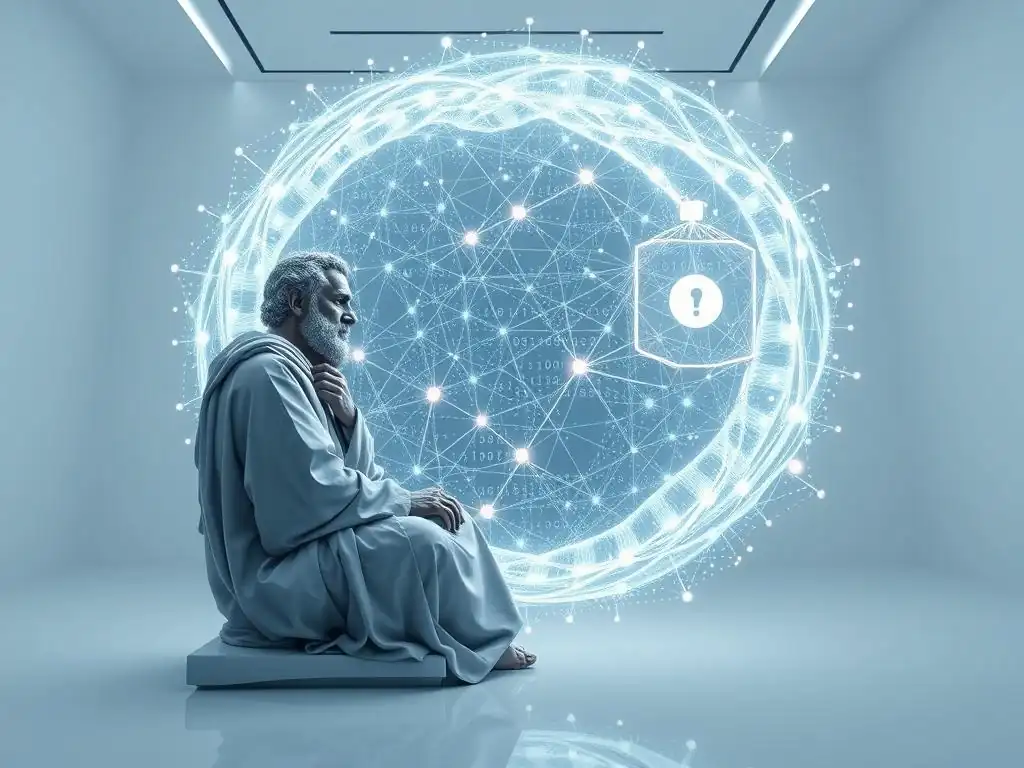
Welcome to Blockchain Trends, your source for in-depth analysis of blockchain's evolving landscape. Beyond the hype, we delve into the real-world applications of this transformative technology. This week, we unravel the power of a game-changing advancement in cybersecurity: Zero-Knowledge Cryptography. Intrigued? Discover how this ingenious approach is revolutionizing data privacy and opening up unprecedented possibilities for secure blockchain applications. Let's explore the evolution of Zero-Knowledge Cryptography applications and see how they're shaping the future of decentralized systems.
- Understanding Zero-Knowledge Proofs: A Foundation for Blockchain Security
-
Frequently Asked Questions
- What exactly is Zero-Knowledge Cryptography, and how does it work?
- Beyond theory, what are some real-world Zero Knowledge cryptography applications discussed in the article?
- How is Zero-Knowledge Cryptography being used in the Decentralized Finance (DeFi) space?
- What role does regulation play in the adoption and development of Zero Knowledge cryptography applications?
- What does the future hold for Zero Knowledge cryptography applications in decentralized systems?
- Final Reflection: Embracing the Power of Trustless Verification
- Uncover the Future: Dive Deeper into Zero-Knowledge!
Understanding Zero-Knowledge Proofs: A Foundation for Blockchain Security
What are Zero-Knowledge Proofs (ZKPs)? A Simple Explanation
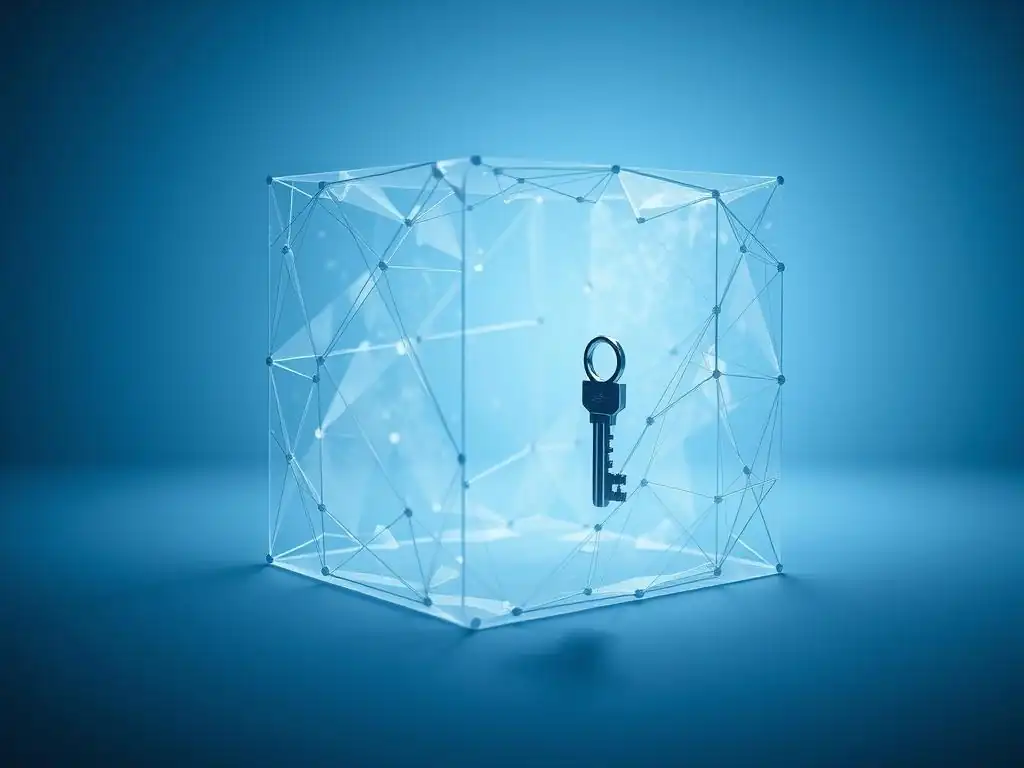
Zero-Knowledge Proofs (ZKPs) are cryptographic protocols that allow one party (the prover) to convince another party (the verifier) that a statement is true, without revealing any information beyond the validity of the statement itself. Imagine you have a secret key to unlock a door, and you want to prove to someone that you have the key without actually showing it to them. A ZKP would allow you to do just that.
You could interact with the verifier in a way that demonstrates your knowledge of the key, perhaps by opening the door and letting the verifier see you inside, but without ever revealing the key’s specific shape or combination. This concept, initially abstract, has profound implications for privacy and security, especially in the context of blockchain technology.
In simpler terms, think of it like proving you've solved a Sudoku puzzle without showing the solution. You can demonstrate that you've correctly filled in the grid according to the rules, perhaps by allowing the verifier to check random rows and columns, without revealing the actual numbers in each cell. The verifier becomes convinced of your solution's validity based on the interaction, but learns nothing about the solution itself. This ability to prove knowledge without disclosure is the core essence of zero-knowledge proofs, making them a powerful tool for enhancing privacy and trust in digital systems, including blockchain networks.
Key Properties of Zero-Knowledge Cryptography: Completeness, Soundness, and Zero-Knowledge
Zero-Knowledge Proofs are defined by three essential properties: completeness, soundness, and zero-knowledge itself. Completeness ensures that if the statement is true, an honest prover can always convince an honest verifier. In our Sudoku analogy, if you have indeed solved the puzzle correctly, you should be able to convince someone that you have done so using the ZKP protocol.
Soundness, on the other hand, guarantees that if the statement is false, no cheating prover can convince an honest verifier that it is true, except with a negligible probability. This means someone who hasn't actually solved the Sudoku puzzle can't trick the verifier into believing they have, using the ZKP protocol.
The most crucial property, zero-knowledge, ensures that the verifier learns nothing beyond the validity of the statement. In other words, the verifier gains no extra information about why the statement is true, only that it is true. Continuing with the Sudoku example, the verifier only learns that the puzzle is solved, but gains no information about the actual solution itself, or the methods used to solve it.
These three properties working in concert are what make Zero-Knowledge Proofs so powerful. They provide a method for establishing trust and verifying information without compromising privacy, a critical requirement in many modern applications, particularly within blockchain and cybersecurity.
The Role of Zero-Knowledge Proofs in Enhancing Blockchain Security and Privacy
Zero-Knowledge Proofs play a pivotal role in addressing some of the inherent challenges in blockchain technology, particularly in the areas of security and privacy. Traditional blockchains, while offering transparency, often lack robust privacy mechanisms. Every transaction is publicly recorded and traceable, which can be a significant concern for users and businesses seeking confidentiality.
Zero-Knowledge Proofs offer a solution by enabling transactions to be verified without revealing sensitive details about the transaction itself, such as the sender, receiver, or the transaction amount. This is crucial for applications requiring confidential transactions, such as financial transactions or supply chain management where revealing transaction details could expose sensitive business information.
Furthermore, ZKPs can enhance blockchain security by enabling more efficient and private authentication and authorization processes. Instead of revealing passwords or private keys directly, users can prove their identity or authorization to perform an action using a ZKP, without exposing their credentials. This significantly reduces the risk of credential theft and unauthorized access.
For instance, in decentralized identity management systems, ZKPs can allow users to prove attributes about themselves, such as age or nationality, without disclosing the underlying personal data. This ability to selectively disclose information while maintaining privacy and security is a game-changer for blockchain technology, paving the way for wider adoption in privacy-sensitive applications.
Frequently Asked Questions
What exactly is Zero-Knowledge Cryptography, and how does it work?
Zero-Knowledge Cryptography allows one party (the prover) to prove to another party (the verifier) that they know a piece of information without revealing the information itself. It relies on complex mathematical principles to ensure security and privacy.
Beyond theory, what are some real-world Zero Knowledge cryptography applications discussed in the article?
The article explores applications in areas like DeFi (Decentralized Finance) for privacy-preserving transactions, enterprise applications for secure data sharing, and compliance with data privacy regulations.
How is Zero-Knowledge Cryptography being used in the Decentralized Finance (DeFi) space?
In DeFi, Zero-Knowledge Cryptography enables private transactions and anonymous trading on blockchain networks. This is crucial for maintaining user privacy and preventing front-running.
What role does regulation play in the adoption and development of Zero Knowledge cryptography applications?
Regulation can both hinder and encourage the adoption of Zero-Knowledge Cryptography. Clear guidelines on data privacy are needed to foster innovation while ensuring compliance and ethical use.
What does the future hold for Zero Knowledge cryptography applications in decentralized systems?
The future looks promising, with potential for wider adoption across various industries. Expect to see more sophisticated applications emerging, focused on enhancing privacy, security, and trust in decentralized environments.
Final Reflection: Embracing the Power of Trustless Verification
The journey of zero-knowledge cryptography, as we've explored, is far from over. Its transition from abstract theory to tangible applications is not just a technological advancement, but a paradigm shift in how we approach trust and security in the digital age. The potential for verifiable computation without revealing sensitive data is now a reality, poised to revolutionize industries from finance and healthcare to voting systems and supply chain management.
This evolution profoundly impacts our cultural landscape, moving us towards a future where privacy and transparency are not mutually exclusive, but rather complementary forces. Zero-knowledge proofs empower individuals and organizations to assert their claims without compromising their data, fostering greater accountability and collaboration. Trust, but verify
has always been a cornerstone of sound practice, but zero-knowledge cryptography allows us to "verify without trust," a truly transformative concept.
As we stand on the cusp of widespread adoption of zero-knowledge cryptography applications, let us embrace the opportunity to build a more secure, private, and trustworthy future. Consider how you can leverage these powerful tools in your own life and work to protect your data, verify your claims, and contribute to a world where trust is earned through verifiable proof, not blind faith. The future of privacy and security is in our hands – let's build it wisely.
Uncover the Future: Dive Deeper into Zero-Knowledge!
Thank you for exploring the fascinating world of zero-knowledge cryptography with us. We hope you've gained valuable insights into its development and real-world applications. Now, it's time to deepen your understanding and contribute to this exciting field.
Here are a few ways you can get involved:
- Start experimenting with zero-knowledge proof libraries. Don't just read about it—try building your own applications using existing open-source projects.
- Dive into the foundational research papers that established the principles of modern zero-knowledge cryptography. Understanding these core concepts will give you a richer appreciation for the field.
- Share this article with your network and spark discussions about the potential of zero-knowledge cryptography across various industries. What challenges do you think this technology can help solve?
What innovative use case for zero-knowledge cryptography has sparked your imagination the most? Share your thoughts in the comments below!
Leave a Reply