
ZeroKnowledge Proofs and AML/KYC Compliance: Balancing Privacy and Financial Regulations


Welcome to Blockchain Trends, your guide to understanding the revolutionary power of blockchain beyond the hype. Dive deep into the world of decentralized finance, enterprise solutions, and the ever-evolving regulatory landscape.
Ever wondered how to reconcile the inherent privacy of blockchain with the stringent requirements of financial regulations? Our featured article explores Zero Knowledge Proof compliance, revealing how this powerful cryptographic tool can unlock a new era of secure and compliant blockchain applications. Discover the delicate balance between privacy and accountability – and how it's shaping the future of finance. Read on to uncover the innovative solutions that are paving the way for a truly decentralized future.
Zero-Knowledge Proofs and AML/KYC Compliance: Balancing Privacy and Financial Regulations
- Introduction: Zero-Knowledge Proofs (ZKPs) in the Blockchain Era
- Understanding Zero-Knowledge Proofs: A Deep Dive
- AML/KYC Regulations and the Need for Privacy
- Zero-Knowledge Proof Compliance: Bridging the Gap
- Challenges and Considerations for Implementing ZKP Compliance Solutions
- The Future of Zero-Knowledge Proofs in Financial Regulation
-
Frequently Asked Questions
- How can Zero-Knowledge Proofs (ZKPs) enhance AML/KYC compliance?
- What are the key challenges in implementing ZKPs for AML/KYC?
- How do ZKPs balance the need for privacy with regulatory requirements for transparency?
- What are the potential benefits of using ZKPs for cross-border AML/KYC compliance?
- What is the future outlook for ZKP adoption in the context of AML/KYC and financial regulations?
- Final Reflection: Navigating the Future of Trust with Zero-Knowledge Proofs
- Embrace the Future: Uncover Privacy-Preserving Compliance!
Introduction: Zero-Knowledge Proofs (ZKPs) in the Blockchain Era
The advent of blockchain technology has ushered in an era of decentralization, transparency, and enhanced security for various applications, from cryptocurrencies to supply chain management. However, the inherent transparency of many blockchain systems presents a significant challenge when it comes to user privacy, particularly in regulated sectors like finance. This is where Zero-Knowledge Proofs (ZKPs) emerge as a pivotal cryptographic tool, offering a pathway to reconcile the benefits of blockchain with the stringent demands of privacy and regulatory compliance.
In the context of Anti-Money Laundering (AML) and Know Your Customer (KYC) regulations, ZKPs promise a revolutionary approach, enabling verification of information without revealing the underlying data itself. This article delves into the transformative potential of Zero-Knowledge Proofs in achieving "zero knowledge proof compliance", exploring their mechanisms, applications, and the balance they strike between privacy and financial regulations in the evolving landscape of blockchain and decentralized finance.
Understanding Zero-Knowledge Proofs: A Deep Dive
What are Zero-Knowledge Proofs (ZKPs)?
Zero-Knowledge Proofs (ZKPs) are cryptographic protocols that allow one party (the prover) to convince another party (the verifier) that a statement is true, without revealing any information beyond the validity of the statement itself. Imagine proving you know the solution to a puzzle without showing the solution itself, only demonstrating that you possess it. This concept, initially conceived in the 1980s, has gained significant traction with the rise of blockchain technology due to its profound implications for privacy and security.
The core principle lies in enabling verification processes while maintaining data confidentiality. This is achieved through complex mathematical techniques that allow for demonstrating knowledge of a secret or property without disclosing the secret itself.
ZKPs are characterized by three key properties: Completeness, Soundness, and Zero-Knowledge. Completeness means that if the statement is true, an honest prover can convince an honest verifier. Soundness ensures that if the statement is false, no prover can convince an honest verifier that it is true, except with a negligible probability.
Finally, and most crucially, zero-knowledge dictates that the verifier learns nothing beyond the fact that the statement is true. This is achieved through intricate cryptographic interactions that meticulously control the information flow, ensuring that no sensitive data is leaked during the verification process. The power of ZKPs rests in their ability to provide verifiable trust without sacrificing privacy, a critical aspect for applications in finance, identity management, and secure computation within blockchain ecosystems.
Types of Zero-Knowledge Proofs: zk-SNARKs and zk-STARKs
Within the realm of Zero-Knowledge Proofs, two prominent types stand out: zk-SNARKs and zk-STARKs. zk-SNARKs, short for Zero-Knowledge Succinct Non-Interactive Argument of Knowledge, are characterized by their succinctness and non-interactivity. "Succinct" means the proof size is very small and quick to verify, typically logarithmic in the size of the computation being verified.
"Non-interactive" implies that once the proof is generated, the verifier can validate it without further communication with the prover. zk-SNARKs rely on complex cryptographic assumptions like pairing-based cryptography and trusted setups, which require an initial ceremony to generate public parameters that must be securely managed to maintain the security of the system. Zcash, a privacy-focused cryptocurrency, is a notable example of a project leveraging zk-SNARKs to provide confidential transactions.
zk-STARKs, or Zero-Knowledge Scalable Transparent Argument of Knowledge, offer an alternative approach, prioritizing transparency and scalability. Unlike zk-SNARKs, zk-STARKs do not require a trusted setup, relying instead on publicly verifiable randomness and collision-resistant hash functions. This "transparent" setup eliminates the potential vulnerability associated with the trusted setup in zk-SNARKs.
Furthermore, zk-STARKs are considered more scalable, as proof generation and verification times scale more favorably with the complexity of the computation. While zk-STARKs proofs tend to be larger than zk-SNARKs proofs, the advantages in transparency and scalability make them increasingly attractive for applications requiring robust security and high throughput. Projects like StarkWare are actively developing and deploying zk-STARKs for scaling solutions and privacy-preserving applications on blockchain platforms.
Applications of ZKPs Beyond Compliance
While the focus is often on "zero knowledge proof compliance", the utility of Zero-Knowledge Proofs extends far beyond regulatory adherence. Their ability to verify information without revealing sensitive data opens up a wide spectrum of applications across various industries. In supply chain management, ZKPs can be used to verify the authenticity and origin of goods without disclosing proprietary supplier information or pricing details.
Imagine a consumer scanning a QR code on a product and instantly verifying its origin and certifications without exposing the entire supply chain data to public scrutiny. This enhances transparency and trust while protecting sensitive business information.
In the realm of voting systems, ZKPs can facilitate secure and private electronic voting. Voters can prove their eligibility and that their vote was cast correctly and counted, all without revealing their actual vote or identity to others. This can significantly enhance the integrity and privacy of democratic processes.
Furthermore, in secure multi-party computation, ZKPs can enable computations on sensitive data distributed across multiple parties, ensuring that no party learns more than the intended output of the computation. For instance, multiple hospitals could collaboratively analyze patient data to identify disease trends without sharing individual patient records with each other. These diverse applications underscore the transformative potential of ZKPs beyond the immediate context of compliance, highlighting their role in building more secure, private, and efficient systems across various domains.
AML/KYC Regulations and the Need for Privacy
Overview of Anti-Money Laundering (AML) and Know Your Customer (KYC) Regulations
Anti-Money Laundering (AML) and Know Your Customer (KYC) regulations are critical components of the global financial system, designed to combat financial crime and ensure the integrity of financial institutions. AML regulations aim to prevent the proceeds of illegal activities, such as drug trafficking, terrorism financing, and fraud, from being laundered through the financial system.
KYC regulations, on the other hand, focus on verifying the identity of customers and assessing their risk profiles to prevent illicit actors from accessing and abusing financial services. These regulations are mandated by international bodies like the Financial Action Task Force (FATF) and implemented by national governments worldwide.
Financial institutions, including banks, exchanges, and increasingly, cryptocurrency platforms, are legally obligated to implement robust AML/KYC programs. These programs typically involve collecting and verifying extensive customer data, including identity documents, proof of address, and transaction history. Failure to comply with AML/KYC regulations can result in severe penalties, including hefty fines, reputational damage, and even criminal charges.
The cost of AML compliance is substantial; for example, a 2020 study by LexisNexis Risk Solutions estimated that financial institutions in the US and Canada spent approximately \$42.7 billion on financial crime compliance in 2019. While essential for combating financial crime, these stringent regulations often clash with the growing demand for privacy in the digital age, particularly within the blockchain and cryptocurrency space where users often prioritize pseudonymity and data protection.
The Privacy Concerns Associated with Traditional AML/KYC Processes
Traditional AML/KYC processes, while effective in many respects, inherently involve the collection and storage of vast amounts of sensitive personal data. This data, including names, addresses, dates of birth, and financial transaction details, is often centralized within financial institutions and regulatory bodies, creating potential honeypots for data breaches and cyberattacks.
Data breaches in the financial sector are increasingly common and costly; for instance, the Capital One data breach in 2019 exposed the personal information of over 100 million individuals. Beyond the risk of external breaches, centralized data also raises concerns about potential misuse of data by internal actors or unauthorized access.
Furthermore, the current AML/KYC paradigm often involves sharing customer data across multiple institutions and jurisdictions, particularly in cross-border transactions. This data sharing, while intended to enhance security and compliance, can further erode user privacy and increase the risk of data leaks or misuse. The lack of transparency in how customer data is collected, stored, and shared within the traditional AML/KYC framework also contributes to user distrust and a sense of privacy violation.
Many individuals are increasingly wary of providing extensive personal information online, especially in light of growing awareness about data privacy and surveillance concerns. This tension between regulatory demands for data collection and user expectations for privacy necessitates exploring privacy-preserving alternatives to traditional AML/KYC processes, paving the way for solutions like "zero knowledge proof compliance".
The Challenge of Balancing Compliance and Privacy in Decentralized Systems
Decentralized systems, particularly blockchain-based platforms and decentralized finance (DeFi) protocols, present a unique challenge to traditional AML/KYC frameworks. The core ethos of decentralization often emphasizes pseudonymity, user autonomy, and reduced reliance on intermediaries, directly contrasting with the data-centric and centralized nature of conventional compliance processes. Many DeFi protocols, for instance, operate without central entities controlling user access or transactions, making it difficult to implement traditional KYC procedures that rely on identifying and verifying users through centralized authorities.
Moreover, the global and borderless nature of blockchain technology complicates jurisdictional compliance. DeFi platforms may operate across multiple jurisdictions, making it challenging to determine which AML/KYC regulations apply and how to enforce them effectively. The transparency of public blockchains, while beneficial for auditability, can also expose transaction history and potentially link pseudonymous addresses to real-world identities through deanonymization techniques.
This creates a paradox: while blockchain offers transparency, the desire for privacy and regulatory compliance necessitates mechanisms to selectively disclose information without compromising user anonymity entirely. Therefore, achieving "zero knowledge proof compliance" becomes particularly crucial in decentralized systems to reconcile the principles of privacy and decentralization with the imperative of combating financial crime and adhering to regulatory standards.
Zero-Knowledge Proof Compliance: Bridging the Gap
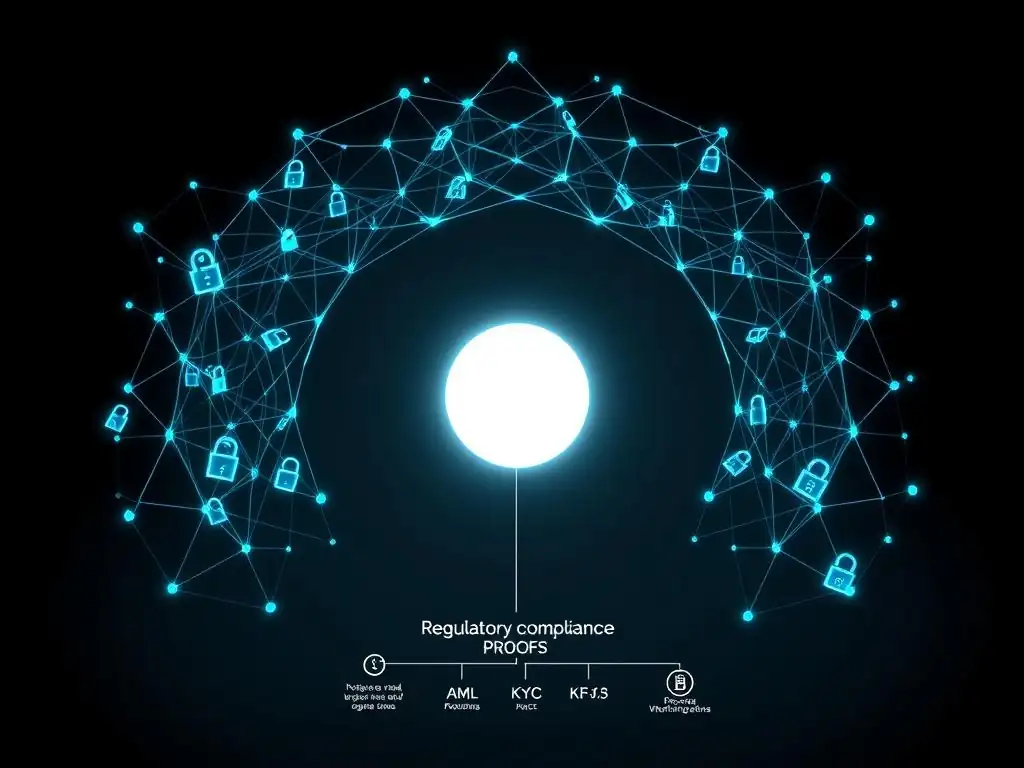
How Zero-Knowledge Proofs Enable Privacy-Preserving Compliance
Zero-Knowledge Proofs (ZKPs) offer a groundbreaking approach to AML/KYC compliance by enabling verification of necessary information without revealing the underlying sensitive data. Instead of directly sharing personal details like identity documents or transaction history, users can leverage ZKPs to cryptographically prove specific properties about their data without disclosing the data itself. For example, a user could prove they are over 18 years old without revealing their exact date of birth, or demonstrate that their funds originated from legitimate sources without exposing their entire transaction history. This principle of selective disclosure is fundamental to achieving privacy-preserving compliance.
ZKPs transform the compliance paradigm from data sharing to proof sharing. Financial institutions and regulatory bodies can verify these ZKPs to ensure compliance with AML/KYC regulations without gaining access to the user's raw personal data. This significantly reduces the risk of data breaches, misuse, and privacy violations associated with traditional data-centric compliance processes.
Furthermore, ZKPs can be designed to be auditable and transparent, allowing regulators to verify the integrity of the compliance process itself. By shifting the focus from data exposure to verifiable proofs, ZKPs provide a powerful tool to bridge the gap between stringent regulatory requirements and the growing demand for privacy in the digital age, especially within the blockchain and cryptocurrency ecosystem.
Use Cases: ZKP Applications for AML/KYC
Private Identity Verification
Traditional KYC processes often require users to submit sensitive identity documents, such as passports or driver's licenses, which are then stored and processed by financial institutions. This process is both privacy-invasive and creates a significant data security risk. Zero-Knowledge Proofs offer a privacy-preserving alternative through private identity verification.
Using ZKPs, individuals can prove their identity and key attributes, such as age or nationality, derived from their identity documents, without revealing the actual documents or the full extent of their personal data. For instance, a user could prove to a cryptocurrency exchange that they are a resident of a specific country and over the legal age to trade, based on their government-issued ID, without revealing their ID number, full name, or date of birth to the exchange.
This approach drastically reduces the amount of personal information shared and stored, minimizing the risk of data breaches and enhancing user privacy. Several companies are exploring ZKP-based identity solutions for KYC. For example, projects are developing systems where users can generate ZKPs based on their verifiable credentials stored on their devices, allowing them to selectively disclose only the necessary attributes to different service providers, ensuring "zero knowledge proof compliance" in identity verification. This not only enhances privacy but also simplifies the KYC process for both users and institutions, making it more efficient and user-friendly.
Transaction Monitoring with Enhanced Privacy
AML regulations mandate transaction monitoring to detect and prevent suspicious activities. Traditional transaction monitoring often involves analyzing vast amounts of transaction data, potentially exposing users' financial activities to scrutiny. Zero-Knowledge Proofs can enhance the privacy of transaction monitoring by enabling institutions to verify compliance without accessing the raw transaction details. Imagine a scenario where a DeFi platform needs to ensure that transactions comply with AML thresholds without knowing the exact transaction amounts or parties involved.
Using ZKPs, users could generate proofs that their transactions adhere to certain AML rules, such as not exceeding transaction limits or not originating from sanctioned addresses, without revealing the full transaction details to the platform. The platform can then verify these proofs to ensure compliance without gaining access to the underlying transaction data.
This approach allows for effective AML monitoring while preserving user privacy and confidentiality. Research is ongoing in developing ZKP-based transaction monitoring systems that can detect suspicious patterns and anomalies in aggregate transaction data without revealing individual transaction details, thus achieving "zero knowledge proof compliance" in transaction surveillance.
Cross-Border Compliance
Cross-border transactions pose significant challenges for AML/KYC compliance due to varying regulations and data privacy laws across jurisdictions. Sharing sensitive customer data across borders can be complex, costly, and raise significant privacy concerns. Zero-Knowledge Proofs can facilitate cross-border compliance by enabling institutions in different jurisdictions to verify compliance with their respective regulations without directly sharing raw customer data. For example, when a user in country A transacts with a platform in country B, both jurisdictions may have different KYC requirements.
Using ZKPs, the user could generate proofs that satisfy the KYC requirements of both country A and country B without revealing their full identity data to either jurisdiction in its entirety. Institutions in both countries can then verify these proofs to ensure compliance with their local regulations without needing to exchange sensitive personal information across borders.
This streamlined approach can significantly reduce the complexities and privacy risks associated with cross-border AML/KYC compliance. The interoperability and privacy-preserving nature of ZKPs make them ideal for facilitating seamless and compliant cross-border transactions in the increasingly globalized financial landscape, paving the way for international "zero knowledge proof compliance".
Benefits of Implementing ZKP-Based AML/KYC Solutions
Implementing Zero-Knowledge Proof (ZKP)-based AML/KYC solutions offers a multitude of benefits compared to traditional approaches. Primarily, enhanced privacy is a key advantage. Users retain greater control over their personal data as ZKPs minimize data sharing and exposure. This fosters user trust and encourages wider adoption of compliant blockchain and DeFi services. Secondly, ZKP solutions can lead to reduced data security risks. By minimizing the storage and transmission of sensitive data, the potential attack surface for data breaches is significantly decreased, protecting both users and institutions from costly security incidents.
Furthermore, ZKP-based systems can improve efficiency and reduce costs associated with AML/KYC compliance. Automated ZKP verification processes can streamline KYC procedures, reducing manual review and processing times. This can lead to faster onboarding for users and lower operational costs for institutions.
Moreover, ZKPs can enhance interoperability and cross-border compliance, simplifying regulatory adherence in a globalized financial system. Finally, ZKP-based solutions can promote innovation and trust in the blockchain and DeFi space. By demonstrating a commitment to privacy and compliance, these solutions can foster a more responsible and sustainable growth of decentralized financial technologies, driving broader adoption and acceptance of "zero knowledge proof compliance" as a standard for the future of financial regulation.
Challenges and Considerations for Implementing ZKP Compliance Solutions
Technical Complexity and Scalability
While Zero-Knowledge Proofs offer immense potential for privacy-preserving compliance, their implementation is not without challenges. One significant hurdle is the technical complexity associated with designing, developing, and deploying ZKP-based systems. Cryptography, particularly ZKP cryptography, is a highly specialized field requiring deep expertise. Building robust and secure ZKP protocols and integrating them into existing financial systems demands skilled cryptographers, software engineers, and security auditors. The complexity also extends to choosing the right type of ZKP (e.g., zk-SNARKs vs. zk-STARKs) and optimizing performance for specific use cases.
Scalability is another crucial consideration. Generating and verifying ZKPs can be computationally intensive, especially for complex proofs or large volumes of transactions. While advancements are being made in improving ZKP performance, ensuring scalability for high-throughput financial applications remains an ongoing area of research and development.
The computational overhead of ZKPs needs to be carefully evaluated and optimized to avoid bottlenecks and maintain efficient system performance. Furthermore, the infrastructure required to support ZKP-based systems, including specialized hardware or software, may require significant investment. Overcoming these technical complexities and scalability challenges is essential for the widespread adoption of "zero knowledge proof compliance" solutions.
Regulatory Uncertainty and Acceptance
Despite the technological promise, regulatory uncertainty remains a significant impediment to the widespread adoption of ZKP-based AML/KYC solutions. While regulators are increasingly exploring and acknowledging the potential of privacy-enhancing technologies, clear regulatory frameworks and guidelines specifically addressing ZKPs in compliance are still evolving. Many regulators are still in the early stages of understanding ZKPs and their implications for financial regulation. This lack of regulatory clarity creates uncertainty for financial institutions considering implementing ZKP solutions, as they need assurance that these solutions will be accepted by regulators and meet compliance requirements.
Gaining regulatory acceptance is crucial for the mainstream adoption of ZKP compliance. This requires ongoing dialogue and collaboration between technology developers, financial institutions, and regulatory bodies to educate regulators about ZKPs, demonstrate their effectiveness in achieving compliance goals, and address any concerns they may have. Standardization efforts and the development of industry best practices for ZKP implementation in AML/KYC can also help build regulatory confidence and facilitate wider acceptance. Overcoming regulatory uncertainty and fostering acceptance are critical steps in paving the way for the widespread deployment of "zero knowledge proof compliance" solutions.
Potential for Misuse and Ethical Considerations
While ZKPs are designed to enhance privacy and security, like any powerful technology, they also have the potential for misuse. The very feature that makes ZKPs attractive – the ability to prove something without revealing information – could be exploited by malicious actors to conceal illicit activities. For instance, criminals might attempt to use ZKPs to obfuscate the origin or destination of illicit funds, making it harder to detect money laundering. While ZKPs themselves do not facilitate illegal activities, their privacy-enhancing capabilities could be misused to complicate investigations if not implemented thoughtfully.
Ethical considerations are also paramount. The design and implementation of ZKP-based AML/KYC systems must be carefully considered to ensure they are used responsibly and ethically. It is crucial to strike a balance between privacy and transparency, ensuring that ZKPs are used to enhance legitimate privacy while not hindering the ability to detect and prevent financial crime.
Robust security measures, auditability, and clear guidelines for ZKP usage are essential to mitigate the potential for misuse and ensure the ethical deployment of "zero knowledge proof compliance" technologies. Ongoing monitoring and adaptation are also necessary to address evolving threats and ensure the responsible use of ZKPs in financial regulation.
The Future of Zero-Knowledge Proofs in Financial Regulation
Emerging Trends and Developments
The field of Zero-Knowledge Proofs (ZKPs) is rapidly evolving, with several emerging trends and developments pointing towards their increased adoption in financial regulation. Advancements in cryptography are leading to more efficient and scalable ZKP protocols, reducing the computational overhead and making them more practical for real-world applications. For example, research into recursive ZKPs and hardware acceleration is improving proof generation and verification speeds. Furthermore, the development of user-friendly ZKP libraries and tools is making it easier for developers to integrate ZKPs into their systems without requiring deep cryptographic expertise.
Standardization efforts are also gaining momentum. Industry consortia and standards bodies are working to define common standards and protocols for ZKP-based identity and compliance solutions. This standardization will promote interoperability, reduce fragmentation, and facilitate wider adoption across the financial industry. Moreover, regulatory interest in ZKPs is growing.
Regulators are increasingly exploring the potential of privacy-enhancing technologies like ZKPs to address the tension between compliance and privacy. Regulatory sandboxes and pilot programs are being launched to test and evaluate ZKP-based AML/KYC solutions in real-world scenarios. These emerging trends indicate a promising future for "zero knowledge proof compliance" in shaping the landscape of financial regulation.
The Role of ZKPs in Shaping the Future of Decentralized Finance (DeFi)
Zero-Knowledge Proofs are poised to play a transformative role in shaping the future of Decentralized Finance (DeFi). As DeFi continues to grow and attract mainstream adoption, the need for regulatory compliance becomes increasingly critical. ZKPs offer a crucial bridge to reconcile the decentralized and privacy-centric nature of DeFi with the stringent demands of financial regulations. ZKPs can enable DeFi platforms to implement AML/KYC measures in a privacy-preserving manner, allowing them to operate within regulatory frameworks without compromising user anonymity or decentralization principles.
By enabling "zero knowledge proof compliance", ZKPs can facilitate the responsible growth and maturation of the DeFi ecosystem. They can unlock new opportunities for institutional adoption of DeFi, as institutions are often bound by strict regulatory requirements. Furthermore, ZKPs can foster greater trust and confidence in DeFi among users, addressing concerns about privacy and security. The integration of ZKPs into DeFi protocols and platforms can pave the way for a more regulated, sustainable, and user-friendly DeFi ecosystem, unlocking the full potential of decentralized finance while adhering to essential regulatory safeguards.
Conclusion: Embracing Zero-Knowledge Proof Compliance for a More Secure and Private Financial Future
Zero-Knowledge Proofs represent a paradigm shift in the approach to AML/KYC compliance, offering a powerful mechanism to balance the imperative of financial regulation with the fundamental right to privacy. By enabling "zero knowledge proof compliance", ZKPs empower individuals to control their personal data while allowing financial institutions and regulators to effectively combat financial crime and maintain the integrity of the financial system. While challenges related to technical complexity, regulatory uncertainty, and potential misuse remain, the ongoing advancements in ZKP technology, growing regulatory interest, and standardization efforts signal a promising future for their widespread adoption.
Embracing Zero-Knowledge Proofs in financial regulation is not just about technological innovation; it is about fostering a more secure, private, and user-centric financial future. By prioritizing privacy-preserving compliance, we can build a financial ecosystem that is both robust against illicit activities and respectful of individual rights. As the digital landscape continues to evolve and the demand for privacy grows, Zero-Knowledge Proofs are set to become an indispensable tool in shaping the future of financial regulation and fostering a more trustworthy and equitable financial system for all.
Frequently Asked Questions
How can Zero-Knowledge Proofs (ZKPs) enhance AML/KYC compliance?
ZKPs allow users to prove information without revealing the underlying data, thereby enabling compliance with AML/KYC regulations while protecting user privacy. This reduces the risk of data breaches and identity theft.
What are the key challenges in implementing ZKPs for AML/KYC?
Challenges include scalability concerns, the need for standardization of ZKP protocols, and the complexity of integrating ZKPs into existing financial systems.
How do ZKPs balance the need for privacy with regulatory requirements for transparency?
ZKPs provide a method for proving compliance without disclosing sensitive data, satisfying regulators' need for oversight while maintaining user privacy and data security. This offers a compromise between transparency and confidentiality.
What are the potential benefits of using ZKPs for cross-border AML/KYC compliance?
ZKPs can facilitate secure and efficient data sharing across different jurisdictions, reducing the complexities and costs associated with cross-border compliance. This fosters global regulatory collaboration.
What is the future outlook for ZKP adoption in the context of AML/KYC and financial regulations?
The adoption of ZKPs is expected to increase as regulators become more familiar with the technology and its potential to enhance both compliance and privacy. Further research and development are needed to address scalability and standardization challenges.
The exploration of Zero-Knowledge Proofs (ZKPs) within the context of AML/KYC compliance reveals a critical juncture in the evolution of financial regulations. The ability to verify information without revealing the underlying data represents a paradigm shift, potentially resolving the inherent tension between privacy and security that has long plagued the financial industry. This technology offers a path towards a future where compliance doesn't necessitate the sacrifice of individual privacy, a concept that is increasingly vital in our data-driven world.
The ongoing influence of ZKPs extends far beyond the immediate realm of financial institutions. Its potential to revolutionize data handling across various sectors, from healthcare to voting systems, underscores its profound societal impact. This technology empowers individuals to control their own data while still participating in essential societal functions. Privacy is not an option, and it shouldn't come at a price. It's a fundamental right.
- Gary Kovacs, former CEO of Mozilla. This quote perfectly encapsulates the spirit of ZKP technology and its commitment to safeguarding individual autonomy.
As we stand on the cusp of widespread ZKP adoption, I invite you to consider the role you can play in shaping this future. Reflect on how you can advocate for privacy-preserving technologies in your own sphere of influence. Embrace the potential of ZKPs to build a more secure and equitable world, where trust is not built on blind faith, but on verifiable truth, without compromising the fundamental right to privacy.
Embrace the Future: Uncover Privacy-Preserving Compliance!
Thank you for exploring the intersection of Zero-Knowledge Proofs and AML/KYC compliance! We hope you've gained valuable insights into how these technologies can work together to balance privacy and regulation. Now, let's put that knowledge into action:
Here are a few things you can do next:
- Dive Deeper: Explore practical implementation examples of zero-knowledge proofs in AML/KYC frameworks. Understanding how these systems work in real-world scenarios is essential for adoption.
- Share Your Insights: Discuss these concepts with peers and colleagues to foster a broader understanding of privacy-preserving financial technologies.
- Experiment With Open Source: Look into open-source zero-knowledge proof libraries and tools, and try implementing a simple privacy-preserving KYC process yourself to better grasp how they work.
What specific AML/KYC process do you think zero-knowledge proofs could revolutionize the most, and why? Share your thoughts in the comments below!
Leave a Reply