
ZeroKnowledge Proofs for Digital Identity: PrivacyPreserving Authentication on the Blockchain


Welcome to Blockchain Trends, your guide to navigating the exciting world of decentralized technologies.
Dive into the transformative potential of blockchain beyond the headlines. Are you ready to unlock a new era of privacy and security? Our latest exploration delves into Zero Knowledge Proof Authentication, a groundbreaking technique poised to revolutionize digital identity and data protection. Discover how this cutting-edge approach is shaping the future of blockchain cybersecurity and what it means for you. Intrigued? Read on to learn more about this fascinating solution!
Zero-Knowledge Proofs for Digital Identity: Privacy-Preserving Authentication on the Blockchain
- Introduction: The Need for Privacy in Blockchain Identity Management
- Understanding Zero-Knowledge Proofs (ZKPs)
- Zero-Knowledge Proof Authentication: How it Works
-
Applications of Zero-Knowledge Proofs in Digital Identity on Blockchain
- Decentralized Identity (DID) and Zero-Knowledge Proofs
- Secure and Private KYC/AML Compliance with ZKPs
- Zero-Knowledge Credentials for Access Control and Authorization
- Supply Chain Authentication: Verifying Product Origin Without Revealing Supplier Information
- Healthcare Data Privacy: Patient Consent and Selective Data Disclosure
- Benefits of Using ZKPs for Blockchain-Based Digital Identity
- Challenges and Limitations of Zero-Knowledge Proof Authentication
- The Future of Zero-Knowledge Proofs in Blockchain Identity
- Conclusion: Zero-Knowledge Proofs and the Future of Privacy-Preserving Digital Identity
-
Frequently Asked Questions
- How does Zero-Knowledge Proof authentication enhance privacy compared to traditional methods?
- What are the primary benefits of using Zero-Knowledge Proofs for digital identity management on the blockchain?
- Can Zero-Knowledge Proof authentication be implemented across different blockchain platforms?
- What are the potential challenges or limitations of adopting Zero-Knowledge Proof authentication for widespread digital identity?
- How does "Zero-Knowledge Proof Authentication" relate to the broader concept of "Decentralized Identity (DID)"?
- Final Reflection: Embracing Trust Through Verifiable Privacy
- Unlock Your Privacy: Start Building with Zero-Knowledge!
Introduction: The Need for Privacy in Blockchain Identity Management
The Challenges of Traditional Identity Solutions on Blockchain
Blockchain technology offers a promising foundation for decentralized digital identity solutions, moving away from centralized authorities and giving individuals more control over their personal data. However, traditional identity management approaches often clash with the inherent privacy needs of blockchain users. Many existing systems, even those adapted for blockchain, still rely on revealing substantial personal information for authentication and verification processes.
For instance, a conventional blockchain-based identity system might require users to publicly disclose their cryptographic keys or link their on-chain activities directly to their real-world identities. This transparency, while core to blockchain's auditability, can inadvertently expose sensitive data, leading to privacy breaches and potential misuse of personal information. The inherent immutability of blockchain further exacerbates this issue; once identity data is recorded on-chain, it becomes permanently accessible, raising concerns about data persistence and the long-term privacy implications for users.
Furthermore, traditional identity solutions often struggle with interoperability across different blockchain networks and applications. Users may need to create and manage multiple digital identities for various platforms, leading to fragmentation and a cumbersome user experience. This complexity increases the risk of identity silos and reduces the potential for a unified and user-centric digital identity ecosystem.
The challenge lies in creating blockchain identity solutions that not only offer decentralization and user control but also prioritize privacy, enabling individuals to authenticate and interact online without compromising their personal information. This necessitates the adoption of privacy-enhancing technologies that can reconcile the transparency of blockchain with the fundamental right to privacy in the digital age.
Zero-Knowledge Proofs (ZKPs) as a Solution for Privacy-Preserving Authentication
Zero-Knowledge Proofs (ZKPs) emerge as a groundbreaking cryptographic solution to address the privacy challenges inherent in blockchain-based identity management. ZKPs allow one party (the prover) to convince another party (the verifier) that a statement is true without revealing any information beyond the validity of the statement itself.
In the context of digital identity, this means a user can prove they possess certain credentials or attributes – such as age, citizenship, or professional certifications – without disclosing the actual credential details or the underlying data. This is particularly crucial for blockchain environments where minimizing data exposure on a public ledger is paramount for user privacy and security.
By leveraging zero-knowledge proof authentication, blockchain identity systems can achieve a paradigm shift from data disclosure to proof of knowledge. Instead of sharing sensitive personal data for verification, users can generate ZKPs to demonstrate the validity of their claims in a privacy-preserving manner. For example, in a Know Your Customer (KYC) process on a decentralized exchange, a user could prove they are over 18 years old without revealing their exact birth date or submitting a copy of their ID.
This capability not only enhances user privacy but also reduces the risk of data breaches and identity theft associated with storing and transmitting sensitive personal information on the blockchain. The adoption of ZKPs in digital identity represents a significant step towards building a more secure, private, and user-centric decentralized web.
Understanding Zero-Knowledge Proofs (ZKPs)
What are Zero-Knowledge Proofs? A Simple Explanation
Imagine you want to prove to a friend that you know the secret word to open a specific online account, but you don't want to reveal the password itself. A Zero-Knowledge Proof is like a clever trick that allows you to convince your friend you know the password without ever telling them what it is.
You interact with your friend in a way that demonstrates your knowledge, but no information about the password is leaked during the process. In essence, a Zero-Knowledge Proof allows a "prover" to convince a "verifier" that they possess certain knowledge or that a statement is true, without revealing any information beyond the fact that the statement is indeed true.
In the realm of cryptography, Zero-Knowledge Proofs are sophisticated mathematical techniques that enable this seemingly paradoxical feat. They rely on complex algorithms and protocols to create proofs that are both convincing and information-hiding. Think of it like a coded message where the verifier can confirm the message is valid without being able to decipher the underlying content.
This characteristic makes ZKPs exceptionally valuable in situations where privacy is paramount, such as proving identity, authenticating transactions, or verifying compliance without exposing sensitive data. The beauty of ZKPs lies in their ability to establish trust and validity while preserving confidentiality, a critical requirement for secure and privacy-respecting digital interactions.
Key Properties of Zero-Knowledge Proofs: Completeness, Soundness, and Zero-Knowledge
Zero-Knowledge Proofs are characterized by three essential properties that guarantee their effectiveness and security: completeness, soundness, and zero-knowledge. Completeness ensures that if the statement being proven is indeed true, an honest prover can always convince an honest verifier. In simpler terms, if you actually know the secret password, you should be able to successfully demonstrate this to your friend using the ZKP protocol.
Soundness, conversely, ensures that if the statement is false, no dishonest prover can trick an honest verifier into believing it. If you don't know the password, you cannot fabricate a ZKP that will fool your friend. This property is crucial for preventing fraud and ensuring the integrity of the verification process.
The most defining property, zero-knowledge, is that the verifier learns absolutely nothing beyond the validity of the statement itself. During the proof exchange, no additional information about the secret or the underlying data is revealed to the verifier. Returning to our password example, after the ZKP interaction, your friend will be convinced you know the password, but they will not have gained any information that helps them guess or learn the password itself.
These three properties work in concert to make ZKPs a powerful tool for privacy-preserving authentication. Completeness ensures usability, soundness guarantees security against false proofs, and zero-knowledge safeguards the confidentiality of sensitive information.
Different Types of Zero-Knowledge Proofs: zk-SNARKs, zk-STARKs, Bulletproofs
The field of Zero-Knowledge Proofs has evolved into various types, each with its own strengths and trade-offs in terms of efficiency, security assumptions, and complexity. zk-SNARKs (Zero-Knowledge Succinct Non-Interactive Argument of Knowledge) are known for their succinctness and non-interactivity. "Succinct" means the proofs are very small in size and quick to verify, making them highly efficient for applications requiring fast authentication.
"Non-interactive" implies that the prover and verifier require minimal back-and-forth communication, often just a single message from the prover to the verifier. However, zk-SNARKs typically rely on a "trusted setup," a complex initial phase that, if compromised, could potentially undermine the security of the proofs. Examples of zk-SNARKs being used in blockchain include Zcash, a privacy-focused cryptocurrency.
zk-STARKs (Zero-Knowledge Scalable Transparent Argument of Knowledge) address some of the limitations of zk-SNARKs, particularly the trusted setup. "Transparent" signifies that zk-STARKs do not require a trusted setup, enhancing their security and trustworthiness. They are also designed to be highly scalable, meaning they can handle complex computations and large datasets more efficiently than zk-SNARKs in certain scenarios. While zk-STARK proofs are generally larger and slower to verify than zk-SNARKs, their transparency and scalability make them attractive for applications where security and auditability are paramount. Projects like StarkWare are leveraging zk-STARKs for scaling blockchain applications and enhancing privacy.
Bulletproofs represent another significant type of ZKP, focusing on efficiency and flexibility, particularly for range proofs. Bulletproofs are efficient for proving statements about ranges of values, such as proving an age is within a certain range without revealing the exact age. They do not require a trusted setup and offer good performance, especially for certain types of proofs.
Bulletproofs are utilized in projects like Monero for confidential transactions and are gaining traction in other privacy-focused blockchain applications. The choice between zk-SNARKs, zk-STARKs, Bulletproofs, and other ZKP types depends on the specific application requirements, considering factors like proof size, verification speed, security assumptions, and the complexity of the statements being proven.
Zero-Knowledge Proof Authentication: How it Works
The Prover and Verifier in ZKP Authentication Systems
In a Zero-Knowledge Proof authentication system, there are two key participants: the prover and the verifier. The prover is the entity seeking to authenticate themselves or prove a certain claim about their identity. This is typically the user who wants to access a service, application, or platform. The verifier is the entity that needs to verify the prover's identity or claim. This could be a website, a decentralized application (dApp), a smart contract, or any system requiring authentication. The interaction between the prover and verifier is structured around the ZKP protocol.
The process begins when the prover wants to demonstrate a specific identity claim, such as "I am over 18 years old" or "I possess a valid professional certification." The prover generates a Zero-Knowledge Proof that corresponds to this claim, using their private information or credentials. This proof is then sent to the verifier. The verifier's role is to check the validity of the received ZKP.
Using the publicly available parameters of the ZKP system, the verifier runs a verification algorithm on the proof. If the verification succeeds, the verifier becomes convinced that the prover's claim is true, without learning any sensitive details about the prover's underlying identity or credentials. This separation of roles and the cryptographic process at the heart of ZKP authentication ensure privacy and security throughout the identity verification process.
Creating and Verifying Zero-Knowledge Proofs for Identity Claims
The creation and verification of Zero-Knowledge Proofs for identity claims involve specific cryptographic steps, tailored to the chosen ZKP type (zk-SNARKs, zk-STARKs, Bulletproofs, etc.). Let's consider a simplified example scenario where a user wants to prove they are a citizen of a certain country without revealing their passport details. The process starts with the user (prover) having access to their verifiable credential or identity document issued by a trusted authority.
Using a ZKP generation algorithm and their private credential data, the user creates a cryptographic proof. This proof is mathematically constructed in such a way that it demonstrates the validity of the claim ("I am a citizen") without revealing the actual passport number, issue date, or any other identifying information contained within the credential.
The generated ZKP is then transmitted to the service or application (verifier) requiring authentication. The verifier, equipped with the public parameters of the ZKP system and the verification algorithm, processes the received proof. The verification algorithm checks the mathematical integrity of the proof against the claim being made.
If the proof is valid, the algorithm outputs "accept," confirming that the user has successfully proven their citizenship. Crucially, the verifier only receives a binary "yes" or "no" answer – they cannot extract any further information about the user's identity from the ZKP itself. This entire process occurs without the user ever disclosing their sensitive passport data to the verifier, ensuring privacy-preserving authentication.
Privacy Implications: Protecting User Data with ZKPs
The privacy implications of using Zero-Knowledge Proofs for authentication are profound and represent a significant advancement in digital identity management. Traditional authentication methods often require users to share sensitive personal data, such as usernames, passwords, or even copies of identity documents, with service providers. This data sharing creates privacy risks, as this information can be vulnerable to breaches, misuse, or unauthorized access.
ZKPs fundamentally change this paradigm by eliminating the need to disclose sensitive data during authentication. Instead of revealing personal information, users prove the validity of their claims using cryptographic proofs that reveal nothing beyond the truth of the statement itself.
This privacy-preserving approach has several key benefits. Firstly, it minimizes the amount of personal data that users need to share online, reducing their digital footprint and exposure to privacy risks. Secondly, it empowers users with greater control over their identity data, as they can selectively disclose only the necessary information (or rather, prove its existence) without giving away the underlying details. Thirdly, it enhances security by reducing the attack surface for data breaches.
If sensitive data is not stored or transmitted, it cannot be stolen. For example, in a ZKP-based KYC process, a decentralized exchange never needs to store users' ID documents, significantly reducing the risk of data leaks. By enabling privacy-preserving authentication, ZKPs pave the way for a more secure and user-centric digital identity ecosystem where individuals can interact online with confidence and control over their personal information.
Applications of Zero-Knowledge Proofs in Digital Identity on Blockchain
Decentralized Identity (DID) and Zero-Knowledge Proofs
Decentralized Identity (DID) is a paradigm shift in digital identity, aiming to give individuals complete control over their identity data, moving away from centralized identity providers. Zero-Knowledge Proofs are a crucial enabling technology for realizing the full potential of DIDs, particularly in enhancing privacy and security. DIDs are typically anchored on a blockchain or distributed ledger, providing a tamper-proof and verifiable foundation for digital identities.
However, simply having a DID on a blockchain doesn't automatically guarantee privacy. ZKPs address this by allowing users to selectively disclose attributes associated with their DID without revealing the entire identity or linking their on-chain identity to their real-world persona.
For example, imagine a DID user wants to prove they are a member of a certain organization to access a members-only online forum. Using ZKPs, they can generate a proof demonstrating their membership based on their DID and the organization's verifiable credentials, without revealing their full DID or any other personal information stored within it.
This selective disclosure capability is essential for maintaining privacy while still leveraging the benefits of DIDs for secure and verifiable identity management. ZKPs enable DID users to interact with services and applications, proving specific attributes or qualifications associated with their decentralized identities in a privacy-preserving and controlled manner, fostering a more user-centric and secure digital identity ecosystem.
Secure and Private KYC/AML Compliance with ZKPs
Know Your Customer (KYC) and Anti-Money Laundering (AML) compliance are critical requirements for many industries, especially in the financial sector. However, traditional KYC/AML processes often involve collecting and storing vast amounts of sensitive personal data, creating significant privacy risks and compliance burdens. Zero-Knowledge Proofs offer a revolutionary approach to KYC/AML, enabling secure and private compliance without compromising user privacy. Using ZKPs, individuals can prove their compliance with KYC/AML regulations without revealing the underlying sensitive data to the verifying entity.
For instance, in a cryptocurrency exchange setting, a user might need to prove they are not on a sanctions list to comply with AML regulations. With ZKPs, the user can generate a proof demonstrating that their identity is not present in a sanctions database, without revealing their name, date of birth, or other identifying information to the exchange. The exchange only receives a confirmation of compliance, not the sensitive data itself.
This approach significantly reduces the data privacy risks associated with KYC/AML, minimizes the compliance burden for businesses, and allows for more efficient and user-friendly onboarding processes. Several blockchain projects are exploring and implementing ZKP-based KYC/AML solutions to balance regulatory compliance with user privacy in the digital economy.
Zero-Knowledge Credentials represent a powerful application of ZKPs in managing access control and authorization in a privacy-preserving manner. Traditional access control systems often rely on attribute-based access control (ABAC), where access is granted based on specific attributes of the user. However, revealing these attributes for every access request can compromise user privacy. Zero-Knowledge Credentials combine the principles of ABAC with ZKPs, allowing users to prove they possess the required attributes for access without disclosing the attributes themselves to the access control system.
Imagine a scenario where access to a confidential document is granted only to employees in the "Research and Development" department with a "Senior" level designation. Using Zero-Knowledge Credentials, an employee can generate a proof demonstrating they meet both of these criteria – "department: R&D" AND "level: Senior" – without revealing their actual department, level, or employee ID to the document access control system. The system only verifies the ZKP, granting access if the proof is valid and denying access otherwise.
This approach enhances privacy by minimizing attribute disclosure, strengthens security by preventing attribute-based attacks, and simplifies access management by relying on verifiable and privacy-preserving credentials. Zero-Knowledge Credentials are becoming increasingly important for securing sensitive resources and applications in decentralized and privacy-focused environments.
Supply Chain Authentication: Verifying Product Origin Without Revealing Supplier Information
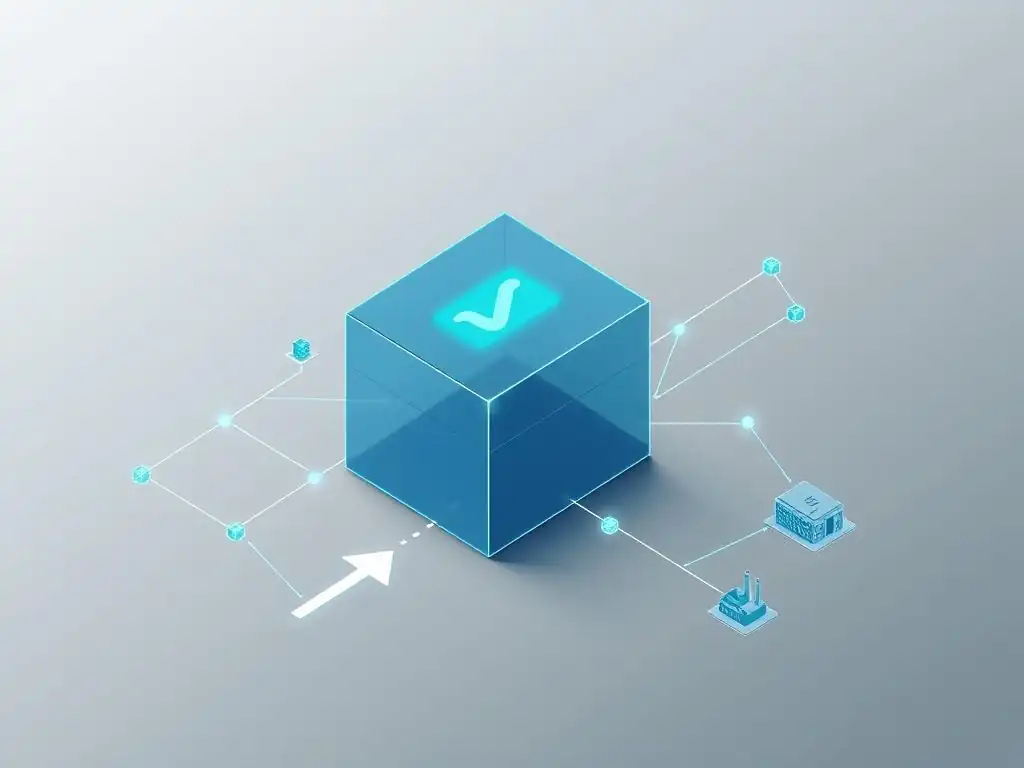
Supply chain transparency and authentication are critical for ensuring product quality, preventing counterfeiting, and building consumer trust. Blockchain technology offers a promising platform for tracking products throughout the supply chain. However, revealing all supply chain data on a public blockchain can expose sensitive business information, such as supplier relationships and pricing details. Zero-Knowledge Proofs can be applied to supply chain authentication to verify product origin and authenticity while preserving the confidentiality of sensitive supply chain information.
Consider a consumer wanting to verify the origin of a product, ensuring it is ethically sourced and not counterfeit. Using ZKPs, the consumer or a verifying authority can check the product's blockchain-based provenance record and generate a proof that confirms the product originated from a certified supplier, without revealing the supplier's identity, specific location, or other commercially sensitive details recorded on the blockchain. The ZKP verifies the authenticity and origin claim without disclosing unnecessary information about the supply chain.
This application of ZKPs allows for verifiable supply chain authentication, enhancing transparency and trust, while simultaneously protecting sensitive business information and maintaining competitive advantages for participating companies. This balance between transparency and confidentiality is crucial for wider adoption of blockchain in supply chain management.
Healthcare Data Privacy: Patient Consent and Selective Data Disclosure
Healthcare data is highly sensitive, and its privacy is paramount. Blockchain can enhance healthcare data management by providing secure and auditable records. However, sharing healthcare data on a blockchain, even in an encrypted format, raises privacy concerns. Zero-Knowledge Proofs can play a vital role in enabling privacy-preserving healthcare data sharing and management, particularly for patient consent and selective data disclosure. Patients can use ZKPs to control who can access their healthcare data and for what purpose, without revealing the data itself to unauthorized parties.
For example, a patient might want to grant a specific doctor access to their allergy information for a consultation, without revealing their entire medical history. Using ZKPs, the patient can generate a proof that they consent to share their allergy information with the doctor, and the doctor can verify this consent and access only the necessary data. The patient's full medical record remains private and inaccessible without further specific consent and ZKP authorization.
This fine-grained access control, enabled by ZKPs, empowers patients with greater control over their healthcare data, promotes data privacy, and facilitates secure and compliant data sharing for improved healthcare delivery. The application of ZKPs in healthcare is crucial for building trust and enabling the responsible use of blockchain technology in this sensitive domain.
Benefits of Using ZKPs for Blockchain-Based Digital Identity
Enhanced Privacy and Data Protection
The most significant benefit of using Zero-Knowledge Proofs for blockchain-based digital identity is the enhanced privacy and data protection they offer. Traditional identity systems, even those built on blockchain, often require users to disclose personal information, creating vulnerabilities and privacy risks. ZKPs fundamentally shift this paradigm by enabling authentication and verification without data disclosure.
Users can prove claims about their identity without revealing the underlying sensitive data, minimizing their digital footprint and reducing the attack surface for privacy breaches. This inherent privacy-preserving nature of ZKPs aligns perfectly with the core principles of blockchain and the growing demand for user-centric and privacy-respecting digital solutions.
By minimizing data exposure, ZKPs significantly reduce the risks associated with data breaches, identity theft, and unauthorized surveillance. In a world increasingly concerned about data privacy, ZKP-based identity systems offer a compelling alternative to traditional approaches. Users gain greater control over their personal information, and organizations can minimize their liability and compliance burdens related to handling sensitive data. This enhanced privacy is not just a theoretical advantage; it translates to tangible benefits for individuals and organizations alike, fostering trust and enabling more secure and privacy-conscious digital interactions.
Increased Security and Resistance to Identity Theft
Beyond enhanced privacy, Zero-Knowledge Proofs also contribute to increased security and resistance to identity theft in blockchain-based digital identity systems. Traditional password-based authentication is prone to phishing, brute-force attacks, and credential stuffing. Even multi-factor authentication methods can be circumvented. ZKPs offer a more robust security model by eliminating the reliance on shared secrets like passwords and reducing the value of stolen credentials. Since ZKPs do not reveal any sensitive information during authentication, there is less to steal and less to exploit.
In a ZKP-based system, even if a malicious actor intercepts a ZKP, they gain no useful information that can be reused for impersonation or identity theft. The proof is specific to a particular authentication request and reveals nothing about the user's underlying credentials. This inherent security advantage makes ZKP authentication significantly more resistant to common identity theft techniques. Furthermore, ZKPs can be integrated with decentralized identity (DID) frameworks to create self-sovereign identity solutions where users have full control over their credentials and how they are used for authentication, further enhancing security and resilience against identity-related attacks.
Improved Scalability and Efficiency in Identity Verification
While initially perceived as computationally intensive, advancements in ZKP technology, particularly with zk-SNARKs and zk-STARKs, have led to significant improvements in scalability and efficiency for identity verification. zk-SNARKs, for example, are known for their succinct proof sizes and fast verification times. This efficiency is crucial for blockchain applications that require rapid and scalable identity verification processes, such as decentralized exchanges, online gaming platforms, and high-volume transaction systems. The non-interactive nature of many ZKP schemes also contributes to efficiency by minimizing communication overhead between provers and verifiers.
Compared to traditional identity verification methods that may involve manual document review or centralized identity providers, ZKP-based systems can offer faster and more automated verification processes. This is particularly beneficial in decentralized environments where speed and efficiency are paramount. Furthermore, the computational costs associated with ZKP generation and verification are continuously being optimized through ongoing research and development in cryptography. As ZKP technology matures, its scalability and efficiency will further improve, making it an increasingly viable and attractive solution for blockchain-based digital identity systems requiring high performance and throughput.
Reduced Regulatory Burden and Compliance Costs
Implementing Zero-Knowledge Proofs for digital identity can lead to a reduction in regulatory burden and compliance costs for organizations operating in regulated industries. Traditional compliance processes, such as KYC/AML, often involve collecting, storing, and processing large amounts of sensitive personal data, which incurs significant compliance costs and regulatory scrutiny. ZKPs offer a privacy-preserving approach to compliance that can potentially reduce these burdens. By enabling organizations to verify compliance without accessing or storing the underlying sensitive data, ZKPs can simplify regulatory adherence and minimize the risk of non-compliance penalties.
For example, using ZKP-based KYC/AML solutions, financial institutions can verify that users meet regulatory requirements without collecting and storing copies of their identity documents. This reduces the data storage burden, minimizes the risk of data breaches, and simplifies compliance audits.
Furthermore, the inherent transparency and auditability of blockchain, combined with the privacy-preserving nature of ZKPs, can enhance regulatory trust and facilitate smoother compliance processes. As regulations around data privacy and digital identity become more stringent, the ability of ZKPs to enable compliance while preserving privacy will become increasingly valuable for organizations seeking to navigate the evolving regulatory landscape effectively and efficiently.
Challenges and Limitations of Zero-Knowledge Proof Authentication
Computational Complexity and Performance Considerations
One of the primary challenges associated with Zero-Knowledge Proof authentication is the computational complexity involved in generating and verifying proofs. While advancements like zk-SNARKs and zk-STARKs have improved efficiency, ZKP computations can still be resource-intensive, particularly for complex statements or large datasets. Generating ZKPs often requires significant processing power and time, which can impact the user experience, especially on resource-constrained devices like mobile phones. Verification, while generally faster than proof generation, can also introduce latency in authentication processes, especially for large-scale systems with high transaction volumes.
The computational overhead of ZKPs needs to be carefully considered when designing and implementing ZKP-based identity systems. Optimizations in ZKP algorithms, hardware acceleration, and efficient software implementations are crucial to mitigate performance bottlenecks and ensure practical usability. Furthermore, the choice of ZKP type (zk-SNARKs, zk-STARKs, Bulletproofs) should be tailored to the specific application requirements, considering the trade-offs between proof size, verification speed, and computational cost. Ongoing research and development are continuously pushing the boundaries of ZKP efficiency, but computational complexity remains a significant challenge that needs to be addressed for wider adoption in real-world applications.
Key Management and Trust Assumptions
Zero-Knowledge Proof systems rely on cryptographic keys and specific trust assumptions, which introduce their own set of challenges. Like any cryptographic system, secure key management is crucial for ZKP authentication. The private keys used to generate ZKPs must be securely stored and protected against unauthorized access. Key compromise can undermine the security of the entire system, potentially allowing malicious actors to generate fraudulent proofs or impersonate legitimate users. Robust key management practices, including secure key generation, storage, distribution, and revocation mechanisms, are essential for maintaining the integrity of ZKP-based identity systems.
Furthermore, many ZKP schemes, particularly zk-SNARKs, rely on a "trusted setup" phase. This setup process requires the generation of initial parameters that are used by both provers and verifiers. If this setup is not performed correctly or if the trusted setup parameters are compromised, it can potentially weaken or invalidate the security guarantees of the ZKP system. While zk-STARKs offer a "transparent setup" as an alternative, trusted setups remain a concern for some ZKP types. Understanding and mitigating these trust assumptions and implementing robust key management practices are critical for building secure and reliable ZKP-based identity solutions.
The Learning Curve and Implementation Barriers
The complexity of Zero-Knowledge Proof cryptography and the relative novelty of ZKP technology contribute to a significant learning curve and implementation barriers. Developing and deploying ZKP-based identity systems requires specialized cryptographic expertise and a deep understanding of ZKP protocols, algorithms, and security considerations. The mathematical foundations of ZKPs can be challenging to grasp for developers and system architects without a strong background in cryptography. This lack of readily available expertise can hinder the adoption of ZKPs, especially for organizations that lack in-house cryptographic capabilities.
Furthermore, the tooling and libraries for ZKP development are still maturing compared to more established cryptographic techniques. Implementing ZKP protocols from scratch can be a complex and error-prone process. While progress is being made in creating more user-friendly ZKP development frameworks and libraries, the implementation barriers remain a significant hurdle. Overcoming these challenges requires increased education and training in ZKP cryptography, the development of more accessible ZKP tooling, and the growth of a skilled ZKP development community to facilitate wider adoption and integration of ZKPs into real-world digital identity systems.
Quantum Resistance and Long-Term Security Considerations
As quantum computing technology advances, there are growing concerns about the potential vulnerability of current cryptographic systems, including some Zero-Knowledge Proof schemes, to quantum attacks. Certain ZKP constructions rely on cryptographic assumptions that are believed to be broken by quantum computers, such as the discrete logarithm problem and elliptic curve cryptography. While quantum computers are not yet a practical threat to most ZKP systems, the long-term security of ZKP-based identity solutions needs to consider quantum resistance.
Research is ongoing to develop quantum-resistant ZKP schemes that are resilient to attacks from both classical and quantum computers. Lattice-based cryptography and code-based cryptography are promising candidates for building quantum-resistant ZKPs. Migrating to quantum-resistant ZKP algorithms and protocols will be crucial for ensuring the long-term security of ZKP-based digital identity systems in the post-quantum era. Proactive planning and investment in quantum-resistant cryptography are essential to safeguard the future of privacy-preserving authentication and maintain the security of digital identities against evolving technological threats.
The Future of Zero-Knowledge Proofs in Blockchain Identity
Advancements in ZKP Technology and Standardization
The field of Zero-Knowledge Proofs is rapidly evolving, with ongoing research and development driving significant advancements in ZKP technology. Researchers are continuously working on improving the efficiency, scalability, and security of ZKP algorithms and protocols. New ZKP constructions are being developed that offer better performance, stronger security guarantees, and enhanced usability. For instance, advancements in recursive ZKPs are enabling more complex computations and composability, while research into zero-knowledge virtual machines (zkVMs) promises to bring ZKP capabilities to general-purpose computing.
Standardization efforts are also crucial for the widespread adoption of ZKPs. Standardizing ZKP protocols, interfaces, and data formats will improve interoperability between different ZKP systems and facilitate easier integration into existing identity frameworks and applications. Industry consortia and standards bodies are beginning to recognize the importance of ZKPs and are working on developing relevant standards. These advancements and standardization efforts will pave the way for more practical, efficient, and interoperable ZKP-based identity solutions, accelerating their deployment and impact in the digital identity landscape.
Integration with Existing Identity Frameworks
For Zero-Knowledge Proofs to achieve widespread adoption in digital identity, seamless integration with existing identity frameworks and standards is essential. This includes integration with established identity protocols like OAuth 2.0 and OpenID Connect, as well as emerging decentralized identity standards such as W3C Decentralized Identifiers (DIDs) and Verifiable Credentials (VCs). Developing bridge technologies and interoperability layers that allow ZKP-based authentication to work smoothly within existing identity ecosystems will be critical for practical deployment.
Integration efforts should focus on making ZKPs transparent and easy to use for developers and end-users. Abstracting away the underlying cryptographic complexity and providing user-friendly APIs and SDKs will lower the barrier to entry and encourage wider adoption. Furthermore, integrating ZKPs with existing identity management platforms and services will allow organizations to incrementally adopt privacy-enhancing authentication without requiring a complete overhaul of their identity infrastructure. This gradual and interoperable integration approach will facilitate the smooth transition towards a more privacy-preserving and secure digital identity landscape.
The Role of ZKPs in the Metaverse and Web3 Identity
The rise of the metaverse and Web3 is creating new demands for digital identity solutions that are both user-centric and privacy-preserving. In these immersive and decentralized environments, users need to interact, transact, and prove their identity without compromising their personal information. Zero-Knowledge Proofs are ideally suited to address these emerging identity challenges in the metaverse and Web3. ZKPs can enable users to seamlessly authenticate themselves across different metaverse platforms and Web3 applications while maintaining control over their identity data.
In the metaverse, ZKPs can be used for privacy-preserving avatar customization, age verification for age-restricted content, and secure in-world transactions. In Web3 applications, ZKPs can facilitate private and compliant interactions with decentralized finance (DeFi) protocols, decentralized autonomous organizations (DAOs), and non-fungible token (NFT) marketplaces.
The ability of ZKPs to enable privacy-preserving authentication and selective attribute disclosure aligns perfectly with the principles of user sovereignty and data privacy that are central to the vision of the metaverse and Web3. As these new digital realms continue to evolve, ZKPs are poised to play a critical role in shaping the future of digital identity in immersive and decentralized environments.
Conclusion: Zero-Knowledge Proofs and the Future of Privacy-Preserving Digital Identity
Zero-Knowledge Proof Authentication: A Paradigm Shift for Blockchain Security
Zero-Knowledge Proof authentication represents a paradigm shift in how we approach security and privacy in blockchain and digital identity. By enabling authentication without data disclosure, ZKPs address a fundamental tension between the need for security and the imperative for privacy in the digital age. This technology moves us away from traditional models where users must surrender personal information for verification, towards a future where individuals can prove their identity and claims without revealing sensitive data. This shift is particularly significant for blockchain, where transparency and immutability can inadvertently expose user data, creating privacy vulnerabilities.
ZKPs offer a powerful cryptographic tool to reconcile the transparency of blockchain with the fundamental right to privacy. By embracing ZKP authentication, blockchain-based identity systems can achieve a new level of security and user-centricity, fostering greater trust and confidence in decentralized technologies. This paradigm shift is not just about technological advancement; it's about redefining the relationship between users and their digital identities, empowering individuals with greater control and agency over their personal information in an increasingly interconnected and data-driven world.
Embracing Privacy-Enhancing Technologies for a More Secure and Trustworthy Digital Future
The future of digital identity hinges on embracing privacy-enhancing technologies like Zero-Knowledge Proofs. As concerns about data privacy and security continue to grow, ZKPs offer a crucial pathway towards building a more secure and trustworthy digital future.
By prioritizing privacy in the design and implementation of digital identity systems, we can create a digital landscape where individuals can interact online with confidence, knowing that their personal information is protected and their privacy is respected. ZKPs are not just a theoretical concept; they are a practical and increasingly viable technology that can be deployed today to enhance privacy and security across a wide range of applications.
Investing in research, development, and standardization of ZKP technologies is essential to unlock their full potential and drive their widespread adoption. Educating developers, policymakers, and the public about the benefits of ZKPs and privacy-enhancing technologies is also crucial for fostering a culture of privacy and security in the digital age. By embracing ZKPs and other privacy-preserving innovations, we can collectively build a digital future that is not only more secure but also more equitable, user-centric, and respectful of individual privacy rights.
Frequently Asked Questions
How does Zero-Knowledge Proof authentication enhance privacy compared to traditional methods?
Zero-Knowledge Proofs (ZKPs) allow users to prove their identity without revealing the actual identifying information. This provides significantly enhanced privacy compared to methods that require sharing sensitive data. It verifies a claim without disclosing the underlying proof.
What are the primary benefits of using Zero-Knowledge Proofs for digital identity management on the blockchain?
The main benefits include increased privacy for users, enhanced security against identity theft, and reduced reliance on centralized identity providers. It also enables selective disclosure of identity attributes.
Can Zero-Knowledge Proof authentication be implemented across different blockchain platforms?
Yes, ZKPs can be implemented on various blockchain platforms, though the specific implementation details may differ. The crucial aspect is the cryptographic compatibility between the ZKP system and the blockchain's smart contract capabilities.
What are the potential challenges or limitations of adopting Zero-Knowledge Proof authentication for widespread digital identity?
Challenges include the computational complexity of generating and verifying ZKPs, the need for standardization and interoperability across different systems, and potential regulatory considerations regarding data privacy.
How does "Zero-Knowledge Proof Authentication" relate to the broader concept of "Decentralized Identity (DID)"?
ZKP authentication can be a key component of a DID system, providing a privacy-preserving way to verify claims associated with a user's DID. This allows users to control their identity data and share it selectively, furthering the goals of decentralized identity.
Final Reflection: Embracing Trust Through Verifiable Privacy
The exploration of Zero-Knowledge Proofs (ZKPs) for digital identity, as presented in this article, transcends mere technological innovation; it speaks directly to the growing need for privacy-preserving authentication in an increasingly interconnected world. The ability to verify identity without revealing sensitive information is no longer a futuristic ideal, but a crucial requirement for building trust and security in decentralized systems and beyond.
This journey into ZKP authentication has profoundly influenced my understanding of the delicate balance between security and privacy. Witnessing the potential of ZKPs to reshape digital interactions, fostering trust while safeguarding individual autonomy, is truly inspiring. > As Alan Kay wisely stated, "Technology is anything that wasn't around when you were born." ZKPs, while relatively new, represent a paradigm shift in how we approach identity verification, moving away from centralized databases and towards user-centric control.
Now, as we stand at the cusp of this technological revolution, I urge you to reflect on the power of verifiable privacy. Consider how ZKP authentication can be applied in your own life, in your own community, to build a more secure, equitable, and privacy-respecting future. Let us embrace the potential of ZKPs to empower individuals and foster trust in the digital age.
Unlock Your Privacy: Start Building with Zero-Knowledge!
Thank you for exploring how zero-knowledge proofs can transform digital identity by enhancing privacy on the blockchain. Now that you've seen the potential, are you ready to take the next step?
Here are some ways to deepen your involvement:
- Start experimenting with a zero-knowledge proof library or framework. Explore existing tools and begin prototyping your own solutions.
- Share this article with your network to inspire discussions about the future of privacy-preserving digital identities on the blockchain. Let’s expand the conversation!
- Contribute to open-source projects dedicated to zero-knowledge proof implementations to help build a more secure and private digital future.
What challenges do you anticipate in implementing zero-knowledge proofs for digital identity? How can we work together to overcome them? Share your thoughts in the comments below!
Leave a Reply