
Beyond Transparency: How Blockchain Empowers Consumers in the Future Supply Chain


Welcome to Blockchain Trends, your go-to resource for navigating the evolving landscape of blockchain technology!
Ever wonder how blockchain can build unshakeable consumer trust in the products you buy? Dive into our latest article, "Beyond Transparency: How Blockchain Empowers Consumers in the Future Supply Chain," where we explore how blockchain supply chain consumer trust is revolutionizing industries, offering unprecedented visibility and accountability. Discover the tangible benefits for both businesses and consumers, and explore the exciting possibilities that lie ahead. Intrigued? Keep reading to uncover the power of blockchain to reshape the future of consumption.
Beyond Transparency: How Blockchain Empowers Consumers in the Future Supply Chain
- Introduction: The Evolving Role of Blockchain in Supply Chain Consumer Trust
- Blockchain Supply Chain: Building Consumer Confidence Through Immutable Data
- Enhancing Product Provenance and Authenticity with Blockchain Technology
- Blockchain for Supply Chain: Empowering Consumers with Data Ownership and Control
- The Future of Blockchain-Driven Supply Chains: A Consumer-Centric Approach
- Overcoming Challenges to Blockchain Adoption in Supply Chains
- Case Studies: Real-World Examples of Blockchain Improving Consumer Trust
- Conclusion: Blockchain as a Catalyst for Consumer Empowerment and Supply Chain Transformation
-
Frequently Asked Questions
- How does blockchain technology enhance transparency in the supply chain?
- What are the key benefits of using blockchain in the supply chain for consumers?
- How can blockchain help improve consumer trust in product authenticity?
- What role does decentralized finance (DeFi) play in the future of blockchain-powered supply chains?
- What are some potential challenges to widespread adoption of blockchain in supply chains?
- Final Reflection: Rebuilding Trust, Block by Block
- Unleash Your Supply Chain Power!
Introduction: The Evolving Role of Blockchain in Supply Chain Consumer Trust
The Current State of Supply Chains and the Need for Enhanced Consumer Trust
Global supply chains today are vast, complex networks spanning multiple continents, intermediaries, and processes. While highly efficient in moving goods, this complexity often creates opacity, making it difficult for consumers to truly understand the journey of a product from its raw materials to their hands. This lack of visibility fuels consumer skepticism regarding product authenticity, ethical sourcing, and safety standards. Incidents involving contaminated goods or fraudulent products frequently surface, eroding public confidence and highlighting the urgent need for greater transparency and accountability throughout the supply chain.
The current system relies heavily on paper trails and centralized databases, which are susceptible to errors, tampering, and data silos. This makes verifying claims about origin, quality, and sustainability challenging for both businesses and consumers. The absence of a unified, trustworthy record hinders efforts to build robust blockchain supply chain consumer trust. Consumers increasingly demand verifiable information about the products they purchase, driven by concerns about health, environmental impact, and social responsibility, pushing businesses to find more reliable ways to share provenance data.
Blockchain's Potential to Revolutionize Supply Chain Transparency and Beyond
Blockchain technology offers a fundamentally new approach to managing supply chain data by providing a decentralized, immutable, and transparent ledger. Unlike traditional systems, information recorded on a blockchain is extremely difficult to alter or delete once validated, creating a reliable history of a product's journey. This inherent immutability is key to unlocking unprecedented levels of transparency, allowing all authorized participants, potentially including consumers, to trace a product back to its origin and verify claims made by manufacturers or retailers.
Beyond simple transparency, blockchain's capabilities extend to enabling greater efficiency, security, and automation within the supply chain. Smart contracts, self-executing contracts with the terms of the agreement directly written into code, can automate transactions and processes based on predefined conditions, reducing delays and the risk of human error. By linking physical products to digital tokens on a blockchain, businesses can create digital identities for goods, making tracking more precise and verifiable. This technological shift promises to fundamentally reshape the relationship between businesses and consumers, fostering a new era of blockchain supply chain consumer trust built on verifiable data.
Blockchain Supply Chain: Building Consumer Confidence Through Immutable Data
Understanding Blockchain's Core Principles: Immutability, Transparency, and Decentralization
At its heart, blockchain is a distributed ledger technology that records transactions across many computers. Each transaction is grouped into a 'block', which is then cryptographically linked to the previous block, forming a 'chain'. This structure, combined with consensus mechanisms that require agreement among participants before a new block is added, makes the historical record incredibly secure and resistant to tampering. Immutability means that once data is recorded, it cannot be changed without altering subsequent blocks, which is practically impossible across a distributed network.
Transparency, in the context of a public or permissioned blockchain used in supply chains, means that transaction data is accessible to authorized participants. While sensitive details can be permissioned, the existence and sequence of transactions provide an auditable trail. Decentralization means that no single entity controls the entire database; instead, copies are maintained across the network. These core principles – immutability, transparency, and decentralization – combine to create a system far more trustworthy than centralized databases, laying a foundation for enhanced blockchain supply chain consumer trust.
How Blockchain Creates a Single Source of Truth for Product Origin and Journey
Implementing blockchain in a supply chain allows for the creation of a shared, immutable record of a product's lifecycle. As a product moves through different stages – manufacturing, packaging, shipping, distribution – relevant data points (e.g., location, temperature, handling, quality checks) can be recorded on the blockchain by authorized parties. This creates a verifiable digital history or 'digital twin' for each item or batch.
Unlike traditional systems where each participant might maintain their own separate records, often leading to discrepancies or delays in information sharing, the blockchain acts as a single source of truth. All approved network participants access the same, up-to-date ledger. This unified view eliminates information silos and provides a clear, auditable trail of provenance data. For consumers, this means they could potentially access this verified history, confirming details about where and how their product was produced, thereby significantly boosting blockchain supply chain consumer trust.
The Impact of Blockchain on Food Safety and Consumer Assurance
Food safety is a critical area where blockchain offers immense potential to enhance consumer assurance. The complex nature of food supply chains, involving numerous handlers and rapid movement of perishable goods, makes tracing contamination events notoriously difficult and time-consuming. Outbreaks of foodborne illnesses can take days or even weeks to trace back to their source using traditional methods, leading to widespread recalls and significant health risks.
Blockchain can drastically reduce this tracing time. By recording data points such as farm origin, processing dates, shipping routes, and temperature logs on an immutable ledger, the path of a specific food item can be identified in minutes, not days. For example, Walmart's blockchain initiative demonstrated the ability to trace a mango back to its farm in seconds, a process that previously took seven days. This rapid traceability allows for targeted recalls, minimizing waste and public health risks, and provides consumers with confidence that food provenance and safety data is reliable, directly contributing to blockchain supply chain consumer trust.
Enhancing Product Provenance and Authenticity with Blockchain Technology
Combating Counterfeiting and Fraud: Blockchain's Role in Verifying Product Authenticity
Counterfeiting is a multi-billion dollar problem affecting numerous industries, from luxury goods and pharmaceuticals to electronics and apparel. Fake products not only cost companies revenue but can also pose serious health and safety risks to consumers (e.g., counterfeit medications). Traditional anti-counterfeiting measures, such as holograms or serial numbers, can often be replicated.
Blockchain provides a robust mechanism to verify product authenticity. By assigning a unique digital identity to each product (often linked via a QR code or NFC tag on the physical item), and recording its journey on the blockchain from manufacturing onwards, consumers can scan the item and verify its legitimacy against the immutable ledger. If an item's digital history doesn't match the expected path, or if multiple items claim the same unique ID, it's a strong indicator of a counterfeit. This direct verification empowers consumers and builds significant blockchain supply chain consumer trust.
Tracking Product Journey: From Origin to Consumer, Step-by-Step on the Blockchain
A key benefit of blockchain in supply chains is its ability to provide a detailed, step-by-step record of a product's journey. Each time a product changes hands, undergoes a transformation (like processing), or reaches a new location, this event can be recorded as a transaction on the blockchain. Data points might include timestamps, locations (GPS coordinates), responsible parties, and condition parameters (like temperature for cold chain goods).
This granular tracking creates a comprehensive digital history accessible to authorized parties. A consumer scanning a product could potentially see its manufacturing date, the factory it came from, its shipping route, and even details about its handling at various distribution centers. This level of transparency goes far beyond what is typically available today and allows consumers to gain deeper insights into the products they buy, reinforcing blockchain supply chain consumer trust by providing verifiable evidence of provenance and handling.
Use Cases: Blockchain Implementation in Pharmaceuticals and Luxury Goods
The pharmaceutical industry grapples with the critical issue of counterfeit drugs, which can be ineffective or even harmful. Projects like MediLedger leverage blockchain to create an immutable ledger of drug transactions across the supply chain, from manufacturer to dispenser. This system allows stakeholders, including potentially regulators and pharmacists, to verify the legitimacy of a drug's journey and ensure it hasn't been diverted or tampered with. While direct consumer access is still evolving, ensuring drug integrity at every step is vital for public health and builds indirect consumer trust in the supply chain.
In the luxury goods sector, blockchain is being used to combat counterfeiting and provide verifiable proof of ownership and authenticity for high-value items like diamonds, watches, and art. De Beers' Tracr platform, for instance, tracks diamonds from mine to retailer, recording unique characteristics and ownership transfers on a blockchain. Consumers purchasing a diamond tracked on Tracr can receive a digital certificate verifying its origin and journey, providing assurance of its authenticity and ethical sourcing. This direct interaction with verifiable data significantly enhances blockchain supply chain consumer trust for high-value purchases.
Blockchain for Supply Chain: Empowering Consumers with Data Ownership and Control
Giving Consumers Access to Verified Product Information: Empowering Informed Decisions
A significant empowerment aspect of blockchain in supply chains is the potential for consumers to directly access verified information about the products they are interested in or have purchased. By scanning a QR code on packaging, consumers could be directed to a secure interface displaying key data points recorded on the blockchain: origin, manufacturing date, ingredients, certifications (e.g., organic, fair trade), sustainability metrics, and the product's journey through the supply chain.
This direct access to immutable data bypasses potentially biased marketing claims and provides consumers with objective facts, enabling them to make truly informed purchasing decisions based on their values and priorities. Whether choosing ethically sourced coffee or verifying the components of an electronic device, having verifiable data at their fingertips shifts power to the consumer and builds stronger blockchain supply chain consumer trust. This level of transparency creates a direct line of communication built on verifiable facts.
Building Trust Through Enhanced Traceability: Knowing Where Your Products Come From
Enhanced traceability is a core benefit of blockchain for supply chain management that directly impacts consumer trust. In traditional systems, tracing a product's origin can be difficult or impossible for the end consumer. With a blockchain-enabled supply chain, the entire path of a product is recorded and potentially auditable. This means a consumer buying a piece of furniture could potentially trace the wood back to the specific forest, or someone buying coffee could see the farm where the beans were grown.
This level of granular traceability provides assurance regarding product provenance, quality, and ethical considerations. It allows consumers to verify claims about sourcing, labor practices, and environmental impact directly from the immutable record. Knowing the complete journey of a product, supported by verifiable blockchain data, fosters a deep sense of trust in the brand and the supply chain itself, solidifying blockchain supply chain consumer trust.
Consumer Rights and Data Privacy in Blockchain-Enabled Supply Chains
While blockchain offers transparency, it also introduces important considerations regarding consumer rights and data privacy. As more data is recorded on the ledger, including potentially data linked to individual products purchased by consumers (e.g., warranty information, recall notifications), ensuring responsible data management is crucial. Public blockchains are inherently transparent, meaning data is visible to all, which may not be suitable for all types of sensitive information.
Permissioned or private blockchains offer more control over data access, allowing businesses to grant specific permissions to consumers or restrict visibility of sensitive information. However, designing these systems requires careful consideration of data ownership – who owns the data recorded about a product once it's purchased? Ensuring compliance with data protection regulations like GDPR is paramount. The industry must navigate these challenges to build blockchain supply chain consumer trust by ensuring that increased traceability doesn't come at the expense of consumer privacy and data rights.
The Future of Blockchain-Driven Supply Chains: A Consumer-Centric Approach
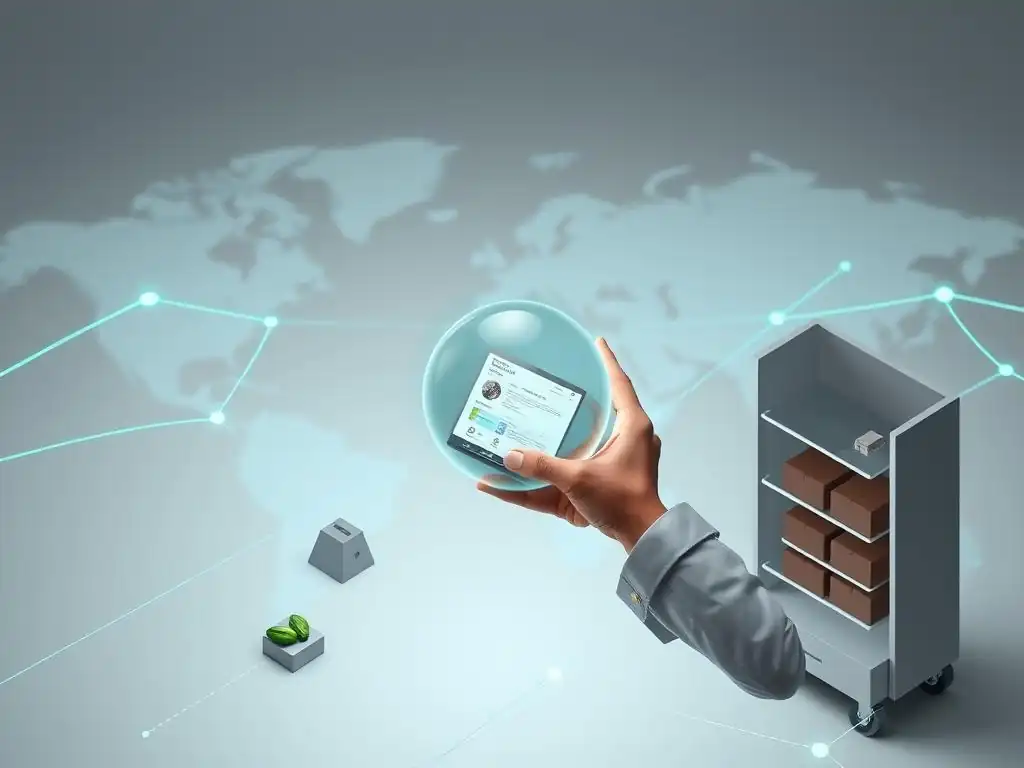
Beyond Traceability: Exploring New Applications of Blockchain for Consumer Engagement
While traceability is a primary benefit, the future of blockchain in supply chains extends beyond simply tracking goods. It offers opportunities for deeper consumer engagement and interaction. Imagine receiving loyalty points or digital collectibles linked to your purchase history on a blockchain, verifying your ownership of a product in a verifiable way, or participating in a decentralized autonomous organization (DAO) related to a brand's sourcing practices.
Blockchain can facilitate direct communication channels between consumers and producers, allowing for feedback loops that are transparent and verifiable. Consumers could potentially influence product development or supply chain improvements by participating in tokenized governance models. These applications move beyond passive transparency to active engagement, creating a more dynamic and trusting relationship between brands and their customers, further embedding blockchain supply chain consumer trust.
Smart Contracts and Automated Supply Chain Processes: Ensuring Fair Practices
Smart contracts are self-executing agreements coded onto the blockchain. In a supply chain context, they can automate various processes based on predefined conditions being met. For example, payment to a supplier could be automatically released via a smart contract once a shipment's arrival is verified on the blockchain, or a warranty period could automatically begin upon confirmation of a product reaching the consumer.
This automation reduces the need for intermediaries, minimizes delays, and ensures that agreed-upon terms are executed precisely as coded. For consumers, this translates to greater assurance that business practices within the supply chain are fair and efficient. Automated processes can guarantee timely deliveries, verify fulfillment of conditions (like maintaining cold chain temperature), and streamline post-purchase activities like warranty claims. This transparency in process execution builds confidence and reinforces blockchain supply chain consumer trust.
The Role of Blockchain in Sustainable and Ethical Sourcing: Meeting Consumer Demands
Consumers are increasingly demanding products that are sustainably produced and ethically sourced. Verifying claims about fair labor practices, environmental impact, and sustainable resource management is challenging with traditional methods, often relying on third-party certifications that can be opaque. Blockchain provides a verifiable way to track and prove these claims.
By recording data points related to sustainability certifications, carbon footprint measurements, labor condition audits, and responsible resource extraction directly onto the blockchain, companies can provide immutable evidence of their practices. Consumers can scan a product and verify that it meets specific sustainability standards or was produced under fair labor conditions. This verifiable proof allows consumers to support brands that align with their values, and it incentivizes companies to adopt more responsible practices, knowing they can transparently demonstrate their efforts, thereby enhancing blockchain supply chain consumer trust related to ethical sourcing.
Overcoming Challenges to Blockchain Adoption in Supply Chains
Addressing Scalability and Interoperability Issues for Widespread Implementation
Despite its promise, widespread blockchain adoption in complex global supply chains faces significant challenges. Scalability is a major hurdle; current blockchain networks can struggle to process the sheer volume of transactions generated by high-volume supply chains in real-time. While solutions like layer-2 scaling and specialized blockchain platforms are emerging, they require further development and standardization.
Interoperability is another critical issue. Global supply chains involve diverse systems used by different companies and across various industries. For blockchain to be truly effective, different blockchain networks and legacy systems need to be able to communicate and share data seamlessly. Developing standards and protocols for interoperability is essential to connect fragmented supply chain ecosystems and enable the flow of data required to build comprehensive blockchain supply chain consumer trust.
Data Security and Privacy Considerations in Blockchain Supply Chains
While blockchain is inherently secure due to its cryptographic nature, implementing it in a supply chain requires careful consideration of data security and privacy. Deciding what data goes on the blockchain, who has permission to write and read it, and how to handle sensitive business information or personally identifiable consumer data are complex issues. Putting too much sensitive data on an immutable ledger can create privacy risks.
Using permissioned blockchains where access is restricted, employing data encryption, and storing only hashes or references to off-chain data are potential strategies. However, these approaches add complexity. Ensuring that the system design protects sensitive information while providing necessary transparency for stakeholders, including consumers (where appropriate), is vital for maintaining trust and complying with regulations. Balancing transparency with privacy is key to fostering blockchain supply chain consumer trust.
The Importance of Collaboration and Standardization for Effective Blockchain Integration
Implementing blockchain across a supply chain requires collaboration among all participants, from raw material suppliers to manufacturers, logistics providers, distributors, and retailers. This involves agreeing on data standards, protocols, and governance models for the blockchain network. Without widespread adoption and cooperation among stakeholders, the network effect needed to build a comprehensive, trustworthy system cannot be achieved.
Standardization efforts are crucial to ensure that data recorded by different parties is consistent and interoperable. Industry consortia and standards bodies are working to define best practices and technical specifications for blockchain in various supply chain sectors. Overcoming the inertia of existing systems and fostering a collaborative environment where competitors share infrastructure for mutual benefit are significant challenges, but necessary steps for blockchain to deliver on its potential for enhancing blockchain supply chain consumer trust.
Case Studies: Real-World Examples of Blockchain Improving Consumer Trust
De Beers - Implementing Blockchain for Enhanced Diamond Traceability and Consumer Engagement
De Beers, a leading diamond company, launched the Tracr platform to provide immutable provenance tracking for diamonds. This initiative aims to address consumer concerns about the origin and ethical sourcing of diamonds. Tracr assigns a unique ID to each rough diamond and records its journey through the value chain – cutting, polishing, manufacturing, and retail – on a distributed ledger. Key attributes and ownership changes are logged at each stage.
Consumers purchasing a diamond tracked on Tracr can potentially access verified information about its origin (e.g., mine country), weight, color, cut, and clarity, as well as confirmation that it has passed through legitimate channels. This level of verifiable data directly combats issues like conflict diamonds and undisclosed synthetics, providing consumers with confidence in the authenticity and ethical journey of their purchase. By offering this transparency, De Beers is actively building blockchain supply chain consumer trust in the diamond industry.
Walmart - Using Blockchain to Track Produce and Ensure Food Safety
Walmart has been a pioneer in implementing blockchain for food traceability, initially focusing on produce like leafy greens and mangoes. Their motivation stemmed from the need to quickly and accurately trace contaminated food items during outbreaks, minimizing health risks and recall costs. Using a Hyperledger Fabric-based blockchain, suppliers are required to record detailed information about produce batches, including farm origin, packing dates, and shipping information.
This system drastically reduced the time required to trace produce from days or weeks down to mere seconds. While direct consumer access to the granular blockchain data is still developing, this enhanced traceability at the enterprise level significantly improves food safety response times. Knowing that a major retailer like Walmart is leveraging immutable ledger technology to ensure the safety and provenance of the food they sell provides a strong foundation for indirect blockchain supply chain consumer trust regarding food items purchased from their stores.
Conclusion: Blockchain as a Catalyst for Consumer Empowerment and Supply Chain Transformation
The Long-Term Impact of Blockchain on Consumer Trust and Brand Loyalty
Blockchain technology is poised to fundamentally alter the dynamics of consumer trust in supply chains. By providing verifiable, immutable data about product origin, journey, and attributes, it moves beyond marketing claims to deliver objective truth. This unprecedented transparency empowers consumers, allowing them to make informed decisions based on facts, not just faith. As consumers become accustomed to accessing this level of detail, their expectations will rise, pushing more businesses to adopt similar technologies.
Brands that successfully implement blockchain to provide genuine transparency and verifiable data will build stronger relationships with consumers based on trust and authenticity. This can translate into enhanced brand loyalty and a competitive advantage in markets where consumers prioritize ethical sourcing, sustainability, and product integrity. The long-term impact is a shift towards a supply chain ecosystem where trust is not assumed but is verifiable through technology, solidifying blockchain supply chain consumer trust as a key differentiator.
Embracing the Future: How Businesses Can Leverage Blockchain to Build Stronger Consumer Relationships
For businesses, embracing blockchain is not just about improving efficiency; it's about building a future-proof strategy centered on consumer empowerment and trust. Companies should explore how to integrate blockchain into their supply chain operations, starting potentially with pilot programs focused on high-value goods, sensitive products like food or pharmaceuticals, or product lines where ethical sourcing is a key consumer concern.
Leveraging blockchain allows businesses to proactively address consumer demands for transparency, combat counterfeiting, and provide verifiable proof of their sustainability and ethical practices. This requires investment in technology, collaboration with supply chain partners, and a commitment to sharing relevant, verified data with consumers in an accessible format. By doing so, businesses can transform their supply chains into engines of trust, fostering deeper connections with customers and positioning themselves as leaders in the age of verifiable blockchain supply chain consumer trust.
Frequently Asked Questions
How does blockchain technology enhance transparency in the supply chain?
Blockchain creates an immutable and shared ledger, allowing consumers to track a product's journey from origin to delivery. This increased visibility builds trust and verifies authenticity, ensuring product integrity.
What are the key benefits of using blockchain in the supply chain for consumers?
Consumers gain greater access to product information, including origin, manufacturing processes, and certifications. This empowers them to make informed purchasing decisions and verify ethical sourcing.
How can blockchain help improve consumer trust in product authenticity?
Blockchain's tamper-proof nature makes it extremely difficult to counterfeit products or alter data. This verifiable record assures consumers of a product's genuineness and provenance.
What role does decentralized finance (DeFi) play in the future of blockchain-powered supply chains?
DeFi can facilitate secure and transparent payments between supply chain participants, reducing reliance on intermediaries. This can streamline financial processes and increase efficiency.
What are some potential challenges to widespread adoption of blockchain in supply chains?
Challenges include scalability issues, the need for industry standardization, and ensuring data privacy across a decentralized network. Overcoming these hurdles is vital for widespread adoption.
Final Reflection: Rebuilding Trust, Block by Block
The journey through blockchain's potential to revolutionize supply chains reveals a powerful truth: transparency alone isn't enough; it's about verifiable trust. We've explored how this technology can empower consumers with unprecedented insight into the origins and journey of the products they purchase, moving beyond mere labels to a system of immutable records. This shift is not just about efficiency; it's about fundamentally reshaping the relationship between businesses and the people they serve.
The impact of this shift extends far beyond the logistical advantages. It's about reclaiming agency in a world increasingly defined by complex and often opaque systems. The ability to trace a product's journey, to verify its ethical sourcing, and to hold businesses accountable for their claims is a powerful force for positive change. As consumers demand more than just products, but also assurances of integrity and sustainability, blockchain offers a pathway to meet those demands. Trust is the glue of life. It's the most essential ingredient in effective communication. It's the foundational principle that holds all relationships.
- Stephen Covey. This quote perfectly encapsulates the importance of trust, which blockchain helps to restore in the supply chain.
Now, consider how you can apply this understanding in your own life. How can you, as a consumer, demand greater transparency and accountability from the brands you support? How can you, as a business leader, embrace technologies like blockchain to build stronger, more trustworthy relationships with your customers? The future of the supply chain is not just about efficiency; it's about building a world where trust is earned, verified, and valued. Let us all strive to be active participants in shaping that future, one block at a time.
Unleash Your Supply Chain Power!
Thank you for diving into the world of blockchain and its potential to revolutionize consumer empowerment. We hope you found valuable insights into how this technology is reshaping supply chains. Now, let's put that knowledge into action!
Here are a few steps you can take to become a more informed and empowered consumer:
- Demand transparency! Start asking your favorite brands about their supply chain practices and whether they utilize blockchain technology for traceability. Make your voice heard!
- Explore blockchain-based consumer platforms. Research apps and platforms that offer supply chain information, allowing you to track the journey of your products from origin to your hands.
- Share this article with friends and family! Help spread awareness about the potential of blockchain to create a more ethical and transparent marketplace.
What specific product's supply chain would you most like to see fully tracked using blockchain technology? Share your thoughts in the comments below!
Leave a Reply