
Blockchain and AI: A Powerful Duo Reshaping the Future of Supply Chain Operations

Welcome to Blockchain Trends, your compass in the ever-evolving world of decentralized technology! Delve into the transformative possibilities of blockchain, moving beyond the hype to uncover its real-world applications. In this article, we'll explore how the powerful synergy of Blockchain AI supply chain optimization is revolutionizing industries. Curious to see how these technologies are creating unprecedented efficiency and transparency? Let's dive in and unlock the future of supply chain operations!
Blockchain and AI: Revolutionizing Supply Chain Operations
- Introduction: The Synergy of Blockchain and AI in Supply Chain
- Supply Chain Challenges Addressed by Blockchain and AI
- Blockchain's Role in Transforming Supply Chain Operations
- AI's Contribution to Supply Chain Optimization
- Optimizing Supply Chains with Blockchain and AI
- Real-World Applications of Blockchain and AI in Supply Chain
- Benefits of Implementing Blockchain and AI in Supply Chain
- Challenges and Considerations for Blockchain AI Implementation
- The Future of Blockchain and AI in Supply Chain Management
- Conclusion: Embracing the Revolution
-
Frequently Asked Questions
- How does blockchain technology enhance supply chain transparency?
- What role does AI play in optimizing blockchain-based supply chains?
- Can blockchain and AI together improve supply chain security?
- What are some potential regulatory challenges for implementing blockchain and AI in supply chains?
- How does the integration of blockchain and AI contribute to supply chain optimization?
- Final Reflection: Embracing the Synergistic Future
- Unleash the Future: Transform Your Supply Chain Today!
Introduction: The Synergy of Blockchain and AI in Supply Chain
Understanding the Combined Power of Blockchain and AI
The modern supply chain is a complex web of interconnected processes, participants, and data flows, often plagued by inefficiencies, lack of visibility, and trust issues. While blockchain technology offers a decentralized, immutable ledger for secure and transparent transactions, artificial intelligence (AI) provides powerful analytical capabilities to process vast amounts of data, identify patterns, and make predictions. The convergence of these two technologies creates a potent synergy capable of fundamentally transforming how supply chains operate, leading to significant improvements in efficiency, transparency, and resilience.
Integrating blockchain and AI allows organizations to move beyond simple automation towards intelligent, self-optimizing supply networks. Blockchain provides the foundation of trust and a single source of truth for tracking goods, transactions, and events across the chain. AI then leverages this reliable, transparent data to gain deeper insights, automate decision-making, and predict potential disruptions or bottlenecks. This combined approach offers a compelling path towards sophisticated Blockchain AI supply chain optimization.
Benefits of Integrating Blockchain and AI for Supply Chain Management
The integration of blockchain and AI unlocks a multitude of benefits for supply chain management. One primary advantage is enhanced data integrity and accessibility. Blockchain ensures that data recorded is tamper-proof and verifiable, providing a trustworthy dataset for AI algorithms to analyze. This leads to more accurate predictions and insights, such as demand forecasting or risk assessment.
Furthermore, combining blockchain's transparency with AI's analytical power significantly improves supply chain visibility. AI can analyze blockchain records to track the journey of goods in real-time, identify potential points of failure, or verify compliance with regulations. This enhanced visibility, coupled with AI-driven insights, enables proactive management, reduces delays, and minimizes losses due to fraud or errors, contributing directly to robust Blockchain AI supply chain optimization efforts.
Supply Chain Challenges Addressed by Blockchain and AI
Addressing Inefficiencies and Lack of Transparency
Traditional supply chains often suffer from significant inefficiencies stemming from fragmented data, manual processes, and a lack of trust among disparate parties. Information silos prevent seamless data flow, leading to delays, errors, and increased costs. For instance, a single shipment might involve dozens of documents and multiple intermediaries, each adding complexity and potential points of failure. This opacity makes it difficult to pinpoint the source of delays or issues, hindering effective problem-solving.
Blockchain provides a shared, immutable ledger accessible to all authorized participants, creating a single version of truth for transactions and product movements. This inherent transparency eliminates information silos and reduces the need for intermediaries, streamlining processes. When combined with AI, which can analyze this transparent data to identify bottlenecks and optimize routes or inventory levels, the duo effectively targets and mitigates these deep-seated inefficiencies, driving significant progress in Blockchain AI supply chain optimization.
Enhancing Visibility and Traceability
Lack of end-to-end visibility is a critical challenge in many supply chains, making it difficult to track goods from origin to destination and verify their authenticity or condition. This limited traceability exposes businesses to risks such as counterfeiting, product diversion, and difficulty in managing recalls effectively. For example, in the food industry, tracing contaminated products back to their source can take days or weeks using traditional methods, potentially endangering public health.
Blockchain's distributed ledger inherently enhances traceability by recording every transaction and movement of a product on an immutable chain. Each step is time-stamped and verifiable by participants. AI algorithms can then process this rich, real-time traceability data from the blockchain to provide granular insights into product location, status, and history. This allows for near-instantaneous tracing in case of issues like recalls, significantly improving response times and building consumer trust through enhanced transparency and contributing heavily to Blockchain AI supply chain optimization.
Blockchain's Role in Transforming Supply Chain Operations
Establishing Transparency and Trust with Blockchain
At its core, blockchain technology is designed to build trust in a trustless environment. By providing a shared, distributed ledger where transactions are recorded chronologically and immutably, it creates an undeniable history of events. In a supply chain context, this means every handoff, every quality check, and every payment can be recorded on the blockchain, visible to all authorized parties. This eliminates information asymmetry and fosters collaboration among participants who may not otherwise trust each other implicitly.
For example, a manufacturer, a logistics provider, and a retailer can all access the same, up-to-date information about a shipment's status recorded on the blockchain. This shared view drastically reduces disputes over shipment details, delivery times, or payment terms. It lays a foundation of transparency that is crucial for the successful implementation of advanced technologies like AI for further analysis and optimization, proving essential for effective Blockchain AI supply chain optimization.
Ensuring Immutability and Data Integrity
One of the defining features of blockchain is the immutability of its records. Once a transaction or data point is added to the blockchain, it cannot be altered or deleted without the consensus of the network participants. This characteristic is vital for maintaining data integrity within complex supply chains where data can be manipulated or lost. Ensuring data accuracy is paramount, especially when dealing with sensitive information like product origin, quality certifications, or compliance records.
This immutability provides a high level of assurance that the data AI systems are analyzing is reliable and hasn't been tampered with. For instance, if quality inspection data for a batch of goods is recorded on a blockchain, both the buyer and the seller can be confident that the data reflects the actual inspection results at the time of recording. This guaranteed data integrity is a fundamental requirement for AI algorithms to generate accurate insights and drive intelligent decisions in Blockchain AI supply chain optimization.
Improving Collaboration through Decentralized Ledgers
Traditional supply chain collaboration often relies on centralized systems or point-to-point communication, leading to inefficiencies and bottlenecks. Each party maintains its own records, which may not always align with others, causing delays and disputes. A decentralized ledger, like a blockchain, offers a shared, single source of truth accessible to all authorized members of the supply chain network.
This shared ledger facilitates seamless information exchange and collaboration. Participants can update and view the status of goods, documents, and payments in near real-time on a platform accessible to everyone involved. This reduces reliance on manual communication, faxes, or emails, speeding up processes like customs clearance or payment releases. Improved collaboration, underpinned by blockchain's transparent and shared data, provides the necessary environment for AI to optimize interactions and flows across the entire network, contributing significantly to Blockchain AI supply chain optimization.
AI's Contribution to Supply Chain Optimization
Predictive Analytics with Artificial Intelligence
AI excels at analyzing vast datasets to identify complex patterns and predict future outcomes. In supply chain management, this capability is revolutionary. AI algorithms can process historical sales data, market trends, weather patterns, economic indicators, and even social media sentiment to forecast demand with greater accuracy than traditional statistical methods. Beyond demand, AI can predict potential supply disruptions, equipment failures, or logistics delays by analyzing data from sensors, maintenance logs, and external events.
For instance, AI can predict that a specific route is likely to experience delays due to upcoming weather conditions or roadwork, allowing logistics managers to reroute shipments proactively. It can also predict which suppliers are at risk of failing to meet delivery deadlines based on their historical performance and current economic factors. These predictive capabilities enable businesses to move from reactive problem-solving to proactive risk management and planning, a core component of effective Blockchain AI supply chain optimization.
Demand Forecasting and Inventory Management with Machine Learning
Accurate demand forecasting is critical for efficient inventory management. Overstocking leads to increased holding costs, while understocking results in lost sales and dissatisfied customers. Machine learning, a subset of AI, can analyze historical sales data, promotional activities, seasonality, and external factors like holidays or competitor actions to generate highly accurate demand forecasts at a granular level (e.g., by product, location, or time).
Based on these sophisticated forecasts, machine learning models can optimize inventory levels across the supply chain network. They can determine optimal stock quantities at different warehouses, recommend replenishment schedules, and even suggest dynamic pricing strategies based on predicted demand and inventory levels. By leveraging machine learning for forecasting and inventory, businesses can significantly reduce waste, improve fill rates, and free up capital, directly contributing to overall Blockchain AI supply chain optimization. For example, companies using ML for forecasting have reported reducing forecast errors by 20-50%.
Automation and Process Optimization with AI
AI also plays a crucial role in automating repetitive tasks and optimizing complex processes within the supply chain. Robotic Process Automation (RPA) powered by AI can handle data entry, document processing, and communication with suppliers or carriers, freeing up human workers for more strategic tasks. AI algorithms can also optimize complex logistical processes, such as warehouse layout, picking routes, or vehicle loading sequences, based on real-time data.
Beyond simple automation, AI can optimize entire workflows. For instance, AI can analyze data from sensors in a warehouse to manage autonomous vehicles or robotic arms for picking and packing. In transportation, AI can optimize delivery routes considering factors like traffic, delivery windows, and vehicle capacity. This level of intelligent automation reduces operational costs, speeds up processes, and minimizes errors, representing a key pillar in achieving comprehensive Blockchain AI supply chain optimization.
Optimizing Supply Chains with Blockchain and AI
Enhancing Traceability and Provenance Verification
The combination of blockchain's immutable record-keeping and AI's analytical power creates a powerful system for enhancing product traceability and verifying provenance. Every step a product takes through the supply chain, from raw material sourcing to final delivery, can be recorded on a blockchain. This includes details like origin, manufacturing date, quality checks, handling conditions (e.g., temperature), and ownership transfers.
AI can then analyze this comprehensive blockchain data to provide instant, verifiable information about a product's journey. For example, a consumer could scan a QR code on a product to access its entire history, proving its authenticity and ethical sourcing. In industries like pharmaceuticals or luxury goods, this is critical for combating counterfeiting. AI can also detect anomalies in the recorded history that might indicate tampering or fraud, flagging suspicious items for investigation, which is a major aspect of Blockchain AI supply chain optimization.
Strengthening Security and Preventing Fraud
Fraud, theft, and cyberattacks pose significant threats to supply chain integrity and security. Traditional systems often rely on centralized databases which are vulnerable to single points of failure and unauthorized access. The decentralized nature of blockchain makes it inherently more resistant to tampering and fraud. Each transaction is verified by multiple nodes on the network, making it extremely difficult for a single party to alter records fraudulently.
AI adds another layer of security by analyzing the data recorded on the blockchain and from other sources to detect suspicious patterns or anomalies that might indicate fraudulent activity or security breaches. For example, AI can identify unusual transaction volumes, unexpected changes in shipment routes, or discrepancies between recorded data and sensor readings. By leveraging AI to monitor blockchain transactions and supply chain activities, organizations can proactively identify and prevent fraudulent actions, significantly enhancing security within the scope of Blockchain AI supply chain optimization.
Streamlining Logistics and Reducing Costs
Logistics is often the most complex and costly part of the supply chain. Inefficiencies in routing, scheduling, load optimization, and communication lead to wasted resources and increased expenses. The combination of blockchain and AI offers significant potential for streamlining logistics operations. Blockchain provides a transparent and trustworthy platform for tracking assets, managing freight contracts, and automating payments via smart contracts upon delivery verification.
AI can leverage this real-time, verified data to optimize logistics decisions. AI algorithms can dynamically calculate the most efficient routes considering real-time traffic, weather, and delivery schedules. They can optimize load configurations for vehicles and containers to maximize capacity. Furthermore, AI can predict potential delays and recommend alternative plans. By automating verification and payment processes through blockchain smart contracts and optimizing physical movements with AI, logistics costs can be significantly reduced, contributing directly to overall Blockchain AI supply chain optimization. Some estimates suggest potential logistics cost reductions of 10-25% through such integrated solutions.
Real-World Applications of Blockchain and AI in Supply Chain
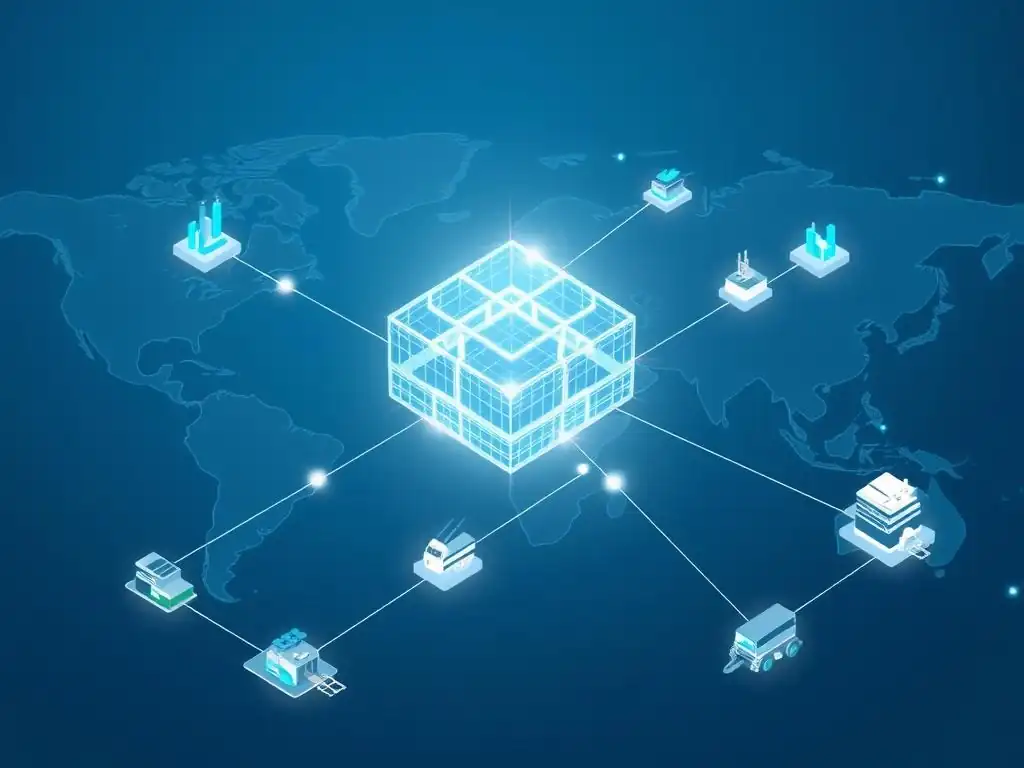
Case Study: De Beers' Diamond Tracking with Blockchain and AI
De Beers, the world's leading diamond company, launched the Tracr platform, a blockchain-based system to track diamonds from mine to retailer. Each rough diamond is registered on the blockchain, and its journey is recorded at every step, including cutting, polishing, and setting into jewelry. This creates an immutable digital trail, verifying the diamond's authenticity and conflict-free origin.
While primarily a blockchain platform, Tracr incorporates AI and machine learning for several functions. AI is used to analyze images and characteristics of each diamond to help identify and match them to their digital record on the blockchain, preventing fraud and ensuring the integrity of the tracking process. This combination of verifiable blockchain data and AI verification is a prime example of Blockchain AI supply chain optimization in a high-value industry. The system has successfully tracked millions of diamonds, providing unprecedented transparency to retailers and consumers.
Use Case: Improving Pharmaceutical Supply Chain Integrity
The pharmaceutical supply chain is highly vulnerable to counterfeiting and diversion, posing serious health risks. Tracking medications effectively from manufacturer to patient is critical. Blockchain can provide a secure, immutable ledger for recording the unique identifier of each drug package, its batch number, expiration date, and every change in custody along the supply chain.
AI can analyze this blockchain data, combined with data from sensors (e.g., temperature logs) and external sources, to monitor the integrity of the supply chain. AI can detect patterns that suggest counterfeiting (e.g., products appearing in unexpected locations), identify shipments that have experienced temperature excursions that could compromise efficacy, or predict areas where diversion is likely to occur. This combined approach ensures product authenticity, safety, and compliance with regulations like the US Drug Supply Chain Security Act (DSCSA), demonstrating the power of Blockchain AI supply chain optimization in a life-critical sector.
Application: Enhancing Automotive Parts Traceability
The automotive industry relies on complex global supply chains with millions of components sourced from numerous suppliers. Ensuring the authenticity and quality of every part is paramount for vehicle safety and reliability. Blockchain can create a transparent, immutable record for each automotive part, tracking its manufacturing details, quality checks, supplier information, and installation history.
AI can leverage this blockchain data to enhance traceability and quality control. AI algorithms can analyze the history of parts to identify potential issues related to specific batches or suppliers, predict the lifespan of components based on usage data recorded on the blockchain, or verify that only certified parts are being used in repairs. This improves recall management, reduces the risk of counterfeit parts entering the supply chain, and enhances overall product quality, showcasing the practical application of Blockchain AI supply chain optimization in a manufacturing context.
Benefits of Implementing Blockchain and AI in Supply Chain
Increasing Efficiency and Productivity
Implementing integrated Blockchain AI supply chain solutions leads to significant increases in operational efficiency and productivity. Automation driven by AI reduces manual tasks such as data entry, documentation, and verification processes. Blockchain's transparency eliminates delays caused by information silos and disputes over data accuracy. Smart contracts on the blockchain can automate payments and contractual obligations upon verification of conditions by AI, speeding up financial flows.
For example, automating the verification of goods receipt via blockchain and triggering payment via a smart contract can reduce payment cycles from weeks to days. AI-driven route optimization can reduce transportation time and fuel consumption. Overall, the synergy streamlines workflows, reduces the time and effort required for tracking and managing goods, and allows resources to be allocated more effectively, leading to substantial productivity gains.
Reducing Operational Costs and Improving Profitability
The cumulative effect of increased efficiency, reduced errors, improved fraud prevention, and optimized resource allocation is a significant reduction in operational costs. Eliminating manual processes, reducing the need for intermediaries, minimizing losses from counterfeiting or spoilage, and optimizing logistics all contribute to a leaner, more cost-effective supply chain.
Studies and pilot programs suggest potential cost savings in areas like administrative overhead (up to 30%), logistics expenses (as mentioned earlier, potentially 10-25%), and inventory holding costs. By reducing waste and improving the flow of goods, businesses can also improve profitability. The initial investment in implementing these technologies is often offset by the long-term operational savings and increased revenue from improved customer satisfaction and reduced losses, making Blockchain AI supply chain optimization a compelling business case.
Enhancing Customer Satisfaction
In today's market, customers demand transparency and faster, more reliable deliveries. Blockchain and AI directly address these demands. Enhanced traceability powered by blockchain allows companies to provide customers with detailed information about the origin and journey of their products, building trust, especially for ethical sourcing or high-value goods.
AI contributes by improving delivery speed and reliability through optimized logistics and proactive risk management. Predictive AI can anticipate potential delays and allow businesses to communicate proactively with customers. Furthermore, AI-driven personalized recommendations and efficient returns processes, underpinned by transparent blockchain records, further enhance the customer experience. Meeting and exceeding customer expectations through improved visibility and efficiency is a key outcome of effective Blockchain AI supply chain optimization.
Improving Compliance
Supply chains are subject to an ever-increasing number of regulations related to product safety, origin, ethical sourcing, and trade compliance. Manually tracking and verifying compliance across complex global networks is challenging and prone to errors. Blockchain provides an immutable record of compliance-related data points, such as certifications, inspections, and permits, making audits significantly easier and faster.
AI can then analyze this blockchain-based compliance data to monitor adherence to regulations in real-time, identify potential compliance risks, and automate the generation of compliance reports. This ensures that businesses meet their regulatory obligations consistently, reducing the risk of fines and legal issues. The combination offers a robust framework for managing compliance effectively, an often overlooked but critical benefit of Blockchain AI supply chain optimization.
Challenges and Considerations for Blockchain AI Implementation
Data Integration and Interoperability
One of the primary challenges in implementing Blockchain AI supply chain solutions is the integration of data from disparate legacy systems used by different supply chain partners. These systems often use varying formats, protocols, and data standards, making it difficult to create a unified data layer for both the blockchain ledger and AI analysis. Achieving seamless interoperability between these systems and the new blockchain and AI platforms requires significant effort and investment.
Furthermore, ensuring data quality and consistency across all participants is crucial. Poor quality data fed into the blockchain or AI models will lead to inaccurate insights and ineffective optimization. Developing industry standards for data exchange and implementing robust data governance frameworks are necessary steps to overcome these challenges and unlock the full potential of Blockchain AI supply chain optimization.
Scalability and Performance
The scalability of blockchain networks can be a concern for large, high-volume supply chains with millions of transactions occurring daily. Public blockchains, while highly decentralized, can face limitations in transaction speed and throughput. While private or consortium blockchains offer better performance, they may sacrifice some degree of decentralization. Similarly, training and running complex AI models on massive datasets generated by the supply chain require significant computational resources and infrastructure.
Ensuring that the combined blockchain and AI solution can handle the volume and velocity of data generated by the entire supply chain network is critical for widespread adoption. Ongoing advancements in blockchain technology (e.g., layer 2 solutions) and AI infrastructure (e.g., cloud computing, specialized hardware) are addressing these scalability and performance challenges, paving the way for more robust Blockchain AI supply chain optimization solutions.
Regulatory and Legal Considerations
The regulatory landscape surrounding both blockchain technology and AI is still evolving in many jurisdictions. Issues related to data privacy (e.g., GDPR), data ownership, smart contract enforceability, and the legal implications of AI-driven decisions need careful consideration. The decentralized nature of blockchain can complicate legal jurisdiction, while the 'black box' nature of some AI algorithms can raise questions about accountability in case of errors or biases.
Organizations must navigate this complex legal environment and ensure their Blockchain AI supply chain solutions comply with all relevant laws and regulations across the different regions they operate in. This may involve consulting legal experts, designing systems with privacy by design principles, and establishing clear governance frameworks for AI decision-making, adding layers of complexity to the implementation of Blockchain AI supply chain optimization.
Addressing Skills and Training Needs
Implementing and managing sophisticated Blockchain AI supply chain solutions requires specialized skills that are currently in high demand. Supply chain professionals need to understand the fundamentals of blockchain technology and how it integrates with existing processes. Data scientists and AI experts are needed to build, train, and maintain the AI models. Furthermore, IT teams require expertise in distributed systems, cryptography, and cloud infrastructure.
Organizations need to invest in training existing staff or hiring new talent with the necessary skills. A lack of skilled personnel can be a significant bottleneck in the adoption and successful deployment of these technologies. Building internal capabilities or partnering with external experts is essential to overcome this challenge and effectively leverage Blockchain AI supply chain optimization.
The Future of Blockchain and AI in Supply Chain Management
Emerging Trends and Innovations
The convergence of blockchain and AI in supply chain management is still in its early stages, with several exciting trends and innovations on the horizon. We are seeing the development of more sophisticated AI algorithms specifically designed for supply chain use cases, leveraging reinforcement learning and graph neural networks to analyze complex network structures. On the blockchain side, advancements in interoperability protocols and more scalable consensus mechanisms are making enterprise-wide adoption more feasible.
Furthermore, the integration of other technologies like the Internet of Things (IoT) and 5G networks will further enhance the data flow and real-time capabilities of Blockchain AI supply chain solutions. Decentralized Autonomous Organizations (DAOs) could potentially manage aspects of the supply chain, with rules and agreements encoded in smart contracts and decisions informed by AI analysis of blockchain data.
The Role of IoT
The Internet of Things (IoT) is set to play a crucial role in the future of Blockchain AI supply chain optimization. IoT devices, such as sensors, GPS trackers, and smart cameras, can collect vast amounts of real-time data on product location, condition (temperature, humidity, shock), and environmental factors. This data can be securely recorded on a blockchain, providing a verifiable and immutable record of a product's journey and state.
AI can then analyze this rich, real-time IoT data from the blockchain to gain unprecedented insights. For example, AI can use temperature data from a refrigerated shipment recorded on the blockchain to automatically trigger an alert if conditions exceed acceptable thresholds and predict the remaining shelf life of perishable goods. This integration creates a highly intelligent and responsive supply chain, where physical events trigger digital actions and analysis, significantly boosting the effectiveness of Blockchain AI supply chain optimization.
Predictions for Transparency and Automation
Looking ahead, the combined impact of blockchain and AI is predicted to lead to unprecedented levels of transparency and automation in supply chains. Within the next five to ten years, it's plausible that end-to-end traceability for many products will become standard, with consumers able to verify provenance and authenticity with ease. This increased transparency will build greater trust between businesses and consumers and among supply chain partners.
Automation will extend beyond individual tasks to entire processes, with AI making real-time decisions based on blockchain-verified data, from dynamic re-routing of shipments to automated quality control checks and instant payments. This will result in significantly more efficient, resilient, and adaptive supply chains capable of responding quickly to disruptions and changing market conditions. The widespread adoption of Blockchain AI supply chain optimization is set to redefine global trade and logistics.
Conclusion: Embracing the Revolution
Key Takeaways: The Transformative Impact
The integration of blockchain and AI is not merely an incremental improvement but a fundamental transformation of supply chain operations. Blockchain provides the essential foundation of trust, transparency, and data integrity through its immutable and decentralized ledger. AI leverages this reliable data to deliver powerful capabilities in predictive analytics, process optimization, and intelligent automation. Together, they address core supply chain challenges like inefficiency, lack of visibility, and security risks.
Key takeaways include enhanced traceability, reduced costs, improved efficiency, stronger security, and greater resilience. From tracking diamonds with verifiable precision to ensuring the safety of pharmaceuticals and optimizing complex automotive logistics, real-world applications are already demonstrating the tangible benefits. Embracing this powerful duo is becoming essential for businesses seeking to remain competitive in an increasingly complex global marketplace, driving comprehensive Blockchain AI supply chain optimization.
The Path Forward: Achieving Competitive Advantage
For businesses looking to achieve competitive advantage, the path forward involves strategically investing in and implementing Blockchain AI supply chain solutions. This requires a phased approach, starting with pilot projects focused on specific high-value use cases, such as traceability for premium products or automating key logistical processes. Building internal expertise, fostering collaboration among supply chain partners, and addressing data integration challenges are critical steps.
While challenges related to data interoperability, scalability, and regulation exist, ongoing technological advancements and the clear benefits outlined make the case for adoption compelling. By leveraging the combined power of blockchain and AI, companies can build supply chains that are not only more efficient and cost-effective but also more transparent, secure, and responsive, ultimately positioning themselves for leadership in the future of global commerce through advanced Blockchain AI supply chain optimization.
Frequently Asked Questions
How does blockchain technology enhance supply chain transparency?
Blockchain provides an immutable and shared ledger, allowing all stakeholders to track products from origin to consumer. This increased visibility helps identify inefficiencies and prevent fraud within the supply chain.
What role does AI play in optimizing blockchain-based supply chains?
AI algorithms can analyze the vast amounts of data stored on the blockchain to predict demand, optimize routes, and automate decision-making. This leads to greater efficiency and reduced costs.
Can blockchain and AI together improve supply chain security?
Yes, the combination enhances security. Blockchain's inherent security features combined with AI's anomaly detection capabilities can identify and prevent counterfeit products and other security breaches.
What are some potential regulatory challenges for implementing blockchain and AI in supply chains?
Regulatory uncertainty around data privacy, cross-border transactions, and the use of AI algorithms can hinder adoption. Clearer guidelines are needed to foster innovation and build trust.
How does the integration of blockchain and AI contribute to supply chain optimization?
By providing real-time visibility and predictive analytics, blockchain and AI enable businesses to make better-informed decisions. This leads to streamlined processes, reduced waste, and improved overall supply chain optimization.
Final Reflection: Embracing the Synergistic Future
The convergence of blockchain and AI, as explored throughout this article, isn't just a technological trend; it's a fundamental shift in how we understand and manage supply chains. The potential for increased transparency, efficiency, and resilience is no longer a distant promise but a tangible reality, poised to revolutionize industries and reshape global commerce.
This powerful synergy continues to influence the cultural and social landscape by fostering trust and accountability in a world increasingly demanding ethical and sustainable practices. The ability to trace products from origin to consumer, ensuring fair labor practices and environmental responsibility, is not just a business advantage but a moral imperative. The future of supply chains is not just about efficiency; it's about building a more equitable and sustainable world.
As we stand on the cusp of this transformative era, let us not simply be passive observers. Consider how you can leverage the power of blockchain and AI, whether as a business leader, a consumer, or a concerned citizen, to contribute to a more transparent, efficient, and ethical future. Embrace the potential of this powerful duo, and together, let's build supply chains that are not only optimized but also aligned with our shared values.
Unleash the Future: Transform Your Supply Chain Today!
Thank you for exploring the powerful synergy of blockchain and AI in revolutionizing supply chains. We hope you've gained valuable insights into how these technologies can create unprecedented transparency, efficiency, and resilience. Now, it's time to turn that knowledge into action.
Start by mapping your current supply chain processes to identify areas where blockchain and AI can be integrated. This is the first step toward building a more efficient and transparent supply chain. Consider exploring AI-powered supply chain management platforms to find the one that best suits your business needs.
Share this article with your network to encourage a discussion about the transformative potential of blockchain and AI in supply chains.
What is one area in your supply chain where you see the greatest potential for improvement through blockchain and AI? Share your thoughts below!
Leave a Reply