
Blockchain vs. Traditional Logistics: A HeadtoHead Comparison of Efficiency

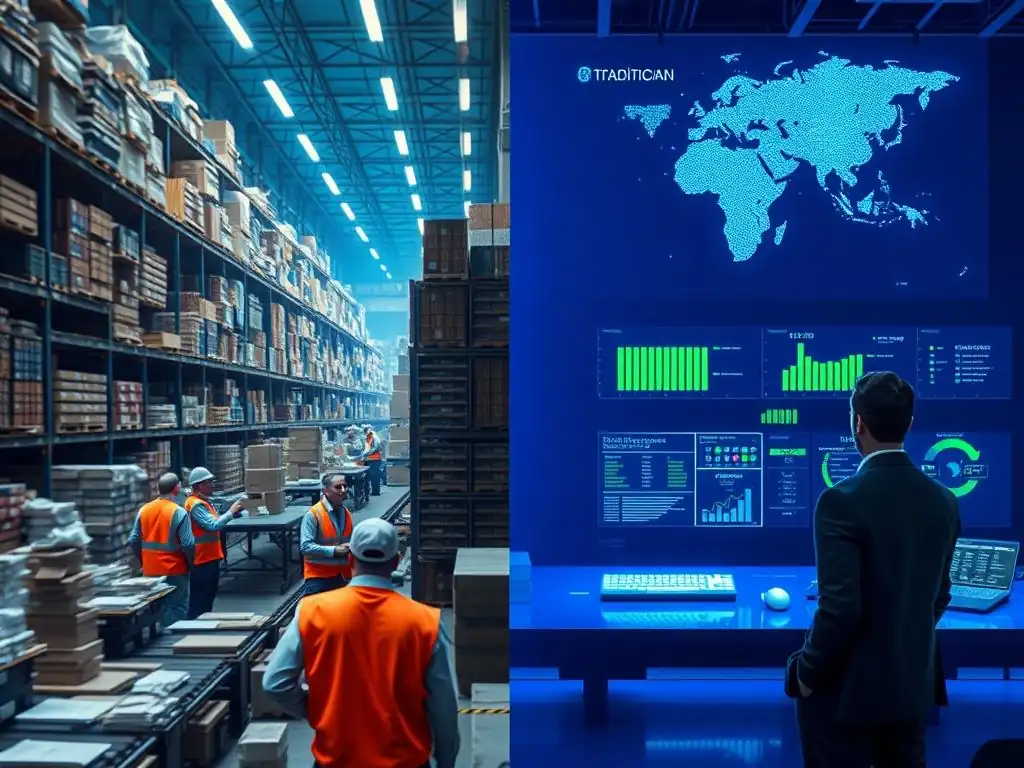
Welcome to Blockchain Trends, where we delve into the transformative power of blockchain technology beyond the realm of cryptocurrencies. Today, we're excited to present our latest article, "Blockchain vs. Traditional Logistics: A Head-to-Head Comparison of Efficiency." Discover how blockchain is revolutionizing supply chain management with unparalleled logistics efficiency. Are you ready to uncover the stark contrasts and potential advantages of decentralized systems? Let’s embark on this journey together and explore how blockchain could reshape the future of logistics!
- Blockchain vs. Traditional Logistics: A Head-to-Head Efficiency Comparison
- Understanding Traditional Logistics: Challenges and Inefficiencies
- Blockchain Technology: A Paradigm Shift for Logistics
- Blockchain Logistics Efficiency Comparison: A Detailed Analysis
- Use Cases: Demonstrating Blockchain's Impact on Logistics Efficiency
- Advantages of Blockchain Logistics Over Traditional Methods
- Disadvantages and Limitations of Blockchain Implementation in Logistics
- The Future of Blockchain in Logistics: Trends and Predictions
- Conclusion: Is Blockchain the Key to Unlocking Logistics Efficiency?
-
Frequently Asked Questions
- What are the main benefits of blockchain in logistics compared to traditional methods?
- How does blockchain enhance supply chain visibility?
- What are some of the challenges to implementing blockchain in logistics?
- How does blockchain impact logistics costs in the long run?
- What is a "Blockchain logistics efficiency comparison" and why is it important?
- Final Reflection: Embracing Transparency in the Supply Chain
- Ignite Your Logistics Revolution!
Blockchain vs. Traditional Logistics: A Head-to-Head Efficiency Comparison
Introduction: Evaluating Logistics Efficiency in the Age of Blockchain
The global logistics industry forms the backbone of international trade, moving trillions of dollars worth of goods annually. However, this complex network of carriers, warehouses, customs agencies, and distributors is often hampered by legacy systems, fragmented data, and manual processes. These inefficiencies lead to delays, increased costs, lack of visibility, and a higher risk of errors or fraud, significantly impacting the overall effectiveness of supply chains. Evaluating logistics efficiency is paramount for businesses seeking competitive advantage in today's fast-paced market.
Traditional logistics operations, while functional, struggle to meet the demands for speed, transparency, and security required by modern commerce. The reliance on paper-based documentation, multiple intermediaries, and disconnected databases creates friction at every step. This inherent complexity makes tracking goods in real-time challenging and verifying the authenticity and provenance of products difficult, ultimately hindering the efficiency of the entire logistics ecosystem.
Understanding Traditional Logistics: Challenges and Inefficiencies
Common Pain Points in Traditional Supply Chain Management
Traditional supply chain management is fraught with numerous challenges that collectively diminish efficiency. One major pain point is the sheer volume of paperwork involved in moving goods across borders or even domestically. Bills of lading, customs declarations, invoices, and certificates of origin often exist in physical or disparate digital formats, requiring manual handling and verification at multiple points. This process is not only time-consuming but also prone to human error, leading to delays in transit and increased administrative costs.
Another significant issue is the lack of a single, trusted source of truth regarding the status and location of goods. Each party in the supply chain – from manufacturer to carrier to distributor – typically maintains its own system and data. Reconciling discrepancies between these systems is a frequent source of delays and disputes. For instance, a discrepancy in a shipping manifest might halt a consignment at customs for hours or even days, incurring demurrage charges and disrupting downstream operations. This fragmentation makes a truly comprehensive Blockchain logistics efficiency comparison necessary.
Lack of Transparency and Traceability in Legacy Systems
A fundamental limitation of traditional logistics systems is their inherent lack of end-to-end transparency and traceability. Once goods leave one point in the supply chain, visibility into their journey can become obscured. Tracking information is often updated manually or through systems that don't communicate seamlessly, resulting in delayed or inaccurate status reports. This makes it difficult for stakeholders to know precisely where a shipment is at any given moment or who is responsible for it.
This opacity makes it challenging to identify bottlenecks, verify the provenance of goods, or quickly respond to disruptions. For example, in the event of a recall or a quality issue, pinpointing the exact batch of products and its location within the supply chain can be a lengthy and complex process involving contacting multiple parties and sifting through disparate records. This lack of real-time, shared visibility directly impacts the potential for robust Blockchain logistics efficiency comparison.
Inefficient Data Management and Communication Silos
Traditional logistics suffers significantly from inefficient data management and pervasive communication silos. Data related to a single shipment – such as tracking updates, customs documents, inspection reports, and payment information – is often scattered across numerous databases maintained by different companies and even different departments within the same company. These systems frequently use incompatible formats and protocols, making data sharing and integration a complex and expensive undertaking.
The result is a fragmented data landscape where information is difficult to access, verify, and share in a timely manner. Communication often relies on emails, phone calls, and faxes, leading to delays and misunderstandings. This lack of a unified, accessible data platform hinders collaborative decision-making and prevents stakeholders from having a holistic view of the supply chain, thereby limiting overall operational efficiency and making a clear Blockchain logistics efficiency comparison difficult.
The Costs Associated with Traditional Logistics Inefficiencies
The inefficiencies embedded in traditional logistics systems translate directly into significant costs. Manual processes require substantial labor, while fragmented data and poor communication lead to errors that necessitate costly rework, investigations, and dispute resolution. Delays in transit due to customs issues, data discrepancies, or lack of visibility result in increased transportation costs, warehousing fees, and potential penalties.
Furthermore, the lack of transparency contributes to higher risks of fraud, theft, and counterfeit goods entering the supply chain, leading to financial losses and reputational damage. The inability to quickly and accurately trace products also increases the cost and complexity of recalls. Estimates suggest that inefficiencies in global supply chains can add between 10% to 25% to overall logistics costs, highlighting the substantial financial burden imposed by legacy systems and underscoring the need for a comprehensive Blockchain logistics efficiency comparison.
Blockchain Technology: A Paradigm Shift for Logistics
What is Blockchain and How Does it Work?
Blockchain is a distributed, immutable ledger that records transactions across many computers. Instead of storing data in a single central database, copies of the ledger are held by all participants in the network. Transactions are grouped into "blocks," which are then cryptographically linked together in a chain, creating a chronological and tamper-evident record. Once a block is added to the chain, it is extremely difficult to alter or delete the information it contains without the consensus of the network participants.
At its core, blockchain operates through a consensus mechanism, ensuring that all participants agree on the validity of transactions before they are added to a block. This distributed nature and the requirement for consensus make the ledger highly secure and resistant to single points of failure or malicious manipulation. Each transaction is also time-stamped and linked to the previous one, creating a transparent and verifiable history of all activities recorded on the chain.
Key Features of Blockchain: Security, Transparency, and Immutability
Blockchain technology offers several key features that address fundamental challenges in traditional logistics. Security is paramount; cryptographic hashing ensures that each block is linked to the previous one, and any attempt to tamper with data in a past block would immediately break the chain and be visible to all participants. This makes the ledger highly secure against unauthorized alterations.
Transparency is another core feature. While the identity of participants can be pseudonymized, the transactions themselves are typically visible to authorized members of the network. This shared view of the ledger means all relevant parties have access to the same, up-to-date information simultaneously, eliminating information asymmetry. Finally, immutability means that once data is recorded on the blockchain and validated, it is virtually impossible to change or delete it. This creates a permanent, auditable trail of every transaction and event, providing an unprecedented level of trust and accountability within the network.
Applications of Blockchain in Supply Chain Management
Blockchain technology has a wide range of potential applications within supply chain management, extending far beyond simple tracking. It can be used to create a transparent and immutable record of a product's entire journey, from raw material sourcing to final delivery. This includes recording manufacturing details, quality control checks, transportation milestones, customs clearance, and even proof of delivery.
Beyond tracking, blockchain can facilitate secure and automated transactions using smart contracts. These self-executing contracts, with the terms of the agreement directly written into code, can automatically trigger actions like payments upon the verified delivery of goods or the successful completion of an inspection. This potential for automation and verifiable data sharing makes a compelling case in any Blockchain logistics efficiency comparison, promising reduced manual effort and faster processes across various supply chain functions.
Blockchain Logistics Efficiency Comparison: A Detailed Analysis
Enhanced Transparency and Traceability with Blockchain
One of the most significant advantages of blockchain in logistics is the dramatic increase in transparency and traceability compared to traditional systems. By recording every handoff, location update, and status change on a shared, immutable ledger, all authorized stakeholders gain real-time visibility into the movement and condition of goods. This means a manufacturer can track a product as it moves through carriers, customs, warehouses, and distributors, all through a single, trusted interface.
This enhanced visibility allows for proactive management of potential issues. If a shipment is delayed, all parties are immediately aware, enabling faster communication and resolution. For example, in pilot programs tracking high-value goods, average time spent verifying shipment authenticity and location was reportedly reduced by up to 50% when using blockchain compared to traditional methods relying on fragmented data sources and manual checks. This improved traceability is a key differentiator in a Blockchain logistics efficiency comparison.
Improved Data Management and Real-Time Visibility
Blockchain fundamentally improves data management by providing a single, distributed source of truth accessible to all permissioned participants. Instead of each party maintaining separate, often conflicting databases, logistics data is recorded directly onto the shared ledger. This ensures data consistency and reduces the need for time-consuming reconciliation efforts. When data is updated, the change is propagated across the network, providing near real-time visibility to everyone involved.
This real-time access to accurate data allows for more informed decision-making. For instance, inventory managers can have precise knowledge of incoming stock, carriers can optimize routes based on real-time shipment status, and customs officials can expedite clearance processes with verifiable digital documentation. Studies in specific supply chains, such as food or pharmaceuticals, have shown that the time taken to trace a product back to its origin can be reduced from days or weeks to mere seconds using a blockchain-based system, a stark contrast highlighted in any Blockchain logistics efficiency comparison.
Streamlined Processes and Reduced Operational Costs
Blockchain has the potential to significantly streamline logistics processes by digitizing and automating many steps that are manual and paper-based in traditional systems. The shared, verifiable ledger reduces the need for intermediaries to validate information, as trust is built into the technology itself. This can accelerate processes like documentation handling, customs clearance, and payment processing.
Smart contracts, in particular, can automate actions based on predefined conditions being met on the blockchain. For example, a payment could be automatically released to a carrier once the blockchain verifies that goods have arrived at their destination and passed an automated quality check recorded on the ledger. By eliminating manual checks and accelerating transactions, operational costs associated with administration, verification, and reconciliation can be substantially reduced. Some early adopters have reported potential savings of 10-15% on administrative costs alone through blockchain implementation, a notable figure in the ongoing Blockchain logistics efficiency comparison.
Increased Security and Reduced Risk of Fraud
The immutable and cryptographically secure nature of blockchain significantly enhances security and reduces the risk of fraud within the logistics chain. Because records on the blockchain cannot be altered without detection, it becomes extremely difficult for malicious actors to tamper with shipping manifests, product information, or transaction details. This provides a high level of integrity for the data being shared among stakeholders.
Furthermore, blockchain can be used to verify the authenticity of products and documents. By recording the origin and key attributes of goods on the chain, along with a secure digital identity, it becomes easier to detect counterfeit products entering the supply chain. The distributed nature also means there is no single point of attack for hackers, making the system more resilient than centralized databases. This enhanced security is a critical component when considering the overall Blockchain logistics efficiency comparison.
Automation and Smart Contracts in Blockchain-Based Logistics
Automation is a key driver of efficiency, and smart contracts are blockchain's primary tool for achieving it in logistics. These self-executing agreements automatically enforce the terms of a contract when predefined conditions are met, eliminating the need for manual triggers and intermediaries. For instance, a smart contract could automatically initiate payment to a supplier once a shipment's arrival at a warehouse is confirmed by an IoT sensor and recorded on the blockchain.
Smart contracts can also automate actions like releasing goods from customs upon verification of digital documentation, updating inventory records upon delivery, or even triggering insurance payouts based on recorded events like delays or damage verified on the ledger. This automation speeds up transactions, reduces administrative overhead, and minimizes the potential for human error or deliberate manipulation, contributing significantly to improved Blockchain logistics efficiency comparison outcomes.
Use Cases: Demonstrating Blockchain's Impact on Logistics Efficiency
Case Study 1: Tracking Seafood from Ocean to Table with Blockchain
One compelling use case demonstrating blockchain's impact on logistics efficiency is the tracking of perishable goods like seafood. Traditional methods often involve paper trails and multiple handoffs, making it difficult to verify the origin, handling, and temperature control throughout the supply chain. This lack of transparency contributes to food safety concerns, fraud (like mislabeling species), and significant waste due to spoilage.
Companies like Bumble Bee Foods, in partnership with SAP, have piloted blockchain solutions to track tuna from the point of catch in Indonesia to consumers in the US. By recording data such as catch location, vessel name, processing facility, shipping route, temperature data, and customs information on a blockchain, consumers can scan a QR code to access the fish's complete history.
This not only builds consumer trust but also improves operational efficiency by providing regulators and supply chain partners with verifiable data, potentially reducing the time needed for audits and enhancing the response time for recalls by providing immediate traceability, a strong point in favor of Blockchain logistics efficiency comparison.
Case Study 2: Streamlining Cross-Border Customs Clearance using Blockchain
Cross-border logistics is notoriously complex, involving multiple parties, extensive documentation, and varying regulatory requirements. Customs clearance is often a major bottleneck, with processes relying heavily on manual document submission and verification, leading to delays and unpredictable transit times. The lack of a single, shared platform for all parties involved – shippers, carriers, customs authorities, and banks – exacerbates these issues.
Initiatives like TradeLens, a platform developed by Maersk and IBM, utilize blockchain technology to create a shared, immutable record of shipment data across the supply chain. By digitizing and sharing documents like bills of lading, commercial invoices, and customs declarations on the blockchain, all authorized parties, including customs officials, can access verified information simultaneously. Pilots have shown that this can potentially reduce the time goods spend in transit and at ports by up to 40%, primarily by accelerating documentation flow and approvals, showcasing a significant advantage in the Blockchain logistics efficiency comparison for international trade.
Case Study 3: Improving Pharmaceutical Supply Chain Integrity with Blockchain Technology
Maintaining the integrity and security of the pharmaceutical supply chain is critical to prevent counterfeit drugs from reaching patients and ensuring product quality. Traditional systems struggle with global traceability and verifying the legitimacy of every product package as it moves through complex distribution networks. This lack of transparency poses significant risks to public health and results in financial losses for legitimate manufacturers.
Blockchain technology offers a robust solution by creating a secure, tamper-evident ledger for tracking individual drug packages. Each package can be assigned a unique digital identity (serialized) and its movement recorded on the blockchain at every step – from manufacturing and packaging to distribution, dispensing, and even patient verification. This provides an immutable history, making it easy to identify counterfeit products or pinpoint the source of issues.
The U.S. Drug Supply Chain Security Act (DSCSA) mandates enhanced tracing requirements, and blockchain is seen as a key technology to meet these regulations efficiently. Pilot programs have demonstrated the ability to trace specific drug packages in seconds, compared to days or weeks with legacy systems, dramatically improving response capabilities during recalls and reinforcing the value of Blockchain logistics efficiency comparison in critical industries.
Advantages of Blockchain Logistics Over Traditional Methods
Cost Reduction in Logistics Operations
Implementing blockchain in logistics holds the potential for significant cost reductions compared to traditional methods. By streamlining processes through automation and shared data, companies can reduce administrative overhead associated with manual data entry, document handling, and reconciliation. The elimination of intermediaries for verification also cuts down on fees.
Furthermore, improved transparency and traceability reduce losses from fraud, theft, and counterfeit goods. Faster customs clearance and reduced dwell times at ports minimize demurrage charges and optimize transportation costs. While initial implementation can be expensive, the long-term operational savings from increased efficiency and reduced risk present a compelling economic argument in the Blockchain logistics efficiency comparison. Some estimates suggest potential cost savings of 10-20% across various logistics functions for early adopters.
Increased Speed and Efficiency in the Supply Chain
A primary advantage of blockchain logistics is the potential for dramatically increased speed and overall efficiency throughout the supply chain. Real-time data sharing and the elimination of information silos accelerate decision-making and process execution. Automation via smart contracts speeds up transactions like payments and approvals.
Reduced delays at customs and border crossings, as demonstrated in use cases like TradeLens, mean goods reach their destination faster. The ability to quickly verify data and documents minimizes the time spent on manual checks and dispute resolution. This acceleration across multiple touchpoints leads to shorter lead times and more agile supply chains, a clear win in the Blockchain logistics efficiency comparison.
Enhanced Security and Trust Among Stakeholders
Blockchain inherently builds a higher level of trust among disparate stakeholders in the logistics network. The immutable and transparent nature of the ledger means that all participants are working with the same, verifiable set of data. This reduces the need for trust in a central authority or individual partners, as trust is distributed across the network.
The cryptographic security prevents unauthorized data modification, significantly reducing the risk of fraud and errors. This enhanced security and the foundation of shared trust facilitate smoother collaboration and data exchange between parties who might otherwise be hesitant to share sensitive information, creating a more secure and reliable logistics environment.
Improved Regulatory Compliance and Auditing
Regulatory compliance and auditing are critical but often burdensome aspects of logistics. Traditional systems make compiling necessary documentation for audits challenging due to fragmented data sources and paper records. Blockchain simplifies this process by providing a complete, immutable, and easily accessible audit trail of all transactions and events related to a shipment or product.
Regulators and auditors can be granted permissioned access to the blockchain ledger to verify compliance with regulations regarding provenance, handling, and documentation. This dramatically reduces the time and effort required for audits and makes it easier to demonstrate compliance with complex requirements, such as those in the pharmaceutical or food industries. This improved compliance capability further strengthens the case for a positive Blockchain logistics efficiency comparison.
Disadvantages and Limitations of Blockchain Implementation in Logistics
Scalability Challenges and Network Congestion
Despite its promise, blockchain technology currently faces scalability challenges that can limit its widespread adoption in high-volume logistics environments. Public blockchains, while highly decentralized, can experience network congestion and slow transaction speeds, particularly under heavy load. While private or permissioned blockchains used in enterprise settings offer better performance, they may still face limitations compared to the transaction volume of global logistics networks.
Processing and validating the immense amount of data generated by tracking millions of shipments and billions of individual items daily requires significant computational resources and efficient consensus mechanisms. Ensuring that blockchain networks can handle this scale without becoming prohibitively slow or expensive remains a key technical hurdle that impacts the current state of Blockchain logistics efficiency comparison outcomes.
Interoperability Issues with Existing Systems
One major hurdle for blockchain adoption in logistics is the challenge of interoperability with existing legacy systems. Most logistics companies and their partners rely on established ERP systems, warehouse management systems, and transportation management systems that were not designed to interact directly with blockchain platforms. Integrating these disparate systems with a new blockchain layer is complex, time-consuming, and costly.
Data needs to be accurately captured from existing systems and fed onto the blockchain, and vice versa. This requires developing middleware and APIs, which can be technically challenging and require significant development effort. The lack of universal standards for blockchain in logistics further complicates integration efforts, creating silos even within blockchain implementations and hindering a seamless Blockchain logistics efficiency comparison across different platforms.
High Implementation Costs and Technological Complexity
Implementing blockchain technology in logistics is not a trivial undertaking and often involves significant upfront costs. This includes the cost of developing or licensing blockchain platforms, integrating them with existing IT infrastructure, training personnel, and potentially restructuring business processes. For smaller logistics providers or those with limited IT budgets, these costs can be prohibitive.
The technology itself is also relatively new and complex, requiring specialized expertise to develop, deploy, and maintain. Finding skilled professionals with blockchain knowledge is still a challenge. The complexity extends to managing the network, ensuring data privacy on a transparent ledger, and handling potential issues like data input errors before information is immutably recorded. These factors contribute to the barriers to entry for widespread blockchain adoption.
Regulatory Uncertainty and Legal Frameworks
The regulatory landscape surrounding blockchain technology is still evolving in many jurisdictions, creating uncertainty for businesses looking to implement it in logistics. Questions remain about the legal status of smart contracts, data ownership on the blockchain, and jurisdictional issues for transactions spanning multiple countries with different legal frameworks.
While some countries are developing clear guidelines, others have yet to address blockchain specifically. This lack of regulatory clarity can pose risks for companies, particularly in highly regulated sectors like pharmaceuticals or food. Furthermore, establishing legal frameworks that recognize blockchain records as valid evidence in disputes is crucial for its widespread adoption and impact on a global Blockchain logistics efficiency comparison.
The Future of Blockchain in Logistics: Trends and Predictions
Integration with IoT and AI for Enhanced Efficiency
The future of blockchain in logistics is likely to involve deep integration with other emerging technologies like the Internet of Things (IoT) and Artificial Intelligence (AI). IoT devices, such as sensors tracking temperature, humidity, or location, can automatically feed real-time data directly onto the blockchain ledger, providing verifiable and tamper-proof information about the condition and movement of goods without manual intervention.
AI can then leverage this rich, immutable dataset from the blockchain to provide advanced analytics, predictive insights, and optimized decision-making. AI algorithms could predict potential delays based on blockchain-recorded events, optimize routes using real-time location data, or identify patterns indicative of fraud or inefficiency. This combined approach promises to unlock unprecedented levels of automation, visibility, and predictive capabilities, significantly enhancing Blockchain logistics efficiency comparison outcomes in the future.
Development of Standardized Blockchain Platforms for Logistics
Currently, there are multiple blockchain platforms and initiatives focused on logistics, which can lead to fragmentation. The future is expected to see the development and wider adoption of standardized blockchain platforms specifically designed for the logistics industry. These platforms will likely offer common protocols, data models, and APIs to facilitate interoperability between different companies and systems within the supply chain.
Industry consortia and collaborations are working towards establishing these standards. The emergence of widely accepted platforms will lower implementation barriers, reduce integration costs, and enable seamless data exchange across the entire logistics ecosystem. This standardization is crucial for realizing the full potential benefits highlighted in a comprehensive Blockchain logistics efficiency comparison on a global scale.
Increasing Adoption of Blockchain by Major Logistics Providers
While still in relatively early stages for widespread operational use, major logistics providers and large shippers are increasingly investing in and piloting blockchain solutions. Companies like Maersk, UPS, and FedEx are exploring or implementing blockchain for various use cases, from tracking shipments and managing trade finance documentation to enhancing customs processes.
As these industry leaders demonstrate successful implementations and quantifiable efficiency gains, it is expected to drive broader adoption across the sector. The network effect is particularly powerful with blockchain; the more participants join a blockchain network, the more valuable it becomes for everyone. This growing momentum suggests that blockchain will become an increasingly common and critical technology for achieving logistics efficiency in the coming years, heavily influencing future Blockchain logistics efficiency comparison studies.
Conclusion: Is Blockchain the Key to Unlocking Logistics Efficiency?
Weighing the Pros and Cons of Blockchain for Supply Chain Optimization
Based on a detailed Blockchain logistics efficiency comparison, it's clear that blockchain technology offers significant potential to address many of the fundamental inefficiencies plaguing traditional logistics. The advantages of enhanced transparency, improved data management, streamlined processes, increased security, and automation through smart contracts present a compelling case for its adoption. These benefits promise reduced costs, increased speed, and greater trust among supply chain partners.
However, it is also crucial to weigh these benefits against the current disadvantages and limitations. Scalability challenges, interoperability issues with legacy systems, high implementation costs, technological complexity, and regulatory uncertainty remain significant hurdles. Blockchain is not a magic bullet and requires careful planning, investment, and collaboration to implement effectively within the intricate web of global logistics.
Blockchain Logistics Efficiency: A Strategic Imperative for the Future
Despite the challenges, the potential for Blockchain logistics efficiency is too significant for the industry to ignore. As technology matures, standards emerge, and integration methods improve, the barriers to adoption will likely decrease. For companies seeking to optimize their supply chains, gain a competitive edge, and meet the increasing demands for speed, transparency, and security from consumers and regulators, exploring and implementing blockchain solutions is becoming a strategic imperative.
The future of logistics efficiency likely lies in leveraging blockchain as a foundational technology to create more intelligent, connected, and trustworthy supply chains. While the transition from traditional systems will take time and effort, the long-term benefits in terms of cost savings, operational speed, risk reduction, and overall resilience make blockchain a key technology for unlocking the next level of logistics performance, fundamentally reshaping the landscape for future Blockchain logistics efficiency comparison analyses.
Frequently Asked Questions
What are the main benefits of blockchain in logistics compared to traditional methods?
Blockchain offers improved transparency, traceability, and security in logistics operations. This can lead to reduced fraud and increased efficiency compared to traditional systems.
How does blockchain enhance supply chain visibility?
Blockchain creates a shared, immutable ledger allowing all parties to access and verify information. This eliminates data silos and provides a real-time view of the entire supply chain.
What are some of the challenges to implementing blockchain in logistics?
Scalability can be a major hurdle, along with integration with existing systems. Also, achieving industry-wide adoption requires collaboration and standardization.
How does blockchain impact logistics costs in the long run?
While initial investment may be high, blockchain can reduce costs by automating processes, reducing paperwork, and minimizing errors. This leads to overall increased efficiency.
What is a "Blockchain logistics efficiency comparison" and why is it important?
It's an analysis of how blockchain implementations improve logistics performance compared to traditional systems, including metrics like time, cost, and accuracy. Understanding this comparison is vital for businesses considering blockchain adoption.
Final Reflection: Embracing Transparency in the Supply Chain
The preceding analysis has illuminated the stark contrasts between blockchain-based and traditional logistics systems, highlighting the potential for radical improvements in efficiency and transparency. While traditional methods grapple with fragmentation and opacity, blockchain offers a compelling vision of a streamlined, secure, and auditable supply chain, poised to revolutionize how goods move across the globe.
The impact of this technological shift extends far beyond mere cost savings; it touches upon fundamental principles of trust and accountability. Witnessing the evolution of logistics through the lens of blockchain has underscored the critical need for adaptable and resilient systems in an increasingly interconnected world. The supply chain is the ultimate team sport; it requires collaboration, trust, and transparency to succeed.
- Tom Linton, Former Chief Procurement Officer, Flextronics. This quote perfectly encapsulates the spirit of what blockchain promises to deliver, fostering a collaborative ecosystem where all stakeholders benefit from shared information and verifiable transactions.
Now, consider the implications of this comparison for your own role in the global economy. Whether you are a logistics professional, a business owner, or simply a consumer, the principles of transparency and efficiency are universally valuable. Reflect on how you can champion these values within your sphere of influence, advocating for the adoption of innovative solutions that promote a more ethical, sustainable, and ultimately, more efficient future for global trade.
Ignite Your Logistics Revolution!
Thank you for exploring how blockchain technology can transform logistics. We hope you now have a better understanding of its advantages over traditional methods and the efficiency improvements it can bring. Are you ready to take the next step?
Discover more about the future of logistics with these options:
- Start a free trial with a blockchain-based logistics platform to see how it can optimize your supply chain operations.
- Share this article with your colleagues in the logistics industry to encourage discussions about blockchain innovations.
- Explore emerging blockchain companies focused on specific logistics challenges, such as cold chain management or customs clearance.
What is one small change you can make this week to incorporate blockchain solutions into your logistics planning? Share your ideas in the comments below!
Leave a Reply