
Blockchain's Impact on Cold Chain Logistics: Ensuring TemperatureSensitive Product Integrity


Welcome to Blockchain Trends, your source for insightful analysis on the evolving world of blockchain technology!
Ever wondered how blockchain is revolutionizing industries beyond just cryptocurrencies? Dive into our exploration of DeFi, enterprise applications, and the future of decentralized systems. Today, we unravel a critical application: blockchain's impact on cold chain logistics. Discover how this technology is ensuring the integrity of temperature-sensitive products and learn more about the crucial role of blockchain cold chain logistics integrity in safeguarding our supply chains. Intrigued? Let's explore.
Blockchain's Impact on Cold Chain Logistics: Ensuring Temperature-Sensitive Product Integrity
- Introduction: The Challenge of Maintaining Cold Chain Integrity
- Understanding Cold Chain Logistics and Its Vulnerabilities
- Blockchain Technology: A Solution for Cold Chain Integrity
- Implementing Blockchain for Temperature-Sensitive Product Tracking
- Blockchain Cold Chain Logistics: Enhancing Traceability and Transparency
- Overcoming Challenges in Blockchain Cold Chain Adoption
- The Future of Blockchain in Cold Chain Logistics
- Conclusion: Blockchain as a Key Enabler for Cold Chain Integrity
-
Frequently Asked Questions
- What is the primary benefit of using blockchain in cold chain logistics?
- How does blockchain improve cold chain logistics integrity?
- What are some specific examples of temperature-sensitive products benefiting from blockchain-based cold chain solutions?
- What are the main challenges to implementing blockchain in cold chain logistics?
- How does blockchain contribute to regulatory compliance in the cold chain?
- Final Reflection: Securing the Cold Chain's Future
- Unlock Cold Chain Transparency: Secure Your Products Now!
Introduction: The Challenge of Maintaining Cold Chain Integrity
The Critical Importance of Temperature Control in Supply Chains
Maintaining precise temperature control throughout the supply chain is absolutely critical for a wide range of products, from life-saving pharmaceuticals like vaccines and biologics to perishable goods such as fresh produce, meat, and dairy. Failure to keep products within their required temperature ranges – which can vary from deep frozen (below -18°C) to refrigerated (2-8°C) or controlled room temperature (20-25°C) – can lead to significant degradation, loss of efficacy, or spoilage.
For pharmaceuticals, this compromises patient safety; for food, it poses health risks and leads to massive waste. The global pharmaceutical logistics market alone is estimated to be worth over \$80 billion, with a substantial portion requiring strict temperature control.
The consequences of temperature excursions are far-reaching and costly. Products that have been exposed to temperatures outside their acceptable range may become unusable, requiring disposal. The International Air Transport Association (IATA) has estimated that around 20% of temperature-sensitive products are damaged during transit due to cold chain breaks. This results in billions of dollars in financial losses annually for manufacturers, logistics providers, and retailers. Beyond direct financial hits, companies face the risk of product recalls, regulatory penalties, and severe damage to their brand reputation if temperature control failures lead to health issues or widespread spoilage.
The Rising Demand for Transparency in Cold Chain Logistics
Stakeholders across the supply chain, from manufacturers and logistics providers to regulators and end consumers, are increasingly demanding greater transparency regarding the journey and condition of temperature-sensitive goods. Manufacturers need visibility to ensure product quality is maintained post-production. Regulators, such as those enforcing the U.S. Drug Supply Chain Security Act (DSCSA) or the EU's Falsified Medicines Directive, require detailed traceability information to combat counterfeiting and ensure product authenticity and integrity. Consumers, empowered by technology and concerned about safety and sustainability, want to know the origin and handling history of the food they eat and the medicines they take.
Traditional cold chain logistics often rely on fragmented systems, paper records, and disparate databases held by individual parties. This creates information silos, making it difficult to get a unified, trustworthy view of a product's journey and temperature history from origin to destination. When an issue arises, such as a reported temperature excursion or a quality complaint, tracing back the exact path and identifying the point of failure is a time-consuming and often incomplete process. This lack of end-to-end visibility hinders accountability and makes it challenging to ensure the Blockchain cold chain logistics integrity that is vital for sensitive products.
How Blockchain Technology Addresses Cold Chain Challenges
Blockchain technology, with its inherent characteristics of immutability, transparency, and security, offers a compelling solution to many of the long-standing challenges in cold chain logistics. By providing a shared, tamper-evident ledger accessible to authorized participants, blockchain can create a single source of truth about a product's journey and condition. This shared ledger can record every handoff, location update, and crucially, temperature reading from integrated sensors, creating a comprehensive and trustworthy history.
Implementing blockchain in cold chains allows for unprecedented levels of traceability and accountability. Unlike traditional systems where data can be altered or lost, information recorded on a blockchain is extremely difficult to change without detection by the network participants. This dramatically enhances the integrity of the data trail, ensuring that stakeholders can trust the information about a product's temperature history and provenance. This improved data integrity is foundational to building robust Blockchain cold chain logistics integrity and trust among all parties involved, from farm or factory to the final consumer.
Understanding Cold Chain Logistics and Its Vulnerabilities
What is Cold Chain Logistics? Defining Temperature-Sensitive Products
Cold chain logistics refers to the management of a temperature-controlled supply chain. It involves the storage, transportation, and distribution of products that must be kept within a specific temperature range to maintain their quality, safety, and efficacy. This specialized field requires careful planning, specific equipment (like refrigerated trucks, temperature-controlled warehouses, and insulated containers), and continuous monitoring. Products requiring cold chain management are diverse and include pharmaceuticals (vaccines, insulin, blood plasma), biological materials, fresh agricultural products (fruits, vegetables, flowers), seafood, dairy, frozen foods, and certain chemicals and electronic components.
Each type of temperature-sensitive product has unique requirements. For example, many vaccines must be stored between 2°C and 8°C, while frozen foods require temperatures below -18°C. Failure to adhere to these specific ranges, even for short periods, can render the product unusable. The complexity arises from ensuring these conditions are met consistently across various modes of transport (air, sea, road, rail) and storage points, often involving multiple logistics providers and border crossings. Maintaining this unbroken chain of temperature control is the core challenge of cold chain logistics.
Key Stages in the Cold Chain: From Production to Delivery
The cold chain is not a single event but a series of interconnected stages that a temperature-sensitive product passes through from its point of origin to its final destination. These stages typically include manufacturing or production, initial storage (often in cold rooms or freezers), packaging into temperature-controlled containers, primary transportation (e.g., from factory to distribution center), warehousing and inventory management, secondary transportation (e.g., to regional depots), and finally, last-mile delivery to hospitals, pharmacies, supermarkets, or consumers.
At each stage, the product is handled, potentially stored for varying periods, and transported, involving different equipment and personnel. Handoff points between stages – such as transferring goods from a cold storage facility to a refrigerated truck, or from a port to a distribution center – are particularly vulnerable moments. Without robust processes and transparent data sharing, temperature excursions can easily occur or go unnoticed during these transitions, compromising the overall Blockchain cold chain logistics integrity. Ensuring seamless temperature control and visibility across every single step is paramount.
Common Cold Chain Challenges: Temperature Excursions, Spoilage, and Counterfeiting
Cold chain logistics is fraught with potential pitfalls. The most common and critical challenge is temperature excursion – when a product's temperature deviates outside its required range. This can happen due to equipment failure (refrigeration unit breakdown), human error (door left open), delays in transit, improper packaging, or inadequate monitoring. For perishable goods like food, excursions quickly lead to spoilage, resulting in waste and potential health risks. For pharmaceuticals, excursions can reduce or destroy the potency of drugs, making them ineffective and potentially harmful.
Beyond temperature control, other significant challenges include product loss due to physical damage or theft, delays that impact product shelf life, and the pervasive threat of counterfeiting and diversion. The market for counterfeit goods, particularly pharmaceuticals, is vast, estimated by some to be hundreds of billions of dollars annually. Fake or substandard products can enter the legitimate supply chain, often through complex international routes, posing serious health risks. The lack of transparent, verifiable tracking in traditional systems makes it incredibly difficult to detect these illicit products and ensure genuine Blockchain cold chain logistics integrity.
The Economic Impact of Cold Chain Failures: Losses and Reputational Damage
The economic consequences of cold chain failures are substantial and multifaceted. Direct losses stem from the value of spoiled or compromised products that must be discarded. Estimates vary, but global losses in the cold chain across food and pharma are in the tens of billions of dollars annually. For instance, a widely cited report from 2019 suggested that pharmaceutical logistics losses due to temperature excursions alone amounted to approximately \$35 billion per year. This waste represents not only financial loss but also inefficient resource utilization.
Indirect costs can be even more damaging. Product recalls, necessitated by confirmed or suspected temperature excursions or contamination, are expensive, logistically complex, and can severely disrupt operations. Companies may face regulatory fines for non-compliance with temperature monitoring and reporting standards. Furthermore, a single well-publicized failure can erode consumer trust and severely damage a brand's reputation, impacting future sales and market position. Maintaining strong Blockchain cold chain logistics integrity is thus not just a matter of compliance but a critical business imperative for financial health and brand protection.
Blockchain Technology: A Solution for Cold Chain Integrity
How Blockchain Works: Immutability, Transparency, and Security
At its core, blockchain is a type of distributed ledger technology (DLT) that records transactions across a network of computers. Instead of a central database, copies of the ledger are shared and synchronized among participating nodes. Transactions are grouped into "blocks," which are then cryptographically linked together in a chronological chain, forming an immutable history. Once a block is added to the chain through a consensus mechanism agreed upon by the network participants, it is extremely difficult and computationally expensive to alter the data within it without the change being immediately obvious to all other participants.
This structure provides key properties vital for supply chain applications. Immutability means that records, once added, serve as a permanent, tamper-evident audit trail. Transparency means that authorized participants on the network can view the relevant transaction data, creating a shared, real-time view of the supply chain. Security is ensured through cryptographic hashing and the distributed nature of the ledger, making it highly resistant to fraud and unauthorized alterations. These features combine to build a foundation for verifiable trust and robust Blockchain cold chain logistics integrity among parties who may not otherwise have direct trust in one another.
The Benefits of Blockchain in Supply Chain Management
Applying blockchain technology to supply chain management offers numerous advantages beyond traditional systems. It provides an unprecedented level of end-to-end visibility, allowing participants to track products from their origin point through every step of their journey. This shared visibility reduces information asymmetry and builds trust between parties by providing a single, verifiable source of truth regarding product movement and condition. The automation potential through smart contracts can also streamline processes, reducing manual paperwork and speeding up transactions and settlements.
Specifically for cold chains, blockchain enhances accountability by clearly recording which party handled the product at what time and location, and under what environmental conditions (as reported by connected sensors). This reduces disputes and makes it easier to identify responsibility if an issue arises. The improved efficiency and reduced administrative overhead can also lead to cost savings. Ultimately, blockchain helps create more resilient, transparent, and efficient supply chains, reinforcing overall operational integrity.
Real-time Tracking and Traceability with Blockchain
One of the most significant benefits blockchain brings to the cold chain is enhanced real-time tracking and traceability. By recording data points at each stage of the product's journey – including shipment origin, destination, carrier information, timestamps, and critically, temperature readings from IoT sensors – blockchain creates a comprehensive and immutable digital history. This data is accessible to authorized network participants almost instantaneously as it is added to the ledger.
This capability allows stakeholders to monitor the location and condition of temperature-sensitive goods in near real-time. If a temperature excursion occurs, it is immediately recorded on the blockchain, triggering alerts. This verifiable, end-to-end audit trail allows for rapid identification of the affected products, their current location, and the circumstances surrounding the event. This level of granular, trustworthy traceability is essential for ensuring product safety and maintaining Blockchain cold chain logistics integrity from manufacturing facility to the point of consumption.
Enhanced Data Security and Reduced Risk of Tampering
Traditional supply chain data often resides in centralized databases that are susceptible to cyberattacks, data breaches, or unauthorized alterations by individuals within or outside the organization. In contrast, blockchain's decentralized and cryptographic nature significantly enhances data security. Data is not stored in a single location but distributed across multiple nodes in the network. Each block of transactions is secured using cryptographic hashes, and any attempt to alter data in a historical block would require recalculating the hashes of all subsequent blocks, a computationally infeasible task without the consensus of the majority of the network.
This makes the data recorded on the blockchain highly resistant to tampering and fraud. Participants can trust that the historical record of a product's journey and temperature history is accurate and has not been retrospectively altered. This enhanced data integrity is paramount in regulated industries like pharmaceuticals and food, where verifiable records are legally required. By securing the data trail, blockchain provides a robust foundation for ensuring Blockchain cold chain logistics integrity and building verifiable trust among all parties involved in handling sensitive goods.
Implementing Blockchain for Temperature-Sensitive Product Tracking
Use Cases: Pharmaceuticals, Food & Beverage, and Healthcare
The application of blockchain in cold chain logistics is particularly impactful in sectors dealing with highly sensitive and regulated products. The pharmaceutical industry is a prime candidate, especially for tracking high-value, temperature-sensitive biologics and vaccines.
Regulations like the U.S. DSCSA mandate unit-level traceability, and blockchain can provide the secure, interoperable platform needed to track drugs through the complex distribution network, verifying provenance and temperature history to combat counterfeiting and ensure efficacy. For example, tracking a batch of influenza vaccines might involve recording its temperature from the moment it leaves the manufacturer, through transport in refrigerated containers, storage at distribution centers, and delivery to clinics, ensuring it stays between 2-8°C throughout.
In the food and beverage sector, blockchain is being used to track perishable goods like meat, poultry, produce, and dairy from farm to fork. This improves food safety by enabling rapid, targeted recalls in case of contamination and provides consumers with verifiable information about the origin and journey of their food.
A pilot project tracking a batch of mangoes from a farm in Latin America to a supermarket shelf in the US could record details like harvest date, cooling procedures, transport temperature logs across multiple carriers, and arrival at distribution centers, all on a shared ledger. The broader healthcare sector can also leverage blockchain for tracking sensitive materials like blood, tissues, or organs, where temperature control and provenance are life-critical.
Integrating IoT Sensors and Blockchain for Real-Time Monitoring
A key enabler for blockchain in cold chain logistics is the seamless integration with Internet of Things (IoT) sensors. These sensors, embedded in packaging, containers, or vehicles, can automatically collect critical data points such as temperature, humidity, location (GPS), and even light exposure or shock. Traditionally, this sensor data might be logged in separate systems, making it difficult to correlate directly with product movement records held by different parties.
By connecting these IoT devices to a blockchain platform, the real-time sensor data can be securely and automatically uploaded to the distributed ledger as transactions. This creates an immutable, time-stamped record of the product's environmental conditions throughout its journey. Stakeholders with permission can access this verifiable data on the blockchain, gaining real-time visibility into the product's condition and receiving automated alerts if temperature thresholds are breached. This integration of physical monitoring and digital, verifiable recording significantly enhances Blockchain cold chain logistics integrity and allows for proactive interventions.
Smart Contracts: Automating Cold Chain Compliance
Smart contracts are self-executing pieces of code stored on a blockchain that automatically run when predefined conditions are met. In cold chain logistics, smart contracts can automate compliance checks and trigger actions based on the verifiable data recorded on the ledger, particularly from IoT sensors. For example, a smart contract could be programmed to hold payment for a shipment until the blockchain records confirm that the goods arrived at the correct location and that the temperature remained within the specified range (e.g., 2-8°C for pharmaceuticals) throughout transit.
Another application could involve smart contracts automatically initiating an insurance claim or notifying relevant parties (manufacturer, carrier, insurer) the moment the blockchain registers a temperature excursion event. This automation reduces the need for manual verification, minimizes disputes, and ensures that contractual obligations related to temperature control are enforced based on tamper-evident data. Smart contracts streamline operations and add an extra layer of automated assurance to Blockchain cold chain logistics integrity.
Maersk and IBM's TradeLens: A Blockchain Solution for Global Trade
A prominent real-world example of blockchain being applied to global supply chains, relevant to cold chain logistics, is TradeLens. Developed initially through a collaboration between Maersk, a global shipping giant, and IBM, TradeLens is a blockchain-based platform designed to provide a more efficient and transparent way for all parties involved in international trade to share information. It connects shippers, freight forwarders, inland transportation providers, ports and terminals, customs authorities, and ocean carriers on a shared ledger.
While TradeLens encompasses all types of cargo, its infrastructure is applicable and beneficial for cold chain shipments. Participants can securely share and access documents, logistics data, and status updates related to containers, including refrigerated (reefer) containers. This allows for improved visibility into the journey of temperature-sensitive goods moving across oceans and continents.
By providing a single, shared, and immutable record of container movements and associated data points – which can include temperature logs if integrated – TradeLens showcases how a large-scale blockchain network can enhance transparency and potentially improve Blockchain cold chain logistics integrity on a global scale. The platform has onboarded hundreds of organizations and continues to expand its reach.
Blockchain Cold Chain Logistics: Enhancing Traceability and Transparency
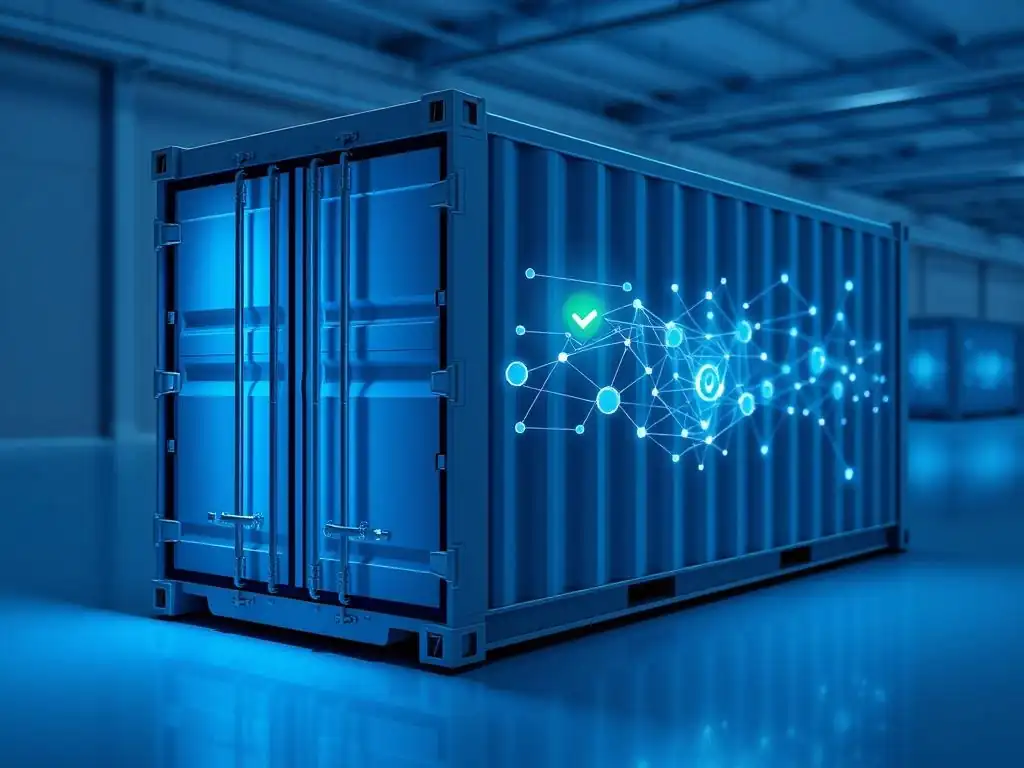
Improved Product Recall Processes with Blockchain
Product recalls in traditional cold chains are often slow, inefficient, and overly broad. Tracing affected products typically involves sifting through disparate paper records, emails, and siloed databases across multiple companies. This makes it difficult to pinpoint exactly which batches went where, resulting in widespread recalls that affect many products that were likely handled correctly, leading to unnecessary waste and cost.
Blockchain dramatically improves this process. With an immutable, end-to-end record of every product's journey, including manufacturing details, batch numbers, handling parties, locations, and temperature logs, companies can trace back the origin and path of affected goods with unprecedented speed and precision.
If an issue is detected, the exact scope of the affected batch and its distribution points can be identified within minutes or hours, allowing for highly targeted recalls. This not only saves money and reduces waste but, more importantly, enables faster removal of potentially harmful products from the market, enhancing public safety and reinforcing Blockchain cold chain logistics integrity.
Increased Consumer Confidence and Brand Trust
In an age where consumers are increasingly concerned about the origin, safety, and ethical sourcing of their products, transparency is a powerful tool for building trust. For temperature-sensitive goods like food and medicine, consumers want assurance that products have been handled correctly throughout their journey. While direct consumer access to raw blockchain data is unlikely, brands can leverage the verifiable data on the blockchain to provide consumers with credible information.
By demonstrating that they utilize a transparent and secure system like blockchain to ensure stringent temperature control and traceability, companies can significantly enhance their brand reputation. Providing scannable codes on packaging (though the article avoids links, conceptually this is the application) that link to verified information about the product's origin and handling history can build consumer confidence. Knowing that the integrity of the cold chain is verifiable through a tamper-proof system fosters trust and differentiates brands committed to quality and safety, directly linking to enhanced Blockchain cold chain logistics integrity.
Streamlining Audits and Regulatory Compliance
Meeting the stringent regulatory requirements for handling temperature-sensitive products, particularly in pharmaceuticals and food, often involves complex and time-consuming audits. Companies must provide proof of proper handling, storage conditions, and complete traceability records. In traditional systems, gathering and verifying this documentation across multiple supply chain partners can be a significant administrative burden.
Blockchain streamlines audits and regulatory compliance by providing a single, immutable, and easily accessible source of truth. Regulators and auditors, granted appropriate permissions, can access the verifiable history of a product directly on the blockchain, including all relevant temperature logs and handling records. This eliminates the need to chase down disparate records and provides auditors with high confidence in the data's integrity. The ease of access to verifiable records simplifies compliance reporting and demonstrates adherence to regulations, proving the effective implementation of Blockchain cold chain logistics integrity measures.
Reducing Waste and Improving Sustainability in the Cold Chain
Cold chain failures are a major contributor to product waste, particularly in the food sector. Spoiled food products end up in landfills, contributing to environmental problems like methane emissions. Pharmaceuticals rendered ineffective due to temperature excursions must also be safely disposed of, which can be a complex and environmentally sensitive process. Reducing spoilage through better monitoring and management directly translates to less waste.
By providing enhanced visibility, real-time monitoring capabilities (via integrated IoT), and verifiable data on product condition, blockchain helps identify potential issues earlier and ensures that fewer products are compromised by temperature excursions. This reduction in spoilage minimizes waste throughout the supply chain. Furthermore, the improved efficiency and transparency enabled by blockchain can lead to better inventory management, optimized logistics routes, and reduced energy consumption associated with handling and transporting compromised goods, contributing to a more sustainable cold chain and bolstering overall Blockchain cold chain logistics integrity.
Overcoming Challenges in Blockchain Cold Chain Adoption
Scalability Issues and Blockchain Network Capacity
One significant challenge in implementing blockchain for large-scale cold chains is scalability. Modern supply chains generate a massive volume of transactions and data, especially when integrating real-time feeds from potentially thousands or millions of IoT sensors tracking temperature, location, and other conditions. Public blockchains, while highly decentralized, can sometimes face limitations in transaction throughput (transactions per second) and data storage capacity when dealing with such high volumes.
To address this, many enterprise cold chain solutions are exploring or utilizing private or consortium blockchains. These networks are permissioned, meaning participation is restricted to known entities, and can often be designed for higher transaction speeds and data handling capacity compared to public chains. Additionally, strategies like off-chain storage of large sensor data files with only hashes recorded on the blockchain, or employing Layer 2 scaling solutions, are being developed to handle the sheer volume of data required to maintain comprehensive Blockchain cold chain logistics integrity across vast networks.
Interoperability Between Different Blockchain Platforms
The blockchain landscape is evolving, with various platforms and protocols being developed and adopted by different companies or consortia (e.g., Hyperledger Fabric, R3 Corda, private Ethereum variants). This proliferation of platforms raises the challenge of interoperability. A single cold chain often involves multiple participants, each potentially using different internal systems or even different blockchain solutions. If these platforms cannot communicate and exchange data seamlessly, the goal of end-to-end transparency is undermined, and new data silos can emerge.
Achieving true end-to-end visibility requires establishing standards and protocols for interoperability between different blockchain networks and integrating them with existing legacy systems like Enterprise Resource Planning (ERP) or Warehouse Management Systems (WMS). Industry-wide collaboration is needed to define common data standards and APIs that allow data to flow securely and reliably across different platforms, ensuring that the verifiable data trail crucial for Blockchain cold chain logistics integrity remains unbroken regardless of the underlying technology used by individual participants.
Data Privacy Concerns and GDPR Compliance
While blockchain's transparency is a key benefit, it can also raise data privacy concerns, particularly in light of regulations like the GDPR in Europe or CCPA in California. Recording every transaction and data point immutably on a shared ledger might conflict with the right to be forgotten or the need to protect commercially sensitive information or personal data that could potentially be linked to specific shipments (e.g., healthcare data).
Permissioned blockchains, where participation and data access are restricted and controlled, are often preferred for enterprise supply chain solutions to address this. Techniques like hashing sensitive data and storing the actual data off-chain, or using advanced cryptographic methods like zero-knowledge proofs, can allow verification of data integrity and compliance without revealing the underlying sensitive details to all network participants. Designing blockchain solutions with privacy by design is crucial to balance the need for transparency and traceability with regulatory requirements and commercial confidentiality while ensuring robust Blockchain cold chain logistics integrity.
The Cost of Implementing Blockchain Solutions
Implementing blockchain technology for cold chain logistics requires a significant initial investment. Costs include developing or licensing the blockchain platform, integrating it with existing IT infrastructure (ERP, WMS, TMS), deploying and integrating IoT sensors and gateway devices, and training personnel to manage the new system and processes. For large enterprises with complex global supply chains, this can represent a substantial capital expenditure.
However, it is essential to evaluate the cost of implementation against the potential return on investment (ROI). The benefits, such as reduced losses from spoilage and recalls, improved operational efficiency, lower compliance costs, enhanced brand reputation, and increased sales due to consumer trust, can potentially outweigh the initial expenditure over time. Companies considering adoption must conduct thorough cost-benefit analyses and potentially start with pilot programs focusing on specific high-value or high-risk cold chain segments to demonstrate the value and build a case for broader implementation, proving the long-term financial benefits of strengthened Blockchain cold chain logistics integrity.
The Future of Blockchain in Cold Chain Logistics
Emerging Trends: AI Integration and Predictive Analytics
The convergence of blockchain with other advanced technologies like Artificial Intelligence (AI) and machine learning is set to further revolutionize cold chain logistics. Blockchain provides an immutable, verifiable, and comprehensive dataset on product movement, condition, and handling history. This wealth of trustworthy data is the perfect fuel for AI and machine learning algorithms.
AI can analyze historical blockchain data, combined with external factors like weather patterns, traffic conditions, and route data, to identify correlations and predict potential cold chain risks. Predictive analytics can forecast the likelihood of temperature excursions on specific routes or at certain transfer points, allowing logistics providers to take proactive measures to prevent issues before they occur. AI could also optimize routes, predict maintenance needs for refrigeration equipment, and even forecast demand based on verifiable delivery data, moving from reactive problem-solving to proactive risk management and further enhancing Blockchain cold chain logistics integrity.
The Role of Blockchain in Creating More Resilient Supply Chains
Recent global events have highlighted the critical need for supply chain resilience – the ability to adapt to and recover quickly from disruptions such as natural disasters, geopolitical events, or pandemics. Traditional cold chains, with their limited visibility and reliance on disparate systems, are often vulnerable to these shocks. When disruptions occur, it's difficult to quickly locate goods, assess their condition, or reroute shipments effectively.
Blockchain contributes significantly to building more resilient cold chains by providing real-time, end-to-end visibility and a single, verifiable source of truth. In the event of a disruption, stakeholders can immediately access accurate information on the location and status of temperature-sensitive shipments on the blockchain. This enables faster decision-making, allows for rapid identification of alternative routes or logistics partners, and facilitates transparent communication with customers and regulatory bodies, making the entire cold chain more robust and better equipped to maintain Blockchain cold chain logistics integrity even under duress.
Increased Use of Consortium Blockchains for Collaborative Cold Chains
Given the multi-party nature of cold chains, involving manufacturers, carriers, customs, warehouses, distributors, and retailers, consortium blockchains are likely to become the predominant model for industry-wide adoption. A consortium blockchain is a permissioned network governed by a group of pre-selected organizations. This model offers a balance between the decentralization of public blockchains and the centralized control of private databases.
Consortium blockchains enable competing or collaborating entities within a cold chain ecosystem to share relevant data securely and efficiently on a shared, immutable ledger. This fosters collaboration and trust among participants who need to share information but may not want to expose all their data on a public network or rely on a single, potentially biased, central authority. The trend towards collaborative platforms built on consortium blockchains will facilitate greater data sharing, process standardization, and collective responsibility for maintaining Blockchain cold chain logistics integrity across the entire value chain.
Conclusion: Blockchain as a Key Enabler for Cold Chain Integrity
The Transformative Potential of Blockchain for Temperature-Sensitive Products
Blockchain technology holds immense transformative potential for cold chain logistics, fundamentally changing how temperature-sensitive products are tracked, managed, and verified. By providing an immutable, transparent, and secure ledger, blockchain moves cold chain management beyond siloed systems and paper trails into a new era of verifiable trust and end-to-end visibility. This is not merely an incremental improvement but a foundational shift that addresses core vulnerabilities inherent in traditional cold chain processes.
The ability to record every step of a product's journey, combined with real-time environmental data from IoT sensors, creates a level of accountability and data integrity previously unattainable. This directly translates to enhanced product safety, quality, and efficacy, particularly critical for pharmaceuticals and perishable foods. The verifiable nature of the data ensures that businesses, regulators, and consumers can have confidence in the handling history of sensitive goods, solidifying Blockchain cold chain logistics integrity.
Moving Towards a More Transparent and Efficient Cold Chain Future
As blockchain adoption matures and integrates further with technologies like IoT and AI, the future of cold chain logistics promises to be significantly more transparent, efficient, and resilient. The challenges of scalability, interoperability, and cost are being addressed through technological advancements and collaborative industry efforts, paving the way for broader implementation.
The ongoing shift towards blockchain-enabled cold chains will lead to reduced waste, faster and more accurate recalls, streamlined regulatory compliance, and ultimately, increased consumer trust. By providing a shared, tamper-proof record of temperature and handling conditions from origin to destination, blockchain acts as a critical enabler for ensuring the integrity of temperature-sensitive products, creating a more reliable and trustworthy global supply chain for vital goods.
Frequently Asked Questions
What is the primary benefit of using blockchain in cold chain logistics?
The primary benefit is enhanced transparency and traceability, ensuring the integrity of temperature-sensitive products throughout the supply chain by providing an immutable record. This helps prevent spoilage and reduces waste.
How does blockchain improve cold chain logistics integrity?
Blockchain creates a shared, tamper-proof ledger that records temperature readings and location data at each stage of the supply chain. This allows for real-time monitoring and immediate identification of any deviations from acceptable conditions.
What are some specific examples of temperature-sensitive products benefiting from blockchain-based cold chain solutions?
Examples include pharmaceuticals, which require precise temperature control to maintain efficacy, and food products, where temperature fluctuations can lead to spoilage and health risks. Vaccines are also a key area.
What are the main challenges to implementing blockchain in cold chain logistics?
Challenges include the high initial investment in technology, the need for interoperability between different systems, and the lack of standardized regulations regarding blockchain use in supply chain management.
How does blockchain contribute to regulatory compliance in the cold chain?
Blockchain provides an auditable and transparent record of all temperature data, location information, and custody transfers, making it easier to demonstrate compliance with regulations related to food safety, pharmaceutical handling, and other relevant standards.
Final Reflection: Securing the Cold Chain's Future
The journey through blockchain's application in cold chain logistics reveals a powerful synergy, where technological innovation directly addresses the critical need for unwavering temperature-sensitive product integrity. No longer a futuristic concept, blockchain's ability to provide transparent, immutable records is actively reshaping how we ensure the safety and efficacy of everything from pharmaceuticals to perishable foods, impacting global health and economic stability.
This exploration underscores how technology can be a force for good, enhancing trust and accountability in complex supply chains. Witnessing the potential of blockchain to minimize waste, prevent fraud, and ultimately safeguard human health is deeply inspiring. The cold chain is only as strong as its weakest link. Blockchain provides the visibility and traceability needed to strengthen every link and ensure product integrity from origin to consumer.
This sentiment perfectly captures the transformative potential of this technology in creating a more reliable and secure future for temperature-sensitive goods.
As we conclude, consider the implications of this technology in your own life. How might blockchain-enabled transparency impact your choices as a consumer? How can you advocate for the adoption of solutions that prioritize product safety and reduce waste? Embrace the possibilities that blockchain offers and become a champion for a future where the integrity of the cold chain is not just a goal, but a guaranteed reality.
Unlock Cold Chain Transparency: Secure Your Products Now!
Thank you for exploring how blockchain technology can improve cold chain logistics. We hope you've gained useful insights into how this innovation can enhance the integrity of temperature-sensitive products. Now, it's time to take action and strengthen your supply chain.
Here's how you can get started:
- Launch a pilot blockchain project within your cold chain operations. This hands-on approach will help you gather valuable data and assess its practicality and advantages.
- Investigate open-source blockchain platforms designed for supply chain management to understand their various features.
- Share this article with colleagues in logistics and pharmaceuticals to encourage discussions about adopting blockchain for better product safety.
What is the first small step you plan to take this week to explore blockchain's potential in your cold chain? Share your thoughts in the comments below!
Leave a Reply