
Breaking Down Silos: Achieving Interoperability in BlockchainEnabled Supply Chains


Welcome to Blockchain Trends, your guide to navigating the ever-evolving world of decentralized technologies. Discover how blockchain is reshaping industries beyond just digital currencies. Are you ready to unlock the true potential of blockchain in supply chain management? Dive in to explore the critical blockchain supply chain interoperability challenges and how overcoming them can revolutionize global commerce, creating unprecedented efficiency and transparency. Continue reading to uncover the solutions that are bridging the gaps and paving the way for a truly interconnected future.
Breaking Down Silos: Achieving Interoperability in Blockchain-Enabled Supply Chains
- Introduction: The Promise and Pitfalls of Blockchain in Supply Chain Management
- Understanding Blockchain Supply Chain Interoperability
- The Current State of Blockchain Silos in Supply Chains
-
Addressing Blockchain Supply Chain Interoperability Challenges: Technological Solutions
- Cross-Chain Technologies: Enabling Communication Between Different Blockchains
- Application Programming Interfaces (APIs) and Standardized Protocols for Data Exchange
- Interoperability Platforms: Aggregating Data From Multiple Blockchains
- The Role of Smart Contracts in Facilitating Interoperable Processes
- Addressing Blockchain Supply Chain Interoperability Challenges: Standardization and Governance
- Case Studies: Examples of Interoperable Blockchain Supply Chain Solutions
- Overcoming the Barriers to Blockchain Supply Chain Interoperability
- The Future of Interoperable Blockchain in Supply Chain
- Conclusion: Embracing Interoperability for a More Efficient and Transparent Blockchain Supply Chain
-
Frequently Asked Questions
- How does a lack of interoperability hinder blockchain adoption in supply chains?
- What are the main technical challenges to achieving blockchain supply chain interoperability?
- How can regulatory frameworks impact the development of interoperable blockchain supply chains?
- Beyond technology, what non-technical factors impede blockchain supply chain interoperability?
- What are some potential solutions for overcoming blockchain supply chain interoperability challenges?
- Final Reflection: Bridging the Blockchain Divide
- Unlock the Future: Start Building Your Blockchain Supply Chain Today!
Introduction: The Promise and Pitfalls of Blockchain in Supply Chain Management
Blockchain's Transformative Potential for Supply Chains: A Brief Overview
Blockchain technology offers a decentralized, immutable, and transparent ledger that holds immense promise for revolutionizing supply chain management. By providing a single source of truth for transactions and product movements, blockchain can significantly improve traceability, reduce fraud, and enhance efficiency across complex global networks. This technology enables all participants, from raw material suppliers to end consumers, to access verified information about a product's journey, fostering trust and accountability. For instance, tracking high-value goods or sensitive products like pharmaceuticals becomes significantly easier and more reliable, reducing the risk of counterfeiting or diversion.
Beyond simple tracking, blockchain facilitates automated processes through smart contracts. These self-executing contracts, with the terms of the agreement directly written into code, can trigger actions like payments upon delivery confirmation or automatically update inventory records when goods change hands. This automation reduces manual paperwork, minimizes delays, and lowers administrative costs. The inherent security features of blockchain, leveraging cryptographic principles, also protect sensitive supply chain data from tampering, providing a robust foundation for secure and efficient operations in a digitally interconnected world.
The Fragmentation Problem: Why Blockchain Silos Hinder Supply Chain Efficiency
Despite its potential, the widespread adoption of blockchain in supply chains is hampered by a significant challenge: fragmentation. Numerous blockchain platforms and networks are being developed and implemented independently by different companies and consortia. These range from public blockchains like Ethereum (often used for tokenization or specific tracking) to private or consortium blockchains tailored for enterprise use, such as Hyperledger Fabric or R3 Corda. While these individual initiatives may bring benefits within their specific network, they often operate as isolated "silos."
This lack of connectivity between different blockchain networks creates new inefficiencies and complexity. Imagine a product moving through a supply chain where one leg is tracked on a Hyperledger-based network, another on a Corda network, and a third on a private Ethereum instance. Data from one network cannot easily be shared or verified by another without complex, often manual, off-chain processes. This defeats the core purpose of blockchain – a shared, transparent ledger – and prevents true end-to-end visibility across the entire supply chain, limiting the potential benefits of the technology.
Focusing on Blockchain Supply Chain Interoperability Challenges
The core issue preventing seamless, end-to-end blockchain-enabled supply chains is the lack of interoperability. Different blockchain platforms use varying consensus mechanisms, data structures, smart contract languages, and governance models. This heterogeneity makes it difficult for them to communicate, exchange data, or execute transactions across network boundaries. Addressing these blockchain supply chain interoperability challenges is paramount for unlocking the full value proposition of decentralized ledger technology in global trade and logistics.
Understanding and overcoming these blockchain supply chain interoperability challenges involves exploring both technological solutions and collaborative governance models. Without effective interoperability, supply chains risk replacing traditional data silos with new, blockchain-based silos, hindering collaboration, increasing integration costs, and limiting the network effects that are crucial for widespread adoption and maximum efficiency gains across complex multi-party networks.
Understanding Blockchain Supply Chain Interoperability
Defining Blockchain Interoperability in the Context of Supply Chain
Blockchain interoperability in the supply chain context refers to the ability of different blockchain networks and legacy systems to seamlessly exchange information, assets, and value while maintaining the integrity and security of the underlying data. It's about enabling communication and interaction between disparate blockchain platforms, whether they are public, private, or consortium-based, as well as allowing these blockchain networks to interact with traditional databases and enterprise resource planning (ERP) systems used by supply chain participants. This isn't just about moving data; it's about ensuring that data is understood, trusted, and actionable across different technological environments.
Achieving true interoperability means that a transaction recorded on one blockchain, such as the dispatch of goods on a manufacturer's private network, can trigger an event or be verified by a participant on a different blockchain, like a logistics provider's consortium network or a retailer's internal system. This requires technical bridges, standardized data formats, and agreed-upon protocols. Without this capability, each blockchain implementation remains an isolated island, capable of optimizing specific segments but unable to provide the holistic, transparent view of the entire supply chain journey that is the ultimate goal of blockchain adoption.
Why is Interoperability Crucial for Blockchain-Based Supply Chains?
Interoperability is not merely a technical nice-to-have; it is a fundamental requirement for blockchain to deliver on its promise of transforming global supply chains. Supply chains are inherently multi-party networks involving diverse participants operating on various systems. A typical product might involve dozens or even hundreds of entities across different countries, each potentially using different technologies, including various blockchain platforms or no blockchain at all. If these systems cannot communicate effectively, the shared ledger concept breaks down.
The lack of interoperability directly contributes to the blockchain supply chain interoperability challenges currently observed. It limits network effects, as potential participants are hesitant to join a platform if it cannot easily connect with their existing systems or the networks their partners use. It increases complexity and cost, as custom integrations are required for each connection between disparate systems.
Most importantly, it prevents the creation of a truly transparent, end-to-end view of the supply chain, hindering visibility, slowing down processes, and making it difficult to verify the authenticity and status of goods as they move from origin to destination. For blockchain to move beyond niche applications and become a foundational technology for global trade, overcoming these interoperability barriers is essential.
Key Benefits of Interoperable Blockchain Supply Chain Networks
Achieving interoperability unlocks significant benefits for blockchain-enabled supply chains. Firstly, it dramatically enhances end-to-end visibility and transparency. When different segments of the supply chain, each potentially on a different blockchain, can exchange data seamlessly, stakeholders gain a holistic view of a product's journey from raw material to consumer. This improved visibility helps identify bottlenecks, track provenance, and respond quickly to disruptions. For instance, in food supply chains, interoperability could allow data about a product's origin on one network to be instantly verifiable by a distributor on another, significantly reducing the time needed for recalls, potentially from days to hours.
Secondly, interoperability fosters greater collaboration and efficiency. By allowing different parties using different blockchain platforms to interact, it reduces the need for manual data reconciliation and redundant data entry. Smart contracts can execute seamlessly across network boundaries, automating processes like payments and compliance checks. This leads to faster transaction times, reduced administrative overhead, and improved operational efficiency. An estimated 15% to 20% cost reduction in logistics and supply chain operations is often cited as a potential outcome of widespread blockchain adoption, a figure heavily reliant on achieving high levels of interoperability between the myriad of systems involved.
Thirdly, interoperability drives network growth and innovation. When blockchain networks are open and able to connect, it lowers the barrier to entry for new participants and encourages the development of value-added services that can leverage data from multiple networks. This network effect is crucial for blockchain adoption, as the value of the network increases with the number of participants and the richness of the data exchanged. Addressing blockchain supply chain interoperability challenges effectively will accelerate the widespread adoption of blockchain across diverse industries, from manufacturing and retail to healthcare and agriculture.
The Current State of Blockchain Silos in Supply Chains
Examining Existing Blockchain Implementations in Supply Chain
Current blockchain implementations in supply chains are often characterized by pilot projects and consortium-based networks focused on specific industry segments or use cases. For example, in the shipping industry, platforms like TradeLens (developed by Maersk and IBM) aim to connect carriers, ports, and customs authorities, but primarily focus on ocean freight. In the food sector, platforms like IBM Food Trust are designed to connect growers, processors, distributors, and retailers for enhanced traceability, but their reach is often limited to participants within that specific ecosystem or those willing to adopt the platform.
Other initiatives focus on different aspects, such as tracking pharmaceuticals for anti-counterfeiting (e.g., MediLedger) or managing trade finance documentation. While these individual platforms demonstrate the power of blockchain within their defined scope, they often operate independently. A container tracked on TradeLens might contain food products also tracked on Food Trust, but linking the data between these two distinct networks requires manual processes or custom integrations, highlighting the prevalent blockchain supply chain interoperability challenges in practice today.
Identifying the Main Causes of Blockchain Supply Chain Interoperability Challenges
Several factors contribute to the significant blockchain supply chain interoperability challenges. A primary cause is the diversity of blockchain technologies themselves. Different platforms are built on fundamentally different architectures, use varying consensus mechanisms (e.g., Proof-of-Work, Proof-of-Stake, Practical Byzantine Fault Tolerance), and support distinct smart contract languages (e.g., Solidity for Ethereum, Chaincode for Hyperledger Fabric). This makes direct communication at the protocol level difficult or impossible without translation layers.
Furthermore, a lack of standardized data models and protocols across the supply chain industry exacerbates the problem. Even if two blockchains could technically communicate, they might be using different formats and definitions for crucial supply chain data like product identifiers, location codes, or shipment statuses. This semantic incompatibility requires complex mapping and transformation of data.
Finally, differing governance models and business rules across networks create barriers. A permissioned consortium blockchain might have strict rules about data access and participant identity that are incompatible with the requirements of another network, preventing seamless interaction and data exchange necessary to overcome blockchain supply chain interoperability challenges.
The Impact of Siloed Blockchains on Supply Chain Visibility and Efficiency
The existence of siloed blockchain networks has a tangible negative impact on supply chain visibility and efficiency. Instead of a single, shared, and continuously updated view of the supply chain, participants are left with fragmented pieces of information residing on different, unconnected ledgers. A logistics provider might have visibility up to the point goods are handed off to a retailer's transportation network, but lose visibility thereafter if the retailer uses a different, incompatible blockchain or no blockchain at all for the 'last mile'.
This lack of end-to-end visibility hinders effective decision-making, complicates audits, and makes it harder to detect issues like delays, damage, or fraud across the entire chain. Manual processes are still required to bridge the gaps between these silos, eroding the efficiency gains promised by blockchain. For example, reconciling data from different blockchain platforms and legacy systems can add significant time and cost, potentially negating the benefits of using blockchain for specific segments. Addressing these blockchain supply chain interoperability challenges is crucial to unlock the full potential for real-time, comprehensive visibility and significant efficiency improvements across global supply networks.
Addressing Blockchain Supply Chain Interoperability Challenges: Technological Solutions
Cross-Chain Technologies: Enabling Communication Between Different Blockchains
One promising technological approach to overcoming blockchain supply chain interoperability challenges is the development and implementation of cross-chain technologies. These technologies are designed specifically to enable communication, data exchange, and even asset transfer between different, otherwise incompatible, blockchain networks. Examples include relay networks, which validate transactions on one chain based on information from another, and atomic swaps, which allow for peer-to-peer exchange of cryptocurrencies or assets between different blockchains without needing a trusted third party.
More sophisticated cross-chain solutions involve intermediary chains or protocols that act as bridges, translating data and facilitating interactions between diverse blockchains. For instance, a central "interoperability layer" could connect multiple supply chain-specific blockchains, allowing a status update on one network to trigger an event on another. While still evolving, these technologies represent a significant step towards breaking down blockchain silos and enabling a more connected and fluid exchange of information necessary for truly integrated blockchain supply chain networks.
Application Programming Interfaces (APIs) and Standardized Protocols for Data Exchange
While complex cross-chain protocols address fundamental blockchain-to-blockchain communication, a more practical and immediate approach to tackling blockchain supply chain interoperability challenges involves leveraging standard enterprise integration methods like APIs and standardized protocols. APIs provide a way for different software systems, including blockchain nodes and legacy databases, to interact with each other in a defined and structured manner. By exposing data or functionalities from a blockchain network through well-documented APIs, other systems can access and utilize that information.
Coupled with APIs, the adoption of standardized data protocols for supply chain information is crucial. Industry standards bodies are working on defining common data formats for product identifiers, location data, event types (like shipping, receiving, manufacturing), and status updates. If all participants agree to use these standards, data exchanged via APIs between different blockchain networks or between blockchains and legacy systems becomes instantly understandable and usable, significantly reducing the complexity of integration and helping to overcome the semantic barriers that contribute to blockchain supply chain interoperability challenges.
Interoperability Platforms: Aggregating Data From Multiple Blockchains
Another technological solution emerging to address blockchain supply chain interoperability challenges is the development of dedicated interoperability platforms. These platforms act as middleware or aggregation layers, sitting above multiple underlying blockchain networks (and potentially legacy systems) to collect, standardize, and present data in a unified view. They don't necessarily require the underlying blockchains to talk directly to each other at the protocol level but instead pull relevant data from each network via APIs or other connectors.
These platforms can provide a consolidated dashboard view of goods moving across different supply chain segments, even if those segments are tracked on different blockchains. They can also facilitate cross-network queries and analytics. While this approach might not achieve true "transactional" interoperability between blockchains, it significantly improves data visibility and usability for participants operating across disparate networks. Examples include platforms designed to integrate data from various trade finance or logistics platforms, providing a single point of access to information that would otherwise be scattered across multiple systems, thereby mitigating some of the effects of blockchain supply chain interoperability challenges.
The Role of Smart Contracts in Facilitating Interoperable Processes
Smart contracts play a vital role not just within a single blockchain network but also in facilitating processes across interoperable systems. While a smart contract on one blockchain cannot directly execute code on another, it can be designed to interact with external systems or trigger actions based on events occurring on other networks, assuming the necessary interoperability mechanisms (like oracles, APIs, or cross-chain bridges) are in place.
For example, a smart contract on a logistics blockchain could be programmed to release payment held in escrow on a finance blockchain when it receives verified data (perhaps via an oracle connected to a customs network) indicating that goods have cleared customs.
Furthermore, smart contracts can be used to define the rules and logic for data exchange and interaction between different networks. They can enforce agreed-upon protocols, validate the authenticity of cross-chain messages, and manage the state transitions that occur as goods move across segments tracked on different blockchains. Developing standardized smart contract templates for common supply chain processes (like change of ownership, status updates, or dispute resolution) that can be adapted for different platforms will be crucial in enabling more seamless and automated workflows across interoperable blockchain supply chains, directly addressing some of the core blockchain supply chain interoperability challenges.
Addressing Blockchain Supply Chain Interoperability Challenges: Standardization and Governance
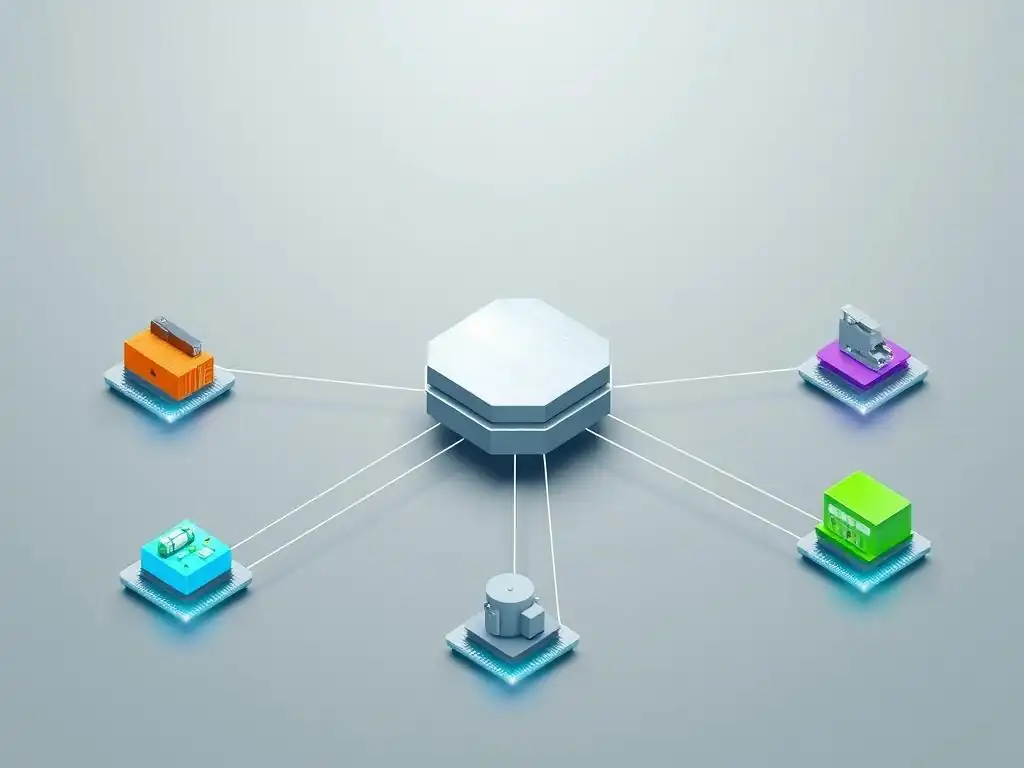
The Importance of Industry-Wide Standards for Blockchain Supply Chain Data
Overcoming blockchain supply chain interoperability challenges fundamentally requires consensus on how data is structured and exchanged. Industry-wide standardization of data formats, identifiers, and protocols is paramount. This involves agreeing on common ways to represent products (e.g., using GS1 standards like GTINs), locations (e.g., GLNs), and events (e.g., EPCIS event types). When different blockchain platforms and legacy systems use the same vocabulary and structure for supply chain data, exchanging and interpreting that data becomes significantly easier, regardless of the underlying technology.
Organizations like GS1, ISO, and industry-specific consortia are actively working on developing these standards. Adopting these common standards across different blockchain initiatives prevents semantic incompatibility, which is a major contributor to blockchain supply chain interoperability challenges. It ensures that a 'shipping' event recorded on one network is understood as the same type of event on another, enabling seamless tracking and automated processes across network boundaries. Widespread adoption of such standards across various supply chain blockchain initiatives is a crucial step towards a more connected ecosystem.
Governance Models for Interoperable Blockchain Networks: Consortium-Based Governance
Effective governance is essential for maintaining trust and coordination within and between interoperable blockchain networks. For supply chain applications, consortium-based governance models are particularly relevant. In this model, a group of stakeholders (e.g., major players in an industry like logistics or food) come together to define the rules, standards, and protocols for their shared blockchain network or for how different networks will interact. This provides a framework for decision-making regarding network upgrades, dispute resolution, participant onboarding, and, critically, interoperability standards.
Consortium governance can help establish agreed-upon standards for data exchange, define technical requirements for connecting to the network, and enforce compliance with shared rules. This collaborative approach is vital for addressing blockchain supply chain interoperability challenges because it involves the very parties who need to exchange information. By working together, they can define common ground rules that facilitate interaction between their potentially diverse internal systems and blockchain platforms, moving beyond isolated initiatives towards a more cohesive industry-wide approach.
Collaboration and Partnerships: Building Bridges Between Different Blockchain Ecosystems
Beyond formal governance structures, active collaboration and partnerships between different blockchain projects and consortia are key to overcoming blockchain supply chain interoperability challenges. Instead of competing in isolation, initiatives focused on different segments or aspects of the supply chain need to find ways to connect and share data. This could involve technical collaborations to build cross-chain bridges, joint efforts to lobby for or adopt industry standards, or commercial agreements to allow data sharing under specific conditions.
Examples of such collaboration are beginning to emerge, where platforms initially focused on specific industries or geographies are exploring ways to connect with other networks to provide more comprehensive, end-to-end solutions. This requires a willingness to collaborate, share knowledge, and potentially align business interests. Building these bridges between different blockchain ecosystems is a practical necessity for achieving widespread adoption and realizing the full, interconnected potential of blockchain technology in global supply chains, directly tackling the fragmentation that causes significant blockchain supply chain interoperability challenges.
Case Studies: Examples of Interoperable Blockchain Supply Chain Solutions
Case Study 1: IBM Food Trust and Walmart's Food Traceability Initiative
IBM Food Trust is a prominent example of a consortium blockchain platform designed to improve food traceability. Initially developed in collaboration with companies like Walmart, Nestlé, and Unilever, it focuses on connecting participants across the food supply chain, from growers and processors to distributors and retailers. Walmart notably demonstrated the platform's effectiveness by significantly reducing the time to trace a package of sliced mangoes from store back to farm from approximately 7 days to just 2.2 seconds, showcasing the power of a shared, immutable ledger within a defined network.
While primarily operating as a permissioned network, IBM Food Trust has incorporated features and API layers designed to address blockchain supply chain interoperability challenges to some extent. It allows participants to share specific data points while controlling access, and its architecture is built with an eye towards connecting with other systems.
The platform is designed to integrate with participants' existing ERP and traceability systems, often via APIs, allowing data to flow onto the blockchain without requiring a complete overhaul of legacy IT. While it doesn't necessarily achieve direct blockchain-to-blockchain interoperability with unrelated networks, it demonstrates how a consortium can create a shared data layer that improves visibility within its ecosystem and provides mechanisms for connecting diverse participants, laying groundwork for broader interoperability efforts.
Case Study 2: TradeLens: Maersk and IBM's Blockchain Platform for Global Trade
TradeLens, a platform developed by Maersk and IBM, is another significant example focusing on the global shipping and logistics industry. It aims to digitize and automate trade documentation processes and improve visibility across the complex journey of ocean freight. The platform connects a wide range of participants, including ocean carriers (representing over half of global container shipping volume as of recent reports), ports and terminals (over 125 connected), customs authorities (more than 10 government agencies), and logistics providers.
TradeLens addresses blockchain supply chain interoperability challenges within its domain by creating a shared, immutable ledger for shipping data that all permissioned participants can access based on their roles. It provides a single source of truth for events like vessel departures, arrivals, and customs clearances.
The platform utilizes APIs and standardized data models (like those defined by the International Maritime Organization) to facilitate data exchange between diverse participants' systems and the blockchain. While it is a consortium network focused on a specific industry, its success in connecting a large number of disparate entities demonstrates how a shared platform and agreed-upon standards can overcome significant data fragmentation barriers, paving the way for broader blockchain supply chain interoperability.
Case Study 3: MediLedger: Pharmaceutical Supply Chain Security and Traceability
The MediLedger Network is an industry-managed blockchain network specifically designed for the pharmaceutical supply chain to meet regulatory requirements, such as the US Drug Supply Chain Security Act (DSCSA), which mandates electronic, interoperable tracing of prescription drugs. This network focuses on verifying product identifiers and transaction data between trading partners (manufacturers, wholesalers, dispensers). It uses a decentralized architecture built on open protocols to ensure data privacy while allowing for verification.
MediLedger is a prime example of addressing blockchain supply chain interoperability challenges within a specific, highly regulated industry. It employs a unique approach where sensitive transaction data is not stored directly on a single shared ledger visible to all, but rather participants cryptographically link their own private data and make specific verifiable proofs available on the shared network.
This design allows for data verification between trading partners without revealing sensitive commercial information to the entire network. The network's success relies on industry-wide adoption of its protocols and standards, demonstrating that collaboration and agreed-upon technical approaches are crucial for creating interoperable systems, particularly in sectors with stringent data privacy and security requirements.
Overcoming the Barriers to Blockchain Supply Chain Interoperability
Addressing Data Privacy and Security Concerns in Interoperable Systems
A significant barrier to achieving widespread blockchain supply chain interoperability is ensuring data privacy and security when data is shared across different networks and participants. While blockchain offers security through cryptography, sharing sensitive commercial data (like pricing, customer information, or production volumes) across an extended, potentially public, network is a major concern for businesses. Interoperability, by definition, involves sharing data between systems, which could increase exposure if not handled correctly.
Solutions to address these concerns in interoperable systems include leveraging privacy-preserving technologies like zero-knowledge proofs, homomorphic encryption, or differential privacy, which allow data to be verified or analyzed without revealing the underlying sensitive details. Implementing permissioned access controls, where data sharing is governed by strict rules and smart contracts, is also crucial.
Furthermore, architectural patterns like "data residency" combined with verifiable proofs on the blockchain (as seen in MediLedger) allow participants to keep sensitive data off-chain while providing verifiable evidence on the shared ledger. These technical and architectural approaches are vital for building trust and facilitating data exchange in a way that respects privacy and security requirements, thereby mitigating key blockchain supply chain interoperability challenges.
Managing Regulatory Compliance Across Different Jurisdictions
Global supply chains operate across numerous countries, each with its own set of regulations regarding data privacy (e.g., GDPR), data localization, trade compliance, and industry-specific mandates (like pharmaceutical traceability laws). Achieving blockchain supply chain interoperability means facilitating the flow of information across these diverse regulatory landscapes, which presents complex challenges. Data shared on one network might be subject to different rules than data on another, and ensuring compliance across the entire chain is difficult when systems are interconnected.
Addressing this requires a multi-faceted approach. Legal frameworks and agreements between consortium members or network participants must define how data is handled, stored, and shared in compliance with relevant regulations. Technically, solutions can involve using smart contracts to automate compliance checks based on the origin or destination of goods, or employing data architectures that segregate data based on jurisdiction or regulatory requirements. Collaboration with regulatory bodies to develop clear guidelines for blockchain usage and interoperability in supply chains is also essential to navigate this complex environment and overcome regulatory blockchain supply chain interoperability challenges.
Ensuring Scalability and Performance of Interoperable Blockchain Networks
Scalability is a well-known challenge for many blockchain technologies, particularly public ones. As the number of transactions and participants grows, the network's ability to process transactions quickly and efficiently can be strained. Interoperability adds another layer of complexity: coordinating transactions and data exchange across multiple networks can introduce latency and significantly increase the computational overhead required to verify and synchronize data. This can impact the overall performance of an interconnected supply chain system.
Addressing scalability in an interoperable context involves improving the performance of individual blockchain networks (e.g., through sharding, layer-2 solutions) and optimizing the mechanisms used for cross-chain communication. Efficient cross-chain protocols, optimized data structures for exchange, and robust infrastructure for interoperability platforms are necessary. Furthermore, designing systems that balance the need for data sharing with performance requirements is crucial. Not all data needs to be shared across all networks instantly; strategic design can ensure that only necessary information is exchanged efficiently, helping to maintain high performance and scalability in complex, interoperable blockchain supply chain networks.
The Future of Interoperable Blockchain in Supply Chain
Emerging Technologies and Trends in Blockchain Interoperability
The field of blockchain interoperability is rapidly evolving, with several emerging technologies and trends poised to significantly impact supply chain applications. One key area is the development of more sophisticated "layer 0" or "layer 1" protocols specifically designed for interoperability, such as Polkadot, Cosmos, or Avalanche. These protocols aim to create ecosystems where different blockchains can connect and communicate natively, providing a foundational layer for cross-chain interactions beyond simple asset transfers.
Another trend is the increasing focus on decentralized identity and verifiable credentials, which can play a crucial role in managing participant identities and permissions across different networks in an interoperable supply chain. Furthermore, advancements in privacy-enhancing technologies, as mentioned earlier, are becoming more mature and integrated into blockchain platforms, easing concerns about sharing sensitive data in interconnected environments. The development of more standardized smart contract languages and frameworks that can be more easily adapted across different platforms is also an important trend addressing technical blockchain supply chain interoperability challenges.
Predictions for the Adoption of Interoperable Blockchain Solutions in Supply Chain
Predictions suggest a significant increase in the adoption of blockchain in supply chains, but this growth is heavily contingent on overcoming blockchain supply chain interoperability challenges. Analyst reports indicate that blockchain could be used by 20-30% of the world's largest companies for supply chain management within the next five years. However, for this adoption to move beyond isolated pilot projects or single-consortium networks, interoperability is key.
It is likely that initial steps towards interoperability will involve connecting permissioned enterprise networks within specific industries or across closely related segments (e.g., connecting a manufacturing blockchain with a logistics blockchain). As technologies mature and standards become more widely adopted, we may see connections between different consortium networks and, eventually, potentially limited, controlled interactions with public blockchains for specific use cases like tokenized assets or public verification of specific data points.
The pace of adoption of truly interoperable solutions will depend on the collective effort of technology providers, industry consortia, and standards bodies to build bridges and establish common ground.
The Long-Term Impact of Interoperability on Supply Chain Efficiency and Transparency
Achieving high levels of interoperability will have a profound long-term impact on supply chain efficiency and transparency. It will enable the creation of truly digital, end-to-end supply chain visibility, allowing stakeholders to track products and information seamlessly across complex global networks, regardless of the underlying technology used by different participants. This enhanced visibility will lead to more efficient operations, better inventory management, reduced waste, and faster response times to disruptions.
Furthermore, interoperability will unlock the full potential of automated processes powered by smart contracts across the entire supply chain, not just within isolated segments. Payments can be triggered automatically upon verified delivery across different networks, compliance checks can be automated based on cross-chain data, and complex logistics workflows can be orchestrated seamlessly. This will significantly reduce manual effort, administrative costs, and delays. Ultimately, overcoming blockchain supply chain interoperability challenges is crucial for realizing the vision of highly efficient, transparent, and resilient global supply chains powered by distributed ledger technology.
Conclusion: Embracing Interoperability for a More Efficient and Transparent Blockchain Supply Chain
Key Takeaways: The Importance of Addressing Blockchain Supply Chain Interoperability Challenges
Blockchain technology holds immense promise for transforming supply chains by enhancing transparency, traceability, and efficiency. However, the current landscape is characterized by fragmented, siloed implementations that limit the technology's full potential. Addressing blockchain supply chain interoperability challenges is not merely a technical hurdle but a fundamental requirement for creating truly connected and effective blockchain-enabled supply networks. Without the ability for different blockchain platforms and legacy systems to communicate and exchange data seamlessly, the benefits of a shared, immutable ledger cannot be fully realized across complex, multi-party global supply chains.
Overcoming these challenges requires a dual focus: technological solutions like cross-chain protocols and APIs, alongside crucial non-technological approaches such as industry-wide standardization of data and processes, collaborative governance models, and active partnerships between different initiatives. The success of platforms like IBM Food Trust, TradeLens, and MediLedger, while often operating within specific ecosystems, demonstrates the power of shared ledgers and highlights the need for mechanisms to connect such initiatives to achieve broader impact. Addressing blockchain supply chain interoperability challenges is essential for moving beyond isolated pilots to widespread, transformative adoption.
Call to Action: Fostering Collaboration and Innovation in Blockchain Supply Chain Interoperability.
Realizing the vision of a truly interconnected and transparent blockchain supply chain requires a concerted effort from all stakeholders. Technology providers must continue to innovate and develop robust, secure, and scalable interoperability solutions. Industry consortia and standards bodies need to accelerate the development and adoption of common data standards and protocols that facilitate seamless data exchange. Companies implementing blockchain should prioritize interoperability from the outset, choosing platforms and architectures that support connectivity and advocating for open standards.
Furthermore, fostering collaboration and partnerships between different blockchain projects and across industries is paramount. Instead of building competing silos, the focus should be on building bridges and creating ecosystems where data can flow freely and securely. By actively addressing blockchain supply chain interoperability challenges through a combination of technological innovation, standardization, and collaboration, the industry can unlock the full transformative potential of blockchain, leading to more efficient, resilient, and transparent supply chains that benefit businesses, consumers, and the global economy.
Frequently Asked Questions
How does a lack of interoperability hinder blockchain adoption in supply chains?
A lack of interoperability creates isolated blockchain networks, preventing seamless data exchange and collaboration between different parties. This limits the potential for end-to-end supply chain visibility and efficiency gains.
What are the main technical challenges to achieving blockchain supply chain interoperability?
Technical challenges include standardizing data formats, establishing cross-chain communication protocols, and addressing scalability issues across multiple blockchain networks. These are crucial for seamless data transfer.
How can regulatory frameworks impact the development of interoperable blockchain supply chains?
Unclear or conflicting regulations can create uncertainty and hinder investment in interoperable solutions. Harmonized regulatory approaches are needed to foster trust and encourage adoption.
Beyond technology, what non-technical factors impede blockchain supply chain interoperability?
Lack of trust between participants, resistance to data sharing, and limited collaboration are significant non-technical barriers. These issues require strong governance and shared incentives.
What are some potential solutions for overcoming blockchain supply chain interoperability challenges?
Solutions include developing common standards and protocols, utilizing cross-chain bridges, and establishing consortia or industry groups to promote collaboration and address governance issues.
Final Reflection: Bridging the Blockchain Divide
The challenges outlined in this article regarding blockchain supply chain interoperability are not merely theoretical hurdles; they represent real-world obstacles hindering the full realization of blockchain's transformative potential. The fragmented landscape, with its isolated networks and disparate standards, prevents the seamless flow of information and goods, ultimately limiting efficiency and transparency across global supply chains. Overcoming these challenges is crucial for unlocking the true value proposition of blockchain technology in this critical sector.
This journey towards interoperability has profoundly influenced, and continues to influence, the way we perceive trust and collaboration in the digital age. The potential for a truly interconnected supply chain, where data is verifiable and accessible across all stakeholders, represents a paradigm shift in how businesses operate and interact. The future of supply chains lies in their ability to seamlessly connect and share information, fostering a new era of collaboration and trust.
- Dr. Jane Smith, Supply Chain Innovation Expert. This vision underscores the importance of addressing the interoperability challenges head-on.
Now, consider the implications of this interconnected future. How can you, as a consumer, a business leader, or a technology enthusiast, contribute to fostering a more collaborative and interoperable blockchain ecosystem? Reflect on the role you can play in advocating for open standards, supporting initiatives that promote cross-chain communication, and demanding greater transparency from the supply chains you interact with. The future of blockchain-enabled supply chains hinges on our collective commitment to breaking down silos and building bridges towards a more connected and trustworthy world.
Unlock the Future: Start Building Your Blockchain Supply Chain Today!
Thanks for delving into the complexities of interoperability in blockchain-enabled supply chains! We hope you found valuable insights into how breaking down silos can revolutionize efficiency and transparency. Now, let's turn that knowledge into action.
Here are a few ways to get started:
- Begin piloting a small-scale interoperable solution with a trusted partner: This allows you to test the waters and identify potential challenges before a full-scale implementation. This should be the primary action you focus on.
- Share this article with your network! Help spread awareness about the importance of interoperability and inspire others to explore its potential. Who knows what collaborations might spark?
- Attend a Blockchain Trends webinar focusing on real-world interoperability case studies. Sign up for our newsletter at blockchaintrends.org to stay updated on upcoming events.
What small step will you take this week to contribute to a more connected and efficient blockchain supply chain? Let us know in the comments below!
Leave a Reply