
The Efficiency Gap: Blockchain's Superiority in Modern Logistics Operations


Welcome to Blockchain Trends, your compass in the rapidly evolving world of decentralized technology. Beyond the hype of cryptocurrencies, we delve into the real-world applications of blockchain, from DeFi to enterprise solutions. Are you ready to unlock unprecedented efficiency? This article explores how blockchain logistics efficiency improvements are revolutionizing supply chain management, offering a glimpse into a future where transparency and optimization reign supreme. Discover how this transformative technology is closing the efficiency gap in modern logistics operations.
- Blockchain Logistics Efficiency Improvements: A Deep Dive
-
Frequently Asked Questions
- ### How does blockchain improve supply chain visibility in logistics?
- ### What are the key advantages of using blockchain for tracking and tracing goods?
- ### Can blockchain help streamline customs clearance processes in international logistics?
- ### What role does blockchain play in reducing fraud and errors in logistics operations?
- ### How can blockchain contribute to cost reduction in logistics and supply chain management?
- Final Reflection: Embracing Blockchain's Logistical Dawn
- Unlock Logistics Mastery: Embrace Blockchain's Potential!
Blockchain Logistics Efficiency Improvements: A Deep Dive
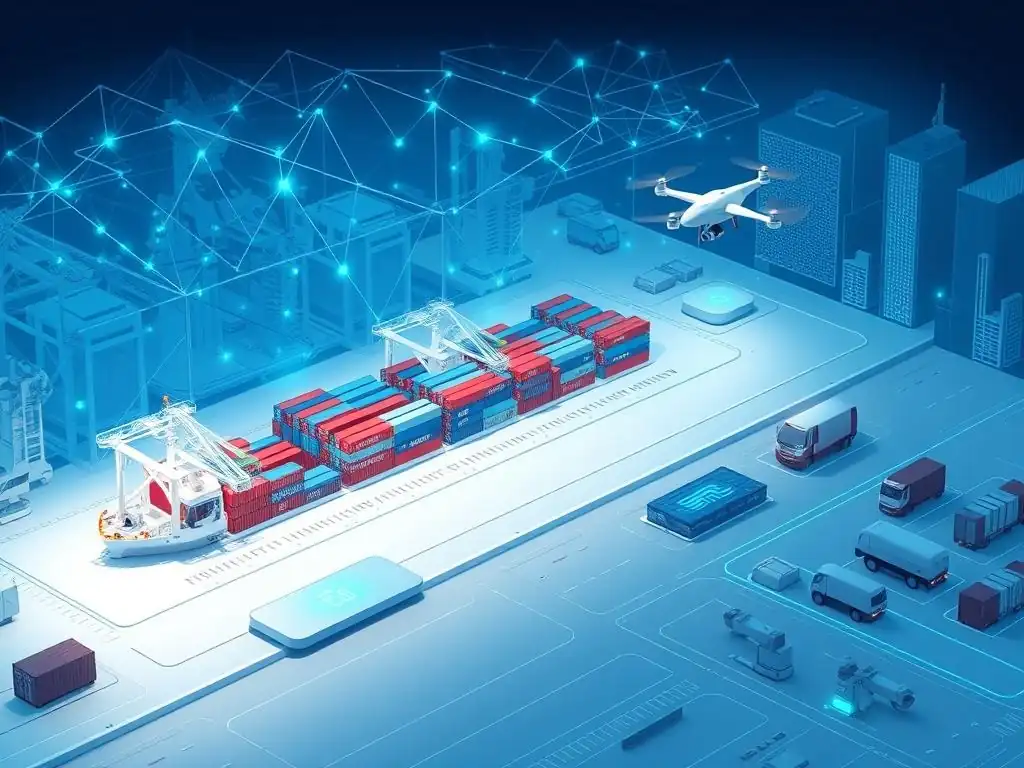
Blockchain technology presents a fundamental shift in how logistics operations are managed, offering profound blockchain logistics efficiency improvements across various facets of the supply chain. Unlike traditional, fragmented systems where information is siloed and often inconsistent, blockchain provides a unified, transparent, and secure ledger accessible to all authorized participants.
This shared source of truth drastically reduces delays caused by data reconciliation, manual verification, and communication breakdowns, paving the way for significant operational gains. The inherent nature of blockchain, being decentralized and cryptographically secure, tackles core inefficiencies that have long plagued the logistics industry, from opaque tracking to cumbersome documentation processes.
The potential for blockchain logistics efficiency improvements stems directly from its core attributes: immutability, transparency, and decentralization. These features enable automation, enhance trust among parties, and provide a level of data integrity previously unattainable in complex, multi-party logistics networks. By creating a single, verifiable record of every transaction or event – be it a shipment milestone, a temperature reading, or a change in ownership – blockchain minimizes disputes and accelerates the flow of goods and information. This foundational change allows businesses to unlock new levels of performance, reducing costs and improving service delivery in a competitive global market.
Enhanced Transparency and Traceability with Blockchain
One of the most immediate and impactful blockchain logistics efficiency improvements is the dramatic enhancement of transparency and traceability within the supply chain. Traditionally, tracking a shipment involves navigating multiple disparate systems, each holding only a piece of the puzzle. This fragmentation makes it difficult, if not impossible, to get a complete, real-time view of a product's journey from origin to final destination.
Blockchain solves this by creating a shared, append-only ledger where every step, from manufacturing to transit and delivery, can be recorded and verified by relevant parties. This single, immutable timeline eliminates information asymmetry and provides unparalleled visibility into the flow of goods.
This enhanced transparency directly translates into tangible efficiency gains. For instance, knowing the exact location and status of a shipment at any given moment allows for proactive management of potential delays or disruptions. It reduces the need for manual status checks and inquiries, freeing up valuable time for logistics personnel. Furthermore, in industries handling sensitive goods like pharmaceuticals or high-value electronics, the ability to trace a product's provenance and handling history with absolute certainty significantly improves quality control and reduces the risk of counterfeiting or diversion, contributing substantially to overall blockchain logistics efficiency.
Real-time Tracking and Monitoring of Goods
Integrating blockchain with IoT devices, such as GPS trackers, temperature sensors, and humidity monitors, enables near real-time tracking and condition monitoring of goods throughout their journey. As sensors collect data, this information can be securely written onto the blockchain, creating an immutable log of the shipment's environmental conditions and location updates. This data is instantly accessible to all authorized stakeholders – manufacturers, carriers, distributors, and even end customers – providing a level of visibility that traditional systems struggle to match.
This granular, real-time insight allows for immediate alerts if conditions deviate from required parameters (e.g., temperature excursions for perishable goods). It facilitates rapid response to issues, potentially saving entire shipments from spoilage or damage. The certainty provided by blockchain-recorded sensor data also simplifies claims processes and assigns responsibility based on verifiable facts, further boosting blockchain logistics efficiency and reducing operational friction.
Immutable Record Keeping: Reducing Errors and Disputes
Blockchain's core feature of immutability ensures that once data is recorded on the ledger, it cannot be altered or deleted. Each transaction block is linked to the previous one using cryptographic hashes, making any attempt to tamper with historical data immediately obvious. This creates a highly reliable and tamper-proof audit trail for every action and event related to a shipment. Manual data entry errors, intentional data manipulation, or lost paperwork – common causes of disputes and delays in traditional logistics – are significantly mitigated.
Having an indisputable record of every transaction, from pickup times and delivery confirmations to customs clearances and quality checks, drastically reduces the time and effort spent on resolving discrepancies and disputes. Parties can rely on the shared, verified data on the blockchain rather than relying on potentially conflicting or incomplete records held by individual entities. This clarity and certainty streamline administrative processes, accelerate settlements, and contribute substantially to blockchain logistics efficiency improvements by minimizing costly delays and legal battles.
Streamlined Processes and Reduced Costs Through Decentralization
The decentralized nature of blockchain technology fundamentally changes how logistics processes operate by removing the reliance on central authorities or multiple, often competing, intermediaries. Instead of transmitting documents and information through a chain of separate entities – each adding time, cost, and potential points of failure – blockchain allows participants to interact and share validated data directly on a peer-to-peer network. This direct interaction cuts through bureaucratic layers and accelerates the flow of information and transactions, leading to significant blockchain logistics efficiency improvements.
By eliminating intermediaries, businesses can reduce transaction costs associated with fees charged by brokers, banks (for certain payment types), and data clearinghouses. The streamlined workflows also mean less administrative overhead and reduced paperwork. For instance, a single digital record on the blockchain can replace multiple paper documents or data entries across different systems, simplifying audits and compliance. This shift towards a more direct and automated process architecture is a key driver behind the cost savings and operational efficiencies promised by blockchain in logistics.
Automation of Contracts and Payments: Smart Contracts in Logistics
Smart contracts are self-executing contracts where the terms of the agreement are directly written into code. These programs run on the blockchain and automatically execute predefined actions when specific conditions are met and verified on the ledger. In logistics, smart contracts can automate tasks such as releasing payment upon confirmation of delivery, triggering insurance payouts based on recorded sensor data (e.g., temperature exceeding a threshold), or initiating customs clearance processes once necessary documentation is uploaded and verified.
This automation dramatically speeds up processes that traditionally involve manual checks, approvals, and paperwork. For example, a payment that might take days or weeks to process through traditional banking systems and manual invoicing can be executed almost instantly via a smart contract once the delivery status is confirmed on the blockchain. This not only improves cash flow for carriers and suppliers but also reduces administrative costs and minimizes the risk of human error in payment processing, delivering significant blockchain logistics efficiency improvements.
Eliminating Intermediaries: Direct Communication and Transactions
Traditional logistics involves a complex web of intermediaries, each playing a role in validating information, facilitating transactions, or managing documentation. These can include freight brokers, banks, customs brokers, and third-party auditors. While often necessary in siloed systems, these intermediaries add layers of complexity, cost, and potential delays. Blockchain provides a platform where parties can interact directly based on shared, verifiable data, reducing the need for many of these middlemen.
For instance, instead of relying on a central clearinghouse to verify shipment details between a carrier and a shipper, both parties can access the same immutable record on the blockchain. Payments can be made directly or via smart contracts without needing a bank as a central intermediary for validation (though banks can still participate on the network). This disintermediation simplifies the logistics chain, reduces transaction costs, and speeds up the overall process, contributing significantly to blockchain logistics efficiency by fostering direct, trustless interactions between participants.
Frequently Asked Questions
### How does blockchain improve supply chain visibility in logistics?
Blockchain provides an immutable and shared ledger, allowing all participants to track goods in real-time. This enhanced transparency reduces discrepancies and improves overall efficiency.
### What are the key advantages of using blockchain for tracking and tracing goods?
Blockchain offers enhanced security and transparency, making it easier to identify counterfeit goods and ensure product authenticity. The decentralized nature reduces reliance on single points of failure.
### Can blockchain help streamline customs clearance processes in international logistics?
Yes, by providing a secure and transparent platform for sharing documentation, blockchain can expedite customs procedures. This reduces delays and improves efficiency.
### What role does blockchain play in reducing fraud and errors in logistics operations?
The immutable nature of blockchain records makes it difficult to tamper with data, significantly reducing fraud. Automated processes and smart contracts minimize human error.
### How can blockchain contribute to cost reduction in logistics and supply chain management?
By automating processes, reducing paperwork, and minimizing errors, blockchain can lead to significant cost savings. Improved efficiency and reduced delays further contribute to this.
Final Reflection: Embracing Blockchain's Logistical Dawn
The exploration of blockchain's transformative power in logistics culminates in a stark realization: the efficiency gap between traditional methods and blockchain-enabled systems is not just significant, but rapidly widening. The potential for cost reduction, transparency enhancement, and security fortification is no longer a theoretical promise; it's a tangible reality reshaping supply chains across the globe.
This shift towards decentralized, immutable ledgers is profoundly impacting the cultural and social landscape of global trade. The ability to track goods with unparalleled accuracy and verify their provenance fosters trust and accountability, ultimately empowering consumers and promoting ethical sourcing. The future of supply chains is not about moving faster, but about moving smarter, with greater transparency and resilience. Blockchain is the key to unlocking that future.
This quote encapsulates the essence of the revolution we are witnessing, a revolution driven by the need for greater efficiency and ethical responsibility.
As we stand on the precipice of a new era in logistics, let us not be passive observers. Consider how you, whether as a consumer, a business owner, or a policymaker, can champion the adoption of blockchain technology. Reflect on the potential for increased transparency, reduced waste, and enhanced security within your own sphere of influence. Embrace the challenge of integrating this powerful tool into your operations, and together, let us build a more efficient, ethical, and resilient global supply chain for all.
Unlock Logistics Mastery: Embrace Blockchain's Potential!
Thank you for exploring the transformative role of blockchain in logistics. We hope you've gained insights into how this innovative technology can optimize operations and enhance efficiency. Now, it's time to take the next step.
Consider identifying specific areas within your logistics processes where implementing blockchain could bring significant improvements. Research successful case studies across various industries—beyond traditional logistics—to see how blockchain has been effectively utilized.
Share this article with your network and tag a logistics professional who could benefit from understanding blockchain's potential. Engage in discussions about how this technology might shape the future of logistics.
What is one actionable step you will take this week to start exploring blockchain's role in your logistics strategy? Share your commitment in the comments below!
Leave a Reply