
Eggcellent Traceability: A Blockchain Case Study in Tracking Eggs from Farm to Consumer


Welcome to Blockchain Trends, your guide to understanding the revolutionary impact of blockchain beyond the hype. Curious about how blockchain is transforming industries?
Dive into our latest article and discover the surprising potential of blockchain egg traceability solutions. Learn how this innovative application is ensuring transparency and safety, tracing eggs from farm to consumer. This is just one example of how blockchain is reshaping supply chain management, and we invite you to explore the many possibilities. What other industries could benefit from this level of transparency? Read on to find out!
Eggcellent Traceability: A Blockchain Case Study in Tracking Eggs from Farm to Consumer
- Introduction: The Need for Enhanced Egg Traceability
- The "Eggcellent Traceability" Case Study: An Overview
- Implementing Blockchain for Egg Traceability: A Step-by-Step Approach
- Benefits of Blockchain Egg Traceability Solutions
- Technical Architecture of the Blockchain Egg Tracking System
- Results and Impact of the Blockchain Implementation
- Challenges and Lessons Learned in Blockchain Egg Tracking
- The Future of Blockchain in Food Supply Chains: Beyond Eggs
- Conclusion: Blockchain's Transformative Potential for Egg Traceability and Beyond
-
Frequently Asked Questions
- What are Blockchain egg traceability solutions and why are they important?
- How does blockchain improve egg traceability compared to traditional methods?
- What benefits do Blockchain egg traceability solutions offer to egg producers?
- What challenges are involved in implementing Blockchain egg traceability solutions?
- What is the future outlook for Blockchain egg traceability solutions?
- Final Reflection: Embracing Transparency in Every Shell
- Rediscover the Freshness: Crack Open Transparency!
Introduction: The Need for Enhanced Egg Traceability
Traceability in the food supply chain is paramount, directly impacting consumer safety, brand reputation, and operational efficiency. For a product as common and sensitive as eggs, ensuring rapid and accurate identification of origin and journey is critical. Traditional paper-based or siloed digital systems often fall short, leading to delays in recalls, difficulty pinpointing contamination sources, and a general lack of transparency that can erode consumer trust. The journey of an egg, from the hen house through processing, packaging, transport, and finally to the grocery store shelf, involves numerous handoffs and potential points of failure or data loss.
The increasing complexity of global supply chains, coupled with heightened consumer demand for information about their food's origin and ethical production practices, necessitates a more robust and reliable traceability system. Issues like foodborne illness outbreaks (such as Salmonella, which can be linked to eggs), fraudulent labeling, and inefficient recall processes highlight the urgent need for technological advancements.
Without a comprehensive system, tracing a contaminated egg back to its source can take days or even weeks, significantly increasing the scope of a recall and the potential for widespread illness. This is where innovative approaches, like implementing blockchain egg traceability solutions, offer a compelling alternative.
The Challenges of Traditional Egg Supply Chains
Traditional egg supply chains face significant hurdles in achieving end-to-end traceability. Information is often fragmented, stored in disparate systems across different stakeholders—farmers, processors, distributors, and retailers. This lack of interoperability creates data silos, making it difficult and time-consuming to compile a complete, verifiable history of a specific batch of eggs. Paper records are prone to errors, damage, or loss, while even digital systems may lack standardization or real-time updates.
Furthermore, verifying the authenticity of claims about egg quality, origin, or production methods (like free-range or organic) is challenging with traditional methods. Fraudulent labeling, though difficult to quantify precisely across the entire market, is a known issue that undermines legitimate producers and deceives consumers. In the event of a food safety incident, manually tracing affected products through layers of intermediaries can take an average of 5-7 days, sometimes longer, leading to larger, more costly recalls and prolonged public health risks. This inefficiency underscores the limitations of current systems and the potential benefits of enhancing blockchain egg traceability solutions.
Why Blockchain is Ideal for Egg Tracking
Blockchain technology offers a decentralized, immutable, and transparent ledger that is ideally suited for enhancing supply chain traceability, including for sensitive products like eggs. Each transaction or data point—from the farm where the egg was laid to the store where it was sold—can be recorded as a block and linked cryptographically to the previous one, creating an unalterable chain of custody. This inherent security and transparency mean that once data is entered, it cannot be tampered with without detection, providing a high level of trust in the information recorded.
Specifically for eggs, blockchain can track critical data points such as farm location, production date, feed type, processing facility, packaging date, transportation temperature logs, and retail destination. This creates a comprehensive, verifiable digital history for every batch or even individual egg (via unique identifiers).
Unlike traditional databases, the decentralized nature of blockchain means that no single entity controls the entire dataset, reducing the risk of data manipulation and increasing resilience. Implementing blockchain egg traceability solutions can therefore drastically improve the speed and accuracy of tracing, potentially reducing recall times from days to mere hours and building unprecedented trust between producers and consumers.
The "Eggcellent Traceability" Case Study: An Overview
The concept of "Eggcellent Traceability" represents a forward-thinking approach to leveraging cutting-edge technology for a seemingly simple, yet complex, agricultural product. This case study explores how blockchain technology can be applied to create a robust, transparent, and efficient system for tracking eggs throughout their entire supply chain lifecycle. It moves beyond theoretical discussions to examine practical implementation, focusing on how data is captured, shared, and utilized across various stakeholders, from the farmer to the end consumer. The goal is to illustrate the tangible benefits and operational shifts that occur when embracing blockchain egg traceability solutions.
While "Eggcellent Traceability" serves as a conceptual framework for an ideal system, it draws heavily on real-world pilots and initiatives undertaken by pioneers in the food traceability space. By detailing the steps involved and the outcomes achieved, this case study provides a blueprint for how the egg industry, and potentially other perishable goods sectors, can adopt blockchain to address long-standing challenges related to safety, authenticity, and transparency. It highlights the technological components, the operational changes required, and the measurable impact on key performance indicators within the supply chain.
Vital Farms: Pioneers in Blockchain Egg Traceability
Vital Farms, a company known for its commitment to ethical and transparent farming practices, has been highlighted in discussions around leveraging technology for traceability, making them a compelling example in the context of blockchain egg traceability solutions. While specific public details of a full-scale, live blockchain implementation across their entire network may vary, their exploration and piloting of advanced traceability technologies exemplify the industry's move towards greater transparency. Companies like Vital Farms understand that consumers are increasingly willing to pay a premium for products with verifiable claims about animal welfare and production methods.
Their efforts in enhancing traceability often involve working with technology partners to explore systems capable of linking individual cartons back to specific farms and even flocks. Early pilot programs in the industry, potentially involving companies like Vital Farms or similar pioneers, have demonstrated the feasibility of using distributed ledger technology to record data points like farm location, hen welfare certifications, and packaging dates immunoassay. These initiatives aim to provide consumers with unprecedented insight into the provenance of their eggs, directly supporting brand promises of transparency and ethical sourcing, and setting a standard for future blockchain egg traceability solutions.
Goals of the Blockchain Implementation
The primary goals behind implementing blockchain technology for egg traceability are multifaceted, aiming to address critical pain points in the traditional supply chain. At the forefront is the objective to significantly improve food safety by enabling rapid and precise identification of contamination sources during an outbreak. Instead of recalling vast quantities of eggs from numerous locations, a blockchain system allows pinpointing affected batches down to specific farms or even production dates, minimizing waste and economic impact while maximizing public health protection.
Another key goal is to enhance transparency and build consumer trust. By providing consumers with easy access to verifiable information about where their eggs came from, how they were produced, and their journey to the store, companies can fulfill promises of ethical sourcing and quality.
This transparency, facilitated by blockchain egg traceability solutions, empowers consumers and differentiates brands committed to openness. Additionally, streamlining supply chain operations, reducing manual processes, decreasing the potential for fraud or counterfeiting, and improving overall efficiency by providing a single, shared source of truth for all stakeholders are crucial objectives driving the adoption of this technology.
Implementing Blockchain for Egg Traceability: A Step-by-Step Approach
Implementing a blockchain solution for egg traceability requires a structured approach that integrates technology with existing, albeit potentially modified, supply chain processes. The process typically begins at the source—the farm—and extends through every subsequent step until the egg reaches the consumer. Each step involves capturing specific data points and recording them on the blockchain ledger to create an immutable history. This phased implementation ensures that data flows correctly and that all participants in the supply chain are onboarded and trained on the new system.
The success of blockchain egg traceability solutions hinges on accurate data capture at each stage. This involves not just recording manual inputs but increasingly leveraging automation through IoT devices and sensors. The step-by-step process ensures that the digital twin of the physical egg's journey is built piece by piece on the blockchain, making the entire supply chain visible and auditable. This detailed approach provides a framework for companies looking to move beyond traditional traceability methods and embrace a decentralized, trust-minimized system.
Step 1: Farm Integration and Data Capture
The initial and arguably most critical step in establishing blockchain egg traceability is integrating the farms into the system and implementing robust data capture mechanisms at the source. This involves assigning unique identifiers to farms, flocks, and specific egg batches. Data captured at this stage includes the farm ID, location coordinates, date of lay, breed of hen, feed type, and certifications (e.g., organic, free-range, humane certified). This foundational data forms the starting point of the egg's digital history on the blockchain.
Ensuring data accuracy at the farm level is paramount, as errors here will propagate through the chain. This often requires providing farmers with easy-to-use interfaces or integrating directly with existing farm management software. For large-scale operations, automating data capture through sensors becomes essential to handle the volume and frequency of data generation. The goal is to create a verified record of the egg's origin and initial conditions, making it the anchor point for all subsequent traceability data recorded by blockchain egg traceability solutions.
On-Farm Sensors and IoT Devices
To enhance the accuracy and automation of data capture at the farm, implementing Internet of Things (IoT) devices and various sensors is becoming increasingly common in advanced traceability systems. These devices can monitor environmental conditions within hen houses, such as temperature and humidity, which can impact egg quality and safety. They can also count eggs produced, track feed consumption, and even monitor hen activity levels, providing objective data points about the production process and animal welfare.
Integrating these sensors with the blockchain platform allows for automatic, real-time recording of key metrics directly onto the distributed ledger. For example, a sensor might record the barn temperature every hour, and this data is batched and added to the blockchain associated with the eggs produced in that barn during that period. This automated process reduces the potential for human error or data manipulation, providing a more reliable dataset for blockchain egg traceability solutions and enhancing the credibility of the information available to consumers.
Recording Egg Production Data on the Blockchain
Once the initial data is captured, whether manually or via sensors, it needs to be securely recorded on the chosen blockchain platform. This involves creating a transaction on the blockchain that includes the unique batch ID and all associated production data points gathered at the farm. This transaction is then validated by the network and added to a block, becoming an immutable part of the ledger. The data is typically hashed and stored, with potentially larger datasets stored off-chain but referenced by a hash on the blockchain.
Each subsequent event related to that batch of eggs—such as washing, grading, or packaging—will trigger a new transaction linked to the original farm data. This builds a chronological, tamper-evident history. The data structure on the blockchain is designed to hold specific fields relevant to egg production, ensuring standardization across all participating farms. This step solidifies the origin data, making it readily accessible and verifiable for all authorized parties utilizing the blockchain egg traceability solutions.
Step 2: Transportation and Logistics Tracking
After leaving the farm, eggs enter the transportation and logistics phase, which introduces new data points crucial for maintaining quality and traceability. This stage involves moving eggs from farms to processing plants, then to distribution centers, and finally to retail locations. Tracking during transit is essential for monitoring conditions like temperature and humidity, especially for refrigerated eggs, and for documenting handoffs between different carriers or logistics providers.
Implementing blockchain in this phase means recording each transfer of custody as a transaction, noting the parties involved, the time and date of the transfer, and the location. This creates a clear chain of custody. Furthermore, integrating IoT sensors within transport vehicles allows for continuous monitoring of environmental conditions, with this data also being recorded on the blockchain. This ensures that the integrity of the cold chain is maintained, and any deviations are logged, providing critical information in case of quality issues or safety investigations facilitated by blockchain egg traceability solutions.
Real-Time Location Monitoring with Blockchain
Leveraging GPS or other geolocation technologies integrated with the blockchain system allows for real-time monitoring of egg shipments. As a truck moves from point A to point B, its location can be periodically recorded on the blockchain, linked to the specific batch of eggs being transported. This provides stakeholders with visibility into the current location of the shipment and its route.
This location data, combined with timestamps recorded on the blockchain, creates a verifiable log of the egg's physical journey. In case of delays, detours, or incidents during transit, the immutable record on the blockchain provides an accurate account of what occurred and when. This enhances accountability among logistics providers and provides crucial data points for optimizing routes and improving supply chain efficiency, all documented transparently within the blockchain egg traceability solutions framework.
Maintaining Cold Chain Integrity with Blockchain
Maintaining the correct temperature during transportation is vital for preventing bacterial growth and preserving egg quality. Temperature sensors placed within refrigerated trucks can continuously monitor the internal temperature. These sensors can be configured to automatically record temperature readings onto the blockchain at set intervals (e.g., every 15 minutes) or when temperature thresholds are breached.
If the temperature deviates outside the safe range (typically between 33°F and 45°F for refrigerated eggs), the sensor can trigger an alert and record the excursion on the blockchain. This immutable record provides clear evidence of whether the cold chain was compromised during transit. This data is invaluable for quality control, identifying potential spoilage issues before products reach consumers, and assigning responsibility in case of claims, thereby strengthening the reliability of blockchain egg traceability solutions.
Step 3: Retail and Consumer Verification
The final step involves the arrival of eggs at the retail location and enabling consumers to access the traceability information. At the retail level, the arrival of the shipment is recorded on the blockchain, completing the chain of custody from farm to store. Inventory management systems can be integrated to track specific batches on shelves.
Crucially, this stage focuses on making the traceability data accessible to the end consumer. This is often achieved through consumer-facing applications that interact with the blockchain. By empowering consumers to verify the origin and journey of their eggs, companies build trust and meet the growing demand for transparency. This direct line of communication, facilitated by blockchain egg traceability solutions, creates a powerful connection between the producer and the consumer.
QR Codes and Blockchain-Based Verification Apps
A common method for enabling consumer access to blockchain traceability data is through the use of QR codes printed on egg cartons. Each QR code is linked to the unique identifier of the egg batch within the blockchain system. Consumers can scan this code using a smartphone app provided by the brand or a third-party verification platform.
Upon scanning, the app queries the blockchain and retrieves the verifiable history associated with that specific carton of eggs. This information might include the farm where the eggs were laid, the date of lay, details about hen welfare and feed, processing and packaging dates, transportation route highlights, and even the retail location's receiving date. This seamless access to detailed provenance data, powered by blockchain egg traceability solutions, provides consumers with confidence in the product's authenticity and journey.
Empowering Consumers with Egg Provenance Information
Providing consumers with easy-to-understand and comprehensive provenance information empowers them to make informed purchasing decisions. Beyond just confirming origin, the data shared via blockchain can include details about the farm's sustainable practices, certifications received (like Certified Humane or Organic), and even photos or videos from the farm.
This level of transparency goes beyond traditional labeling, which can be limited by space and prone to less rigorous verification. By accessing the immutable data on the blockchain, consumers can trust the information presented, knowing it has been recorded and validated across the supply chain. This direct connection fosters greater loyalty to brands that are transparent about their sourcing and production methods, demonstrating the significant impact of effective blockchain egg traceability solutions on consumer engagement.
Benefits of Blockchain Egg Traceability Solutions
Implementing blockchain technology for tracking eggs yields a wide array of benefits that impact food safety, consumer relations, operational efficiency, and market integrity. The core advantage lies in the creation of a single, shared, and immutable record of the egg's journey, replacing fragmented and often unreliable traditional systems. This foundational improvement cascades into multiple positive outcomes for all stakeholders involved in the egg supply chain, from small farmers to large retailers and, most importantly, the end consumer.
The benefits extend beyond simply knowing where an egg came from. They include the ability to react much faster during crises, build stronger brand reputation based on verifiable claims, streamline complex logistical processes, and combat fraudulent activities that harm legitimate businesses. These tangible advantages highlight why blockchain egg traceability solutions are gaining traction as a transformative technology for the food sector.
Improved Food Safety and Reduced Contamination Risks
One of the most significant benefits of blockchain egg traceability solutions is the dramatic improvement in food safety management. In the event of a foodborne illness outbreak linked to eggs, a blockchain system allows authorities and companies to trace affected products back to their source with unprecedented speed and accuracy. Instead of initiating broad, costly, and wasteful recalls covering large geographical areas or extended timeframes, companies can pinpoint the specific farms, flocks, or even production dates associated with the contaminated eggs.
For example, a traditional trace back might take several days to identify the source farm, potentially requiring the recall of millions of eggs across multiple states. With blockchain, this process could be reduced to a matter of hours or minutes by querying the distributed ledger. This rapid identification allows for targeted recalls, minimizing the volume of safe eggs removed from the market and reducing economic losses for producers and retailers. More importantly, it limits consumers' exposure to contaminated products, significantly reducing the risk of widespread illness.
Enhanced Transparency and Consumer Trust
Blockchain inherently fosters transparency by providing a verifiable and accessible record of an egg's journey and attributes. Consumers are increasingly demanding to know more about the food they eat – its origin, how it was produced, and its safety. Blockchain egg traceability solutions meet this demand by allowing consumers to access this detailed information through simple means like scanning a QR code.
This level of openness builds immense trust between brands and consumers. When a company can verifiably demonstrate claims about ethical sourcing, organic status, or specific farming practices directly through an immutable ledger, it strengthens its credibility. A study by Nielsen in 2015, while not specific to blockchain, indicated that 73% of global consumers would change their consumption habits to reduce their environmental impact, and transparency about sourcing is a key part of this trend. Blockchain provides the technological backbone to support such verifiable claims, fostering loyalty and potentially commanding a premium for transparently sourced eggs.
Streamlined Supply Chain Operations and Efficiency
Beyond safety and transparency, blockchain egg traceability solutions contribute to significant operational efficiencies throughout the supply chain. The shared, single source of truth provided by the blockchain reduces the need for manual data reconciliation between different parties, minimizing administrative overhead and reducing errors. Smart contracts can automate processes based on predefined conditions, such as triggering payment to a farmer automatically upon verification of a shipment's arrival at a processing plant.
Furthermore, having real-time or near real-time visibility into the location and condition of egg shipments allows companies to optimize logistics, reduce transit times, and better manage inventory. Identifying bottlenecks or inefficiencies becomes easier when the entire supply chain's movement is logged on a transparent ledger. Experts estimate that improved supply chain visibility through technologies like blockchain can reduce administrative costs by 10-15% and optimize inventory levels, leading to substantial savings for businesses.
Reduced Fraud and Counterfeiting in the Egg Market
Fraudulent activities, such as mislabeling conventional eggs as organic or free-range, substituting lower-quality eggs, or forging certifications, are real problems in the food industry that undermine consumer trust and harm legitimate producers. Blockchain egg traceability solutions make such fraudulent activities significantly more difficult. Because every data point recorded on the blockchain is immutable and linked to previous records, altering information about an egg's origin or attributes without detection is virtually impossible.
If a batch of eggs is claimed to be organic, the blockchain record can verify the farm's organic certification status, the feed used (if recorded), and the specific flock's production data, all linked back to the original farm entry. Any attempt to introduce non-organic eggs under the guise of an organic batch would break the verifiable chain of custody on the blockchain, making the fraud immediately apparent upon verification. This enhances the integrity of the egg market, protecting both consumers and honest producers from illicit activities.
Technical Architecture of the Blockchain Egg Tracking System
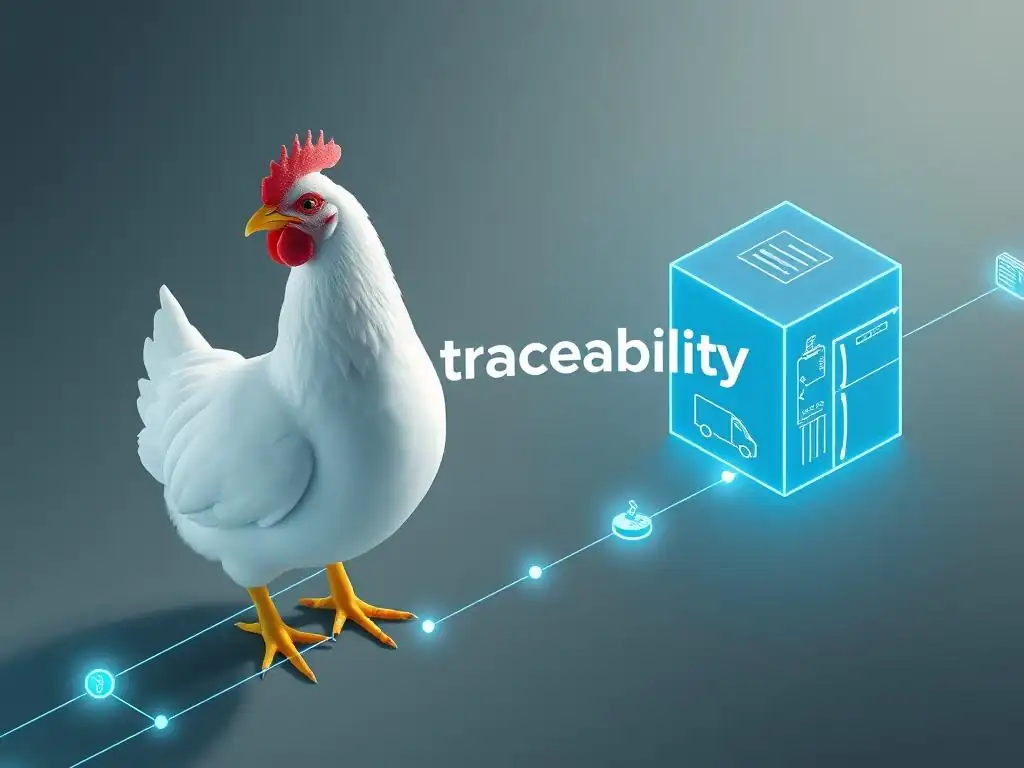
A robust blockchain egg traceability system requires a carefully designed technical architecture that considers the specific needs of the egg supply chain. This includes selecting the appropriate blockchain platform, designing secure data storage mechanisms, and developing smart contracts to automate key processes. The architecture must support the capture and management of diverse data types, from simple text entries like farm IDs to more complex streams from IoT sensors like temperature logs.
The technical framework aims to provide a scalable, secure, and interoperable system that can accommodate numerous participants, from small family farms to large processing facilities and retailers. Choosing the right components and integrating them effectively is crucial for the successful deployment and operation of blockchain egg traceability solutions.
Blockchain Platform Selection: Hyperledger Fabric
For enterprise-level supply chain applications like egg traceability, permissioned blockchain platforms are often preferred over public, permissionless ones like Bitcoin or Ethereum due to considerations of privacy, scalability, and governance. Hyperledger Fabric, an open-source project hosted by the Linux Foundation, is a popular choice in this domain. It allows participants to join a known network, provides granular access control over data, and supports the execution of smart contracts (chaincode) in various programming languages.
Hyperledger Fabric's channel architecture enables participants to transact privately with a subset of the network members, which is essential for protecting commercially sensitive data while still maintaining a shared, immutable ledger for relevant information. Its modular architecture allows for customization to fit the specific requirements of the egg supply chain, such as defining participant roles (farmer, processor, transporter, retailer) and their permissions within the network. This makes it a suitable backbone for building sophisticated blockchain egg traceability solutions.
Data Storage and Security Considerations
While the blockchain ledger provides immutability and transparency, it is typically not designed to store large volumes of raw data, especially sensor data or documents. Instead, a common architectural pattern is to store large or sensitive data off-chain in secure databases or decentralized storage systems and record a cryptographic hash of that data on the blockchain. This hash acts as a tamper-evident pointer; if the off-chain data is altered, the hash on the blockchain will no longer match, indicating that the data's integrity has been compromised.
Security is paramount. Access to the blockchain network is restricted to authorized participants, and cryptographic keys are used to sign transactions, ensuring that data is entered by legitimate parties. Data encryption, both in transit and at rest (for off-chain storage), is also critical to protect sensitive information. Implementing robust access controls and cryptographic measures ensures that the blockchain egg traceability solutions are not only transparent but also secure against unauthorized access or manipulation.
Smart Contracts for Automated Processes
Smart contracts are self-executing contracts with the terms of the agreement directly written into code. Deployed on the blockchain, they automatically execute predefined actions when specific conditions are met, without the need for intermediaries. In an egg traceability system, smart contracts can automate various processes, increasing efficiency and reducing potential delays or disputes.
Examples include:
- Automatically updating the status of a batch from "In Transit" to "Arrived at Processing Plant" when geolocation data confirms arrival.
- Triggering payment to a farmer's digital wallet once a processor verifies the quantity and quality of a delivered batch of eggs, based on data recorded on the blockchain.
- Automating alerts to relevant parties if temperature sensors in a transport vehicle report conditions outside the acceptable range for a specified duration.
- Implementing recall logic, where a smart contract can rapidly identify all affected downstream batches and stakeholders based on an initial data entry (e.g., identifying a positive Salmonella test result linked to a specific farm batch).
These automated processes, governed by the logic encoded in smart contracts, enhance the efficiency and reliability of blockchain egg traceability solutions, reducing manual intervention and potential for error.
Results and Impact of the Blockchain Implementation
The implementation of blockchain egg traceability solutions, whether in pilot programs or full-scale deployment, has demonstrated significant positive impacts on various aspects of the egg supply chain. These results often include measurable improvements in the speed and accuracy of tracing products, enhanced consumer perception and loyalty, and tangible cost savings derived from increased operational efficiencies. Quantifying these outcomes is crucial for demonstrating the return on investment and driving broader adoption within the industry.
Real-world examples, even if based on initial pilots or approximations from similar food traceability projects, illustrate the transformative potential of this technology. The impact extends beyond just technological implementation, influencing business processes, stakeholder collaboration, and market dynamics.
Measurable Improvements in Traceability Speed and Accuracy
One of the most frequently cited and impactful results of implementing blockchain egg traceability solutions is the dramatic reduction in the time required to trace a product's origin and journey. While traditional manual or siloed database methods might take several days (e.g., 5-7 days is a common estimate for complex food recalls), blockchain pilots have shown the ability to trace a product back to its source within seconds or minutes.
For instance, a major food retailer utilizing a blockchain traceability system (though not specifically for eggs in the public case) reported reducing the time to trace mangoes from the store back to the farm from 7 days to just 2.2 seconds. While eggs have different supply chain characteristics, similar proportional improvements are expected. This speed is critical during food safety crises. Accuracy also improves significantly because the data is immutable and verifiable; there's less risk of relying on outdated, incomplete, or incorrect records. This precision ensures that responses to issues are targeted and effective.
Increased Consumer Confidence and Brand Loyalty
Transparency enabled by blockchain egg traceability solutions directly translates into increased consumer confidence and stronger brand loyalty. When consumers can easily access verifiable information about the provenance, safety, and ethical production of the eggs they purchase, they feel more secure and connected to the brand. Surveys indicate that a majority of consumers (often cited as over 70-80% in various studies) are willing to pay more for products from companies they trust and that provide transparency.
Brands that implement blockchain traceability can differentiate themselves in a competitive market. By showcasing their commitment to openness and verifiable ethical practices, they build a reputation for integrity. For example, a pilot program allowing consumers to trace specific produce items back to the farm via blockchain reported a significant increase in consumer engagement and positive sentiment towards the participating brand. This suggests that applying the same transparency to eggs would yield similar positive results, fostering deeper consumer relationships and driving repeat purchases.
Cost Savings and Operational Efficiencies Achieved
Beyond improving safety and trust, blockchain egg traceability solutions can lead to substantial cost savings and operational efficiencies. The reduction in recall scope and duration directly minimizes financial losses associated with discarding large volumes of product, logistics costs for returns, and potential legal liabilities. Estimates for the cost of a food recall can run into the millions of dollars, with traceability speed being a major factor in limiting these costs.
Operational efficiencies stem from streamlined data management, automation via smart contracts, and improved supply chain visibility. Reducing manual data entry and reconciliation saves labor costs. Automated payments based on verifiable delivery records can speed up transaction cycles and improve cash flow for suppliers. Better visibility allows for optimized inventory management, reducing spoilage and warehousing costs. While specific figures for egg supply chains are still emerging, similar blockchain implementations in other supply chains have reported efficiency gains of 15-20% in certain processes.
Challenges and Lessons Learned in Blockchain Egg Tracking
Implementing blockchain egg traceability solutions is not without its challenges. While the potential benefits are significant, organizations must navigate technical hurdles, operational complexities, and human factors to achieve successful adoption. Learning from early implementations and pilot programs is crucial for future deployments to mitigate risks and optimize outcomes.
Understanding these challenges—ranging from integrating disparate data systems to managing the expectations and buy-in of numerous stakeholders across the supply chain—provides valuable insights for anyone considering blockchain for egg or other food product traceability.
Data Integration and Interoperability Hurdles
One of the primary technical challenges in implementing blockchain egg traceability solutions is integrating data from various sources across the supply chain. Farms, processing plants, logistics providers, and retailers often use different legacy systems, databases, and even manual processes. Getting these disparate systems to communicate and feed standardized, accurate data into the blockchain platform is complex.
Achieving interoperability requires developing middleware, APIs, and data standards that can translate information from diverse formats into a consistent structure suitable for the blockchain ledger. This often involves significant upfront investment in data mapping, system upgrades, and integration development. Furthermore, ensuring the quality and integrity of data captured at the source remains a challenge; "garbage in, garbage out" applies to blockchain just as it does to any database system. Overcoming these data silos and ensuring seamless data flow is critical for the system's effectiveness.
Scalability and Performance Considerations
The egg supply chain involves massive volumes of data, from individual egg counts and batch information to continuous sensor readings from transport vehicles. Ensuring that the chosen blockchain platform can handle this scale of data and transaction volume without performance degradation is a significant technical consideration. Public blockchains can face issues with transaction speed and cost (gas fees) at high volumes, which is why permissioned blockchains like Hyperledger Fabric are often preferred for enterprise use cases due to their higher transaction throughput and lower latency.
However, even with permissioned ledgers, careful architectural design is needed to manage data efficiently. Deciding what data resides on-chain (typically hashes and key transaction details) versus off-chain (bulk data like sensor logs) is crucial for performance and cost-effectiveness. As the system expands to include more farms, processors, and retailers, the network must be able to scale horizontally or vertically to accommodate the increasing load, requiring careful planning and infrastructure management for robust blockchain egg traceability solutions.
Overcoming Resistance to Change from Stakeholders
Implementing blockchain egg traceability solutions requires significant changes to existing processes and workflows for all participants in the supply chain. Farmers may need to adopt new data capture methods or technology, processors may need to integrate with the platform, and logistics providers must ensure sensor data is correctly transmitted. Overcoming resistance to these changes is a major human and organizational challenge.
Stakeholders, particularly smaller farms or businesses with limited technical resources, may be hesitant to adopt new technology due to perceived complexity, cost, or lack of understanding of the benefits. Building trust among participants in a shared ledger is also essential. This requires clear communication, comprehensive training programs, demonstrating the tangible benefits to each party (e.g., faster payments for farmers, reduced disputes for transporters), and potentially providing financial or technical support to ease the transition. Gaining buy-in from all links in the chain is vital for the success of any blockchain traceability initiative.
The Future of Blockchain in Food Supply Chains: Beyond Eggs
The application of blockchain technology in the egg industry serves as a compelling case study, but its potential impact extends far beyond this single commodity. The core principles of creating a transparent, immutable, and verifiable chain of custody are applicable to virtually any food product, from perishable produce and meat to complex processed goods. The lessons learned and the infrastructure developed for blockchain egg traceability solutions can pave the way for widespread adoption across the entire food sector.
The future will likely see blockchain integrated with other advanced technologies, creating even more sophisticated and resilient food systems. As pilots mature and standards emerge, blockchain is poised to become a foundational technology for ensuring food safety, authenticity, and sustainability on a global scale.
Expanding Blockchain Traceability to Other Food Products
The framework developed for blockchain egg traceability can be adapted and expanded to track a wide variety of other food products. For instance, tracking meat and poultry from farm to fork can leverage similar data points related to animal welfare, feed, processing, and cold chain management. Seafood traceability can benefit immensely from blockchain to combat illegal fishing and verify species origin.
For produce, tracking specific batches from fields, through washing, packaging, and distribution, is directly analogous to the egg process. Even processed foods with multiple ingredients can use blockchain to trace each component back to its source, creating a comprehensive "bill of materials" on the ledger. The ability to apply the principles of blockchain egg traceability solutions to diverse products means that the technology can become a universal standard for food provenance.
Integrating Blockchain with Other Supply Chain Technologies
The full power of blockchain in food supply chains is realized when it is integrated with other complementary technologies. As discussed earlier, IoT sensors are critical for automated data capture at the source and during transit. Artificial Intelligence (AI) and Machine Learning (ML) can be applied to the vast datasets collected on the blockchain to identify patterns, predict potential issues (like spoilage risks based on temperature logs), and optimize supply chain routes.
Furthermore, integrating blockchain with existing Enterprise Resource Planning (ERP) systems, Warehouse Management Systems (WMS), and Transportation Management Systems (TMS) is essential for seamless operations. The blockchain acts as the trust layer and the shared record of truth, while other systems manage the day-to-day operational tasks. This synergistic approach leverages the strengths of each technology to create highly efficient, transparent, and resilient food supply chains, building upon the foundation laid by initiatives like blockchain egg traceability solutions.
The Role of Blockchain in Building More Resilient Food Systems
Recent global events have highlighted the fragility of complex food supply chains. Disruptions can lead to shortages, price volatility, and increased food waste. Blockchain technology can play a significant role in building more resilient food systems. By providing real-time visibility into the location and status of food products, stakeholders can react more quickly to disruptions, reroute shipments, and identify alternative sources.
Smart contracts can be designed to manage risk and automate responses to unforeseen events, such as triggering alternative logistics plans if a primary route is blocked. The transparent and immutable nature of the ledger also facilitates faster settlements and reduces disputes, improving trust and collaboration among supply chain partners during stressful times. Ultimately, the enhanced visibility, efficiency, and trust enabled by blockchain egg traceability solutions and similar initiatives across the food sector contribute to a more robust and adaptable global food system capable of withstanding future shocks.
Conclusion: Blockchain's Transformative Potential for Egg Traceability and Beyond
The exploration of "Eggcellent Traceability" provides a clear illustration of how blockchain technology can fundamentally transform traditional supply chains, starting with a seemingly simple product like eggs. The challenges inherent in tracing eggs through complex networks—fragmented data, slow recalls, and lack of transparency—are effectively addressed by the core attributes of blockchain: immutability, transparency, and decentralization. This case study demonstrates the practical steps involved, from farm integration and data capture to consumer verification, highlighting the potential for significant improvements at each stage.
The benefits realized from implementing blockchain egg traceability solutions are substantial, including enhanced food safety through rapid, targeted recalls, increased consumer trust driven by verifiable provenance information, improved operational efficiency through streamlined processes and automation, and reduced fraud in the market. While challenges related to data integration, scalability, and stakeholder adoption exist, they are being addressed through ongoing pilots and technological advancements.
Key Takeaways from the "Eggcellent Traceability" Case Study
The "Eggcellent Traceability" case study underscores several critical takeaways for the food industry. Firstly, granular data capture at the source, ideally automated through IoT, is foundational for effective traceability. Secondly, a permissioned blockchain platform like Hyperledger Fabric offers the necessary balance of transparency, privacy, and performance for enterprise use cases. Thirdly, making traceability data accessible and understandable to the end consumer through simple interfaces like QR codes is key to unlocking the full value proposition of enhanced trust and brand loyalty.
Finally, the case highlights that successful blockchain implementation requires not just technological deployment but also significant process re-engineering and collaborative engagement across the entire supply chain. It's a transformation that impacts business models and relationships, moving towards a more collaborative and transparent ecosystem powered by shared, reliable data. These lessons learned from pioneering blockchain egg traceability solutions are invaluable for other food sectors considering similar initiatives.
The Future of Food Traceability with Blockchain Technology
Looking ahead, blockchain technology is poised to become an integral part of the global food system's infrastructure. As standards for food data on the blockchain evolve and interoperability improves across different platforms and supply chains, a more connected and transparent food ecosystem will emerge. The expansion from single commodities like eggs to multi-ingredient products and complex international supply chains is the next frontier.
The integration of blockchain with AI, IoT, and other emerging technologies will further enhance capabilities, enabling predictive analytics for supply chain risks, automated quality control, and dynamic pricing based on verified provenance. Ultimately, blockchain egg traceability solutions are just one example of how this transformative technology can help build a future where consumers have complete confidence in the safety, authenticity, and sustainability of the food they eat, and where the food supply chain is more efficient, resilient, and equitable for all participants.
Frequently Asked Questions
What are Blockchain egg traceability solutions and why are they important?
They use blockchain technology to create a transparent and immutable record of an egg's journey, from farm to consumer. This enhances food safety and allows consumers to verify the egg's origin and quality.
How does blockchain improve egg traceability compared to traditional methods?
Traditional methods rely on centralized databases and paper records, which can be easily tampered with or lost. Blockchain offers a secure and decentralized way to track eggs, making the data more reliable.
What benefits do Blockchain egg traceability solutions offer to egg producers?
Producers can enhance brand reputation, reduce the risk of foodborne illnesses, and gain access to premium markets that demand transparency and traceability.
What challenges are involved in implementing Blockchain egg traceability solutions?
Challenges include the cost of implementation, the need for industry-wide collaboration, and ensuring data accuracy at every step of the supply chain. Scalability can also be a concern.
What is the future outlook for Blockchain egg traceability solutions?
The future looks promising, with increasing demand for transparency and food safety. We expect to see wider adoption of blockchain in the egg industry and other agricultural sectors.
Final Reflection: Embracing Transparency in Every Shell
The journey of an egg, seemingly simple, reveals the profound potential of blockchain technology to revolutionize food traceability and build consumer trust. In a world increasingly concerned with food safety and ethical sourcing, the ability to verify the origin and journey of our food is no longer a luxury, but a necessity. Blockchain egg traceability solutions offer a tangible answer to this demand, fostering transparency and accountability at every stage of the supply chain.
The impact of this technology extends far beyond simply knowing where an egg came from. It fosters a deeper connection between consumers and producers, empowering informed choices and promoting sustainable practices. This shift towards transparency is not just a trend, but a fundamental change in how we interact with our food system, demanding ethical considerations and responsible consumption. The future of food is transparency. Consumers want to know where their food comes from, how it was produced, and what impact it has on the environment and society.
- Dan Barber
As we conclude this exploration of blockchain egg traceability solutions, let us consider the broader implications of this technology. How can we, as consumers and industry stakeholders, champion transparency and demand accountability in all aspects of our food supply? Let us embrace the power of blockchain to build a more trustworthy and sustainable food future, one egg, one transaction, one informed choice at a time.
Okay, I'm ready to create a Call to Action (CTA) for your "Eggcellent Traceability: A Blockchain Case Study in Tracking Eggs from Farm to Consumer" article on Blockchain Trends (blockchaintrends.org). Here it is:
Rediscover the Freshness: Crack Open Transparency!
Thank you for exploring how blockchain is revolutionizing egg traceability and providing a new level of consumer trust. You've gained valuable insights into a real-world application of this transformative technology. Now, let's put that knowledge into action!
Here are a few ways you can dive deeper:
- Immediately check the packaging of your next egg carton for a traceability QR code or label and see if you can trace its origins! Consider sharing your experience on social media.
- Explore other blockchain-powered supply chain initiatives in the food industry. Search for companies using blockchain to track other products like coffee, seafood, or even honey.
- Start a conversation! Discuss the potential impact of blockchain technology on food safety and consumer confidence with your friends, family, or online blockchain communities.
What steps will you take to demand greater transparency in your food supply chain?
Leave a Reply